
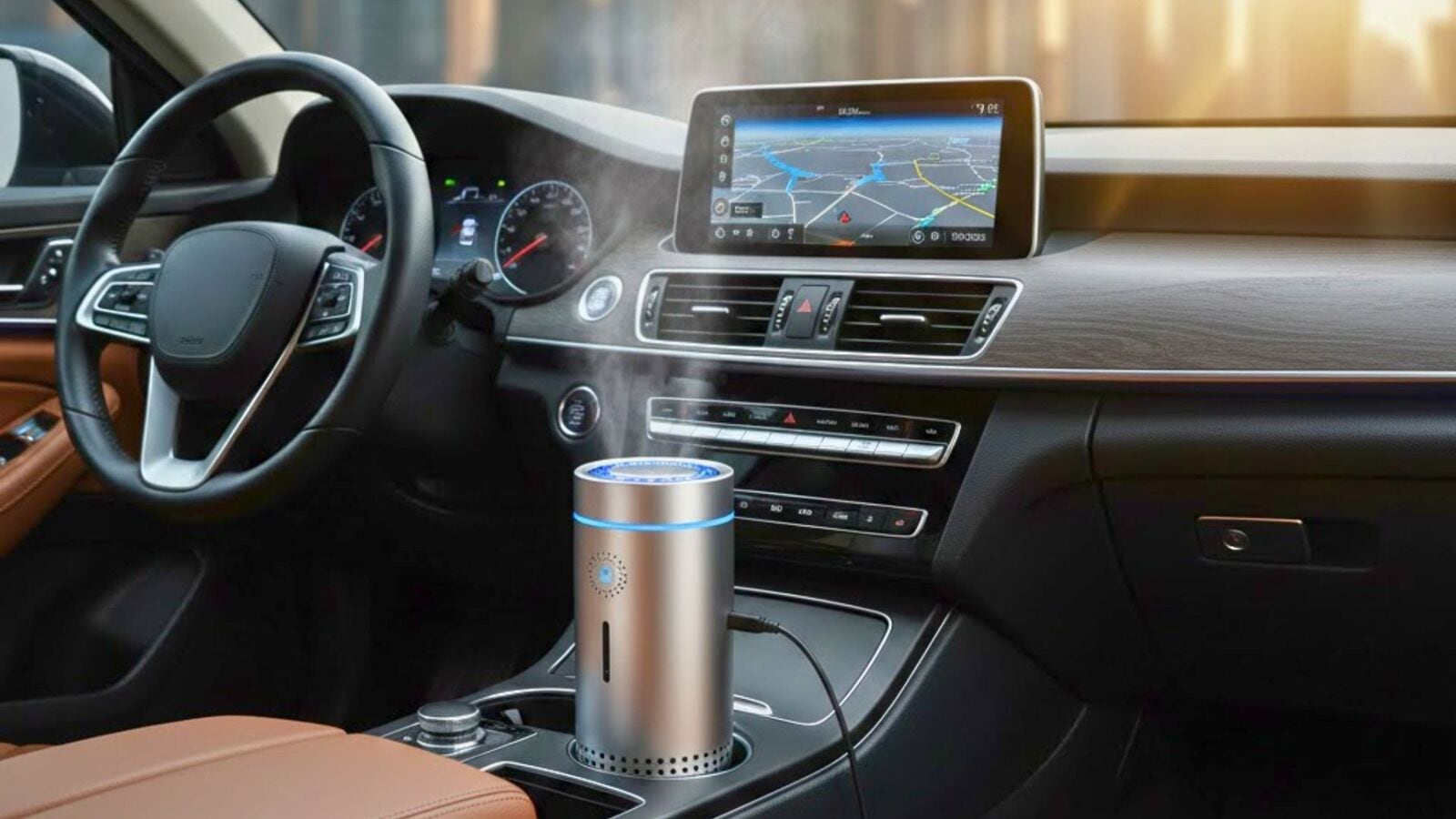
- As the pollution situation worsens across North India, we explain the role of car air purifiers, the filters they use and the key things buyers should know.
The smog season in Delhi-NCR often takes the AQI level to the red. For many travelers, wearing a mask and setting up a home purifier has become routine. But when you spend time in a car, often in traffic, near construction dust and exhaust fumes, the cabin may be exposed to fine particulate matter (PM2.5), exhaust gases, dust or allergens.


Regular cabin air filters help but often rely on simple paper or foam media, which can only trap larger dust or pollen. High-grade filtration like HEPA (High Efficiency Particulate Air) in a dedicated car air purifier can capture very fine particles and reduce exposure to harmful pollutants during a drive.
How do they work and what to check
A “real” car air purifier typically combines these elements:
– A pre-filter (to catch larger dust and debris)
– A HEPA (or HEPA-grade) filter to trap fine particulate matter (PM2.5, smoke, pollen, fine dust)
– Often, an activated-carbon layer is used to absorb odors, volatile organic compounds (VOCs) or exhaust gases.
Effectiveness largely depends on the quality of the filter and the “clean air delivery rate” (CADR), which is a measure of how much air the purifier processes per minute or hour. In a closed cabin, a compact purifier can make a more visible difference than in a large living room, as the air volume is smaller and limited.
Additionally, using the vehicle's air conditioning or ventilation system in “recirculation” mode helps, as this reduces the flow of polluted outside air while the purifier operates.
Also read: This made-in-India helmet is a wearable air purifier, it gets a USB slot

what the research shows
Studies on vehicle-cabin air quality show that air purifiers and proper filtration can reduce exposure substantially. Also, limitations exist: if the ride is very short, or if windows/doors are opened frequently, the purifier may not have enough time to meaningfully reduce pollution levels.
Cabin filters, even high-grade ones, are less effective at removing certain gases, such as carbon monoxide or some volatile organic compounds (VOCs), unless the purifier includes a good activated-carbon stage and the design accounts for sealing and air circulation.
Also Read: Watch: Hyundai turns Ioniq 5 EV into an air purifier

Should you get one for the Delhi-NCR drive?
Given the serious air-quality problems in Delhi and surrounding North Indian areas, a good quality car purifier can be a worthwhile add-on, especially if:
– Your daily commute involves long periods of traffic, or
– You often travel when pollution is at its peak, or
– You or your passengers are sensitive to dust, allergies or respiratory problems.
Car-air purifiers, when selected and used correctly, provide meaningful protection against PM2.5, dust, smoke and allergens inside the vehicle cabin. In high pollution environments like Delhi-NCR during winter, they can reduce the risk associated with commuting to some extent. But they are not a silver bullet. Realizing their benefits require effective filtration, good air flow, disciplined use (windows closed, recirculation mode) and regular maintenance.
Upcoming cars in India in 2025, check out the best SUVs in India.
First publication date: 03 Dec 2025, 16:31 PM IST