
Last Updated:
Buying an EV in India has now become easier than before. After the success of MG Motor India's BaaS model, Tata Motors and Maruti Suzuki have also entered this race. Low upfront cost, separate battery EMI and affordable starting price. Will this really change the EV market? Read the full report.

BaaS Scheme
Now the real revolution has started in the Indian EV market. MG Motor India showed how it can solve the battery problem that makes EVs expensive by introducing Battery as a Service (BaaS) with the Windsor EV in 2024. Now Tata Motors and Maruti Suzuki have also started on the same path. In February 2026, both the companies have launched electric vehicles with BaaS. The question is, will this completely change the EV market?
MG made BaaS mainstream. The full price of Windsor EV is around ₹ 14 lakh, but on BaaS it remains only ₹ 9.99 lakh + ₹ 3.9 per km battery charge. Comet EV starts at ₹4.99 lakh + ₹3.2/km What's the result? Saving of Rs 4-5 lakh in upfront cost, zero tension of battery degradation or replacement. Perhaps this is why Windsor EV became India's best selling EV. Will Tata and Maruti also be able to do this? Come, let us try to find out.
Tata's 'Twin EMI' scheme
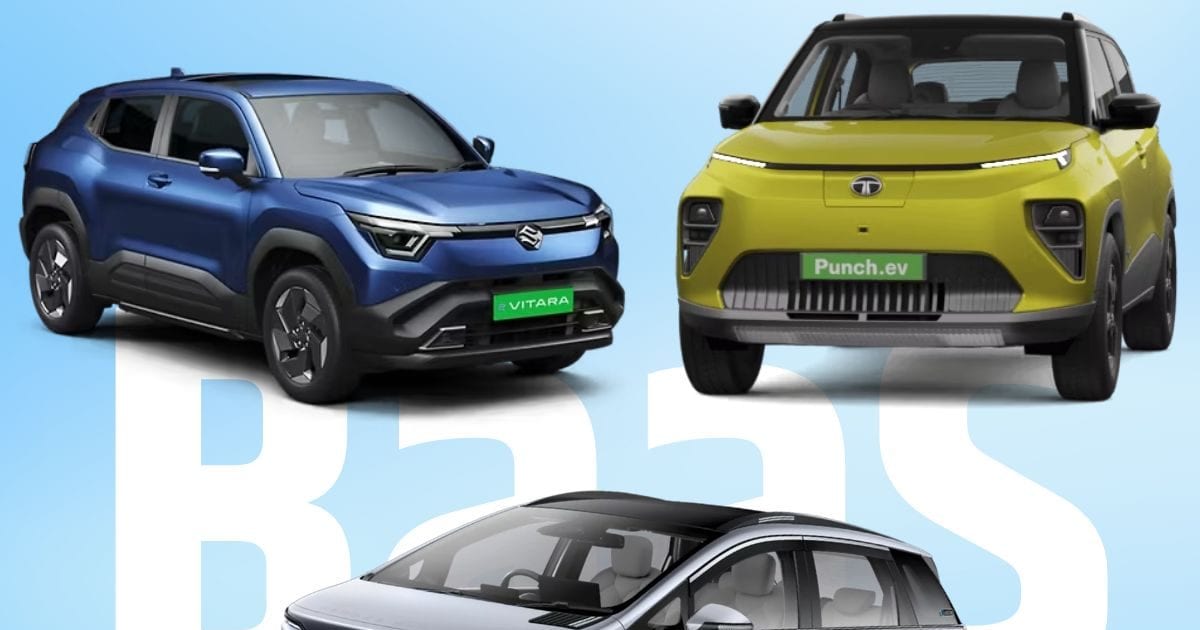
Tata has launched Punch EV facelift on 20 February 2026. The 40 kWh battery is capable of delivering a real world range of 355 km. The normal price is ₹ 9.69 lakh, but it can be purchased with BaaS for only ₹ 6.49 lakh, in which battery rent of ₹ 2.6/km will have to be paid separately. Tata is calling it 'twin EMI', in which the EMI of the car is separate and that of the battery. This can prove to be a game changer for small towns and middle class.
Maruti Suzuki launched its first electric car eVitara on 18 February. The full price of the base variant is ₹ 15.99 lakh, but with BaaS it can be purchased for only ₹ 10.99 lakh, in which battery rent will have to be paid at the rate of ₹ 3.99/km. This fare will increase to ₹4.39/km on the larger 61 kWh variant. Direct savings of up to ₹ 5 lakh are seen upfront. Maruti's large service network and brand trust can make it more popular.
Why is BaaS a game changer?
The biggest hurdle for EVs in India is the upfront cost. BaaS scheme solves this to a great extent. The buyer just buys the car. The battery remains on rent. The upfront savings cover the battery charge for 80,000-1 lakh km even in the long run. Resale value is better because the battery is different. This formula makes buying an EV as easy and cheap as buying an ICE car.
Where will the problem arise?
However, this is not such an easy task. Some challenges are also emerging. Monthly bills may prove costly for those who drive more kilometres. Charging infra is still weak, long trips are difficult. However, government schemes, fast charging stations and aggressive plans of companies will be able to overcome these.