
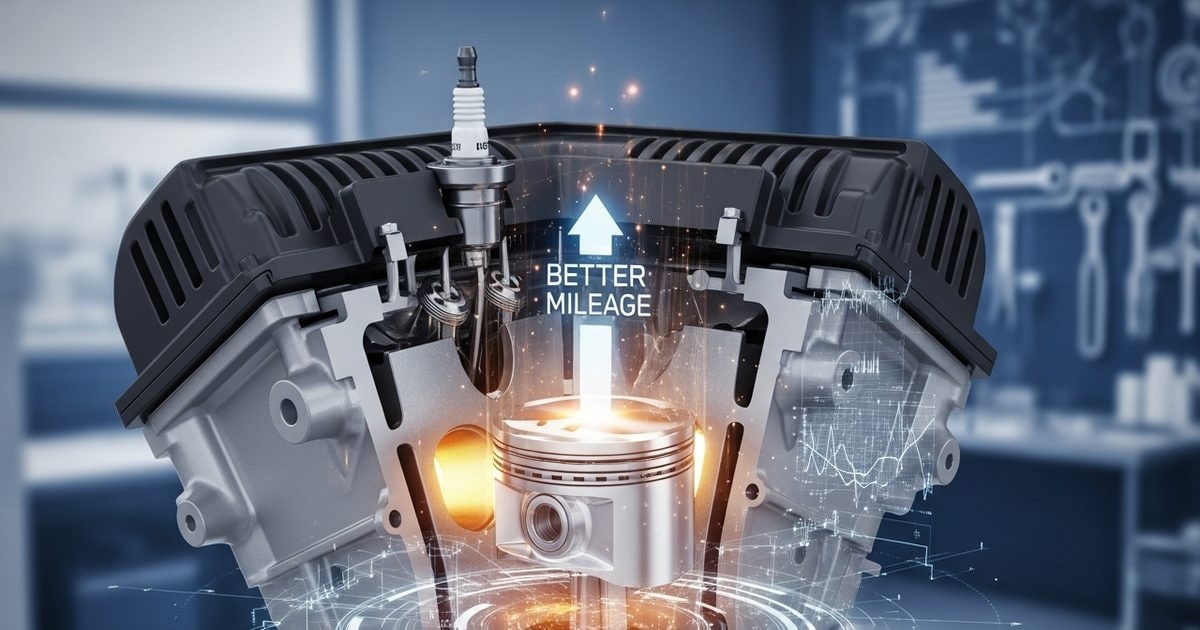
There has been a historic change in the Indian automobile industry. The Central Government has issued new standards for the most important parts of the Internal Combustion Engine (ICE) – the piston ring. The old specifications dating back to 1977 have now been completely updated. The updated standards include revised dimensional tolerances, material requirements and testing procedures.
The purpose of these new rules of Bureau of Indian Standards (BIS) is to reduce carbon emissions from vehicles, increase fuel economy and bring Indian components at par with global standards. This change will have a direct impact on the country's third largest auto market, where the number of vehicles running on petrol and diesel is still the highest.
Why is the piston ring so important?
The piston ring controls the layer of oil on the walls of the piston in the engine cylinder. It returns excess oil to the crankcase while maintaining the correct amount of lubrication. Due to this, there is better combustion of fuel, less friction, along with more power, emissions are also less.
The transport sector is responsible for about 14% of India's total greenhouse gas and particulate matter emissions. In such a situation, the new dimensional tolerances of piston rings, material requirements and updated testing procedures will directly increase the efficiency of vehicles and reduce emissions.
What is the impact on the auto industry?
Big companies like Maruti Suzuki, Tata Motors, Mahindra, Hyundai and Toyota are already following global specifications, so the cost impact will be minimal for them. But the country's auto parts sector (worth about $116 billion in 2026) is mostly based on MSME. These small manufacturers will have to invest in new materials, coating and testing equipment. However, this update is necessary for MSMEs. This will improve their product quality and make them competitive in the foreign market.
ICE's bridge amid EV transition
EVs accounted for only 8% of total new registrations in 2025, which mostly included two-wheelers and three-wheelers. Petrol-diesel vehicles are still ruling the market. In such a situation, this step of BIS will make ICE vehicles more efficient. Auto industry experts believe that these standards will support the EV transition, not stop it. MSMEs will get an opportunity for skilling and phased upgrade, which will not have any major impact on lakhs of jobs.
Strong steps towards sustainable mobility
BIS's new piston ring standards are not just a technical update, but a big signal towards sustainability of the Indian auto sector. This will not only reduce emissions, but Indian components will stand stronger on the global platform. Small manufacturers will have to invest a little, but in the long term this will make the entire industry strong and competitive.