
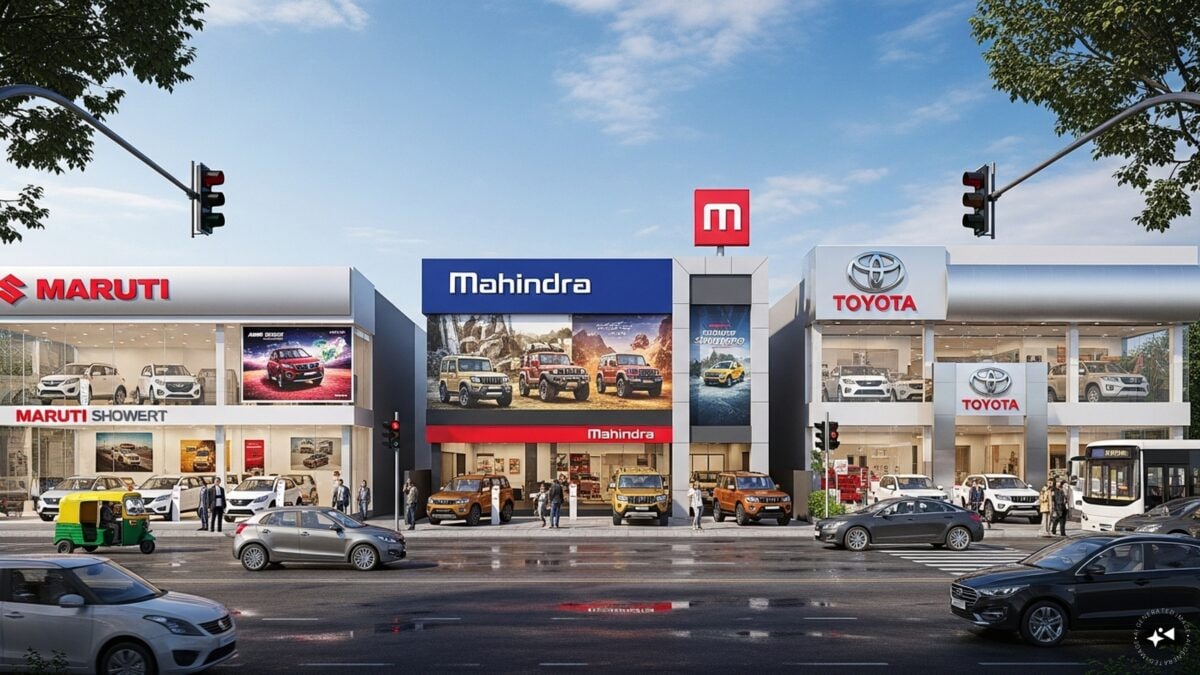
Inflation has increased to buy oil! Indians are shedding money on big vehicles like water.

Inflation has increased to buy oil! Indians are shedding money on big vehicles like water.

New Delhi. May 2026 has been a great year for the Indian automobile industry. On the basis of domestic demand, improvement in rural market, strong exports and increasing popularity of new vehicles, the country's big auto companies have registered tremendous sales. May figures also indicate that despite high interest rates and global uncertainties, the purchasing power of Indian consumers remains strong. Companies like Maruti Suzuki, Hyundai, Mahindra and Toyota have performed strongly in May. The special thing is that this time not only the sales of passenger cars have increased, but good demand has also been seen in tractors, commercial vehicles and hybrid vehicles.

The country's largest car manufacturer Maruti Suzuki has recorded its highest ever monthly sales in May 2026. The company sold a total of 2,42,688 vehicles. Maruti sold 1,93,535 vehicles in the domestic market. Apart from this, 7,239 units were supplied to other OEM companies. The company also exported 41,914 vehicles. This figure shows that the demand for Maruti remains strong in both domestic and international markets.

Great jump in Hyundai sales too

Hyundai Motor India also performed strongly in May. The company's domestic sales increased by 9.1 percent to 47,837 units. The company sent 13,300 vehicles to the export market. In this way, total monthly sales were 61,137 units, which is 4.1 percent more than last year. According to the company's MD and CEO Tarun Garg, domestic sales have increased by 13 percent to 99,739 units in the first two months of financial year 2027 i.e. April and May.

Both Mahindra's SUV and tractor are popular

The month of May was very strong for Mahindra & Mahindra. The company's total auto sales increased by 20 percent to 99,636 units. Mahindra sold 58,021 utility vehicles in the domestic market, which is 11 percent more on annual basis. Globally, utility vehicle sales stood at 59,573 units. In the commercial vehicle segment also, the company sold 24,079 vehicles with a growth of 19 percent. However, the company has also mentioned supply chain challenges due to lack of manpower at some suppliers.

Strong growth of 23% in tractor business

Mahindra's farm equipment business was also successful in performing well. The company sold 47,845 tractors in the domestic market, which is 23 percent more than last year. Total tractor sales stood at 49,695 units. The company says that good harvesting of Rabi crop and better income of farmers has strengthened tractor demand.

Truck and bus business also back on track

Mahindra's Trucks and Buses division sold 3,129 vehicles in May. This is 18 percent more than last year. However, the company believes that high diesel prices and rising costs may put pressure on the profits of fleet operators in the near future.

Toyota made a new hybrid record

Toyota Kirloskar Motor sold a total of 33,128 vehicles in May. This is 7 percent more than last year. Of these, 30,574 vehicles were sold in the domestic market while 2,554 units were exported. May was also special for Toyota because the company crossed the mark of 3 lakh units of sales of its strong hybrid electric vehicles in India. The company says that this achievement reflects the increasing acceptance of hybrid technology in India and the growing trend towards clean mobility.

Reasons behind the surge in sales?

  1. There are many strong reasons behind the record sales of the auto sector in May 2026. The biggest reason is the continued strong domestic demand in the country. Despite high interest rates and global uncertainties, the purchasing power of Indian consumers remains strong. This is the reason why sales in the passenger vehicle segment are continuously creating new records.
  2. Improvement in the rural economy has also given great support to auto companies. Due to timely completion of harvesting of Rabi crop, improvement in farmers' income and favorable business conditions, there has been a sharp jump in the demand for agricultural equipment and tractors.
  3. Now the acceptance of clean mobility and new technologies is also increasing rapidly among Indian customers. Toyota crossing the sales mark of 3 lakh units of its strong hybrid electric vehicles in India is a sign of this change.
  4. The dominance of SUV and utility vehicle segments is also continuously increasing. Customer preferences are shifting from small cars to larger and feature-rich vehicles.
  5. Apart from this, increasing expenditure on roads, highways and other infrastructure projects across the country has kept the demand for commercial vehicles strong. Truck and bus companies have also benefited from the increase in freight and logistics activities.

(With inputs from ANI)
Source link

Indian auto industry faced innovation test amid Chinese EV dominance

Indian auto industry faced innovation test amid Chinese EV dominance

This mismatch is not only a scheduling issue, but a structural defect for managing partner Ravindra Patki in the Vector Consulting Group, between the expectation and the time of delivery. “Around 80 percent of the respondents in our study admitted that the delay is largely internal, not the external. The system slows you,” they say.

Also Read: Indian Auto Industry Next Global Manufacturing Era

Many projects, very few resources

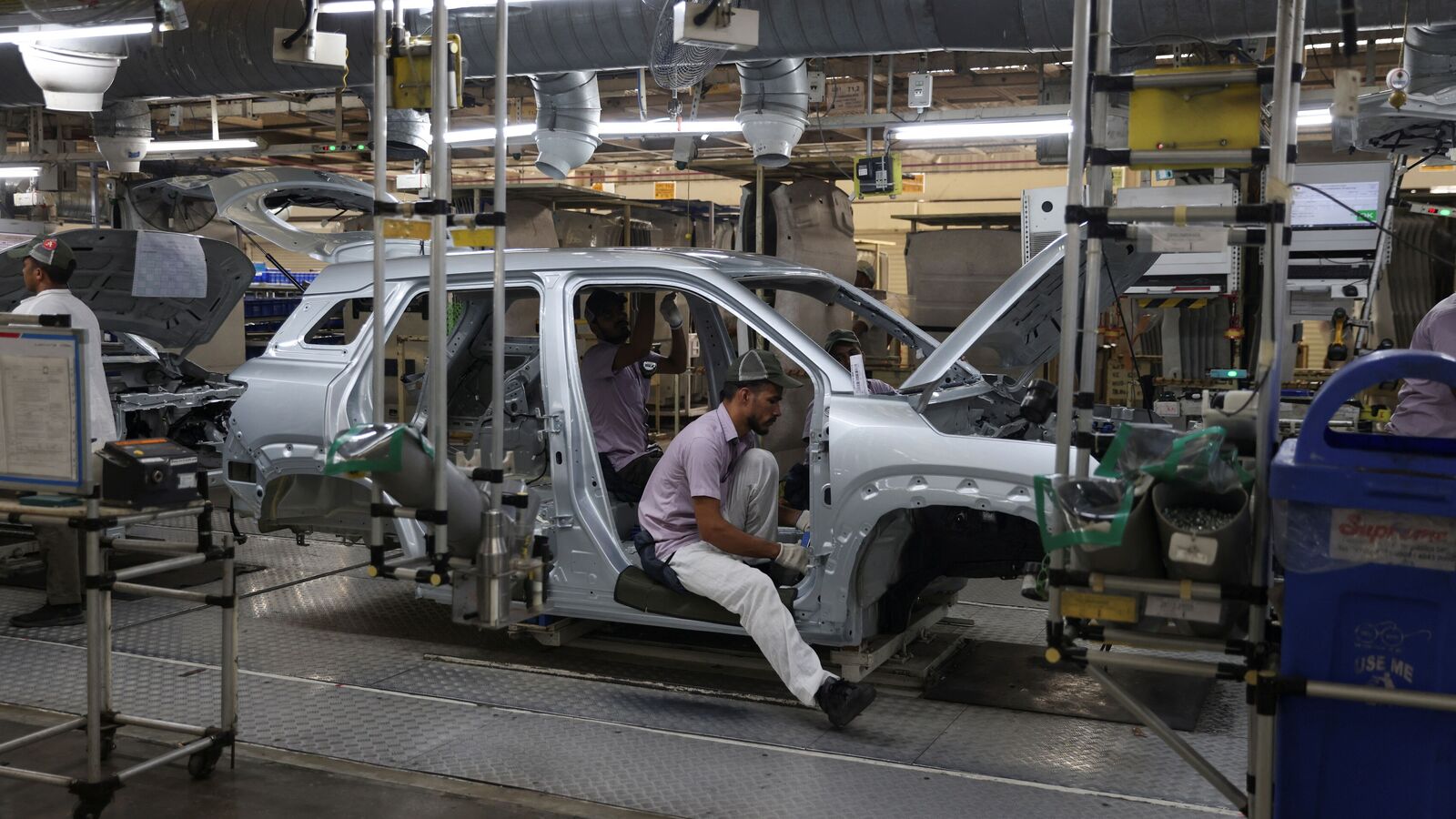
The reflex of the industry has been killed in the market for some time to launch more and more projects in the hope. But this shotgun is the results of the approach. Many parallel projects dilute resources, slow down each initiative and push the “half-cakes” prototype later in the latter.

Engineering changes, which should ideally be caught in the design phase, spread in production and even post-launch, running warranty costs, wasting manpower, and already consumed rare R&D budget. “Resources are not just about money,” Patki noted. “They include time and manpower, both are ruined in this process.”

Chase sugar

The problem is the argument of Patki, not only about speed but also about innovation. While Indian companies struggle with the obstacle of execution, Chinese manufacturers are returning their profit in R&D, creating proprietary technologies that give them flexibility and bargain power in global markets.

ALSO READ: Automotive industry turns into software as new growth engine: Survey

“If Indian constituent manufacturers remain a build-to-print supplier, they will always be sensitive to political changes,” they warns. The proprietary design capacity, by contrast, makes switching suppliers far more difficult. This is a competitive increase, India is in dire need to build.

Resource net

The irony is that the passion of passion with several auto sector projects leaves very little capital for true innovation. Patki says, “The moment we reversed it, and stop wasting resources, we free the money and time required for the real R&D.”

The vector consulting work with a two-wheel manufacturer shows the point. By rationalizing the project workflows, the company increased the output with the same manpower by five to five. The lead time crashed, the cost collapsed, and innovation pipelines finally had a breathing place.

Technology Options and China Question

The debate on the technology strategy is even more pressure. Global peers are largely focused on a major path, EVS or ice, while India is betting on EVS, hybrid, CNG, hydrogen and biofuel. It is clear that the major danger lies in rare Earth magnets and lithium-ion cells in extreme-dependence on China.

Mining rare earth is domestically filled with environment and political challenges, given the dense population of India. “Instead of pursuing China's model, India should invest in magnet-less motors and alternative technologies,” he suggests. Companies like Sona Comstar and Ola are experimenting in this direction, but the scale is limited.

Chips, software and next frontier

The semiconductor is another bottleneck. India has a mineral base to support electronics manufacturing, but the ecosystem is still delicate to create chips on a scale. Patki believes that it would be difficult to disrupt global players installed on top of the series, but India can produce more agitated in emerging technologies such as hydrogen or advanced biofuels.

Meanwhile, reducing dependence on scrap, fuel and other input imports can be freed government money to invest in chip and semiconductor ecosystems. He says, “China's success is not only the industry -led, it is also a government -supported. To compete for India, the ongoing cash must flow in long -term technical stakes,” he says.

Export and flexibility

Trade headwind adds another layer of complexity. US tariffs may endanger a slices of India's $ 6 billion auto components exports, but Patki states that only one-fourth of this volume is at an immediate risk, as most of it is owned or single-source. Nevertheless, the lesson is clear: low -cost manufacturing cannot secure the future of India alone. “Clothing can be replaced overnight, but it is difficult to dislike technology-operated industries,” he said.

For Indian auto industry, bets may not be high. Shrinking product cycles, rising technology costs, and geopolitical risk are all changing to demand reset. Patki explains that less but better projects, more investment in R&D, and make a sharp focus on proprietary technology.

Get insight into state -of -the -art technology changing upcoming cars, electric vehicles, bikes in India and automotive landscape.

First published date: 30 September 2025, 12:36 pm IST

Source link