
Last Updated:
Tata Motors has presented a big roadmap for the next five years for its passenger vehicle business. The company will invest Rs 40,000 crore and wants to achieve the target of annual sales of more than 12 lakh vehicles by financial year 2031. Along with this, a target has also been set to have 20 percent share in the domestic passenger vehicle market, revenue of Rs 1.4 lakh crore and increase the share of electric vehicles to more than 30 percent.
The company will launch 6 brand new vehicles in the next few years.
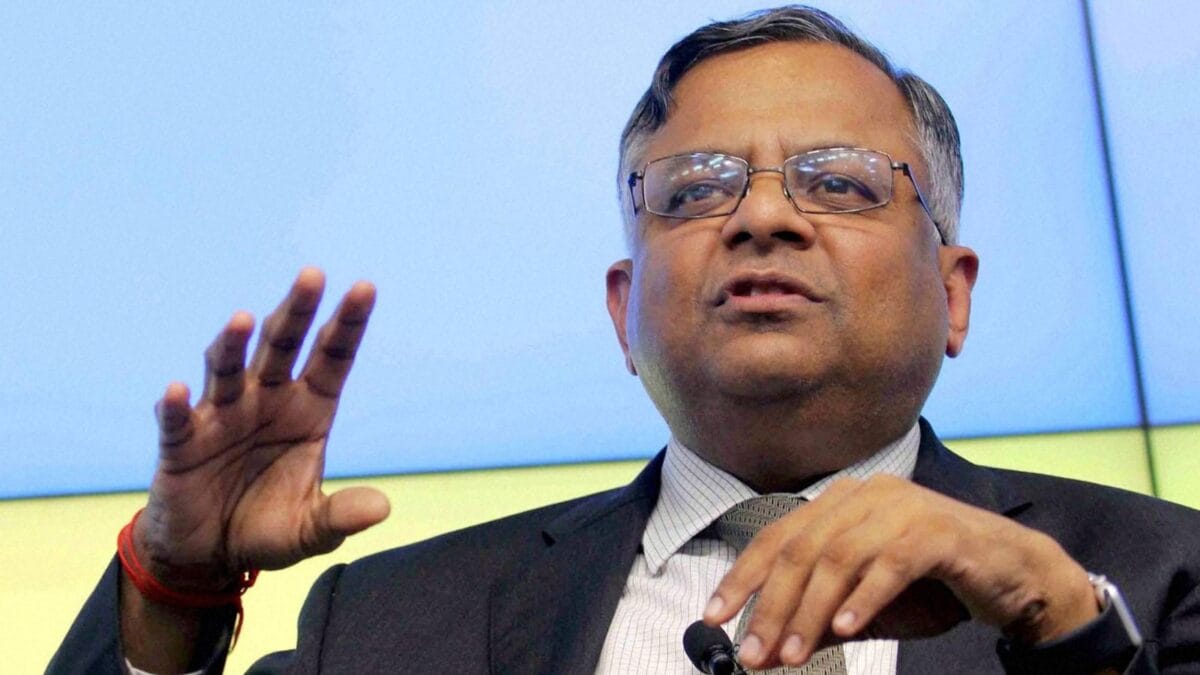
New Delhi. Competition is continuously increasing in the Indian automobile market. Companies are increasingly betting on SUVs, electric vehicles and new technologies. Meanwhile, Tata Motors has also revealed the strategy for the next five years for its passenger vehicle business. The company's aim is not just to launch new cars but also to take a big leap in sales, market share and profits, said company chairman N. Chandrasekaran (N. Chandrasekaran) told in the 81st Annual General Meeting (AGM) that Tata Motors wants to take passenger vehicle sales above 12 lakh units by financial year 2030. At present the market share of the company is 14.2 percent, the target has been set to increase it to 20 percent.
To achieve these goals, Tata Motors will invest about Rs 40,000 crore in the next few years. This amount will be spent on developing new products, increasing manufacturing capacity and new technologies. The company says that through this investment it wants to take its passenger vehicle business to the next level. Besides, a target has also been set to achieve free cash flow of about Rs 10,000 crore.
6 new cars will come, more than 20 models will be updated
Tata Motors will also expand its portfolio. The company will launch 6 new nameplates (6 all-new cars) in the next few years, while more than 20 existing models will be updated. At the standalone level, the company is working on a plan to increase its portfolio to 15 nameplates. Besides, there are preparations to enter those segments also, where it does not have presence yet.
Special focus will be on EV
The company has made it clear that electric vehicles will be an important part of its strategy in the coming years. By the end of financial year 2030, the company wants the share of electric vehicles in its total passenger vehicle sales to be more than 30 percent. The EV market in India is growing rapidly and Tata Motors is already one of the leading companies in this segment. In such a situation, the company will increase investment in new electric models and technology to maintain its lead.
Earning and profit also a big target
Tata Passenger Mobility Managing Director and Chief Executive Officer Shailesh Chandra said that the company wants to achieve a revenue of Rs 1.4 lakh crore by financial year 2031. Along with this, targets of double digit EBITDA margin, more than 5 percent EBIT margin and more than five times the profit before tax (PBT) as compared to the current level have also been set. At the group level, Tata Motors has set a long-term target of revenue of $60 billion, EBIT margin of 10 percent and PBT of $5 billion.
There was an impact on performance last year
The company said that due to the cyber attack on Jaguar Land Rover in the financial year 2026, production was affected for about two months. This also affected the overall business of the company. Tata Motors' consolidated revenue declined by 8 percent to Rs 3.35 lakh crore in FY 2026, while total sales also declined by 1 percent to 9.49 lakh units. Now the company is preparing to achieve rapid growth in the next five years on the basis of new investments, new models and expansion of electric vehicles.
About the Author

I am Jai Thakur, serving as Senior Sub-Editor at News18 Hindi. My main job is to convey complex business news to people in simple language. Be it the movement of the stock market, the impact of the country's economy…read more