These are the 5 best EVs coming with BaaS scheme, starting price only ₹ 4.92 lakh

These are the 5 best EVs coming with BaaS scheme, starting price only ₹ 4.92 lakh

With the increasing popularity of electric vehicles (EVs) in India, the Battery as a Service (BaaS) model has made it easy and affordable for buyers to buy an EV. In this scheme, the price of the battery is separated from the initial price of the car, which reduces the upfront cost significantly and the battery is used by paying a rental fee per kilometer.

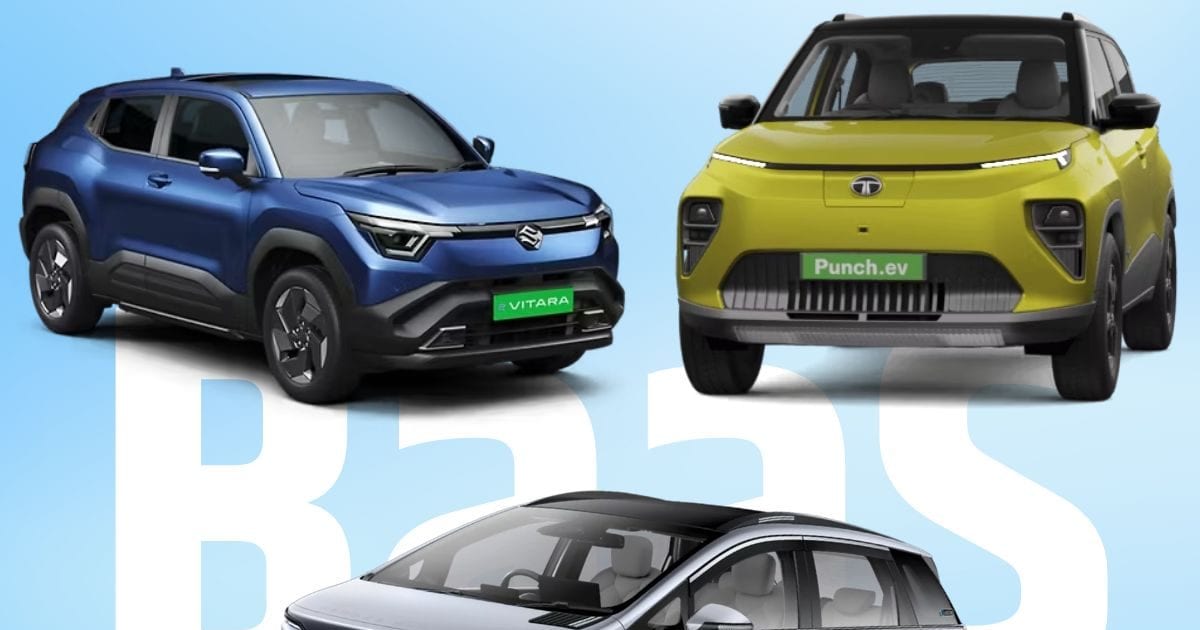
This brings the starting price of EV close to ICE cars, while the running cost remains low. Brands like MG, Tata and Maruti have adopted this model, due to which MG Comet EV is the most affordable, Tata Punch EV is the most affordable and new models like Maruti e Vitara have come in the market. If you are planning to buy an EV with BaaS in the coming days, then we have brought 5 such options for you.

MG Comet EV

Comet EV is India's most affordable EV, which is perfect for short commutes in the city. Its starting price with BaaS starts at ₹4.92 lakh and battery rental is ₹3.2 per km. Whereas, without BaaS it will be available for ₹ 7.63 lakh. It has a 17.4 kWh battery, which gives an ARAI range of 230 km. Features like small size, rear-wheel drive, cruise control, 360° camera and regenerative braking make it a perfect option for the city. The top speed is 100 km/h and it is a compact and low maintenance option for the family.

New Tata Punch EV

Tata Punch EV is a compact electric micro SUV, which offers the most attractive per km charge with BaaS. With BaaS prices starting at ₹6.49 lakh (₹9.69 lakh without BaaS), battery rental is only ₹2.6 per km. It has 30 kWh and 40 kWh battery options and the ARAI range goes up to 365 and 468 km. Features include dual 10.25-inch screens, ventilated seats, 360° camera, iRA connected tech and lifetime battery warranty (first owner). This SUV is best for both city and highway along with looks, ground clearance and safety.

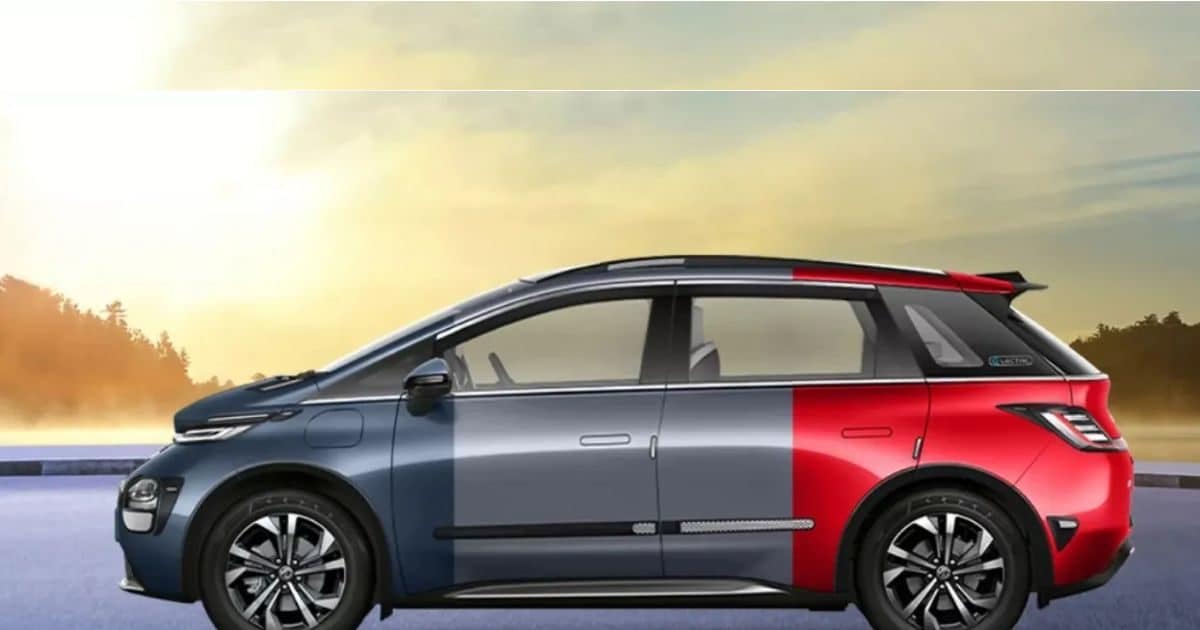
MG Windsor EV

Windsor EV is an intelligent crossover SUV, which gives a premium feel. Price starts at ₹9.99 Lakh with BaaS. Battery rental ranges from ₹3.9-4.5 per km (depending on battery pack). It has 38 kWh and 52.9 kWh battery options, with ARAI claimed ranges of 332 and 449 km. Features include 15.6-inch touchscreen, reclining rear seats, infinity view glass roof, level 2 ADAS, 6 airbags and premium sound system. It is spacious for family use, rear seat experience is excellent.

Maruti e Vitara

Maruti E Vitara is the country's first homegrown electric SUV, which starts at ₹ 10.99 lakh (Delta variant, 49 kWh battery) with BaaS. Battery rental is ₹3.99 per km. In variants with larger 61 kWh pack, fare will have to be paid at the rate of ₹ 4.39/km. Maruti's reliability, 8 years/1.6 lakh km battery warranty, free charging (first year) and assisted buyback make it a better option.

MG ZS EV

The ZS EV is a premium mid-size electric SUV, available with BaaS for just ₹ 13 lakh. Battery rental will have to be paid at the rate of ₹ 4.5 per km. It has a 50.3 kWh battery, which is capable of giving a range of up to 461 km according to ARAI. Features include advanced infotainment, regenerative braking, quick DC charging (0-80% 60 minutes) and good cabin space. It gives better performance on the highway, is strong in safety and practicality.
Source link

MG showed the way, Tata and Maruti raced on it! How right is it to buy EV with BaaS scheme? Know

MG showed the way, Tata and Maruti raced on it! How right is it to buy EV with BaaS scheme? Know

Last Updated:

Buying an EV in India has now become easier than before. After the success of MG Motor India's BaaS model, Tata Motors and Maruti Suzuki have also entered this race. Low upfront cost, separate battery EMI and affordable starting price. Will this really change the EV market? Read the full report.

news immediately

Zoom

BaaS Scheme

Now the real revolution has started in the Indian EV market. MG Motor India showed how it can solve the battery problem that makes EVs expensive by introducing Battery as a Service (BaaS) with the Windsor EV in 2024. Now Tata Motors and Maruti Suzuki have also started on the same path. In February 2026, both the companies have launched electric vehicles with BaaS. The question is, will this completely change the EV market?

MG made BaaS mainstream. The full price of Windsor EV is around ₹ 14 lakh, but on BaaS it remains only ₹ 9.99 lakh + ₹ 3.9 per km battery charge. Comet EV starts at ₹4.99 lakh + ₹3.2/km What's the result? Saving of Rs 4-5 lakh in upfront cost, zero tension of battery degradation or replacement. Perhaps this is why Windsor EV became India's best selling EV. Will Tata and Maruti also be able to do this? Come, let us try to find out.

Tata's 'Twin EMI' scheme

Tata has launched Punch EV facelift on 20 February 2026. The 40 kWh battery is capable of delivering a real world range of 355 km. The normal price is ₹ 9.69 lakh, but it can be purchased with BaaS for only ₹ 6.49 lakh, in which battery rent of ₹ 2.6/km will have to be paid separately. Tata is calling it 'twin EMI', in which the EMI of the car is separate and that of the battery. This can prove to be a game changer for small towns and middle class.

Maruti Suzuki launched its first electric car eVitara on 18 February. The full price of the base variant is ₹ 15.99 lakh, but with BaaS it can be purchased for only ₹ 10.99 lakh, in which battery rent will have to be paid at the rate of ₹ 3.99/km. This fare will increase to ₹4.39/km on the larger 61 kWh variant. Direct savings of up to ₹ 5 lakh are seen upfront. Maruti's large service network and brand trust can make it more popular.

Why is BaaS a game changer?

The biggest hurdle for EVs in India is the upfront cost. BaaS scheme solves this to a great extent. The buyer just buys the car. The battery remains on rent. The upfront savings cover the battery charge for 80,000-1 lakh km even in the long run. Resale value is better because the battery is different. This formula makes buying an EV as easy and cheap as buying an ICE car.

Where will the problem arise?

However, this is not such an easy task. Some challenges are also emerging. Monthly bills may prove costly for those who drive more kilometres. Charging infra is still weak, long trips are difficult. However, government schemes, fast charging stations and aggressive plans of companies will be able to overcome these.

Source link

The hero has arrived and dominated! Ola also got washed away, Vida brand sold 1 lakh electric scooters

The hero has arrived and dominated! Ola also got washed away, Vida brand sold 1 lakh electric scooters

New Delhi. For the first time since entering the electric two-wheeler market three years ago, Hero MotorCorp's Vida brand has crossed the sales mark of 1 lakh units in a calendar year. According to the latest retail sales data available on the Vahan portal, a total of 1,00,383 Vida e-scooters were delivered to customers between January 1 and December 5. Moreover, the total sales of Vida e-scooter have crossed 1.50 lakh units since the brand launch in October 2022.

8% market share
Hero's electric sales journey so far: Currently, Vida has 8 percent market share. 2025 got off to a slow start, with only 1,626 units sold in January. But monthly sales remained more than 6,000 units for four consecutive months from March to June. In July, sales crossed 10,000 units for the first time (10,548 units), and Vida maintained this pace for the next five months.

Highest Monthly Sale
In October 2025, Vida recorded its highest monthly sales in the domestic market with 16,017 units. This impressive performance was also reflected in VIDA's manufacturers rankings: from seventh in January to sixth in February and fifth in March, which it maintained through October. Last month, Vida secured the fourth position, leaving behind Ola Electric.

Battery-as-a-Service Model
VX2 drives Vida's growth, benefiting from low price and battery-as-a-service model and the launch of the family-centric VX2 in July 2025. The company also has a sporty looking V2 in its portfolio. The VX2 and V2 are almost identical in terms of battery, motor and other mechanical parts, but there are two main differences.

left Ola behind
First, the design of VX2 is similar to the traditional family scooters sold in India. Second and most importantly, its purchase price is already quite aggressive, but when purchased through the Battery-as-a-Service (BaaS) model, this price becomes even lower. Due to this, Vida's growth accelerated in the second half of the year and in terms of monthly sales, the company easily left behind the continuously falling Ola Electric.

Source link

Nexon kept watching the show! This car became India's fastest selling EV, broke all records in just 400 days

Nexon kept watching the show! This car became India's fastest selling EV, broke all records in just 400 days

New Delhi. JSW MG Motor India has announced that the MG Windsor has crossed the sales milestone of 50,000 units, achieving this feat in just 400 days since the Windsor production began. After production starts in October 2024, Windsor has become the fastest four-wheeler EV to reach 50,000 sales in India, which shows the demand for this car in India and the trust of buyers on it. This car has challenged the dominance of Tata Nexon EV in India which was the bestselling EV in India before the arrival of Windsor.

This achievement is special
This milestone is special for the company because in the monthly retail data from November 2024 to October 2025, a total of 45,653 units have been sold. The remaining 4,300+ units to reach the 50,000 mark were acquired in just the first 19 days of November 2025, reflecting Windsor's continued high demand and strong daily run rate.

Windsor is becoming increasingly popular
Becoming increasingly popular in India, the MG Windsor EV has managed to sell an average of 3,800+ units per month in the last year, and has often crossed the 4,000 mark in recent months. The demand has come not only from metro cities but also from Tier-2 and Tier-3 markets, which shows the rapidly increasing adaptability towards EV vehicles in India.

variants battery pack ARAI range Ex-showroom price
Windsor EV Inspire Edition 38kWh 332 km ₹ 12.65 lakh
Windsor EV Excite 38kWh 332 km ₹ 14.00 lakh
Windsor EV Exclusive 38kWh 332 km ₹ 15.15 lakh
Windsor EV Essence 38kWh 332 km ₹ 16.30 lakh
Windsor EV Exclusive Pro 52.9 kWh 449 km ₹ 17.25 lakh
Windsor EV Essence Pro (top model)52.9 kWh 449 km ₹ 18.39 lakh

This record breaking success of MG Windsor EV is a clear indication that Indian customers are now enthusiastically adopting electric mobility. After its production begins in October 2024, this electric CUV (Crossover Utility Vehicle) has received an overwhelming response from customers.

  • Sales of 5 units every hour: According to data released by the company, Windsor EV achieved an average of About 5 units per hour Has been sold.

  • Access to Tier-2/3 by Metro: Its demand is not limited only to big metro cities, but this car is becoming increasingly popular in Tier-2 and Tier-3 cities also. This shows that a strong and viable market is emerging for electric vehicles across the country.

There are many reasons behind the rapid success of the Windsor EV, the main two being:

  1. Battery-as-a-Service (BaaS) Model: MG has introduced the BaaS model, which has made it easier for customers to buy EVs. Under this model, the customer can purchase the car by keeping aside the battery cost. low starting price (₹ 9.99 lakh ex-showroom) and later pay the battery rent per kilometer.

  2. Premium Features and Comfort: It is promoted as an 'intelligent CUV'. It has a huge 15.6 inch Grandview Touchscreen Displaybendable up to 135 degrees 'Aero lounge' seats And premium features like Level 2 ADAS (Advanced Driver Assistance System) are available, which make it special in the segment.

Commenting on the achievement, Anurag Mehrotra, Managing Director, JSW MG Motor India, said, “When we launched the Windsor EV, our mission was simple yet ambitious: to offer a mobility solution that is practical, stylish and value-driven. Touching the 50,000 sales mark in record time is a historic moment in India's EV journey.”

Source link