CNG vs EV Cars: Which one is better to buy for going to office? Understand with 5 year calculation

CNG vs EV Cars: Which one is better to buy for going to office? Understand with 5 year calculation

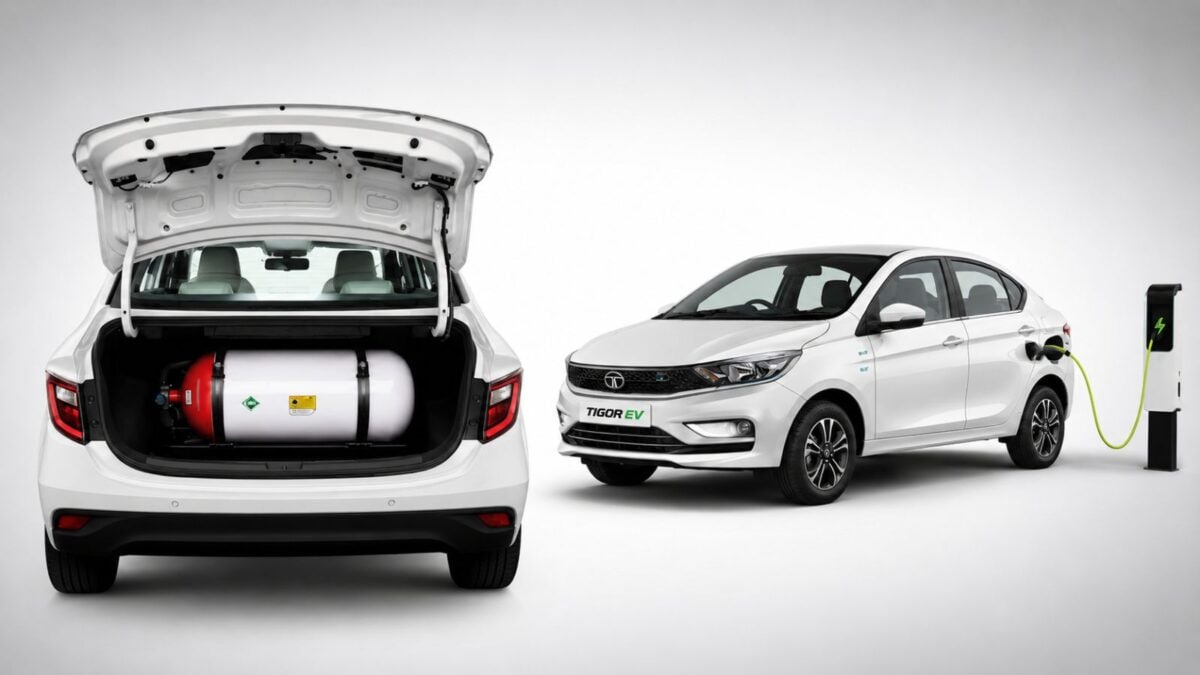
If you are thinking of buying a new car for 5 years, then this question will definitely be in your mind whether to buy CNG or EV car. Which car will put less burden on the pocket? Initially CNG cars seem quite cheap, but as you drive, the mathematics starts changing. Even though the starting price (Ex-Showroom Price) of electric vehicles may be high, their per kilometer expense and servicing cost is much lower than CNG.

In this article we will talk about every aspect like mileage, daily fuel cost, maintenance and resale value after 5 years. We are presenting before you very clear and honest calculations without any bias, so that you can take the most sensible decision as per your need and running (daily driving).

Calculating running costs

The biggest difference in the cost of CNG and electric cars comes here. Talking about CNG car, today the price of CNG is around ₹ 75 to ₹ 85 per kg. If the car gives a mileage of 20 km/kg, then the cost per kilometer comes to around ₹ 3.75 to ₹ 4.25.

At the same time, the average rate of electricity for charging an electric car at home is ₹ 7 to ₹ 8 per unit. A typical EV takes 30 units of electricity to be fully charged (costs approximately ₹ 240) and covers a range of 250 km. In this way the cost of EV comes to only ₹ 1 to ₹ 1.20 per kilometer.

  • If you travel 50 kilometers daily, the daily expense on CNG will be around ₹200, whereas on EV this expense will be only ₹50-₹60.

Servicing and maintenance expenses

Electric vehicles have less moving parts than CNG vehicles. CNG car has petrol engine only, hence engine oil change, air filter, spark plug, coolant and tuning of CNG kit have to be done. Its maintenance cost in 5 years can range from ₹ 30,000 to ₹ 45,000.

At the same time, in an electric car there is neither engine oil, nor piston, nor the hassle of gearbox. In this, only suspension, brake pads and tires have to be taken care of. Its servicing cost in 5 years does not exceed ₹ 15,000 to ₹ 20,000.

5 years complete mathematics

Let us assume that you drive 50 km every day. According to this, there will be a total running of 18,000 km in 1 year and 90,000 km in 5 years. Let us see what the total expenditure will be-

parameters cng car Electric Car (EV)
Starting price (estimated) ₹8.5 lakh (affordable) ₹11.5 lakh (₹3 lakh expensive)
Cost per km (fuel) ₹4.00 ₹1.10
Fuel cost of 90,000 KM ₹3,60,000 ₹99,000
5 years servicing cost ₹40,000 ₹18,000
Fear of changing the battery does not apply 8 Years/1.6 Lakh KM Warranty
Total Expenses (Car+Running+Service) ₹12,50,000 ₹12,67,000

Which is better for you?

It is clear from the above mathematics that after 5 years and 90,000 kilometers of driving, the total cost of both the cars becomes almost equal. If your budget is limited, your daily running is less than 30-40 km and you want to go on long journeys without worrying about charging (Range Anxiety), then CNG is still the best and safest option for you.

At the same time, if your daily running is 50 to 100 km or more, then EV is a boon for you. As the vehicle ages beyond 5 years, EV will save you lakhs of rupees. Also, it gives you a great and smooth driving experience without noise and hassle of changing gears.


Source link

Is it better to buy a new car or drive it on rent? Understand with 5 year calculation

Is it better to buy a new car or drive it on rent? Understand with 5 year calculation

Buy vs Rent: Buying or leasing a car in the Indian market is a big decision, especially when it comes to a popular compact SUV like the Tata Nexon. Nexon is known for its 5-star safety, stylish design, strong performance and good resale value. But amidst rising inflation, fuel cost, maintenance and depreciation, many people ask – is it better to buy for 5 years or use it on monthly rent?

In this article, we make detailed calculations for 5 years taking the example of a mid-variant Tata Nexon (Petrol). We will compare keeping in mind the actual market data, average running (12,000-15,000 km/year), fuel, insurance, servicing and resale value. The result will clearly tell you what suits your needs. Own your own car or choose flexible rental options. Let us all try to understand.

5 Year Complete Maths: Buy or Rent?

The biggest difference between buying a car and leasing it is the responsibility of ownership, initial down payment and maintenance. Let us understand both the options in detail-

Tata Nexon(Buying Option)

If you choose a mid-to-top variant of Tata Nexon, whose on-road price is around ₹ 13,00000, then the 5 year expenses will be like this-

  • Downpayment: Let's assume you make a downpayment of ₹3,00,000.
  • Loan and EMI: If you take a loan for the remaining ₹ 10,00000 at an interest rate of 9% for 5 years, then your monthly EMI will be approximately ₹ 20,758. In 5 years you will pay a total of ₹ 12,45,480 only as EMI.
  • Other expenses: Insurance renewal, periodic servicing, tire replacement and maintenance will add up to an additional expense of at least ₹1,50,000 over a 5-year period.
  • Resale Value: When you go to sell the car after 5 years, you can get back around ₹ 5,50,000 due to the strong resale value of Tata Nexon.
  • Total Net Expenses: ₹3,00,000 (Downpayment) + ₹12,45,480 (EMI) + ₹1,50,000 (Maintenance/Insurance) – ₹5,50,000 (Resale Value) = ₹11,45,480

Subscription option

The monthly rental (inclusive of all taxes, insurance and maintenance) for mid-size cars like the Tata Nexon on leading car subscription platforms works out to be around ₹26,000 to ₹28,000 per month for a long tenure of 5 years. Come, let us understand the complete details-

  • Initial expenses: There is no huge down payment required, only a refundable security deposit of ₹ 30,000 to ₹ 50,000 has to be paid.
  • Monthly Rent: If we assume an average rent of ₹ 27,000 per month, then the total rent for 5 years (60 months) will be ₹ 16,20,000.

Benefit: During this period, you do not have to pay the expenses of insurance, road tax, periodic servicing or any kind of mechanical breakdown, all that is included in the rent amount. However, after 5 years you will not have any ownership rights on the vehicle and you will not get any resale value.

means of expenditure Buying a car Subscription
Downpayment / Deposit ₹3,00,000 (downpayment) ₹40,000 (Refundable Deposit)
Monthly Expenses (EMI / Rent) ₹20,758 (for 5 years) ₹27,000 (average monthly rent)
5 years total payment ₹12,45,480 (EMI total) ₹16,20,000 (Total Rent)
Insurance and maintenance expenses ₹1,50,000 (additional to be paid) ₹0 (included in fare)
Resale value after 5 years ₹5,50,000 (will come back) ₹0 (must return the vehicle)
5 year total net expense ₹11,45,480 ₹16,20,000

What's right for you?

It is clear from the calculations that financially buying Tata Nexon is much more economical than taking it on rent. By purchasing at the end of 5 years, you have a saving of around ₹ 4.5 lakh to ₹ 5 lakh, because in the end the car becomes your asset which can be sold and the money can be recovered.

Who should buy the car?

If you are keeping the car for a long time (5+ years), have the budget for a down payment and want to own the car, then choose the blind buy option.

Who should rent?

If you have come to a city on transfer only for 2-3 years, want to stay away from the hassles of servicing and insurance, or you like to change your vehicle to a new vehicle every few years, then taking a car on rent or subscription would be a wise decision for you.

Source link

hatchback or sedan under ₹10 lakh? Before buying, know which is best for you

hatchback or sedan under ₹10 lakh? Before buying, know which is best for you

Last Updated:

Thinking of buying a new car within a budget of ₹10 lakh, but can't decide between a Premium hatchback and a compact sedan? Both have been compared in detail on important aspects like city traffic, parking, family comfort, boot space and resale value. Know which car will prove to be more profitable for your type of driving and needs and will be the right investment of your hard-earned money.

news immediately

Zoom

hatchback or sedan under ₹10 lakh? Know who is better

The budget of ₹10 lakh is considered a 'sweet spot' in the Indian automobile market. In this budget, customers have many options to choose vehicles with excellent features, strong performance and safety. But the biggest confusion arises when you have to choose between a premium hatchback and a compact sedan.

Both the vehicles have their own merits and demerits. Often people get confused as to which car will be perfect for them according to the heavy daily traffic and family needs. If you are also in the same dilemma, then this news is for you. Let us compare both on the parameters of city traffic, boot space, family size and comfort, so that you can take the right decision for yourself.

City traffic and parking tension

If you live in a metropolitan city like Delhi, Mumbai or Bengaluru, where there is bumper-to-bumper traffic and severe shortage of parking, then a premium hatchback (like Maruti Baleno, Hyundai i20) can prove to be a boon for you.

  • Benefit: The hatchback has a smaller size and less turning radius. It is very easy to turn in narrow streets and park in small spaces.
  • Loss: Compact sedans (eg Maruti Dzire, Honda Amaze) are slightly longer in length, which may make changing lanes frequently in heavy traffic or parking in narrow spaces a bit difficult.

Family size and travel comfort

  • Long Trip and Boot Space: If you have a family of 4 to 5 people and you often go out on weekends, then a compact sedan is the best. In this you get an excellent boot space (dicky) of 350 to 400 litres, in which heavy suitcases can easily fit.
  • Cabin Space: The wheelbase of today's premium hatchbacks is also quite good, due to which the passengers sitting inside do not lack legroom. But after seating five people, there is very little space left for luggage in the hatchback.

Resale value and mileage

Both segments are almost on par in terms of mileage, as both often use the same engine (usually 1.2-litre petrol). However, in the Indian market, the resale value of a compact sedan like Maruti Dezire is slightly better or equal to that of a premium hatchback. From the table given below you can understand which of the two will be best-

Parameters premium hatchback compact sedan
Best Suitability For heavy traffic and daily commute For family trips and long drives
Boot Space (Dicky) Low (about 250-310 litres) More (about 350-420 litres)
Parking and Handling Extreme ease and flexibility a little caution needed
Look and status sporty and modern Classic and 'big car' feel
Popular Option Maruti Baleno,Hyundai i20 Maruti Dzire,Honda Amaze

Final Verdict: What's best for you?

Choose a hatchback if most of your travels are in heavy city traffic, you have a small family and you have to deal with parking problems. Choose a compact sedan if you want the feel of a big car, frequently go on family tours and need large boot space to carry heavy luggage.

About the Author

authoring

Ram Mohan MishraSenior Sub Editor

Ram Mohan Mishra, working as Senior Sub-Editor at News18 Hindi, is active in digital media since 2021 and is currently handling the Auto Desk. They provide car and bike related information in an easy, clear and reliable manner.read more


Source link

Company will quote 25 KMPL, but you will not get even 15? Know the real game before buying a new car

Company will quote 25 KMPL, but you will not get even 15? Know the real game before buying a new car

Everyone dreams of buying a new car. Gleaming cars in the showroom, attractive mileage figures printed on the brochures and the salesman's assurance – 'Sir, it will give 25 kmpl comfortably'. A reality check happens a few months after purchasing the car. In city traffic, with AC on, the mileage drops to 15-18 kmpl in normal driving style. Sometimes it is available up to 30% less.

This is not a human error, but a systematic gap that exists between ARAI testing and real world conditions. Companies attract customers by making tall claims in advertisements, but in reality the customer bears the brunt of expensive petrol. This fraud is so common that every person buying a car should know about it before doing so.

This problem in claimed mileage

ARAI testing takes place in the lab, where perfect conditions are created. The car is run on a dynamometer (roller), the air conditioning is kept off, the driving style is computer simulated and very smooth. The distance is limited and there are no real life problems like traffic, potholes, load or fast acceleration. Result: ARAI figure often appears 20-35% higher. For example, if the company claims 22-25 kmpl, then it is normal to get only 15-18 kmpl in the city.

Why less if you drive yourself?

In the real world, many factors affect mileage. The biggest villain is AC itself. It is difficult to run without AC in the Indian summer, but in the test it is kept off. Idling, bad roads, overloading, fuel adulteration, aggressive driving and high speed highways also contribute to traffic jams. This gap is more visible in small petrol hatchbacks, whereas it is slightly less in diesel or larger engine vehicles. Many users report that the mileage is close to ARAI on the highway, but there is a huge drop in the city.

Companies say wrong?

This problem is not new. Car buyers have been complaining for years. Companies use it as a marketing tool, because mileage is the biggest factor in India. small asterisks in the brochure

It is written with 'ARAI certified, ideal conditions', but the common man ignores it. The result is disappointment after purchase. If we reduce the ARAI figure by 25-30% then a realistic estimate can be made.

  • What to do before buying a new car?
  • Do not trust the ARAI figure, instead look or read real user reviews.
  • Calculate based on your city's traffic, driving style and usage.
  • Check it out yourself on a test drive. With AC on, how much is it giving at normal speed?
  • Maintain correct tire pressure and get regular servicing done.
  • Do not carry unnecessary weight and adopt smooth driving.

Also consider CNG or hybrid options.

Source link

What is the difference between NA and turbo engine? Who will give more mileage, know what is right for you

What is the difference between NA and turbo engine? Who will give more mileage, know what is right for you

Last Updated:

Choosing between NA and turbo engine is the most difficult decision when buying a car. Should you go for the smooth and frugal NA engine or the powerful and fun turbo? City traffic, highway driving, mileage and maintenance. Keeping every aspect in mind, know here which engine is perfect for your needs.

news quickly

Zoom

What is the difference between NA and turbo engine? Know

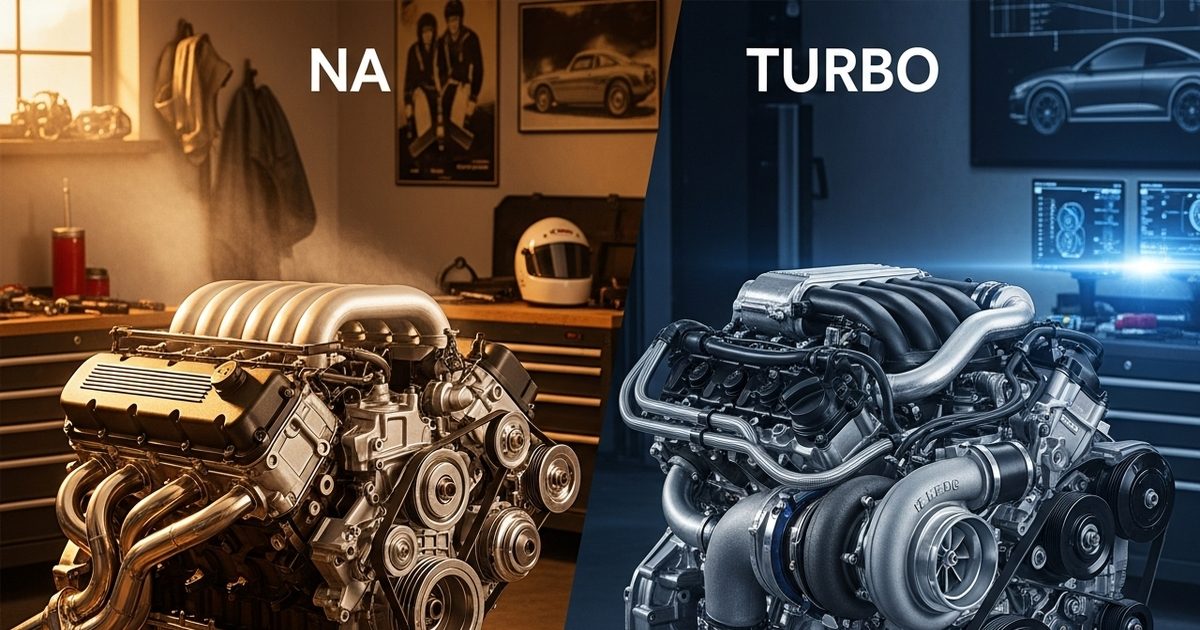
The biggest question while buying a car is whether to buy a naturally aspirated (NA) engine or turbocharged? This decision is not easy amidst the rising petrol and diesel prices in India, city traffic and long driving on the highway. The NA engine is considered a simple and reliable option of the old times, while the turbo engine attracts performance lovers by extracting more power than even a small engine.

Both have their advantages and disadvantages. If you travel 20-30 kilometers daily in the city or like to drive fast on the highway, then it is important to understand which engine will suit your needs. In this article, we will explain the technical differences, advantages and disadvantages of both the engines and the right purchasing decision.

NA engine

In NA i.e. Naturally Aspirated engine, air comes in naturally through the intake manifold. When the piston goes down, a vacuum is created in the cylinder and the atmospheric air automatically goes out. There is no additional pump or turbine in it. Due to this, the response is immediate, the car starts easily in any weather, be it hot or cold, morning or evening. Torque and power depend on the size of the engine. For example, the 1.2 liter NA petrol engines of Maruti Swift or Hyundai Grand i10 run very smoothly at city speeds.

turbocharged engine

A turbocharged engine uses a turbine driven by exhaust gases. This turbine rotates the compressor, which presses and burns more air and fuel in the engine. Even a smaller 1.0 or 1.2 liter engine gives 100-120 bhp power and ample torque. The turbo engines of Tata Nexon, Kia Sonet or Mahindra XUV300 are fun to overtake and load on the highway. But there is a problem of 'turbo lag'. The power comes on suddenly at low RPM, which makes it feel a bit awkward in city stop-go traffic.

Maintenance and cost

Talking about maintenance and cost, NA engine is cheap and simple. Servicing is easy, parts are cheap and the risk of breakage is low. Servicing becomes expensive due to turbocharger, intercooler and more sensors in turbo. If your annual driving is less than 10-12 thousand kilometers and mostly in the city, then NA engine will be better in terms of fuel economy and low cost.

If you travel at a speed of 120-140 km/h on the highway, take a long trip with the family or have luggage loaded in the car, then the turbo engine will give more fun and power. Small engines with turbo often give better mileage than big engines with NA.

The right choice as per your need-

  • City, Low Budget, Low Maintenance- NA Engine (Swift, Baleno, i10)
  • Performance, Highway, Overtaking- Turbo Engine (Nexon, Sonet, Venue)
  • Mileage and Balance – 1.0 liter turbo petrol the smartest choice

About the Author

authoring

Ram Mohan MishraSenior Sub Editor

Ram Mohan Mishra, working as Senior Sub-Editor at News18 Hindi, is active in digital media since 2021 and is currently handling the Auto Desk. They provide car and bike related information in an easy, clear and reliable manner.read more


Source link