This car of Maruti is best for people buying their first car, know the price
Last Updated:
Best Maruti Cars For First Time Buyer: Planning to buy your first car, but not sure which car will be the best? Keeping in mind the budget, mileage, safety and features, Maruti Suzuki's Celerio, Dzire, Fronx and Brezza are considered to be the strongest options. Which of these cars will prove to be the most value for money for you, know the complete comparison here from price to mileage and features.
Maruti Celerio CNG: Celerio CNG is a very practical and affordable option for first-time car buyers and budget-conscious customers. Its ex-showroom price in Delhi starts from ₹ 5,97,900. Talking about the design, this hatchback has been given a modern and sporty '3D Organic Sculpted' look. Due to its compact size, it becomes very easy to drive and park in congested urban roads and narrow streets.
In the interior of this car you get ample space, comfortable seats and boot space of 313 liters. In terms of features, it has important features like key-less entry and power adjustable ORVMs. For safety, it has been provided with safety features like pedestrian protection, rear defogger and ABS with EBD. Its 998 cc K10C engine generates about 56 horsepower on CNG, which is enough for city driving. Most importantly, this car gives an excellent mileage of around 34.43 km/kg.
Maruti Dzire: If you want to buy a premium and stylish sedan as your first car, then Maruti Dzire is the best option. Its ex-showroom price starts from ₹ 6,25,600. Its fresh new look, attractive LED headlamps and premium grille give it a great road presence on the road. Its three-box sedan design is very much liked by those people who are looking for a classic and stylish vehicle.
Add News18 as
Preferred Source on Google
The interior of Dezire comes with dual-tone finish, which gives a very luxurious and ventilated feel to the cabin. It has modern features like 9-inch SmartPlay Pro+ touchscreen, wireless charger, rear AC vents and 360-degree camera. In terms of safety, it is one of the safest cars in the country, which has received 5-star safety rating from Global and Bharat NCAP and it has 6 airbags and ESP as standard. Its new 1.2-litre Z-series engine gives an excellent mileage of 24.79 km/litre on petrol and 33.73 km/kg on CNG.
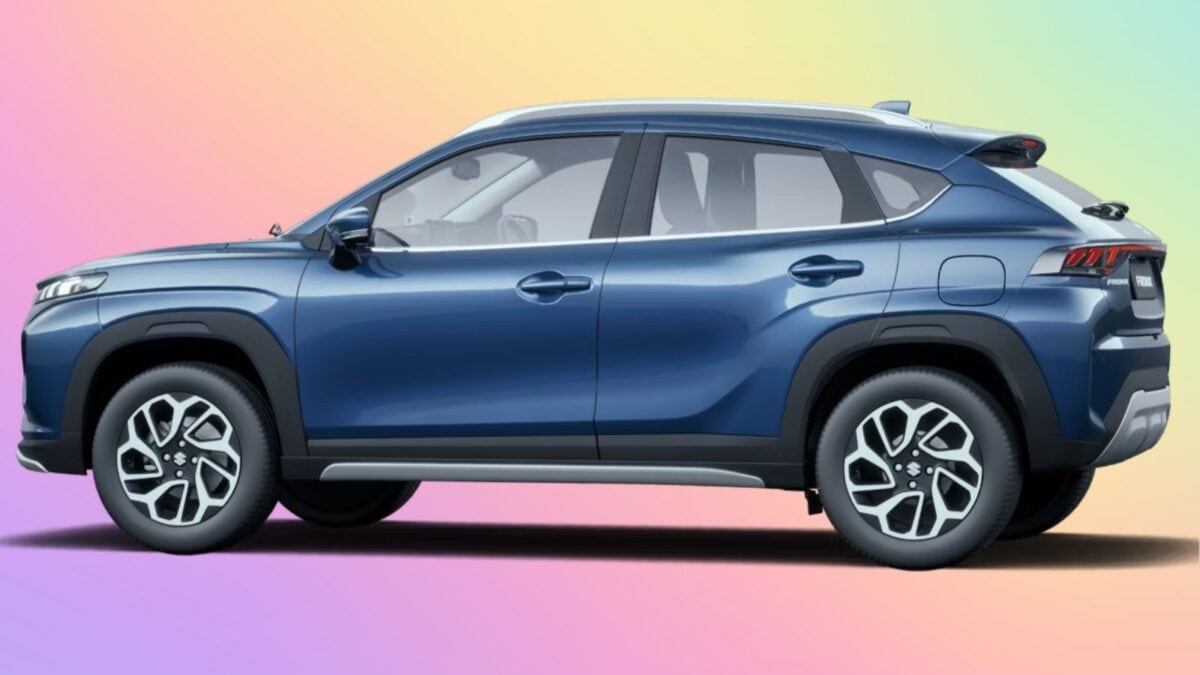
Maruti Fronx: Maruti Fronx is a perfect crossover for those who want a modern, sporty and SUV looking car in the first go. Ex-showroom price of Frontex starts at ₹ 6,84,900. This car is very spectacular in terms of design. Its coupe-like sloping roofline, large grille and ground clearance of 190mm give it a muscular and aggressive look, which attracts the youth a lot.
Inside you get to see a premium interior with dual-tone plum and black theme. The list of features includes heads-up display, cruise control, connected car tech and wireless Android Auto/Apple CarPlay. In terms of safety, it has been provided with 6 airbags, Electronic Stability Program (ESP) and hill-hold assist. The Bronx has the option of 1.2-litre naturally aspirated engine and 1.0-litre turbo-petrol engine. This car is capable of giving a mileage of approximately 21.79 km/liter on petrol and 28.51 km/kg in CNG variant.
Maruti Brezza: If your preference is a proper compact SUV with a strong, large and commanding seating position, then Maruti Brezza should be your first choice. Ex-showroom price of Brezza starts at ₹ 8,25,900. Its bold and geometric design, dual LED projector headlamps and large alloy wheels give it the powerful look of a real SUV. The dominance of this vehicle is clearly visible on the roads and its visibility is also amazing.
The interior of Brezza offers a lot of legroom and headroom, making it very comfortable for long trips. It has modern features like electric sunroof, 360-view camera, paddle shifters (in automatic) and fast-charging ports. For safety, 6 airbags and strong Heartect platform have been used in it. It has a big and powerful 1.5-litre advanced K-series engine which is quite refined. This SUV gives a tremendous mileage of about 19.89 km/liter on petrol and 25.51 km/kg on CNG mode.