
Small SUV vs Big SUV: What is best according to budget, mileage and family? Know

Small SUV vs Big SUV: What is best according to budget, mileage and family? Know

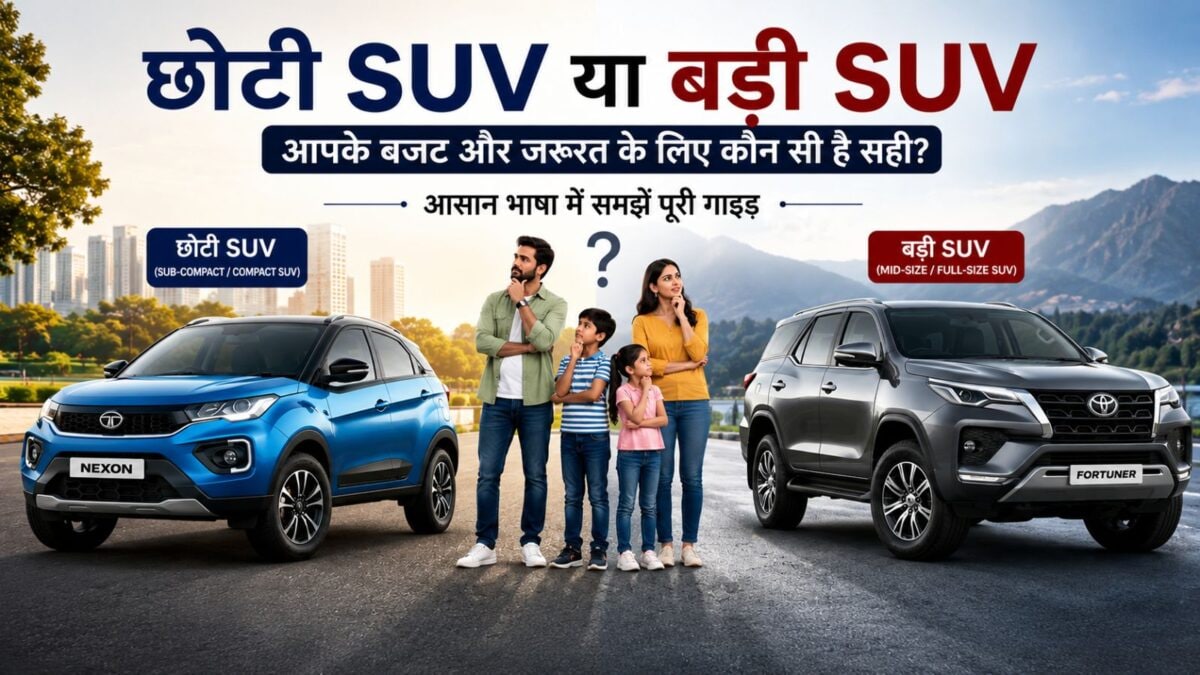
Small SUV vs Big SUV: While buying a new car for their family, people often get confused whether a small SUV (Sub-compact/Compact SUV) will be right for them or a big SUV (Mid-size/Full-size SUV) is better. Today, there are excellent options available in the Indian automobile market in every budget and size, due to which it becomes a bit difficult to make the right choice. A car is not just a vehicle, but a part of family comfort, safety and travel memories.

Therefore, a hasty decision without understanding your needs may prove costly later. Do you have to deal with heavy city traffic every day, or go on long trips with the whole family every weekend? Come, let us understand in very simple language which SUV will prove to be perfect for you according to your budget, space and lifestyle.

Impact on budget and pocket

If your budget is between ₹ 8 lakh to ₹ 15 lakh, then small SUVs are the best option for you. In these you get sunroof, big touchscreen and excellent safety features even at a low price. At the same time, big SUVs usually start from ₹ 15 lakh and go up to ₹ 25-30 lakh or above. Not only the purchase price, but also the maintenance and insurance of small SUVs is much cheaper than big SUVs.

Mileage and performance

In today's time, fuel prices are skyrocketing, hence mileage is a big factor. Small SUVs usually have low CC (1.0L to 1.5L) engines, which give good mileage (about 15 to 20 km/l) both in the city and on the highway. In contrast, larger SUVs have heavier and more powerful engines. These vehicles will give you strong performance and excellent pickup, but due to heavy weight, their mileage is less (about 10 to 14 km/litre).

Space, seating and comfort

This is where the size of your family matters the most. If your family consists of 4 to 5 people, then the cabin of a small SUV and its 350-400 liter boot space will be enough for your weekend trips. But if you have a joint family or relatives often travel with you, then you should go for a 6 or 7-seater large SUV. Big SUVs not only offer more legroom and headroom, but you can also keep a lot of luggage by folding the third row.

Driving and parking convenience

If you live in a crowded city like Delhi-NCR, where there is a huge problem of traffic jams and parking, then a small SUV will prove to be a boon for you. It is very easy to turn them in narrow streets and park in small spaces. Large SUVs can be a bit challenging to handle in city traffic, however, their road presence and stability on the highways are excellent.

parameters Sub-compact / Compact SUV Mid-size / Full-size SUV
seating capacity mainly 5 seater 5, 6 and 7 seater options
estimated budget ₹8 lakh to ₹15 lakh ₹15 Lakh to ₹30 Lakh+
mileage High (15 – 20 km/l) Low (10 – 14 km/l)
Engine and Power 1.0L – 1.5L (Economic) 2.0L+ or Turbo (more power)
Parking and Driving good for urban traffic best for highway

What's better for you?

Buy a small SUV when you have a small family, budget is limited, most of the driving is within the city and you want better mileage. Buy a big SUV when you have a large or joint family, no budget issues, often go on long drives or off-roading and you want a strong look on the road.
Source link

EMI Calculator Tips: Save interest up to ₹ 1.5 lakh while buying a new car

EMI Calculator Tips: Save interest up to ₹ 1.5 lakh while buying a new car

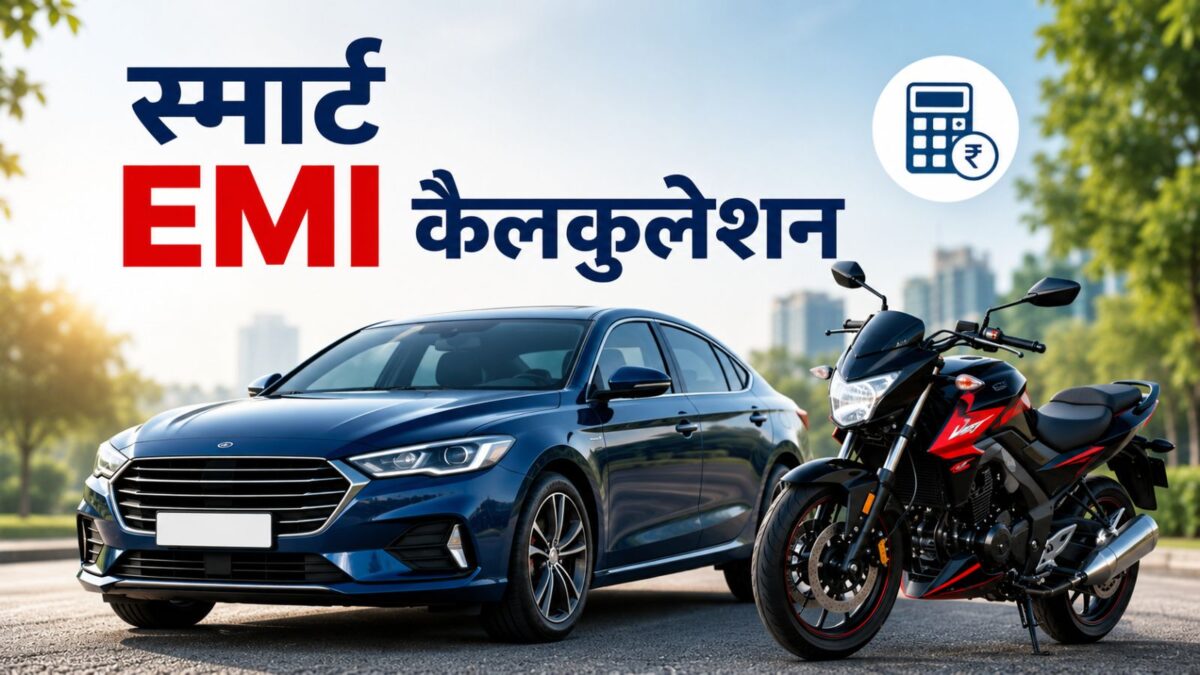
Everyone dreams of buying a new car or bike, but often people get trapped in the attractive finance offers available at showrooms. Instead of relying on the math told by the dealer, if you just spend 5 minutes using the EMI calculator on your mobile before going to the showroom, you can save thousands of rupees.

This small online tool helps you strike a perfect balance between loan tenure, interest rate and downpayment, thereby reducing the extra interest to the bank to less than half. Avoid being out of pocket by being a smart buyer and decide your monthly installment as per your budget. Come, let us know how this can happen?

Loan Mathematics: How to avoid dealer's trap

When you go to a car showroom, the sales executive there offers you the lowest down payment and long term loan (like 7 or 8 years). This deal looks very attractive because it reduces your monthly installment (EMI) a lot. But this is where common people make mistakes. The longer the loan tenure, the more interest you will pay to the bank.

Online EMI calculator takes you out of this trap. Before going to the showroom, compare the interest rates of different banks and enter the loan amount in the calculator to see how much money is actually going to go out of your pocket in the form of interest.

'Perfect balance' of down payment and interest rate

The most basic mantra to save your hard-earned money is – higher down payment and shorter loan tenure. While using the EMI calculator, follow the three steps given below-

Increase down payment: If you pay 30% to 40% of the total price of the vehicle as downpayment in advance, the loan amount (principal amount) gets reduced. Less loan amount directly means less interest.

Keep the duration short: Always try to ensure that the car loan is not for more than 3 to 5 years and the bike loan is not for more than 2 to 3 years. Adjust the tenure in the calculator to see which EMI suits your monthly income.

Comparison of interest rates: Put the interest rates (ROI) of different banks into the calculator and check how much a difference of 0.5% or 1% affects your total payment.

Understand with a small example

Suppose you are buying a car worth Rs 10 lakh and the bank is offering an interest rate of 9%. Let's see how much difference two different decisions make using an EMI calculator:

parameters without planning smart planning
down payment ₹1 lakh (10%) ₹3 lakh (30%)
loan amount ₹9 lakh ₹7 lakh
loan tenure 7 years (84 months) 5 years (60 months)
Monthly EMI ₹14,510 ₹14,530
total interest ₹3,18,837 ₹1,71,777

The truth about big savings: Look at the table given above carefully. In both the options, your monthly out-of-pocket installment (EMI) is almost equal (around ₹ 14,500). But by increasing the downpayment by just ₹2 lakh and reducing the loan tenure by 2 years, you directly save interest of ₹1,47,060! This is smart planning done through online EMI calculator.

Also keep an eye on processing fees and hidden charges

After getting an accurate estimate from the EMI calculator, when you talk to the bank or dealer, ask them about foreclosure charges (fees for premature closure of the loan) and processing fees. Many times banks show low interest rates and charge huge amounts in the name of file charges or processing fees. When you know the base figure through a calculator, no one will be able to mislead you financially.

Our advice: In the digital era, it is wise not to take financial decisions hastily while sitting in a showroom cabin. Next time whenever you decide to buy a new bike or car, first of all open the 'EMI Calculator' of any trusted website or bank on your mobile, try different combinations and deal with the dealer with full confidence.

Source link