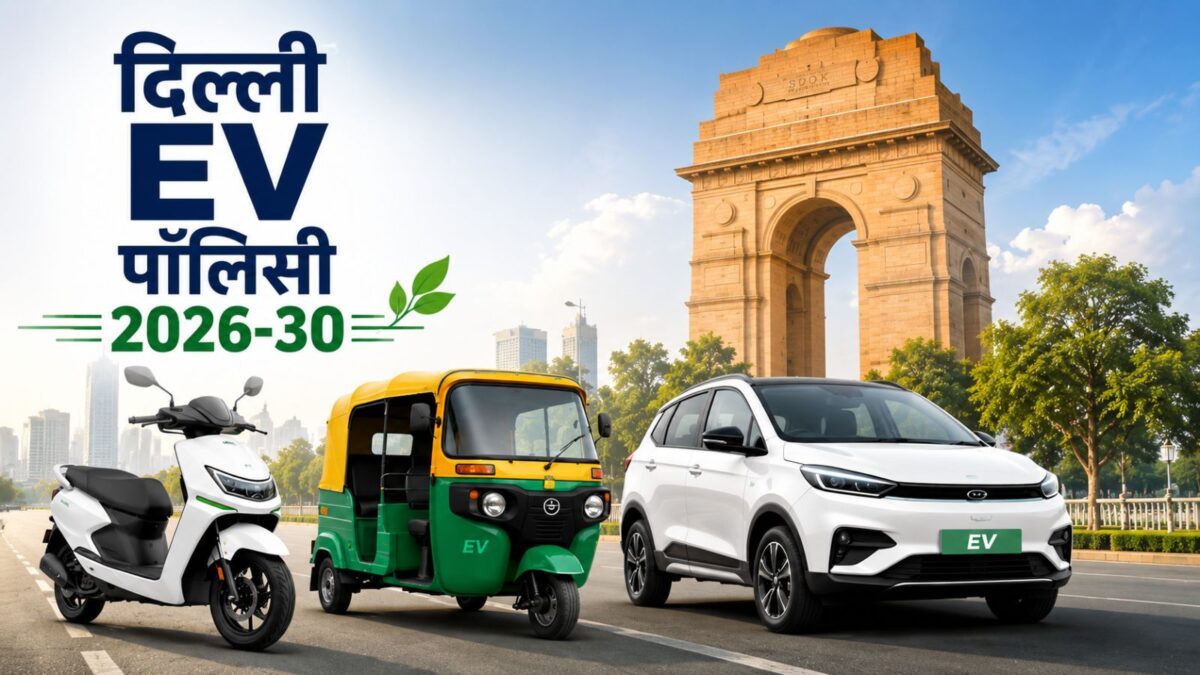
The people of Delhi are crazy! You will get benefit of up to ₹ 1 lakh on buying a new car

The people of Delhi are crazy! You will get benefit of up to ₹ 1 lakh on buying a new car

Last Updated:

The draft of Delhi Government's new EV Policy 2026-30 has brought many big benefits for the common people. Proposals like subsidy of up to ₹ 30,000 on electric two-wheelers, scrapping incentive of ₹ 1 lakh on four-wheelers and 100% exemption in road tax are under discussion. Along with this, major rules which will be implemented from 2027 and 2028 have also come to the fore. Know what effect this new policy will have on you.

news immediately

Zoom

Know what has been offered in the new EV policy.

Delhi government has released the draft of the new EV Policy 2026-30 to reduce pollution and promote electric vehicles. Under this policy, electric two-wheeler buyers will get Rs 30,000 subsidy in the first year, three-wheeler buyers will get Rs 50,000 subsidy. Also, scrapping incentive of Rs 1 lakh will be given to BS-IV four-wheeler owners.

According to the policy, only electric autos will be registered from January 2027 and only electric two-wheelers will be new registered from April 2028. This policy is a big step towards improving the air quality of Delhi and reducing vehicle pollution (which causes about 23% of pollution in the capital).

Push EV Cell

The government aims to increase the share of EVs in new vehicles and to phase out old polluting vehicles. Subsidy will be given through Direct Benefit Transfer (DBT). The buyer should be a resident of Delhi and the vehicle should be registered in Delhi only. You will also get 100% rebate in road tax and registration fees on purchasing EV (on EVs up to Rs 30 lakh, till March 2030).

How much subsidy on two-wheeler?

The subsidy for two-wheelers has been decided on the basis of battery capacity (kWh). Rs 10,000 per kWh in the first year, maximum Rs 30,000. This will be limited to Rs 20,000 in the second year and Rs 10,000 in the third year. For three-wheeler (L5M), subsidy of Rs 50,000 (first year), Rs 40,000 (second) and Rs 30,000 (third year) will be available. There will be huge incentives for electric goods vehicles also.

Scraping incentive will also be available

Scrapping incentive will be available on scrapping old BS-IV or older Delhi registered vehicles and purchasing a new EV. Rs 10,000 on two-wheeler, Rs 25,000 on three-wheeler, Rs 1 lakh on four-wheeler and up to Rs 50,000 on goods vehicle. A new EV will have to be purchased within six months of scrapping. This model will encourage the adoption of EV along with the removal of old vehicles.

The policy also includes expansion of charging infrastructure, swappable battery stations, financing facilities and single window clearance. The target of 30% EV fleet in school buses has been set by 2030. The government estimates that this will lead to a major reduction in vehicle pollution and Delhi will move towards clean air.

who said what?

Rekha Gupta, Chief Minister

  • Cabinet approves new EV policy.
  • After the approval of LG, it will be implemented from July 1, 2026.
  • The policy will remain effective till 31 March 2030.
  • About ₹7,000 crore will be spent on the policy.
  • Exemption in road tax and registration fee on pure EV.
  • No subsidy to hybrid vehicles.
  • No cap on EV purchase, benefits even on more than one vehicle.

Niharika, Transport Commissioner

  • Incentives up to ₹30,000 on two-wheelers, ₹50,000 on autos and up to ₹1 lakh on N1 e-trucks.
  • Additional incentive on scrapping of old vehicles.
  • From January 1, 2027, new three-wheelers and N1 trucks will be registered only as EVs.
  • From April 1, 2028, new two-wheelers will be registered only as EVs.
  • 23,000 EV charging points will be installed during the policy period.
  • The school bus fleet will be converted to EV in a phased manner.
  • The focus of the policy is to reduce pollution caused by commercial vehicles.

Ashish Sood, Electricity Minister

  • As EVs increase, power infrastructure will be expanded.

Dr. Pankaj Singh, Transport Minister

  • The interests of Delhiites have been fully taken care of in the EV policy.
  • Appeal to people to adopt EV policy.

Manjinder Singh Sirsa, Environment Minister

  • The new EV policy will be a big step towards reducing pollution.
  • The policy has been prepared on the basis of scientific studies.
  • The policy is expected to significantly reduce Delhi's pollution levels.

About the Author

authoring

Ram Mohan MishraSenior Sub Editor

Ram Mohan Mishra, working as Senior Sub-Editor at News18 Hindi, is active in digital media since 2021 and is currently handling the Auto Desk. They provide car and bike related information in an easy, clear and reliable manner.read more


Source link

Delhi lifts GRAP 3 restrictions, anti-pollution campaigns will continue with full force

Delhi lifts GRAP 3 restrictions, anti-pollution campaigns will continue with full force

  • Delhi has lifted GRAP 3 after a sharp improvement in AQI, but authorities continue strict enforcement against vehicle emissions, dust, waste and industrial pollution sources.

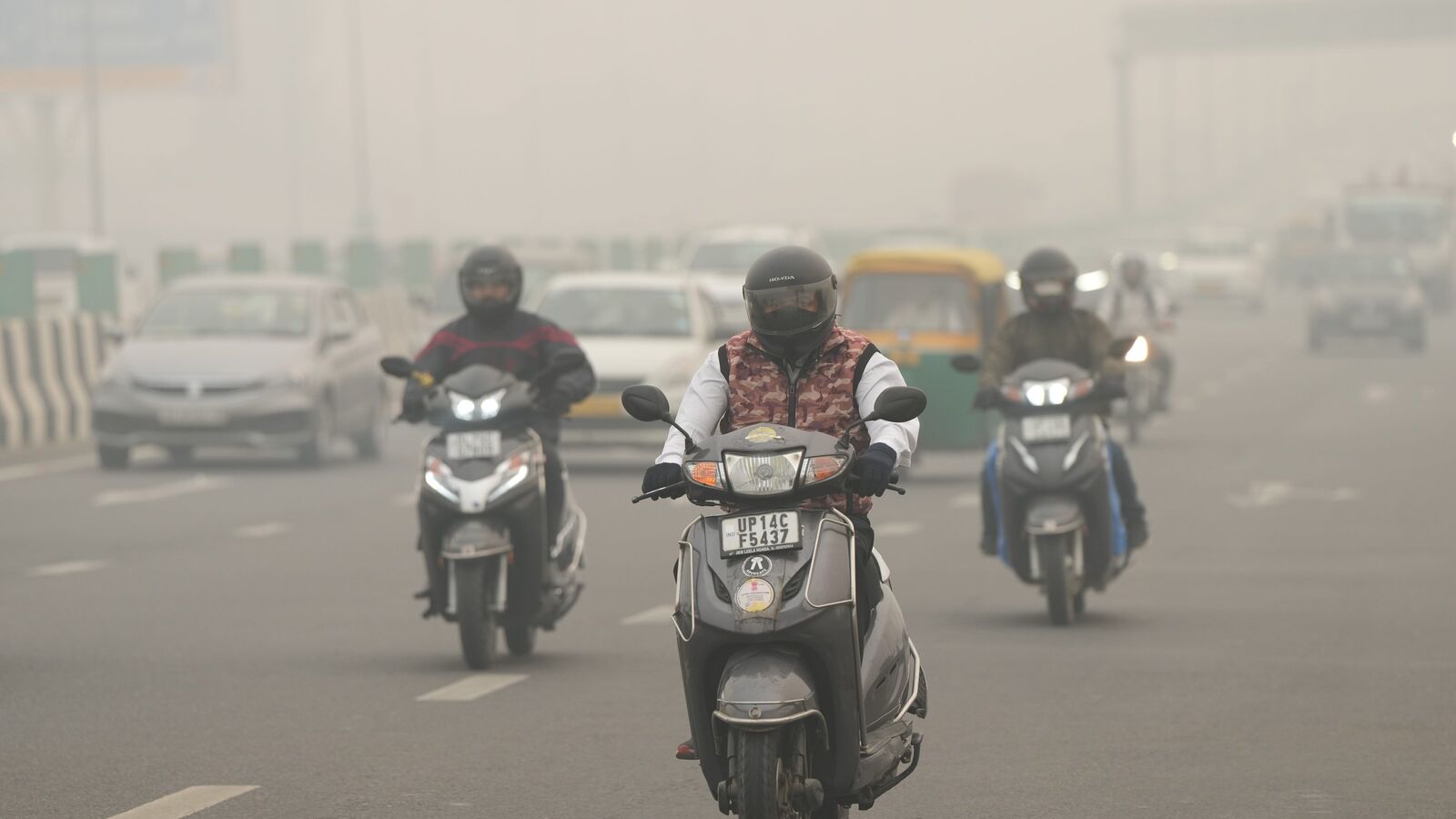
Vehicles are back on Delhi's roads as air quality improves and GRAP 3 restrictions are lifted, although anti-pollution enforcement continues. (HT_PRINT)

Delhi Environment Minister Manjinder Singh Sirsa on Friday said the removal of Stage 3 restrictions under the Graded Response Action Plan (GRAP 3) does not mark a lull in anti-pollution efforts, adding that grassroots enforcement in the national capital will continue with the same intensity.

He said the withdrawal of restrictions should be seen as a response to improvement in air quality and not as a sign of ease in monitoring, as agencies have been directed to continue field-level action without any interruption.

AQI has declined significantly

Sirsa said the sub-committee of the Commission for Air Quality Management (CAQM) took the decision to revoke the GRAP 3 restrictions after seeing significant improvement in air quality. Delhi's air quality index (AQI) fell sharply from 380 to 236 within 24 hours, an official statement said.

Bawana recorded an AQI of 141, placing it in the 'good' category, officials said, reflecting the impact of intensive anti-pollution measures implemented on the ground.

Also read: New policy nears implementation, Delhi ready for its next EV phase

Action on major pollution sources

The Environment Minister said that after sustained efforts to control major pollution sources such as vehicle emissions, industrial effluents, dust and open dumping, GRAP 3 restrictions were lifted on Friday.

“We are encouraged by the progress, but this is not the time to relax. Grassroots action will continue with the same strength to consolidate the gains we have made,” Sirsa said.

Citywide enforcement activity

Data shared by the environment department shows that there has been massive enforcement activity across Delhi in the last 24 hours. Authorities issued 6,596 challans for vehicle emission violations as part of efforts to curb transport-related pollution.

Also read: Petrol and CNG vehicles may become costlier in Delhi as government imposes comprehensive green cess

During the same period, around 12,000 metric tonnes of garbage was removed from various areas of the city. Officials said 6,261 km long roads were mechanically cleaned to reduce the dust load, while 2,315 metric tonnes of construction and demolition waste was collected and taken for scientific disposal.

Enforcement teams conducted 405 inspections at illegal dumping sites, resulting in 156 enforcement actions. The authorities also eased 40 traffic congestion points in major corridors, while 99 light motor vehicles were challaned for violating entry restrictions.

Industrial Monitoring and Technology Measures

Sirsa said pollution control teams are focusing on source-level mitigation. This includes compliance checks at industrial clusters and deployment of smog guns and anti-smog vehicles at traffic-heavy stretches and identified pollution hotspots.

Also read: Delhi GRAP Phase IV rules: Which commercial vehicles are allowed?

He said initiatives like legacy waste biomining at the rate of 35 metric tonnes per day, along with the expansion of clean technology interventions in the industrial and transport sectors, are beginning to show measurable results.

Reiterating the government's resolve, the minister said as Delhi's fight against pollution continues, agencies are strengthening and adapting their response to ensure clean air for the city.

Get information about upcoming cars in India, electric vehicles, upcoming bikes in India and cutting-edge technology that is changing the automotive landscape.

First publication date: 03 January 2026, 10:41 am IST

Source link

As new policy nears implementation, Delhi gets ready for its next EV phase

As new policy nears implementation, Delhi gets ready for its next EV phase

  • Delhi is set to bring out a new EV policy in the next financial year, which will focus on subsidies, charging expansion and incentives for scrapping old petrol and diesel vehicles.

The upcoming policy focuses on fiscal incentives, rapid expansion of charging infrastructure and encouraging removal of older, high-emission vehicles from the roads.

Chief Minister Rekha Gupta on Saturday said the Delhi government is preparing to introduce a new electric vehicle (EV) policy, the implementation of which is expected from the next financial year.

The Chief Minister said the policy framework has been completed and is designed to address rising pollution levels while strengthening the capital's transport system. He pointed out that vehicular emissions account for a significant portion of PM2.5 and PM10 pollution in Delhi, and the shift to electric mobility could help reduce this impact.

Incentives, infrastructure and exit plan for old vehicles

The upcoming policy focuses on fiscal incentives, rapid expansion of charging infrastructure and encouraging removal of older, high-emission vehicles from the roads. Gupta said the subsidy will be used to reduce the cost gap between internal combustion engine vehicles and EVs. He also said that Delhi has already removed road tax and registration charges on EV purchases.

As part of the policy, the government plans to introduce additional incentives for vehicle scrappage. Owners who scrap old petrol or diesel vehicles will be eligible for financial benefits when purchasing electric vehicles, with an aim to accelerate the phasing out of polluting vehicles.

Also read: Delhi pollution curbs explained: Which vehicles are allowed to enter the city)

How the government plans to implement the changes

Gupta said automakers have been asked to align production and supply with demand and maintain reasonable pricing. The government is also consulting power distribution companies, vehicle manufacturers and authorized scrap dealers. Once finalized, the draft policy will be released for public consultation to gather feedback from residents.

On charging infrastructure, the Chief Minister said the plan includes installing public chargers not only at prime locations but also close to residential areas. Provisions for battery exchange and proper disposal of used batteries are also part of the framework. He said that consumers will be given enough time to transition to electric vehicles.

Check out Upcoming EV Cars in India, Upcoming EV Bikes in India.

First publication date: 21 Dec 2025, 12:49 PM IST

Source link

Delhi Minister writes to Centre urging ban on entry of non-BS6 vehicles

Delhi Minister writes to Centre urging ban on entry of non-BS6 vehicles

Delhi Environment Minister Gopal Rai wrote a letter to Union Minister Bhupender Yadav, requesting him to ban the entry of vehicles non-compliant with BS6 norms into Delhi from neighbouring states in Delhi-NCR. He also requested to convene an emergency meeting of neighbouring states’ Environment Ministers.

By: ANI
| Updated on: 04 Nov 2023, 17:01 PM

Commuters plying in Delhi on a road shrouded in smog amid hazy weather conditions. Delhi-NCR’s air quality neared the emergency threshold this week, prompting ban on certain vehicles from plying to control pollution level. (PTI)

Gopal Rai said, “Looking at the rise in the level of pollution in the last two days, construction has been banned in Delhi from yesterday. Today there has been an improvement in the level of pollution as compared to yesterday. The situation is still serious. I am writing a letter to the Central Government saying that the Union Environment Minister should call an emergency meeting of the Environment Ministers of all five states immediately. Because the orders of CAQM are not being implemented in the states. Rules are being made, and CAQM is giving directions, but in the whole NCR, rules are being violated. This is the problem of the whole of North India. “

The overall air quality in Delhi continued to remain in the ‘severe’ category for the third straight day on Saturday morning, as per the SAFAR-India.

According to the System of Air Quality and Weather Forecasting and Research (SAFAR)-India, the overall air quality in the national capital Delhi (Overall) is in the ‘severe’ category with an Air Quality Index (AQI) of 504.

Meanwhile, a Senior Lung specialist, at Medanta Hospital, Gurugram Dr Arvind Kumar said, “All age groups are adversely affected by air pollution. You might wonder how an unborn child is affected because that child is not breathing. When the child’s mother is breathing, the toxins go to her lungs; through the lungs, they go into the blood; and through the placenta, they reach the child, and the fetus, and cause damage. When the child is born, they start breathing the same air. Our air quality is around 450-500, which is equal to about 25-30 cigarettes in terms of damage to the body… They have all sorts of breathing problems.”

“From head to toe, there’s no organ in the body that escapes the ill effects of air pollution. There is no evidence to say that it causes obesity, it causes asthma. When there is obesity and exposure to air pollution both present, the chances of asthma become many times higher, as was shown by us, the Lung Care Foundation. In a study of 1,100 children in Delhi, we found that one out of three children is suffering from asthma, and when obesity was also present, this number went higher,” he added.

Speaking on increasing AQI in Delhi, Dr Neeraj Kumar Gupta, Pulmonologist, HoD, Safdarjung Hospital said, “The AQI crossing 400 and going to the severe category is mainly due to factors like combustion. Due to transportation, burning of agricultural waste, and also due to construction-related activities and industrial activities. We are responsible for it. It’s our responsibility to reduce it. Exposure needs to be avoided as pollution is directly responsible for many diseases.

“It is also responsible for affecting the health of children. The vulnerable population is very old people, small children, pregnant ladies, or people already having some respiratory conditions. They need to avoid exposure to this pollution as much as possible… They should confine themselves to their home… If they have any symptoms, then they should visit the doctor to take treatment immediately,” Neeraj Kumar Gupta added.

First Published Date: 04 Nov 2023, 17:01 PM IST


Source link

‘Red Light On, Gaadi Off’ comes back to Delhi; to start from October 26

‘Red Light On, Gaadi Off’ comes back to Delhi; to start from October 26

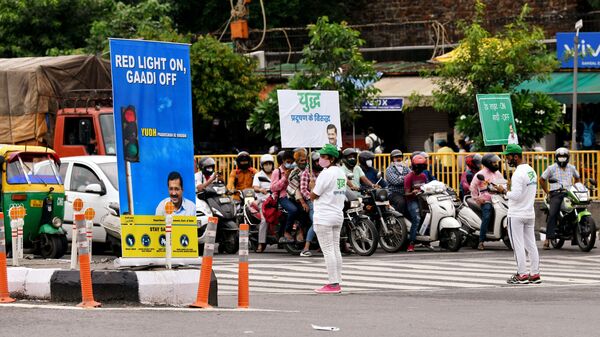
As the overall air quality index of the national capital deteriorates, Delhi Environment Minister Gopal Rai has announced that the ‘Red Light On, Gaadi Off’ campaign will make a comeback from October 26. Like the previous editions, the campaign aims to reduce air pollution in the city by encouraging commuters to turn off their engines when waiting at red lights.

A picture from previous edition of the anti-pollution campaign in Delhi. (ANI)

The campaign was first launched in 2020 to reduce vehicular pollution as part of the15-point action plan to curb air pollution in the winter season across the city. A PTI report earlier informed that based on government estimates, the transport sector is responsible for 28 per cent of the PM2.5 emissions in the city. The vehicular contribution also makes up 80 per cent of nitrogen oxides and carbon monoxide in Delhi’s air.

Also Read : Delhi’s Sarai Kale Khan flyover extension, sans traffic signals, inaugurated

The report also quoted data from the Petroleum Conservation Research Association (PCRA), which shows that if people switch off engines at traffic signals, pollution can be cut down by 13 to 20 per cent.

Rai also informed that the odd-even vehicle rationing system is not being considered at the moment. Under the scheme, private vehicles with registration plates ending in odd numbers ply in the capital on odd dates while those with even numbers ply on even dates.

The Environment ministry has put into force the phase two of Graded Response Action Plan (GRAP) to tackle “very poor” air quality of the city. Special teams will be deputed to identify and inspect local sources of pollution to that the government can work on the root cause of the issue.

The overall air quality in the national capital on Monday morning was recorded in the ‘Very Poor category’, with the Air Quality Index (AQI) at 306 against 302 recorded on Sunday afternoon, as per SAFAR-India.

First Published Date: 23 Oct 2023, 17:40 PM IST


Source link