
Petrol vs EV: Which car is best for daily office commuting? Understand with 5 year calculation

Petrol vs EV: Which car is best for daily office commuting? Understand with 5 year calculation

Petrol vs Electric Car: Choosing the right car for daily commute is a big decision for every working person. While petrol prices in the country remain around ₹ 100 per litre, on the other hand, electric vehicles (EVs) are attracting everyone's attention with their promise of low running costs. But is buying an EV really beneficial for everyone?

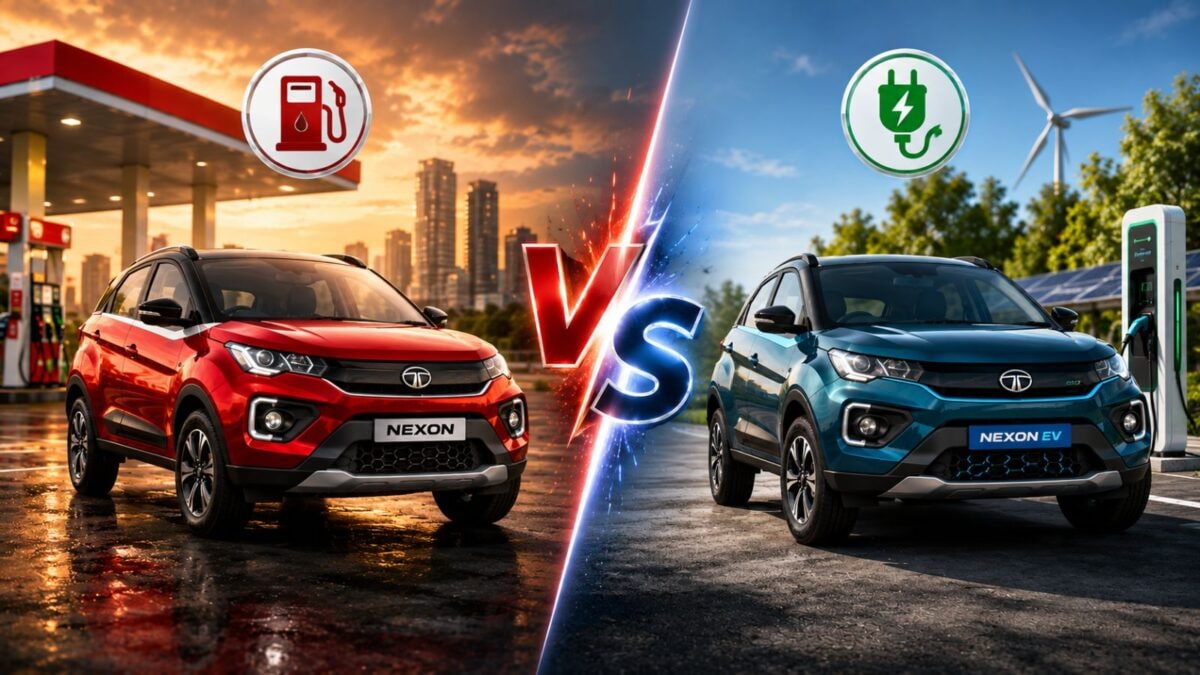
To solve this dilemma, we will understand the complete mathematics of the next 5 years by taking the example of India's most popular compact SUV Tata Nexon and Tata Nexon EV. From this calculation it will become clear to you that which car will be best according to your budget and needs for going to office daily?

Petrol Car vs EV: Daily expense of going to office

Let us assume that your car travels 40 kilometers daily, including the distance from your home to office and weekend travel. According to this, the monthly running of your vehicle will be around 1,200 kilometers and the annual running will be 14,400 kilometers. In 5 years your car will travel a total of 72,000 kilometers.

Tata Nexon Petrol: Its starting on-road price in Delhi starts from around ₹ 8.5 lakh. It gives a mileage of around 14 km/litre in the city. At the rate of ₹100 per liter of petrol, your expenditure on fuel alone in 5 years will be ₹5,14,285.

Tata Nexon EV: The on-road price of its base variant is around ₹ 13.2 lakh. On home charging at the rate of ₹ 8 per unit, this car runs at ₹ 1.1 to ₹ 1.4 per kilometer. In this way, the total cost of charging in 5 years will be only between ₹ 80,000 to ₹ 1,00,000.

5 Year Total Cost of Ownership (TCO)

When buying an EV, you have to pay around ₹4 to ₹4.5 lakh more, which is called 'green premium'. Let us see what is the total cost of ownership including 5 years of service, insurance and fuel/charging-

Type of expenditure (5 year estimate) Tata Nexon Tata Nexon EV
Starting On-Road Price (Approx) ₹8,50,000 ₹13,20,000
Fuel/Charging Cost (72,000 km) ₹5,14,285 ₹96,000
Maintenance and service expenses (5 years) ₹60,000 ₹25,000
Insurance (5 years cumulative) ₹90,000 ₹1,25,000
Total Cost (5 Year TCO) ₹15,14,285 ₹15,66,000

Which car will be best for you?

It is clear from the calculation that if your running is 40 kilometers daily (14,000 km annually), then by the completion of 5 years the total cost of petrol and electric car becomes almost equal.

Electric car is best when: If your daily commute to office is more than 50 kilometers. In this situation, the EV will recover its extra cost (Break-even) in just 3.5 to 4 years and after that your huge savings will start. Also, one can enjoy silent and smooth driving without changing gears in bumper-to-bumper traffic.

Petrol car is best when: If your daily running is less than 20-30 kilometers. In such a situation, it will take 7-8 years to recover the increased price of EV, which will be a loss-making deal. Apart from this, if there is no space for charging setup in your apartment, then petrol car is the most practical option for you.
Source link

Is it worth lakhs of rupees as soon as the EV battery gets damaged? know the truth

Is it worth lakhs of rupees as soon as the EV battery gets damaged? know the truth

Last Updated:

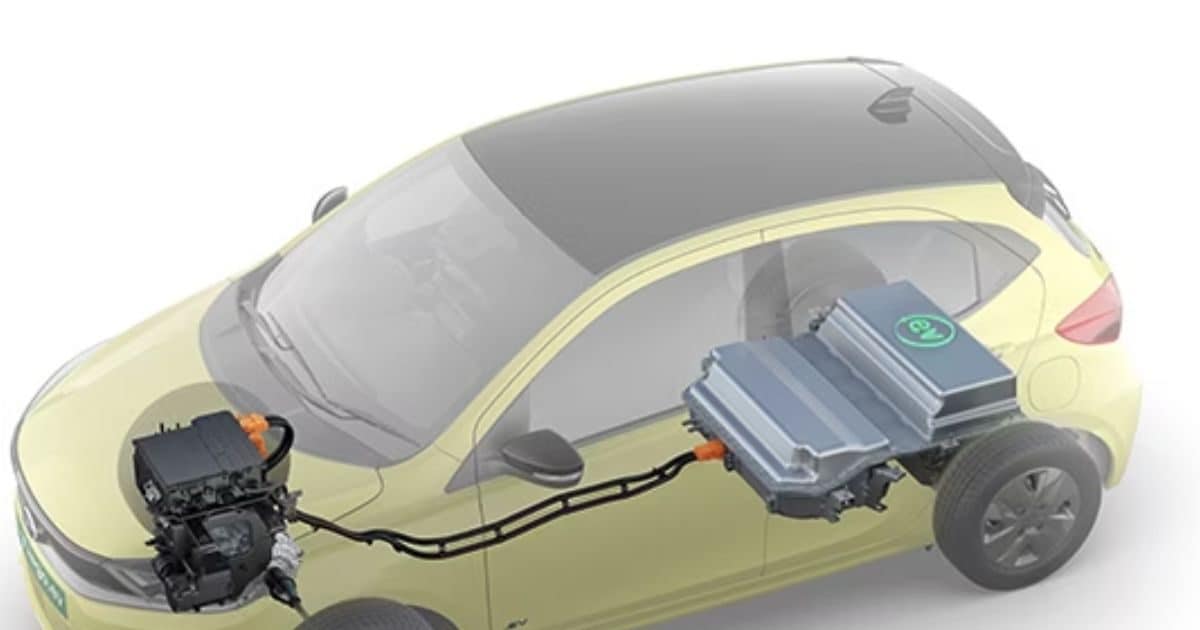
Is there a shock of lakhs of rupees as soon as the battery of the electric car gets damaged? This fear stops many people from buying an EV. But the real picture is something else. Most of the companies in India are giving battery warranty of up to 8 years, whereas in many cases there is no need to replace the entire battery. Know the complete truth about battery cost, life and repair of companies like Tata, Mahindra, MG and BYD.

news immediately

Zoom

Does lakhs of rupees get spent due to EV battery failure? Know

With the increasing popularity of electric vehicles (EV), the biggest question is how much will it cost if the battery gets damaged? Will the bill really be as much as a new car? Many potential buyers step back due to this fear, but after understanding the actual figures and the policies of the brands, the picture becomes quite clear. The batteries of most electric cars in India come with a warranty of 8 years or 1.6 lakh kilometers (whichever is earlier).

During this period, if the battery capacity goes below 70%, then most companies have a provision for free replacement or repair. Tata Motors is offering 15 years lifetime battery warranty (unlimited kilometres, for the first owner) on some premium models (like Nexon EV 45 kWh, Curvv EV, Harrier EV). Mahindra and other brands also offer a standard warranty of 8 years/1.6 lakh km. The warranty of companies like MG, Hyundai and BYD is also around this.

If no warranty, how much will it cost?

Cost of replacement outside warranty depends on model and battery size. The cost of 25-30 kWh battery in small cars (Tata Tiago EV, Punch EV, MG Comet) can range from ₹ 3 lakh to ₹ 5 lakh. Estimates for mid-size SUVs like Tata Nexon EV (30-45 kWh) range from ₹3.5 lakh to ₹6-7 lakh. Larger or premium models (MG ZS EV, BYD Atto 3 etc.) can go from ₹5 lakh to ₹9-12 lakh. The cost per kWh is currently around ₹15,000-20,000. However, battery prices are falling rapidly globally.

When does the battery go bad?

The reality is that the battery does not get completely damaged suddenly. Modern lithium-ion batteries can easily last for 8-12 years or 1.5-2 lakh km with proper usage (maintaining 30-80% charge, protection from direct sunlight, regular servicing). Real-world degradation ranges from 10-20%. In many cases, instead of replacing the entire battery, repairing a few cells is enough, which can cost ₹ 50,000-1.5 lakh.

changing technology

Companies like Tata, Mahindra are making battery packs modular, which will make repairs easier and cheaper in future. Taking a battery protection add-on in insurance can provide additional protection. In the long run, the petrol-diesel savings (up to ₹50,000-1 lakh per year) and low maintenance (no breaks, oil changes etc) offset the battery costs.

Summary: While buying a new EV, be sure to check the battery warranty details, service network and Battery Health Reporting System (BMS). With the right model and usage, the chances of getting a bill of lakhs are very less. The future of EVs is clear – battery technology is getting cheaper and better. Take decisions with information instead of fear.

About the Author

authoring

Ram Mohan MishraSenior Sub Editor

Ram Mohan Mishra, working as Senior Sub-Editor at News18 Hindi, is active in digital media since 2021 and is currently handling the Auto Desk. They provide car and bike related information in an easy, clear and reliable manner.read more


Source link