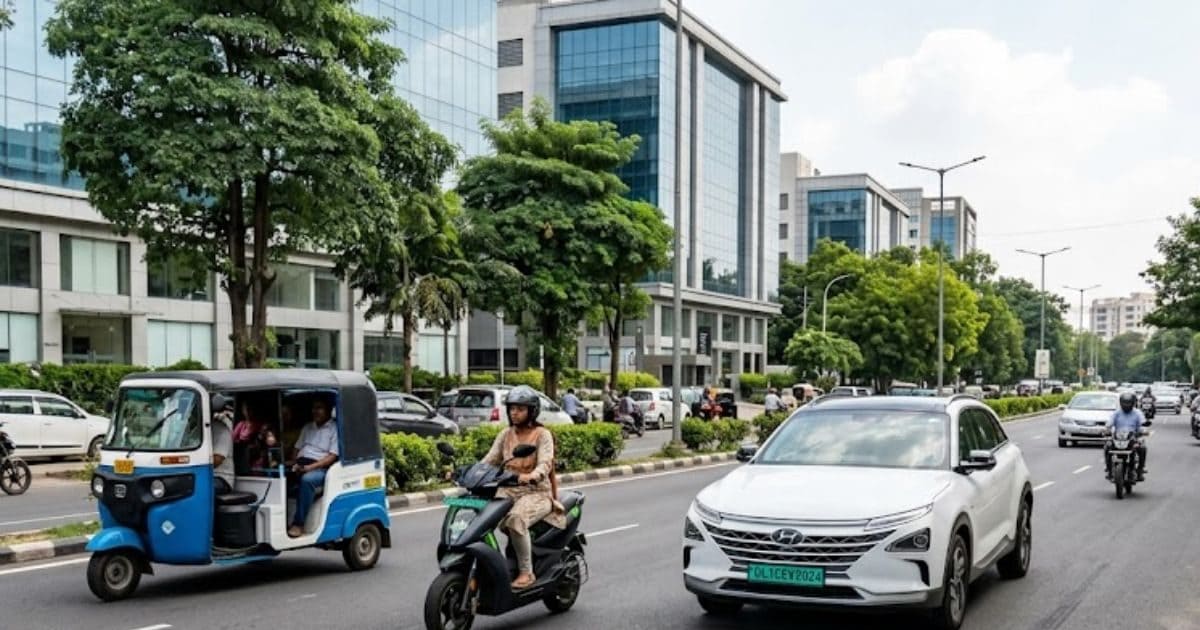
Delhi government is preparing the draft of Electric Vehicle Policy 2026 to control vehicle pollution and rapid adoption of electric vehicles (EV). In this, year-wise incentives will be given to electric two-wheeler and auto-rickshaw buyers. Special 'Pink e-Permit' and 'Rainbow Permit' categories for women and transgenders may also be included.
The current EV policy was brought in 2020 and extended several times. It will expire on 31 March 2026. The new policy may remain effective till 2030. Let us know what can be changed in the new EV policy. According to the information, after the policy is announced, the Transport Department will send the final draft to the Cabinet. After getting approval, it can be announced in the budget session starting from March 16.
target to reduce emissions
Talking about the figures, two-wheelers constitute about 67 percent of the total vehicles in Delhi and vehicle emissions contribute about 23 percent of air pollution in winter. The main goal of this policy is to convert 58 lakh two-wheelers into electric ones. For this, major incentives have been kept in the first three years.
Who will get how much benefit?
Electric two-wheelers (ex-showroom price up to Rs 2.25 lakh) will get an incentive of Rs 10,000 per kilowatt-hour (maximum Rs 30,000) in the first year. In the second year it will be Rs 6,600 per kilowatt-hour (maximum Rs 20,000) and in the third year it will be Rs 3,300 per kilowatt-hour (maximum Rs 10,000). For electric auto-rickshaw, an incentive of Rs 50 thousand will be given in the first year, Rs 40 thousand in the second year and Rs 30 thousand in the third year. There will be no limit on the number of buyers in these three years.
The objective behind this is to encourage a large number of people to buy electric bikes and autos in the first year itself. More than one lakh two-wheelers have been registered in Delhi so far this year, whereas last year there were more than five lakh. The goal is to completely convert the two-wheeler and auto fleet into EVs by 2030.
Special exemption for women and transgenders
Special incentives will be given under 'Pink e-Permit' and 'Rainbow Permit' category for the empowerment of women and transgender drivers. The government will strengthen last-mile connectivity by training them. It will be mandatory for the permit holder to drive the vehicle himself; it cannot be given on lease. Some relaxation will be given in case of pregnancy. The process of priority allotment of auto-rickshaws will start from April 1 and will continue for the first nine months.
Public charging and battery swapping points will also increase
The policy has a provision to increase the number of public charging and battery swapping points from the current 9,000 to 36,000. Incentives have also been kept for electric trucks (N1 category). E-cars will get 100 percent exemption in road tax and registration fees till March 31, 2030 for vehicles with ex-factory value up to Rs 30 lakh. Vehicles above this will not be able to get this benefit.
The new EV policy aims to develop extensive charging networks, battery recycling, servicing chains and improve air quality. The incentives will be linked to the PM e-Drive Scheme of the Central Government. Also, let us tell you that the information given above has been collected on the basis of draft and possibilities. These benefits have not been officially confirmed yet.