
Petrol vs EV: Which car is best for daily office commuting? Understand with 5 year calculation

Petrol vs EV: Which car is best for daily office commuting? Understand with 5 year calculation

Petrol vs Electric Car: Choosing the right car for daily commute is a big decision for every working person. While petrol prices in the country remain around ₹ 100 per litre, on the other hand, electric vehicles (EVs) are attracting everyone's attention with their promise of low running costs. But is buying an EV really beneficial for everyone?

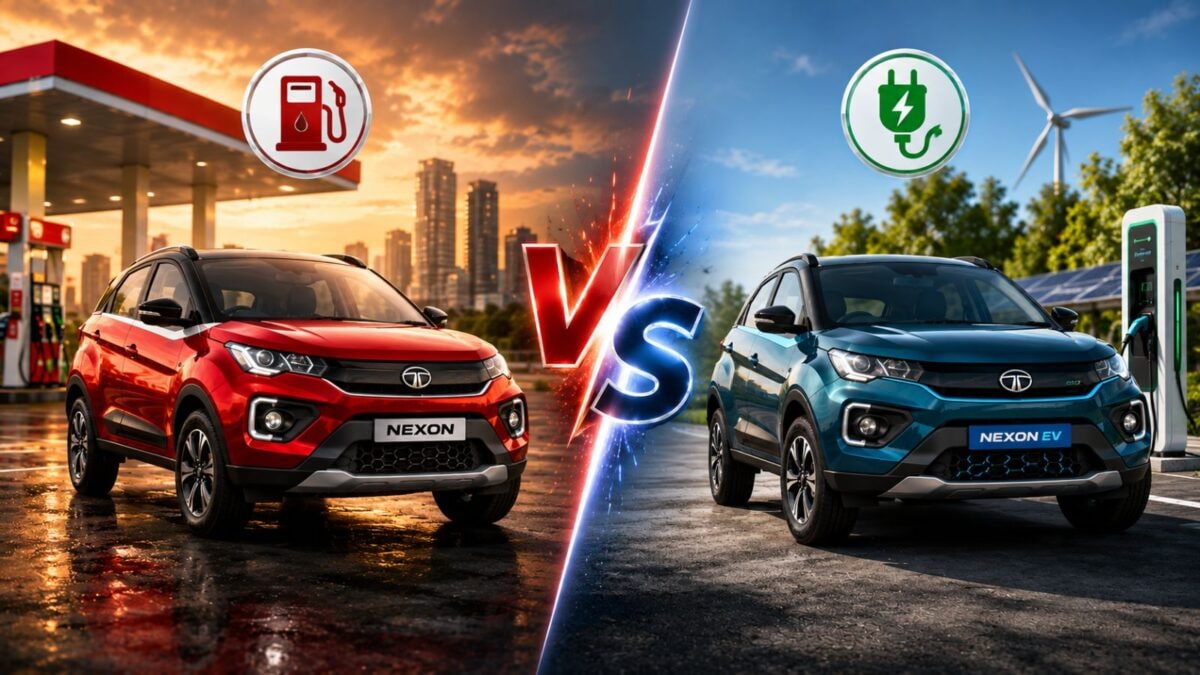
To solve this dilemma, we will understand the complete mathematics of the next 5 years by taking the example of India's most popular compact SUV Tata Nexon and Tata Nexon EV. From this calculation it will become clear to you that which car will be best according to your budget and needs for going to office daily?

Petrol Car vs EV: Daily expense of going to office

Let us assume that your car travels 40 kilometers daily, including the distance from your home to office and weekend travel. According to this, the monthly running of your vehicle will be around 1,200 kilometers and the annual running will be 14,400 kilometers. In 5 years your car will travel a total of 72,000 kilometers.

Tata Nexon Petrol: Its starting on-road price in Delhi starts from around ₹ 8.5 lakh. It gives a mileage of around 14 km/litre in the city. At the rate of ₹100 per liter of petrol, your expenditure on fuel alone in 5 years will be ₹5,14,285.

Tata Nexon EV: The on-road price of its base variant is around ₹ 13.2 lakh. On home charging at the rate of ₹ 8 per unit, this car runs at ₹ 1.1 to ₹ 1.4 per kilometer. In this way, the total cost of charging in 5 years will be only between ₹ 80,000 to ₹ 1,00,000.

5 Year Total Cost of Ownership (TCO)

When buying an EV, you have to pay around ₹4 to ₹4.5 lakh more, which is called 'green premium'. Let us see what is the total cost of ownership including 5 years of service, insurance and fuel/charging-

Type of expenditure (5 year estimate) Tata Nexon Tata Nexon EV
Starting On-Road Price (Approx) ₹8,50,000 ₹13,20,000
Fuel/Charging Cost (72,000 km) ₹5,14,285 ₹96,000
Maintenance and service expenses (5 years) ₹60,000 ₹25,000
Insurance (5 years cumulative) ₹90,000 ₹1,25,000
Total Cost (5 Year TCO) ₹15,14,285 ₹15,66,000

Which car will be best for you?

It is clear from the calculation that if your running is 40 kilometers daily (14,000 km annually), then by the completion of 5 years the total cost of petrol and electric car becomes almost equal.

Electric car is best when: If your daily commute to office is more than 50 kilometers. In this situation, the EV will recover its extra cost (Break-even) in just 3.5 to 4 years and after that your huge savings will start. Also, one can enjoy silent and smooth driving without changing gears in bumper-to-bumper traffic.

Petrol car is best when: If your daily running is less than 20-30 kilometers. In such a situation, it will take 7-8 years to recover the increased price of EV, which will be a loss-making deal. Apart from this, if there is no space for charging setup in your apartment, then petrol car is the most practical option for you.
Source link

EV vs Petrol: Before buying a new car, know the mathematics of real running cost for 5 years.

EV vs Petrol: Before buying a new car, know the mathematics of real running cost for 5 years.

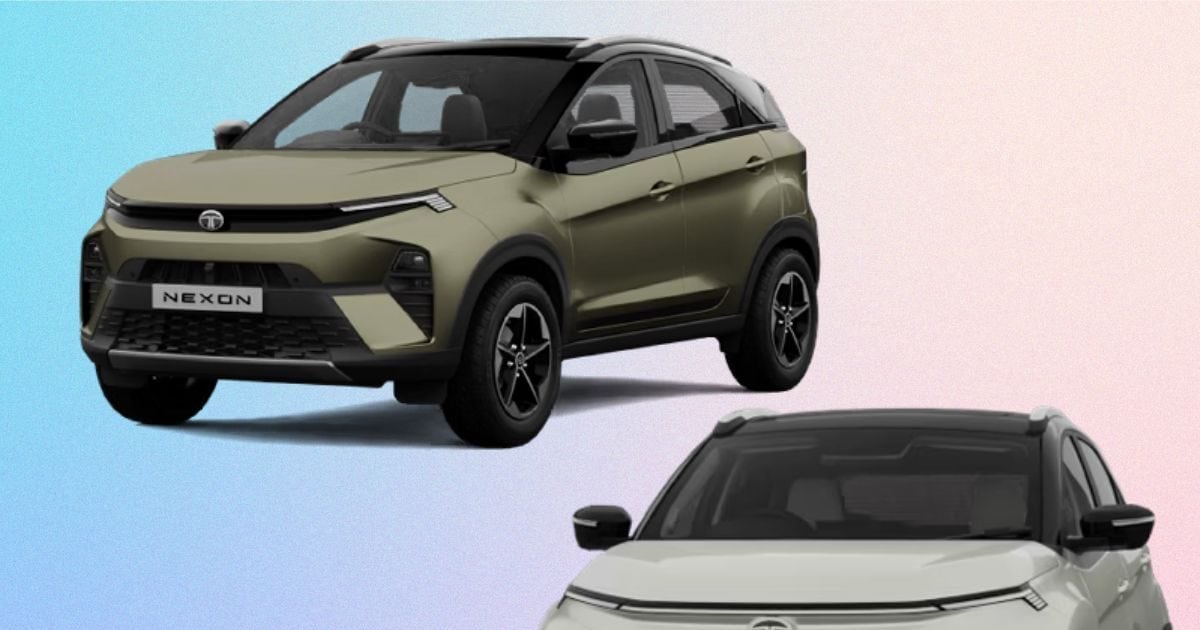
Buying a new car is a big decision in life, but nowadays this decision does not depend only on design or features. The skyrocketing prices of petrol and diesel have forced people to turn to other options. In such a situation, EVs have emerged as a much better option. If you are planning to buy a car in the coming days and are confused about which would be better to choose between petrol or EV car, then this article is useful for you. We have taken Nexon ICE and Nexon EV as examples.

At present, the average price of petrol has reached ₹ 94.50 to ₹ 95.50 per liter, while the cost of EV charging at home is only ₹ 1 per km. Could 5-year running costs prove to be a game-changer for an average Indian buyer who drives 15,000 km every year? Amidst the government EV policy, extension of FAME-II and falling battery prices, the discussion on EV is in full swing, but is it really cheaper? Or will the petrol car prove to be old reliable? In this article we will learn about the difference between these two.

Understand mathematics from Nexon ICE and Nexon EV

We have taken Nexon ICE and Nexon EV as examples. This includes Tata Nexon Petrol (XZ+ variant) and Nexon EV (Empowered Plus). The on-road price of petrol Nexon will be around ₹ 13-14 lakh, while the price of Nexon EV will go up to ₹ 17-18.5 lakh. This means that there is going to be an additional expenditure of ₹ 4-5 lakh initially on EV, but this is where the real story begins. Let us understand the advantages and disadvantages between the two.

Fuel/charging costs

Suppose you run 15,000 km annually, then in 5 years the total running will be 75,000 km. Real-world mileage of the petrol Nexon is assumed to be an average of 15 km/litre (city-highway mix). In this way, the total petrol consumption will be 5,000 liters. At ₹ 95/litre, you will buy fuel worth ₹ 4,75,000 in 5 years.

On the other hand, the real-world efficiency of the Nexon EV is 7 km/unit (AC charging at home). In this way, if it travels 75 thousand kilometers in 5 years, it will spend a total of 10,714 units. Domestic tariff in UP averages ₹6-8/unit. Round figures ask for ₹7/unit. In this way, the total expenditure in 5 years will be only around Rs 75 thousand. If we compare both, there will be savings of around Rs 3-3.30 lakh in 5 years.

maintenance cost

In a petrol car, parts like engine oil, filter, timing belt, spark plug and clutch have to be changed. Apart from this, it is also necessary to get service done every 10,000 km. In this way, the total maintenance in 5 years will be between ₹ 60,000-75,000.

At the same time, there is no engine in EV. You only have to spend a little on brake pads, tires and software updates. Battery warranty is 8 years/1.6 lakh km. Total maintenance is only between ₹15,000-25,000. In this way, there is a saving of Rs 40-50 thousand on the maintenance and service front also.

insurance and tax

Due to the higher ex-showroom price of EV, annual insurance is ₹ 10-15% costlier (1st year ₹ 80,000 vs petrol ₹ 50,000). Total insurance for EV in 5 years will be ₹3-3.5 lakh, for petrol ₹2.5-2.8 lakh. However, in many states EVs are getting 50-100% exemption in road tax. The registration charge on EV is also less in UP. Overall this difference remains ₹ 50,000-70,000.

Total 5 Year Ownership Cost (75,000 km)

  • Petrol Nexon: Purchase ₹13.5 lakh + Fuel ₹4.75 lakh + Maintenance ₹65,000 + Insurance ₹2.7 lakh. In this way the figure reaches around ₹22 lakh.
  • Nexon EV: Purchase ₹ 18 lakh + Charging ₹ 75,000 + Maintenance ₹ 20,000 + Insurance ₹ 3.2 lakh. Its total figure also reaches around ₹ 22 lakh.

The numbers of both appear to be almost equal, but for those who drive more than 15,000 km/year, the EV breaks even in 3-4 years. At 20,000 km/year, EV becomes cheaper by ₹ 2-2.5 lakh in 5 years. If you drive a taxi/cab, the savings will be even higher.

Resale value and other factors

Resale of petrol cars is considered better, but battery technology of EV is getting perfected. In 2026, the resale value of Nexon EV after 3 years is expected to be 55-60% and petrol can also get resale value around 60-65%.

Which one makes sense to buy?

If you drive less than 40-50 km daily and the budget is tight, then a petrol car is still safe. If you have 12,000+ km/year, home charging facility and plan to keep it for 5+ years, then EV will be a smart choice. By buying an EV you will also be able to save 10 tonnes of CO2 in 5 years. With time, charging infrastructure will also improve, which will make driving EVs much better.

Source link