
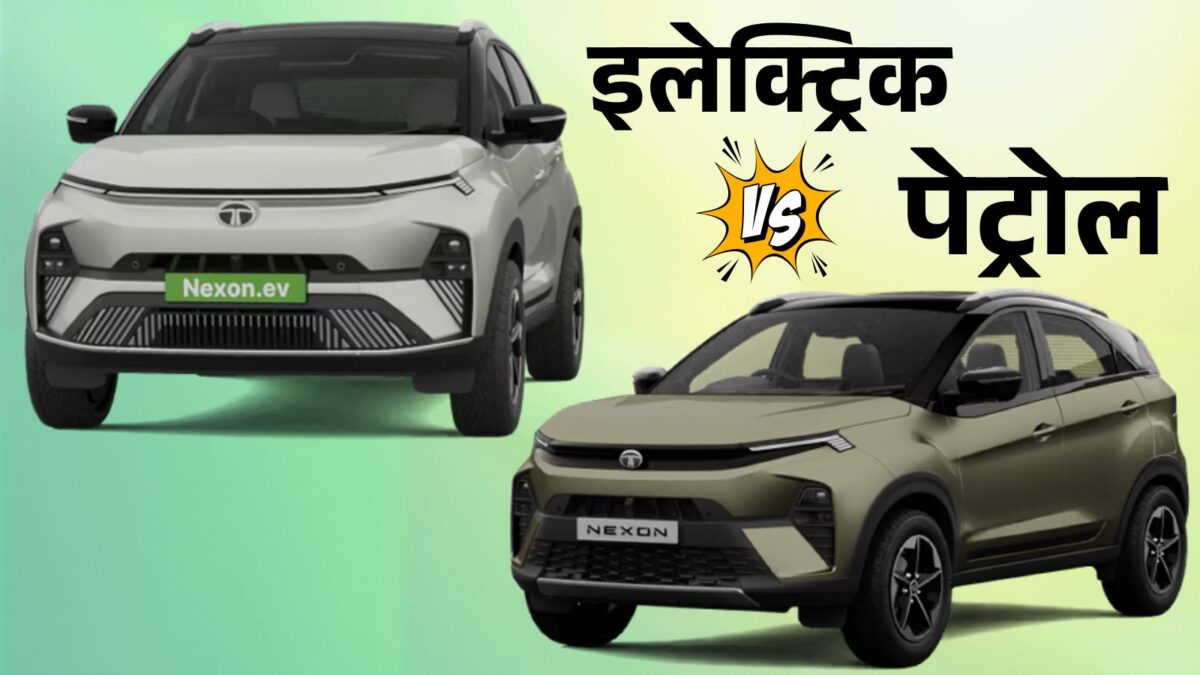
Is it more expensive to buy an EV or a Petrol car? Understand the full details of 50,000 KM

Is it more expensive to buy an EV or a Petrol car? Understand the full details of 50,000 KM

Amidst rising fuel prices and pollution, there is only one big question in the mind of every car buyer today, whether to buy an electric car (EV) or a petrol car? At first glance, EV seems expensive due to its high price, whereas petrol car fits in the budget. But the real game starts when the car hits the road.

Do you know that after driving just 50,000 kilometers, there is a huge difference in the cost of both? An EV, which may seem heavy in initial investment, can save you lakhs of rupees after covering long distances. Come, without any confusion, let us understand which car will prove to be the real value for money for you with simple mathematics of maintenance, running cost and resale value.

Mathematics of Initial Price (Buying Cost)

There is a big difference in the starting price of petrol and electric cars. Generally, compared to a petrol car of the same segment and model, its EV variant is costlier by around Rs 3 to 5 lakh.

Petrol Car: Low starting price, low down payment and low loan EMI.

Electric Car: Higher starting price, but the difference is reduced slightly due to tax exemptions and subsidies on road tax and registration fees in many states.

Running cost: direct calculation per kilometer

The real cost of driving a car is decided from here. While petrol prices are skyrocketing, electricity rates are quite cheap.

Petrol Car: If the car gives a mileage of 15 km/litre and petrol is ₹100/litre, then the cost per kilometer comes to around ₹6.66.

Electric Car: It takes about 30-40 units of electricity to fully charge a normal EV (costs about ₹ 300), which enables it to travel 300 km. According to this, the cost of EV comes to only ₹ 1 to ₹ 1.50 per kilometer.

Total savings after 50,000 kms

Let us now compare the total expenses on fuel and charging after driving 50,000 kms:

type of expense Petrol Car (Mileage: 15 km/l) EV charging costs
cost per kilometer ₹6.66 ₹1.20
Total cost of 50,000 km ₹3,33,000 ₹60,000
Direct savings (on fuel) ₹2,73,000

conclusion: The EV saves you around ₹2,73,000 on fuel costs alone, which covers a large part of its higher starting price.

Difference between maintenance and servicing

Maintenance of electric car is very cheap as compared to petrol car. Come, let us know about both-

Petrol Car: Servicing costs for every 10,000 km range from ₹5,000 to ₹8,000 due to engine oil, oil filter, spark plugs, coolant and gearbox. By 50,000 km this cost increases to ₹ 30,000 to ₹ 40,000.

Electric Car: There is no engine in an EV, so neither the oil has to be changed nor the moving parts get damaged. It only costs tyres, brake pads and AC filter. Its maintenance cost in 50,000 km is less than half that of petrol.

What is better for you?

After driving 50,000 kilometers, the EV not only recovers the extra cost of its petrol variant, but also starts saving you lakhs of rupees (about more than Rs 3 lakh including fuel + maintenance).

Buy EV then: If your daily commute is more than 50-60 kms, you want to keep the car for 5-7 years and you have charging facility at home.

Buy a petrol car then: If your annual running is very low (less than 500 km a month), budget is limited or you often travel on long routes where charging infrastructure is weak.
Source link

You are stuck with petrol and diesel, while electric vehicles are being sold at a rapid rate.

You are stuck with petrol and diesel, while electric vehicles are being sold at a rapid rate.

If you are still entangled in the mathematics of rising prices of petrol and diesel, calculating the mileage or making rounds of the fuel station every week, then just wait! A large population of the country has now moved beyond this problem. Just when you are thinking of standing in petrol pump queues, the footfall of customers at Electric Vehicle (EV) showrooms is increasing.

A silent but very fast revolution is going on in the Indian automobile market. Data is witness that the confidence of Indian customers is now rapidly shifting from traditional fuel to 'green mobility'. If you are planning to buy a car in the coming days and you want to know why your next car should be an electric car, then this article of ours is useful for you.

EV sales are breaking records

If you look at the recent data of Federation of Automobile Dealers Association (FADA) and Government Vehicle Portal, the speed of EV will surprise you. The figures are as follows-

  • Huge jump in annual growth: The total sales of electric vehicles in India have registered an annual growth of about 35% to 40% over the previous financial years.
  • Dominance of two-wheelers: The youth and middle class of the country have taken charge of the EV revolution. The share of electric two-wheelers (scooters and bikes) alone in the total electric vehicle sales is more than 55%. Companies like Ola, Ather, TVS and Bajaj are selling thousands of units every month.
  • Revolution in the three-wheeler segment: The game has completely changed in the commercial segment. More than 50% of the total three-wheelers (auto rickshaws and loaders) sold in the country have now become electric. The entire structure of local transport and delivery is shifting to electricity.
  • Speed ​​in car market also: Thanks to companies like Tata Motors, MG and Mahindra, sales of electric cars have also seen a growth of up to 90% annually.

Why are people leaving petrol and diesel and choosing EV?

What happened that people suddenly started saying 'bye-bye' to petrol and diesel? There are some very concrete and practical reasons behind this. Come, let us try to know these also one by one-

1. Huge savings on pocket: While the average cost of driving a petrol car is Rs 7 to 9 per kilometer, an electric car runs for only Rs 1 to 1.5 per kilometer. In two-wheelers this cost is even less (about 25 to 30 paise per kilometer).

2. No maintenance hassles: A conventional engine has hundreds of moving parts. This includes things like engine oil, filter, spark plug, gearbox. There is no hassle in EV. No engine, no oil change, i.e. almost zero maintenance cost.

3. Increasing Range and Infrastructure: Earlier people were afraid what would happen if the battery ran out. But now the vehicles are giving a range of 150 to 500 kilometers in a single charge. Also, a network of charging stations has been spread from the highway to the society.

The future is EV!

Experts believe that the Indian auto market has now reached the turning point from where return is not possible. The government's FAME scheme, PLI scheme and tax exemptions given by state governments have doubled this pace. So next time you think of buying a car or bike, don't just look at petrol and diesel variants. The market trend is clear. The world is changing and vehicles are no longer being charged at petrol pumps but at home plug points.

Source link