
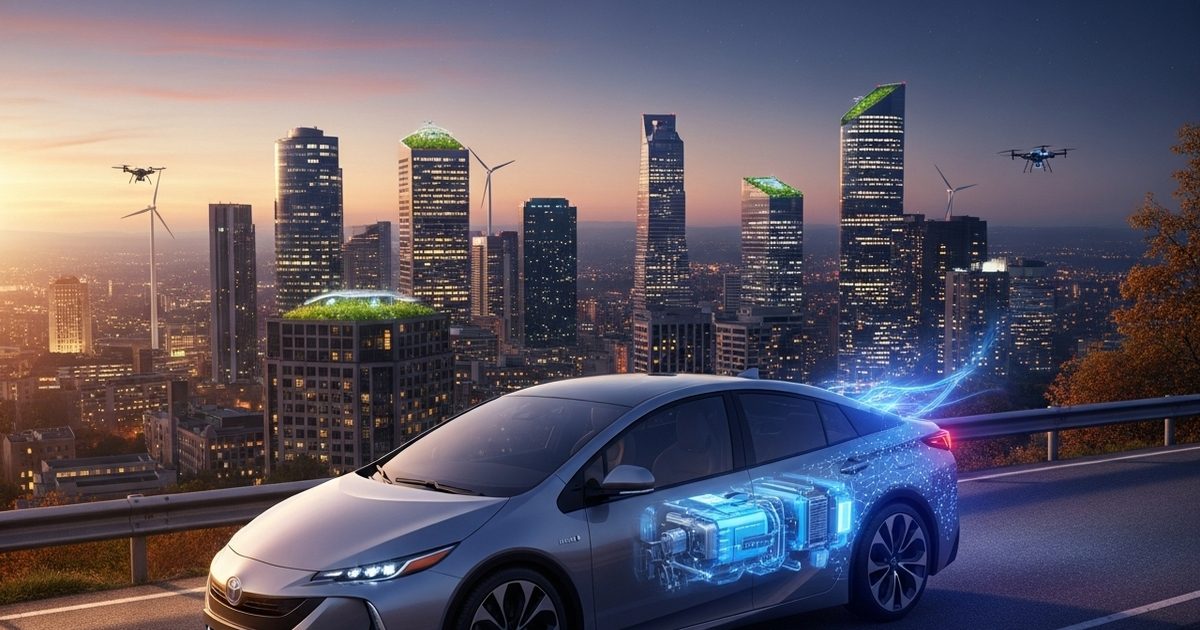
Hybrid cars are becoming very popular at present. Amidst the ever increasing pollution and skyrocketing prices of petrol and diesel, hybrid engines have emerged as a much better option. These cars provide better mileage and lower emissions by combining an electric motor with a petrol or diesel engine.
These are mainly divided into three types. This includes the names of mild hybrid (MHEV), full hybrid (HEV) and plug-in hybrid (PHEV). Their technology varies depending on your driving style, budget and needs. Let us understand in detail which technology car can be right for you.
Mild Hybrid (MHEV)
First of all let's talk about mild hybrid (MHEV). This is the most basic form of hybrid cars, where a small electric battery and motor assist the main engine. The electric motor works to start the engine, help in acceleration and regenerate energy during braking.
However, this car cannot run completely on electric mode. Talking about advantages, they are low price (10-20% more expensive than normal cars), better fuel efficiency (5-15% savings) and easy maintenance. The drawback is limited electric range. This car is better for those people who travel short distances in the city and want to save fuel by staying within the budget. If your daily run is less than 50 km and there is no charging infrastructure, then this can be the perfect option.
The option is ideal.
Full Hybrid (HEV)
Now let's look at Full Hybrid (HEV). This is more advanced, where the car can run on the electric motor alone, especially at low speeds or in traffic. The engine and motor work together or separately and the battery is charged by braking. Benefits include high mileage (up to 30-50 km/l), low emissions and smooth driving. However, its initial price may seem high to you.
Plug-in Hybrid (PHEV)
The third and most effective option is plug-in hybrid (PHEV). Yeful is a step up from hybrid, where the larger battery can be charged at home or by plugging it in at a charging station. Electric range is 30-80 km, after that it works like an HEV. Benefits include zero emissions on short trips, tax incentives and high efficiency. However, they are heavy weight and expensive and also need to be charged.
Apart from this, hybrid cars are also divided into series and parallel. In series hybrid, the engine only charges the battery, whereas in parallel, it provides power to both the wheels. Toyota's system is a combination of series-parallel. Range-Extended EV (REEV) is similar to PHEV but the engine only acts as a generator.
Overall, hybrid cars are a great combination of fuel economy and environmental safety. Companies like Toyota, Honda and Hyundai are promoting these models in India in 2026. However, choosing one of these will depend on your lifestyle and budget. Strong Hybrid cars are mostly sold in the Indian market.