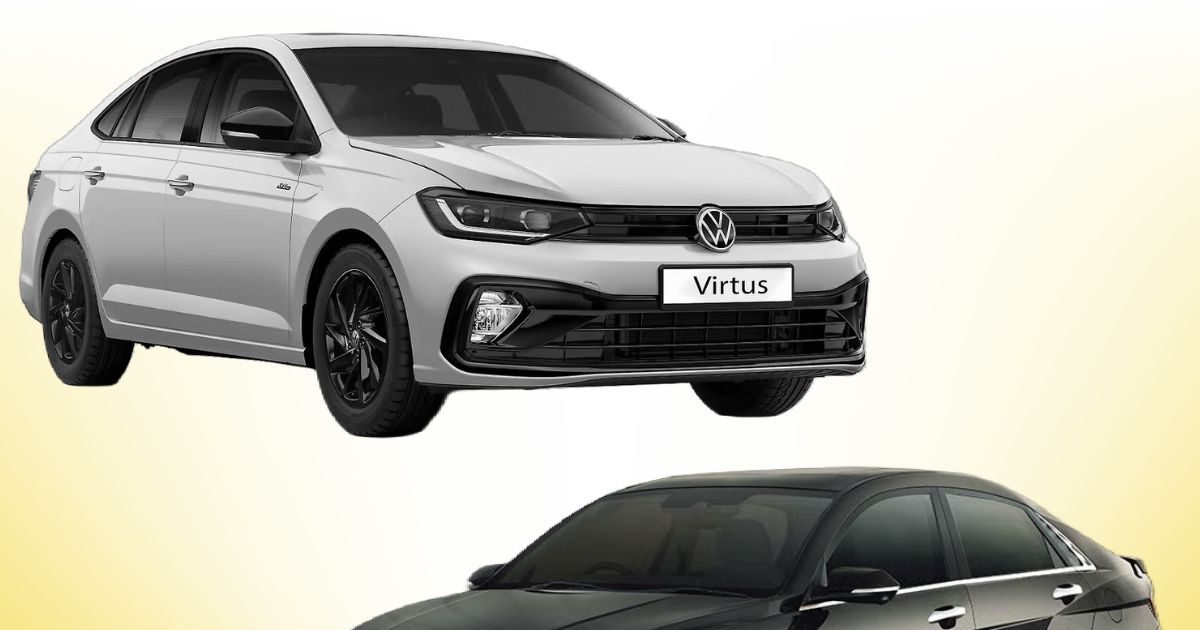
2026 Hyundai Verna vs VW Virtus: Which family sedan has more power?

2026 Hyundai Verna vs VW Virtus: Which family sedan has more power?

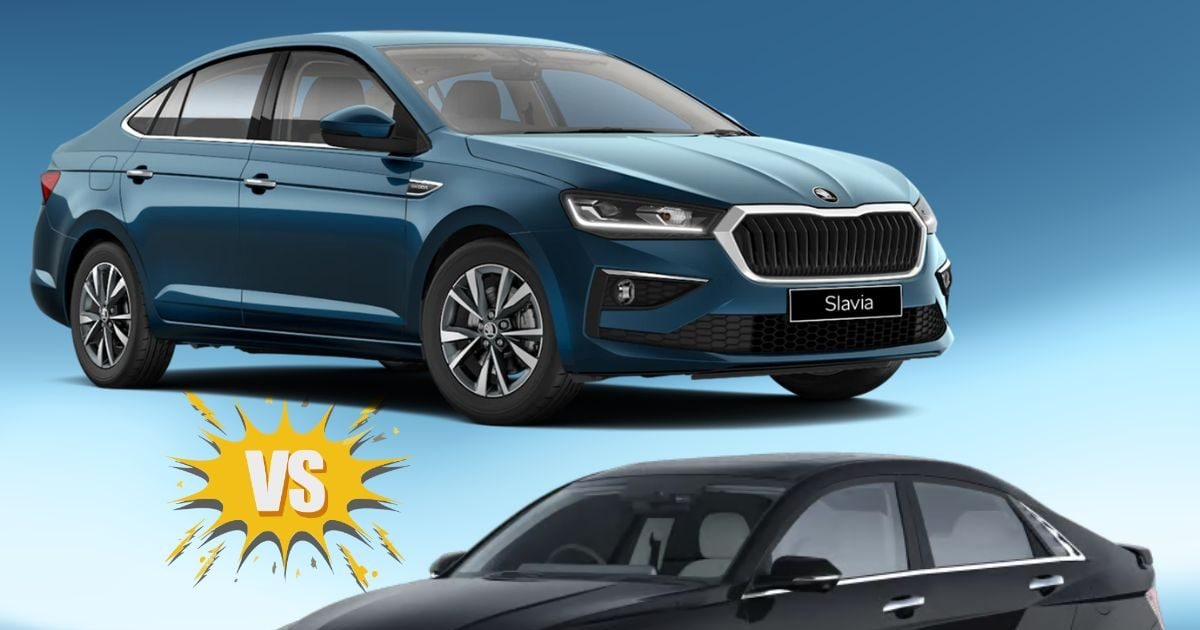
2026 Hyundai Verna has recently been launched with new updates. This popular sedan is going to compete with VW Virtus in the market. Both petrol sedans are perfect for families and enthusiasts. If you are planning to buy a perfect sedan in the coming days and are confused in choosing between these two, then this article of ours is useful for you.

On one hand, the price of Verna starts from ₹ 10.98 lakh and goes up to ₹ 18.25 lakh for the top variant. At the same time, Virtus can be purchased at an ex-showroom price of ₹ 10.50 lakh to ₹ 19 lakh. Let us take a look at the design, interior, features, safety, engine and mileage details of these two sedans.

2026 Hyundai Verna vs VW Virtus: Design

Verna is bold and modern. It can be bought with dual LED projector headlamps, black chrome grille, aggressive rear bumper, aero spoiler and new colors (Classy Blue, Titan Gray Matte). There itself. Virtus is a German-sporty car. It gets LED lights, fog lamps with cornering function and chrome/sport variants. Both have 16-inch alloy wheels.

Cabin and Comfort

Verna gives a premium feel. It can be bought with dual 10.25-inch touchscreen + digital cluster, Bose 8-speakers, ventilated front seats, driver seat memory, boss mode (co-driver), ambient lighting and rear sunshade. There itself. Virtus is solid but simple. It gets 10 inch screen + 8-inch cluster, ventilated seats, 60:40 split rear. The cabin of Verna is more luxurious and tech-loaded.

Features and safety

Verna is ahead in this matter. The new Verna gets level-2 ADAS, 360° camera, dashcam, auto hold with EPB, drive modes (Eco/Normal/Sport), paddle shifters, rain-sensing wipers, front parking sensors and wireless charger. The Virtus has a sunroof, cruise control and connected car tech, but no ADAS.

Talking about safety, Virtus has got 5-star GNCAP (Adult+Child) rating and is equipped with 40+ safety features along with 6 airbags. Verna gets 7 airbags (top), 360° camera, level-2 AIDS, TPMS, ESC and all-disc brakes. Verna is better in active safety and Virtus is good in crash protection.

Engine and Mileage

Hyundai Verna has 1.5L naturally aspirated (115 PS/144 Nm, 6MT/IVT) and 1.5L turbo (160 PS/253 Nm, 6MT/7DCT) engines. There itself. Virtus can be bought with 1.0L TSI (115 PS/178 Nm, MT/AT) and 1.5L TSI (150 PS/250 Nm, MT/7DSG) engines. Verna's turbo is more powerful. Talking about ARAI mileage, Verna is capable of giving up to 20.6 kmpl and Virtus is capable of giving up to 20.8 kmpl.
Source link

2026 Hyundai Verna launched at a starting ex-showroom price of only ₹ 10.98 lakh, know what changed

2026 Hyundai Verna launched at a starting ex-showroom price of only ₹ 10.98 lakh, know what changed

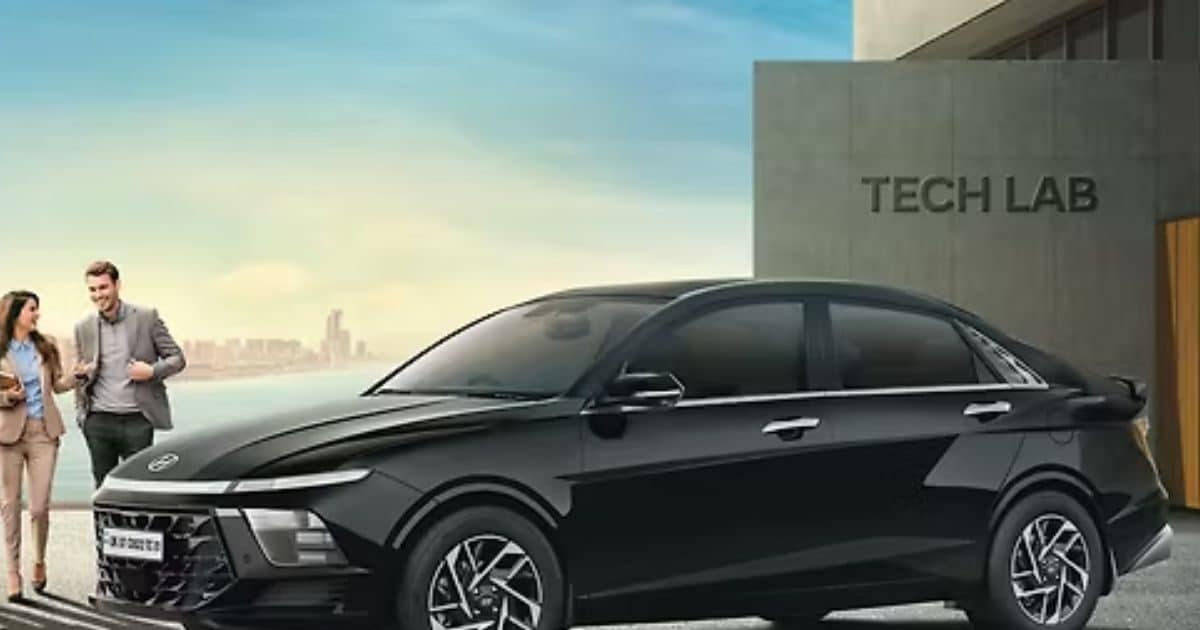
Hyundai Motor India has introduced its popular C-segment sedan Verna in a new avatar. The 2026 Hyundai Verna now comes with more than 25 new updates, which include bold design, level-2 ADAS, dual 10.25 inch screens, power seats with memory function and a more premium feel.

Its starting ex-showroom price is ₹ 10.98 lakh, while the top variant goes up to ₹ 18.25 lakh. It will be offered in a total of 6 variant options – HX2, HX4, HX6, HX6+, HX8 and HX10. These prices are slightly higher than the old model, but considering the features and styling, it seems to be value for money. Booking has started and delivery will take place from March-April 2026.

Design and dimensions

Verna's look has now become more bold and premium. At the front, a new black chrome radiator grille, dual LED projector headlamps and revised front-rear bumpers have been provided. On the side, new 16-inch diamond-cut alloy wheels and sharper body lines make it look sporty. There are updated tail lamps in the rear too.

This is the widest sedan in the segment and the wheelbase is 2,670 mm. Length is 4,565 mm, width is 1,765 mm. Two new color options have been added and there are a total of 7-8 color options available. Due to its fastback silhouette and aerodynamic design, it will look very attractive on the road. In the market it will compete with cars like Honda City and Skoda Slavia.

Cabin and Comfort

It gets a D-cut steering wheel (with updated Hyundai logo), leatherette seat upholstery and a dual-tone theme. Has been introduced with. The driver seat is 8-way power adjustable, with memory function and welcome retract feature. The passenger seat is 4-way electrically adjustable, which also has a walk-in device. Front seats are ventilated.

Boot space is 528 litres, which is enough for the family. Features like rear window sunshade, smart trunk, wireless charger, 64-color ambient lighting and electric sunroof are available in the top variants. Overall space, comfort and quality is best in the segment.

Features and safety

It gets segment-first features like dual 10.25-inch integrated infotainment and digital cluster, Hyundai Bluelink connected car tech (70+ features and 350+ voice commands), wireless Android Auto/Apple CarPlay, Bose 8-speaker premium sound system, switchable infotainment and climate control panel, surround view monitor and blind spot view monitor. Rear AC vents, paddle shifters (in Turbo), drive modes (Eco, Normal, Sport) and smartphone connectivity are also included.

No stone has been left unturned in safety. It has been given Hyundai SmartSense Level-2 ADAS, which includes 20 advanced functions. 7 airbags (standard), integrated dashcam, rain-sensing wipers, ESC, hill start assist, TPMS, rear parking sensors and ISOFIX child seat anchors are also part of the safety package. It is considered very safe for Indian roads.

Engine and Mileage

Engine options remain the same. The first is a 1.5-litre MPi naturally aspirated petrol engine, which is equipped with a 6-speed MT or IVT automatic. The second is a 1.5-litre turbo GDi petrol engine, which produces 160 PS power and 253 Nm torque. It is mated to 6-speed MT or 7-speed DCT. Paddle shifters, ISG (Idle Stop & Go) and drive modes are available in Turbo. ARAI claimed mileage ranges from 18.6 kmpl to 20.6 kmpl.

Source link

Hyundai Verna facelift spotted testing in South Korea: What we know so far

Hyundai Verna facelift spotted testing in South Korea: What we know so far

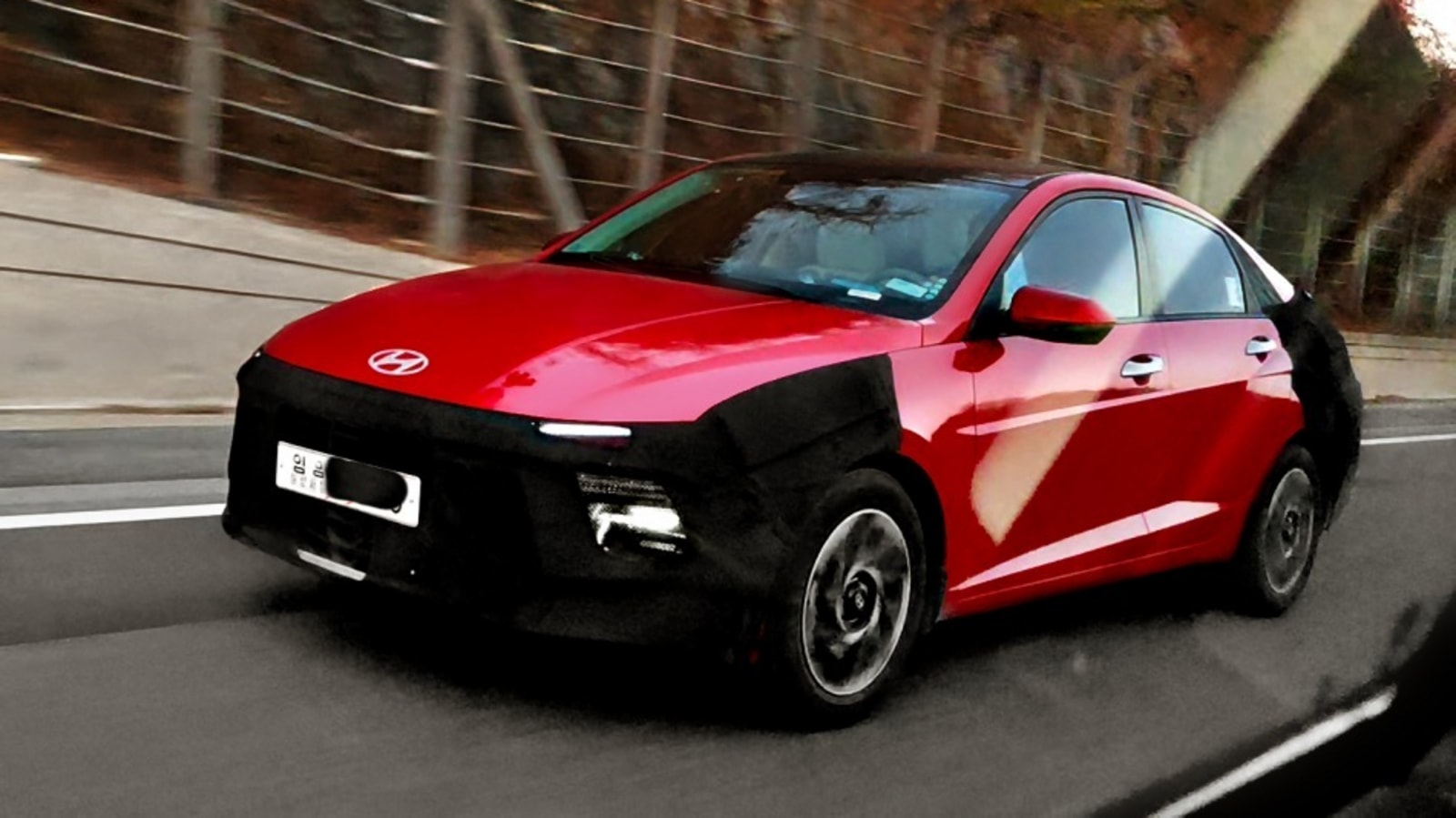
  • Hyundai Verna is gearing up for its 2026 facelift, with test models spotted in South Korea hinting at updated styling and refreshed interior features.

Hyundai Verna facelift test mule spotted in South Korea ahead of 2026 update (Autospy)

View personalized offers

check offer icon check offers

When the Hyundai Verna entered its sixth generation with the facelift, it was one of the first cars in India to adopt full-width LED lightbars for its DRLs and featured the sharp lines and outlines that underpin every new model from the South Korean carmaker. The mid-size sedan is now due for a mid-cycle update, and its test mule has once again been spotted on Korean roads. The upcoming iteration was seen with camouflage hiding its front and rear fascia, suggesting a facelift for the 2026 model year.

Preferred Source Banner

Otherwise, Hyundai's updates for the facelift are expected to largely focus on the front and rear of the sedan. These are likely to result in a more attractive design for the updated front grille and bumper. The car is expected to retain its split LED headlamp design with full-width LED DRLs, while the lighting signature will potentially be updated for renewed appeal among buyers in the segment.

The rear will also be updated, with the test mule speculating about updated taillamps and a revised rear bumper. With this, the new Verna is expected to bring a facelift for the upcoming model year, while retaining its overall sleek silhouette that has played a major role in gaining appeal among sedan buyers in India. It is expected that this car will come with a new alloy wheel design which will differentiate itself from the existing model.

What are the interior changes expected in the Hyundai Verna facelift?

Hyundai Verna Facelift
The Verna facelift is expected to retain the split LED headlamp setup with updated lighting elements (Autospy)

Most facelifts these days bring feature and interior upgrades rather than just focusing on design, and the same is likely to be the case with the Verna facelift. It is expected to bring new upholstery options and a revised interior trim, as well as an updated list of creature comforts. The overall dashboard layout will likely be retained on the upcoming iteration, with the dual-screen display likely to feature updated software and graphics.

Also Read: Tata Punch facelift 2026 spotted testing in Kerala, major cabin upgrades revealed

Will the Verna facelift bring updated powertrain options?

The facelift is not expected to get any mechanical updates and will continue to feature the same powertrain options. As a result, the Verna facelift will continue to be offered with either a 1.5-litre naturally aspirated petrol engine or a 1.5-litre turbo-petrol. The naturally aspirated unit produces 113 bhp and 143.8 Nm, while the latter produces 160 bhp and 253 Nm of peak torque. Transmission options include a 6-speed manual, a CVT gearbox and a 7-speed DCT.

The current price of Hyundai Verna is ₹ 10.69 lakh (ex-showroom), and the facelift will carry a slight premium when it reaches our shores. Upon arrival, it will re-enter the competition against sedans like Honda City, Skoda Slavia and Volkswagen Virtus. To understand where Verna stands, take a look at the detailed spec sheet below:

specifications Hyundai Verna Honda City skoda slavia vw virtus
Price (ex-showroom) From 10.69 lakh From 11.95 lakh From 10 lakhs From 11.16 lakh
Engine and Power 1.5 NA Petrol – 113 bhp; 1.5 Turbo-Petrol – 158 BHP 1.5 NA Petrol – 119 BHP 1.0 TSI – 114 bhp; 1.5 TSI – 148 BHP 1.0 TSI – 114 bhp; 1.5 TSI – 148 BHP
Torque: 144nm/253nm 145nm 178nm/250nm 178nm/250nm
gearbox option 6MT, IVT, 7DCT 6MT, CVT 6MT, 6AT, 7DCT 6MT, 6AT, 7DSG
Mileage (ARAI) 20–20.6 km/l 17.8-18.4 km/l 18.7–20.3 km/l 18.4–20.8 km/l
key features 10.25″ touchscreen, voice-activated panoramic sunroof, 64-color ambient lighting, ventilated seats, wireless charging 8″ Touchscreen, Remote Sunroof, Honda Connect App, Rear Sunshade 10″ Touchscreen, Ventilated Seats, Electric Sunroof, Powered Front Seats, MySkoda Connect App 10″ Touchscreen, Ventilated Seats, Sunroof, Wireless Charging, Auto Climate Control
Security 6 Airbags, ABS+EBD, ADAS (FCW, LKA, Adaptive Cruise), ISOFIX, Rear Camera 6 Airbags, VSA, TPMS, ADAS (CMBS, RDM, Adaptive Cruise), ASEAN NCAP 5-Star 6 Airbags, ESC, Hill-hold, Multi-collision Braking, Global NCAP 5-Star 6 Airbags, ESC, Hill-hold, ISOFIX, Global NCAP 5-Star

Upcoming cars in India in 2025, check out the best SUVs in India.

First publication date: 14 Dec 2025, 15:29 PM IST

Source link