
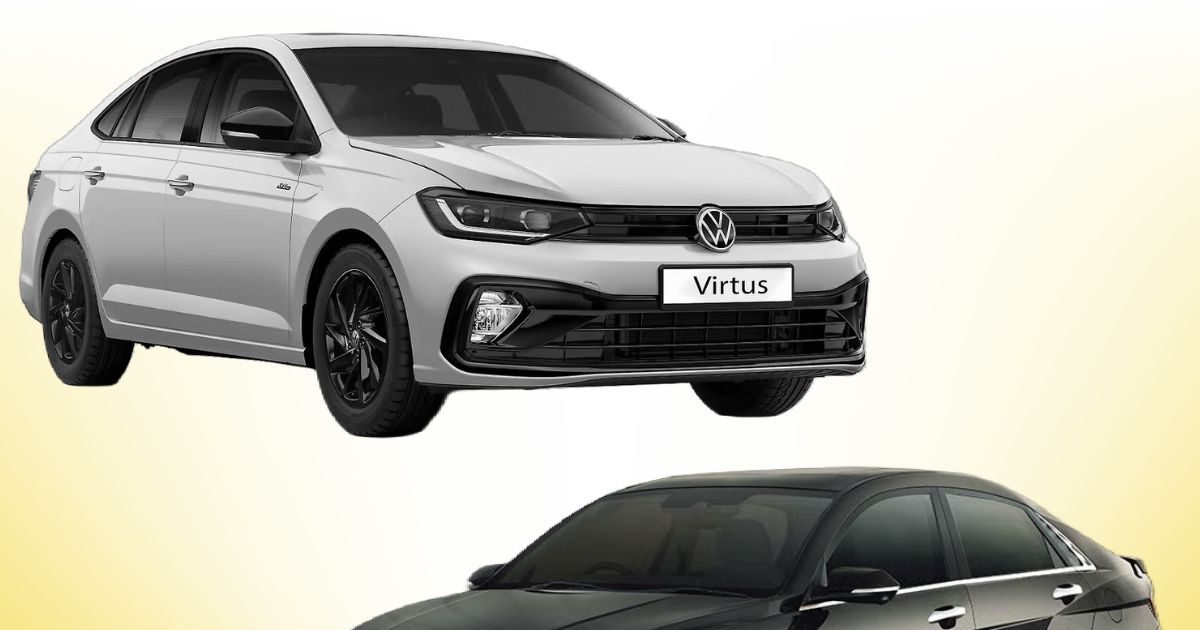
2026 Hyundai Verna vs VW Virtus: Which family sedan has more power?

2026 Hyundai Verna vs VW Virtus: Which family sedan has more power?

2026 Hyundai Verna has recently been launched with new updates. This popular sedan is going to compete with VW Virtus in the market. Both petrol sedans are perfect for families and enthusiasts. If you are planning to buy a perfect sedan in the coming days and are confused in choosing between these two, then this article of ours is useful for you.

On one hand, the price of Verna starts from ₹ 10.98 lakh and goes up to ₹ 18.25 lakh for the top variant. At the same time, Virtus can be purchased at an ex-showroom price of ₹ 10.50 lakh to ₹ 19 lakh. Let us take a look at the design, interior, features, safety, engine and mileage details of these two sedans.

2026 Hyundai Verna vs VW Virtus: Design

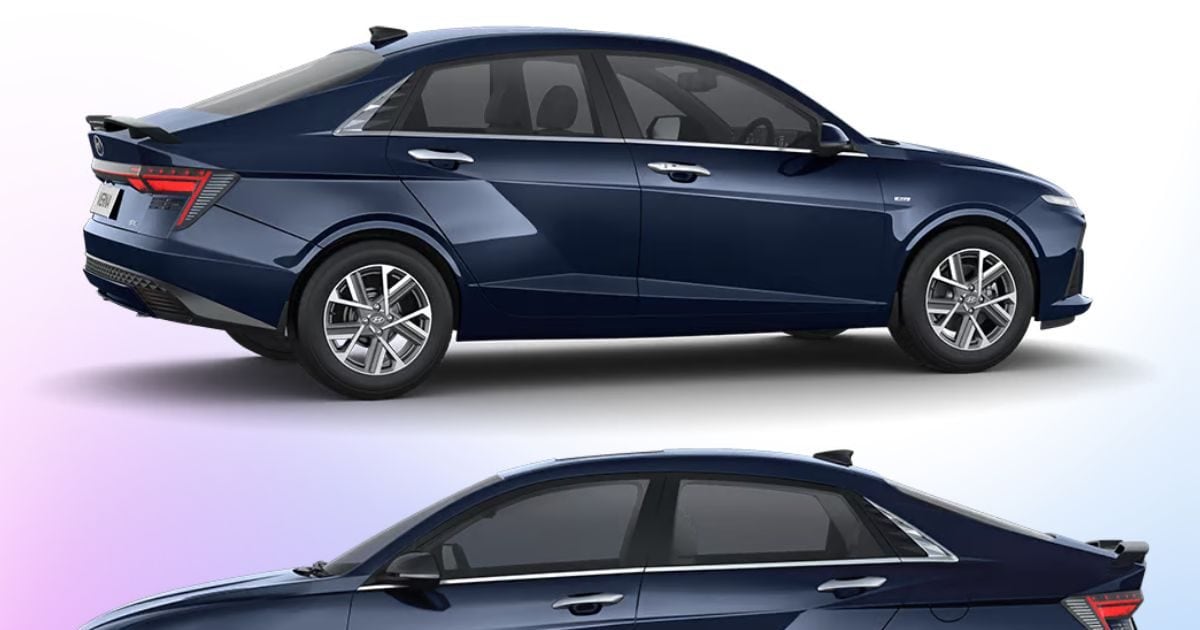
Verna is bold and modern. It can be bought with dual LED projector headlamps, black chrome grille, aggressive rear bumper, aero spoiler and new colors (Classy Blue, Titan Gray Matte). There itself. Virtus is a German-sporty car. It gets LED lights, fog lamps with cornering function and chrome/sport variants. Both have 16-inch alloy wheels.

Cabin and Comfort

Verna gives a premium feel. It can be bought with dual 10.25-inch touchscreen + digital cluster, Bose 8-speakers, ventilated front seats, driver seat memory, boss mode (co-driver), ambient lighting and rear sunshade. There itself. Virtus is solid but simple. It gets 10 inch screen + 8-inch cluster, ventilated seats, 60:40 split rear. The cabin of Verna is more luxurious and tech-loaded.

Features and safety

Verna is ahead in this matter. The new Verna gets level-2 ADAS, 360° camera, dashcam, auto hold with EPB, drive modes (Eco/Normal/Sport), paddle shifters, rain-sensing wipers, front parking sensors and wireless charger. The Virtus has a sunroof, cruise control and connected car tech, but no ADAS.

Talking about safety, Virtus has got 5-star GNCAP (Adult+Child) rating and is equipped with 40+ safety features along with 6 airbags. Verna gets 7 airbags (top), 360° camera, level-2 AIDS, TPMS, ESC and all-disc brakes. Verna is better in active safety and Virtus is good in crash protection.

Engine and Mileage

Hyundai Verna has 1.5L naturally aspirated (115 PS/144 Nm, 6MT/IVT) and 1.5L turbo (160 PS/253 Nm, 6MT/7DCT) engines. There itself. Virtus can be bought with 1.0L TSI (115 PS/178 Nm, MT/AT) and 1.5L TSI (150 PS/250 Nm, MT/7DSG) engines. Verna's turbo is more powerful. Talking about ARAI mileage, Verna is capable of giving up to 20.6 kmpl and Virtus is capable of giving up to 20.8 kmpl.
Source link

Hyundai's mega planning! Will launch 2 new vehicles in the market soon

Hyundai's mega planning! Will launch 2 new vehicles in the market soon

Hyundai Motor India is preparing for many new launches this year to strengthen its lineup of cars. The company has planned to bring a total of 26 new models or updates by 2030, out of which Hyundai Verna Facelift and Exter Facelift will be the first to hit the market.

Both these cars were recently spotted testing together on Indian roads, indicating the proximity of their launch. In spy photos and videos, both the models have been seen with camouflage, which gives a lot of information about their updated design. Let us know how much this is going to change.

Hyundai Verna Facelift

Hyundai Verna facelift (2026 model) is the most talked about. The current Verna was launched in 2023 and there was some criticism regarding its front design. Now major changes are expected in the front fascia in the facelift. Spy shots reveal new LED DRLs, revised grille, updated bumpers and possibly Hyundai Sonata-inspired styling. Minor changes like new taillights or bumpers can also be seen in the rear.

The biggest upgrade will be in the interior. Dual 12.3-inch screens will be available in the new Verna. It will have a 12.3-inch touchscreen infotainment system (with wireless Android Auto and Apple CarPlay) and another 12.3-inch full digital driver display. The dashboard will be completely redesigned. Advanced safety technologies like a new steering wheel, better materials and possibly ADAS Level 2+ features may also be included.

No major changes are visible in the engine. It will be offered with 1.5-litre NA petrol (115 hp) and 1.5-litre turbo-petrol (160 hp) options only. The launch is likely to happen by or before June 2026, making it a rival to the Skoda Slavia and VW Virtus.

Hyundai Exter Facelift

On the other hand, Hyundai Exeter facelift has also been seen testing. Launched in 2023, this micro SUV will challenge competitors like Tata Punch and Citroen C3. The facelift will bring updates to the front and rear bumpers, grille and LED lighting. Its starting ex-showroom price will be less than ₹ 6 lakh.

Some feature upgrades like better infotainment or safety features can be found in the interior. The 1.2-litre petrol and CNG options will remain intact in the powertrain, no major mechanical changes are visible. The launch of the Exeter facelift is also likely in the first half of 2026. Probably it will be introduced after or along with Verna.

Seeing these two cars testing together, it seems that Hyundai wants to establish a strong hold in the market by refreshing its product range. Otherwise, the facelift will bring freshness to the premium sedan segment while the Exeter will bring freshness to the entry-level SUV segment. Buyers will like the updated features, better technology and attractive design of both the models. An official announcement is expected soon.

Source link