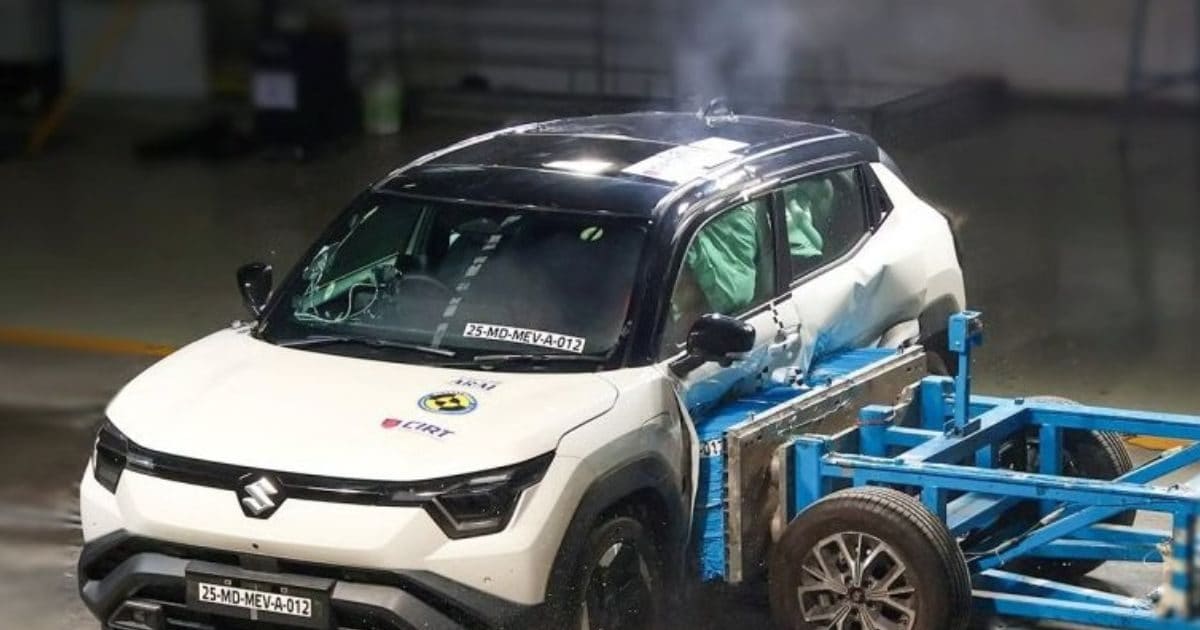
Australia and New Zealand's independent safety agency ANCAP has given Suzuki's first electric car Suzuki e Vitara a 4 star safety rating. This rating is for all variants that will be implemented from March 2026 and will remain valid till December 2031. This electric SUV manufactured by Maruti Suzuki in India has shown strong safety performance in the global market, although it could not get 5 stars due to the lack of center airbag.
According to the ANCAP test report, the e-Vitara scored 77% (31/40 points) in Adult Occupant Protection, 87% (43/49 points) in Child Occupant Protection, 79% (50.34/63 points) in Vulnerable Road User Protection and 71% (12.78/18 points) in Safety Assist. Let us know how safe ANCAP found it?
How safe is e Vitara?
In the frontal crash test, driver's chest protection was rated 'Weak' and rear passenger's head protection was rated 'Marginal', which were the main factors affecting the overall score. Despite this, the vehicle showed solid performance in most areas.
Standard safety features on the e-Vitara include dual frontal airbags, side and curtain airbags, driver knee airbag, Electronic Stability Program (ESP), ABS with EBD, ISOFIX child seat anchorages and Advanced Driver Assistance System (ADAS) level-2.
ADAS features include technologies like AEB (Automatic Emergency Braking) car-to-car (including rear), lane departure warning, adaptive cruise control, high beam assist and forward collision warning. These features play an important role in crash avoidance and mitigation.
Design, features and specifications
This SUV is built on the HEARTECT-e platform developed in India, which has a length of 4275 mm, width of 1800 mm and wheelbase of 2700 mm. Two battery options are available in it – 49 kWh and 61 kWh LFP. The 61 kWh variant delivers 172 bhp power and ARAI range of up to 543 km.
With fast charging, 10-80% charge is done in just 45 minutes. The interior has premium features like 10.1 inch infotainment screen, 10.25 inch digital cluster, ventilated seats, 360 degree camera, sunroof and level-2 ADAS. Boot space is 310 litres, which can be expanded with a flexible rear seat.
In India, Maruti Suzuki e-Vitara has already received a 5 star rating in BNCAP, which is very positive for the domestic market. Getting 4 stars in ANCAP confirms that the vehicle has met global safety standards. However, ANCAP experts say that 5 stars could have been achieved by adding additional features like a center airbag. This SUV is going to be launched in Australia in June 2026.
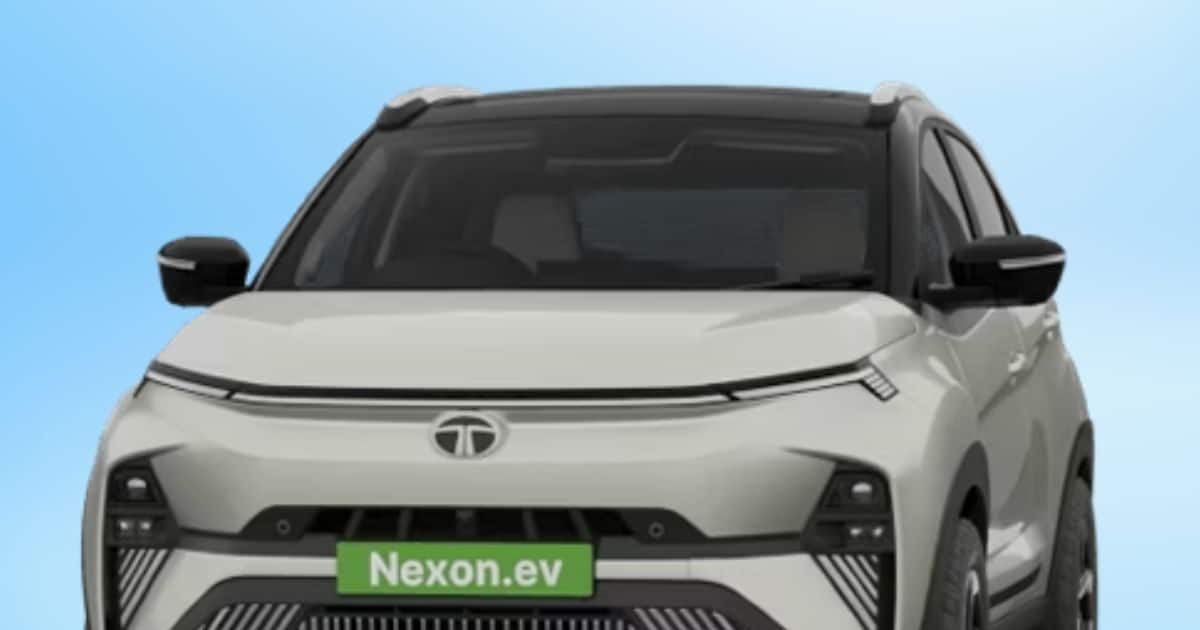
The demand for EVs is continuously increasing in the Indian car market. The same was seen in last month's sale also. As always, Tata Motors has been the country's largest seller of electric cars. At the same time, sales of Mahindra and MG have also increased. Apart from this, demand from companies like VinFast and Hyundai has decreased.
If we look at the total sales, all the car companies together dispatched a total of 22,315 units in March 2026. This figure is one and a half times more than the total 14,712 units sold by them in February 2026. Let us take a look at the company-wise sales report.
Tata Motors
Tata Motors is at number one in terms of sales. A total of 8,253 units were sold last month. This figure shows an excellent monthly increase compared to 5,947 units sold in February 2026.
Mahindra
Mahindra is at second place in terms of sales. They got a total of 5,244 new customers last month. This figure shows a significant jump at the monthly level as compared to 3,174 units sold by the company in February 2026.
MG Motor
Last month, MG Motor sold a total of 5,141 units. This figure shows a better jump on a monthly basis compared to the total 3,556 units sold in February 2026.
Maruti Suzuki
Maruti has sold 949 units last month on the sole basis of E Vitara. This figure indicates an eight-fold increase compared to 223 units sold in February 2026.
VinFast
On the basis of its two SUVs – VF6 and VF7, Vinfast has registered its name in the list of top-5 companies. 691 units were sold last month. This figure shows good growth on a monthly level as compared to 415 units sold in February 2025.
Apart from the top-5 companies of EV segment mentioned above, last month 476 units of Hyundai, 458 units of Kia, 437 units of BMW, 414 units of BYD, 97 units of Mercedes-Benz, 49 units of Tesla, 30 units of Stellantis and other companies together have sold a total of 76 units.
India's largest car manufacturer Maruti Suzuki India Limited (MSIL) has released its sales figures for February 2026. The company's total sales have registered an increase of 7.32%, but the domestic market remains stable. There itself. There has been a tremendous jump in exports.
Maruti's total sales last month were 2,13,995 units, which is 14,595 units more than 1,99,400 units in February 2025 last year. In percentage terms this is an increase of 7.32%. However, sales in the domestic market remained almost stable. Domestic sales stood at 1,61,000 units, which is only 209 units more than 1,60,791 units in February 2025, i.e. a marginal increase of only 0.13%. Let's take a look at the complete report.
increase in exports
Exports provided strong support to the company. Exports in February 2026 stood at 39,155 units, which is 14,134 units more than 25,021 units last year. This is an impressive increase of 56.49%. The company says that this increase is due to increasing demand in the markets of Africa, Latin America and Asia. Maruti's popular models like Swift, Baleno and Dezire are performing well in foreign markets.
Toyota got less units
There was a slight decline in the models delivered to Toyota. 10,710 units were sold in February 2026, which is 168 units less than 10,878 units in February 2025, i.e. there is a decrease of 1.54%. This is a supply under the partnership between Maruti and Toyota, which includes models like Glanza and Urban Cruiser. However, this decline is minor.
lcv cell increased
The light commercial vehicle (LCV) segment also showed positive trends. 3,130 units were sold in February 2026, which is 420 units more than last year's 2,710 units, i.e. an increase of 15.50%. This segment is a growing area for the company, where models like Super Carry are becoming popular among small businesses and logistics companies.
monthly decline
Talking on monthly level, the sales of February 2026 are 13,529 units less than 1,74,529 units of January 2026, i.e. there is a decline of -7.75%. This could be due to seasonal factors like slackness after the festival season or production related reasons. Experts believe that to improve the domestic market, it is necessary to increase focus on electric vehicles (EV) and hybrid models. Maruti is recently planning to expand its EV range.
Competition is increasing in the auto industry. Rivals like Tata Motors, Hyundai and Mahindra are gaining strength in the EV and SUV segments. In such a situation, Maruti will have to continuously work on innovation to maintain its market share. February figures show that the company is in a strong position by taking advantage of global opportunities, but there was a slight slowdown in the domestic market last month.
New Delhi. India's largest car manufacturer Maruti Suzuki is ready to launch its first electric car. Maruti and Vitara. Buyers have been waiting for this car for a long time. A big reason for this wait is that this is going to be the company's first electric car whereas Maruti's direct competitors Mahindra and Tata have already prepared a large electric portfolio. Both these companies have prepared a huge customer base even before the launch of Maruti's first EV. In such a situation, it will be interesting to see how Indian customers respond to Maruti E Vitara. The company will unveil Maruti E Vitara tomorrow i.e. on 2nd December.
Has been presented in Global Expo The company had introduced this car in the 2025 Bharat Mobility Global Expo. If you are also excited about this car, then you should know some things before its launch.
Maruti E Vitara: Exterior Many people may consider it to be an electric Grand Vitara because of its name, but it is not so. This is a completely new electric vehicle, whose design is also different. The E Vitara looks like a strong SUV, which is clearly visible from its heavy bumper. It also has modern design elements, like sleek Y-shaped LED DRLs, sharp headlamps and a number of cuts and creases.
Rear and side profile In the side profile, you get large wheel arches and thick door cladding, which shows its strength. It has 18-inch dual-tone alloy wheels, whose design is aerodynamic. At the rear too, like the front, there is a strong looking bumper and wraparound LED tail lamps, which have a Y-shaped design like the DRLs.
Maruti E Vitara: Interior On the inside, it has been given a new dashboard design, which has not been seen in any Maruti car till now. The cabin has a dual-tone theme, with both the dashboard and seats in dual-tone black and tan shade. Here you get a new two-spoke steering wheel design, gloss black inserts, semi-leather seat upholstery and dual screen setup.
Maruti E Vitara: Features and Safety The E Vitara will have a dual screen setup, which has a 10.25-inch touchscreen infotainment system and a 10.1-inch digital driver display. It will also get Infinity Sound System with Wireless Android Auto and Apple CarPlay. Other features include panoramic glass roof, 10-way electrically adjustable driver seat, wireless phone charger, ventilated front seats, ambient lighting, electrically adjustable and folding ORVMs, and PM2.5 cabin air filter.
Safety In terms of safety, Maruti E Vitara will get up to 7 airbags, electronic stability control (ESC), tire pressure monitoring system (TPMS), front and rear parking sensors, electronic parking brake with auto hold and 360-degree camera. E Vitara has got 4 star safety rating in Euro NCAP crash test. Apart from this, it will also get Level-2 ADAS (Advanced Driver Assistance System) technology, which includes features like Adaptive Cruise Control, Lane Keep Assist, High Beam Assist, Rear Cross Traffic Alert, Blind Spot Alert and Autonomous Emergency Braking.
Maruti Suzuki will launch a new range of electric and hybrid cars with E Vitara, Victoris, Fronx, Baleno and Mini MPV by 2026, Victoris will become India's most fuel efficient car.
New Delhi. Maruti Suzuki is moving towards green mobility solutions by 2026 with its new hybrid and electric vehicle range. The car manufacturer is ready to introduce its first electric offer – E Vitara – by the end of this financial year. In the hybrid segment, the Indo-Japanese automaker will introduce four new models-Victoris with strong hybrid powertrain, Toyota, and Maruti Suzuki's In-House Development with strong hybrid systems Fronks, Next-Jen Baleno and a sub-4 meter MPV.
Victoris – India's most fuel efficient car Starting from Maruti Victoris, the midsize SUV will launch with three engine options – 103bhp, 1.5L mild hybrid petrol, 116bhp, 1.5L Strong Hybrid and 89bhp, 1.5L Petrol + CNG. Despite sharing his powertrain with Grand Vitara, it will be more fuel efficient than its cybbing. Maruti Suzuki claims that Victoris' Strong Hybrid variant will give a mileage of 28.65kmpl, making it India's most fuel efficient car.
Maruti's new strong hybrid system
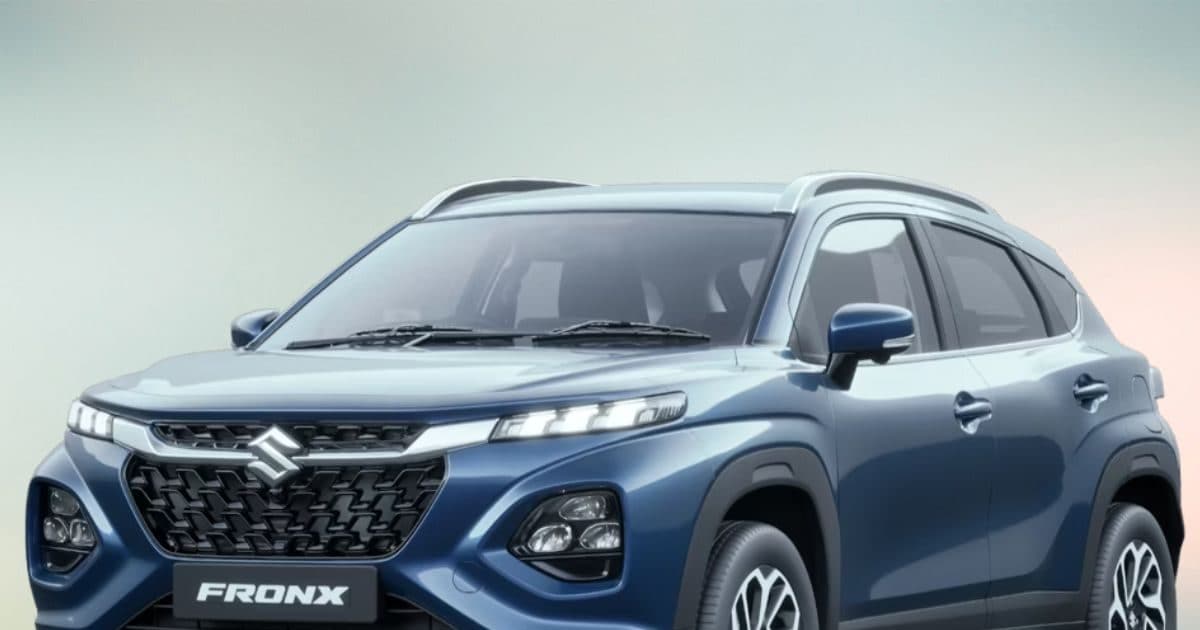
Maruti Suzuki is developing an in-house series Hybrid Povertrain (Kodename-HEV), which will make its debut in 2026 on the Fronx Compact Crossover. Unlike Toyota's Atkinson Hybrid system, Maruti's own hybrid technology will be very economical, while mileage will give more than 35kmpl. It will be a series hybrid system with a petrol engine, an electric motor and a battery. The car manufacturer will elect its 1.2L Z-series petrol engine for its Future Mass-Market Hybrid cars.
Baleno Hybrid, Mini MPV The same hybrid powertrain will be introduced in the new-generation Maruti Baleno hatchback and Japan-Space Spaceia based MPV, later by Next-Jen Swift (2027) and All-New Brezza (2029). The Maruti Fronx hybrid is likely to have 'hybrid' badges on the exterior and some hybrid-specific software inside, while its original design and interior will remain intact.
All-new Maruti Baleno hatchback With the new hybrid powertrain, All-New Maruti Baleno hatchback is expected to have much better styling and feature-pack interior. Suzuki Spaceia based mini MPV will be positioned against Renault Tribe and upcoming Nissan's new subcompact MPV.
Click here to add News18 Hindi as your favorite news source on Google.
Location:
New Delhi,Delhi
First Published:
September 07, 2025, 12:47 IST
homeauto
Maruti is bringing one or two new hybrid cars, a lot of mileage
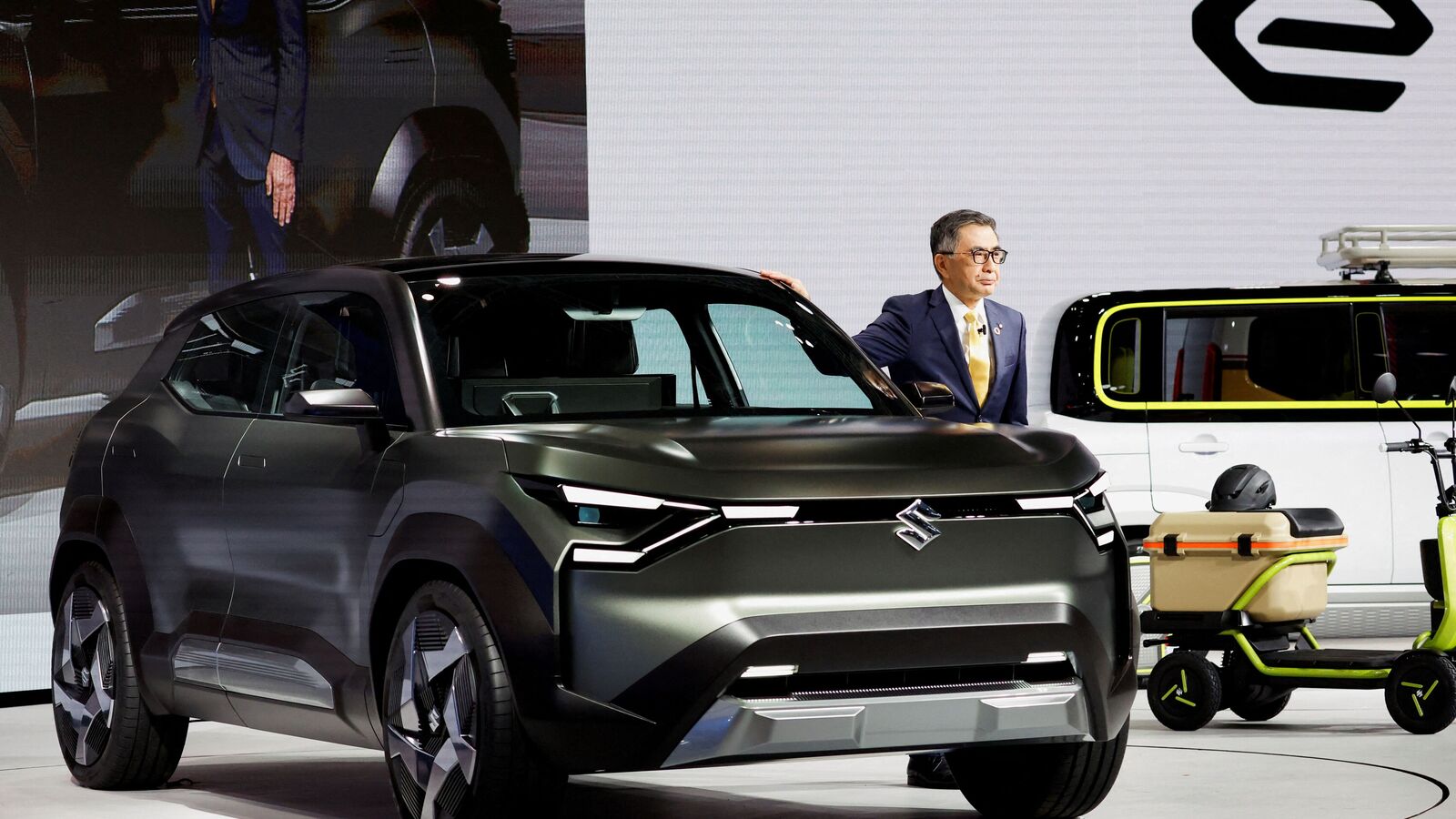
Toshihiro said India is and will remain a key business area for the company to achieve its growth strategy for fiscal year 2030. Interestingly, in fiscal year 2023, the company achieved revenue of 5.4 trillion yen with sales of 3.2 million cars and 1.9 million motorcycles. Globally, Suzuki is targeting sales of 7 trillion yen in fiscal year 2030, and achieving sustainable growth.
Also read: Maruti E Vitara equipped with off-road technology unveiled for the first time
The focus here is on sustainable development. For FY2029-30, Suzuki has said this will contribute to the achievement of a carbon neutral society and the economic growth of our core business areas, Japan, India and Europe along with emerging countries such as India, ASEAN and Africa. main.
The focus will be on creating solutions that are unique to Suzuki, developing customer-centric products and services and growing with the operating countries and regions.
India's role changing dynamics for Suzuki
One of Suzuki Corporation's key goals for fiscal year 2030 is to achieve significant progress toward carbon neutrality. The company aims to reach carbon neutrality by 2050 in Japan and Europe and by 2070 in India in line with the target dates set by the respective governments.
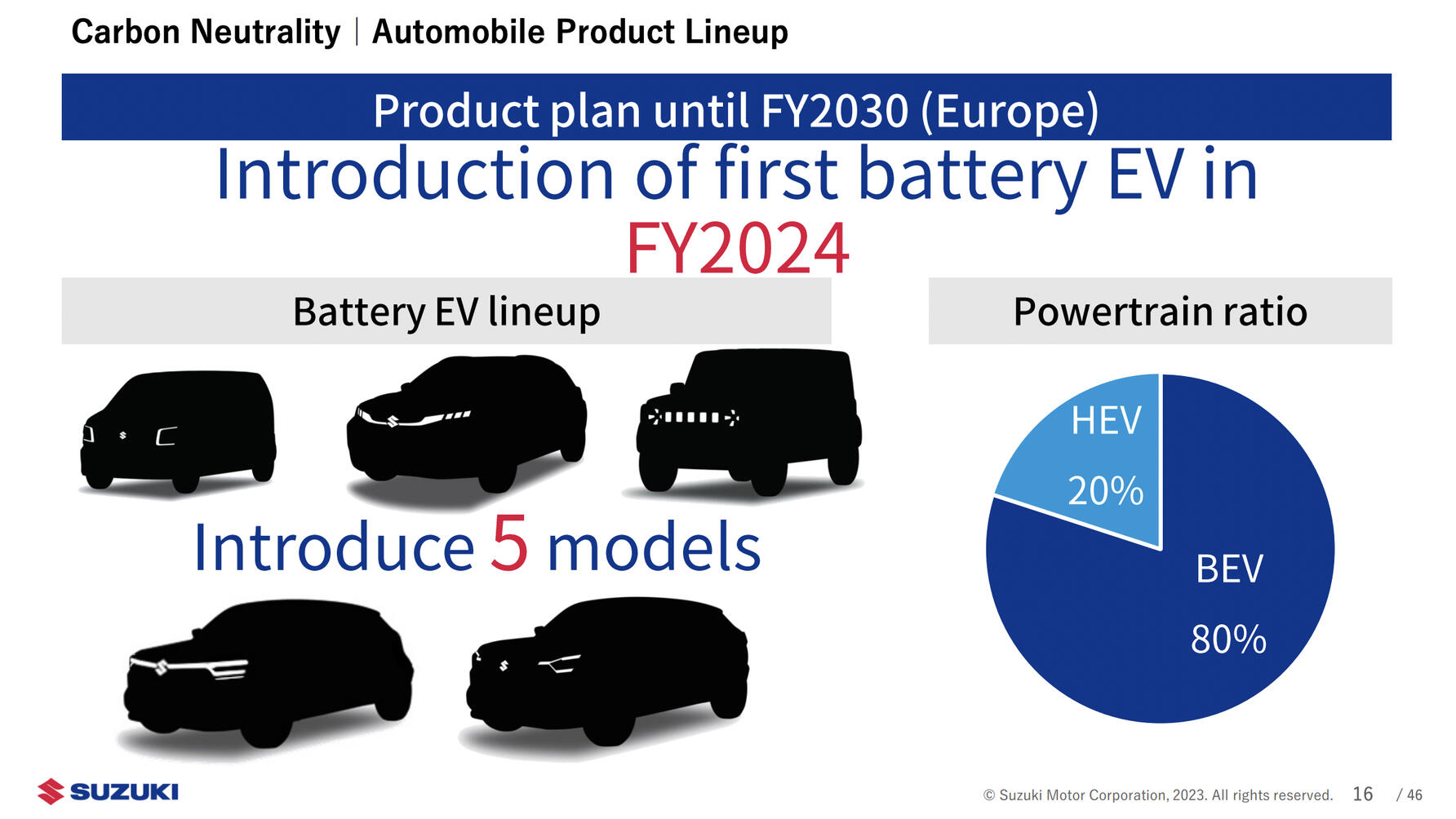
Additionally, the company also plans to grow in other regions such as Africa, Latin America, and Southeast Asia. Central to this goal is Suzuki's electric vehicle (EV) strategy, which includes plans to introduce six EVs in Japan and India and five in Europe by fiscal 2030. This transformation begins with the Suzuki E Vitara, the brand's first electric vehicle.
Suzuki had earlier announced a lineup of five EVs, which included the Maruti Suzuki E Vitara, WagonR, FrontX and two other models, starting with the E Vitara. Notably, production of the Suzuki e Vitara will begin at Suzuki Motor Gujarat (SMG) by spring 2025, with plans for export to global markets.
Here's your first look at the e Vitara, Maruti Suzuki's all-electric offering, which will be manufactured at the company's Gujarat facility.
To support its BEV production, Suzuki has committed to invest Rs 3,200 crore to add fourth production line at SMG plant. With this expansion, the annual production capacity of the plant will increase from the current 7,50,000 units to 10 lakh units by FY 2026.
Additionally, Suzuki plans An investment of Rs 3,500 crore to set up a second facility at SMG, which will add another one million units annually by FY2029. This expansion will ultimately increase SMG's total production capacity to two million units annually, supporting Suzuki's ambitious global growth and sustainability goals.
Suzuki's technology strategy for carbon neutrality
In addition to increasing production, Suzuki Corporation has outlined a comprehensive technology strategy for the next decade aimed at achieving its carbon neutrality goals. This strategy focuses on reducing energy consumption through three main concepts: genba, genbutsu, genjitsu (visit the site, make direct observations and determine the facts), sho-sho-kei-tan-bi (small, less, light, small), beauty) and yaramika (to challenge).
Toshihiro highlighted that the company's electric vehicle (EV) strategy will be guided by the principles of Sho-Sho-Kei-Tan-Bi, which emphasizes the production of compact, efficient and resource-conscious vehicles. This philosophy drives the development of EVs with streamlined, highly efficient motors and lightweight batteries, ultimately maximizing energy efficiency while minimizing environmental impact.
Suzuki revealed in its presentation that it plans to bring 5 EVs to market by 2030, including a production-spec EVX.
Furthermore, Suzuki's commitment to energy efficiency extends to the entire vehicle life cycle. At the heart of this approach is the concept ofkeiOr density. According to Toshihiro, Suzuki cars are about 200 kg lighter than typical European, Indian or Japanese cars.
Also read: Suzuki unveils sustainability roadmap: Focus on lighter cars, EVs. check details
This reduction in weight translates into a 6 percent reduction in energy required for driving, 20 percent less energy for manufacturing and less resource use overall, significantly cutting CO2 emissions and contributing to a more sustainable future. This is in line with Suzuki's ambition to do so.
Multidimensional approach key to sustainability
While EVs are a central focus, Suzuki's sustainability strategy covers a wide range of initiatives. The company is actively developing vehicles designed for high-efficiency internal combustion engines, advanced driver assistance systems and streamlined recycling and disassembly, with the aim of reducing its overall environmental footprint.
Suzuki Corporation understands that a “one size fits all” approach to electric vehicles (EVs) is not practical for global markets. According to Toshihiro, the company plans to diversify its investments not only into battery EVs but also hybrids and internal combustion engines. ICE) which operate on alternative fuels like CNG, biofuel and ethanol. This multi-pronged approach enables Suzuki to offer tailored solutions that maximize performance and energy efficiency in different markets.
Also See: Maruti unveils eVX EV concept at Auto Expo 2023
Suzuki's commitment to regional carbon neutrality goals aligns with its mission to expand customer choice and provide products and services that meet specific regional needs. By addressing environmental impact across various technologies, Suzuki aims to support sustainable mobility and meet the unique demands of each market.
Brand perspective is changing
Toshihiro sees Suzuki's future as a “lifestyle infrastructure company”, playing an integral role in revitalizing economies by addressing daily mobility needs through initiatives such as infrastructure development and next-generation mobility solutions.
The company is dedicated to providing high-value products and services that make it essential for both people and society. According to Toshihiro, this mission includes a strong commitment to the achievement of carbon neutrality and a sustainable future, positioning Suzuki as a major contributor to social and environmental progress.
Get information about upcoming cars in India, electric vehicles, upcoming bikes in India and cutting-edge technology that is changing the automotive landscape.
First publication date: 05 November 2024, 10:25 AM IST