
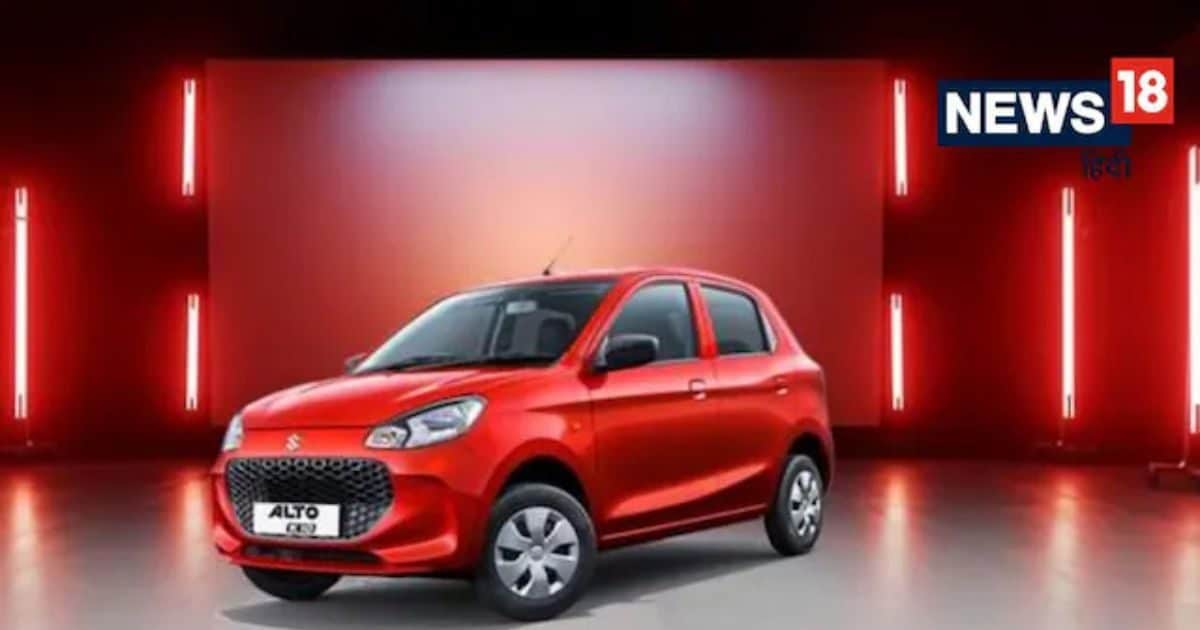
The Government of India has completely canceled the proposed exemption for small cars in the upcoming fuel efficiency standard rules. According to an exclusive report by Reuters, the Power Ministry has removed the special relief for petrol cars weighing 909 kg or less in the latest 41-page draft of CAFE-III (Corporate Average Fuel Efficiency Phase-3).
This decision was taken after opposition from other automakers including Tata Motors, Mahindra & Mahindra, who argued that this exemption would benefit only one company (Maruti Suzuki). Come, let us know how the new rule will work now and why was it benefiting only Maruti Suzuki?
Shock to Maruti Suzuki!
Maruti Suzuki holds about 95% share in India's small car market. An earlier draft dated September 2025 proposed additional relaxation in the fuel efficiency target for petrol cars weighing less than 909 kg, as there was limited scope for efficiency improvement.
This relaxation was justified for small cars (length less than 4 meters, engine capacity up to 1200 cc). But companies like Tata, Mahindra, Hyundai and JSW MG Motor said it was inequitable as it would give Maruti an unfair advantage and harm the national goals of EV adoption.
What's in the New Testament?
Along with removing these exemptions, other parameters have also been tightened in the new draft. Weight-based over-compensation will be prevented, so that there is equal competition between light and heavy cars. The transport sector accounts for a major share of India's total petroleum consumption and CO₂ emissions.
The new rules will come into effect from April 2027 and will last till 2032. The aim is to significantly reduce fleet-average emissions. According to some estimates, it will be reduced by 91.7 grams CO₂/km. Failure to comply could result in fines of up to $550 per car.
Emphasis on EV and hybrid
These changes will increase pressure on all vehicle manufacturers to increase sales of electric and hybrid vehicles. This is a big blow for Maruti Suzuki, because many of their entry-level models (like Alto, Celerio) were dependent on this discount. The company has already said that without relief, production of small cars may become difficult. At the same time, companies like Tata and Mahindra are strong in the EV segment.
The move is part of India's green transportation policy, which focuses on accelerating EV adoption by 2030. However, this may affect the availability of affordable small cars, which are the best option for the middle class. The auto industry is now shifting investments towards EV, hybrid and advanced engine technologies.