
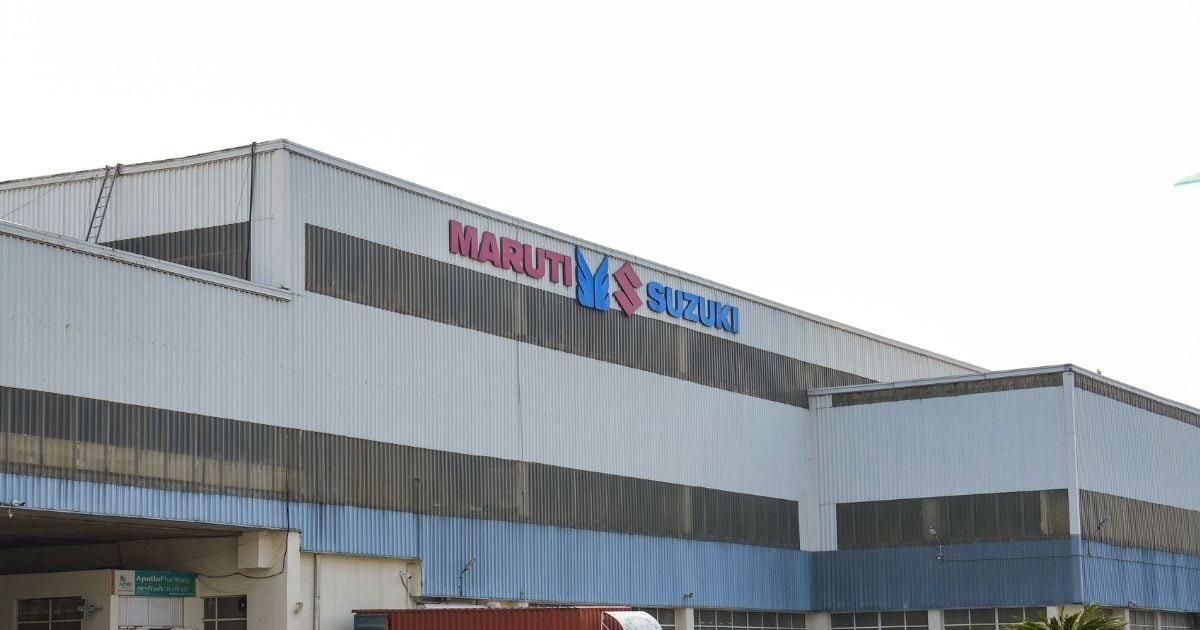
Once every other car was sold by Maruti, now the scene has changed!

Once every other car was sold by Maruti, now the scene has changed!

Maruti Suzuki's dominance in the Indian car market is continuously decreasing. The company's market share has declined to 39.26 percent in the financial year 2025-26 (FY26), which is the lowest level in the last 13 years. According to Society of Indian Automobile Manufacturers (SIAM) data, this is the third consecutive year when Maruti's share has declined. The company's share was around 50 percent in FY20, which means there has been a decline of about 12 percent in the last six years.

The main reason for the change in the Indian automobile market is the growth of the SUV and Utility Vehicle (UV) segments. The UV segment now accounts for 67 percent of the total passenger vehicle market in FY26, while the growth of sub-4 meter cars was just less than 2 percent. There was an increase of 11 percent in UV segment. Maruti Suzuki's share in the UV segment is below 25 percent, while its dominance in the sub-4 meter segment (like Wagon R, Swift, Baleno) remains at 67 percent. But the company has suffered losses due to slowing demand for small cars.

Where is the gap coming from?

The biggest issue among the weaknesses of Maruti is the absence of diesel engine. The share of diesel engine vehicles in the market is about 20 percent, but Maruti has completely left this segment. The company's positioning remained weak even in the premium segment. For example, Toyota-badged models often outsell Maruti's twin models. The case of Grand Vitara (Toyota Hyrider) is a good example of cannibalization, where the Toyota version is being liked more. Maruti Invicto sells only 300-400 units per month, while Toyota Innova Hycross sells 9,000-11,000 units.

Mahindra and Tata took advantage

Competitors took advantage of this opportunity. Mahindra & Mahindra doubled its share in five years and reached second position with 14.21 percent in FY26. Models like Thar, Bolero and Scorpio strengthened it. Tata Motors' share reached 13 percent, in which Nexon, Punch and Safari have a major contribution. Both the companies have gone ahead in SUV and premium features, design and safety.

What do the figures say?

Talking about figures, Maruti holds about 50 percent share in the petrol and CNG segments, but powertrain complexities, mistakes in diesel and premium offerings and loss of brand aspiration have worsened the situation. Tata and Mahindra have set new standards in design, features and safety.

India's passenger vehicle market reached record levels in FY26, with SUVs accounting for 56-67 percent share. Maruti has set a target of acquiring 50 percent share by FY31, but analysts believe this will be challenging. The company has not yet given any new statement on this target.

still number-1

Overall, Maruti Suzuki still remains India's largest car company and has a strong service network. But the SUV boom, changing consumer preferences and increasing competition have challenged its traditional dominance. In the future, the company can strengthen its position only by electric vehicle transition and strong offerings in the premium segment.
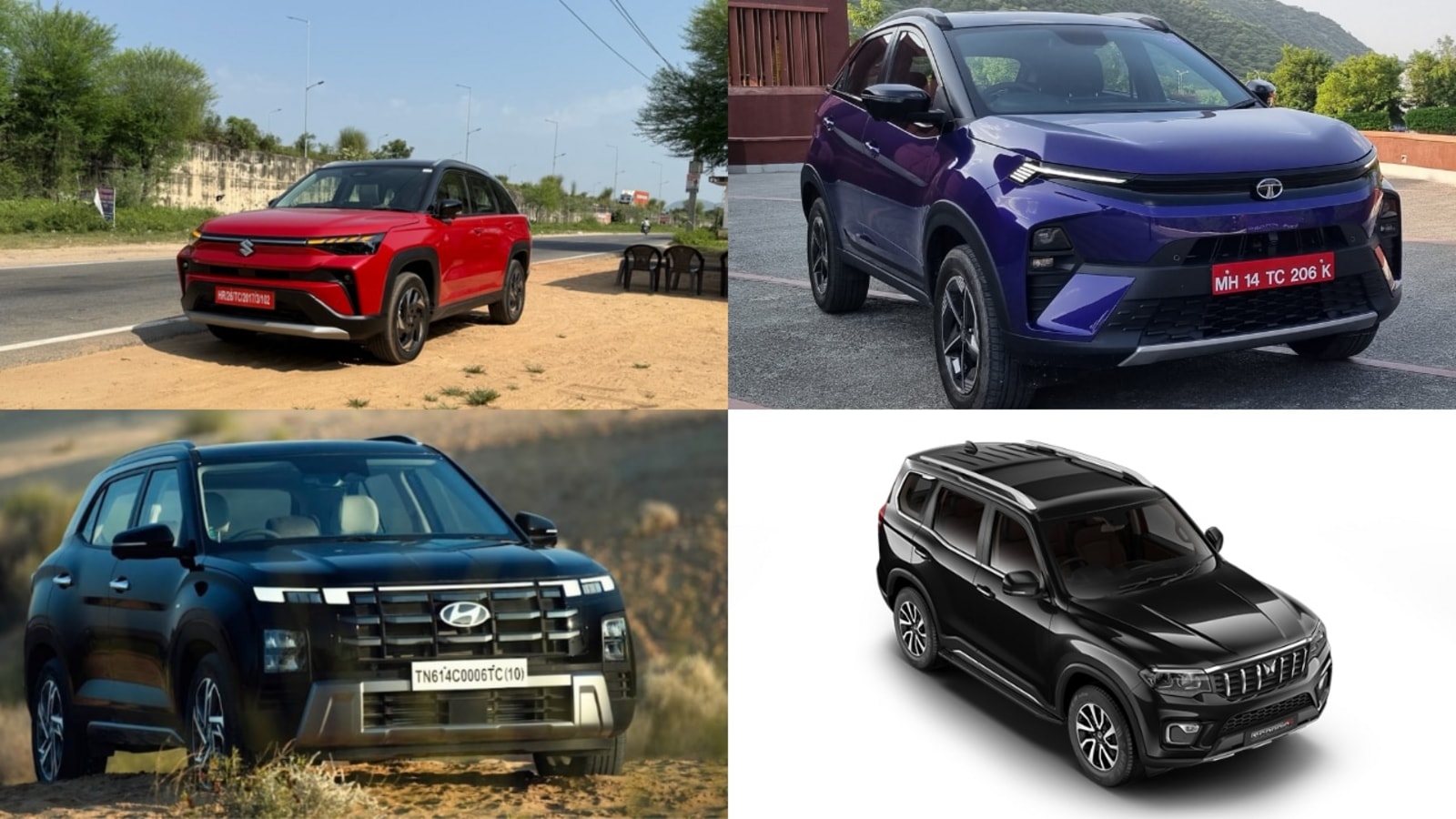
Source link

SUVs dominate Indian car market as hatchback buyers decline due to premium: Report

SUVs dominate Indian car market as hatchback buyers decline due to premium: Report

SUV market share has reached 52 per cent, while hatchbacks have declined to just 26 per cent, their weakest share in almost 20 years.

SUV market share has reached 52 per cent, while hatchbacks have declined to just 26 per cent, their weakest share in almost 20 years. (Photo is symbolic)

The Indian passenger vehicle landscape is undergoing a structural shift, and this time, it is not a short-term change in priority. This is a mindset change. A new SOIC Research report titled “Premiumization: India's Next Consumption Wave” points to a clear trend, SUVs are no longer just a segment, they are the new definition of mobility aspiration in India. The entry-level hatchback, which was once the default choice of first-time buyers, has been losing its position for five consecutive years, indicating that affordability is no longer the only deciding factor in the purchase decision.

Preferred Source Banner

The numbers tell the story clearly. SUV market share has reached 52 per cent, while hatchbacks have declined to just 26 per cent, their weakest share in almost 20 years. In FY2024 alone, SUV sales grew by 23 percent year-on-year, while hatchbacks declined by 17 percent. It's a surprising change for a market once dominated by compact cars.

Also read: BMW Group India records best-ever Q3 2025 sales, EV sales up 246% year-on-year

Premiumization isn't just about price, it's about identity

Be it the design and cabin refinement or the technology offering and road presence, Indian buyers are clearly looking for much more than functional mobility. The report said premiumization is flowing across the value chain, from OEM product strategy to components, internal suppliers and supporting ecosystems. Cars are no longer bought just for commuting; They are an extension of lifestyle, status and personal expression.

Automakers align portfolios

Car manufacturers are reading the matter and reacting decisively. Mahindra & Mahindra, which has seen tremendous success with the Scorpio-N, Thar and XUV portfolio, has made its stand clear. Mahindra Group MD and CEO Dr Anish Shah, quoted in the report, said, “Mahindra & Mahindra has decided not to make sedans, hatchbacks and small SUVs.”

Tata Motors is echoing this sentiment, with new-age SUVs like the Nexon, Punch and Harrier leading its volume play. “Especially in the SUV segment, we are seeing significantly higher growth than the industry average, driven by both upgraders and first-time buyers,” said Shailesh Chandra, MD, Tata Motors Passenger Vehicles.

Also read: Festival has arrived early: GST reduced, hatchbacks will become cheaper due to reduced tax.

Even Maruti Suzuki, the face of India's hatchback era, has accepted this change. “India is moving from small cars to high-end cars and while small cars may come back cyclically, the structural growth will remain with SUVs,” the report quoted Maruti Suzuki Chairman RC Bhargava as saying.

aspirations have changed

Earlier, first-time buyers would visit dealerships in search of the most affordable four-wheeler. Today, first-time buyers increasingly want a vehicle with height, stance and features, whether that means stretching the budget or opting for long-term financing.

The SOIC report attributes this to rising disposable income, easier credit access and a change in mindset where ownership is about pride rather than just practicality.

what comes next?

With SUVs expected to retain their majority share till FY2025 and beyond, OEMs are reorganizing their product pipelines. Compact SUVs are replacing the traditional entry hatchback, and features once seen in premium models, touchscreens, connected tech, panoramic sunroofs are now standard conversation starters. 8 to 12 lakh bracket.

India's auto market is clearly at a turning point. The era of compact affordability is giving way to the era of attainable aspiration, and in that story, the SUV has emerged as the new cultural icon of Indian mobility.

Get information about upcoming cars in India, electric vehicles, upcoming bikes in India and cutting-edge technology that is changing the automotive landscape.

First publication date: 20 October 2025, 13:44 PM IST

Source link