Is it more expensive to buy an EV or a Petrol car? Understand the full details of 50,000 KM

Is it more expensive to buy an EV or a Petrol car? Understand the full details of 50,000 KM

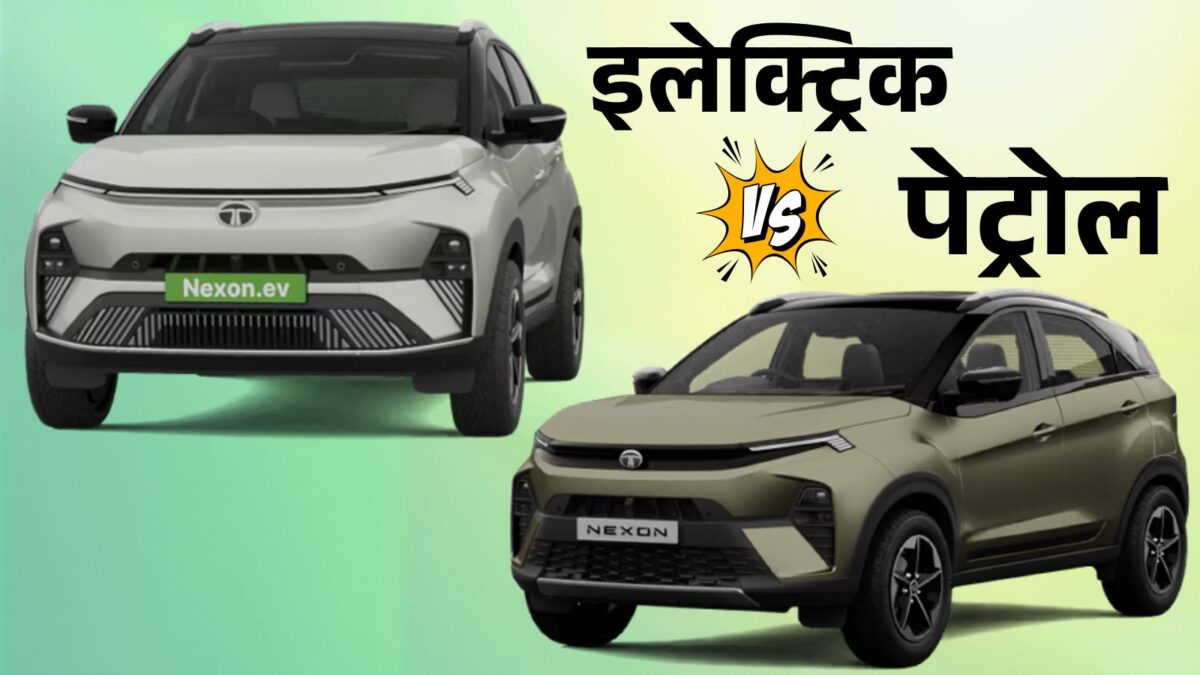
Amidst rising fuel prices and pollution, there is only one big question in the mind of every car buyer today, whether to buy an electric car (EV) or a petrol car? At first glance, EV seems expensive due to its high price, whereas petrol car fits in the budget. But the real game starts when the car hits the road.

Do you know that after driving just 50,000 kilometers, there is a huge difference in the cost of both? An EV, which may seem heavy in initial investment, can save you lakhs of rupees after covering long distances. Come, without any confusion, let us understand which car will prove to be the real value for money for you with simple mathematics of maintenance, running cost and resale value.

Mathematics of Initial Price (Buying Cost)

There is a big difference in the starting price of petrol and electric cars. Generally, compared to a petrol car of the same segment and model, its EV variant is costlier by around Rs 3 to 5 lakh.

Petrol Car: Low starting price, low down payment and low loan EMI.

Electric Car: Higher starting price, but the difference is reduced slightly due to tax exemptions and subsidies on road tax and registration fees in many states.

Running cost: direct calculation per kilometer

The real cost of driving a car is decided from here. While petrol prices are skyrocketing, electricity rates are quite cheap.

Petrol Car: If the car gives a mileage of 15 km/litre and petrol is ₹100/litre, then the cost per kilometer comes to around ₹6.66.

Electric Car: It takes about 30-40 units of electricity to fully charge a normal EV (costs about ₹ 300), which enables it to travel 300 km. According to this, the cost of EV comes to only ₹ 1 to ₹ 1.50 per kilometer.

Total savings after 50,000 kms

Let us now compare the total expenses on fuel and charging after driving 50,000 kms:

type of expense Petrol Car (Mileage: 15 km/l) EV charging costs
cost per kilometer ₹6.66 ₹1.20
Total cost of 50,000 km ₹3,33,000 ₹60,000
Direct savings (on fuel) ₹2,73,000

conclusion: The EV saves you around ₹2,73,000 on fuel costs alone, which covers a large part of its higher starting price.

Difference between maintenance and servicing

Maintenance of electric car is very cheap as compared to petrol car. Come, let us know about both-

Petrol Car: Servicing costs for every 10,000 km range from ₹5,000 to ₹8,000 due to engine oil, oil filter, spark plugs, coolant and gearbox. By 50,000 km this cost increases to ₹ 30,000 to ₹ 40,000.

Electric Car: There is no engine in an EV, so neither the oil has to be changed nor the moving parts get damaged. It only costs tyres, brake pads and AC filter. Its maintenance cost in 50,000 km is less than half that of petrol.

What is better for you?

After driving 50,000 kilometers, the EV not only recovers the extra cost of its petrol variant, but also starts saving you lakhs of rupees (about more than Rs 3 lakh including fuel + maintenance).

Buy EV then: If your daily commute is more than 50-60 kms, you want to keep the car for 5-7 years and you have charging facility at home.

Buy a petrol car then: If your annual running is very low (less than 500 km a month), budget is limited or you often travel on long routes where charging infrastructure is weak.
Source link

Increase the mileage of your vehicle in this way amid rising prices of petrol and diesel!

Increase the mileage of your vehicle in this way amid rising prices of petrol and diesel!

Last Updated:

Amidst the rising prices of petrol and diesel, every car owner wants more mileage. The good thing is that by adopting some easy habits you can save 10-25% fuel. Small things like correct tire pressure, smooth driving, low weight and regular servicing make a big impact on your pocket. If you also want to reduce fuel expenses every month, then definitely know these 5 important tips.

news quickly

Zoom

Car mileage can be increased in these 5 ways. (Photo-AI)

The rising prices of fuel have increased the worries of every vehicle owner. Due to continuous increase in the prices of both petrol and diesel, monthly expenses are increasing by hundreds of rupees. In such a situation, improving the mileage of the car is not only a way to save money, but is also beneficial for the environment.

By adopting small habits and maintenance you can save 10-25% fuel. Correct driving style, regular servicing and maintaining good condition of the vehicle is equally effective for both petrol and diesel engine cars. By adopting these tips you can cover more distance at less expense. Let us know the five tips one by one.

1. Maintain correct tire pressure

Maintain correct air pressure in tyres. Underinflated tires increase rolling resistance, which can reduce mileage by 5-10%. Check every week or before a long drive. This is the easiest and most effective method for both petrol and diesel cars.

2. Adopt smooth driving

Avoid sudden acceleration, hard braking and high speed. Use cruise control at speeds of 80-100 km/hr. Change gears slowly and run the engine at the correct RPM. Aggressive driving consumes 15-30% more fuel.

3. Lose unnecessary weight

Do not keep heavy items, roof carriers or unnecessary items in the boot or inside the car. Every 50 kg extra weight affects mileage by 1-2%. The weight reduction is immediately visible in both engine variants.

4. Get regular maintenance done

Keep the air filter, fuel filter, spark plug (petrol) and fuel injector clean. Use correct grade engine oil. Old filters force the engine to work harder, causing mileage to drop. Servicing is necessary from time to time.

5. Use AC carefully

On long drives, run with open windows instead of AC. You can do this in the evening or morning and also at low speed. Stop the engine if it stops for more than 1 minute. Unnecessary idling wastes fuel.

By adopting these tips, you can not only save fuel but also keep your car healthy for a long time. Give priority to safe driving. With this, you and the people sitting in the car will remain safe and the car will also give more mileage.

About the Author

authoring

Ram Mohan MishraSenior Sub Editor

Ram Mohan Mishra, working as Senior Sub-Editor at News18 Hindi, is active in digital media since 2021 and is currently handling the Auto Desk. They provide car and bike related information in an easy, clear and reliable manner.read more


Source link

Company will quote 25 KMPL, but you will not get even 15? Know the real game before buying a new car

Company will quote 25 KMPL, but you will not get even 15? Know the real game before buying a new car

Everyone dreams of buying a new car. Gleaming cars in the showroom, attractive mileage figures printed on the brochures and the salesman's assurance – 'Sir, it will give 25 kmpl comfortably'. A reality check happens a few months after purchasing the car. In city traffic, with AC on, the mileage drops to 15-18 kmpl in normal driving style. Sometimes it is available up to 30% less.

This is not a human error, but a systematic gap that exists between ARAI testing and real world conditions. Companies attract customers by making tall claims in advertisements, but in reality the customer bears the brunt of expensive petrol. This fraud is so common that every person buying a car should know about it before doing so.

This problem in claimed mileage

ARAI testing takes place in the lab, where perfect conditions are created. The car is run on a dynamometer (roller), the air conditioning is kept off, the driving style is computer simulated and very smooth. The distance is limited and there are no real life problems like traffic, potholes, load or fast acceleration. Result: ARAI figure often appears 20-35% higher. For example, if the company claims 22-25 kmpl, then it is normal to get only 15-18 kmpl in the city.

Why less if you drive yourself?

In the real world, many factors affect mileage. The biggest villain is AC itself. It is difficult to run without AC in the Indian summer, but in the test it is kept off. Idling, bad roads, overloading, fuel adulteration, aggressive driving and high speed highways also contribute to traffic jams. This gap is more visible in small petrol hatchbacks, whereas it is slightly less in diesel or larger engine vehicles. Many users report that the mileage is close to ARAI on the highway, but there is a huge drop in the city.

Companies say wrong?

This problem is not new. Car buyers have been complaining for years. Companies use it as a marketing tool, because mileage is the biggest factor in India. small asterisks in the brochure

It is written with 'ARAI certified, ideal conditions', but the common man ignores it. The result is disappointment after purchase. If we reduce the ARAI figure by 25-30% then a realistic estimate can be made.

  • What to do before buying a new car?
  • Do not trust the ARAI figure, instead look or read real user reviews.
  • Calculate based on your city's traffic, driving style and usage.
  • Check it out yourself on a test drive. With AC on, how much is it giving at normal speed?
  • Maintain correct tire pressure and get regular servicing done.
  • Do not carry unnecessary weight and adopt smooth driving.

Also consider CNG or hybrid options.

Source link