Suzuki's multi-fuel strategy: Why isn't India ready for 100% EV any time soon?

Suzuki's multi-fuel strategy: Why isn't India ready for 100% EV any time soon?

Suzuki Motor Corporation's global goal is clear: to achieve carbon neutrality by 2050. But the company says how each market gets there should be shaped by local conditions. In India, this translates into a multi-pathway strategy, adopting electric vehicles, hybrids, biofuels, CNG and even compressed biogas as parallel solutions.

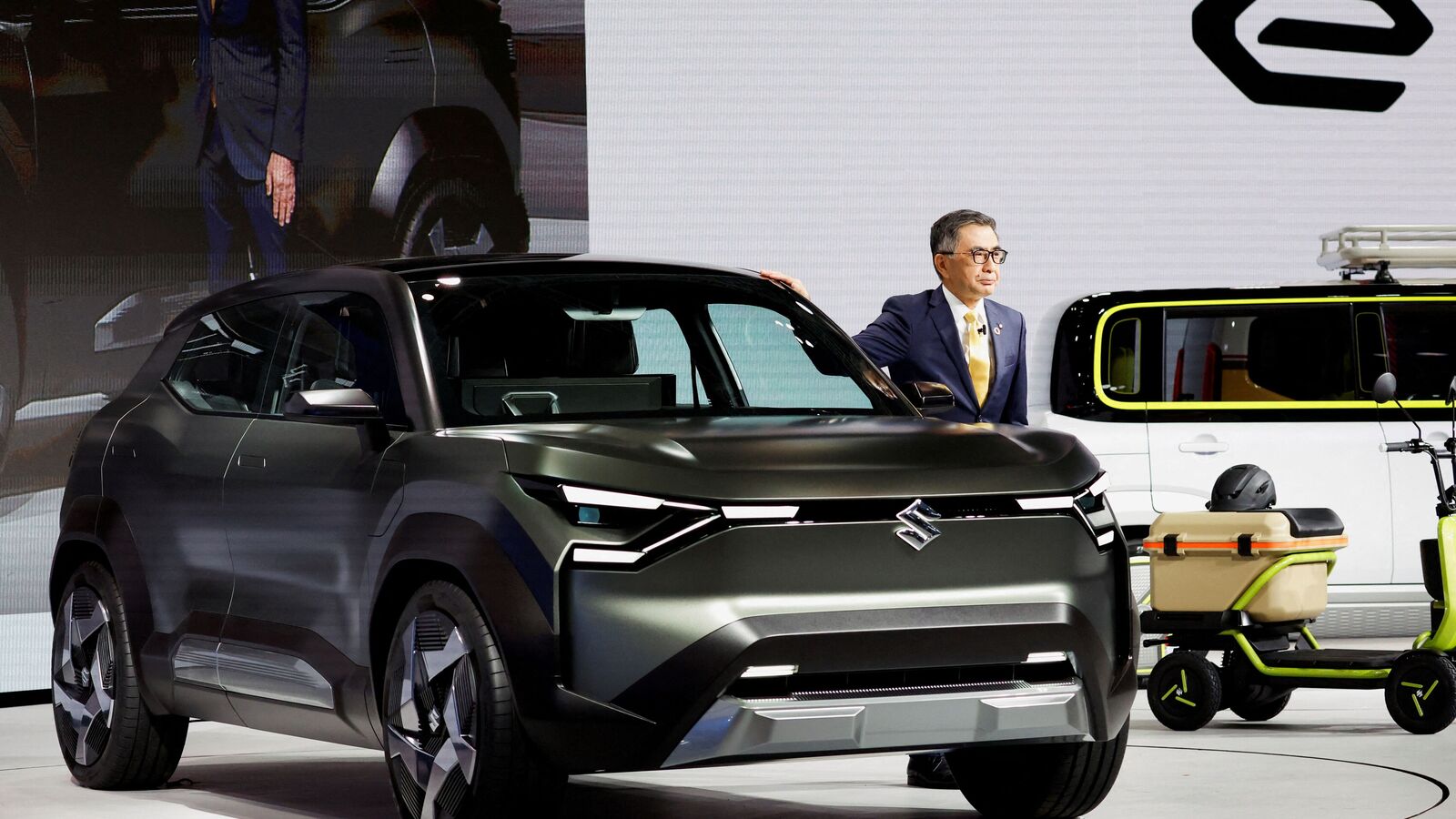
“We have to find our own path to carbon neutrality,” Toshihiro Suzuki said at the Japan Mobility Show. This statement reflects a fundamental difference in Suzuki's worldview. While global automakers are racing to phase out internal combustion engines, Suzuki is betting that India's transformation will be layered, gradual and deeply linked to its energy ecosystem.

Also read: Suzuki's CBG initiative: Connecting rural India to a carbon neutral future

Why is all the electricity not enough?

India's electric vehicle travel is gaining momentum, but infrastructure remains a hurdle. Public charging points are still clustered in metros, while tier-II and rural areas lag far behind. Power grid flexibility, localization of batteries and cost parity still remain challenges.

Suzuki recognizes these shortcomings. In their view, implementing an all-electric approach prematurely could alienate millions of customers who depend on affordable, reliable mobility. Battery technology remains expensive, raw materials are scarce and localization is a lengthy process.

In that sense, the company's “multi-pathway gamble” is also a hedge against uncertainty, ensuring that Suzuki remains relevant in all areas even as the market evolves.

India in origin

Few global automakers have placed as much strategic weight on India as Suzuki. The company's Suzuki R&D Center India (SRDI) now leads the development of alternative fuel technologies tailored to local conditions. From hybrid powertrains to biofuel compatibility and CBG integration, SRDI's work underlines Suzuki's belief that India will not just be a key market, it will be a laboratory for sustainable mobility in the Global South.

Suzuki's new EV plant in Kharkhoda, Haryana, is set to begin production in FY 2025-26, marking its entry into battery-electric manufacturing. But the company has equally invested in hybridization, a bridge technology that meshes well with India's short-term emissions targets and consumer economics.

Also Read: Maruti Suzuki to capture 50% market share in Indian PV market. This way

practicality over purity

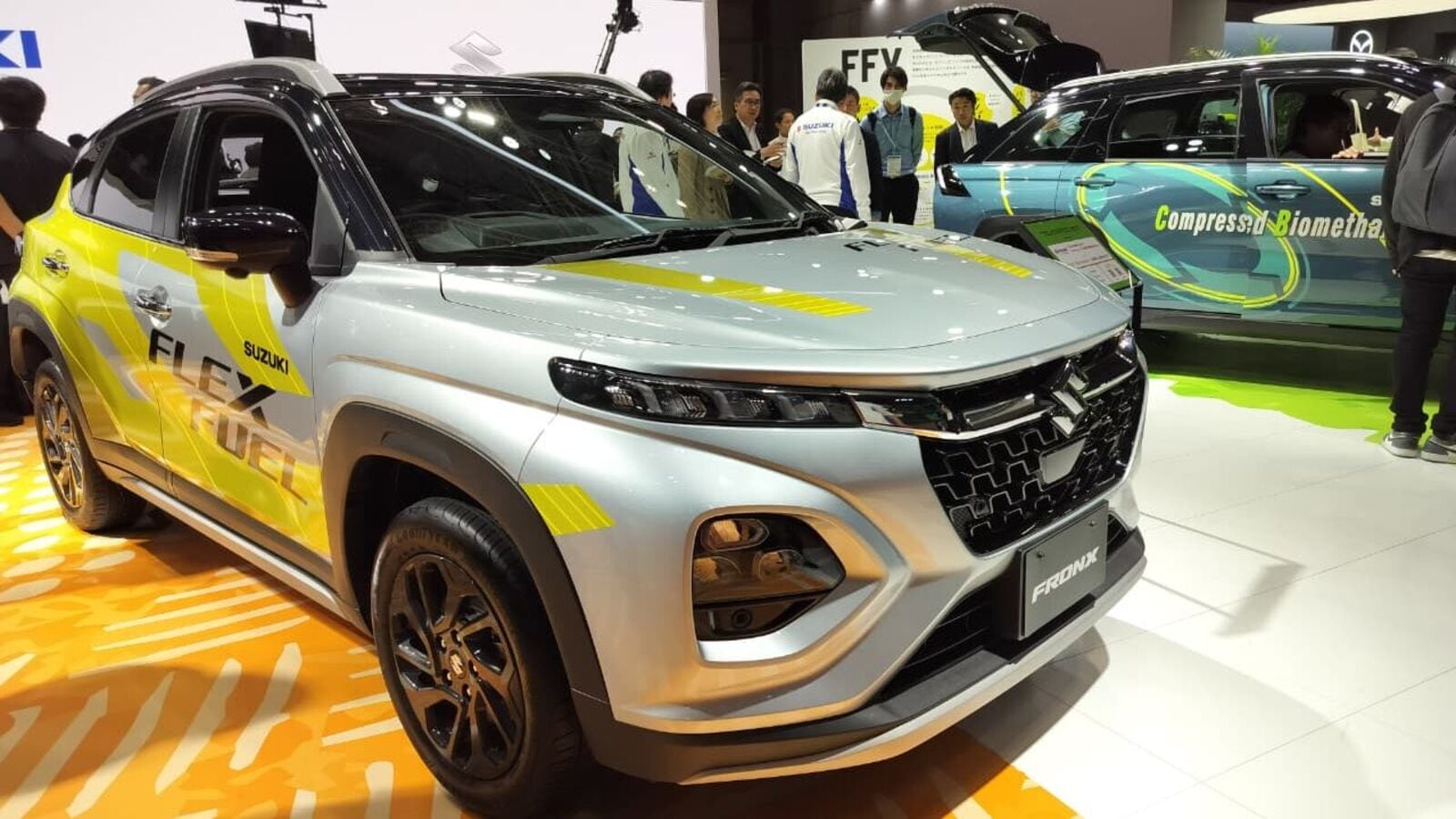
Suzuki's position is not anti-EV, it is context-driven. The company sees electrification as part of a larger continuum rather than a single, comprehensive solution. Its upcoming models will include mild hybrid, strong hybrid, flex-fuel and electric, allowing consumers to choose based on usage, affordability and local fuel infrastructure.

In many ways, this reflects India's policy direction, where ethanol blending, biogas and hybrid technologies are seen as practical enablers of the green transition. As Toshihiro Suzuki has said, “Each country must decide its own path to carbon neutrality based on its own situation.”

The challenge for Suzuki is about timeliness. Move too fast toward EVs, and the company risks alienating its price-conscious customer base. Move too slowly, and it risks being left behind as regulators tighten the screws and rivals expand their EV portfolios. Then again, the answer lies in balance, a philosophy that defines the brand's approach not only towards technology, but also towards business.

betting on the long game

Suzuki's game in India is not about chasing headlines. It is about building an ecosystem that can sustain change for decades. The company's ongoing work with biogas, hybridization and localized EV production signals an intention to diversify, not dilute.

If this approach is successful, Suzuki could demonstrate something the industry has often forgotten, that the path to zero emissions does not necessarily have to be driven by one type of energy. In a country as complex and diverse as India, carbon neutrality will not come from a single breakthrough, but from the sum of many small, systematic steps. For Toshihiro Suzuki, it's not hesitation, it's realism. And in India's case, realism may be the smartest path to a clean future.

Get information about upcoming cars in India, electric vehicles, upcoming bikes in India and cutting-edge technology that is changing the automotive landscape.

First publication date: 30 October 2025, 14:44 PM IST
Source link

Suzuki strengthens India's role in FY2030 growth strategy by unveiling e-Vitara

Suzuki strengthens India's role in FY2030 growth strategy by unveiling e-Vitara

Toshihiro said India is and will remain a key business area for the company to achieve its growth strategy for fiscal year 2030. Interestingly, in fiscal year 2023, the company achieved revenue of 5.4 trillion yen with sales of 3.2 million cars and 1.9 million motorcycles. Globally, Suzuki is targeting sales of 7 trillion yen in fiscal year 2030, and achieving sustainable growth.

Also read: Maruti E Vitara equipped with off-road technology unveiled for the first time

The focus here is on sustainable development. For FY2029-30, Suzuki has said this will contribute to the achievement of a carbon neutral society and the economic growth of our core business areas, Japan, India and Europe along with emerging countries such as India, ASEAN and Africa. main.

The focus will be on creating solutions that are unique to Suzuki, developing customer-centric products and services and growing with the operating countries and regions.

India's role changing dynamics for Suzuki

One of Suzuki Corporation's key goals for fiscal year 2030 is to achieve significant progress toward carbon neutrality. The company aims to reach carbon neutrality by 2050 in Japan and Europe and by 2070 in India in line with the target dates set by the respective governments.

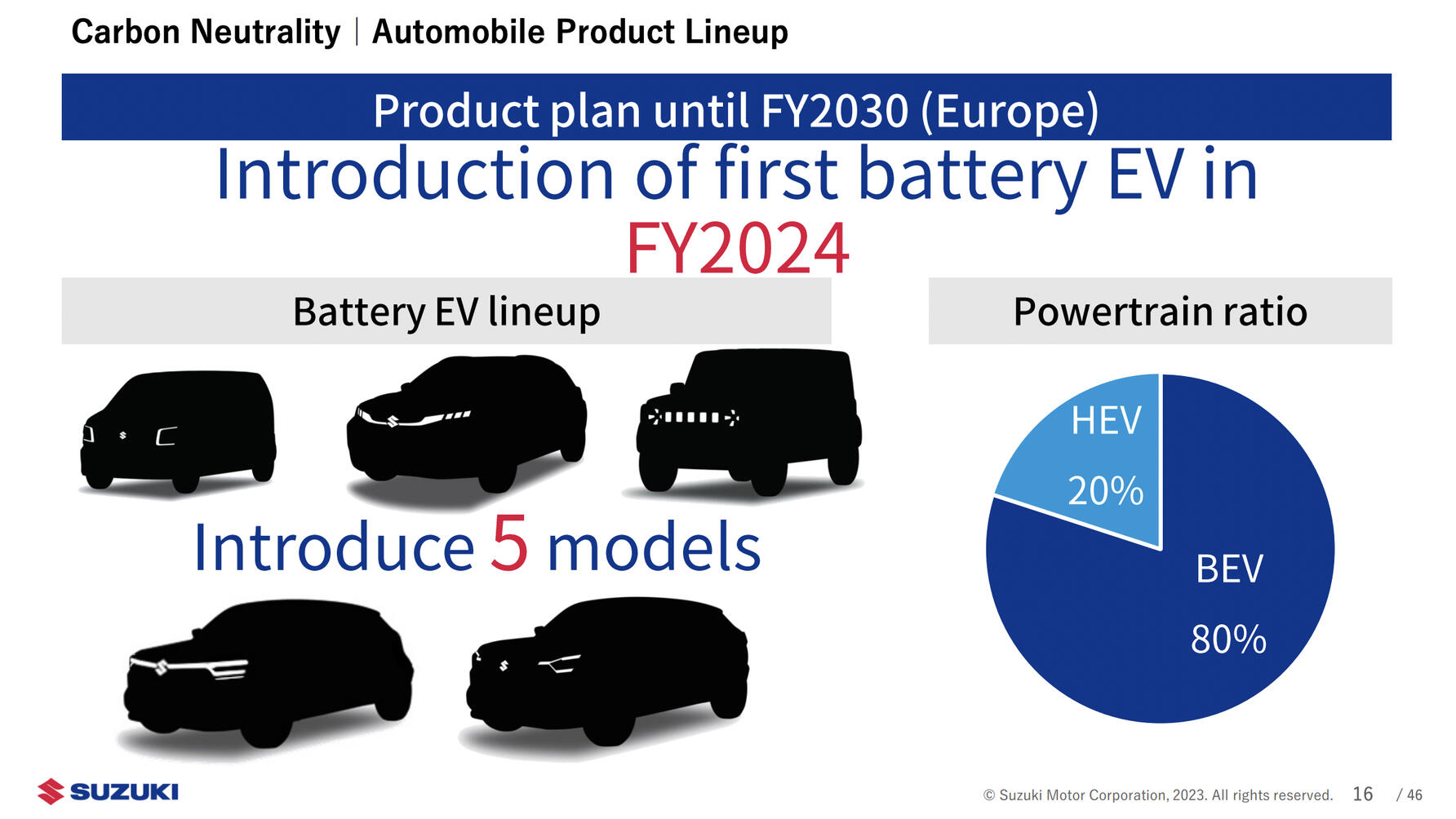
Additionally, the company also plans to grow in other regions such as Africa, Latin America, and Southeast Asia. Central to this goal is Suzuki's electric vehicle (EV) strategy, which includes plans to introduce six EVs in Japan and India and five in Europe by fiscal 2030. This transformation begins with the Suzuki E Vitara, the brand's first electric vehicle.

Suzuki had earlier announced a lineup of five EVs, which included the Maruti Suzuki E Vitara, WagonR, FrontX and two other models, starting with the E Vitara. Notably, production of the Suzuki e Vitara will begin at Suzuki Motor Gujarat (SMG) by spring 2025, with plans for export to global markets.

Here's your first look at the e Vitara, Maruti Suzuki's all-electric offering, which will be manufactured at the company's Gujarat facility.

To support its BEV production, Suzuki has committed to invest Rs 3,200 crore to add fourth production line at SMG plant. With this expansion, the annual production capacity of the plant will increase from the current 7,50,000 units to 10 lakh units by FY 2026.

Additionally, Suzuki plans An investment of Rs 3,500 crore to set up a second facility at SMG, which will add another one million units annually by FY2029. This expansion will ultimately increase SMG's total production capacity to two million units annually, supporting Suzuki's ambitious global growth and sustainability goals.

Suzuki's technology strategy for carbon neutrality

In addition to increasing production, Suzuki Corporation has outlined a comprehensive technology strategy for the next decade aimed at achieving its carbon neutrality goals. This strategy focuses on reducing energy consumption through three main concepts: genba, genbutsu, genjitsu (visit the site, make direct observations and determine the facts), sho-sho-kei-tan-bi (small, less, light, small), beauty) and yaramika (to challenge).

Toshihiro highlighted that the company's electric vehicle (EV) strategy will be guided by the principles of Sho-Sho-Kei-Tan-Bi, which emphasizes the production of compact, efficient and resource-conscious vehicles. This philosophy drives the development of EVs with streamlined, highly efficient motors and lightweight batteries, ultimately maximizing energy efficiency while minimizing environmental impact.

suzuki electric vehicle plan 2030
Suzuki revealed in its presentation that it plans to bring 5 EVs to market by 2030, including a production-spec EVX.

Furthermore, Suzuki's commitment to energy efficiency extends to the entire vehicle life cycle. At the heart of this approach is the concept ofkeiOr density. According to Toshihiro, Suzuki cars are about 200 kg lighter than typical European, Indian or Japanese cars.

Also read: Suzuki unveils sustainability roadmap: Focus on lighter cars, EVs. check details

This reduction in weight translates into a 6 percent reduction in energy required for driving, 20 percent less energy for manufacturing and less resource use overall, significantly cutting CO2 emissions and contributing to a more sustainable future. This is in line with Suzuki's ambition to do so.

Multidimensional approach key to sustainability

While EVs are a central focus, Suzuki's sustainability strategy covers a wide range of initiatives. The company is actively developing vehicles designed for high-efficiency internal combustion engines, advanced driver assistance systems and streamlined recycling and disassembly, with the aim of reducing its overall environmental footprint.

Suzuki Corporation understands that a “one size fits all” approach to electric vehicles (EVs) is not practical for global markets. According to Toshihiro, the company plans to diversify its investments not only into battery EVs but also hybrids and internal combustion engines. ICE) which operate on alternative fuels like CNG, biofuel and ethanol. This multi-pronged approach enables Suzuki to offer tailored solutions that maximize performance and energy efficiency in different markets.

Also See: Maruti unveils eVX EV concept at Auto Expo 2023

Suzuki's commitment to regional carbon neutrality goals aligns with its mission to expand customer choice and provide products and services that meet specific regional needs. By addressing environmental impact across various technologies, Suzuki aims to support sustainable mobility and meet the unique demands of each market.

Brand perspective is changing

Toshihiro sees Suzuki's future as a “lifestyle infrastructure company”, playing an integral role in revitalizing economies by addressing daily mobility needs through initiatives such as infrastructure development and next-generation mobility solutions.

The company is dedicated to providing high-value products and services that make it essential for both people and society. According to Toshihiro, this mission includes a strong commitment to the achievement of carbon neutrality and a sustainable future, positioning Suzuki as a major contributor to social and environmental progress.

Get information about upcoming cars in India, electric vehicles, upcoming bikes in India and cutting-edge technology that is changing the automotive landscape.

First publication date: 05 November 2024, 10:25 AM IST

Source link