
From Hyundai Aura to Honda Amaze, which sedan won in April? Know

From Hyundai Aura to Honda Amaze, which sedan won in April? Know

Despite questions being raised on its popularity, the sedan segment has performed brilliantly in April 2026. A total of 35,218 units were sold within this segment last month, which shows a strong annual growth of 21.92% as compared to 28,887 units in April 2025.

During this period, 6,331 additional vehicles were sold. However, there has been a slight decline of 8.52% on a monthly basis compared to 38,500 units in March 2026. Even amid the dominance of SUVs, sedans have attracted loyal customers due to their utility and low maintenance costs. Come, let us know about the 5 best selling sedans of last month.

1. Maruti Dzire

Maruti Dezire maintained its monopoly on the sedan segment in April 2026. With sales of 23,580 units it achieved a huge market share of 66.95%. Compared to 16,996 units in April last year, a tremendous increase of 38.74% was recorded. Due to fuel efficiency, reliability and attractive features, Dezire continues to be the first choice of Indian families.

2.Hyundai Aura

Hyundai Aura stood at second place, with 4,587 units sold. Its annual growth was 8.59% with 13.02% market share. Aura is very popular among young buyers due to its modern design, premium interior and good feature list. This sedan is proving to be a great option for value for money.

3.Honda Amaze

Amaze secured the third position with sales of 2,856 units. Its market share stood at 8.11% with an impressive annual growth of 41.46%. Due to its excellent driving dynamics, spacious cabin and reliable engine, Amaze is attracting those customers who want both performance and comfort.

4.VW Virtus

1,162 units of Volkswagen Virtus have been sold. However, a decline of 27.60% was recorded on an annual basis. With 3.30% market share, this premium sedan is still a favorite among buyers looking for dynamic handling and European build quality.

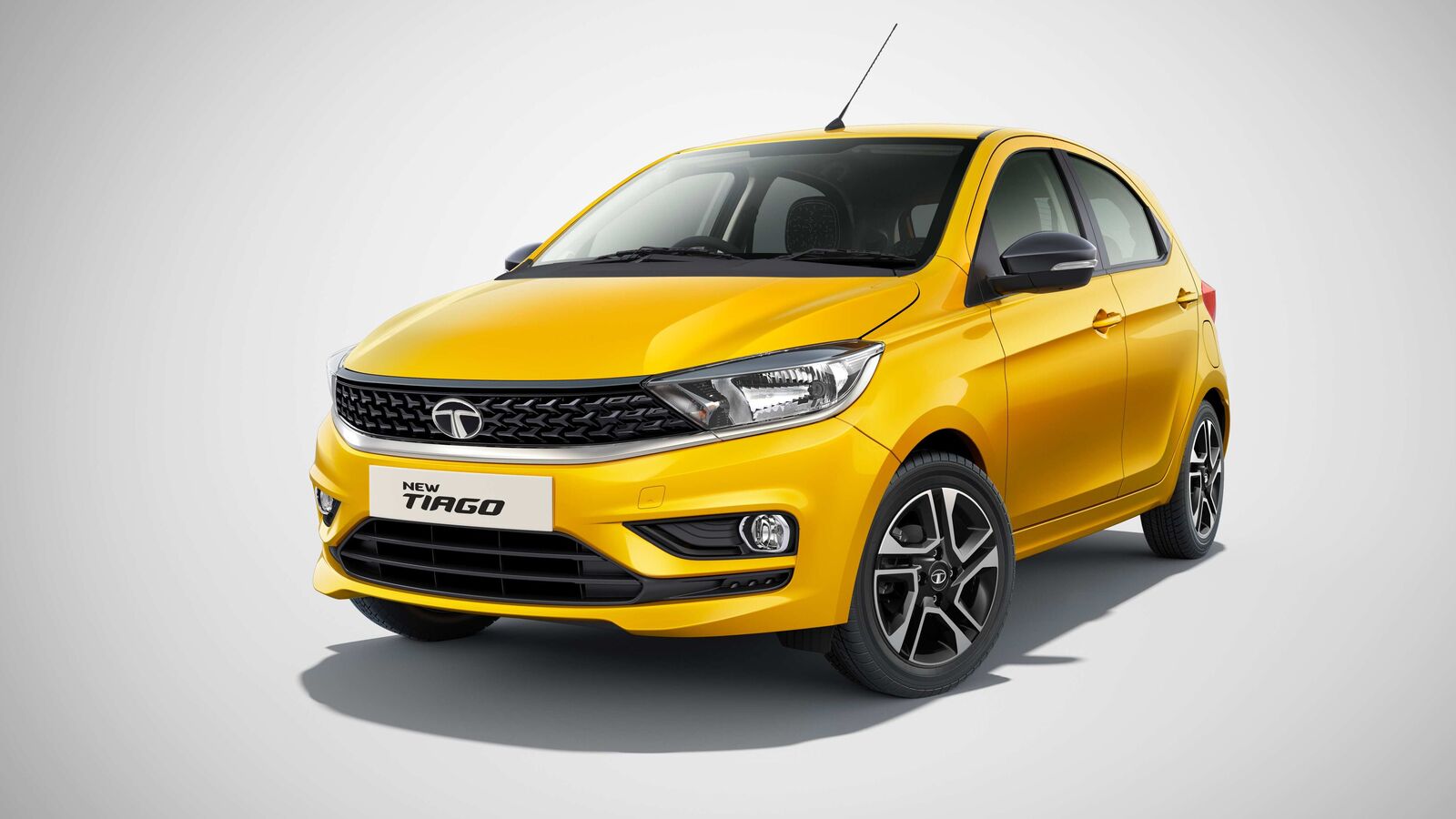
5. Tata Tigor/EV

Tata Tigor has made it to the top-5 with sales of 962 units. Its sales declined by 25.77% with 2.73% market share. With the electric variant, it remains an option for eco-conscious buyers. However, the petrol variant needs stronger marketing.

Apart from the top-5 cars of the segment mentioned above, 865 units of Hyundai Verna, 830 units of Skoda Slavia, 199 units of Toyota Camry and 177 units of Honda City were sold last month.
Source link

India’s passenger vehicle industry to see less than 5% growth in FY25, says Tata

India’s passenger vehicle industry to see less than 5% growth in FY25, says Tata

  • Tata Motors’ key official Shailesh Chandra has hinted at impending price hikes for passenger vehicles in the coming months.
Tata Motors’ key official Shailesh Chandra has hinted at impending price hikes for passenger vehicles in the coming months.

Despite the rapidly rising demand for personal mobility and SUV-mania across the country, India’s passenger vehicle segment is likely to see less than five per cent growth in the next financial year, forecasted Tata Motors. Tata Motors Passenger Vehicles Managing Director Shailesh Chandra stated that India’s domestic passenger vehicle industry is likely to see moderate to less growth in the next fiscal starting in April 2024. However, the Tata Motors official believes electric vehicle sales in the country will grow despite the slow pace of EV charging infrastructure development.

Passenger vehicles to see sluggish growth

Chandra said that in FY23, the industry witnessed 25 per cent growth in the passenger vehicle segment, which is expected to become moderate in this financial year to about eight per cent. The Tata Motors official said that the industry is currently witnessing a high base effect and in the next financial year, there will be be slightly challenging situation for the segment. This challenging situation would result in the industry recording less than a five per cent growth rate in the next financial year, claimed Chandra during an analyst call.

Watch: 2023 Tata Safari review: Family SUV with bachelor spirit?

Passenger vehicles likely to be pricier

In the last few months, automakers in India have announced price hikes for their respective passenger vehicle models citing increasing production costs due to factors such as surging raw material costs, inflation etc. Chandra hinted that there would be more such price hikes in the next financial year, which would pose challenges to the growth of passenger vehicles.

Citing various challenges for the growth of passenger vehicles in India, Chandra noted that while commodity prices have been stable in the past quarter or so, there is a risk that prices may go up going forward. He hinted that costs of crucial raw materials are going up, which may impact the prices of passenger vehicles negatively in the coming months.

Watch: 2023 Tata Nexon EV facelift first drive review: Best-seller gets even better?

Electric vehicles to continue growing

Tata Motors is spearheading the democratisation of electric vehicles in India’s passenger vehicles segment. The homegrown OEM is leading the Indian electric car segment with more than 80 per cent market share. In the last few years, the segment has witnessed rapid growth thanks to various factors such as rising costs of petrol and diesel, narrowing price gap between electric and fossil fuel vehicles, availability of various government subsidies and incentives for EVs, tightening emission norms, growing awareness about environmental pollution and vehicular emissions’ impact on that, the launch of new electric cars etc. Tata Motors believes this growth momentum will continue in the next financial year as well.

Chandra said that in 2023, while the overall passenger vehicle industry grew eight per cent on a year-on-year basis compared to 2022, electric vehicle sales surged by 95-100 per cent YoY compared to the previous year. “I think this trend is likely to continue. So companies with stronger portfolios in CNG and EVs will grow,” Chandra said.

Watch: Tata Altroz iCNG: First Drive Review

Interestingly, this growth projection comes despite the sluggish pace of growth for the electric vehicle charging infrastructure, which is considered a key factor for the growth of electric vehicle sales. “As far as EVs are concerned, I think the biggest challenge here is the pace at which the charging infra is growing. It is lagging behind the pace at which the EV adoption is happening,” Chandra noted further adding, “Given that the charging infra is crucial to the growth and expansion of EV market, we have gone for an open collaboration approach with all charge point operators as well as the oil marketing companies who are focusing on expansion of charging infra.”

First Published Date: 25 Feb 2024, 15:57 PM IST


Source link