
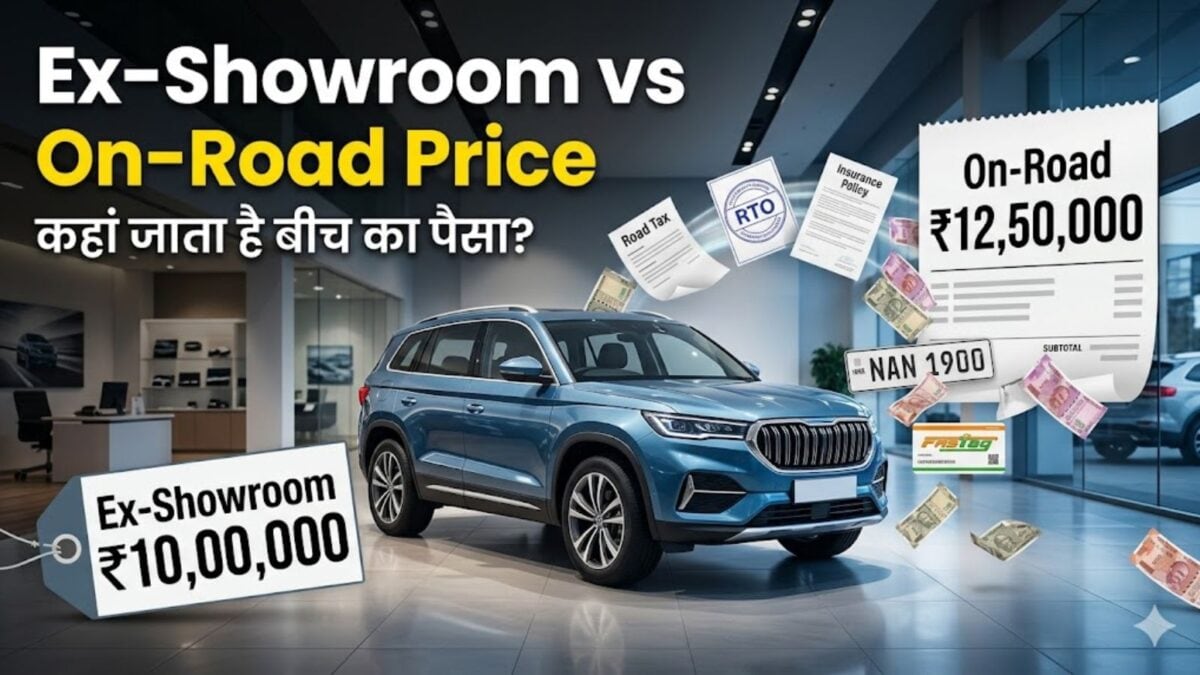
Ex-Showroom vs On-Road Price: Everyone dreams of buying a new car, but when we go to the showroom, the mathematics of the budget changes completely. There is a huge difference between the price shown in the advertisement and the amount deducted from the pocket. The main reason for this difference is the difference between 'Ex-Showroom' and 'On-Road' price.
Actually, the ex-showroom price is the basic amount at which the company sells the car. This includes only factory cost, dealer profit and GST. But to drive the vehicle legally on the road, many mandatory taxes and charges have to be paid. This is the reason why there is a huge gap of 15% to 25% between the showroom price of a car or bike and the final bill, which often surprises the customers. Let us know where the middle money goes?
What is the difference between ex-showroom and on-road?
When you buy a new car, there are various government and non-government charges added on top of the base price. Let's understand where every penny of your bill goes:
1. Road Tax / RTO Fees
This is the largest part of this gap. State governments collect road tax on every new vehicle to fund road maintenance and infrastructure. This tax can range from 6% to 20% in different states depending on the price of the vehicle, engine capacity (cc) and type of fuel (petrol/diesel/electric). Apart from this, registration fees and number plate (HSRP) charges are also included in this.
2. Vehicle Insurance
It is legally mandatory to have insurance to drive on the road in India. Third party insurance has been made mandatory. According to government rules, it is necessary to take third-party insurance for 3 years for a new car and 5 years for a two-wheeler. Apart from this, people also take 1 year comprehensive insurance to cover the loss of their own vehicle. By combining these two, the insurance premium becomes a huge amount.
3. TCS – Tax Collected at Source
According to the rules of the Income Tax Department, if the ex-showroom price of a vehicle is more than Rs 10 lakh, then the government charges TCS of 1% on it. Although you can claim this later while filing your Income Tax Return (ITR), it increases the on-road price at the time of purchasing the vehicle.
4. Fastag & Green Cess
Fastag is mandatory for every new vehicle to pass through the toll plaza on the National Highway, for which around Rs 400 to 600 is charged. In many states, in the name of controlling environmental pollution, additional green cess is imposed especially on diesel vehicles.
Dealer's hidden charges
There are some expenses which are not necessary, but the dealers include them in the on-road price list. It is very important for customers to know:
- Logistics or Handling Charges: Cost of bringing the vehicle from the yard to the showroom. The Supreme Court has declared it illegal, so you can demand its removal.
- Accessories Kit: Dealers add things like car mat, seat cover, chrome garnish in advance. If you wish, you can refuse to take them.
- Extended Warranty: Apart from the company's standard warranty, you can also get additional years of warranty removed, which is optional.
Work advice: Next time you go to buy a car, ask for an item-wise breakup of the on-road price from the dealer. You can also get the insurance done cheaply from any other company from outside, for which the dealer cannot force you. By being smart, you can save thousands of rupees in on-road prices.