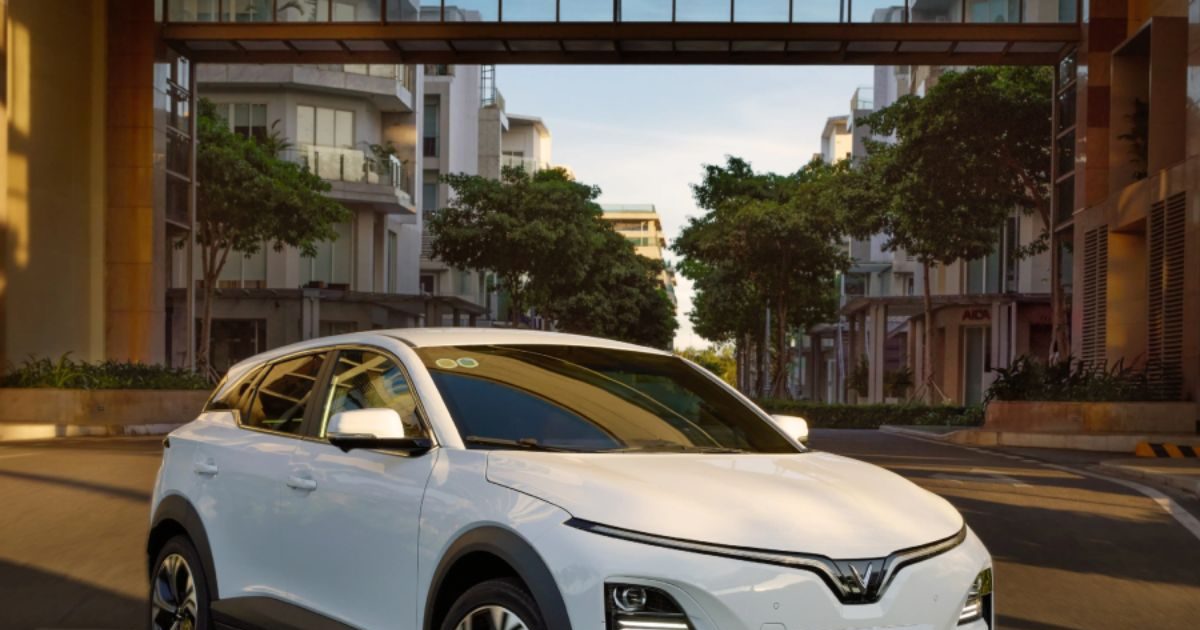
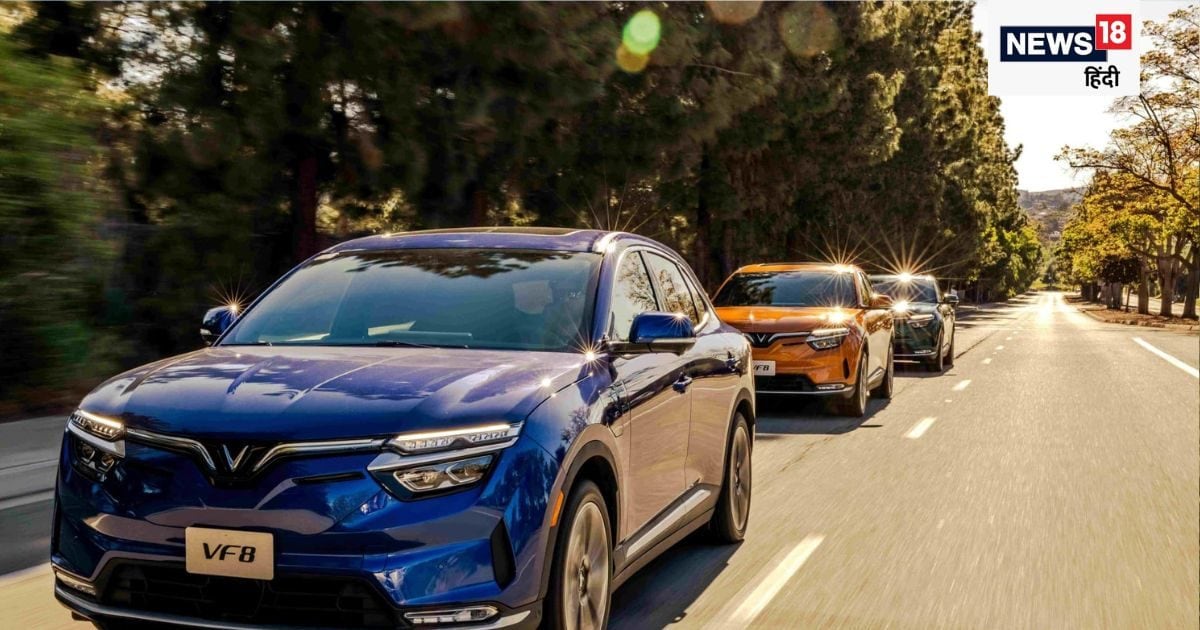
VinFast launches in India with VF6 and VF7, sells 1,000 units. Limo Green, VF3 and VF5 will be launched soon, will compete with MG Comet EV and Tata Punch EV.
New Delhi. Vietnamese electric vehicle manufacturer Vinfast started its operations in India in September 2025 with the VF6 and VF7. Within just four months of coming here, the company crossed the sales mark of 1,000 units and also continuously expanded its sales and service network. The company has so far sold more than 200 electric vehicles in 2026 and it is expected that these figures may increase significantly with the launch of three new products.
3-row electric mpv Vinfast's 3-row electric MPV Limo Green is set to hit showrooms in February, while the names of the remaining two new models have not been officially announced yet. According to media reports, Vinfast will launch VF3 two-door micro EV and VF5 sub-compact EV. While the VF3 will compete with the MG Comet EV, the VF5 will directly compete with the Tata Punch EV.
Vinfast Limo Green Through Limo Green, the Vietnamese EV manufacturer will target family-oriented electric car buyers and challenge BYD eMax7. Globally, this MPV comes with a 60.13kWh battery pack, which is paired with an electric motor that produces 204bhp of power and 280Nm of torque. It gives a range of 450 km (NEDC) on full charge. Three driving modes are available in Limo Green – Eco, Comfort and Sport. The same powertrain is likely to be given in the models coming to India also.
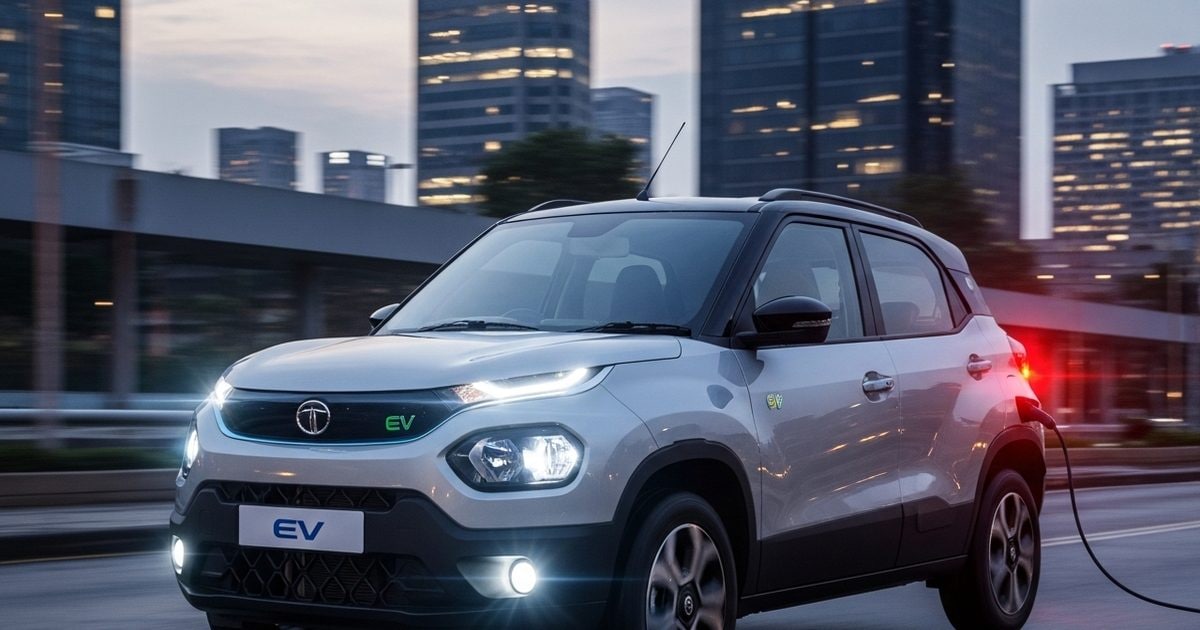
WinFast VF3 The VF3 will sit below the VF6 in the company's Indian product portfolio and will be positioned as an affordable urban electric commuter, with an estimated price between Rs 8 lakh and Rs 10 lakh. The VF3 has an 18.64kWh lithium-ion phosphate battery, which is paired with an electric motor, which gives a power of 44bhp. This compact EV gives a range of about 210 km on a single charge.
Winfast VF5 VinFast VF5 is available globally with two battery pack options – 29.6kWh and 37.23kWh – depending on the market. A 95bhp front-axle mounted motor is available with a small battery, which gives a range of 268 km (NEDC). At the same time, a 136bhp front-axle mounted motor is available with a large 37.23kWh battery pack, which gives a driving range of 326 km on full charge.
Location:
New Delhi,Delhi
First Published :
January 18, 2026, 16:36 IST
homeauto
VinFast will launch 3 new electric cars, ready to compete with Tata Punch EV
One of the defining developments of the year was the implementation of GST 2.0 reforms, which recalibrated the taxation structure for automobiles. Small cars, which form the backbone of first-time buyers’ mobility, saw a reduction in GST from 28 per cent to 18 per cent. This policy change made affordable cars more accessible to the burgeoning middle class, particularly in smaller cities and towns where such vehicles dominate household mobility.
Simultaneously, larger cars over four meters in length and premium motorcycles above 350cc were subjected to a fixed 40 per cent tax. The reforms not only reduced costs for buyers but also simplified the taxation framework, creating predictability in pricing and enabling dealerships to offer attractive deals during festival seasons.
Auto Retail Grows 3.4 per cent in H1 FY’26:
Two-wheelers continued to dominate the market, registering 88,37,140 units, a 3.07 per cent increase from a year ago.
India’s automobile retail sector recorded steady growth in the first half of FY’26 (April–September 2025), with total vehicle registrations rising 3.42 per cent year-on-year to 1,23,48,306 units, up from 1,19,39,890 units in the same period last year. The latest data highlights broad-based recovery across most vehicle categories, though growth remained moderate amid mixed economic indicators.
Two-wheelers continued to dominate the market, registering 88,37,140 units, a 3.07 per cent increase from a year ago. Accounting for over 71 per cent of total sales, the segment remains the primary volume driver for the industry. Demand was buoyed by improving rural sentiment, easing financing conditions, and steady traction for entry-level commuter bikes and scooters. Passenger vehicles (PVs) grew 3.67 per cent to 19,50,586 units, reflecting sustained momentum in the SUV and crossover segments. The category contributed nearly 16 per cent to overall registrations, aided by festive bookings and a widening choice of hybrid and electric variants.
In the tractor segment, sales surged 10.68 per cent to 4,48,987 units, marking the sharpest growth among all categories. The rise signals a recovery in rural markets and healthy pre-harvest demand. Three-wheelers also expanded 3.86 per cent to 6,18,225 units, supported by increasing adoption of electric passenger and cargo models for urban last-mile mobility. Meanwhile, commercial vehicles (CVs) recorded a modest 2.56 per cent uptick to 4,60,475 units, indicating stable freight and infrastructure activity despite broader macroeconomic headwinds.
The first half of FY’26 shows an encouraging mix of growth across personal and rural mobility segments, even as the construction equipment category declined slightly. With the festive season underway, industry players are optimistic that retail demand will strengthen further in the coming quarters.
Also Read : Festive demand, GST cuts lift Navratri car sales 35 per cent, overall retails up 6 per cent
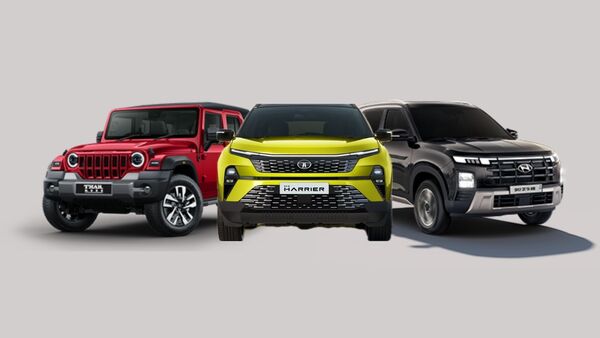
Big Shakedown: Tata Reclaims No. 2 Spot on Record SUV, Small Car Sales
Tata is in the second spot for September sales, followed by Mahindra and then Hyundai.
Festival season sales in 2025 underscored the profound impact of GST 2.0 on consumer behaviour. Automakers reported some of the highest monthly retail numbers in recent history, driven by pent-up demand, strategic pricing, and festive promotions. While Maruti Suzuki maintained its dominance as India’s leading car brand, Tata Motors recorded its highest-ever retail sales in September 2025, reclaiming the second position in the country’s overall passenger vehicle market.
Tata Motors posted its strongest monthly performance ever, selling a historic 60,907 units in September 2025, a remarkable 47 per cent year-on-year growth. This surge helped Tata reclaim the second spot among India’s best-selling car brands, overtaking Hyundai, which saw a slowdown during the period. The Tata Nexon SUV spearheaded the rally, recording its highest-ever monthly sales for any Tata model with over 22,500 units delivered.
Following the rollout of GST 2.0 reforms in 2025, Honda reduced prices across key models—the Amaze, City, and Elevate—by as much as ₹1.2 lakh. The strategy has clearly paid off, with the company recording a strong 15.3% year-on-year rise in domestic sales in October 2025, led primarily by renewed demand for the Amaze. By passing the tax benefits directly to buyers, Honda has effectively improved the affordability of its lineup, helping attract more customers during the crucial festive season.
“We welcome the Government’s GST Reforms 2025 which came at a very timely juncture for the Auto industry. These progressive measures have not only made vehicles more accessible to customers but also provided a strong impetus to festive season demand,” said Kunal Behl, Vice President, Marketing & Sales, Honda Cars India Ltd.
Navratri 2025 marked a record-breaking festive season for automobile retail in India. Reflecting on the same, FADA Vice President, Sai Giridhar said, “Navratri 2025 will go down as one of the most memorable chapters in India’s automobile retail journey — a true ‘Bachat Utsav’ unleashed by the visionary GST 2.0 reform announced by Hon’ble Prime Minister Shri Narendra Modi ji. For the first time ever, dealerships across the nation witnessed record-breaking footfalls and deliveries, with overall retail surging by 34 per cent YoY — a historic high during any festive season.”
The combination of pricing incentives, festival-driven purchases, and strategic marketing created a surge in demand that exceeded expectations. Automakers reported that a significant proportion of these sales came from new buyers entering the market, signalling a demographic shift towards aspirational purchases rather than purely utilitarian choices.
Electrification Gains Momentum
The EV segment continued to expand, reinforced by its structural tax advantage of 5 per cent GST. Several automakers, including BYD, Tata, MG Motor, and Mahindra, expanded their electric vehicle portfolios, launching affordable and mid-range EVs alongside premium electric SUVs. Startups like Ultraviolette, Oben, and Ola Electric played a complementary role, bringing smaller, technology-driven EVs and scooters to urban consumers.
EVs attracted buyers not only because of low GST rates but also due to lower running and maintenance costs. However, price parity with ICE vehicles remained challenging because of high battery costs, limited domestic manufacturing scale, and the need for imported components such as lithium-ion cells. Despite this, the industry witnessed a clear trend: urban buyers, professionals, and environmentally conscious consumers increasingly considered EVs as viable alternatives for personal mobility.
Also Read : BYD overtakes Tesla to secure pole position in electric car race
Global EV players knock on Indian doors:
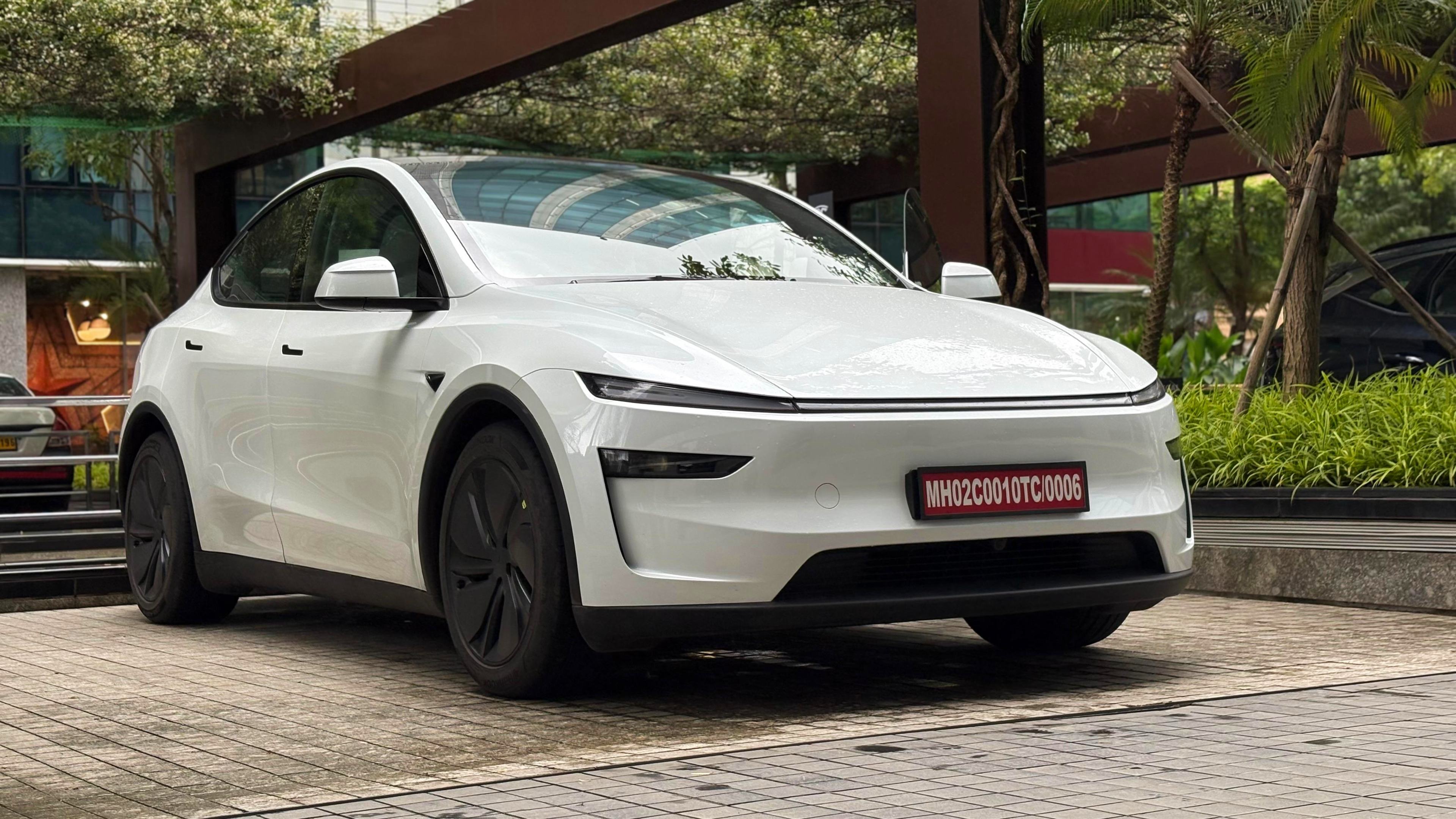
The Tesla Model Y India is the brand’s first offering in India after years of speculation and stalled negotiations
Tesla’s India Entry: After years of speculation and stalled negotiations, American electric vehicle giant Tesla finally made its official debut in India, marking a watershed moment for the country’s fast-evolving EV landscape. The company, led by billionaire Elon Musk, inaugurated its first retail and service centre in Mumbai’s Bandra Kurla Complex in July 2025, with the Model Y becoming the brand’s maiden offering for Indian buyers.
Priced around ₹60 lakh (ex-showroom), the Model Y positions Tesla firmly in the premium EV segment, competing with the likes of the BYD Seal, Hyundai Ioniq 5, and Volvo XC40 Recharge. While initial batches are being imported as completely built units (CBUs), industry sources suggest Tesla is already scouting sites in Maharashtra and Gujarat for potential local assembly operations.
The company is also laying the groundwork for its famed Supercharger network, with the first V4 fast-charging station already operational in Delhi. Tesla’s India website is live, allowing customers to configure and book their cars online. Deliveries of the Model Y electric SUV have commenced across India in a phased rollout.
Despite the excitement, challenges remain. Import duties, even under the revised policy, keep Tesla’s vehicles out of reach for most Indian buyers. Moreover, India’s charging infrastructure and battery supply chain are still at a nascent stage. Domestic players like Tata Motors and Mahindra are already dominating the affordable EV space, making Tesla’s task of scaling up in India a steep climb.
VinFast enters India with global electric SUV lineup:
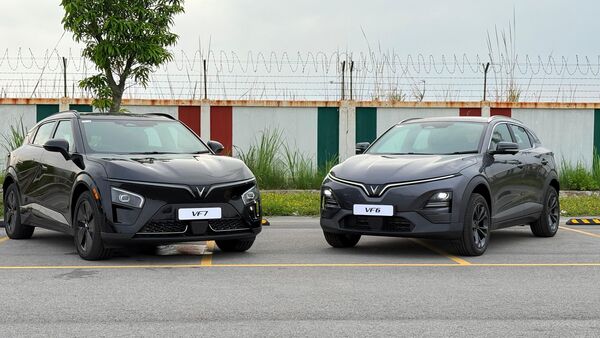
The VinFast VF7 and VF6 are the first launches from the Vietnamese brand in India, made at its assembly plant in Thoothukudi, Tamil Nadu
The Vietnamese electric vehicle manufacturer VinFast has officially entered the Indian market, unveiling its first two models — the VF 6 and VF 7. It also officially inaugurated its electric vehicle (EV) assembly plant at the SIPCOT Industrial Park in Thoothukudi, Tamil Nadu, marking the company’s formal entry into India’s rapidly expanding EV manufacturing landscape.
VinFast’s Tamil Nadu facility is spread across 400 acres with an initial annual capacity of 50,000 units, scalable up to 150,000 units. This facility is the company’s third operational plant and the fifth project in its global manufacturing network. As its first production base outside Vietnam, the site underscores VinFast’s global ambitions and its capability to execute large-scale projects. India is set to become VinFast’s key export hub for right-hand-drive markets. VinFast’s entry signals growing confidence among global EV makers in India’s electrification roadmap and the government’s push toward cleaner mobility.
Also Read : VinFast crosses 1 lakh sales in Vietnam within 9 months
Indian auto industry: The road ahead
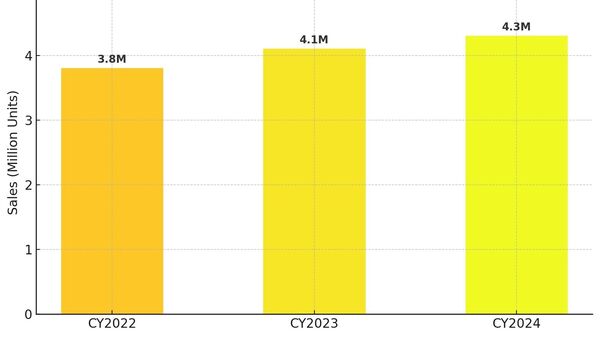
With over 4.3 million passenger vehicles sold last year, India has cemented its position as the third-largest auto market in the world
India’s automobile market stands on the cusp of a structural transformation, driven by accelerated electrification, policy-backed localisation, and a strong rebound in domestic demand. With over 4.3 million passenger vehicles sold last year, India has firmly cemented its position as the world’s third-largest auto market, but the next phase will be defined more by technology and sustainability than sheer volume.
The government’s new EV policy—offering reduced import duties for automakers committing to local production—has set the stage for global entrants such as Tesla, VinFast, and BYD to establish a footprint in India. Meanwhile, domestic manufacturers like Tata Motors, Mahindra, and Maruti Suzuki are investing heavily in dedicated EV platforms, battery plants, and connected vehicle ecosystems. Analysts expect EV penetration in passenger cars to rise from the current 3–4 per cent to over 15 per cent by 2030.
Electrification aside, the industry’s evolution will hinge on advanced manufacturing and supply chain localisation. The Production-Linked Incentive (PLI) scheme is catalysing investment in semiconductor components, lithium-ion battery modules, and hydrogen fuel cell systems. Automakers are also transitioning toward software-defined vehicles, integrating over-the-air updates, AI-based driver assistance, and telematics-driven predictive maintenance.
However, the road is not without speed bumps. Charging infrastructure expansion, raw material dependency for battery production, and high acquisition costs continue to slow mass adoption. The ICE (internal combustion engine) segment will remain relevant for the near term, supported by biofuels, CNG, and hybrid technologies.
Still, industry experts view this decade as India’s inflection point—a shift from being a low-cost manufacturing base to a mobility innovation hub. With rising exports, evolving powertrain diversity, and deepening R&D investments, the Indian auto industry is entering a high-tech, low-emission era that could redefine its global competitiveness.
Retail Data Source: FADA Research
Get insights into Upcoming Cars In India, Electric Vehicles, Upcoming Bikes in India and cutting-edge technology transforming the automotive landscape.
New Delhi. Vietnamese EV manufacturer, Vinfast is going to start its operations in India. The company will launch VF6 and VF7 electric SUVs at the end of August 2025. Prior to the official launch, the car manufacturer opened his first showroom in Pipload in Surat, Gujarat. Both electric vehicles were showcased in the newly opened outlet and will be brought as CKD (Completely knocked down) units. By the end of this year, the company will expand its dealership network in 27 cities across the country. EVS booking has already started in India. Know here everything about upcoming Vinfast Electric SUVs.
Winfast vf6 Poetrain details of VF6 have not yet been revealed in India. In global markets, Vinfast VF6 is available in two variants Eco and Plus, with 59.6kwh battery and a single electric motor. The ECO variant offers a range of 410km, while the Plus variant promises a range of 379km once charged.
Sporty all-black cabin theme
The Vinfast VF6 has a sporty all-black cabin theme with silver accents and soft-touch materials. Electric SUV has many features, including 12.9-inch touchscreen infotainment system, wireless Android auto and Apple CarPlay connectivity, panoramic sunroof, ventilated and Heated front seats, Auto AC, HUD (Head-up Display), 360-Digry Camra, Lawl-2-2 Adas suits include more. EV six color options will come – Urban Mint, Infinity Black, Zenith Gray, Desat Silver, Crimson Red and Jet Black.
Vinfast vf7 The Vinfast VF7 is the flagship EV of the brand, which is available in two variants – Eco FWD and Plus AWD at the global level. Both variants have a 70.8kwh battery pack and an electric motor, which offers the power of 201PS and 204PS respectively. The ECO variant offers 450km's WLTP claims and the Plus trim offers a range of 431km once charged.
These features are also present Externally, the VF7 has sleek headlamps, split LED DRLs, 20-inch alloy wheels and sloping roofline. Electric SUV will be available in paint schemes similar to VF6. Inside, a minimalistic design approach has been adopted in the driver-centric cabin, including a 12.9-inch touchscreen infotainment system, hud, panoramic glass roof, ventilated front seats with 8-way powered driver seat, auto AC, multiple airbags, electronic parking brakes, 360-2 adas, etc. Are.
New Delhi. Vinfast is fully prepared to step into India, after making its debut at the Mobility Global Expo earlier this year. The Vietnamese EV brand has now officially started booking for its upcoming cars – VF7 and VF6 – which are going to be launched at the end of this year. Interested customers can pre-book these cars of Rs 21,000 token amount.
The company will assemble its cars in the upcoming factory in Vinfast in Roathukudi, Tamil Nadu. This factory is an important part of the company's $ 500 million investment in India and is expected to produce 150,000 units annually at full capacity, which will provide employment to about 3,500 people.
32 dealerships in 27 cities
Vinfast plans to stabilize 32 dealerships in 27 cities, which will create a strong 3s ecosystem involving sales, service and spare parts. Initially, major urban centers and emerging EV hubs will be focused on, including Delhi, Gurugram, Noida, Chennai, Bangalore, Hyderabad, Pune, Jaipur, Ahmedabad, Kolkata, Cochin, Bhubaneswar, Trivandram, Chandigarh, Lucknow, Coal, Co., Coimbatore, Surat, Kalikat, Visakhapatnam, Vijayavada, Jhansi, Jhansi, Jhansi, Jhansi, Jhansi, Jhansi, Gwalior, Vapi, Baroda and Goa are included.
State
Area
Dealer partner group
Delhi
North
Posco group
Himachal Pradesh
North
Devbhoomi Group
Uttar Pradesh
South
KB group
Karnataka
South
Raja Group
Telangana
South
Nanesh automotive
Tamil Nadu
South
Mansarovar Group
Kerala
South
EVM Group
Andhra Pradesh
South
Casa Group
Maharashtra
West
Dhon Group
Gujarat
West
Hersholia Group
Gujarat
West
Neozivan group
Odisha
East
Stratvista automobile
West Bengal
East
Bagaria Gru
Mid-size electric SUV
The VF7 is a mid-size electric SUV that is developed with Italy's Torino design. At the global level, it is introduced in two variants: Eco and Plus. The eco variant has a front-wheel drive, which generates 172 bhp and 250 Nm peak torque, while the plus variant comes with an all-wheel drive, which gives 344 bhp and 500 Nm of torque.
Power output and range The VF6 is a compact electric SUV that comes in two trims: Eco and Plus, which offers 172 bhp and 198 bhp respectively. Power comes from 59.6 kwh battery, which offers a driving range of about 381 to 399 km according to Trim. It is expected to cost around 25 lakh rupees (ex-showroom).
Vinfast plans to launch the Indian market in Auto Expo 2025 and launch the VF7 SUV on Diwali. The company aims to start from 50,000 units to increase to 150,000 units.
The company can launch its first car in India around Diwali.
Highlights
Winfast will launch the VF7 SUV on Diwali.
The company aims to start with 50,000 units.
The Winfast VF8 and VF9 models will also launch in India.
New Delhi. Vietnam's car manufacturer Vinfast Vinfast entered the Indian market in Auto Expo 2025 (Auto Expo 2025) held last month. The company showcased almost the entire lineup of its global products at the Auto Expo of India at the expo. The company is now ready for its first official launch in India.
Despite the recent floods, along with the construction of the Tamil Nadu plant on time, the company is aiming to launch the Vinfast VF7 SUV in the festive season, and the next year more affordable models will also introduce in the Indian market. The company plans to start in the Indian market with a complete knocked down (CKD) and 50,000-unit capacity, which will increase to 150,000 units, as well as its portfolio with the top-down strategy from premium to mass-market segment. Will expand
Vinfast has confirmed that its first model for India will be VF7 which will be launched around the Festin season i.e. Diwali. Winfast has large and more premium models such as VF8 and VF9 that make good sales in markets like North America and Middle East. The company can also launch them in India after VF7. Talking to Autocar India, Fam Sanh Chow, MD and CEO of the company's Asia Region, said, “We VF7 is the first place as a premium model in the mid-segment. Will keep it For India, we have tried to bring the top model to the mid-premium range, as our target is a high-level customer in the middle class. After that we will launch VF6 and then next year we will come to VF3, ”
In a difficult market like India, if the company wants to make a strong base, then it will be very important to create a favorable brand image. Someone can have products, but without correct communication and network, it would be very difficult to make their mark (for example take citroen). In this regard, Winfast is expected to benefit from the brand image of his parent company Winggroup.
Location:
New Delhi,Delhi
First Published:
February 04, 2025, 19:13 IST
homeauto
The 'shrew' of cheap cars is going to be installed in India, this company has tightened the waist