
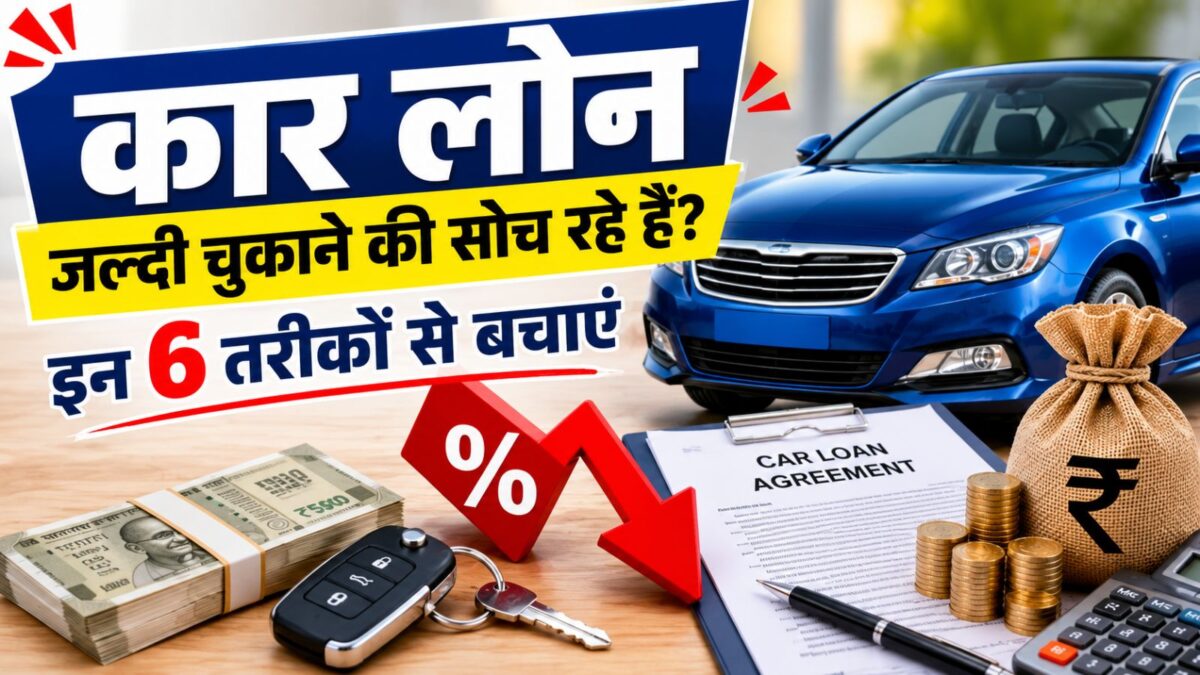
Buying a car is everyone's dream, but the EMI that comes with it sometimes becomes heavy on the pocket. Often people want to foreclose their car loan after getting bonus or extra income, so that they can save lakhs of rupees in interest. However, banks levy heavy foreclosure charges and penalties ranging from 2% to 5% on this.
This reduces the benefit of pre-payment significantly. But do you know that by adopting some smart tips you can completely avoid these hidden charges? Through proper planning and understanding of the rules, you will not only avoid bank penalties, but will also be able to keep a large part of your hard-earned money and interest safe. Let's take a look at the smart tips for Loan Foreclosure.
1. Choose part-payment option
If you do not have a large lump sum amount, then opt for part-payment instead of closing the entire loan at once. Many banks allow prepaying a certain portion of the loan amount (e.g. 25% of the principal amount) once or twice a year without any extra charges. This reduces your principal amount, which automatically reduces the interest burden for the remaining tenure.
2. Pay special attention to part-payment timing
Whenever you go to make a part-payment of the loan, always deposit it right after your EMI cycle. If you pay just before the EMI is deducted, the bank can also add interest for the remaining days of that month. Payment made at the beginning of the month or immediately after the EMI date directly reduces your principal.
3. Choose 'tenure shortening' instead of 'loan foreclosure'
When you give extra money to the bank, the bank asks you two options: reducing the EMI amount or reducing the loan tenure. If you want to save interest, always opt for reducing the loan tenure. The shorter the tenure, the less interest the bank will be able to charge you.
4. Understand the foreclosure lock-in period
Most banks impose heavy penalties for closing the car loan within the first 6 to 12 months of taking it. This time is called 'lock-in period'. After this period passes, the penalty rates reduce significantly or in some cases even become zero. Therefore, take the decision to close the loan only after the end of this lock-in period.
5. Take advantage of floating interest rates
According to the rules of Reserve Bank of India (RBI), if your loan is on floating interest rate, then banks cannot charge you pre-payment or foreclosure charges. However, these charges are applicable on fixed rate loans. Before closing the loan, read your agreement carefully and see if your loan falls in the floating rate category.
6. Consider Loan Balance Transfer
If your existing bank is charging very steep penalties on foreclosure, then you can consider transferring your loan to another bank (Loan Balance Transfer), where the interest rates are lower and the pre-payment rules are a little more flexible. However, before doing this, definitely compare the processing fees of the new bank and the exit load of the old bank.