By: HT Auto Desk | Updated on: 23 Mar 2024, 13:19 PM
The recall notice states that 286 examples of the Suzuki Jimny 3-door in Queensland, Australia, have been affected, which were manufactured between 2
…
The recall notice states that 286 examples of the Suzuki Jimny 3-door in Queensland, Australia, have been affected, which were manufactured between 2018 and 2019.
Suzuki Queensland is a separate entity from Suzuki Australia and the latter is expected to issue a separate recall for the off-roader
Suzuki Queensland has announced a recall involving 286 units of the Jimny 3-door off-roader in the land down under. The recall notice states that 286 examples of the Suzuki Jimny in Queensland have been affected, which were manufactured between 2018 and 2019. The company stated that a potential fault with the fuel pump on the SUV was likely.
The recall notice filed with the Department of Infrastructure in Queensland stated that the fuel pump impeller may swell and cause the fuel pump to stop working, due to a manufacturing defect. This could result in a loss of power on the off-roader.
The Suzuki Jimny 3-door is made in India and exported to a number of markets overseas
It needs to be noted that Suzuki Queensland is separate from Suzuki Australia, and is responsible for Suzuki cars imported and sold in the state. This does mean that Suzuki Australia could issue a separate recall for the Jimny 3-door for the same issue. Suzuki Queensland further said that it will be contacting customers of the affected vehicles and will schedule a service appointment to have the fuel pump replaced free of charge.
More recently, Maruti Suzuki also issued a recall in India for the Baleno and WagonR for a faulty fuel pump issue. Over 16,000 units were affected by either model and were manufactured in 2019 as well. The Suzuki Jimny for Australia is exported from India including the three-door version. The Jimny 5-door should not be affected by the recall, given a much later production timeline.
The blue-orange scheme on the 250 Duke is very similar to the one seen on the Gen 3 KTM 390 Duke.
Our sources in KTM have revealed that the 250 Duke is set to receive a new colour scheme in the coming weeks.
Atlantic Blue colour will be offered on 250 Duke now too
Bike will remain mechanically identical to the current model
KTM 250 Duke Atlantic Blue launch details
Up until 2020, any colour other than white, black, grey or ofcourse the signature orange shade wasn’t seen on any KTM model sold anywhere. With the advent of the Gen 3 KTM Super Duke R, the Austrian marque started adding a dash of blue to its bikes and that has trickled down to models like the 890 Duke R and the 2024 390 Duke. Even the 200 and 125 Duke models get a little helping of blue in certain colourways.
Now it seems as though even the KTM 250 Duke will receive the Atlantic Blue colour and it looks largely similar to the livery we’ve seen on the 390 Duke. The only difference on the 250 Duke is that the ‘Duke’ badging on the tank extensions is written in white (not orange as on the 390).
Currently, the KTM 250 Duke is priced at Rs 2.39 lakh (ex-showroom, Delhi) and we expect the Atlantic Blue to cost the same amount as KTM usually doesn’t upcharge for different colours on the same model. The existing Ceramic White and Electronic Orange colours will continue, which means the 250 Duke will now be offered in three colours upon the Atlantic Blue hue’s launch.
It’s unclear as to what prompted the price cut but this would be a good time to bring the Skoda Kodiaq home for those looking to get a comfortable and luxurious SUV. The Kodiaq has always been impressive with its top-notch build quality, feature-rich cabin and comfortable second row. It also gets a usable third row, accommodating children and young adults with ease.
The cabin of the Kodiaq offers top-notch quality coupled with plenty of storage space
The Skoda Kodiaq L&K variant previously retailed at ₹41.99 lakh (ex-showroom). Despite the price cut, the SUV retains all of its features. Power on the SUV comes from the 2.0-litre TSI petrol motor tuned for 188 bhp and 320 Nm of peak torque. The model is available in a single-spec option with the 7-speed DSG automatic transmission sending power to all four wheels.
The current generation Skoda Kodiaq has been around for a while and Skoda has already unveiled the new generation model globally. The next-generation Kodiaq is expected to arrive in India in 2025 and is expected to arrive via the Completely Knocked Down (CKD) route.
Also Watch: 2022 Skoda Kodiaq facelift SUV: First Drive Review
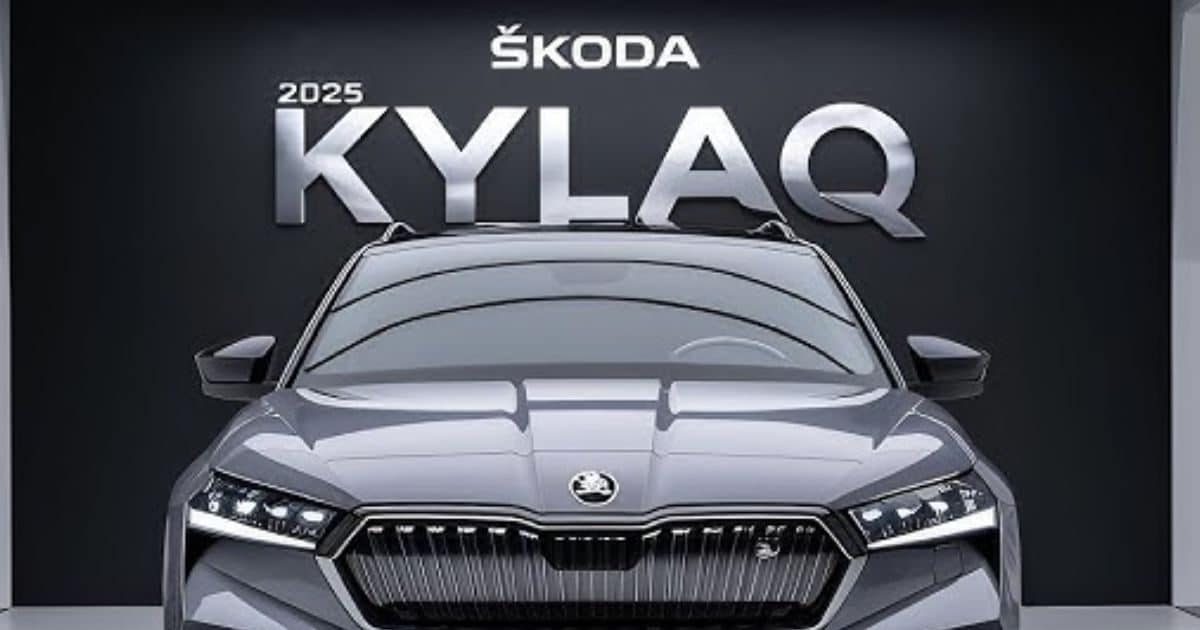
Skoda reportedly will also bring back the Superb and Octavia to the Indian market later this year. Reports suggest that the current generation Superb will be reintroduced as a Completely Built Unit (CBU). Furthermore, the company has the Enyaq electric SUV in the pipeline for India, while it recently announced the made-in-India subcompact SUV that will go on sale in 2025.
New Nissan Kicks SUV gets fresh looks inside out, based on Mitsubishi XForce SUV sold in Indonesia
The new Nissan Kicks has been revealed ahead of its official New York Motor Show 2024 debut. The new Kicks is slightly bigger in all dimensions and has a lot in common with the Mitsubishi X-Force SUV which is sold in markets like Indonesia and a few others.
New Kicks SUV gets fresh styling inside out
Gets new powertrain and off-road gear
Also gets more features and tech on some variants
New Nissan Kicks will be a global SUV
The outgoing Kicks SUV had two different versions depending n market. While both versions had quite similar exterior design, India got the one that sat on the B0 platform shared with other Renault and Nissan SUVs like the Duster and the Captur. The second version of the Kicks was based on the V platform that was sold in markets like North America, ASEAN region and a few other countries. This version shared its platform with the Nissan Micra and the Sunny sedan.
The second gen Kicks now sits on a single platform for all markets. The SUV is now based on the ASEAN market XForce SUV from Mitsubishi and shares its platform, body panels (with some design tweaks), interior bits and a few other mechanical components. While Nissan is tight lipped about the platform that underpins the Kicks , the XForce SUV sits on a derivative of the Mitsubishi GS Platform that has been around since a long time with updates. Apart from the new Kicks SUV and the XForce, it also underpins the Xpander and the Nissan Livinia MPVs in Indonesia.
The Kicks will be sold in left and right hand drive markets across the globe serving as Nissan’s entry level SUV in North America and a few other markets.
New Nissan Kicks styling and features
Some of the body panels of the stylish new Nissan Kicks including the doors, roof and a few other things are common with the XForce SUV. It also gets similar glasshouse with a smart coupe-like tapering roofline. It gets chunky looking wheel arches with matte black body cladding all around with top variants getting huge 19-inch alloy wheels that look straight out of a concept car. As far as styling goes, upfront the new Kick gets horizontal LEDs seamlessly integrated within a large black-finished area surrounding the grille. At the rear, uniquely shaped LED taillamps blend with a black trim that runs across the width of the tailgate.
On the inside, Nissan says the new Kicks gets more premium materials than before. The center of attraction is the large 12.3 inch infotainment screen among other features. The dashboard has a double layered look like the Xforce but the quality of materials on the new Kicks like the AC vents and even the screen looks better than the Mitsubishi counterpart. It gets touch-sensitive controls for the HVAC and climate control, four USB-C ports and a wireless charging pad, along with wireless Apple CarPlay and Android Auto connectivity.The new Kicks also gets a panoramic sunroof which is not offered on the Mitsubishi XForce. Some variants also gets headrest mounted BOSE speakers.
New Nissan Kicks safety and tech
Nissan Safety Shield 360 ADAS Suite, which includes Intelligent Cruise Control is standard on the new Kicks. Top variant gets Nissan ProPILOT Assist system as an upgrade which includes steering assistance to help keep the driver centered in their lane.
New Nissan Kicks: will it come to India?
While the outgoing Kicks was sold in India for a few years, it was a sales disaster for Nissan in India. The brand since then has been surviving on a single model portfolio that includes the budget oriented Magnite compact SUV in our market. Nissan will bring in an MPV based on the Renault Triber and there will be a Nissan-badged SUV based on the new Renault Duster too, however that launch is still some time away. We don’t expect the new Nissan Kicks to come to India anytime soon.
By: HT Auto Desk | Updated on: 22 Mar 2024, 17:28 PM
Rajiv Bajaj, Managing Director – Bajaj Auto, confirmed that the first Bajaj CNG motorcycle will be launched in June this year.
Bajaj Auto will introduce the world’s first CNG motorcycle in June this year, which is likely to be an offering in the 110-125 cc segment (Image used only for representational purpose)
Bajaj Auto is developing the world’s first CNG motorcycle and the company recently fast-tracked the launch of the upcoming offering from 2025 to this year itself. Now, in a recent media interaction, Rajiv Bajaj, Managing Director – Bajaj Auto, has confirmed that the first Bajaj CNG motorcycle will be launched in June this year.
PTI reports that Rajiv Bajaj confirmed the development while speaking about the Bajaj Group’s commitment of ₹5,000 crore towards Corporate Social Responsibility (CSR) over the next five years. The launch timeline is in line with Bajaj’s previous statement confirming the bike’s development and expediting the launch to the next quarter.
Also Read : Bajaj Auto fast-tracks plans to launch CNG motorcycle, to arrive in next quarter
The lower running cost of the Bajaj CNG bike will be its USP, while prices are likely to be at a small premium over the petrol versions (HT_PRINT)
The CNG motorcycle is arguably Bajaj Auto’s most ambitious project yet in recent years. The company has the knowledge and know-how to build CNG three-wheelers but replicating the technology on a motorcycle will be a first anywhere in the world. Bajaj had previously highlighted the salient features of the upcoming CNG motorcycle including reduced tailpipe emissions, a 50-65 per cent cost reduction and a reported 50 per cent reduction in CO2 emissions. The upcoming CNG bike could be called the Bajaj Bruzer.
Recent spy shots also revealed a front disc brake and commuter stance of the motorcycle hinting at a 110-125 cc offering. The operating cost will be a huge factor with the CNG bike targeting mileage-conscious consumers. The motorcycle will have a second storage cylinder for CNG and the technology to run on both petrol and CNG. Bajaj is expected to introduce a new sub-brand for its CNG range, which will spawn more products in the future. The CNG offering is likely to be priced higher than the petrol variants due to the extensive changes and higher manufacturing costs.
Apart from the new CNG motorcycle, Rajiv Bajaj also spoke about the Pulsar brand hitting the two million sales mark soon. The Pulsar was launched in 2001 and was a game-changer for the company. The manufacturer is expected to bring its biggest Pulsar yet this year, which is rumoured to be a 400 cc single-cylinder offering.
By: Sameer Fayaz Contractor | Updated on: 21 Mar 2024, 18:49 PM
Ultraviolette has partnered with K-Rides, part of the Kibar Holding conglomerate, for the sales and distribution of the F77 performance e-bike in Turk
…
Ultraviolette has partnered with K-Rides, part of the Kibar Holding conglomerate, for the sales and distribution of the F77 performance e-bike in Turkiye.
The Ultraviolette F77 on display at Motobike Istanbul 2024
Ultraviolette Automotive has announced its foray into Europe, kickstarting operations in Turkiye. The company showcased the Ultraviolette F77 performance electric motorcycle at the Motobike Istanbul 2024 at the K-Rides pavilion. The F77 is the brand’s flagship offering and is made in India and will be exported from the manufacturer’s facility near Bengaluru.
Ultraviolette has partnered with Kibar Holding, a leading conglomerate in Turkiye, which has ventured into the two-wheeler sector with its new company K-Rides, for the sales and distribution of the F77. Ultraviolette and K-Rides are inviting potential buyers and stakeholders to check out the F77.
Also Read : Ultraviolette unveils electric superbike concept designed by students.
While Turkiye is the first market in Europe to get the Ultraviolette F77, we expect the company to announce newer markets in the coming months
Speaking about Ultraviolette’s arrival, Gökhan Lokmanoğlu, Chief Corporate Development Officer of Kibar Holding, said, “K-Rides, aligning with its mission to curate a distinctive portfolio featuring the most outstanding brands in the motorcycle world, known for their high performance and unique designs, is excited to introduce the F77 to the Turkish rider community in collaboration with Ultraviolette, the pioneering brand shaping the future of electric high-performance vehicles with its innovative designs.”
Speaking at the unveiling in Turkiye, Narayan Subramaniam, CEO & Co-Founder – Ultraviolette, said, “We are thrilled to showcase the Ultraviolette F77 to the vibrant and dynamic market of Türkiye in association with K-RIDES. At the time of the launch of the F77 back in 2022, Ultraviolette had received interest for its flagship motorcycle from over 190 countries hinting towards a strong global demand. The F77’s display at the MotoBike Istanbul 2024 signifies a decisive leap forward in Ultraviolette’s global expansion strategy. With the F77, motorcycle enthusiasts in Türkiye are poised to be thrilled by its Aviation DNA, ground-breaking design and unparalleled performance.”
Ultraviolette is inviting potential buyers and stakeholders to check out the F77 at Motobike Istanbul 2024
The Indian start-up’s entry into the Turkish market is in line with the company’s previous announcement of entering Europe this year. The brand announced its foray at EICMA 2023 last November and also confirmed that deliveries in Europe will begin in the second quarter of 2024.
The Ultraviolette F77 is built to the same spec for the world. The performance electric motorcycle packs a 30 kW (40 bhp) PMS electric motor with 100 Nm that sends power to the rear wheel. The e-bike can sprint from 0-60 kmph in 2.9 seconds and has a top speed of 152 kmph. The F77 gets the biggest battery on any electric two-wheeler in India with the 10.3 kWh unit promising a range of 307 km (claimed) on a single charge.
Watch: Ultraviolette F77 electric motorcycle | Review
Other features include a 5-inch TFT instrument console with smartphone connectivity, all-LED lighting, rider telematics, 9-axis IMU, dual-channel ABS and more. The Ultraviolette F77 is priced from ₹3.80 lakh for the Original, going up to ₹4.55 lakh (ex-showroom) for the Recon variant.
By: Sameer Fayaz Contractor | Updated on: 21 Mar 2024, 16:43 PM
Kia said the decision was hike prices was due to rising commodity prices and supply-chain-related inputs. It is also the first price adjustment this y
…
Kia said the decision was hike prices was due to rising commodity prices and supply-chain-related inputs. It is also the first price adjustment this year by the brand.
The price hike will affect Kia’s mass market models including the Seltos, Sonet and Carens. The increment will vary on the model and variant
Kia India has announced its plans to increase prices across its mass model range with effect from April 1, 2024. The Kia Sonet, Carens and Seltos prices will be hiked by up to three per cent from next month onwards. The automaker said that the decision was made due to the rising commodity prices and supply-chain-related inputs. Kia also emphasised that this was the brand’s first price adjustment this year.
Kia has not revealed the quantum of the price hike on each of the models but you can expect prices to vary depending on the model and variant. The Kia Sonet is the brand’s most accessible offering starting from ₹7.99 lakh, and going up to ₹14.69 lakh. The Kia Carens MPV is priced from ₹10.45 lakh, going up to ₹18.95 lakh. The Kia Seltos is the brand’s bestseller and starts from ₹10.90 lakh, going up to ₹20.30 lakh. All prices are ex-showroom.
Commenting on the price adjustment, Hardeep Singh Brar, National Head – Sales and Marketing – Kia India said, “At Kia, we consistently strive to deliver premium and technologically advanced products to our esteemed customers. However, due to the continuous increase in commodity prices, adverse exchange rate and rising input cost, we are compelled to implement a partial price hike. The company is absorbing a significant portion of the increase, allowing customers to continue driving their favourite Kia cars without a major dent in their pockets.”
Kia is one of the most prominent players in the Indian auto sector, having made a remarkable climb on the sales chart since its arrival in 2019. The automaker has sold nearly 1.16 million units in India and overseas with the Seltos contributing 6.13 lakh units, followed by the Sonet with over 3.95 lakh units, while the Carens has added 1.59 lakh units so far. The automaker also retails the EV6 premium electric SUV in the country, which arrives as a Completely Built Unit (CBU).
New Virtus with blacked-out cosmetic upgrades will go into production in second half of 2024.
Volkswagen has showcased the new Virtus GT Plus Sport concept alongside the new Taigun GT Plus Sport. Like the Taigun, the new Virtus also gets a blacked-out treatment with red highlights, however, the company is calling this a concept at the moment, which will go into production later this year.
Virtus gets new GT Plus Sport variant
Likely to also have a revised trim line-up
Will go on sale later this year
Virtus GT Plus Sport: what’s new
Visually, there isn’t much that sets the new Virtus apart. The existing GT Line variants already come with a blacked-out treatment for the alloy wheels, roof, wing mirrors and bumpers. What’s new is that the chrome lining on the front and rear bumpers and the grille have also been blacked-out; the door handles have a new dark chrome finish; the GT badges on the grille and fenders are now finished in red; and so are the brake calipers.
On the inside, similar to the new Taigun, the Virtus GT Plus Sport gets an all-black interior (the regular model gets dual-tone black and beige interior) with red highlights and red ambient lighting. There are no additions to the equipment list.
Virtus GT Plus Sport: variant and powertrain line-up
Although it hasn’t been officially announced yet, it is likely that the Virtus’ trim line-up will also be revised like the Taigun. The trims will likely be differentiated based on their looks and not powertrain options, which means the line-up could be revised to Chrome, Sport and GT Edge trims. This would essentially mean that the 1.0-litre TSI engine will also be available with the GT Line treatment.
The 150hp, 250Nm, 1.5-litre, four-cylinder turbo-petrol engine continues as is, as does the 115hp, 178Nm, 1.0-litre, three-cylinder turbo-petrol engine. Transmission options include a 6-speed manual, a 6-speed AT and a 7-speed DCT, depending on the engine.
Volkswagen also showcased the much-awaited all-electric ID.4 SUV alongside the new Virtus and Taigun, and it’s finally expected to launch later this year.
By: Sameer Fayaz Contractor | Updated on: 20 Mar 2024, 21:00 PM
The Isuzu D-Max BEV pre-production prototype will make its public debut at the upcoming Bangkok Motor Show and will enter production for Europe in 202
…
The Isuzu D-Max BEV pre-production prototype will make its public debut at the upcoming Bangkok Motor Show and will enter production for Europe in 2025.
The 2025 Isuzu D-Max Electric will have the same payload capacity as the diesel versions
Japanese auto major Isuzu has revealed its first battery electric vehicle (BEV), which is the electrified D-Max pickup. The Isuzu D-Max BEV pre-production prototype will make its public debut at the 2024 Bangkok International Motor Show in Thailand on March 27, and the company has confirmed that the electric pickup will enter production in 2025 for Europe. Isuzu says the electric D-Max will have the same payload capacity as its diesel counterpart.
The upcoming Isuzu D-Max BEV will be able to meet the commercial and passenger vehicle needs expected from a pickup, the company says, while retaining the “tough underlying performance expected of pickup trucks.” The electric pickup will come with a full-time 4WD system with newly developed e-axles in the front and rear.
Also Read : Isuzu announces I-Care pre-summer camp for D-Max, MU-X customers
The Isuzu D-Max Electric prototype gets a redesigned nose with a covered grille and blue accents while the rest of the body shell remains the same
The Isuzu D-Max electric pickup prototype gets a 66.9 kWh lithium-ion battery pack, while power will come from two electric motors, one on each axle. The front electric motor develops 54 bhp and 108 Nm of peak torque, while the rear electric motor produces 121 bhp and 217 Nm. The combined output stands at 174 bhp and 325 Nm, which makes it more powerful than the base-spec 1.9-litre diesel version. The top speed though has been capped at 130 kmph.
Isuzu has not revealed details on the driving range yet of the D-Max BEV. Meanwhile, the company says that it will have a “high towing capacity” along with a robust frame and body, ensuring the performance remains on par with the diesel versions. The payload capacity stands at 1,000 kg with a 3,500 kg towing capacity, which is the same as the diesel model.
Isuzu has also unveiled the 1.9-litre diesel mild-hybrid engine for the D-Max but is yet to confirm when the new motor will enter production
Visually, the Isuzu D-Max electric prototype gets a redesigned front sporting a covered grille with blue accents. The profile appears largely the same as the diesel model, save for the new six-spoke alloy wheels, while the loading bed gets the “EV Concept” badging on the profile. Isuzu says the D-Max electric will go on sale in Europe first, followed by other markets including the “UK, Australia, Thailand and other countries.” However, it also added that the rollout will be based on market needs and the maturity of EV charging infrastructure.
In addition to the electric pickup, Isuzu has unveiled the D-Max prototype with a mild-hybrid diesel engine. The new D-Max Hi-Lander MHEV prototype comes with a 48-volt mild-hybrid system paired with the 1.9-litre turbo diesel engine. More details including power figures and plans for launch are yet to be revealed.
Also Read : Bringing in the new year with the Isuzu D-Max V-Cross: The last of old school
The Isuzu D-Max takes on the Toyota Hilux and Ford Ranger globally, both of which now offer mild-hybrid and plug-in hybrid options, depending on the market. The D-Max Electric will certainly keep Isuzu ahead of the curve, opening new room for growth. That said, it’s unclear if the D-Max BEV will make its way to the Indian market. Isuzu India is still retailing the previous generation D-Max in the country but could use this opportunity to bring the BEV and diesel versions to the market.
However, not all car modifications are permitted by the law of the land. In fact, performing some weird modifications to your car may lead you to legal trouble. Hence, if you are planning to modify your car, make sure not to do anything that may compromise the safety of everyone in and around the vehicle. Don’t do anything that weakens the strength of the car’s chassis. Also, don’t do anything that may impact the environment adversely.
If you are planning to modify your car, here is a comprehensive guide with a list of legal and illegal modifications in India.
Types of modifications
Usually, car modifications can be segmented into three categories: aesthetic, functional and performance.
Aesthetic modifications: The most common car modifications around us are aesthetic modifications. Generally, such modifications make the car visually distinctive but don’t add anything to the performance or utility. While some of these modifications are not allowed by the Motor Vehicle Act, some can be played with. Such customisation can be performed at the exterior and inside the cabin of the car.
Functional modifications: These modifications are usually done to make the use of vehicles more convenient for the driver and passengers. Usually, such modifications are aimed at providing better comfort and convenience to the occupants. These are generally based on accessories and not mechanical. Such customisation can be performed at the exterior and inside the cabin of the car.
Performance modifications: Performance modifications are meant to increase the performance of a car. An average car coming out of the OEM’s plant is tuned to find a perfect balance between performance and fuel efficiency. People who seek extra from their vehicle, often customise the vehicle’s powertrain.
Legal car modifications in India
Body kit installation: Body kit installation on a car is legal as long as it is fitted as a bolt-on and doesn’t interfere with the structure of the vehicle. Usually, these kits like body cladding, side panels, front splitter etc are often fitted to cars to enhance the looks of the vehicles. Many automakers too offer some body kits as factory fitment or dealer-level fitment, which come with the benefit of no impact on warranty.
Colour change: Changing a car’s colour is completely legal in India, but is subject to RTO’s approval. However, some colours like Army Green are only reserved for military vehicles and not available for civilian vehicles. If you are planning to change the colour of your car, make sure to get approval from the RTO first and also update the registration certificate specifying the paint as accurately as possible.
Body wrapping: Similar to colour change, body wrap for a car is legal in India. It is generally a vinyl wrap applied directly on the vehicle’s surface to protect the car’s original paint from damage from natural elements or minor impacts like scratches or scars. Besides this, it also enhances the glossy look of the car. The owner doesn’t require RTO approval for body wrapping if the wrap is of the same colour as the car. However, if the wrap is of a different colour than the exterior paint of the car, the RTO needs to be informed and the RC should be updated accordingly.
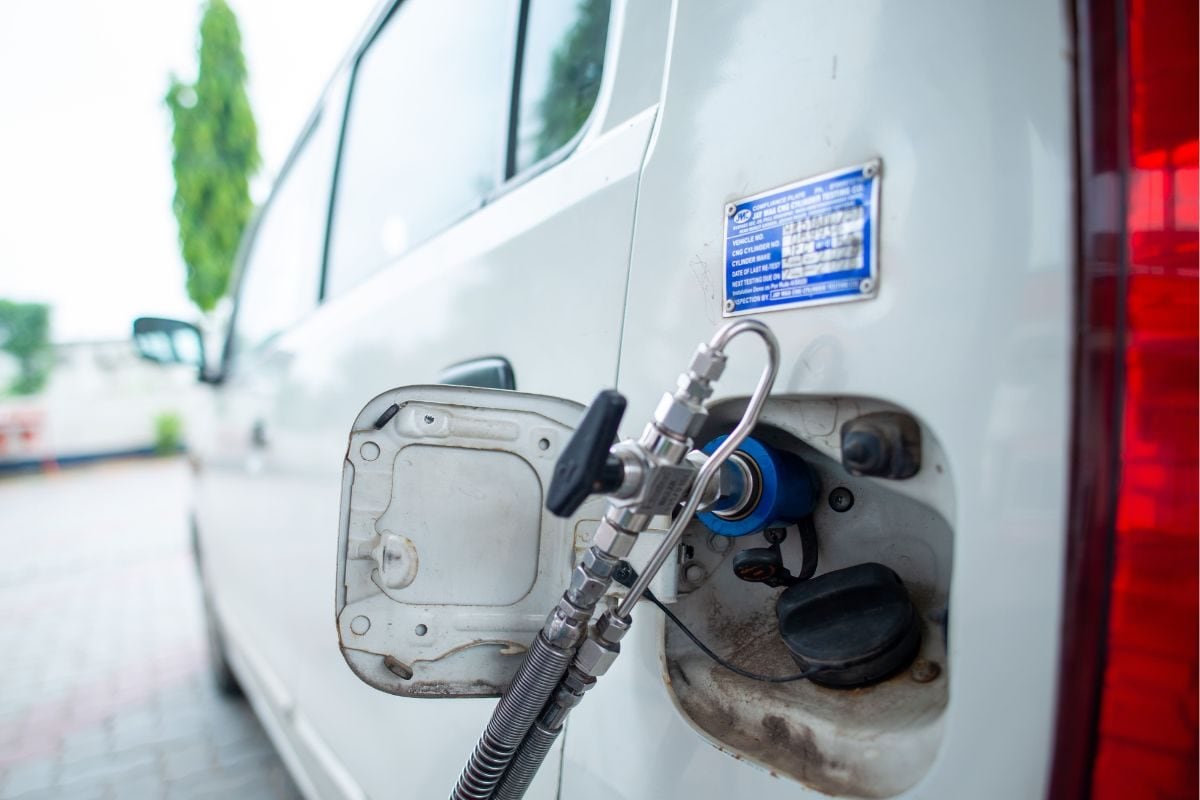
Aftermarket CNG kit installation: Installing an aftermarket CNG kit on a car is legal in India. However, ensure the vehicular documents are updated with the local RTO accordingly and the CNG kit fitment is mentioned in the registration certificate.
Suspension change: Change of suspension is legal as long as the upgrade does not increase or decrease the vehicle’s ground clearance significantly. Upgrading a suspension without hurting the ground clearance majorly can ensure the vehicle offers a more comfortable ride quality, especially considering the condition of the Indian roads.
Arrangement for differently abled: It is legal to make some changes to a car to suit the requirements of a differently-abled person. According to the amended Motor Vehicles Act, an orthopedically disabled person with a 40 per cent permanent disability or above can drive a car with a length less than or equal to four metres. He or she can drive a car with an engine capacity of 1,200 cc for petrol models and 1,500 cc for diesel vehicles. However, such cars should be registered as ‘Adapted Vehicles’ with the local RTO.
Modifications that impact the car’s structural integrity adversely, are prohibited by law.
Illegal car modifications in India
Additional lights: This is another category, which also often sees rule violations. According to the MV Act, any light placed over 1.5 metres from the ground is illegal. This means the cars with lights mounted to the rooftop are violating the rule. Also, all vehicles are legally prohibited to have more than four headlights. Besides that, any lights that blind a person at a distance of eight metres or less are illegal. The cars are legally restricted to come with any additional light positioned in the front and above the height of stock headlamps. Also, such additional lights are supposed to be covered when driving around the city.
Aftermarket exhausts: One of the most common modifications done by car owners in India is the fitment of aftermarket exhausts. This modification is done on both cars and motorcycles. While many such exhausts don’t make much difference to power output, some expensive ones do. However, the problem is that all these aftermarket exhausts come with painfully loud sounds. The amended MV Act mandates that any exhaust that is louder than 80 decibels is illegal. It is recommended to not fit such an exhaust unless it is approved by the RTO. While many motorists brazenly break this rule, doing so is illegal anyway.
Tinted screens: According to law, the screens at the front and the rear of any car must have at least 70 per cent visible light transmission. The sides of the car can be slightly darker and must have 50 per cent sunlight penetration capacity through them to the cabin of the car. While many cars often use very dark-tinted glasses, those are illegal as they not only hamper the vision of the driver but also prevent a clear view inside the car.
Bull bars: A common misconception is that bull bars enhance the safety of a vehicle. In reality, in case of a crash, the bull bar can critically damage the structure of the car and even impact the engine as well. Also, they pose a severe safety threat to pedestrians. While in India, many cars especially SUVs use aftermarket bull bars, they are illegal as they come bolted on the chassis and reduce the car’s structural integrity. It also impacts the airbags’ functionality adversely in case of a crash, posing a threat to the occupants inside the vehicle’s cabin.
Fancy number plates: Again, a widely practised illegal modification is using fancy number plates. As per Indian law, all cars must have a high-security number plate with 3D hallmarked IND lettering embossed on them.
Changing body type: If you are thinking of turning your sedan into a limousine by stretching it as long as possible, or turning it into a convertible by chopping off the roof, refrain from doing so. Making any kind of structural change to any car in India is strictly illegal. Doing so can make the chassis weak and pose a threat to the safety of people.
Engine swapping: No matter how tempted you feel to try a V8 motor on your SUV by spending lakhs of money, be assured that it is illegal. The registration certificate of the car mentions the chassis and engine number of the vehicle, and they must remain the same throughout the life of the vehicle. If you ever consider swapping your car’s engine, approach the local RTO first.
Audi AG’s VP of sales overseas also said the Indian luxury car market is set to cross the 1 lakh sales mark by 2030.
The global sales head of Audi AG, Andre Konsbruck, believes the Indian luxury car market will triple in the next 10 years and is set to cross the 1 lakh unit sales mark by 2030. Speaking to Autocar post the 2023 annual earnings conference, Konsbruck said that the economic indicators of India are picking up rapidly and the industry is growing very fast.
“India has moved up to third place in the global sales and that is why India has full attention from Audi. The growth potential is finally getting materialised. Unlike the past, when the market promised a lot but did not deliver, at present, the market is ticking all (the right) boxes,” explained Konsbruck.
Luxury car sales in India estimated to be 45,000 to 47,000 units in 2023
20 new Audi models on the docket for an India launch
Audi expects 50 percent of luxury cars sales to come from EVs by 2028
In the calendar year 2023, the Indian luxury car market is estimated to have sold over 45,000 to 47,000 units, registering a strong double-digit growth. Audi India grew by 89 percent in 2023 registering a sale of 7,931 units. The tripling of volumes by 2033 would mean the market size may cross 1.25 lakh units per annum in 10 years.
Lauding the Government of India’s latest electric vehicle policy, Konsbruck says that the Indian government is committed to electrification and local manufacturing. “It is a first market which has seen a specific intervention from the government towards the premium cars and that will help in accelerating the localisation of premium cars which will automatically drive demand. All these kinds of policies along with GST benefit – all small steps add up and will help in driving demand.”
Audi has globally announced the launch of 20 new models in the coming years and the head of sales said he is keen on bringing every single car to India principally. “We are open and happy to homologate every possible car. In principle, the entire portfolio is available to India, but we decide on the market launch with Balbir (Audi India head). The big advantage that Audi has is that we are renewing our portfolio in the next two years. We will have a completely new ICE portfolio and we will have a new widened range of EVs,” said Konsbruck.
The revamped portfolio will help Audi adjust globally as well as in India, if the market transition towards EVs were to face headwinds. Globally, Audi has committed to move to 100 percent electric by 2033, though in India, it expects the share of EVs to be 50 percent by 2030.
By: HT Auto Desk | Updated on: 19 Mar 2024, 20:45 PM
The latest video shows the upcoming e-scooter completing the water wading test. It also for the first time we see the Ather Rizta in action.
The latest teaser shows the upcoming Ather Rizta completing the 400 mm water wading test ahead of launch
The Ather Rizta electric scooter is all set to be launched on April 6, 2024, and the two-wheeler maker has dropped a new teaser revealing more details about the offering. The latest video shows the upcoming e-scooter completing the water wading test. It also for the first time we see the Rizta in action. The Rizta is a family electric scooter and will be sold alongside the sporty 450 series in the brand’s lineup.
The new teaser gives a clear view of the front design of the Ather Rizta. The e-scooter shows a more rounded styling, as well as its new bar-type, LED headlamp placed at the bottom of the apron, which reminds us of the TVS iQube. The large body shell and seat are evident. The water wading test demonstrates the vehicle’s ability to ride through flooded areas without the water penetrating critical components.
Also Read : Ather Rizta family electric scooter’s battery pack teased in new video
Despite being fully camouflaged, the Ather Rizta test mule gives away the telescopic front fork and a wide front tyre, while the rearview mirrors are visibly wider too. The TFT screen has been blurred in the teaser video but confirms its presence on the e-scooter. It should come with all the features from the 450X as well as the latest OTA update.
A previous teaser also showed the Rizta’s battery undergoing a 40-ft. drop test, demonstrating its endurance. Expect the Rizta to also come with a host of segment-first features although the manufacturer is yet to reveal more details. The brand has a host of announcements planned for April 6 at the Ather Community Day 2024, make sure to watch this space for all the action.
By: HT Auto Desk | Updated on: 19 Mar 2024, 18:14 PM
The BMW Vision Neue Klasse X concept previews a new design direction range, previewing an upcoming electric SUV from the automaker.
The BMW Vision Neue Klasse X concept will make its debut on March 21
BMW has dropped the first teaser for the upcoming Vision Neue Klasse X SUV, which will make its global debut on March 21, 2024. The BMW Vision Neue Klasse X concept previews a new design direction for the automaker’s SUV range and the teaser reveals a silhouette of the offering, which appears to be identical to the iX.
The BMW Vision Neue Klasse X concept is expected to preview the upcoming range of cars based on the Neue Klasse EV platform. The new architecture will spawn six new cars that will start rolling out in the second half of 2025.
BMW is said to be working on a new five-seater SUV that will replace the current iX3 in the company’s portfolio and is likely to pack around 600 bhp. This will be joined by the BMW i3 saloon, which will be based on the Neue Klasse concept showcased at the 2023 Munich Motor Show. More models will be added to the portfolio in the second half of the decade.
The upcoming Vision Neue Klasse X will take on the upcoming Porsche Macan EV and the newly introduced Audi Q6 e-tron. The offering will be built at BMW’s Debrecen facility in Hungary from 2025, while the automaker’s Munich, Germany, and San Luis Potosi, Mexico, facilities will also begin building Neue Klasses models from 2026 and 2027 respectively.
The BMW Neue Klasse platform will get the sixth-generation lithium-ion battery that has been developed in-house by BMW and comes with liquid cooling. More importantly, the new vehicles will be using the 800-volt electric architecture allowing 30 per cent faster charging times over the current BMW EV lineup. There’s also the new generation of electric motors that will power not only the Neue Klasse-based models but also the CLAR-based EVs.
More details on the Vision Neue Klasse X concept will be available later this week.
Wider EV product portfolio at more accessible price points will be key for such an ambitious target.
Andre Konsbruck, vice president of overseas sales at Audi AG believes that more than 50 percent of luxury cars sold in India by 2028 will be electric vehicles and hence the German carmaker is very actively looking at localising electric vehicles in the country.
Speaking on the sidelines of the 2023 annual conference in Ingolstadt on Tuesday, Konsbruck told Autocar India that he knows that the Government of India wants to achieve 30 percent electric vehicle penetration for cars by 2030, but he believes that in the luxury segment, EV penetration will be much higher at 50 percent by 2028.
EV penetration in luxury segments
“In the premium market, the penetration for EVs will be faster. We believe that the tipping point will come around 2028, when the market crosses 50 percent EV share. I believe in the D segment and in the top end of luxury cars, it may be even earlier. That is our planning premise,” said Konsbruck.
He elaborated that given the high import duty structure in India of around 15-35 percent (for locally assembled vehicles) versus 70-110 percent (for imported models)- with that big gap, “you are only competitive if you locally produce,” he added. “We are currently evaluating different scenarios (for assembling EVs in India), I hope that we will be able to make a decision soon,” asserted Konsbruck.
Autocar India learns that Audi is currently studying both the possibilities of either utilizing the VW Group’s MEB platform for smaller compact EVs and also its own premium modular EV architecture PPE, which it shares with sports car brand Porsche.
Audi India entered the luxury EV space with e-tron SUVs in 2021, but has remained a sub-optimal player due to completely built imports. Its portfolio only comprises models costing well above Rs 1 crore (ex-showroom), which is why its German rivals – Mercedes-Benz and BMW – and Volvo sell much higher volumes of EVs, some of which are much more competitive due to local assembly.
How Audi aims to achieve 50 percent EV sales
The first step will be the introduction of more products. The company just globally unveiled the new Q6 e-tron based on the all-new PPE architecture that’s supposed to mark Audi’s next phase of electrification. As we have reported to you already, the Q6 e-tron is India-bound by late-2024 or early-2025. It is, in fact, one of 20 new models – ICE and EV combined – that Audi plans to introduce globally in the next one year, and “some of these models will also be headed to India,” said Balbir Singh Dhillon, head of Audi India. “With availability of more products, the EV penetration will go up.”
Apart from localization initiatives, Audi also needs more EVs across a wider price band, especially in India. The company has stated that there will be a new entry-level electric SUV positioned below the Q4 e-tron which is currently the entry point to Audi’s EVs, and this could very well be on cards for India as well.
“We need to have a basket of cars available globally to choose from. The availability of products is widening, and we have to combine demands of customers in India and what we have globally and choose some of these models to be brought to India,” said Dhillon.
Challenges in EV adoption
Currently, infrastructure is still the biggest hurdle for wider adoption of EVs. In fact, very few customers actually rely on public charging infrastructure. As Dhillon accepted, “We began with installing charging facilities at all our dealerships, but we now see very few customers actually use it. Most charging happens at home.” And herein lies a big challenge as there have even been cases of customers facing challenges in the installation of home chargers in high-rise societies.
Audi, however, is committed to electrification – the company has already outlined plans to be an all-electric brand globally in the next ten years, and while India catches up on EV adoption over the next few years, the company will maintain a balance of both ICE and EVs in India. “We will be flexible towards ICE and BEVs in India,” said Dhillon.
Q6 e-tron is the first Audi built on the Group’s PPE platform that’s set to underpin future models; India-bound in the next 10-12 months.
Published On Mar 18, 2024 11:30:00 PM
Audi says the Q6 e-tron isn’t just another new car, but the next step in the brand’s transformation into a premium electric mobility company. Indeed, the Q6 e-tron is the very first model to be built on the group’s new platform; the premium platform electric (PPE), which also underpins the Porsche Macan electric. The Q6 e-tron also comes with a new e&e architecture that gets an all-new electronic hardware and software, which is set to filter into the rest of the Audi range, including the internal combustion engine (ICE) models. So yes, the Q6 e-tron is a very important car to examine inside out.
Q6 e-tron is the first Audi on the VW Group’s PPE platform.
The VW group currently has four electric platforms: the MLB EVO platform that underpins the Q8 e-tron; the J1 Performance platform over which the e-tron GT and the Porsche Taycan are built; the MEB platform which the Q4 e-tron and the VW ID family use; and this, the new PPE that’s been designed to underpin EVs right from the midsize to the premium end. So models like this Q6 to sedans like the A6 will be built on it. The platform is also likely to expand and include electric versions of the A8 and the next generation Q8 too. A point to note, the Q6 e-tron is not related to the ICE Q6 on sale in China; that’s an entirely different model built on the MQB EVO platform and sits outside of the typical Audi hierarchy. In fact, Audi says the Q6 e-tron is a sister model to the Q5.
As for the new E3 1.2 e&e architecture, Audi says it has decoupled the hardware and software interdependence, so it should help the company adapt to fast evolving technology. Of course, it brings with it new hardware and software, including some AI tech.
Audi Q6 e-tron exterior style and design
At first look it’s very understated, much like all Audis, but a moment later you’ll soon see some rather striking design elements, and to my eyes it’s a very attractive balance. The grille is the Audi trapezoidal unit but it’s protruding a bit more and is largely sealed off; air flow being managed from the lower bumper area, which has a lot of angular and sharp edges. These elements will differ depending on the trim level.
The LED DRLs can have as many as eight different light signatures.
Unlike the Q4 and Q8 e-trons, the headlights and DRLs are now separate units, which show just how important DRLs have become. They occupy a larger area than the headlights, they sit on top and look really cool with eight different signatures that owners can select; the headlights are the familiar LED Matrix beams.
The profile is typical ICE-like with a long bonnet, and the cabin area stretches back neatly. It has a swept-back look, but even then, it’s very understated. You do see some really flashy elements like a front fender crease line and an extremely prominent, almost horizontal panel over the rear wheels, which Audi calls the Quattro blister. The doors have a contrast cladding below, with smooth but deep curves giving it a nice sensuous flair.
The character line over the rear wheel arch is what Audi calls the Quattro blister.
At the rear, there’s the now-familiar continuous light bar, but the highlight is the new second generation OLED lights, which have six OLED panels and a total of 360 segments. In what Audi says is possibly a world first, the tail-lights have a continuously animated pattern; think twinkling Diwali lights. There’s no real benefit though and if you don’t like them – I don’t – you can opt for different light signatures, some of which have a neat 3D effect.
OLED tail-lights can create warning triangles to alert cars behind of hazards ahead.
Thanks to the new E3 1.2 architecture, these lights can also actively communicate with the outside. So for instance if the Q6 detects some road work signs ahead, it will indicate this to the cars following it by showing small warning triangles in the tail-lights, this also happens when you switch on the hazard lights. Down below there’s a functioning diffuser that helps the Q6 achieve a 0.28 coefficient of drag.
Audi Q6 e-tron interiors, space and comfort
If the outsides are Audi-esque the interiors are pretty much all new. There’s now a single curved pane housing a 11.9-inch IP screen and a 14.5-inch central touchscreen. In an Audi first, it also has a passenger touchscreen. The 10.9-inch screen can also play videos which are obstructed from the driver’s view, the sound though will play over the car’s speakers. There’s an HUD with AR displays and the Audi assistant has a few more clever voice commands like asking it to lower a window half way down.
The curved infotainment and instrument cluster are an Audi first, so is the passenger touchscreen.
The new E3 1.2 architecture is based on the Android operating system, so Android Auto is included. Apple Carplay is also deeply integrated, and the system also brings in some AI bits, which Audi says will keep evolving. So for instance, if the car realises you are struggling with setting the right temperature, it would suggest things like using the cooled seats.
The steering wheel is all new and gone are the buttons, and in its place are touch surfaces. This is the same with the mirror controls; there are indents to guide your fingers around but buttons would have just been better. Also missing is the neat palm rest-integrated drive selector from the Q8 e-tron, and in its place is a simple toggle switch. HVAC controls are also sadly embedded into the touchscreen, but thankfully the familiar Audi media control dial hasn’t been deleted.
Rear seat space is pretty impressive, but some may find the backrest recline slightly upright.
Space inside is pretty impressive, boot space stands at 526 litres and there’s a 64-litre frunk too. For my 5 foot 8 inch frame, front and rear legroom is more than adequate, and headroom is very good too, with about 5 inches to spare. We’ll know more about seat comfort when we spend substantially more time with the car, but first impressions are good. However, some will find the rear backrest recline slightly upright. In terms of features, it’s got all you’d expect like a premium 20-speaker Bang & Olufsen sound system, full ADAS suite, powered tailgate and 360-deg camera.
Boot has a generous 526 litres of space.
Audi Q6 e-tron performance and drive impressions
At launch, the Q6 e-tron will be offered in two AWD (Quattro) versions; Q6 and a sportier SQ6, with a rear-wheel drive model set to follow. The SQ6 puts out 517hp, does the 0-100kph dash in 4.3 seconds and tops out at 230kph, while the Q6 has 387hp, takes 5.9 seconds to 100kph and has a top speed of 210kph. We did drive both, but very briefly and only within the Audi training centre parking lot, so I can’t tell you much, except that acceleration is quick and steady, in typical EV fashion. Through rapid lane changes you can feel some weight, but it’s stable; again, having a low centre of gravity helps. Suspension duties are carried out by the optional adaptive air suspension system. We’ll have a proper drive review by the middle of this year so stay tuned for that.
Acceleration is brisk in typical EV fashion.
One bit that did stand out was the brakes – the blending of the recuperation from the motors and the friction brakes is very good, and pedal feel is uniform and positive. Audi says they have a complex brake blending program that, for the first time, can manage axle-specific blending too. It does work, braking is well controlled and you can’t tell when the friction brakes kick in. The company also says that about 90 percent of everyday braking would be handled by regenerative braking alone.
Audi Q6 battery, charging and range
Both the Q6 and SQ6 get the same 100kWh battery, so range is the only differentiating factor. The Q6 has a claimed WLTP range of 625km, while the SQ6 has a claimed range of 598km. There’s also a smaller 83kWh battery in the pipeline, which is basically the same lithium-ion prismatic unit but with two fewer (10) modules, and it’s this version that’s likely to be brought to India. With up to 270kW at 800 volts, the 100kWh battery can go from 10 to 80 percent in 21 minutes. On board AC charging speed is only 11kW, but an option of 22kW will be offered at a later stage.
Audi Q6 India launch and price
The Q6 e-tron launch is scheduled to take place by the middle of this year in Europe, followed by China. India launch is likely to take place by the end of the year or early next year, and it’s likely to be the two-wheel drive 83kWh battery, which would be priced around the Rs 70 lakh-80 lakh mark. With direct rivals like the iX3 and the Mercedes EQC, both not available in India, the Audi Q6 e-tron would sit between smaller electric SUVs like the Volvo XC40 and the BMW iX1, and larger SUVs like its sibling, the Q8 e-tron, the Mercedes EQE SUV and the BMW iX.
When it arrives in India, it will pretty much sit in a space of its own.
By: Mainak Das | Updated on: 18 Mar 2024, 16:41 PM
Various factors like the gradual improvement of EV charging infrastructure across India, the rising number of electric two-wheelers, and a narrowing p
…
Various factors like the gradual improvement of EV charging infrastructure across India, the rising number of electric two-wheelers, and a narrowing price gap between the ICE and electric two-wheelers are fuelling the favourable situation for electric scooters and motorcycles.
Electric vehicles are finding an increasing level of footprint in India over the last few years. In the last few years, electric two-wheelers have taken the baton of spearheading the EV adoption pace in the country from electric three-wheelers. Also, this shift has democratised the adoption of electric vehicle ownership in the country.
An estimate shows that an electric scooter can offer the rider a saving of about ₹16,200 every year compared to an equivalent internal combustion engine (ICE) powered scooter if the daily commuting distance is 30 kilometres, per unit electricity charge is ₹10 and a litre of petrol costs ₹100. With the FAME 2 subsidy benefits are about to conclude at the end of this month, the newly launched Electric Mobility Promotion Scheme (EMPS) 2024 brings another opportunity for two-wheeler buyers to avail the benefit of purchasing an electric scooter or electric motorcycle with lowered acquisition cost.
The Ministry of Heavy Industries has launched the EMPS 2024, which allocates a total amount of ₹333.39 crore for electric two-wheelers. The scheme also states that a total of 333,387 electric scooters will receive the benefit of ₹10,000 each. Under the EMPS 2024, the buyers of electric two-wheelers will receive this benefit for four months, spanning between April 1 and July 31 this year.
Watch: Ather 450S review: Worthy of its price tag?
Adding further advantage points for the consumers are factors like the rapidly improving electric vehicle charging infrastructure across India, the rising number of products, and the narrowing price gap between the ICE and electric scooters.
EV charging infrastructure
While electric cars require large charging space and bigger infrastructure, electric two-wheelers can use smaller space. This has propelled the EV charging infra developers to set up charging points at various spaces across the country. The EV manufacturers too are coming up at a large number with their relevant solutions. Besides this, electric two-wheelers can be easily charged using home charging solutions. Apart from that, the ease of taking out the battery from the vehicle and charging it somewhere is available with electric two-wheelers. In the last few years, EV charging infrastructure across India has improved significantly, which is one reason to make it an appropriate time for buying an electric scooter or motorcycle, as range anxiety is addressed at large.
Watch: Ola S1 Pro electric scooter: First impressions
Rising number of products
In the last few years, the number of electric vehicle launches, especially in the two-wheeler segment has increased drastically. While the EV startups have been leading the pack, the legacy two-wheeler manufacturers too have shifted their attention to this space. This is why, besides the EV startups like Ather Energy and Ola Electric, Hero MotoCorp, TVS Motor Company, and Bajaj Auto have brought their respective offerings into the space.
Narrowing price gap between ICE and electric two-wheelers
The price gap between conventional petrol engine-powered and electric two-wheelers is narrowing gradually. The EV startups have been offering discounts on their products, while schemes such as FAME and EMPS too are reducing the acquisition costs for the buyers. Additionally, the sky-high cost of petrol and rising maintenance costs along with the rising cost of acquisition for the ICE two-wheelers are making the situation favourable for electric two-wheelers.
The Centre has approved a new EV policy that is expected to lure foreign brands like Tesla to invest and manufacture in India.
Indian auto manufacturers like Ola Electric believe that the new EV policy approved by the Centre will help India become the global EV hub of manufacturing and technology.
Indian electric vehicle manufacturers have welcomed the Centre’s decision to lower import taxes to invite foreign EV makers to invest in India and manufacture locally. On Friday (March 15), the Centre had approved a new EV policy which opened the gate for global EV brands to launch in India with the condition to invest a minimum of ₹4,150 crore and deadline of three years to start manufacturing locally. For India, aiming to be the next global hub for electric vehicles, the new policy could see a number of prominent companies like Tesla launching here soon.
India’s largest electric two-wheeler manufacturer Ola Electric and Mahindra, which plans to launch as many as five electric vehicles in India in the next few years, welcomed the Centre’s move. The Centre has promised to reduce EV import duties to 15 per cent for foreign carmakers if they fulfil the government’s condition on investments and local manufacturing. The policy says the imported EV prices should not exceed $35,000 (roughly converted to around ₹29 lakh). The condition restricts foreign EV makers to import no more than 8,000 electric cars to India in a year.
Mahindra and Mahindra issued a statement welcoming the new EV policy, It read, “The recently announced EV policy for new entrants reinforces the Make in India momentum, with requirements of bank guarantees, minimum investment commitment, and local value addition. This will help accelerate the EV ecosystem in India.” The carmaker, known more for its SUVs in India, currently offers XUV400 as the only EV in its lineup. Mahindra also said that first of its upcoming Born Electric SUVs is scheduled for India launch in January next year, most likely during the second edition of Bharat Mobility Global Expo.
Ola Electric too welcomed the new EV policy, calling it a ‘progressive decision’ to lower EV import duties. Bhavish Aggarwal, CEO and founder at Ola Electric, took to social media and said, “This is a win for the Make In India initiative & strengthens our manufacturing ecosystem, propelling India towards a greener future. India will become the global EV hub of manufacturing and technology.” Ola Electric sells the likes of S1 Pro, S1 Air and S1 X electric scooters in India.
Also Read : As India opens door for global EV makers, check out which brands are expected to launch soon
Among global EV makers aiming for a India launch soon, Vitenam-based EV startup VinFast has also reacted to the new EV policy. Pham Sanh Chau, CEO of VinFast India, issued a statement saying, “We highly value the Indian Government’s new EV scheme as it aims to drive large investments in manufacturing, create competencies and upskilling, set up a robust supply chain and offer consumers world-class, zero tailpipe emission vehicles. With a long-term growth commitment in India, we have pledged an expenditure of $500 million.” VinFast is currently setting up an electric vehicle manufacturing facility in Tamil Nadu. It plans to manufacture electric SUVs locally.
The new EV policy is seen as an opportunity for global EV brands like Tesla to launch in India. In fact, Tesla has been the most active among global brands to lobby for a lower EV import duty in India. The efforts, despite Indian EV manufacturers like Tata Motors demanding level-playing field for all, bore fruits finally. Tata Motors is yet to come out with an official statement on the new policy. However, the Centre has put certain conditions that will help to promote local manufacturing as well as bring in foreign carmakers to turn India into a new global EV hub.
By: HT Auto Desk | Updated on: 18 Mar 2024, 13:08 PM
The Indian government is planning to introduce a GPS-based toll collection system across the country, replacing the current FASTag technology.
The Indian government is planning to introduce a GPS-based toll collection system across the country, replacing the current FASTag technology. (AP)
Ever since Union Minister for Road Transport and Highways, Nitin Gadkari announced that the government is planning to deploy a Global Positioning System (GPS) based toll collection system across India, the new technology has been making headlines. With this strategy, the government is planning to remove all the toll plazas or toll collection booths and enable GPS-based toll collection. This comes after FASTag became mandatory across India just a few years ago for all four-wheeled vehicles to enable automatic deduction of toll charges through Radio Frequency Identification (RFID) technology.
Under the FASTag regime, the vehicles come with a FASTag chip-based sticker positioned on the windshield of the vehicle. When the vehicle passes through the toll gate, a scanner scans the FASTag sticker and deducts the specific amount automatically. This system has significantly reduced the waiting time at the toll plaza for vehicles compared to the era when toll charges were paid through cash or card. Eventually, this technology has resulted in reduced travelling time for the vehicles, better transparency and lower congestion at toll plazas. Now, the government is aiming to bring a more updated technology for this function, which will work as a GPS-based system.
Just like the FASTag-based toll collection requires all vehicles to have a FASTag, the GPS-based toll collection system will make it necessary for all vehicles to have a GPS. The government plans to deploy this technology through a microcontroller with 3G and GPS connectivity. This will allow the NHAi or the regulatory agency to track the vehicle’s route through the GPS device onboard the car. It will transmit the data of how many toll roads the vehicles are taking, and how many toll gates the vehicles are passing through. Based on that, the estimated toll tax will be charged by the vehicle owner.
Difference between FASTag and GPS-based toll collection
FASTag uses RFID technology for automatic deduction of toll tax bringing convenience and transparency. It is like a wallet that allows the system to deduct the toll charges automatically whenever the vehicle passes through the toll plaza. The FASTag account is directly linked to the bank account or wallet.
On the other hand, the GPS-based toll collection will differ from FASTag. It will track the vehicle throughout the journey, which brings the concern related to privacy, as the system will be able to monitor the vehicle all along. The system will be vigilant of vehicle movement and collect toll tax through GPS.
When it comes to insuring your car, one of the options you have is first-party car insurance. This type of insurance provides coverage for damages to your own vehicle in the event of an accident, theft, or any other covered event. In this article, we will explore first-party car insurance and provide details on how it works with Indian insurance companies.
Benefits of First-Party Car Insurance
First-party car insurance offers several benefits to vehicle owners. Here are some key advantages:
1. Coverage for Own Vehicle
With first-party car insurance, you can rest assured that your own vehicle is protected in case of damage or loss. This coverage can be particularly helpful if you have a high-value car or if you rely heavily on your vehicle for daily commuting.
2. Protection against Unforeseen Events
Accidents and unforeseen events can happen at any time. First-party car insurance provides coverage for damages caused by accidents, natural disasters, theft, fire, or vandalism. This coverage can give you peace of mind knowing that you are financially protected in such situations.
3. Customizable Coverage Options
Indian insurance companies offer various types of first-party car insurance policies, allowing you to choose the coverage options that best suit your needs. You can opt for basic coverage or enhance it with additional features such as roadside assistance, zero depreciation cover, or engine protection.
Types of First-Party Car Insurance Policies
Indian insurance companies offer different types of first-party car insurance policies to cater to the diverse needs of vehicle owners. Here are some common types:
1. Comprehensive Car Insurance
Comprehensive car insurance provides coverage for both third-party liability and damages to your own vehicle. It offers the most extensive coverage and is highly recommended if you want maximum protection for your car.
2. Third-Party Car Insurance
Third-party car insurance is the minimum legal requirement in India. It covers damages caused to third-party property or individuals due to an accident involving your vehicle. However, it does not cover damages to your vehicle.
3. Zero Depreciation Car Insurance
Zero depreciation car insurance, also known as bumper-to-bumper insurance, provides coverage for the full value of your vehicle without factoring in depreciation. This means that in case of a claim, you will receive the entire cost of repairing or replacing damaged parts without any deduction for depreciation.
Choosing an Indian Insurance Company for First Party Car Insurance
When selecting an Indian insurance company for your first-party car insurance, it is important to consider the following factors:
1. Reputation and Financial Stability
Choose an insurance company with a good reputation and a strong financial standing. This ensures that they will be able to fulfill their obligations in case of a claim.
2. Claim Settlement Ratio
Check the claim settlement ratio of the insurance company. This ratio indicates the percentage of claims settled by the company. A higher claim settlement ratio indicates a better track record of settling claims promptly.
3. Network of Cashless Garages
Find out if the insurance company has a wide network of cashless garages. This will allow you to avail of cashless repairs in case of an accident, making the claim process smoother and more convenient.
4. Premium and Coverage Options
Compare the premiums and coverage options offered by different insurance companies. Look for a policy that provides adequate coverage at a competitive premium.
Conclusion
First-party car insurance is an essential investment for car owners in India. It provides coverage for damages to your own vehicle and offers protection against various unforeseen events. When choosing an Indian insurance company for first-party car insurance, consider factors such as reputation, claim settlement ratio, network of cashless garages, and premium and coverage options. By selecting the right policy from a reliable insurance company, you can ensure that your car is well-protected.
By: HT Auto Desk | Updated on: 17 Mar 2024, 14:20 PM
Hyundai Creta EV is expected to share a host of design elements with the ICE variant of the midsize SUV.
Hyundai Creta EV is expected to share a host of design elements with the ICE variant of the midsize SUV. (Image: Autospy)
Hyundai Creta EV has been in discussions among Indian electric vehicle enthusiasts even before the updated version of the mid-size SUV entered the market in January this year. Now, the Creta EV has been spotted in the wild in South Korea in a fresh spy shot image. A fully camouflaged test mule of the Hyundai Creta EV has been spied, giving us a clue about the possible design elements of the electric SUV.
The latest spy shot of the upcoming HyundaiCreta EV shows the SUV gets an identical LED daytime running light (DRL) spanning the entire width of the front profile. Also, it looks like the car will have similar styling elements including LED projector headlamps as the ICE variant of the Creta, which is currently on sale in India. However, being an electric car, it would feature a closed panel instead of a conventional radiator grille visible in the newly launched Creta facelift. The spyshot also reveals the electric Creta gets 17-inch aero-designed alloy wheels, which is specifically meant for the EV and comes as the most distinctive change compared to the ICE variant.
Watch: Hyundai Creta facelift review: Major step-up for the SUV king
The Hyundai Creta EV is expected to come with repositioned brand log, front-fender mounted charging port. Also, there will be a smoothened bumper with tweaked radiator grille. Expect the electric SUV to feature design tweaks at side and rear profile as well.
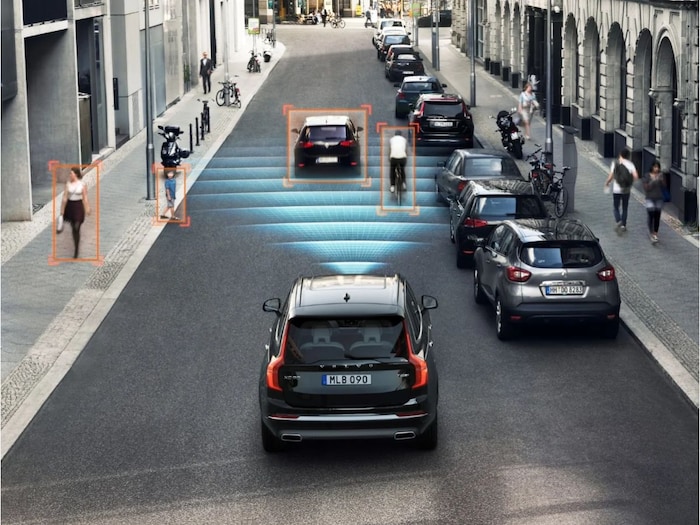
Speaking about features, the Hyundai Creta EV is expected to come equipped with a large touchscreen infotainment system with EV-based user interface, an all-digital instrument cluster with new graphics, revamped centre console. Also, there would be a 360 degree surround camera and Level 2 ADAS suite. The front camera is visible at the centre of the nose section at front profile.
The South Korean automaker is tightlipped about the specifications of the upcoming electric car. However, expect it to come offering about 450 kilometre range on a single charge thanks to 55-60 kWh battery pack.