Which is more profitable between Kia Syros EV and Mahindra XUV 3XO EV? Know

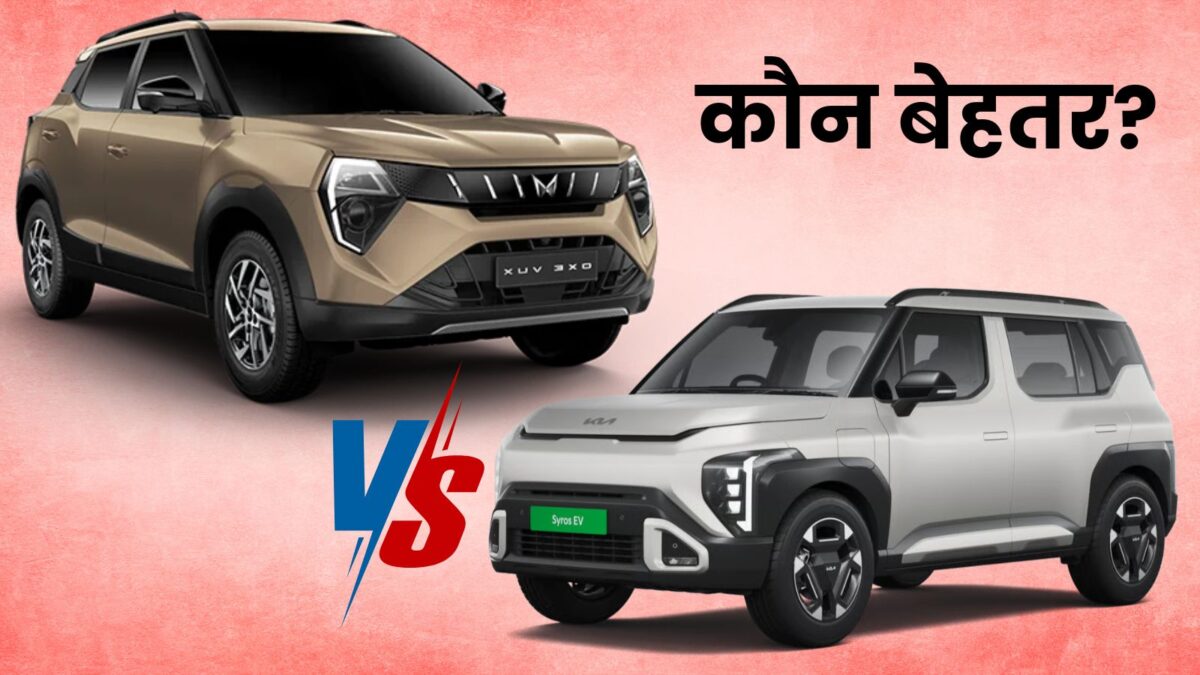
Which is more profitable between Kia Syros EV and Mahindra XUV 3XO EV? Know

Kia Syros EV and Mahindra XUV 3XO EV compete with each other in the compact SUV segment in the Indian EV market. Prices for the Kia Syros EV start at ₹13.49 lakh (ex-showroom), while the top variant goes up to ₹19.99 lakh. Mahindra XUV 3XO EV, on the other hand, is priced between ₹13.89 lakh to ₹14.96 lakh. Both models are designed for affordable electric mobility, premium features and daily use.

The Syros EV claims more range with two battery options, while the XUV 3XO EV offers a balance of budget and performance. If you want to buy either of these two, then this article of ours is useful for you. Let's take a look at the details of their design, interior, features, safety, battery, motor and range.

Design and interior

Kia Syros EV comes with an attractive and modern look. 3995 mm length, bold front grille, LED lights and EV-specific elements. Mahindra Syros EV looks more stylish.

The Syros EV has dual 12.3-inch screens, panoramic sunroof, spacious rear seats and premium materials. The XUV 3XO EV features twin 10.25-inch displays, ventilated seats and good cabin space. Comfort is good in both, but Kia's cabin feels more luxurious.

Features and safety

The Syros EV has L2 ADAS, V2L, connected car tech and a panoramic sunroof as standard. Features like Harman Kardon audio, 360 degree camera, L2 ADAS and wireless charging are available in XUV 3XO EV. Both are full of tech. The XUV 3XO EV is also safe with 6 airbags, ESP and L2 ADAS. Both have good safety scores.

Battery, Motor and Range

The Syros EV has 42 kWh (443 km range, 133-135 hp) or 51.4 kWh (526 km, 171 hp, 255 Nm) battery options. It can be charged 10-80% in 39 minutes with DC fast charging. The XUV 3XO EV has a 39.4 kWh battery and its motor produces 147 hp power and 310 Nm torque. Claimed range goes up to 456 KM. It can be charged 0-80% in 50 minutes. The Syros EV leads in range, while the XUV 3XO EV is stronger in torque and acceleration (0-100 km/h in just 8.3 seconds).
Source link

Kia Syros EV vs Tata Nexon EV: Which electric SUV is right to buy? Know

Kia Syros EV vs Tata Nexon EV: Which electric SUV is right to buy? Know

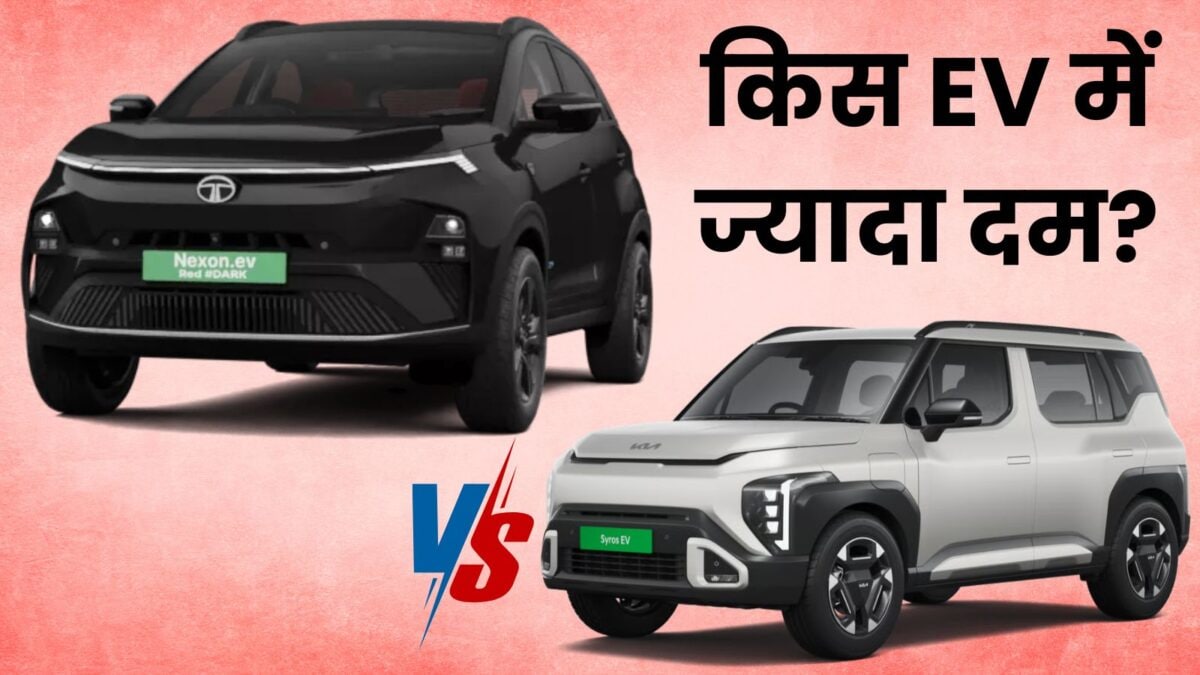
Kia Syros EV vs Tata Nexon EV: There is strong competition in the Indian EV market. The recently launched Kia Syros EV and the popular Tata Nexon EV are giving tough competition to each other in the sub-compact electric SUV segment. Both the cars come with stylish design, modern features and good range, which are suitable for city driving and highway trips.

Ex-showroom price of Cyros EV starts at ₹13.49 lakh and ex-showroom price of Nexon EV starts at ₹12.49 lakh. The Cyros EV comes with two battery options (42 kWh and 51.4 kWh), while the Nexon EV has 30 kWh and 45 kWh packs available. Cyros EV can be made even more affordable with BaaS (Battery as a Service). Let's take a look at the details of both of them, from design to powertrain.

Design and interior

The Kia Syros EV has bold, boxy and EV-specific styling. It can be purchased with LED lights, closed grill and sleek profile. It looks slightly longer and taller than the Nexon EV. The design of Tata Nexon EV is muscular and modern, with connected LED lights and attractive alloy wheels. Both offer a premium look on the road, but the stance of the Cyros EV seems more family-oriented.

The cabin of Cyros EV is spacious and premium. It has a 30-inch panoramic Trinity display (dual 12.3-inch screen), panoramic sunroof, ventilated seats, ambient lighting and Harman Kardon sound system. The Nexon EV also has good space, a 12.3-inch touchscreen, JBL sound and ventilated seats, but the cabin of the Cyros EV feels more luxurious and modern.

Features and safety

Both have wireless charging, 360° camera, wireless Android Auto/Apple CarPlay and connected tech. The Cyros EV comes with Level-2 ADAS, V2L/V2V charging and a larger display in the higher variants. ADAS is also available in the Nexon EV, but the feature list of the Cyros EV seems a bit richer.

The Tata Nexon EV's 5-star BNCAP rating is its strong point, along with 6 airbags, ESP and strong structure. Cyros EV also comes with 5-star safety package, 6 airbags, 360° camera and level-2 ADAS. Both are safe options for the family.

Battery, Motor and Range

The Cyros EV's 51.4 kWh battery pack delivers 526 km range (ARAI) and the 171 hp / 255 Nm motor. The 42 kWh variant produces 135 hp with a range of 443 km. It has 100 kW DC fast charging support.

The Nexon EV's 45 kWh pack delivers 489 km range and 142 hp / 215 Nm (30 kWh: 275 km). Charging is a little slow. Syros EV is ahead in range and power. According to your budget and needs, you can choose any one of these electric SUVs.

Source link

443 KM Range, Sunroof… Price ₹ 13.49 Lakh! Explosive electric SUV has arrived in the market

443 KM Range, Sunroof… Price ₹ 13.49 Lakh! Explosive electric SUV has arrived in the market

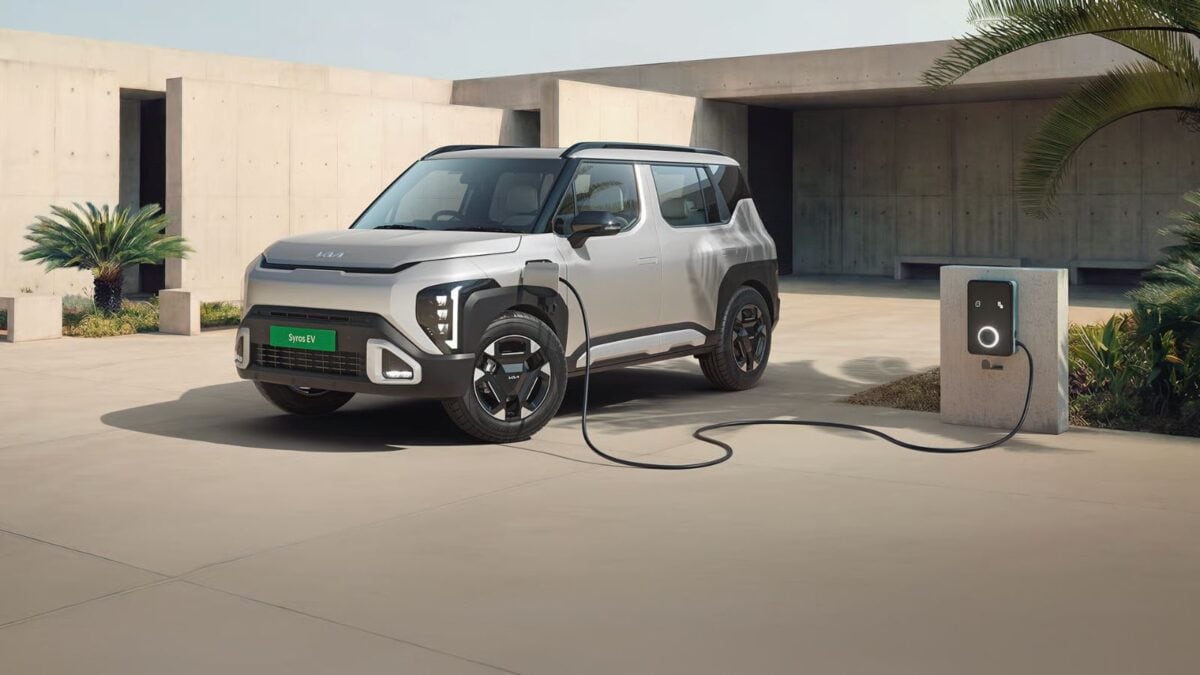
Kia Motors has launched its new electric SUV Kia Cyros EV in the Indian market. With a starting price of ₹ 13.49 lakh (ex-showroom), this car is ready to make a splash in the sub-4 meter electric SUV segment. With an ARAI claimed range of up to 526 km, attractive design, premium interiors and advanced features, Kia Syros EV is the perfect option for customers who want a combination of style, performance and eco-friendly driving.

It is based on the ICE version of the already available Kia Syros, but completely redesigned with EV technology. Available with two battery options (42 kWh and 51.4 kWh), this model can do 10-80% DC fast charging in just 39 minutes. Keeping in mind the increasing demand for electric vehicles in India, Kia has introduced it with affordable price and long range, which makes it different from Hyundai Creta Electric and other competitors. Let's take a look at the details from its design to powertrain.

Design and interior

The design of Kia Syros EV is bold and modern. With 3995 mm length, 1805 mm width and 1670 mm height, this SUV commands a strong presence on the road. The stylish grille with LED DRLs at the front, sculpted body lines, roof rails and sporty alloy wheels give it a premium look. At the rear, connected LED taillights and sharp lines add to the EV-specific appeal.

Its cabin is spacious and premium. High-quality materials, soft-touch surfaces and dual-tone theme give a modern feel. The panoramic sunroof, ventilated seats and good cabin space will ensure a comfortable journey for 5 passengers. The large touchscreen infotainment system and digital instrument cluster on the dashboard make it technology-rich.

Features and safety

The Kia Syros EV is equipped with advanced features, which include wireless Android Auto/Apple CarPlay, 360° camera, ventilated and heated seats, premium sound system, connected car technology and multiple driving modes. Remote features are also available through Kia's UVO connectivity app.

Special attention has also been given to safety in this. Features like 6 airbags standard, ABS with EBD, ESC, hill assist, TPMS and ADAS level 2.0 (Advanced Driver Assistance System) are available. The strong body structure will further enhance the safety of the EV. It is expected to get 5-star safety rating from BNCAP.

Battery, Motor and Range

It comes with two battery packs. The variant with 42 kWh battery gives 443 km range with 135 PS power and 255 Nm torque. The larger 51.4 kWh battery pack offers an ARAI range of up to 526 km with 171 PS power. Both have front-wheel drive single motor. The 100 kW DC fast charger enables 10-80% charging in just 39 minutes, while AC charging is also available.

Source link

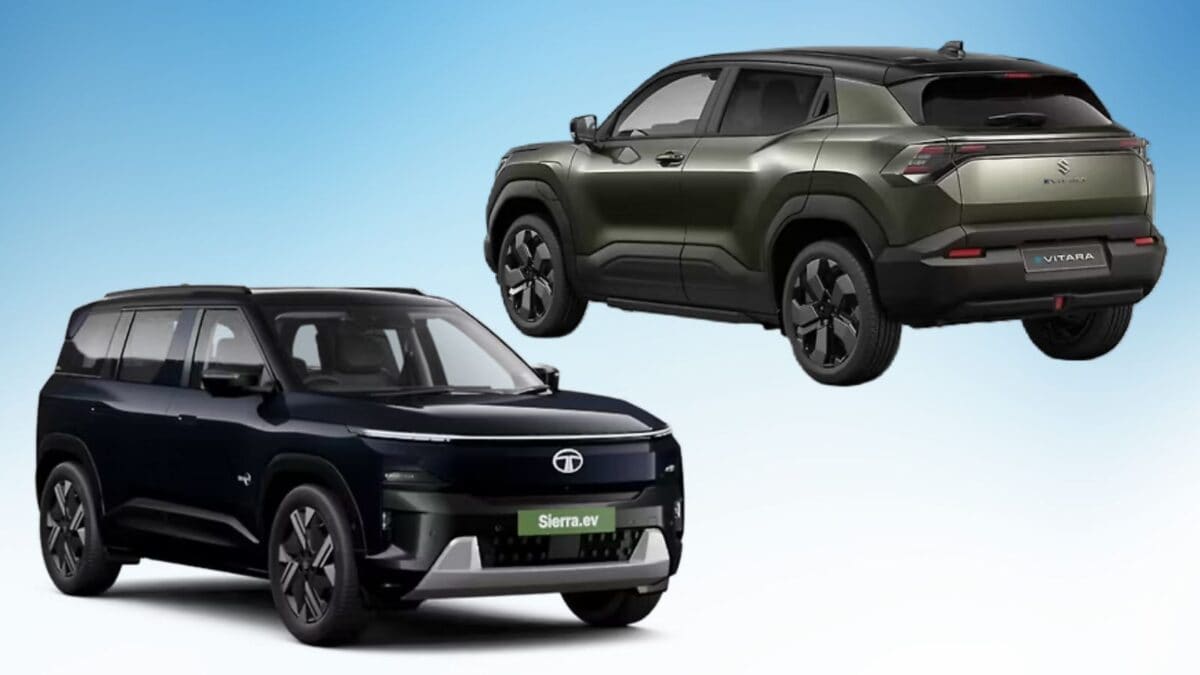
Tata Sierra EV vs Maruti e Vitara: Which one is better to buy in a budget of ₹15-20 lakh? know

Tata Sierra EV vs Maruti e Vitara: Which one is better to buy in a budget of ₹15-20 lakh? know

Tata Sierra EV vs Maruti Suzuki e Vitara: Sierra EV has recently entered the Indian car market. It will also compete with the already existing E Vitara in the segment. Talking about the price, Tata Sierra EV has been launched at ₹ 18.79 lakh (ex-showroom). Whereas, Maruti Suzuki e Vitara can be purchased for ₹ 15.99 lakh (ex-showroom).

Sierra EV is built on the Acti.ev+ platform and comes with a modern design, while the e Vitara is developed on the HEARTECT-e platform. In terms of price, Maruti is more attractive for early buyers, but Tata can prove to be value for money by offering more range, power and luxury features. Let us know which of these two electric SUVs can be a more profitable deal to buy?

design details

The design of Tata Sierra EV is very similar to its ICE version. It has a strong SUV stance with an upright bonnet, split LED headlamps, blanked grille, flush door handles, two-tone roof and dual-tone alloy wheels. It looks big and premium. The design of Maruti e-Vitara is also quite futuristic, which includes sharp lines, LED lighting and attractive color options. e Vitara is a bit compact, but has a young and stylish appeal. Sierra EV has better road presence due to its slightly larger size.

Cabin and Comfort

The cabin of the Sierra EV is technology-loaded. Triple screen setup (12.3-inch infotainment and passenger display, 10.25-inch driver cluster), panoramic sunroof, powered ventilated front seats, dual-zone climate control, 12-speaker JBL sound system with Dolby Atmos, ambient lighting, AR HUD and seats with memory function. The cabin is spacious and full of premium materials.

The interior of e Vitara is also modern. It has ventilated front seats, panoramic sunroof, 10.3-inch touchscreen, good wheelbase and comfortable seating. Although some premium touches may seem less compared to Tata, it is practical and user-friendly. The Sierra EV also gets a trunk and better storage.

Features and safety

Tata Sierra EV gets level-2 ADAS, 360°/540° camera, auto park assist, V2L/V2V, 6 terrain modes, boost mode, powered tailgate and more connected tech. The Maruti e-Vitara has Level 2 ADAS, 360° camera, wireless charging and good connectivity features, but Tata's list is longer and more luxurious. Wireless Apple CarPlay/Android Auto is available in both.

Maruti e-Vitara has received a 5-star Bharat NCAP rating and has 7 airbags. Tata Sierra EV has 6 airbags, Level 2 ADAS, 360° camera and standard safety features (ABS, ESP, hill hold etc.). Considering Tata's safety heritage, this will also be a top class performer.

Battery, Motor and Range

  • Tata Sierra EV: 63 kWh (565 km MIDC, RWD) and 75 kWh (665 km RWD / 624 km AWD)
  • Power up to 238 bhp, torque 315 Nm+, 0-100 km/h in just 5.8 seconds.
  • Maruti e Vitara: 49 kWh (440 km) and 61 kWh (543 km)
  • Power 142-172 bhp, Torque 193 Nm, DC fast charging 10-80% in just 45 minutes.

Who should buy it: If you want more range, power, AWD and premium feel, then Tata Sierra EV is a better option. Whereas, Maruti e Vitara offers value with affordable price, good range and reliable network of Maruti. The final decision will depend on budget, range requirement and test drive. Both EVs will play an important role in India's electric transition.

Source link

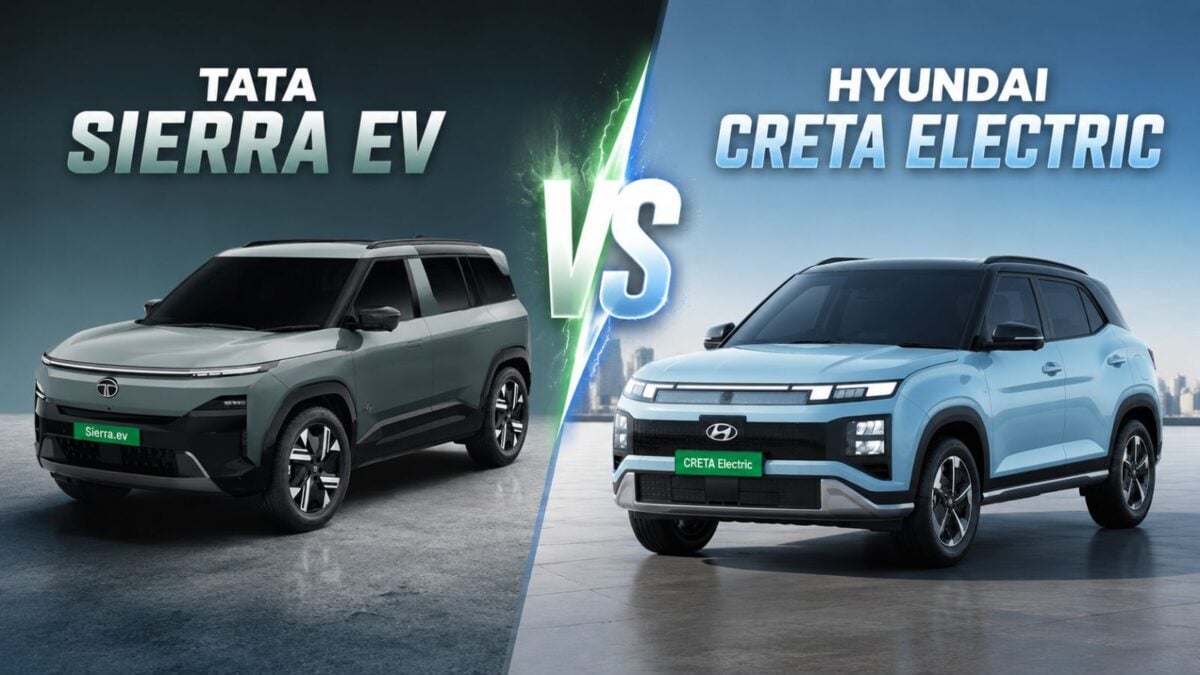
Tata Sierra EV vs Hyundai Creta Electric: Which electric SUV has more power?

Tata Sierra EV vs Hyundai Creta Electric: Which electric SUV has more power?

Tata Sierra EV has arrived in the Indian market after a long wait. It also competes with Hyundai Creta Electric in the market. If we look at the prices of both, Tata Sierra EV can be purchased for ₹ 18.79 lakh (Pure 63 kWh RWD) to ₹ 25.99 lakh for the top variant. Whereas, Hyundai Creta Electric starts at ₹ 18.03 lakh (Executive 42 kWh) and the top variant goes up to around ₹ 24.70 lakh.

Both offer a premium EV experience in the compact SUV segment, but the Sierra EV offers more range and power, while the Creta EV emphasizes on brand value, refined drive and value-for-money. Customers can now choose based on space, features and real-world performance. Both these models will further accelerate India's EV transition. Let us know which of these two will be more profitable to buy in terms of design, battery and range?

Design and interior

Tata Sierra EV comes with retro-modern look. Upright bonnet, split LED headlamps, blanked grille, two-tone roof and flush door handles. It looks as strong and adventurous as the petrol/diesel Sierra. The Hyundai Creta Electric is more futuristic and sleek with its Morse-code 'H' logo. The Creta has more mainstream appeal with its EV-specific closed grille and smooth lines, while the Sierra offers bold and unique styling.

Talking about the cabin, Sierra EV gets triple-screen setup (dashboard), panoramic sunroof, ventilated seats, JBL 12-speaker Dolby Atmos sound and premium materials. The Creta Electric comes with dual 10.25-inch screens, panoramic sunroof, ventilated front seats and Bose audio. Both are spacious 5-seaters, but the cabin of the Sierra feels a little more premium and technology-heavy. The interior of Creta is refined and user-friendly.

Features and safety

Both have L2+ ADAS, 360° camera, wireless charging, V2L and connected tech. Sierra has features like extra auto park assist, in-car gaming, 540° camera and boost mode. The Creta has an EV-specific UI, voice sunroof and a good infotainment system. Sierra looks a little ahead in features.

Talking about safety, Tata Sierra EV gets 6 airbags as standard, strong Acti.ev+ platform and advanced ADAS. Creta Electric is also expected to have 6 airbags, ESC, ADAS L2+ and good safety rating. Tata's EVs have generally proven to be strong in structural safety.

Battery, Motor and Range

Tata Sierra EV has 63 kWh (565 km MIDC) or 75 kWh (665 km MIDC, RWD) battery options. An AWD dual-motor setup is also available with the RWD motor (235 bhp). It can reach the speed of 0-100 kmph in just 5.8 seconds. The Creta Electric can be bought with a 42 kWh (420 km) or 51.4 kWh (510 km) battery pack. The Sierra clearly offers better range, power and performance, while the Creta is efficient for daily use.

Source link

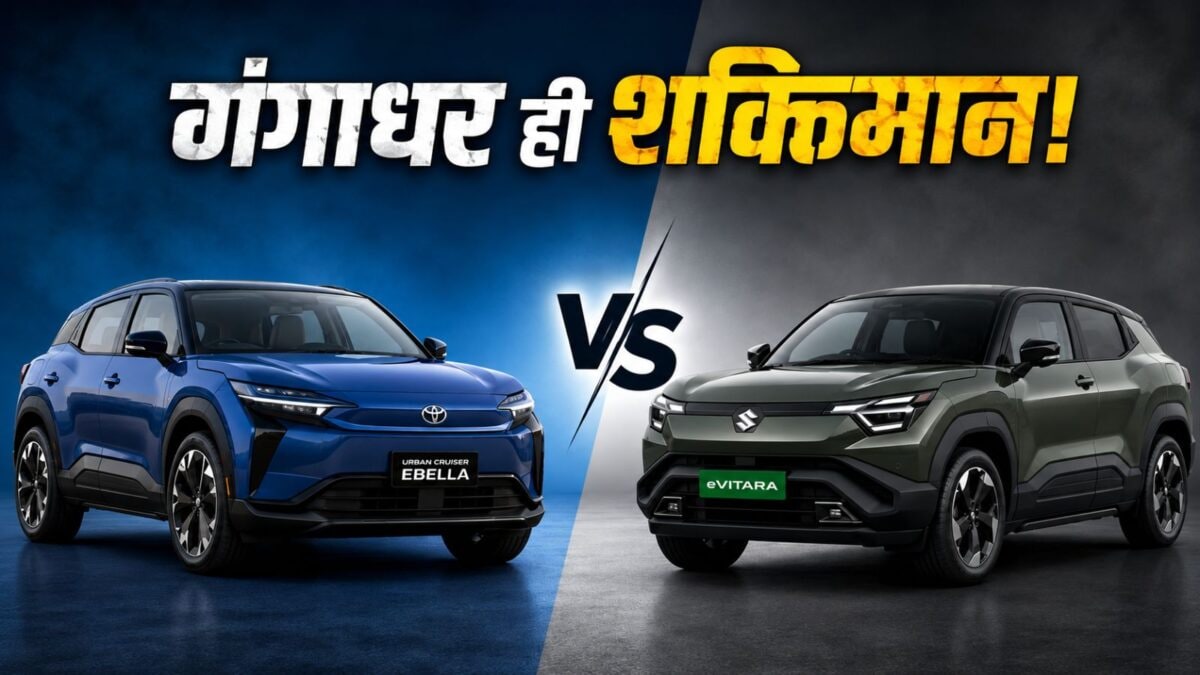
These two EVs are like 'Gangadhar and Shaktiman'! Still, why the big difference in price?

These two EVs are like 'Gangadhar and Shaktiman'! Still, why the big difference in price?

Last Updated:

Toyota Urban Cruiser Ebella and Maruti Suzuki eVitara look different, but the story inside is almost the same. Both come with the same platform, battery and motor, yet there is a difference of lakhs of rupees in price. Does the Toyota's premium badge and superior finishing justify the extra cost, or does the Maruti eVitara prove to be a more sensible deal? Know all the answers.

news quickly

Zoom

Toyota Urban Cruiser Ebella vs Maruti Suzuki eVitara: Know which one is wiser to buy?

The 'Gangadhar Hi Shaktiman' example fits perfectly with the Toyota Urban Cruiser Ebella and Maruti Suzuki eVitara. These electric SUVs are built on the same platform (Heartect-e). Maruti eVitara is an affordable option, while Toyota Ebella focuses on premium branding, better service network and reliability.

The starting price of Maruti eVitara is around ₹13.49 lakh to ₹15.99 lakh (ex-showroom), while the top variant Alpha goes up to around ₹20 lakh. The top E3 ​​variant of Toyota Ebella has been launched at ₹23.60 lakh (ex-showroom), prices of lower variants have not been announced yet. Both come with 49 kWh and 61 kWh battery options. Let us know which one is more profitable to buy among two similar electric SUVs sold under different names?

Design and interior

The look of both SUVs is modern and bold. The Maruti eVitara shares the Nexa's sporty styling, sleek LED lights and dual-tone colours. The Toyota Ebella looks slightly longer (4285 mm vs 4275 mm), with Toyota's signature front grille and premium stance. The design of the Ebella feels a bit more mature and luxurious, while the eVitara looks young and dynamic.

The interior is almost identical. Both get dual screen setup, panoramic sunroof (in top variants), ventilated seats and reclining rear seats. Toyota Ebella features superior material quality, JBL sound system and refined finishing. Space is good in Maruti e Vitara, but Toyota's cabin feels more premium. Both have 5 seater configuration and good boot space.

Features and safety

Both have features like level-2 ADAS, 360° camera, wireless charging, connected car tech and multiple drive modes. Ebella offers more luxurious add-ons like better infotainment and safety features in the top variant. Maruti offers more value-for-money.

Due to Toyota's strong safety image, the Ebella comes with 7 airbags as standard and good structural integrity. Maruti e Vitara also offers good safety, but Toyota can win the trust of customers with the badge. Both have ADAS and strong battery safety features.

Battery, Motor and Range

Both have 49 kWh (440 km ARAI range) and 61 kWh (543 km ARAI range) LFP battery options. In the 61 kWh variant, the front mounted motor gives 172 bhp power and 193 Nm torque. DC fast charging takes 45 minutes from 10-80%. Performance is almost identical, Toyota's tuning of the Ebella may result in slightly better ride quality.

About the Author

authoring

Ram Mohan MishraSenior Sub Editor

Ram Mohan Mishra, working as Senior Sub-Editor at News18 Hindi, is active in digital media since 2021 and is currently handling the Auto Desk. They provide car and bike related information in an easy, clear and reliable manner.read more


Source link