
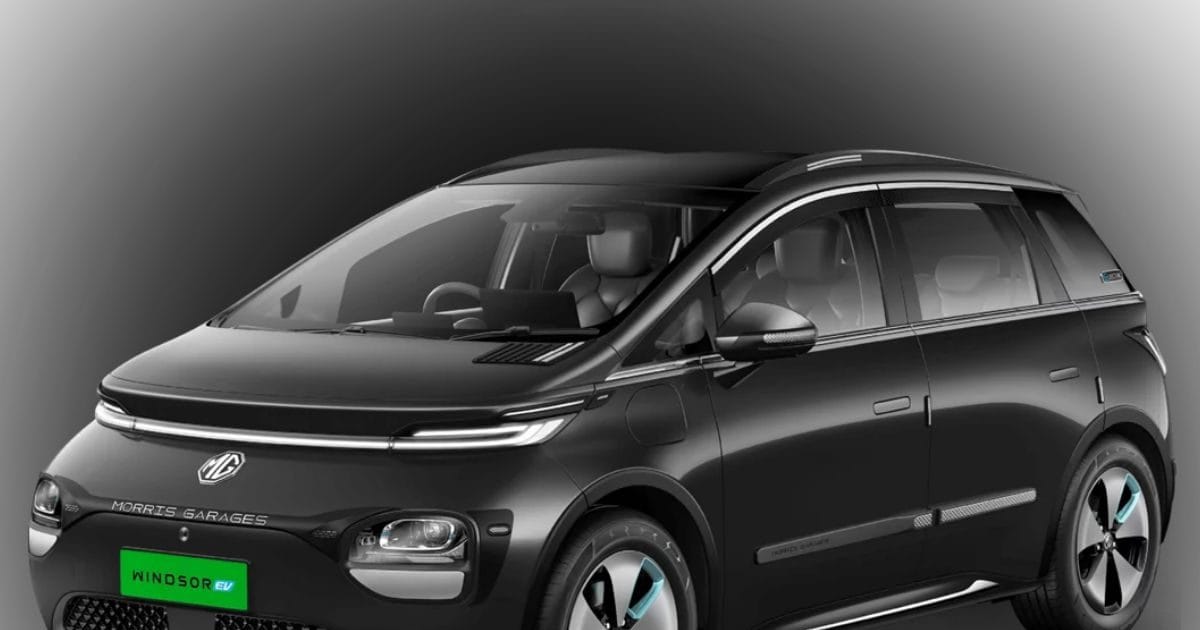
6 Airbags and 332KM Range! MG launches EV for taxi drivers, will earn big money

6 Airbags and 332KM Range! MG launches EV for taxi drivers, will earn big money

JSW MG Motor India has recently launched a new version of its popular electric car MG Windsor, which has been specially designed for taxi and fleet operators. This variant has been named MG Commute and its ex-showroom price has been kept at only Rs 13.49 lakh. This is about Rs 60,800 cheaper than the base variant Excite of the standard Windsor EV, which has become Rs 14.10 lakh after the recent price hike.

Commute aims to provide affordable operating costs and better performance keeping in mind commercial use. This model can prove to be an attractive option for taxi services, cab operators and fleet companies. It has retained Windsor's strong battery technology and space, but has reduced the price by removing some non-essential features. Let's take a look at the design, battery, motor and range details.

Design and dimensions

The design of the MG Commute is very similar to the original Windsor EV, offering a modern CUV (Compact Utility Vehicle) look. It has a long wheelbase of 2700mm with 4295mm length, 1850mm width and 1677mm height, which ensures ample space in the cabin. The exterior features LED projector headlamps, dual-function lighting and solid build quality.

However, some cosmetic changes like black steel wheels with wheel covers and connected rear LED light bar have been removed in the taxi version, which makes maintenance easier and costs lower. It is a durable and practical design for fleet use, which performs well on city roads. A premium black option is also available, which makes the taxi look a little more professional.

Cabin and Comfort

The Commute's interior is as spacious and passenger-friendly as the Windsor EV, especially for rear seat passengers. It has Aero-Lounge rear seats that recline up to 135 degrees, providing comfort on long taxi journeys. There is ample leg room and head room in the cabin, even 6 feet tall passengers can sit comfortably.

The dual-tone interior theme, good build quality and rear AC vents are suitable for commercial use. Although some base features like a larger touchscreen or speakers may be reduced, basic comforts like adjustable headrests and 3-point seat belts are available for all passengers. This practical interior will prove to be long lasting for taxi operators.

Features and safety

Since the MG Commute is fleet-oriented, some premium features have been removed. This includes a connected light bar, steering-mounted controls or advanced infotainment. But it meets the basic requirements, including rear AC vents, LED lighting and drive modes. This model mainly focuses on low running costs, so OTA updates and connected technologies have been limited. It is simple and reliable for fleet management, where there is less need for more gadgets.

No compromise has been made in safety. Essential features like 6 airbags (dual front, side and curtain), all disc brakes, electronic stability control (ESC), hill start assist, electronic parking brake and TPMS are standard in Commute. ISOFIX child seat anchorages and 3-point seat belts are available on all seats. This safety package is much better than the taxi service.

Battery, Motor and Range

The Commute uses the same 37.9 kWh (approx. 38 kWh) LFP battery pack as the standard Windsor Excite, mated to a front-wheel drive single electric motor. This motor generates 136 PS power and 200 Nm torque. Its ARAI claimed range is 332 km, while in real-world conditions (with AC, passengers) 200-250 km can easily be achieved. For charging, there is 3.2 kW AC charger and 45 kW DC fast charging support.
Source link

No tension of petrol and diesel! Electric mini trucks will save thousands every month, understand the math.

No tension of petrol and diesel! Electric mini trucks will save thousands every month, understand the math.

Commercial Electric Vehicles (EV) have become the best option for small businessmen in India. Especially the electric versions of pickups like Chhota Hathi i.e. Tata Ace are proving to be a game-changer for small traders, delivery service providers and those working in last-mile logistics.

By using these EVs instead of traditional diesel or petrol pickups, delivery costs can be reduced by half or even more. This change is not only economically beneficial, but is also very important for the environment. If you are planning to buy a pickup truck in the coming days, then know how beneficial it will be to buy an EV pickup instead of diesel/petrol?

Electric incarnation of 'Chhota Haathi'

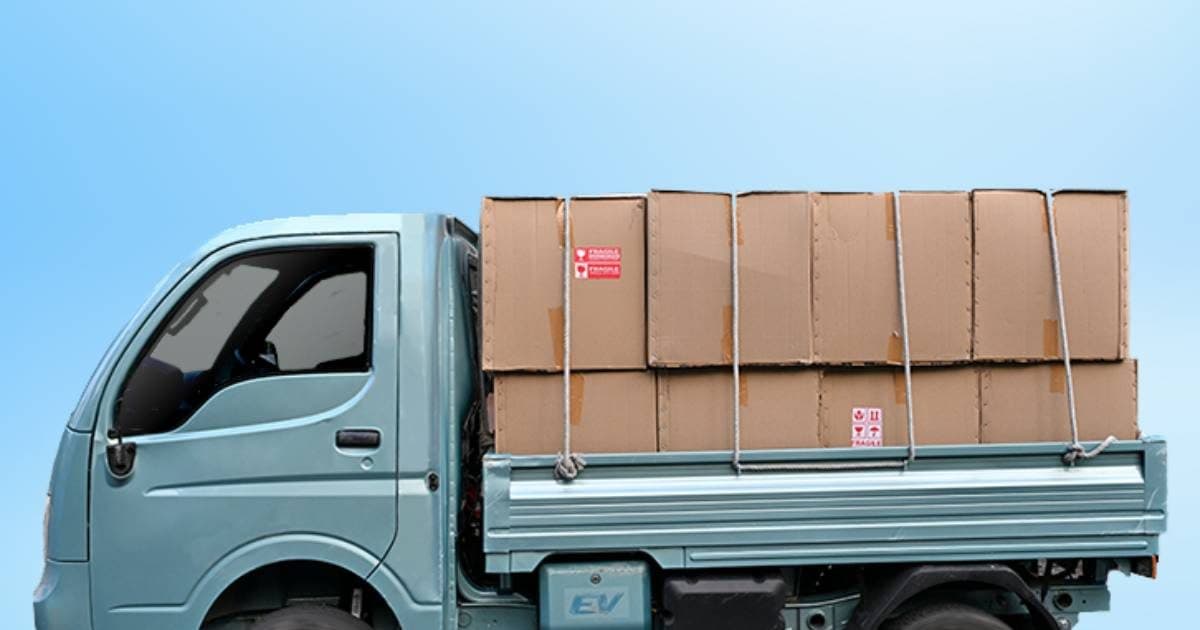
Tata Ace of Tata Motors is India's most popular mini-truck or pickup, which is also called small elephant. For decades, it has been a trusted partner of small traders in rural, urban and semi-urban areas. Now Tata has introduced it in electric form. These vehicles can carry a payload of up to 1000 kg, run 150-200 km on a single charge and are perfect for last-mile delivery.

This EV model is India's first four-wheeler electric cargo vehicle in the commercial category. It is quite different from traditional diesel pickups because of its 21-30 kW motor, 130 Nm torque and low maintenance. Small traders like grocery shopkeepers, vegetable/fruit sellers, e-commerce delivery partners, milk suppliers, fast food chains and local logistics people have now started adopting it.

How is delivery cost halved?

In a traditional diesel pickup (like the old Ace or other mini trucks), the biggest expense is fuel. The price of diesel is around ₹ 90-100 per liter and the average mileage is 15-20 km/liter. If a small businessman drives 80-100 km daily, he spends Rs 15,000-25,000 on fuel in a month.

On the other hand, the cost of charging in electric vehicles is very low. On domestic or commercial charging, electricity is available at ₹ 6-10 per unit. In a vehicle like Tata Ace EV, the cost per km is only ₹ 1-2. This means that if you drive 100 km daily, the charging cost will be only Rs 100-200. This reduces to Rs 3,000-6,000 in a month.

Apart from this there are many other benefits also. There is no problem with engine oil, filter, clutch or gearbox. EVs have 70-80% less moving parts, so servicing costs are less than half. There is also less wear and tear on tyres, brakes etc. Overall saving in operating cost (fuel + maintenance) can be up to 50-70%.

Benefits for small traders

Along with fleet offerers, EV pickup has benefited small traders the most. These may seem a bit expensive when purchased, but the upfront cost can be easily repaid in 3-5 years. Let us understand the benefits in different points.

  1. Lower total cost (TCO): Investment is recovered from EV savings in 5-7 years.
  2. Environmental protection: Zero emissions cleans the air of cities and reduces pollution.
  3. Government support: FAME scheme, subsidies, road tax exemption and low interest rate loans are available.
  4. Zero Noise: Due to less noise, delivery in residential areas is easy.
  5. Better Performance: Instant torque provides fast acceleration in city traffic.

What are the challenges?

Charging infrastructure for commercial EVs is currently limited, but home charging at night and increasing public chargers are reducing the problem. Battery prices will reduce further in the coming time, due to which the price of EV is going to become more attractive. Currently, Tata and Mahindra are two big players in the market, who are selling electric pickups.

Source link