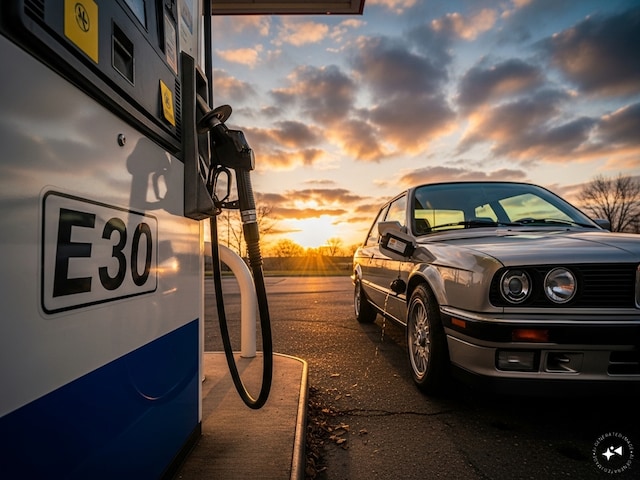
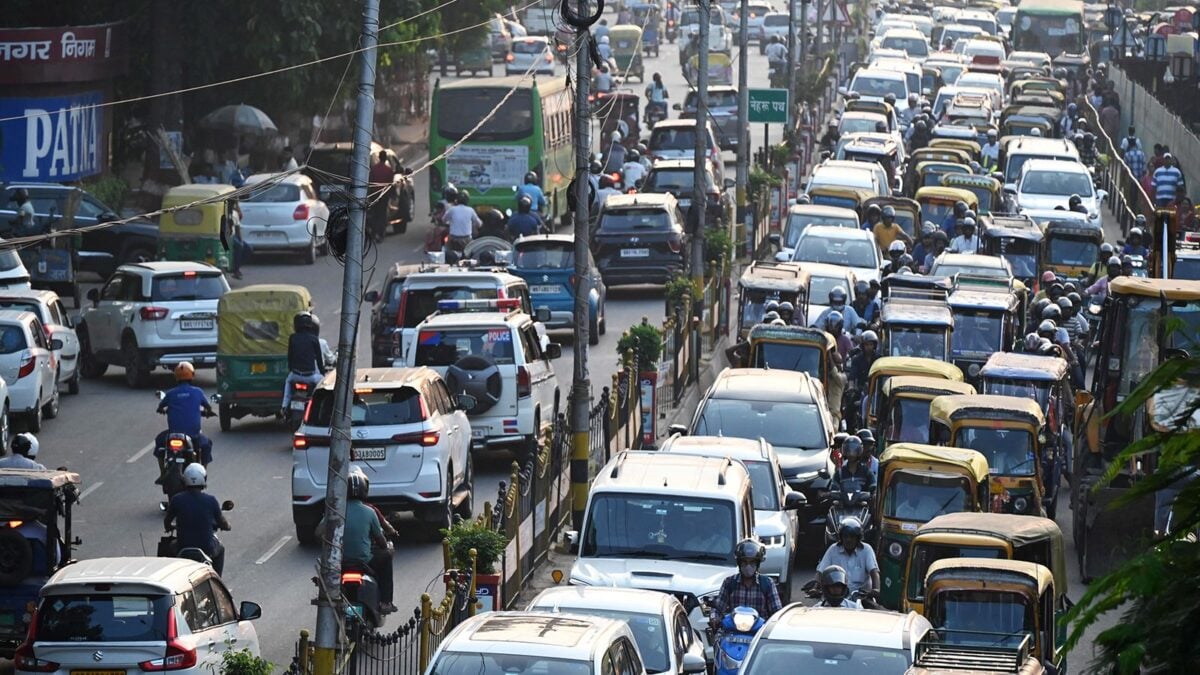
E20, EV also… what is the government's plan, why is work on both being done simultaneously?

E20, EV also… what is the government's plan, why is work on both being done simultaneously?

New Delhi. India's transport sector is currently going through a major transformation, based on two different paths to clean-mobility. The first path is of E20 petrol (petrol mixed with 20 percent ethanol) and the second is of battery operated electric vehicles (EVs). Current national policy sees these as a sequential, 'twin-track' strategy rather than a choice between the two.

In this strategy, E20 fuel is serving as an immediate relief means for energy security, while electric vehicles are positioned as the ultimate long-term solution to reduce carbon emissions. The recent fluctuations in the global energy market have further heightened the need for this dual approach, as India imports about 85 percent of its crude oil needs from abroad, which always puts economic pressure on the country.

E20 got big success in a short time

The introduction of E20 petrol in the country has been a huge success in a very short time. India completely shifted its domestic fuel supply to E20 petrol much ahead of its legal schedule. Due to this swift step, there has been a huge reduction in the expenditure on import of crude oil, due to which the country has saved foreign exchange of more than Rs 1.4 lakh crore. Additionally, this policy has provided a strong economic support to the agriculture sector as surplus sugarcane, maize and spoiled grains are being diverted for ethanol production, directly benefiting the farmers.

However, despite these huge economic benefits, there are some practical challenges to a mandatory E20 rollout on the ground. The biggest concern for consumers is the slight drop in vehicle mileage, as ethanol has a lower energy density per liter than pure petrol. According to automotive laboratories, depending on the engine calibration, the use of E20 fuel can result in a slight reduction in mileage of 3 percent to 6 percent. Additionally, vehicles manufactured after April 2023 are fully compatible with this fuel, but it may have adverse effects on parts of older vehicles as ethanol naturally absorbs moisture, which can cause normal rubber gaskets, hoses and fuel line seals to deteriorate quickly.

Electric vehicles: the challenge of high-capital infrastructure

On the other hand, moving towards electric vehicles meets the goal of zero-emission in the long run, but it requires huge capital investment. The pace of adoption of EVs in urban areas has increased rapidly due to government efforts like PM E-DRIVE scheme and Production Linked Incentive (PLI) for Advanced Chemistry Cell Battery Storage. The tax structure of the government is also a big help in this, while a huge GST of 28 percent is applicable on conventional petrol-diesel vehicles, whereas a low GST rate of only 5 percent is applicable on electric vehicles.

Despite this, some major structural bottlenecks remain in the EV sector. Although local assembly for electric two-wheelers and three-wheelers has been successfully integrated in the country, the supply chain for manufacturing the most critical component, i.e. battery cells, is still highly dependent on imported refined minerals. Additionally, the speed of the public charging network still lags far behind vehicle sales, especially in smaller cities (Tier-2 and Tier-3), leading to range anxiety. Grid capacity limitations and the lack of a unified, interoperable charging payment card also make its use difficult for non-commercial users.

Alignment of market reality and policy

According to projections from economic and transportation models, petrol consumption in India may reach its peak around early 2032, after which it will start declining due to mass electrification. Therefore, these timelines need to be balanced very carefully in long-term policy planning. Planning to add excessive capacity for ethanol distilleries beyond current requirements could turn that investment into stranded capital assets over the next two decades.

The strategic need for India is not to choose between E20 and electric mobility, but to manage their different life cycles properly. E20 fuel serves as a vital transitional bridge to provide immediate carbon reduction and financial relief from the existing conventional vehicle fleet. Additionally, the country will need to continue to aggressively expand domestic battery cell manufacturing and charging infrastructure, so that when the liquid fuel market shrinks in the future, India is well prepared to move towards a mature electric mobility ecosystem.

(Originally written by: Pathikrit Sen Gupta)
Source link

Will E20 petrol damage the car engine? Must read for BS3 and BS4 car owners

Will E20 petrol damage the car engine? Must read for BS3 and BS4 car owners

After the widespread use of E20 petrol (20% ethanol blended) started in India, the debate in the automobile world has intensified. Many videos and posts on social media are claiming that the engines of old cars will get damaged, there will be a huge drop in mileage and the fuel system will get damaged. But are these claims true? The answer is – it is not completely correct, but some problems have definitely arisen!

The purpose of E20 is to reduce oil imports, increase farmers' income and reduce pollution. Ethanol acts as an oxygenate, which keeps the combustion clean. However, questions are being raised on the compatibility of the fuel system in pre-2022 (especially pre-BS4) vehicles. In this article we will try to know the whole truth on the basis of scientific facts, engineering principles and workshop experience.

What is ethanol and why is it added to fuel?

Ethanol is an alcohol mainly produced from sugarcane or corn. The main reason for mixing it in petrol is to increase oxygen, which helps in better combustion of the fuel. This reduces harmful emissions and reduces dependence on fossil fuels.

Ethanol is preferred in motorsport because it has a higher octane rating, lower combustion temperatures and easier tuning. E10 was being used in India for a long time, now E20 has become standard.

How does the engine work?

Every engine has a perfect air-fuel ratio (AFR). For pure petrol (E0) it is 14.7:1. For pure ethanol it is about 9:1. The AFR changes in the E20 blend, causing the ECU to slightly increase the amount of fuel. If the ECU does not adjust, the engine may lean (run on less fuel), causing temperatures to rise. But modern vehicles are capable of dealing with this problem.

BS4 or newer petrol cars have closed-loop fueling, oxygen sensors and an ECU that can adjust the injector pulse. Most ECUs make fuel corrections up to ±20%. E20 comes easily in this range. For example, in Brazil, E25-E27 have been running in common cars for years without any major problems.

BS4 standard had already made preparations for E10. Features ethanol-resistant hoses, seals and pumps. Headroom is always kept in engineering, so most BS4+ cars can be considered safe for E20.

Is 20% more fuel injected than E20?

no way. Pure ethanol contains about 34% less energy than petrol. E20 requires 6-7% more fuel than E0 (only 2-3% more than E10). The ECU handles this easily. The claims of 30-50% mileage drop are simply wrong. The actual decline may be around 2-3%.

Myth of Melting Rubber Fuel Line

Ethanol can affect old natural rubber or cheap hoses. But after 2010, most companies use resistant materials like FKM or NBR. BS4 has strengthened these changes. Due to engineering tolerances, E20 or even E30 is safe in most cases, unless your car is an older carbureted car.

Problem of clogged injectors

Deposits build up slowly in the injectors. These can malfunction due to bad fuel, short drives or carelessness. E20 also has a cleaning effect, which dissolves varnish and carbon. It works the same way as expensive fuel system cleaners. In poorly maintained vehicles, old deposits can loosen and cause temporary problems, but in regularly maintained vehicles this is beneficial.

Water separation: the real problem

Ethanol is hygroscopic, that is, it absorbs moisture. Phase separation in E20 can occur at 0.4% water, but it takes 3-5 weeks. This problem can occur in an unused, humid and empty vehicle. Fuel keeps circulating in daily running vehicles, hence the problem is less.

What problems can arise?

  • Slight 2-3% drop in mileage.
  • Slight problem in cold start in very cold weather.

The case of BS3 and carbureted cars

The material in BS3 vehicles is less tolerant. Hoses, seals and pumps can wear out rapidly over a long period of time. Carbureted engines run lean due to fixed jets, which can cause hesitation, poor starting and overheating. There is a high risk of corrosion in storage.

What to do BS3 Honors?

  1. Install ethanol-resistant hoses/seals (FKM/NBR).
  2. Richer re-jet the carb.
  3. Check/replace pump diaphragm and seals.
  4. Use stabilizer in storage, do not keep E20 for long periods.
  5. Clean jets/injectors regularly.
  6. Keep an eye on drivability.

Source link

Will Mahindra's car be spoiled by E20 petrol? The company itself told the whole truth

Will Mahindra's car be spoiled by E20 petrol? The company itself told the whole truth

Last Updated:

Can E20 petrol harm the engine of your Mahindra car? For the first time, the company has clarified its position in detail on this question. Mahindra says that all its petrol vehicles are safe on E20 fuel, while models manufactured after April 1, 2025 have been specially optimized for this. What changes can be felt in old models and how much will be the impact on mileage, read the full report.

news quickly

Zoom

Mahindra has given an official statement regarding E20 fuel.

Mahindra & Mahindra has given a clear answer to the questions being raised regarding E20 fuel and said that all the petrol vehicles of the company can run safely on E20 fuel. The company has given this information through official social media post and customer care email. However, models manufactured after April 1, 2025 have been specially calibrated for E20, which will provide better acceleration and fuel efficiency.

There is concern among many vehicle owners amid the promotion of E20 petrol (20% ethanol blend). Mahindra has confirmed that older models (manufactured before April 1, 2025) are also completely safe on E20, but they may experience slight differences in performance or mileage. This statement has come at a time when many videos regarding E20 are going viral on social media.

Mahindra's official statement

In response to a customer's query, Mahindra said through customer care email, 'Mahindra engines are in full compliance with the current gasoline standards and all our vehicles can be safely run on E20 fuel.' This statement is bigger than the company's official tweet, which only mentioned E20-compliant vehicles.

These vehicles are out of danger

The company clarified that the vehicles launched in the market after April 1, 2025 have been specially calibrated for E20 fuel. In this, acceleration and fuel efficiency have been optimized. At the same time, owners of vehicles manufactured before this may experience some performance problems (like slightly less acceleration or mileage), but there will be no harm to the engine. This difference also depends on the driving style.

Mileage has decreased!

E20 has slightly less energy than E10, due to which there may be a slight reduction in mileage. This was also accepted by Mahindra and many other companies (Maruti, Toyota, Hyundai, Hero) in the recent government press conference. Toyota had blamed the viral Innova Hycross issue on bad fuel rather than E20.

This clarification from Mahindra is important amid the ongoing debate regarding E20. The government is promoting E20 as an eco-friendly option, while auto companies are continuously increasing communications to reassure owners of older vehicles. Mahindra stressed that all the vehicles have been tested on E20 and there was no significant impact on their performance.

About the Author

authoring

Ram Mohan MishraSenior Sub Editor

Ram Mohan Mishra, working as Senior Sub-Editor at News18 Hindi, is active in digital media since 2021 and is currently handling the Auto Desk. They provide car and bike related information in an easy, clear and reliable manner.read more


Source link

What is Flex Fuel Vehicle? Understand the entire technology in easy language

What is Flex Fuel Vehicle? Understand the entire technology in easy language

Last Updated:

The first mass-market car running on a mixture of petrol and ethanol has arrived in India. Maruti Suzuki's new Wagon R Flex Fuel can run on fuel blends ranging from E20 to E85. After all, what is Flex Fuel Technology, what changes have been made in it from the normal engine and how can it reduce petrol expenses, pollution and oil imports? Know the complete details.

news quickly

Zoom

How does Flex Fuel Vehicle work? Know

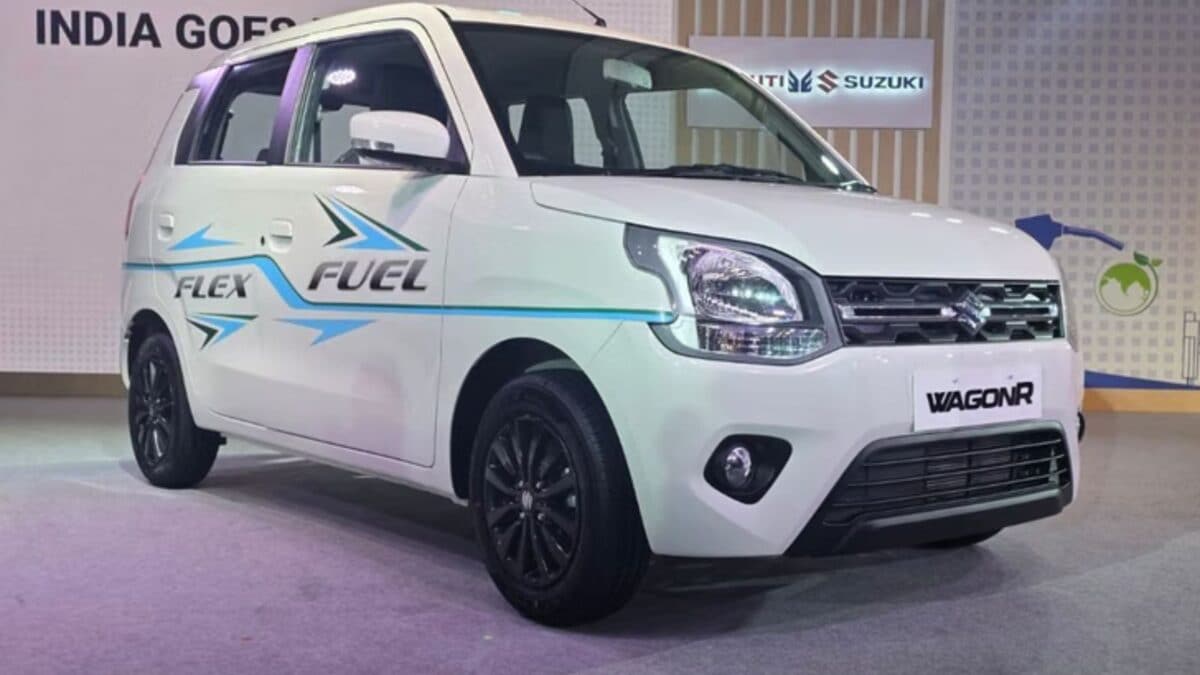
Maruti Suzuki has launched the country's first Flex Fuel running car, Wagon R Flex Fuel. Soon it will start being delivered to customers. However, details of its price and variant options are yet to be known. Flex fuel vehicles can also run on heavy blends of ethanol and petrol.

This flex fuel model, being launched in the mass market for the first time in India, can run on blends ranging from E20 to E85. By becoming an economical and eco-friendly option for the common people, it can prove to be a practical bridge technology along with electric cars. Let us know what is flex fuel and how will this technology be used?

What changed in Maruti Wagon R Felx Fuel

There has been no change in the exterior design of WagonR. Only flex fuel and biofuel badging has been given. The interior and features are also similar to the petrol version. It gets features like 7-inch touchscreen, Android Auto/Apple CarPlay, 6 airbags and power windows. It is based on 1.2-litre petrol engine, whose power is expected to be around 90 PS and torque 113 Nm. The company has not yet told about the mileage available with flex fuel.

What is flex fuel?

Flex fuel is an alternative fuel made by mixing regular petrol with renewable biofuel (mainly ethanol). Flex-fuel vehicles (FFV) can run on 100% petrol, 100% ethanol or any ratio of the two. In India it can start from E20 (20% ethanol) and go up to E85 (85% ethanol).

How does a flex fuel engine work?

Many hardware changes are made in flex fuel engines compared to normal petrol engines, because ethanol is more corrosive and has lower energy density. Some such changes take place in the engine-

  • Anti-Corrosion Fuel System: The fuel tank, fuel line and other related parts are made from special anti-corrosive materials to avoid any harm due to the corrosive nature of ethanol.
  • Large Fuel Injectors and Pumps: The amount of energy in ethanol is less than petrol, so the engine requires more fuel to give the same performance. For this reason, large capacity injectors and fuel pumps have been installed.
  • Ethanol Sensor: A sensor installed inside the fuel tank detects the percentage of ethanol (ranging from 10% to 85%) and immediately sends this information to the ECU.
  • Engine Control Unit (ECU): It automatically adjusts the air-fuel ratio, spark timing and fuel injection quantity as per the fuel mixture based on the information received from the sensors.
  • Heated Fuel Lines: To burn ethanol easily in cold weather, special arrangements have been made to heat the fuel lines, so that starting and performance is not affected.
  • Strong Engine Components: The internal parts of the engine like valve seats, piston rings and other important parts are made from special hardened material, so that there is no early wear or damage due to ethanol.

Why is ethanol so important?

Ethanol is going to be a necessity of the future in many ways. India is a big importer of crude oil. Ethanol blending will save foreign exchange. Farmers will benefit. Ethanol is made from sugarcane, maize etc., which will increase agricultural income. Pollution will also reduce, because tailpipe emissions from ethanol will reduce by 70-75%. Fuel can also become cheaper due to reduction in the quantity of petrol.

About the Author

authoring

Ram Mohan MishraSenior Sub Editor

Ram Mohan Mishra, working as Senior Sub-Editor at News18 Hindi, is active in digital media since 2021 and is currently handling the Auto Desk. They provide car and bike related information in an easy, clear and reliable manner.read more


Source link

Ethanol will assess the ethanol combination scheme before setting high targets: Tel Min Puri

Ethanol will assess the ethanol combination scheme before setting high targets: Tel Min Puri

The statement comes between the Baclash from the vehicle owners on the E20 fuel harmful engines, reducing fuel efficiency and there is no decrease in fuel prices.

All fuel stations across the country are now retail petrol with 20 percent ethanol mixture, which has promoted backlash from vehicle owners on low efficiency and high wear and tears.

For Central Petroleum and Natural Gas Hardeep Singh Puri, the Union Minister has said that the government will “assess” the ethanol combination program before setting high targets. The statement comes between the Baclash from the vehicle owners on the E20 fuel harmful engines, reducing fuel efficiency and there is no decrease in fuel prices. While the government has said that 20 percent of the ethanol mixed with petrol is safe to use environmentally, vehicle users otherwise believe.

Favorite source banner

No plans to jump for high mixed ethanol fuel: Puri

Speaking in an incident recently, Puri said, “We had a target of 20 percent conclusion – for which the target date was 2030, and we have done it six years ago. I will put a full break there; we will assess where we have to go. You hear all the stories that we are going to learn now, etc.

He added, “All stories that you hear about bio fuel, are harmful to the engine, a lot of 'BS' – 'B' Capital, 'S' are capital. And I don't know what it means, but it is a special.”

There were reports of the government's plan to go to 27 percent ethanol mixture in petrol. A recent report also suggested that the Bureau of Indian Standards (BIS) was directed to come up with criteria for E27 fuel on priority. Now it seems that the plan to introduce it for the same time will be delayed.

Hardeep Singh Puri
Oil Minister Hardeep Singh Puri said that all stories call biofuels harmful (PTI)

The government has made the use of E20 petrol mandatory in all fuel pumps across the country, which has promoted backlash from vehicle users. Motor drivers have complained about fuel damage to engine, with increased wear and tear due to corrosive nature of ethanol. Vehicle owners have fallen by 15–20 percent in fuel efficiency on older vehicles, which were not designed to run on E20 fuel. In contrast, the government claims that the decline in fuel efficiency is just 1-2 percent.

There are questions about the impact of ethanol at the price of fuel, and there is no decrease in fuel prices despite the high ethanol mixture. Fuel prices have been largely stable in the last three years.

There are also concerns about the production of ethanol, which requires water-intensive crops. However, the government says that 20 percent ethanol extract from sugarcane or maize is a national program aimed at cutting emissions and increasing the income of farmers.

Bio fuel required to reduce dependence on oil imports

Puri said that the percentage of mixed ethanol in petrol in 2014 was 1.4 percent. It has increased to 20 percent in the last decade. The Ministry of Oil has also rejected the apprehensions about the use of E20, calling the claims baseless. Puri said that some older vehicles may need to replace some rubber parts and gaskets, it may be called a “simple process”.

The government has been vocal about the plan to introduce a high mixture of ethanol in fuel to reduce dependence on crude oil imports. Puri said that India is 88 percent dependent on imports to meet its oil needs, bio fuel and cleaner energy is called “imperatives of that time”.

Get insight into state -of -the -art technology changing upcoming cars, electric vehicles, bikes in India and automotive landscape.

First published date: 17 September 2025, 13:06 pm IST

Source link

Tension over E20 fuel! This company is giving lifetime warranty, brand will take responsibility for malfunction

Tension over E20 fuel! This company is giving lifetime warranty, brand will take responsibility for malfunction

Last updated:

Nissan has supported the E20 fuel initiative in India, both the engines of Magnite are E20 competition and have also been given a 10 -year warranty, assurances to investigate the problems related to performance.

Tension over E20 fuel! This company is giving lifetime warranties

New Delhi, India World Of To all elder Automobile It is included in the market. These days in the market here E20 Fuel The discussion about it is very hot. Some people of this government's initiative Support Are doing and some people are against it. Now Nissan Done official Form From Government of Optional Fuel That means focused on alternative fuel Pawn Has supported, especially recently All over the country In E20 petrol Of roll out With Japanese car maker Latest Media Release It is said that he constantly Product Innovation And Permanent Mobility Solutions To carry forward these goals through Dedicated Is.

What is E20 Meaning of,

E20 That means 80 in fuel Percent petrol And 20 Percent Ethanol The mixture is. In India Nissan Mainly a product brand, in which Magnite The only mass-market in the country Model Is. Company on its official website X-Trail Also List Does it, but it Premium Mid-size SUV Limited Quantity Completely in Imported i.e Cbu Model Is offered as

Nissan Magnite Completely E20 Compatible

Nissan In December last year Magnite A light of Facelift Launch Done fine Cosmetic And Features Update Were. Magnite Give to petrol engine Options By Poward Is done: a 1.0-liter Natural Aspirated Unit and a 1.0-liter Turbocharged unit. Nissan Says that the first engine from February this year E20 Compatible While the second engine from August last year E20 Compatible Was done

Engine and power

Nissan Magnite 1.0-liter in Natural Aspirated petrol Unit 71 Bhp And 96 Nm Of Peak Torque Generate Does Transmission Duties 5-speed for Manual Or 5-speed Amt Transmission Has been given. On the other hand, 1.0-liter Turbocharged Power mill 99 Bhp And 160 Nm ,AT 152 with Nm) Of Peak Torque Generate Does This Variant 5-speed in Manual Or CVT Automatic Gearbox Get

All Nissan For cars Warranty

Nissan Has confirmed that E20 fuel usage october Sold after 2024 Magnite Units of Warranty Will not affect, as well as current Active Warranty Under this, no vehicle manufactured in India will not affect. In fact, Nissan Recently Magnite For Segment The first time in 10 years Warranty The program is introduced. The company has announced that Magnite All new and current Units E20 Fuel But Walking In Able Are, And Any Important Problem No Dekha Went Is. Condition Sole In, All over the country In Many Vehicle owners E20 Fuel Fill After performance and Mileage Has reported to fall in. Nissan Done All Vehicle owners have assured that by the Government of India Mandatory E20 Fuel Of any problem caused by Regular Service Appointments During the time it will also be fully tested and resolved.

Click here to add News18 Hindi as your favorite news source on Google.
homeauto

Tension over E20 fuel! This company is giving lifetime warranties

Source link

Here the rest of the companies were entangled with the E20, on the other hand, Mahindra made the engine running E30+ Fuel

Here the rest of the companies were entangled with the E20, on the other hand, Mahindra made the engine running E30+ Fuel

Last updated:

Mahindra has prepared vehicles for E30 fuel with NU-IQ platform. The Auto Expo 2025 showcased flex-fuel cars, including Hyundai, Tata, Maruti and Toyota.

gogole-serarch-btn
Companies remained entangled with E20, Mahindra made an engine running on E30+
New Delhi. There has been a lot of debate in India about the E20 fuel for a long time. Car manufacturer brands are also continuously offering clarification about this. The government is also constantly informing people about this. There is also a question in the minds of car owners whether their car is compatible for E20 fuel or not. But in the midst of all this, Mahindra has prepared to move beyond E20. Due to which the company's vehicles will not be compliant only for the E20 but even the E30+ fuel.

Modular nu-q platform
Mahindra has developed the new modular NU-IQ platform, capable of cordinating different powertrain options and offering several body styles for upcoming SUVs. Apart from this, Mahindra is also working towards securing the future of cars by developing the flex-fuel engine. This engine will be able to move the E30-rated fuel and even beyond.

Mahindra ready for future

As the Indian government is searching for options to increase the ethanol mixture in petrol to 30 percent (E30) by 2030, Mahindra is getting ready to introduce an engine that will be compatible with this fuel. Engineers will need to reintegoring to run on E30 and high-rated fuel (up to 100 percent ethanol-based); Ethanol material sensors include monitoring the convention of ethanol in real time, as well as fuel rail and injector heaters for cold start, required upgrade.

Fuel Flex in Auto Expo 2025
The Auto Expo 2025 showcased separate flex-fuel cars and bikes, although no timelines have been described for the launch of four wheel vehicles. Hyundai did the Creta 1.0 flex fuel showcase, Tata introduced the E85-Competitive Punch, and Maruti showcased her Wagon R Flex Fuel. Toyota introduced petrol-electric hybrid powertrain at the Innova Hycross, which can run on E20 and high-rated fuel.

Click here to add News18 Hindi as your favorite news source on Google.
homeauto

Companies remained entangled with E20, Mahindra made an engine running on E30+

Source link