
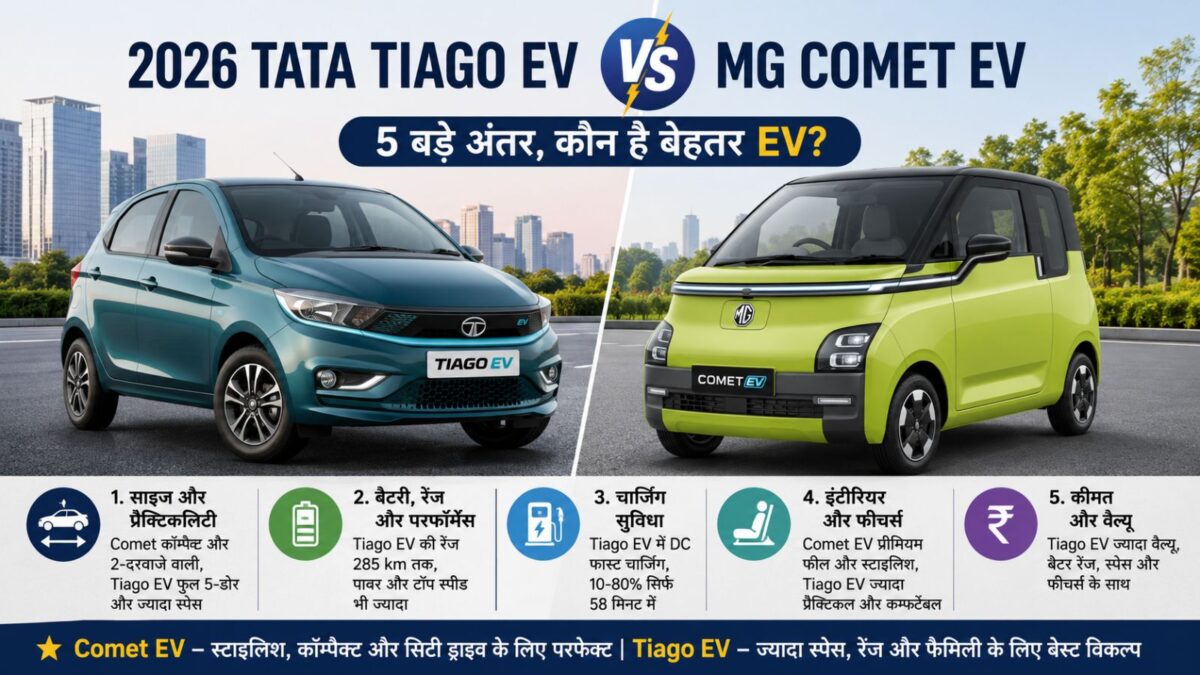
These are the 5 big differences between Tata Tiago EV and MG Comet EV! Know before you buy

These are the 5 big differences between Tata Tiago EV and MG Comet EV! Know before you buy

MG Comet EV and Tata Tiago EV are two popular and affordable electric cars in the Indian market, which are mainly designed for city driving. The MG Comet EV is a compact, stylish and premium-feeling two-door car, while the Tata Tiago EV is a conventional five-door hatchback with an emphasis on practicality. There is a lot of difference in size, performance, range and features between both the EVs.

Comet EV is better for those who want easy parking and premium cabin for small family or solo use. Whereas Tiago EV is more suitable for those users who need more space, better range and longer drive. Both are competitive in terms of price. Starting ex-showroom prices for the Comet EV start at around ₹7.50 lakh, while the Tiago EV can be purchased from ₹6.99 lakh. With BaaS, the price of both comes down to less than ₹5 lakh. Come, let us know about 5 big differences between these two.

1. Size and practicality

The MG Comet EV is quite compact (length approximately 2974 mm) and has only two doors, which makes it easy to maneuver and park in the city. But rear seat access is difficult and space is limited. Tata Tiago EV, on the other hand, is a full five-door hatchback (length 3769 mm) that can comfortably seat four-five people, offers better rear leg room and a larger boot space. Tiago EV is more family-friendly and practical for everyday use.

2. Battery, Range and Performance

The MG Comet EV has a 17.3 kWh battery, which gives an ARAI-claimed 230 km range. Tata Tiago EV comes in two options (19.2 kWh or 24 kWh), with the long range variant offering a range of up to 285 km. The Tiago EV is more powerful (60-75 bhp), offers faster acceleration (0-60 kmph ~5.5 seconds) and a top speed of 120 kmph, while the Comet EV is less powerful (41 bhp) and limited to around 100 kmph. Tiago EV is better for long drives.

3. Charging facility

MG Comet EV supports only AC charging and it can be fully charged in 7 hours. Tata Tiago EV can be charged from 10-80% in just 58 minutes with DC fast charging. This is very useful for emergencies or inter-city trips. The charging flexibility of Tiago EV makes it more versatile.

4. Interior and Features

The cabin of Comet EV is very premium. Dual 10.25-inch screens, rotary gear knob and modern looks. The interior of the Tiago EV is simple but functional, with good storage, auto headlamps and other practical features. Comet EV is better for style, Tiago EV is better for comfort and usability.

5. Price and Value

Comet EV may be a little expensive, but gives a premium feel. Tiago EV offers better value. It can be purchased with more space, range, fast charging and safety features. Overall, the Tiago EV is the more practical option, while the Comet EV is a unique and fun-to-drive city car.
Source link

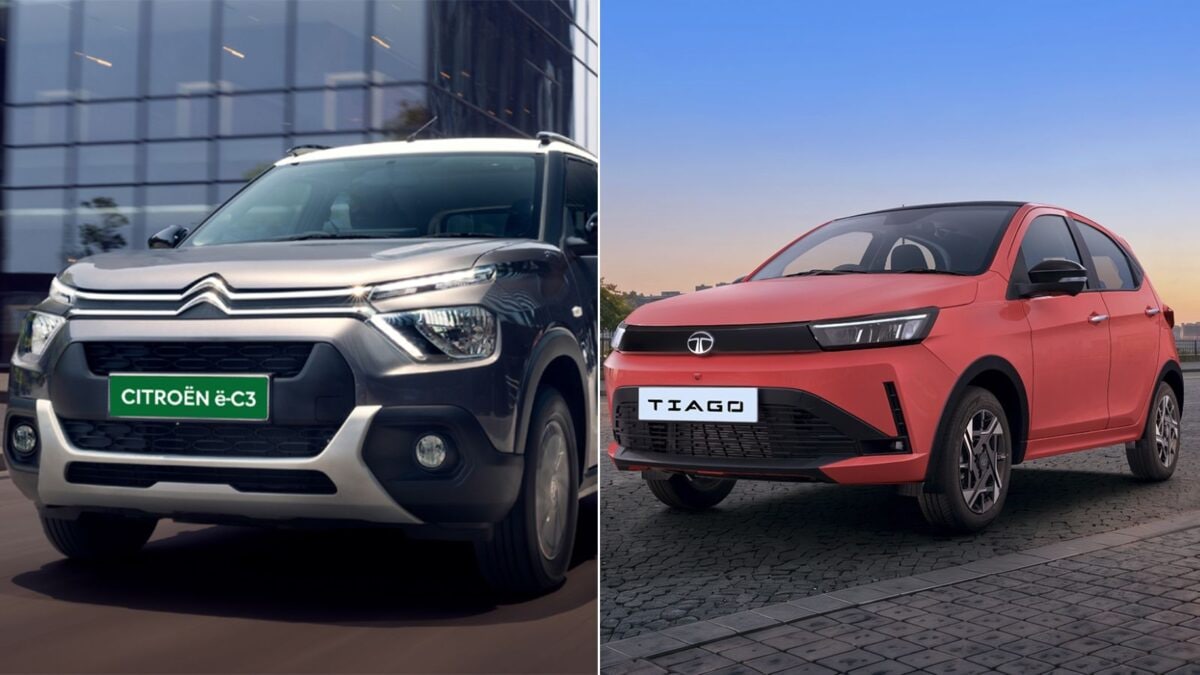
Tata Tiago EV worth ₹7 lakh or Citroën eC3 with 320KM range? Know who to buy from

Tata Tiago EV worth ₹7 lakh or Citroën eC3 with 320KM range? Know who to buy from

Tata Tiago EV and Citroën eC3 are two strong contenders in the budget electric car market. Tata Tiago EV has been recently updated, which includes new styling, better features and competitive pricing. It is perfect for daily commuting in the city. The Citroën eC3, on the other hand, offers a premium feel with a slightly larger hatchback/SUV-like presence, larger battery pack and a comfortable ride.

Talking about the price, the starting ex-showroom price of Tata Tiago EV starts at ₹ 6.99 lakh (Smart 19.2 kWh) and goes up to ₹ 9.99 lakh for the top variant Creative+ 24 kWh. Citroën eC3 prices range from ₹12.90 lakh (Feel) to ₹13.41 lakh (Shine DT). The Tiago EV is affordable and value for money, while the eC3 is a little expensive due to its larger size and range. Let's take a look at the details from their design to battery, motor and range.

Design and interior

The 2026 Tata Tiago EV looks attractive and modern with revised front-rear styling, connected LED taillamps and new colours. This is a compact hatchback. The Citroën eC3 exudes presence with its SUV-inspired design, high ground clearance and bold stance. The Tiago EV is easier for city parking, while the eC3 feels better on highways and bad roads.

Talking about the interior, Tiago EV gets a new dashboard, updated seats, 360-degree camera and better materials. Space is adequate, but some people may find the cabin small. The eC3 has a larger cabin, more leg-headroom and 315 liters of boot space, which is better for family use. Citroën's suspension gives a soft ride.

Features and safety

Tiago EV has features like touchscreen infotainment, wireless connectivity, connected car tech and ventilated seats. The eC3 offers a 10.2-inch touchscreen, wireless Android Auto/Apple CarPlay and good comfort features. Tiago EV looks more tech-loaded. For safety, Tata Tiago EV now gives hope for better safety score with 6 airbags, 360 camera and strong structure. Two airbags are standard on the Citroën eC3, but the overall build is good.

Battery, Motor and Range

Tiago EV comes with two battery pack options – 19.2 kWh (226 KM ARAI range) and 24 kWh (285 KM ARAI range). The motor generates power around 61-75 hp. Fast charging is available. Citroen eC3 has a 29.2 kWh battery and the motor generates 56 bhp power. It is capable of giving 320 KM ARAI range. The eC3 offers more torque with longer range, but the Tiago EV is better in fast charging and variety.

Our advice: If the budget is within ₹ 10 lakh and city commuting is required, then Tata Tiago EV is a better choice. If you want more space, range and comfort then choose Citroën eC3. Both are making the EV segment affordable. Overall Tiago EV is a champion in value for money.

Source link