
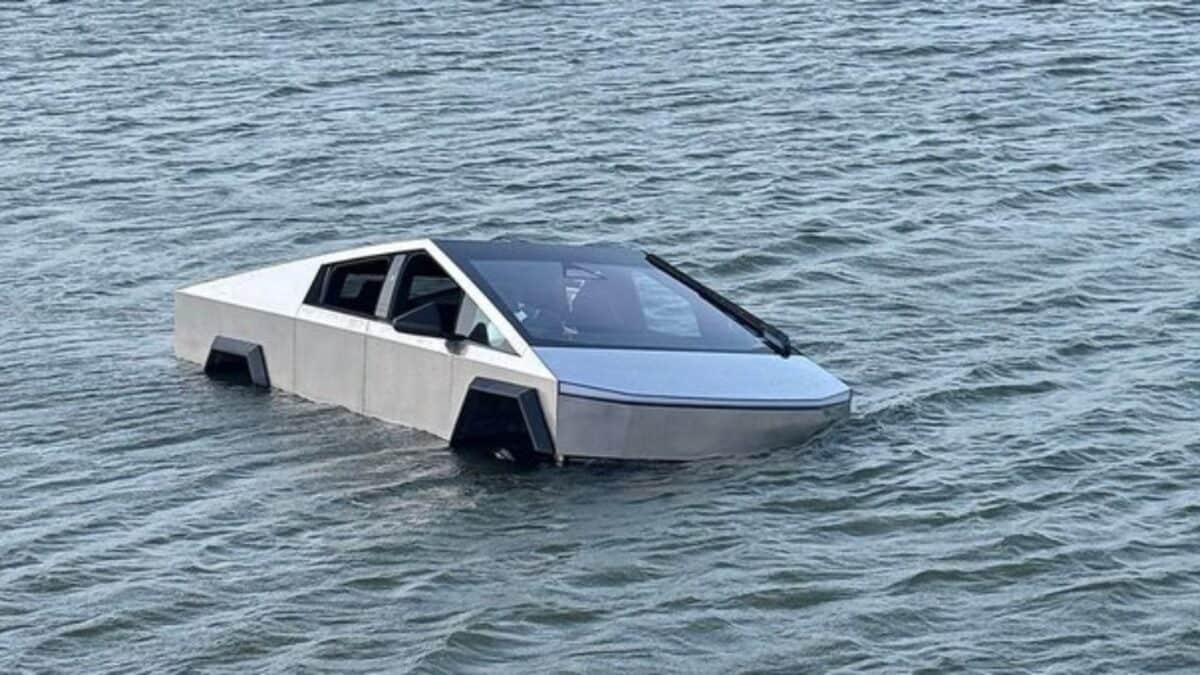
Look at the craze! Tesla Cybertruck was taken into the lake for fun, police sent it to jail

Look at the craze! Tesla Cybertruck was taken into the lake for fun, police sent it to jail

A unique incident in Texas has created a stir on social media. A man was arrested for intentionally sinking his Tesla Cybertruck in a lake. The accused wanted to use the vehicle's 'Wade Mode' feature, which gives the Cybertruck the ability to drive in water up to 81.5 centimeters (32 inches) deep.

Police caught him on charges of driving in a closed area and violating water-related safety rules. This incident highlights the powerful and adventurous capabilities of the Cybertruck, but also shows how dangerous misuse of the features can be. Cybertruck is in the news for its unique design and power, but this incident also raises questions on its real-world use.

Abuse of Cybertruck's powers

This incident happened in a lake in Texas, where the accused tried to land the Cybertruck in water. According to Tesla's manual, when Wade Mode is activated, the ride height of the vehicle becomes very high and the battery pack is pressurized to protect it from water and debris. The mode is limited to 30 minutes and the speed should be kept at 2-5 km/hr.

Police said that part of the lake was closed and safety equipment was not followed. This matter has gone viral, where some people are considering it funny while some are questioning the responsibility of Cybertruck owners. The event highlights the Cybertruck's off-road and water wading capabilities, which make it different from traditional pickup trucks.

Tesla Cybertruck: Design Details

Tesla Cybertruck is the world's most unique and controversial electric pickup truck, which Elon Musk's company unveiled in 2019 and started deliveries from 2023. Its design is completely futuristic and angular. It has an ultra-hard 30X cold-rolled stainless steel exoskeleton body, providing bulletproof-level strength.

The roof has the capacity to withstand 300 pounds of weight. It has air suspension, which can adjust the ride height. This improves approach, breakover and departure angles. The design features no conventional grille, LED lights, power-retractable tailgate and spacious interior with 6-passenger capacity. There is power cover and storage in the back. It is designed for off-roading. Its towing capacity is up to 11,000 pounds.

Powertrain and performance

The main variants of Cybertruck include Dual Motor AWD and Tri-Motor Cyberbeast. Cyberbeast has three electric motors (front: permanent magnet, rear: induction), which generate a total of 845 hp power and huge torque. The battery is 123 kWh, which gives an EPA estimated range of 320-350 miles (515-565 km). 800V architecture supports fast charging (up to 350 kW).

This sets the suspension very high and allows the battery pack to operate safely in up to 32 inches (81.5 cm) of water by pressurizing the air. Other features include Crab Walk (Crab Walking Mode), Full Self-Driving Capability (FSD) and Advanced Safety System. Its top speed is up to 130 mph. There is no official launch in India yet, but some private imports have been seen. Its estimated price can range from ₹ 50 lakh to ₹ 1.5 crore.
Source link

No tension of petrol and diesel! Electric mini trucks will save thousands every month, understand the math.

No tension of petrol and diesel! Electric mini trucks will save thousands every month, understand the math.

Commercial Electric Vehicles (EV) have become the best option for small businessmen in India. Especially the electric versions of pickups like Chhota Hathi i.e. Tata Ace are proving to be a game-changer for small traders, delivery service providers and those working in last-mile logistics.

By using these EVs instead of traditional diesel or petrol pickups, delivery costs can be reduced by half or even more. This change is not only economically beneficial, but is also very important for the environment. If you are planning to buy a pickup truck in the coming days, then know how beneficial it will be to buy an EV pickup instead of diesel/petrol?

Electric incarnation of 'Chhota Haathi'

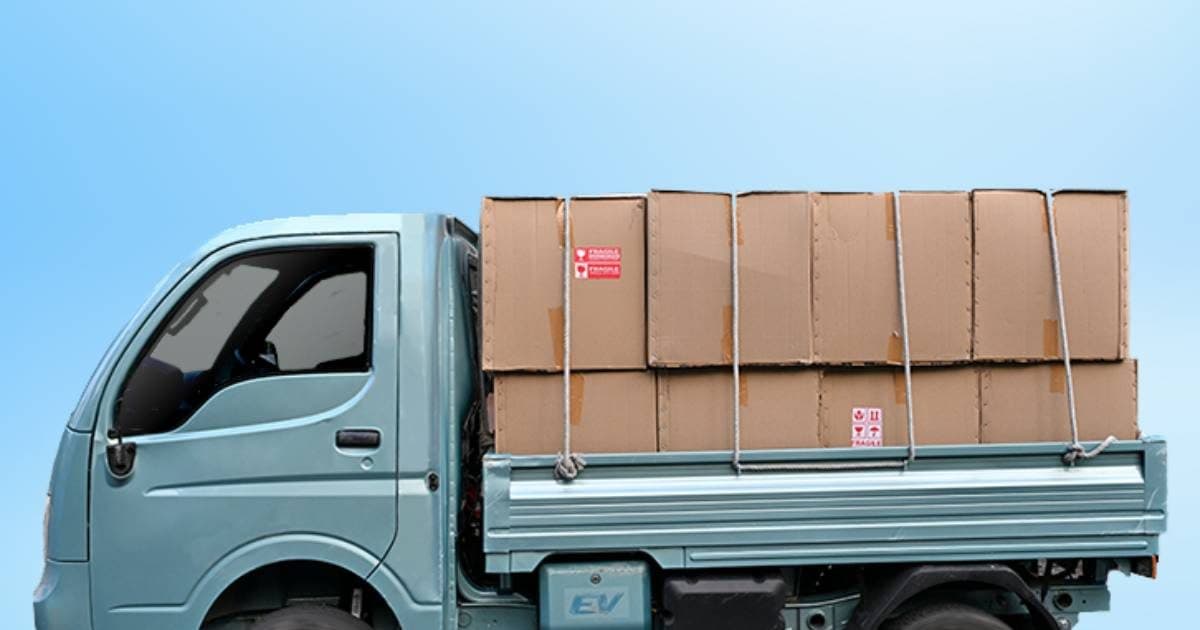
Tata Ace of Tata Motors is India's most popular mini-truck or pickup, which is also called small elephant. For decades, it has been a trusted partner of small traders in rural, urban and semi-urban areas. Now Tata has introduced it in electric form. These vehicles can carry a payload of up to 1000 kg, run 150-200 km on a single charge and are perfect for last-mile delivery.

This EV model is India's first four-wheeler electric cargo vehicle in the commercial category. It is quite different from traditional diesel pickups because of its 21-30 kW motor, 130 Nm torque and low maintenance. Small traders like grocery shopkeepers, vegetable/fruit sellers, e-commerce delivery partners, milk suppliers, fast food chains and local logistics people have now started adopting it.

How is delivery cost halved?

In a traditional diesel pickup (like the old Ace or other mini trucks), the biggest expense is fuel. The price of diesel is around ₹ 90-100 per liter and the average mileage is 15-20 km/liter. If a small businessman drives 80-100 km daily, he spends Rs 15,000-25,000 on fuel in a month.

On the other hand, the cost of charging in electric vehicles is very low. On domestic or commercial charging, electricity is available at ₹ 6-10 per unit. In a vehicle like Tata Ace EV, the cost per km is only ₹ 1-2. This means that if you drive 100 km daily, the charging cost will be only Rs 100-200. This reduces to Rs 3,000-6,000 in a month.

Apart from this there are many other benefits also. There is no problem with engine oil, filter, clutch or gearbox. EVs have 70-80% less moving parts, so servicing costs are less than half. There is also less wear and tear on tyres, brakes etc. Overall saving in operating cost (fuel + maintenance) can be up to 50-70%.

Benefits for small traders

Along with fleet offerers, EV pickup has benefited small traders the most. These may seem a bit expensive when purchased, but the upfront cost can be easily repaid in 3-5 years. Let us understand the benefits in different points.

  1. Lower total cost (TCO): Investment is recovered from EV savings in 5-7 years.
  2. Environmental protection: Zero emissions cleans the air of cities and reduces pollution.
  3. Government support: FAME scheme, subsidies, road tax exemption and low interest rate loans are available.
  4. Zero Noise: Due to less noise, delivery in residential areas is easy.
  5. Better Performance: Instant torque provides fast acceleration in city traffic.

What are the challenges?

Charging infrastructure for commercial EVs is currently limited, but home charging at night and increasing public chargers are reducing the problem. Battery prices will reduce further in the coming time, due to which the price of EV is going to become more attractive. Currently, Tata and Mahindra are two big players in the market, who are selling electric pickups.

Source link