540 KM range, sunroof and ADAS! This e-SUV is ready to enter the market with a bang

540 KM range, sunroof and ADAS! This e-SUV is ready to enter the market with a bang

Last Updated:

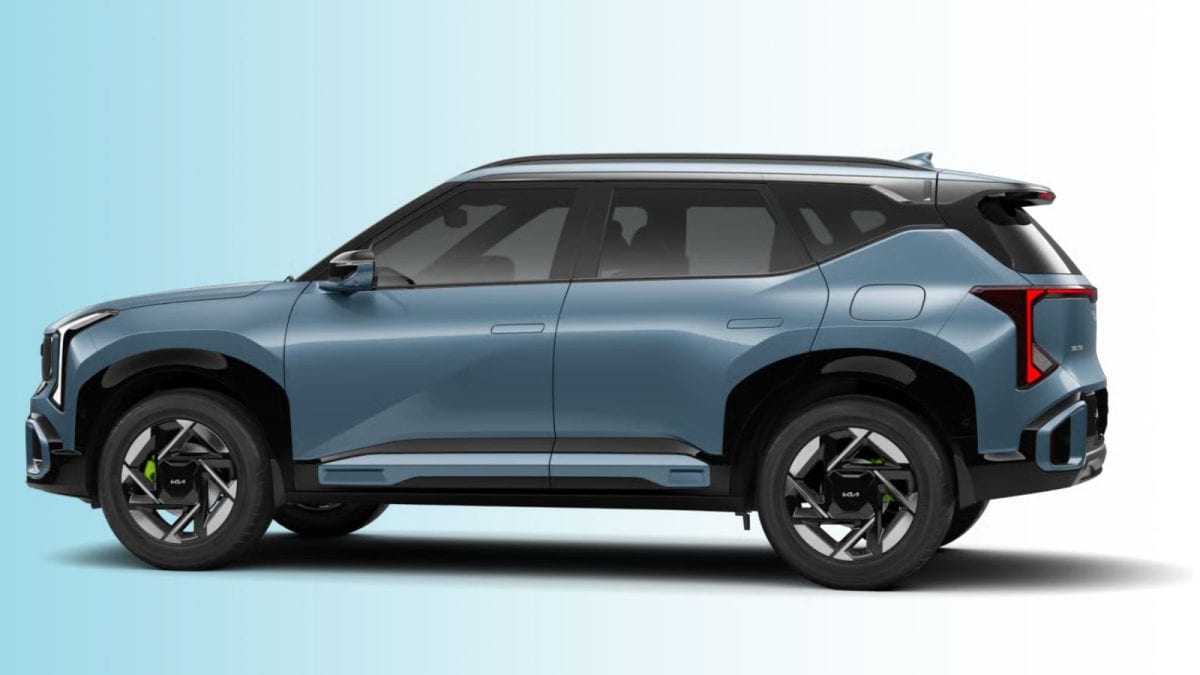
Kia's new Syros EV has been in the news even before its launch. According to the leaked information, it can get a range of up to 520Km, two battery packs, Level-2 ADAS and premium features. If you are planning to buy a new long range electric SUV, then this information related to the possible price, features, battery and warranty of Kia Syros EV is very important for you.

news quickly

Zoom

Kia Seltos has been the best selling SUV of the company.

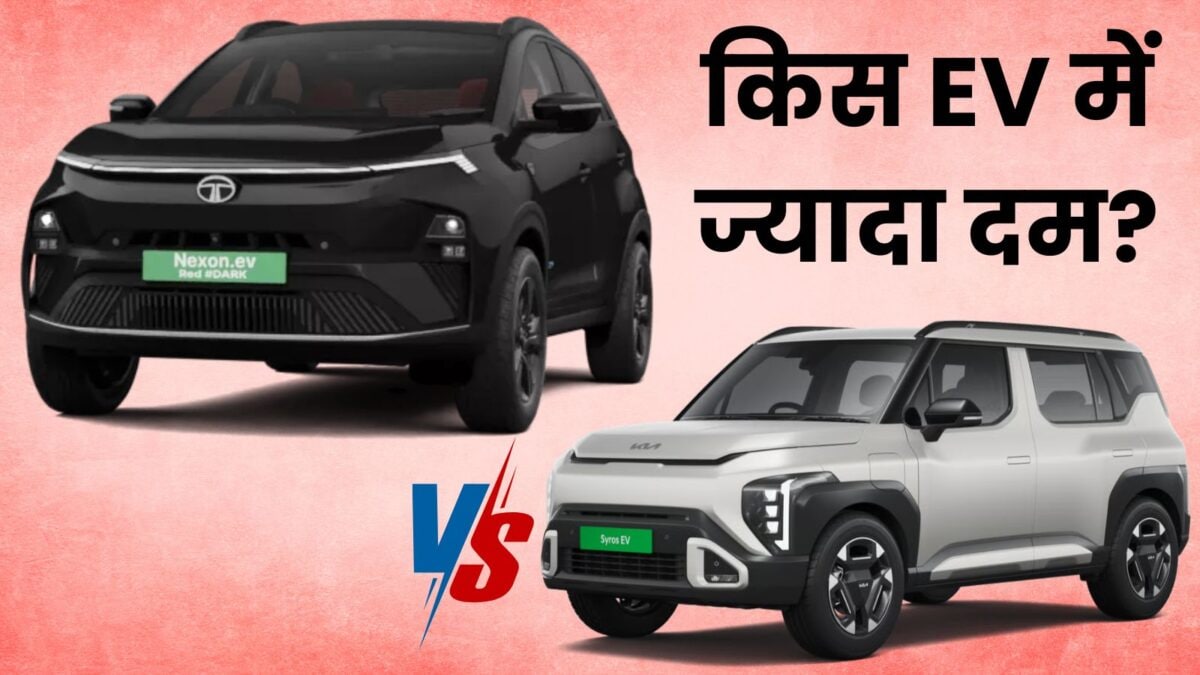
The demand for EVs is increasing rapidly in the Indian car market. In such a situation, Korean automobile manufacturer Kia is preparing to launch its new electric SUV Kia Syros EV. According to recently leaked information online, this will be Kia's smallest electric SUV in India, which will be positioned below the Carens Clavis EV. Unofficial details suggest that the Cyros EV will be offered with two battery pack options.

This model will be able to provide long range in the segment due to its small size, light weight and better efficiency. Kia India has not confirmed these details. The launch is expected soon. This model will be the best option for those buyers in the Indian EV market who want premium features, long range and strong warranty. Let's take a look at its possible design, battery, motor and range details.

Possible design and interior

The design of the Cyros EV is likely to be based on the company's modern 'Tiger Face' language. Bold front grille, LED headlights and sporty lines can be seen in it. Due to its small dimensions, it will be perfect for city roads. The interior will have a cabin with premium materials, digital instrument cluster and modern layout, which will offer comfortable seating and good space.

Features and safety

According to leaked information, Cyros EV will have features like large touchscreen infotainment system, connected car technology, ventilated seats and panoramic sunroof. It will be equipped with Kia's latest generation features. The company will provide a better safety package in it, which will include Level-2 ADAS (Advanced Driver Assistance System). It is expected to have multiple airbags, 360-degree camera and other modern safety features.

Battery, Motor and Range

The Cyros EV will get 42 kWh and 51.4 kWh battery pack options, which are similar to the Carens Clavis EV and Creta EV. Being small and light, it will provide better efficiency. There is a possibility of getting a claimed range of up to 443 km with the 42 kWh battery and up to 520 km with the 51.4 kWh battery.

This will be one of the longest range electric SUVs in the segment. Motor details are not clear yet, but a single motor setup is expected like Kia's current EVs. The most attractive thing is the lifetime or 15 years battery warranty. Apart from this, 3 years standard warranty (extendable up to 7 years/1.6 lakh km) and buyback program can also be available. All these details are unofficial. Complete information about performance, charging speed, variants and price will be revealed at the time of official launch.

About the Author

authoring

Ram Mohan MishraSenior Sub Editor

Ram Mohan Mishra, working as Senior Sub-Editor at News18 Hindi, is active in digital media since 2021 and is currently handling the Auto Desk. They provide car and bike related information in an easy, clear and reliable manner.read more


Source link

Tata Sierra EV's smaller battery pack has more power and the bigger one has less, why so?

Tata Sierra EV's smaller battery pack has more power and the bigger one has less, why so?

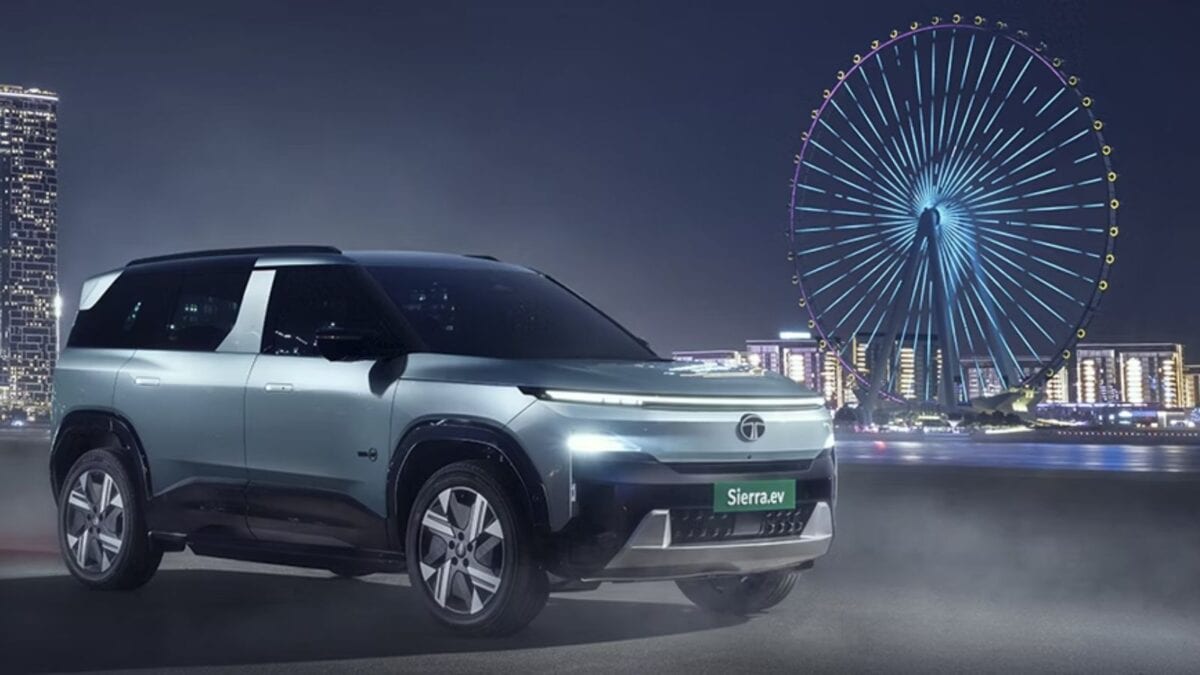
Tata Motors has launched Sierra EV in the Indian market after a long wait. Available at a starting price of just ₹ 18.79 lakh (ex-showroom), this SUV comes with 63 kWh and 75 kWh battery options. One thing was most discussed at the time of launch – why is the power output of the 75 kWh RWD variant less than the 63 kWh RWD?

The 63 kWh model produces 238 PS (175 kW), while the 75 kWh RWD produces only 209 PS (154 kW). This is a difference of 29 PS (about 12%), while the 75 kWh variant is also costlier and has a longer range. Tata has now given an official statement regarding this.

Why is power reduced in bigger packs?

According to Tata Motors, this is not a mistake but an intentional engineering decision. Both batteries are packed in the same volume. The 75 kWh battery uses high-capacity cells and Cell-to-Pack (C2P) architecture, achieving excellent packaging efficiency of 141 Wh/kg and 8.9 km/kWh energy efficiency.

This brings the ARAI range to 665 km (99 km more than 63 kWh). However, this resulted in a slight reduction in operating voltage, resulting in reduced peak power. The company says that the peak torque of 315 Nm is the same in both the RWD variants, so there will be no significant difference in daily driving and city-highway performance. 75 kWh is range-focused, while 63 kWh is performance-oriented.

Design and interior

Sierra EV comes with an attractive design like the ICE model. Its highlights are closed-off grille, end-to-end LED DRL, LED taillights, flush door handles, 19-inch alloy wheels with aero inserts and a large panoramic sunroof (1525mm x 925mm). The 2730 mm wheelbase and 622 liters of boot space add to the practicality.

The cabin has a triple screen setup (two 12.3-inch + 10.25-inch). Light colours, spacious feel, ventilated and memory seats, extendable under-thigh support, rear blinds and leatherette upholstery provide a premium experience.

Features and safety

12-speaker JBL sound system (Dolby Atmos), wireless Android Auto/Apple CarPlay, EV Route Planner, DrivePay (UPI), AirConsole Gaming, iRA.ev connectivity, 540° camera and gesture-controlled powered tailgate are the big features.

For safety, it has features like L2+ ADAS, 6 airbags, strong structure and V2L/V2V. 6 terrain modes and crawl control are also provided for off-road.

Battery, Motor and Range

The 63 kWh battery gives 565 km ARAI range, while the 75 kWh will give 665 km range. Both RWD have 315 Nm torque. AWD option is also available in 75 kWh. Fast charging can add 263 km range in 15 minutes. The speed of 0-100 km/h is completed in 5.8 seconds. Built on the Acti.ev platform, this SUV offers a great combination of performance and range.

Source link

Tata Sierra EV vs Harrier EV: Which electric SUV has more power? Know

Tata Sierra EV vs Harrier EV: Which electric SUV has more power? Know

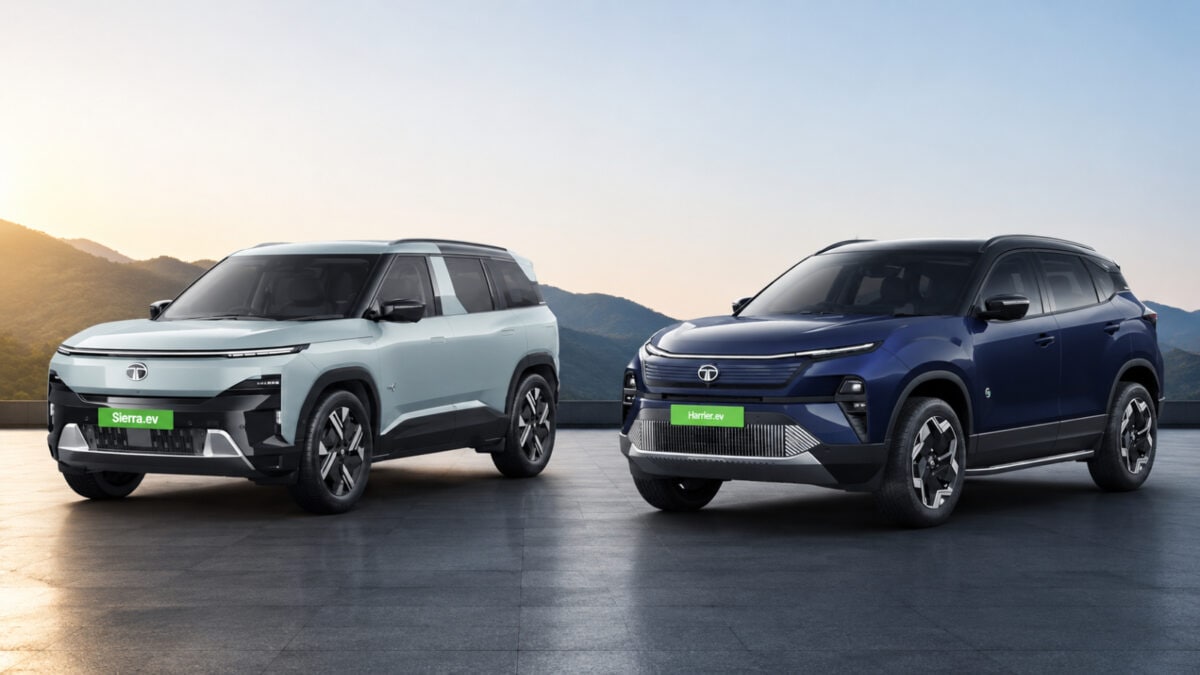
Tata Motors recently strengthened its EV line-up with the launch of Tata Sierra EV, which brings the iconic Sierra design in an electric avatar. It is a more affordable and slightly compact alternative to the Harrier EV. Both are based on the Acti.EV+ platform, but the positioning is different. The Sierra EV is family-oriented and value-for-money, while the Harrier EV is a premium, larger SUV with more features.

Ex-showroom price of Sierra EV starts at ₹18.79 lakh (Pure 63 kWh), the top variant can go up to ₹25-26 lakh. While Harrier EV starts at ₹21.49 lakh (Adventure 65 kWh), the top QWD variant goes for around ₹30 lakh. Both are attractive options for EV buyers, coming with long range, fast charging and strong safety from Tata. Let us know who is better in terms of design and battery-motor?

Design and interior

Tata Sierra EV has a boxy, upright and classic look. It has been introduced with split LED headlamps, blank grille, flush handles and two-tone roof like the ICE version. It looks more practical and family-friendly. The Harrier EV is more dynamic, coupe-styled and muscular, with larger dimensions (4607 mm length) and gives premium road presence. Sierra EV is a bit smaller (about 4400 mm), but feels spacious.

Both the electric SUVs have a premium feel. The Sierra EV gets a triple-screen setup (10.25-inch cluster, 12.3-inch touchscreen + passenger display), panoramic sunroof and ventilated seats. The Harrier EV features a large 14.5-inch touchscreen, JBL Dolby Atmos sound and luxury materials. The cabin of the Sierra EV offers slightly more practical boot space (622 litres+).

Features and safety

Talking about the features, both have features like Level-2 ADAS, 540 degree camera (Transparent Mode), V2L, Auto Park, Summon Mode and Panoramic Sunroof. The Harrier EV gets more premium touches like a larger screen and advanced infotainment, while the Sierra EV is the value pack. Tata is known for its strong 5-star rating. Both have 6-7 airbags, ESP, TPMS, ADAS and disc brakes as standard. Both Harrier EV and Sierra EV get 7 airbags and advanced ESP.

Battery, Motor and Range

Tata Sierra EV can be purchased with 63 kWh (RWD, 535-565 km) or 75 kWh (RWD/AWD, 665 km MIDC) battery options. Harrier EV has 65 kWh (538 km) and 75 kWh (622-627 km) battery options. Both have fast charging (20-80% in just 25 minutes) support.

The top QWD variant of the Harrier EV gets a dual-motor setup, which produces a combined motor power of 158 PS (front) + 238 PS (rear) and 504 Nm torque. At the same time, Sierra EV has been offered with both RWD and QWD drivetrain options. The real-world range of both electric SUVs is approximately between 480 to 530 kilometers.

Source link

Tesla's model Y or Kia's Clavis Ev, which should be your first choice

Tesla's model Y or Kia's Clavis Ev, which should be your first choice

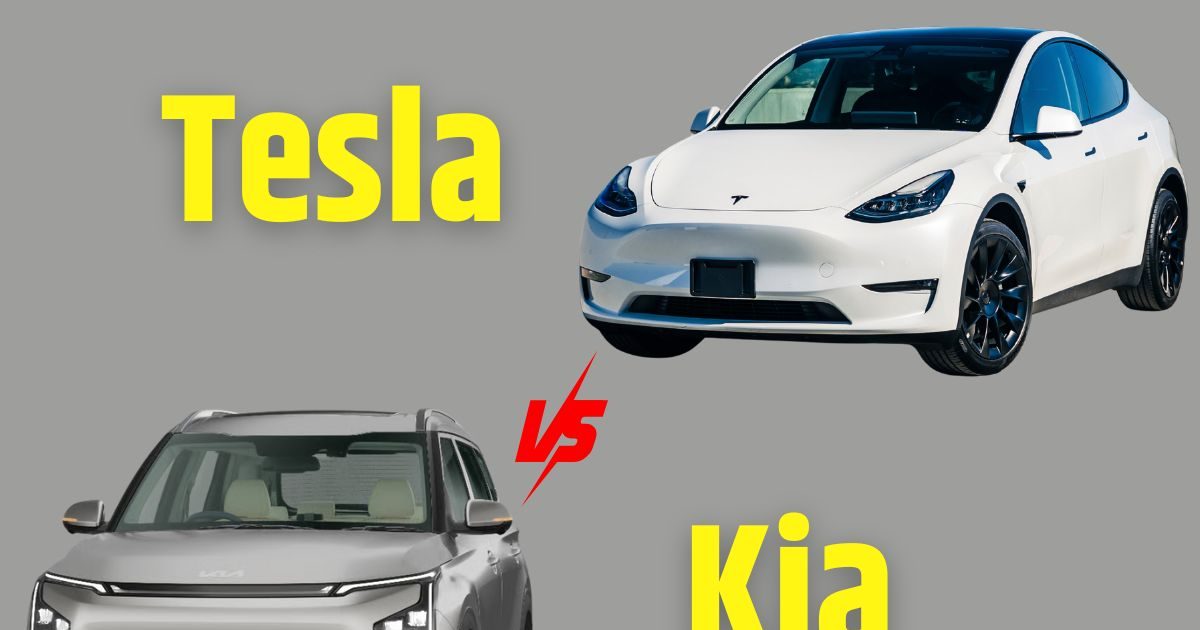
New Delhi. There is a stir in India's electric vehicle market as Tesla has launched its popular SUV model Y, while KIA has introduced MPV in the EV segment through the Cairen Clavis EV. One is luxury, and the other family oriented options. The launch of both has increased curiosity between buyers.

The Tesla model Y is priced at ₹ 58.89 lakh (ex-showroom), while the Careance Clavis Ev starts from ₹ 17.99 lakh to ₹ 24.49 lakhs. Their target audience is different. The model is for Y te te-service and premium segment, while Carrence is better for those with more space, budget and daily use.

Battery, range and performance

The model Y has a 75 kwh battery, allowing it to run up to 530 km. Its 0-100 km/h speed is in just 5 seconds. It comes with the AWD version, which further enhances the performance. On the other hand, the Calence Clavis Ev comes with two battery options 42 kwh (404 km) and 51.4 kwh (490 km). Although its speed model is less than Y, the range is enough for daily use.

Features and Technology

Both trains have advanced features. The model Y has a 15-inch big touchscreen, autopylot and level 2+ adas. Cares Clavis gets 12.3-inch dual display, panoramic sunroof, and 6 airbags with Level 2 ADAS. It also has a V2L feature, so that you can charge the external device. Both are strong in terms of safety, but the autopylot model gives an edge to Y.

Price and Value for Money

The model Y is expensive in terms of price, but it gets high-end technology and brand premiumness. At the same time, the Calence Clavis Ev is economical and is more practical for family users. The 7-seater setup, good range and safety features make it Value for Money.

Who is better for you?

If you want luxury, high performance and smart technology, then the Tesla model is for you. But if you want to cover a long distance with the family, and want to adopt EV by staying in the budget, then the Calence Clavis EV is a better option.

Source link