
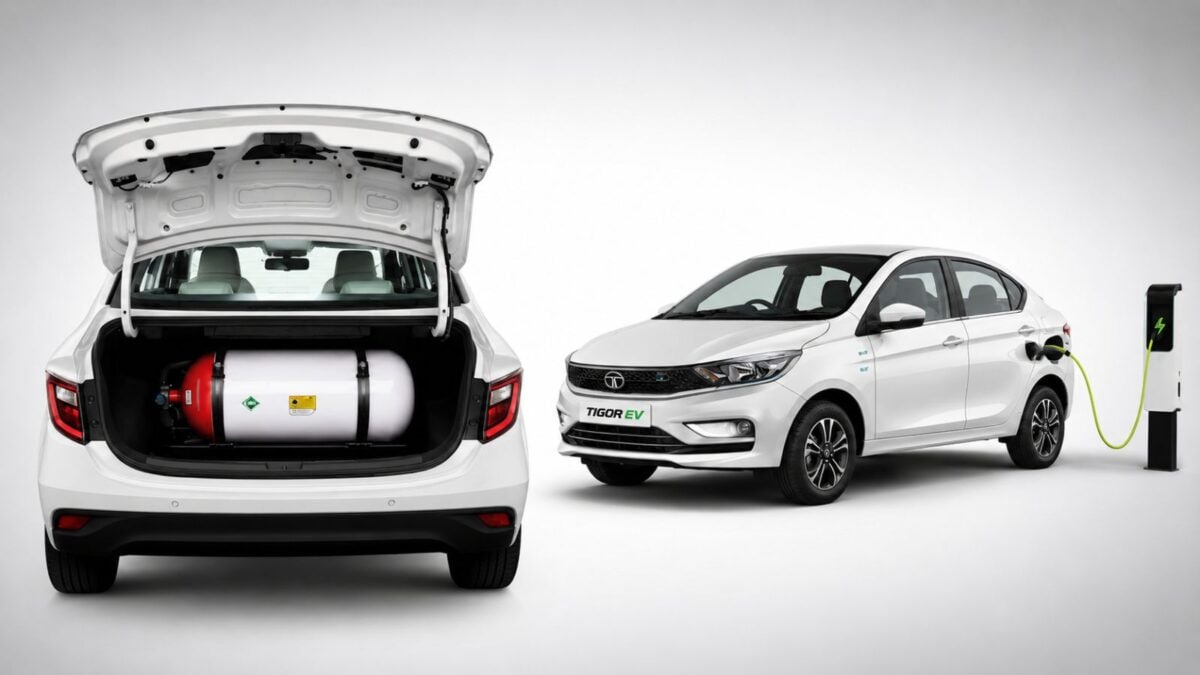
CNG vs EV Cars: Which one is better to buy for going to office? Understand with 5 year calculation

CNG vs EV Cars: Which one is better to buy for going to office? Understand with 5 year calculation

If you are thinking of buying a new car for 5 years, then this question will definitely be in your mind whether to buy CNG or EV car. Which car will put less burden on the pocket? Initially CNG cars seem quite cheap, but as you drive, the mathematics starts changing. Even though the starting price (Ex-Showroom Price) of electric vehicles may be high, their per kilometer expense and servicing cost is much lower than CNG.

In this article we will talk about every aspect like mileage, daily fuel cost, maintenance and resale value after 5 years. We are presenting before you very clear and honest calculations without any bias, so that you can take the most sensible decision as per your need and running (daily driving).

Calculating running costs

The biggest difference in the cost of CNG and electric cars comes here. Talking about CNG car, today the price of CNG is around ₹ 75 to ₹ 85 per kg. If the car gives a mileage of 20 km/kg, then the cost per kilometer comes to around ₹ 3.75 to ₹ 4.25.

At the same time, the average rate of electricity for charging an electric car at home is ₹ 7 to ₹ 8 per unit. A typical EV takes 30 units of electricity to be fully charged (costs approximately ₹ 240) and covers a range of 250 km. In this way the cost of EV comes to only ₹ 1 to ₹ 1.20 per kilometer.

  • If you travel 50 kilometers daily, the daily expense on CNG will be around ₹200, whereas on EV this expense will be only ₹50-₹60.

Servicing and maintenance expenses

Electric vehicles have less moving parts than CNG vehicles. CNG car has petrol engine only, hence engine oil change, air filter, spark plug, coolant and tuning of CNG kit have to be done. Its maintenance cost in 5 years can range from ₹ 30,000 to ₹ 45,000.

At the same time, in an electric car there is neither engine oil, nor piston, nor the hassle of gearbox. In this, only suspension, brake pads and tires have to be taken care of. Its servicing cost in 5 years does not exceed ₹ 15,000 to ₹ 20,000.

5 years complete mathematics

Let us assume that you drive 50 km every day. According to this, there will be a total running of 18,000 km in 1 year and 90,000 km in 5 years. Let us see what the total expenditure will be-

parameters cng car Electric Car (EV)
Starting price (estimated) ₹8.5 lakh (affordable) ₹11.5 lakh (₹3 lakh expensive)
Cost per km (fuel) ₹4.00 ₹1.10
Fuel cost of 90,000 KM ₹3,60,000 ₹99,000
5 years servicing cost ₹40,000 ₹18,000
Fear of changing the battery does not apply 8 Years/1.6 Lakh KM Warranty
Total Expenses (Car+Running+Service) ₹12,50,000 ₹12,67,000

Which is better for you?

It is clear from the above mathematics that after 5 years and 90,000 kilometers of driving, the total cost of both the cars becomes almost equal. If your budget is limited, your daily running is less than 30-40 km and you want to go on long journeys without worrying about charging (Range Anxiety), then CNG is still the best and safest option for you.

At the same time, if your daily running is 50 to 100 km or more, then EV is a boon for you. As the vehicle ages beyond 5 years, EV will save you lakhs of rupees. Also, it gives you a great and smooth driving experience without noise and hassle of changing gears.
Source link

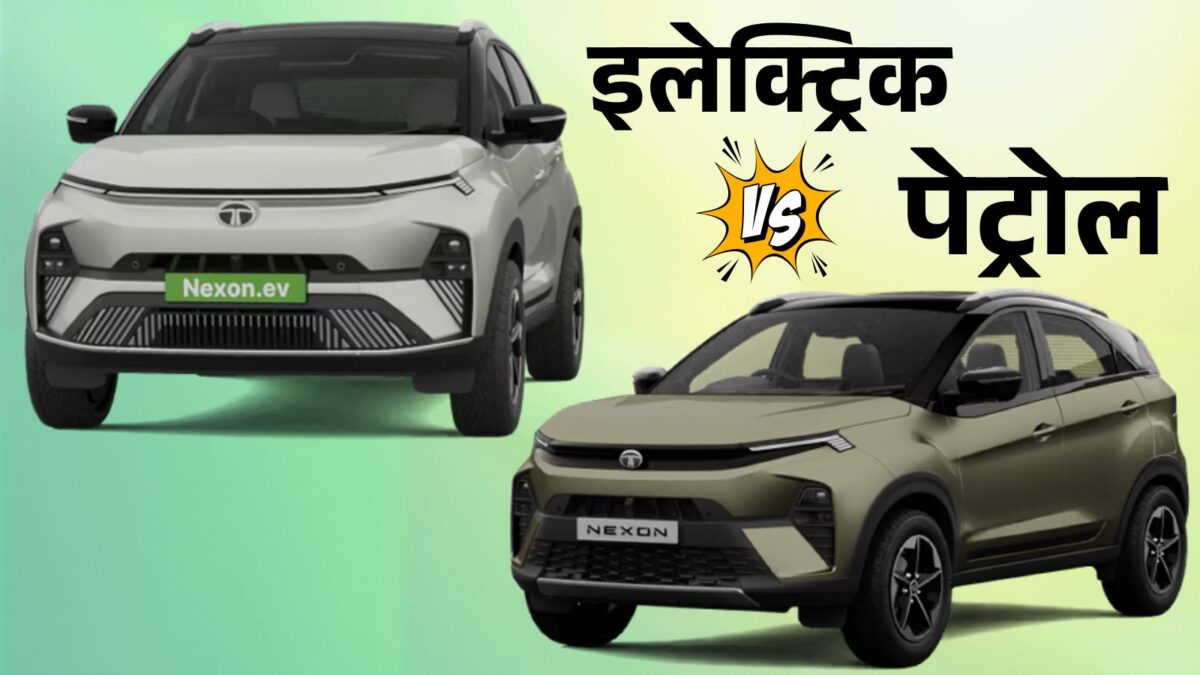
Is it more expensive to buy an EV or a Petrol car? Understand the full details of 50,000 KM

Is it more expensive to buy an EV or a Petrol car? Understand the full details of 50,000 KM

Amidst rising fuel prices and pollution, there is only one big question in the mind of every car buyer today, whether to buy an electric car (EV) or a petrol car? At first glance, EV seems expensive due to its high price, whereas petrol car fits in the budget. But the real game starts when the car hits the road.

Do you know that after driving just 50,000 kilometers, there is a huge difference in the cost of both? An EV, which may seem heavy in initial investment, can save you lakhs of rupees after covering long distances. Come, without any confusion, let us understand which car will prove to be the real value for money for you with simple mathematics of maintenance, running cost and resale value.

Mathematics of Initial Price (Buying Cost)

There is a big difference in the starting price of petrol and electric cars. Generally, compared to a petrol car of the same segment and model, its EV variant is costlier by around Rs 3 to 5 lakh.

Petrol Car: Low starting price, low down payment and low loan EMI.

Electric Car: Higher starting price, but the difference is reduced slightly due to tax exemptions and subsidies on road tax and registration fees in many states.

Running cost: direct calculation per kilometer

The real cost of driving a car is decided from here. While petrol prices are skyrocketing, electricity rates are quite cheap.

Petrol Car: If the car gives a mileage of 15 km/litre and petrol is ₹100/litre, then the cost per kilometer comes to around ₹6.66.

Electric Car: It takes about 30-40 units of electricity to fully charge a normal EV (costs about ₹ 300), which enables it to travel 300 km. According to this, the cost of EV comes to only ₹ 1 to ₹ 1.50 per kilometer.

Total savings after 50,000 kms

Let us now compare the total expenses on fuel and charging after driving 50,000 kms:

type of expense Petrol Car (Mileage: 15 km/l) EV charging costs
cost per kilometer ₹6.66 ₹1.20
Total cost of 50,000 km ₹3,33,000 ₹60,000
Direct savings (on fuel) ₹2,73,000

conclusion: The EV saves you around ₹2,73,000 on fuel costs alone, which covers a large part of its higher starting price.

Difference between maintenance and servicing

Maintenance of electric car is very cheap as compared to petrol car. Come, let us know about both-

Petrol Car: Servicing costs for every 10,000 km range from ₹5,000 to ₹8,000 due to engine oil, oil filter, spark plugs, coolant and gearbox. By 50,000 km this cost increases to ₹ 30,000 to ₹ 40,000.

Electric Car: There is no engine in an EV, so neither the oil has to be changed nor the moving parts get damaged. It only costs tyres, brake pads and AC filter. Its maintenance cost in 50,000 km is less than half that of petrol.

What is better for you?

After driving 50,000 kilometers, the EV not only recovers the extra cost of its petrol variant, but also starts saving you lakhs of rupees (about more than Rs 3 lakh including fuel + maintenance).

Buy EV then: If your daily commute is more than 50-60 kms, you want to keep the car for 5-7 years and you have charging facility at home.

Buy a petrol car then: If your annual running is very low (less than 500 km a month), budget is limited or you often travel on long routes where charging infrastructure is weak.

Source link