
Tata Sierra EV vs Harrier EV: Which electric SUV has more power? Know

Tata Sierra EV vs Harrier EV: Which electric SUV has more power? Know

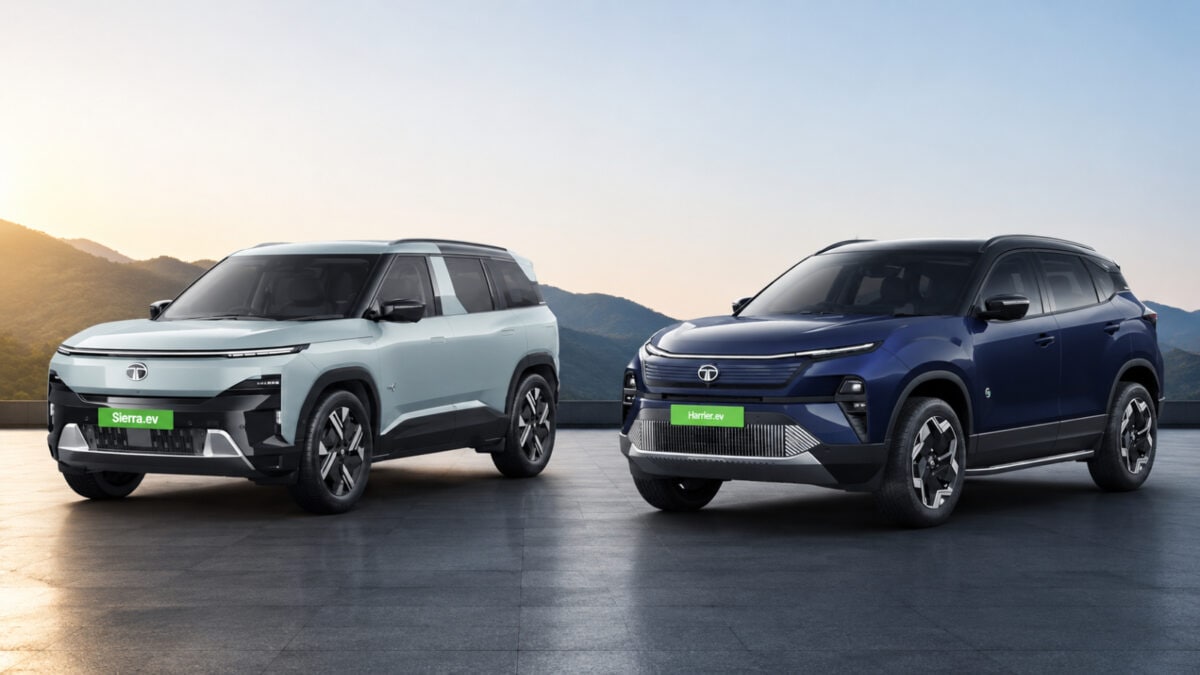
Tata Motors recently strengthened its EV line-up with the launch of Tata Sierra EV, which brings the iconic Sierra design in an electric avatar. It is a more affordable and slightly compact alternative to the Harrier EV. Both are based on the Acti.EV+ platform, but the positioning is different. The Sierra EV is family-oriented and value-for-money, while the Harrier EV is a premium, larger SUV with more features.

Ex-showroom price of Sierra EV starts at ₹18.79 lakh (Pure 63 kWh), the top variant can go up to ₹25-26 lakh. While Harrier EV starts at ₹21.49 lakh (Adventure 65 kWh), the top QWD variant goes for around ₹30 lakh. Both are attractive options for EV buyers, coming with long range, fast charging and strong safety from Tata. Let us know who is better in terms of design and battery-motor?

Design and interior

Tata Sierra EV has a boxy, upright and classic look. It has been introduced with split LED headlamps, blank grille, flush handles and two-tone roof like the ICE version. It looks more practical and family-friendly. The Harrier EV is more dynamic, coupe-styled and muscular, with larger dimensions (4607 mm length) and gives premium road presence. Sierra EV is a bit smaller (about 4400 mm), but feels spacious.

Both the electric SUVs have a premium feel. The Sierra EV gets a triple-screen setup (10.25-inch cluster, 12.3-inch touchscreen + passenger display), panoramic sunroof and ventilated seats. The Harrier EV features a large 14.5-inch touchscreen, JBL Dolby Atmos sound and luxury materials. The cabin of the Sierra EV offers slightly more practical boot space (622 litres+).

Features and safety

Talking about the features, both have features like Level-2 ADAS, 540 degree camera (Transparent Mode), V2L, Auto Park, Summon Mode and Panoramic Sunroof. The Harrier EV gets more premium touches like a larger screen and advanced infotainment, while the Sierra EV is the value pack. Tata is known for its strong 5-star rating. Both have 6-7 airbags, ESP, TPMS, ADAS and disc brakes as standard. Both Harrier EV and Sierra EV get 7 airbags and advanced ESP.

Battery, Motor and Range

Tata Sierra EV can be purchased with 63 kWh (RWD, 535-565 km) or 75 kWh (RWD/AWD, 665 km MIDC) battery options. Harrier EV has 65 kWh (538 km) and 75 kWh (622-627 km) battery options. Both have fast charging (20-80% in just 25 minutes) support.

The top QWD variant of the Harrier EV gets a dual-motor setup, which produces a combined motor power of 158 PS (front) + 238 PS (rear) and 504 Nm torque. At the same time, Sierra EV has been offered with both RWD and QWD drivetrain options. The real-world range of both electric SUVs is approximately between 480 to 530 kilometers.

Source link

627 KM range, 540° camera and 7 airbags! This family EV is getting a discount of Rs 1.5 lakh

627 KM range, 540° camera and 7 airbags! This family EV is getting a discount of Rs 1.5 lakh

Tata Harrier EV has been launched recently. It comes in the list of popular electric SUVs of the country. If you are planning to buy this electric car in the coming days, then now is the best opportunity. Actually, Tata Motors is offering huge discounts on this premium offering.

The company has said that those buying Tata Harrier EV in February 2026 will get a total discount of up to Rs 1,50,000. This discount is available on both MY2025 and MY2026 models of Harrier EV. Let us tell you that its starting ex-showroom price is ₹ 21.49 lakh, which goes up to ₹ 30.24 lakh for the top variant. Let's take a look at its design, interior, features, battery, motor and range details.

interior detail

Its interior is quite luxurious and modern. The cabin has leatherette seats with dual-tone gray and white color scheme, which gives a comfortable and premium feel. The front seats are ventilated, the driver's seat is 6-way power adjustable with memory function. Features like Boss Mode, Panoramic Sunroof, Multi-Color Ambient Lighting, Touch-Based Climate Control and Wireless Phone Charger make it more attractive. For infotainment, there is a 14.5-inch (or 14.53-inch) Samsung Neo QLED touchscreen, which is a segment-first.

It has wireless Android Auto and Apple CarPlay, in-built navigation, OTA updates and Tata's iRA connected car services. Also, the 10-speaker JBL audio system with Dolby Atmos gives theater-like sound. 10.25-inch digital instrument cluster and HD rear view mirror are also provided. Space is quite good, being a 5 seater, rear passengers get ample leg room and head room. Boot space is 502 litres, which increases to 999 liters when folded.

Features and safety

Harrier EV is full of features. It has advanced features like 540-degree surround camera (with transparent mode), summon mode, e-valet, automated parking, vehicle-to-load (V2L) and vehicle-to-vehicle (V2V) charging, 65W fast charger port, digital key and ultra glide suspension. The floating touchscreen in the interior and the 4-spoke steering wheel with illuminated logo is also the center of attraction.

Tata's focus on safety is strongest. It comes with BNCAP 5-star rating ready body structure. Standard features include 6 or 7 airbags (depending on variant), ABS with EBD, ESP with i-VBAC, electronic parking brake, hill hold and hill descent control. There are Level 2 ADAS features like adaptive cruise control, lane keep assist, automatic emergency braking etc. A 360-degree camera, tire pressure monitoring and a built-in dashcam also add to the safety.

Battery, Motor and Range

Harrier EV has two battery options – 65 kWh and 75 kWh LFP (Lithium Iron Phosphate) battery pack. The ARAI certified range with the 75 kWh battery is 622-627 km, while the 65 kWh battery has a range of around 538 km. In real world it can easily travel up to 400-500 km. The motor setup consists of a permanent magnet synchronous motor at the rear in RWD (rear-wheel drive) producing 238 PS (175 kW) of power and 315 Nm of torque.

QWD (all-wheel drive) gets 158 PS induction motor at the front and 238 PS at the rear, totaling 390 bhp (about 396 PS) power and 504 Nm torque. 0-100 kmph can be achieved in just 6.3 seconds and the top speed is 180 kmph. Fast charging takes 250 km range in 15 minutes on a 120 kW DC charger or 25 minutes for 20-80%. AC charging at 7.2 kW takes 10.7 hours from 10-100%. The company is also giving lifetime battery warranty on it.

Source link