
EV vs Petrol: Before buying a new SUV, know the mathematics of real running cost for 5 years.

EV vs Petrol: Before buying a new SUV, know the mathematics of real running cost for 5 years.

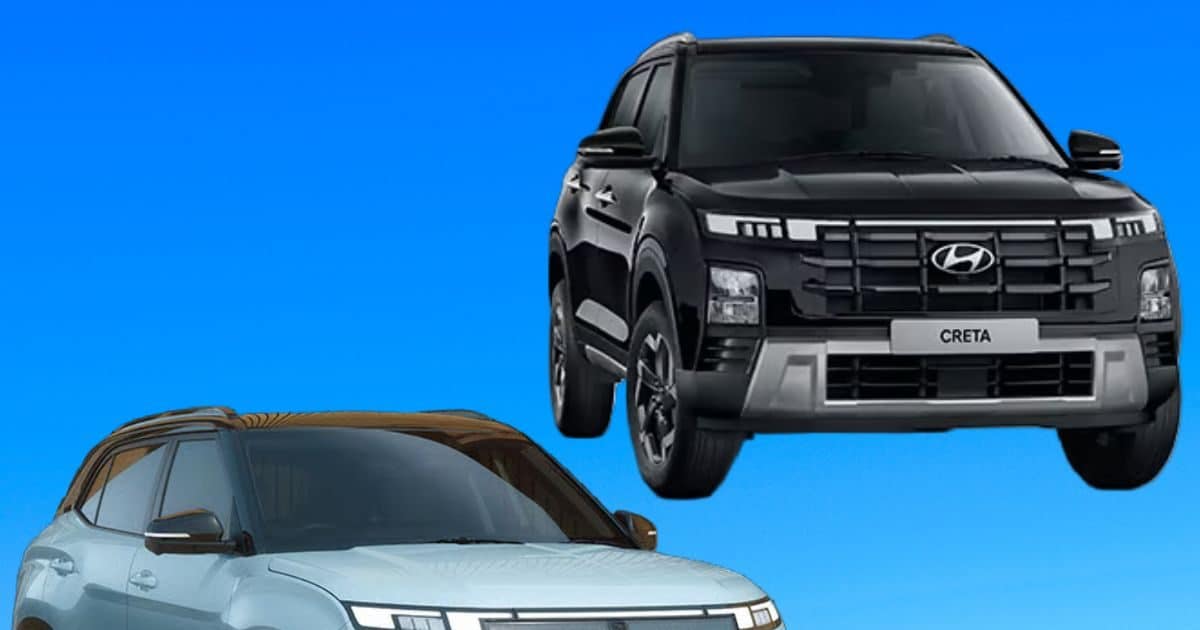
Which is better to buy between Hyundai Creta and Creta EV? This question is revolving in the minds of many buyers these days, especially in cities where traffic, pollution and fuel prices are daily concerns. The Hyundai Creta is one of the most popular mid-size SUVs in India, while the Creta EV is the company's first mass-market electric SUV built on the same platform.

Talking about the price, the base petrol variant of Hyundai Creta starts at around ₹ 10.73 lakh ex-showroom, while the top variant goes for around ₹ 20 lakh. On the other hand, the base model (42 kWh battery) of the Creta EV starts at ₹18.02 lakh ex-showroom, while the long range (51.4 kWh) variants go for ₹20-24.5 lakh. Let us know which of these two would be a more profitable deal to buy?

Performance and driving experience

The Creta petrol comes with a 1.5 liter naturally aspirated or turbo engine, which is smooth but may seem a little sluggish in city traffic. ARAI mileage is around 17-18 kmpl, but in real world it gets 10-13 kmpl in city and 15-18 kmpl on highway. In cities like Delhi-NCR, it would be fine if we assume an average of 12 kmpl with AC, traffic and load.

The electric motor in the Creta EV delivers instant torque (255 Nm), making 0-100 km/h acceleration faster than the petrol version. Driving is silent, smooth and fun. ARAI claimed range is 420-510 km (42/51.4 kWh battery). In real world tests, we get 8.5-9.5 km/kWh in the city and 7-8 km/kWh on the highway, which means 400-450 km range is easily achieved in mixed use. Fast charging (50 kW DC) takes 10-80% in just 58 minutes, while a home 11 kW AC charger takes 4-5 hours.

5 Year Running Cost Calculation (Approximately 15,000 KM/Year)

The price of petrol in Delhi-NCR is around ₹ 95-96 per liter in April 2026. Considering the average real world mileage as 12 kmpl, the figures will be as follows-

  • Cost per KM: ₹95.5/12= ₹7.96/km
  • Annual running cost (15,000 km): ₹1,19,400
  • Total fuel cost for 5 years: Approx ₹5,97,000

For Creta EV, let us assume an average domestic electricity rate in Delhi-NCR of ₹ 6-8 per unit (depending on the slab). If we keep real world efficiency at 8.4 km/kWh (mixed use), then the figures will be something like this-

  • Cost per KM: ₹7/8.4= ₹0.83/km
  • Annual charging cost: ₹12,450
  • Total expenditure for 5 years: Approximately ₹62,250

Saving in running costs

EV will save around ₹5.35 lakh on petrol Creta in 5 years. The savings increase further if you drive more (20,000 km/year). If you charge ₹ 12-15/unit at office parking or public charger, the benefit of EV reduces slightly, but still remains below ₹ 3-4/KM.

EV is also ahead in maintenance. In a petrol car, the cost of service, oil change, timing chain/belt, clutch etc. is incurred every 10,000 KM. From ₹ 80 thousand to 1.2 lakh in 5 years. There are less moving parts in EV, only the cost of brake pads, tires and suspension is incurred. Battery warranty is usually up to 8 years/1.6 lakh KM. Total maintenance can be reduced by 40-60% in EV. Besides, these factors are also very important-

  • Residual Value: The petrol Creta may offer better resale value after 5 years, but the EV market is still developing and there are concerns about battery degradation.
  • Practicality: Creta EV also has almost the same space and features, but range will be a concern. Petrol is better in rural or remote areas.
  • Environment and Tax: EV is a vehicle with zero emissions and reduces pollution. EVs get exemption in road tax and registration.
  • Driving Pleasure: EV is more fun than instant torque and silence. Engine noise and vibration are more in petrol.

Total 5 Year Ownership Cost

  • Creta Petrol: Purchase (on-road) ₹15 lakh + Fuel ₹6 lakh + Maintenance ₹1 lakh + Insurance = ₹22.5-23.5 lakh.
  • Creta EV: Purchase ₹22-24 lakh + Charging ₹0.65 lakh + Maintenance ₹0.4 lakh + Insurance = ₹24-26 lakh.

The EV's huge savings in running and maintenance cover the initial price gap in 4-5 years. If you are going to keep it for more than 5 years or drive 40-50 KM+ daily, then EV is cheaper. Petrol will be better for low running (10,000 km/year) or frequent long trips, as it does not worry about range.
Source link

VW Taigun vs Hyundai Creta: Which premium SUV is better to buy? know this

VW Taigun vs Hyundai Creta: Which premium SUV is better to buy? know this

Last Updated:

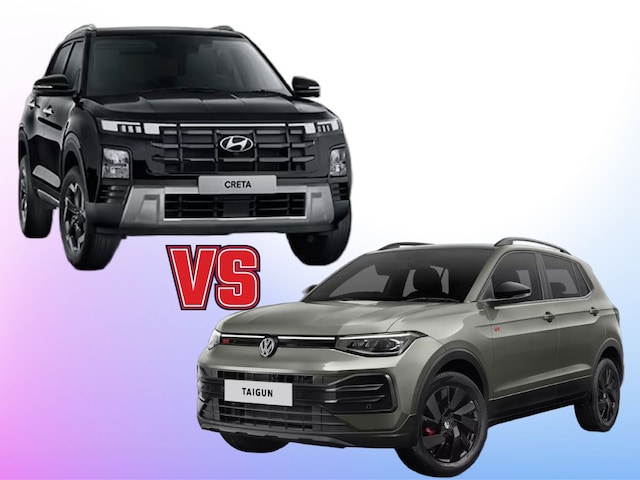
The 2026 Volkswagen Taigun facelift has entered with a new design and better technology, but will it be able to compete with the already hit Hyundai Creta? Both the SUVs have different strengths in price, features, engine and mileage. If you are planning to buy a new SUV, then this comparison will help you in taking the right decision. Know who is the best option for you.

news immediately

Zoom

Who to buy between 2026 Volkswagen Taigun and Hyundai Creta?

Both the 2026 Volkswagen Taigun and Hyundai Creta provide tough competition in the mid-size SUV segment. The 2026 facelift of the Taigun has recently been unveiled, which includes a new design, updated features and an improved 8-speed automatic gearbox. Creta is already popular in the market, with feature-loaded interiors and multiple engine options.

Talking about the price, Taigun can start from around ₹ 11.42 lakh to ₹ 19.19 lakh. At the same time, Creta can be purchased at an ex-showroom price of ₹ 10.79 lakh to ₹ 20.20 lakh. Talking about the starting price, Tigun may be a bit expensive, but Creta offers more variants. Let's take a look at their design, engine and mileage details.

Design and interior

The Taigun facelift comes with new LED light bar, updated front bumper and modern look. The Creta sports a bold and premium design, with parametric jewels, LED DRLs and muscular styling. The Taigun looks sportier, while the Creta is family-friendly and stylish. Talking about the cabin, Taigun has a 10-inch digital cockpit, panoramic sunroof, new infotainment system and better materials. Creta gets a larger touchscreen, premium upholstery and more space. The Creta's cabin feels more luxurious, whereas the Taigun's is more driving focused.

Features and safety

Both have panoramic sunroof, voice command, wireless charging and connected tech. Advanced safety and more comfort features like Level-2 ADAS are available in Creta. The Taigun features IDA voice command and a customizable digital cluster. The Taigun's 5-star GNCAP rating is a strong point, with 6 airbags as standard. Creta also has 6 airbags. Taigun is ahead in safety.

Engine and Mileage

Taigun has 1.0 liter TSI (115 PS, 178 Nm) and 1.5 liter TSI (150 PS, 250 Nm) turbo-petrol engines. The 1.0 liter now offers better efficiency with an 8-speed AT. According to ARAI, mileage ranges from 18-19.89 kmpl. Creta has 1.5 liter NA petrol (113 PS), 1.5 liter turbo petrol (160 PS) and 1.5 liter diesel (116 PS) engine options. Mileage is around 17.4-21.8 kmpl. Creta has the advantage of diesel option, while Taigun offers pure petrol driving enjoyment.

About the Author

authoring

Ram Mohan MishraSenior Sub Editor

Ram Mohan Mishra, working as Senior Sub-Editor at News18 Hindi, is active in digital media since 2021 and is currently handling the Auto Desk. They provide car and bike related information in an easy, clear and reliable manner.read more


Source link

Maruti Victoris vs Hyundai Creta: Which car is more safe, whose features are more powerful

Maruti Victoris vs Hyundai Creta: Which car is more safe, whose features are more powerful

Last updated:

Maruti Suzuki Arena launched the new Maruti Victoris, which competes with Hyundai Creta with a 5-star safety rating in BNCAP and offers advance features and better mileage.

Maruti Victoris vs Hyundai Creta: Which car is more powerful?
New Delhi. Competition in the midsize SUV segment is going to increase further as Maruti Suzuki Arena is launching new flagship SUV, Maruti Victoris, for dealership network. It will directly compete with Hyundai Creta, which has been a player without any interruption in this segment. Let's compare the safety, technology and mileage of these two SUVs.

Maruti's most safe SUV
The new Victoris is the safest Maruti Suzuki ever. This midsize SUV has achieved a 5-star safety rating in BNCAP (India New Car Assessment Program), with 31.66 marks out of 32 for adult safety and 43 out of 49 for child safety.

BNCAP Maruti Victoris GNCAP Hyundai Creta (2022)
Safety rating 5 stars Safety rating 3 stars
Adult 5 stars Adult 3 stars
Child 5 stars Child 3 stars
6 airbags

The standard safety kit of the new Maruti SUV includes 6 airbags, Break Assist with ABS, Electronic Stability Control, Hill Hold Assist, Traction Control System, all 3 point seatbelt and ISOFIX child seat anchor. This is the first Maruti Suzuki to offer Level 2 ADAS suits (reserves for high trims), including automatic emergency braking, adaptive cruise control, lane keip assist, blind spot monitoring, rear cross-traffic alert and other features.

engine Victoris Mileage engine Creta mileage
1.5L Mild Hybrid Petrol 21.18kmpl (MT)/21/06kmpl (AT) /19.07kmpl (AT AWD) 1.5L NA Petrol 17.4kmpl (MT) /17.7kmpl (IVT)
1.5L Strong Hybrid Petrol 28.65kmpl 1.5L Turbo Petrol 18.4kmpl
1.5L Petrol-CNG 27.02km/kg 1.5L diesel 21.8kmpl (MT) /19.1kmpl (AT)

Creta Dhansu features
Hyundai Creta was tested under Global NCAP in 2022 and received a 3 star safety rating for adult and child safety. It is yet to be tested under BNCAP. Safety features such as 6 airbags, hill start assist, ABS with EBD and ESC, Tire Pressure Monitoring System, ISOFIX anchor, Central Locking and five 3 point seat belt base variants are available only. The ADAS suit is available from SX Tech, while 360-degree camera and blind spot monitor are available from SX (O) trim.

Click here to add News18 Hindi as your favorite news source on Google.
homeauto

Maruti Victoris vs Hyundai Creta: Which car is more powerful?

Source link