
Last Updated:
Is filling nitrogen gas in your car tires really beneficial or is it just a marketing trend? Many people spend extra money for this, but do they really get better mileage, more tire life and better safety? In this report, know the scientific difference between nitrogen and normal air, its advantages and disadvantages and which is the best option according to your driving needs?
Nitrogen vs Regular Air: Know which is right for your vehicle?
Nitrogen vs regular air: Your car's tires are the most important part of your safety, mileage, handling and comfort. While driving daily, have you ever wondered whether to fill normal air in tires or expensive nitrogen gas? Many car owners are confused whether nitrogen is really better or is it just a marketing trick of tire shops?
In this article, we will tell you the complete truth, scientific facts, advantages and disadvantages and the right option according to your driving style. So you save money, extend tire life and drive safely. Let us try to understand which type of ventilation is best.
Difference between Nitrogen and Regular Air
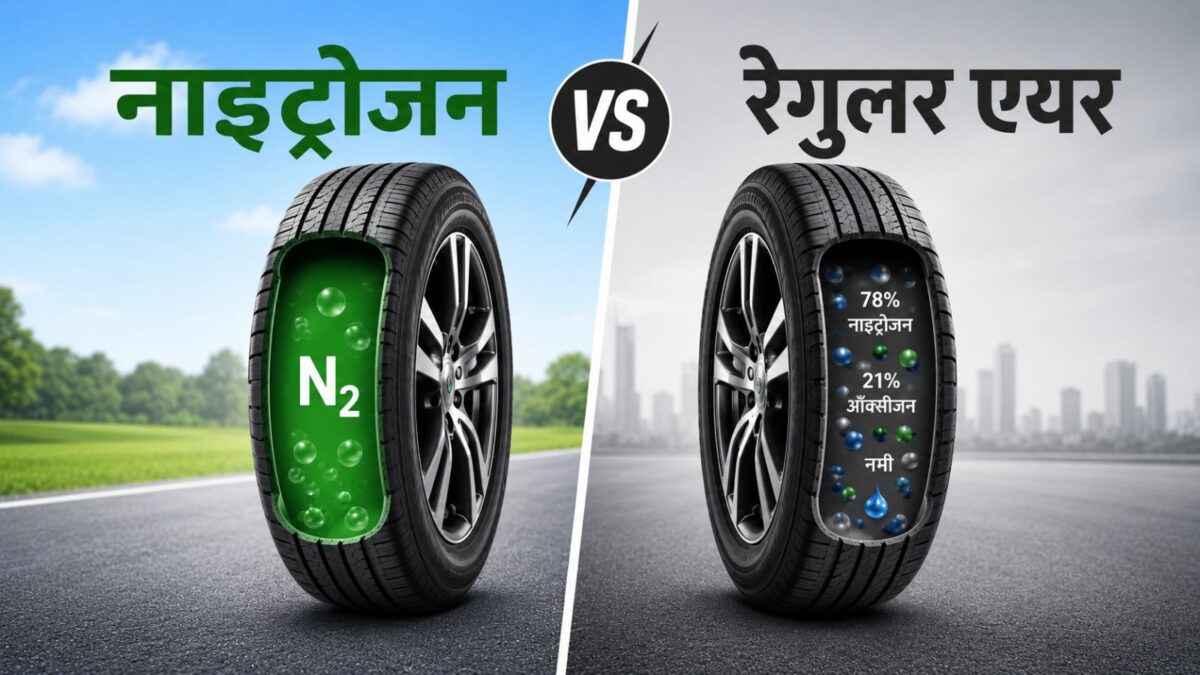
Regular Air (Compressed Air): It contains about 78% nitrogen, 21% oxygen and the remaining gases like moisture, carbon dioxide etc. It is easily available at petrol pumps for free or at very low cost.
Nitrogen: 93-99% pure nitrogen. There is almost no oxygen and moisture in it. It is filled with a special machine.
Benefits of Nitrogen
- Pressure remains stable for longer periods: Nitrogen molecules are larger than oxygen, so they leak more slowly from the tyre. There is slightly less pressure loss compared to normal air.
- Temperature Stability: Pressure increases less in summer, resulting in less heating of tires at high speed or long drives.
- Increases tire and rim life: No moisture prevents rim rust and reduces oxidation of tire rubber.
- Mileage and Handling: Stable pressure may result in slightly better fuel efficiency and even tire wear.
- Safety: Used on highways, racing and airplanes, as pressure fluctuations are less.
Nitrogen loss
- Expensive: ₹400-800 per tire for the first time. Top-up can also be charged later.
- Less Available: Not available at every petrol pump.
- Mixing problem: If normal air is filled in between then the entire benefit of nitrogen is reduced.
Benefits of Regular Air:
- Affordable and easy: Available anywhere for free or for ₹10-20.
- Quite effective: 78% is nitrogen only. There is no big problem with regular checks.
- Easy maintenance: Can top up anywhere.
Disadvantages of Regular Air:
- High leakage: Small molecules (especially oxygen) leak easily.
- Problem due to moisture: Pressure increases in summer, risk of rust.
What's right for you?
Choose Nitrogen if: you do a lot of highway driving, like high speeds, live in a hot area (like Rajasthan, Gujarat), or want long-life tires. Good for premium car owners or fleet owners.
Regular Air is sufficient if: Daily commuting, office-market, average driving in city. Just check the pressure every 15-30 days.
Bonus Tip: No matter how much air is filled, maintain the correct PSI (written in the car manual or on the door). If the tire pressure is not correct, the tire may burst or the engine may be overloaded.
About the Author
.jpg?impolicy=website&width=52&height=52 "authoring")
Ram Mohan Mishra, working as Senior Sub-Editor at News18 Hindi, is active in digital media since 2021 and is currently handling the Auto Desk. They provide car and bike related information in an easy, clear and reliable manner.read more
