

Tata Avinya

Tata Avinya

Last Updated:

Tata Avinya Despite the camouflage, many important clues have been received regarding its coupe-style design, new platform and powerful battery pack. According to reports, this SUV can be launched in 2027 and is set to become Tata's most premium EV. Know every major detail related to this.

news quickly

Zoom

Tata Avinya

Tata Motors is rapidly advancing its premium electric vehicle (EV) strategy. Recently, a camouflaged SUV has been seen testing in public, which looks very similar to the company's upcoming Avina X model. This could be Tata's first premium electric SUV, which is expected to be launched in India in 2027.

This prototype with MH number plate has been seen in a video shared on social media. Despite being highly camouflaged, its coupe-style silhouette, sloping roofline and LED lighting elements can be seen. This model will not only meet the needs of Indian customers but can also create a strong presence of Tata in the global market. Let us know what has been seen in this testing mule of Tata Avinya.

Details of the new test mule

The sloping roofline in the prototype is giving a coupe-like look. The LED headlamps at the front and connected DRLs at the front-rear match Tata's recent design patterns. Dual-tone diamond-cut alloy wheels and smooth body surfacing are also seen. Although the entire design is hidden due to camouflage, the proportions and lighting signature point towards a Tata product.

change in platform

In March, Tata Motors had said that Avinya X will no longer be built on Jaguar Land Rover's EMA platform. Instead, the Freelander platform of the Cherry-JLR (CJLR) ecosystem will be used. This will reduce development cost and speed up the launch process. The company is reworking electronic systems, software and vehicle functions for Indian buyers. Teams from India, China and UK are working on this project.

Battery pack and performance

According to industry reports, battery packs ranging from 65 kWh to 80 kWh can be provided in the first Avinya models. The focus is on balancing range, performance and cost, so that despite being a premium EV, it maintains broad market appeal.

Manufacturing and launch timeline

The first Avinya models will be produced at the new TMPV-JLR plant in Panpakkam, Tamil Nadu. This facility is an important part of Tata's premium EV project. Avinya is being developed as a global premium EV brand, which will use multiple scalable architectures from the Tata Motors and JLR ecosystem.

About the Author

authoring

Ram Mohan MishraSenior Sub Editor

Ram Mohan Mishra, working as Senior Sub-Editor at News18 Hindi, is active in digital media since 2021 and is currently handling the Auto Desk. They provide car and bike related information in an easy, clear and reliable manner.read more


Source link

BYD Seal vs Hyundai Ioniq 5: Which premium EV to go for

BYD Seal vs Hyundai Ioniq 5: Which premium EV to go for

BYD Seal vs Hyundai Ioniq 5: Which premium EV to go for

2023 hyundai ioniq 5 se standard range

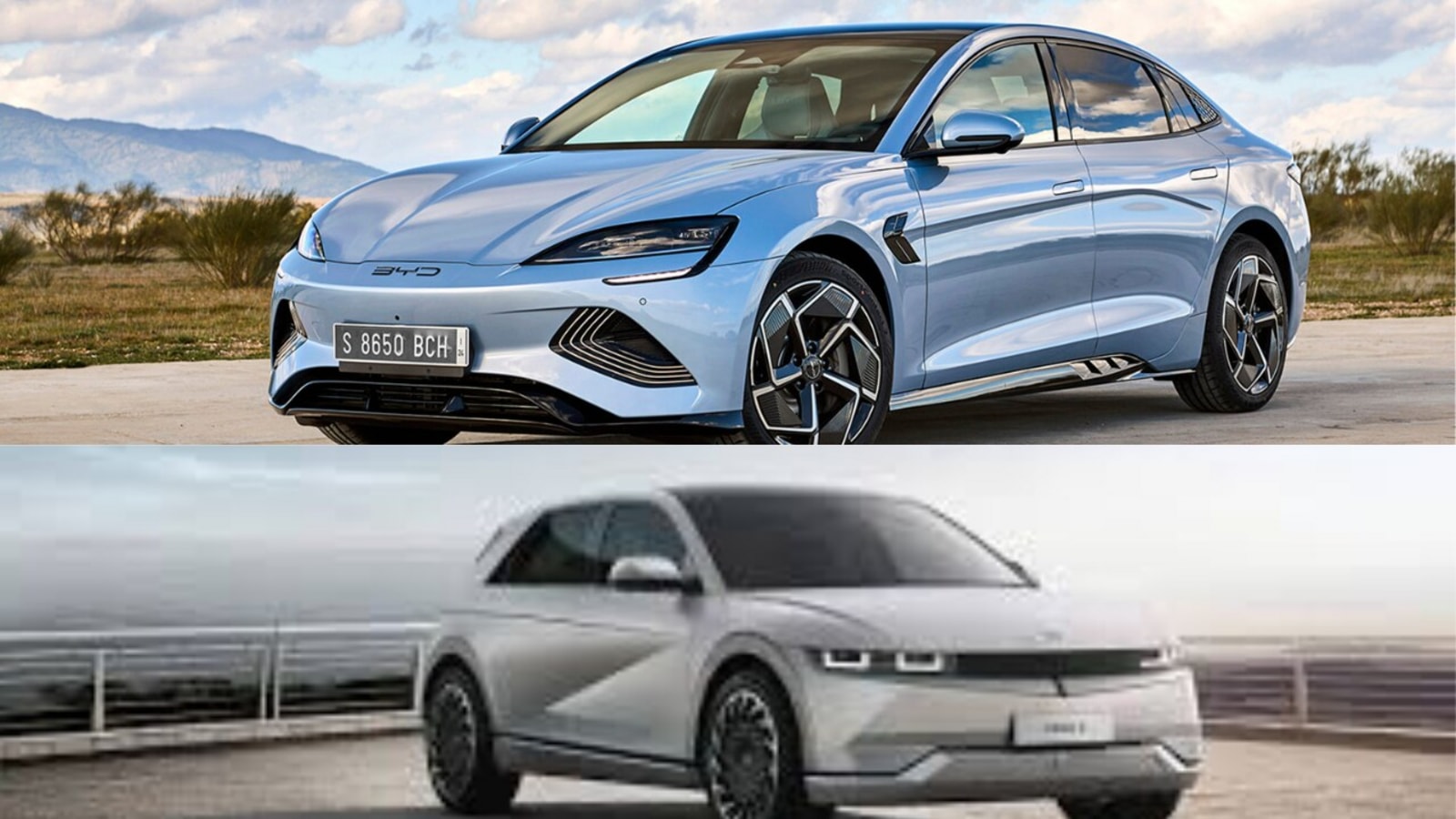
BYD Seal is the newest electric car in the Indian market and at its price points, will rival Hyundai Ioniq 5. The Seal EV will be offered with two pow

BYD Seal is the newest electric car in the Indian market and at its price points, will rival Hyundai Ioniq 5. The Seal EV will be offered with two powertrains and three variant options.

BYD, the Chinese EV giant, has made waves in the global market by surpassing Tesla as the largest EV maker worldwide. This remarkable achievement is credited to the cutting-edge technology found in BYD vehicles, particularly the revolutionary ‘blade battery’ tech, coupled with their competitive pricing. Recently, BYD took the Indian market by storm with the launch of its Seal, touted as a performance EV, at an unexpectedly competitive price point. Priced at 41 lakh ex-showroom, the Seal garnered immense interest, with over 200 bookings within just two days of its launch.

While the BYD Seal offers an enticing value proposition, brand recognition plays a crucial role in the Indian market. This is where the Hyundai Ioniq 5 comes into play. Priced similarly to the Seal, the Ioniq 5 benefits from the strong brand awareness of Hyundai and its extensive sales network, giving it an edge in the market.

To provide a comprehensive comparison between the BYD Seal and the Hyundai Ioniq 5, let’s delve into their pricing, specifications, range, and features.

2023 hyundai ioniq 5 se standard range

BYD Seal vs Hyundai Ioniq 5: Specifications

BYD Seal has been launched in India in three variants. First up is the base Dynamic variant, boasting a 61.44 kWh battery pack and a rear-wheel drive setup. With 201 bhp and 310 Nm of torque under the hood, this variant promises an impressive range of 510 kilometres on a single charge.

Moving up the ladder, the BYD Seal Premium comes equipped with an 82.56 kWh battery and retains the rear-wheel drive configuration. Packing a punch with 308 bhp and 360 Nm of torque, this variant offers the longest range of the trio, reaching up to 650 kilometres.

Also Read : BYD Seal EV launched in India at 41 lakh, gets up to 650 km of range

For those craving even more power, the top-of-the-line BYD Seal Performance variant delivers with its 82.56 kWh battery and all-wheel drive system. Generating a whopping 523 bhp and 670 Nm of torque with a slightly reduced claimed range of 580 kilometres.

The Dynamic variant capable of reaching 85 per cent charge in 37 minutes when plugged into a 110 kW charger. The Premium and Performance variants, on the other hand, can handle even faster 150 kW chargers.

On the other end of the spectrum, the Hyundai Ioniq 5 from Korea boasts a 72.6 kWh battery pack and an axle-mounted single electric motor producing 214 bhp and 350 Nm of torque. Hyundai claims an impressive charging time from 10-80 per cent in just 18 minutes using a 350 kW DC charger.

BYD Seal vs Hyundai Ioniq 5: Range

The larger battery size of the Seal has proven to benifial, offering impressive advantages across its range. The Dynamic variant boasts a claimed range of 510 km and can accelerate from 0-100 kmph in just 7.5 seconds. Stepping up to the Premium Range, drivers can expect even more exhilarating performance, with a 0-100 kmph acceleration time of 5.9 seconds and a claimed range of 650 km.

For those seeking the ultimate in performance, the Seal Performance variant delivers with a claimed range of 580 km and quick acceleration from 0-100 kmph in just 3.8 seconds.

Watch: Hyundai Ioniq 5 Review: First Drive Impressions

On the other hand, the Hyundai Ioniq 5 offers a competitive range of up to 630 kilometres, making it pretty comparable to the Seal’s Premium Range.

BYD Seal vs Hyundai Ioniq 5: Features

Step inside the BYD Seal, and you’ll be greeted by a three-spoke multi-function steering wheel, a digital driver’s display, and a touchscreen infotainment system that can rotate to suit your viewing angle. The EV also boasts a panoramic sunroof, a 360-degree camera, ventilated seats, wireless charging, and Level 2 ADAS features for a truly futuristic driving experience.

On the other hand, Hyundai’s electric crossover is no slouch in the features department either. Featuring a spacious interior with a 12.3-inch digital console and touchscreen infotainment system with wireless Apple CarPlay and Android Auto along with over 60 features of connected car technology and Bose sound system. It also gets dual-zone climate control, leather upholstery, ventilated seats with memory function, and more.

BYD Seal vs Hyundai Ioniq 5: Price

The BYD Seal pricing ranges between 41 lakh and 53 lakh (ex-showroom). The Dynamic and Premium variants of BYD Seal make it the most affordable option among the two EVs in this comparison. The sole variant of Hyundai Ioniq 5 is priced at 46 lakh (ex-showroom).

First Published Date: 07 Mar 2024, 18:57 PM IST

Source link

BYD Seal vs Hyundai Ioniq 5: Which premium EV to go for

Best Cars

Hyundai Ioniq 5 price