
Uber-Ola's work is over! Cheap EV cab service started, book a car at 50% discount

Uber-Ola's work is over! Cheap EV cab service started, book a car at 50% discount

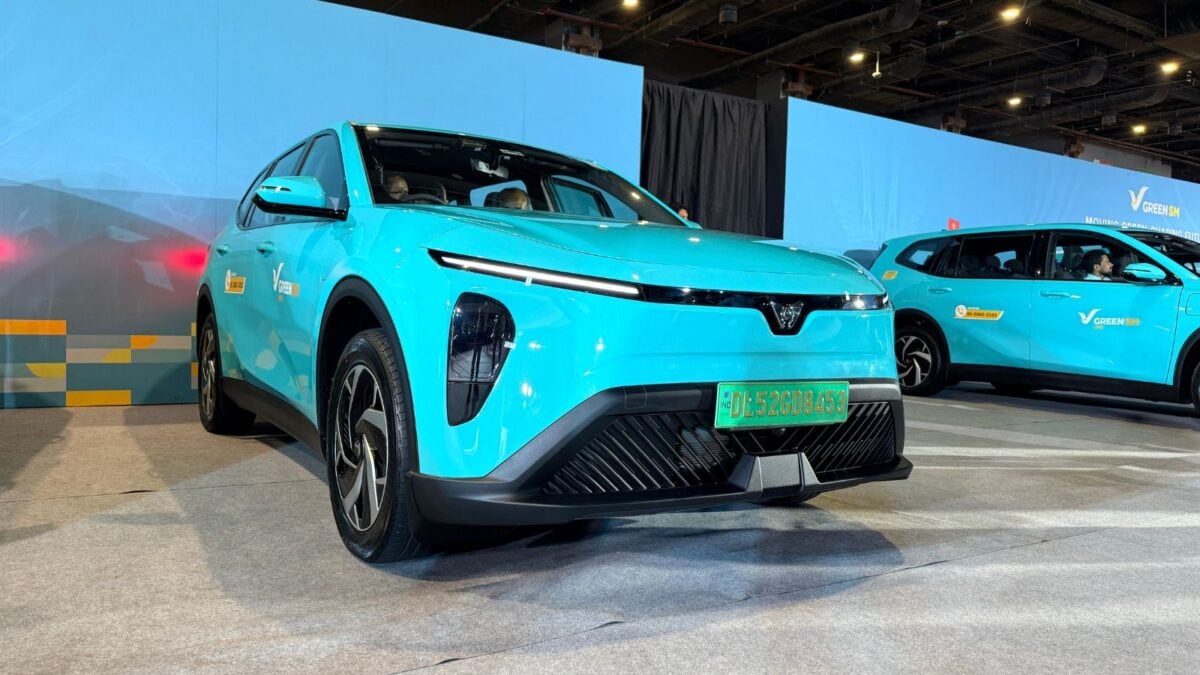
Green SM has launched its fully electric premium taxi service Green SM Limo in India on World Environment Day. This is a big relief and better option for Indian travelers. Now you will be able to enjoy a safe, comfortable, zero emission luxury ride in major areas of Delhi-NCR.

India has become the fifth international market of Green SM. Earlier the company was working in Vietnam, Laos, Indonesia and Philippines. The company's focus is not just on providing rides, but on making daily journeys more convenient, safe and eco-friendly.

Started in Delhi-NCR, will expand soon

Green SM Limo has been launched in key parts of Delhi National Capital Region. The company will expand the service in a phased manner in view of the increasing demand of customers. The vehicles used in this are Vinfast Limo Green. It is a 7-seater fully electric SUV specially designed for premium passenger service.

Full focus on comfort and convenience

To make the journey memorable, drinking water, wet tissue and necessary amenities will already be present in every green SM limo. With a spacious cabin, quiet and smooth ride, every need of the family, office commute, airport transfer or business meeting will be met. Due to zero tailpipe emissions, you will be able to travel comfortably without harming the environment.

No compromise with safety

Every vehicle is equipped with a secure-to-safe system, which has cameras inside and out, AI technology and emergency buttons. Safety of both driver and passenger has been given priority. Trained green drivers will be behind your every journey. They have been given special training in driving electric vehicles, road safety and better customer service.

Ride 5 Star – Guaranteed better experience

Green SM Limo promises a 5 star ride. Based on the quality of the vehicle, safety, professionalism of the driver and overall great experience, the company will take care of every small detail to make your every journey comfortable, safe and memorable.

Booking Details and Launch Offers

You can easily book through the Green SM app (available on App Store and Google Play). Vehicles can also be hailed directly to the hotline or operating area. Under the launch special offer, 50% discount (up to maximum of ₹ 250) can also be availed on app booking from June 5 to June 11.

New partners in Green Alliance Frontier

At the launch, five local partners from mobility, travel, technology and service sectors were included in the Green Alliance Frontier. This platform will promote innovation and green transformation by connecting sustainable businesses.

What did the company say?

Nguyen Van Thanh, Global CEO, said, “India is one of the most important mobility markets in the world. We come here with respect, trust and the spirit of working closely with local partners. Our goal is to provide high quality electric riders and bring safe, reliable and sustainable mobility options to the masses.”
Source link

Suzuki's multi-fuel strategy: Why isn't India ready for 100% EV any time soon?

Suzuki's multi-fuel strategy: Why isn't India ready for 100% EV any time soon?

Suzuki Motor Corporation's global goal is clear: to achieve carbon neutrality by 2050. But the company says how each market gets there should be shaped by local conditions. In India, this translates into a multi-pathway strategy, adopting electric vehicles, hybrids, biofuels, CNG and even compressed biogas as parallel solutions.

“We have to find our own path to carbon neutrality,” Toshihiro Suzuki said at the Japan Mobility Show. This statement reflects a fundamental difference in Suzuki's worldview. While global automakers are racing to phase out internal combustion engines, Suzuki is betting that India's transformation will be layered, gradual and deeply linked to its energy ecosystem.

Also read: Suzuki's CBG initiative: Connecting rural India to a carbon neutral future

Why is all the electricity not enough?

India's electric vehicle travel is gaining momentum, but infrastructure remains a hurdle. Public charging points are still clustered in metros, while tier-II and rural areas lag far behind. Power grid flexibility, localization of batteries and cost parity still remain challenges.

Suzuki recognizes these shortcomings. In their view, implementing an all-electric approach prematurely could alienate millions of customers who depend on affordable, reliable mobility. Battery technology remains expensive, raw materials are scarce and localization is a lengthy process.

In that sense, the company's “multi-pathway gamble” is also a hedge against uncertainty, ensuring that Suzuki remains relevant in all areas even as the market evolves.

India in origin

Few global automakers have placed as much strategic weight on India as Suzuki. The company's Suzuki R&D Center India (SRDI) now leads the development of alternative fuel technologies tailored to local conditions. From hybrid powertrains to biofuel compatibility and CBG integration, SRDI's work underlines Suzuki's belief that India will not just be a key market, it will be a laboratory for sustainable mobility in the Global South.

Suzuki's new EV plant in Kharkhoda, Haryana, is set to begin production in FY 2025-26, marking its entry into battery-electric manufacturing. But the company has equally invested in hybridization, a bridge technology that meshes well with India's short-term emissions targets and consumer economics.

Also Read: Maruti Suzuki to capture 50% market share in Indian PV market. This way

practicality over purity

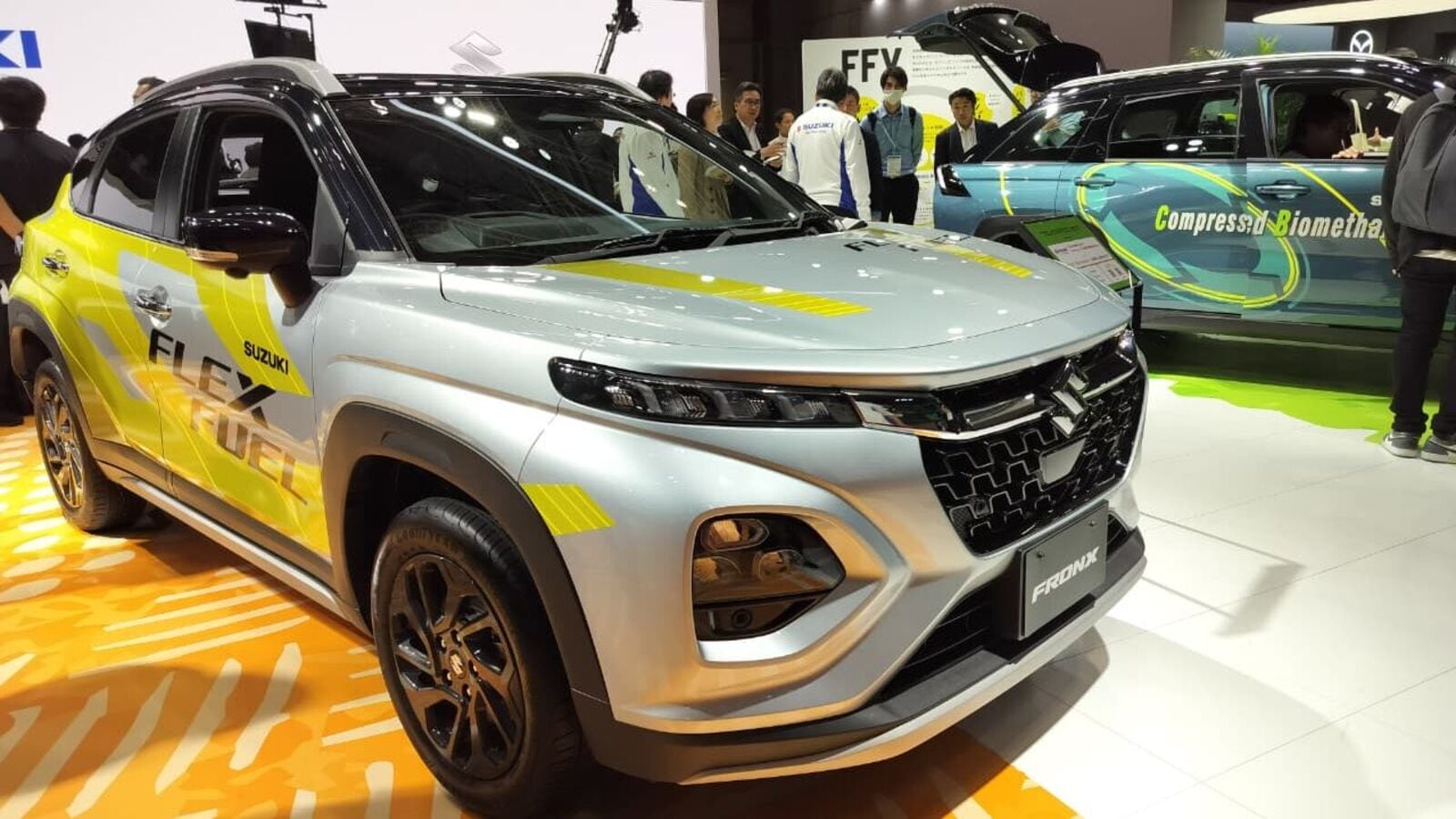
Suzuki's position is not anti-EV, it is context-driven. The company sees electrification as part of a larger continuum rather than a single, comprehensive solution. Its upcoming models will include mild hybrid, strong hybrid, flex-fuel and electric, allowing consumers to choose based on usage, affordability and local fuel infrastructure.

In many ways, this reflects India's policy direction, where ethanol blending, biogas and hybrid technologies are seen as practical enablers of the green transition. As Toshihiro Suzuki has said, “Each country must decide its own path to carbon neutrality based on its own situation.”

The challenge for Suzuki is about timeliness. Move too fast toward EVs, and the company risks alienating its price-conscious customer base. Move too slowly, and it risks being left behind as regulators tighten the screws and rivals expand their EV portfolios. Then again, the answer lies in balance, a philosophy that defines the brand's approach not only towards technology, but also towards business.

betting on the long game

Suzuki's game in India is not about chasing headlines. It is about building an ecosystem that can sustain change for decades. The company's ongoing work with biogas, hybridization and localized EV production signals an intention to diversify, not dilute.

If this approach is successful, Suzuki could demonstrate something the industry has often forgotten, that the path to zero emissions does not necessarily have to be driven by one type of energy. In a country as complex and diverse as India, carbon neutrality will not come from a single breakthrough, but from the sum of many small, systematic steps. For Toshihiro Suzuki, it's not hesitation, it's realism. And in India's case, realism may be the smartest path to a clean future.

Get information about upcoming cars in India, electric vehicles, upcoming bikes in India and cutting-edge technology that is changing the automotive landscape.

First publication date: 30 October 2025, 14:44 PM IST

Source link