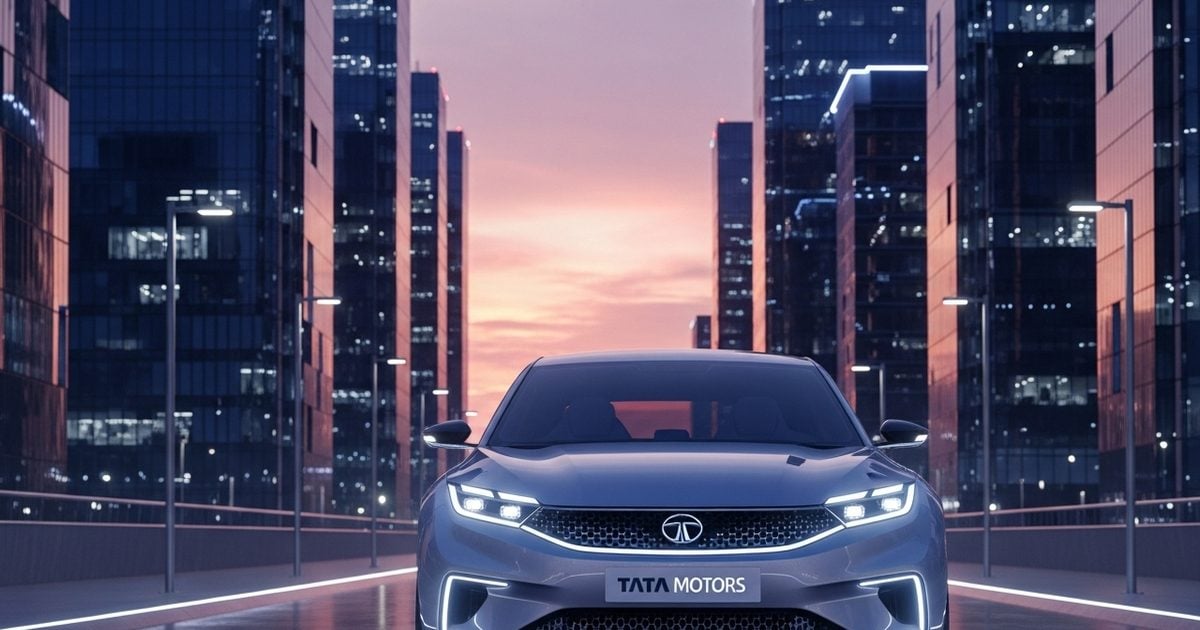
Tata Nexon will now create a stir by becoming Osprey! Entering this country under a new name

Tata Nexon will now create a stir by becoming Osprey! Entering this country under a new name

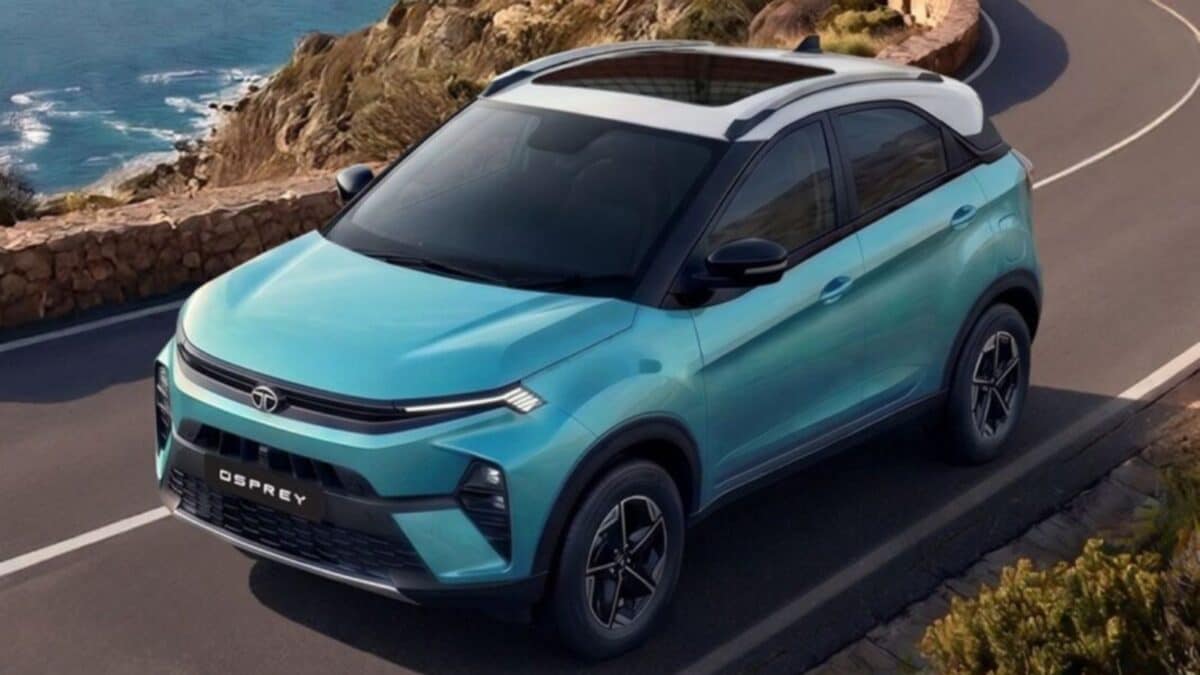
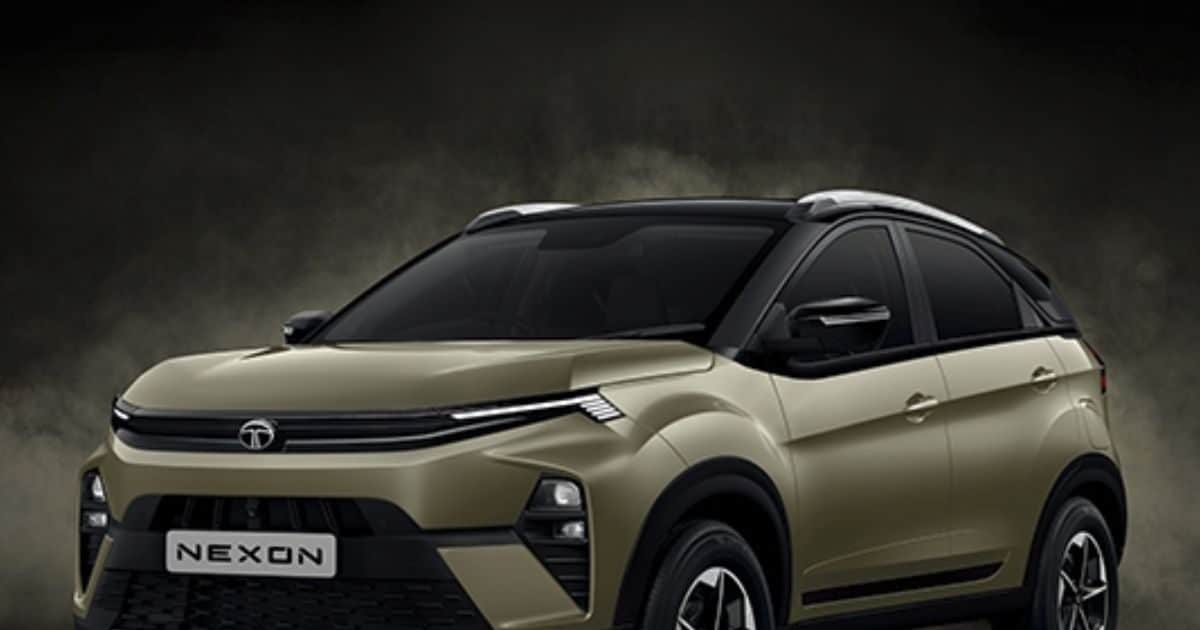
Tata Motors has announced the launch of its popular compact SUV Tata Nexon in South Africa under the name Osprey. This model will be available in the market in the third quarter (Q3 2026). The Nexon, which has been selling successfully in India since 2017, will be positioned between Tata's existing lineup like the Punch and Curve in South Africa.

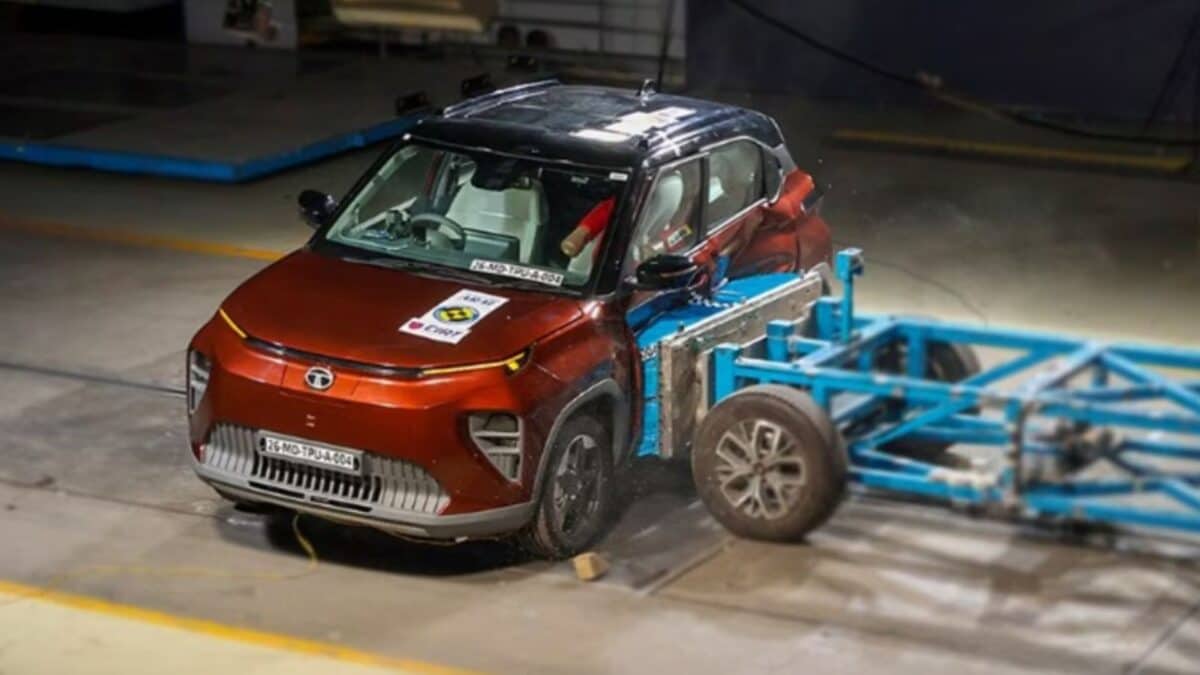
The name Osprey is taken from the internal codename of Nexon. This sub-4 meter crossover will compete with vehicles like Nissan Magnite, Renault Kiger and Kia Sonet. Tata Motors is strengthening its presence in South Africa and the Osprey will form an important part of its expansion. Nexon's 5-star rating in Global NCAP makes it strong in terms of safety.

Petrol, diesel and possibly electric variants may be available in the South African market. This launch is part of Tata's strategy to promote 'Make in India' cars globally. Customers can expect premium features, strong performance and excellent safety. Let's take a look at the design, engine and performance details.

Design and interior

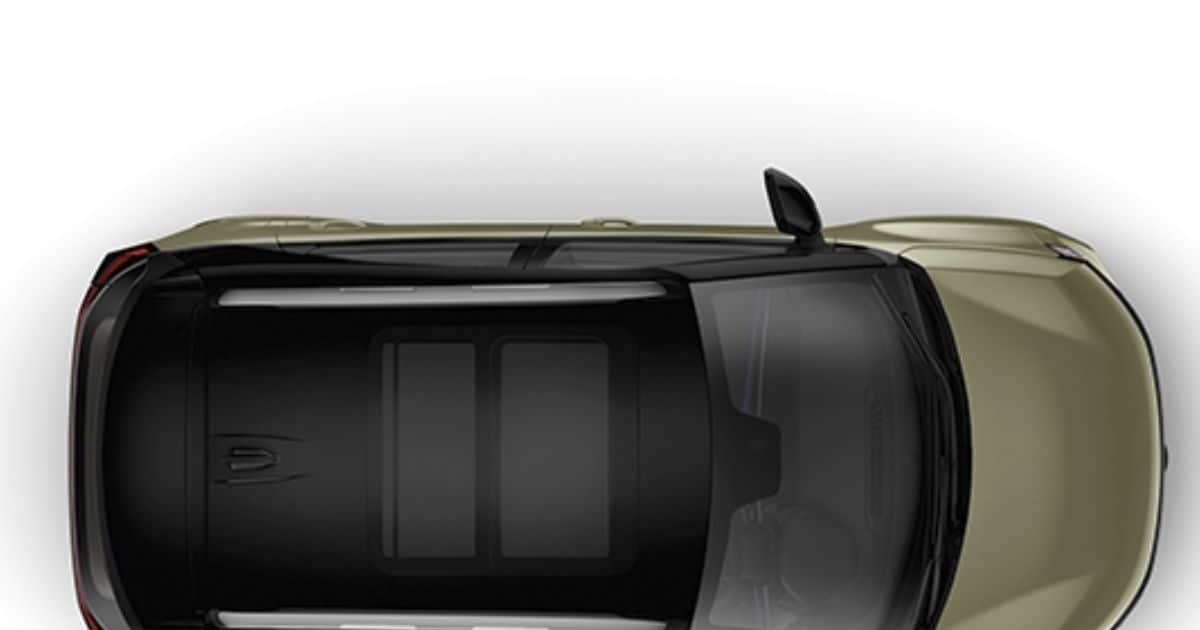
Tata Osprey follows the modern SUV design language. It has a raised hood, sleek LED headlamps, sequential LED daytime running lights and a sporty stance. With 3995 mm length, 2498 mm wheelbase and 208 mm ground clearance, it rides with confidence even on bad roads. The panoramic sunroof and attractive wheels give it an aggressive look on the road.

The cabin is premium and spacious. Dual 10.25-inch displays (infotainment and digital instrument cluster), ventilated leatherette seats (Benecke Kaliko), two-spoke steering wheel and leatherette mid-padding dashboard give it a luxury feel. Despite being a 5-seater, there is 382 liters of boot space. Smartphone integration is easy with IRA 2.0 connected technology.

Features and safety

The high-end variants come with features like 10.25-inch Harman infotainment system, 360-degree camera, front parking sensors, panoramic sunroof and wireless charging. The physical touch panel controls are user-friendly. For safety, it has 6 airbags, Electronic Stability Program (ESP), Level-2 ADAS, 360-degree camera, blind view monitoring and ISOFIX child seat mounts as standard. This is a very safe option for the family.

Engine and Performance

1.2 liter turbo petrol engine (88 kW / 120 PS, 170 Nm) and 1.5 liter turbo diesel (85 kW / 115 PS, 260 Nm) options can be found in South Africa. Both the engines are powerful and efficient. 6-speed manual or automatic transmission will be available. The front-wheel drive system provides good performance in daily driving and on the highway.

Source link

Tata Avinya

Tata Avinya

Last Updated:

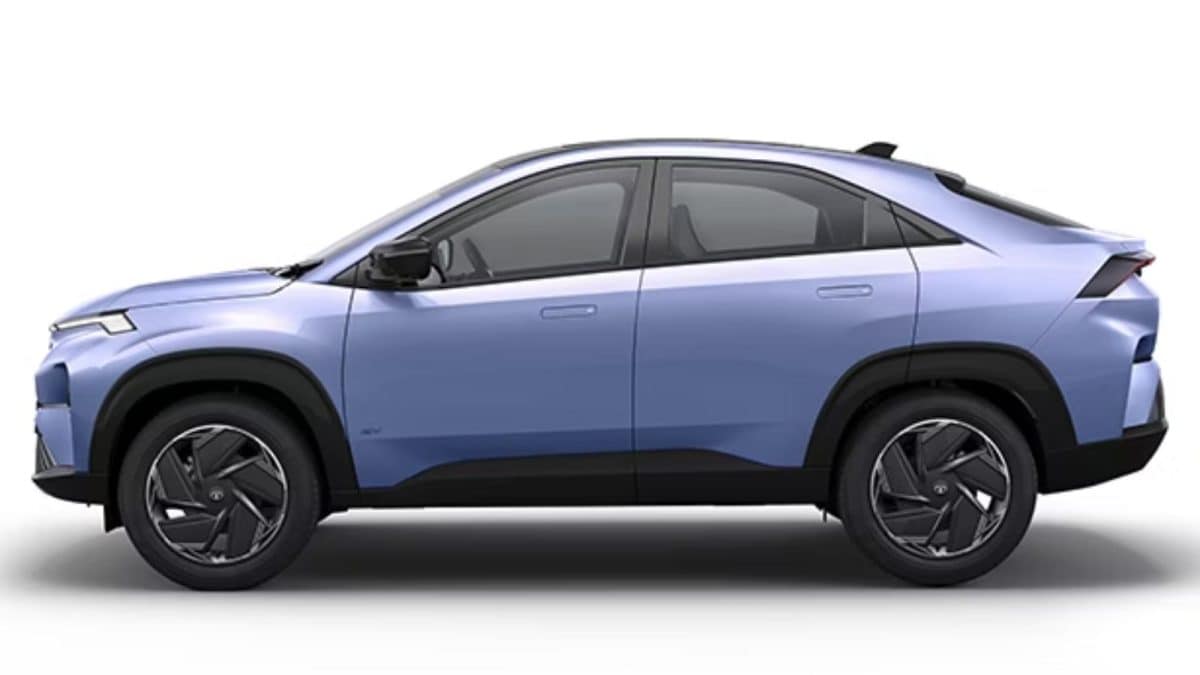
Tata Avinya Despite the camouflage, many important clues have been received regarding its coupe-style design, new platform and powerful battery pack. According to reports, this SUV can be launched in 2027 and is set to become Tata's most premium EV. Know every major detail related to this.

news quickly

Zoom

Tata Avinya

Tata Motors is rapidly advancing its premium electric vehicle (EV) strategy. Recently, a camouflaged SUV has been seen testing in public, which looks very similar to the company's upcoming Avina X model. This could be Tata's first premium electric SUV, which is expected to be launched in India in 2027.

This prototype with MH number plate has been seen in a video shared on social media. Despite being highly camouflaged, its coupe-style silhouette, sloping roofline and LED lighting elements can be seen. This model will not only meet the needs of Indian customers but can also create a strong presence of Tata in the global market. Let us know what has been seen in this testing mule of Tata Avinya.

Details of the new test mule

The sloping roofline in the prototype is giving a coupe-like look. The LED headlamps at the front and connected DRLs at the front-rear match Tata's recent design patterns. Dual-tone diamond-cut alloy wheels and smooth body surfacing are also seen. Although the entire design is hidden due to camouflage, the proportions and lighting signature point towards a Tata product.

change in platform

In March, Tata Motors had said that Avinya X will no longer be built on Jaguar Land Rover's EMA platform. Instead, the Freelander platform of the Cherry-JLR (CJLR) ecosystem will be used. This will reduce development cost and speed up the launch process. The company is reworking electronic systems, software and vehicle functions for Indian buyers. Teams from India, China and UK are working on this project.

Battery pack and performance

According to industry reports, battery packs ranging from 65 kWh to 80 kWh can be provided in the first Avinya models. The focus is on balancing range, performance and cost, so that despite being a premium EV, it maintains broad market appeal.

Manufacturing and launch timeline

The first Avinya models will be produced at the new TMPV-JLR plant in Panpakkam, Tamil Nadu. This facility is an important part of Tata's premium EV project. Avinya is being developed as a global premium EV brand, which will use multiple scalable architectures from the Tata Motors and JLR ecosystem.

About the Author

authoring

Ram Mohan MishraSenior Sub Editor

Ram Mohan Mishra, working as Senior Sub-Editor at News18 Hindi, is active in digital media since 2021 and is currently handling the Auto Desk. They provide car and bike related information in an easy, clear and reliable manner.read more


Source link

Tata Sierra Jubilee Edition launched for just ₹ 11.99 lakh, know how special it is

Tata Sierra Jubilee Edition launched for just ₹ 11.99 lakh, know how special it is

Tata Motors has launched the Jubilee Edition of its popular mid-size SUV Tata Sierra to celebrate the milestone of domestic sales of 50,000 units. This special edition is available as dealer-fitted accessory packs on Smart+, Pure and Adventure variants. The Jubilee Edition is priced at a starting price of ₹ 11.99 lakh (ex-showroom), giving customers the opportunity to purchase a personalized and stylish SUV right from the dealership.

This edition does not bring any changes to the mechanicals or powertrain, but focuses on cosmetic, comfort and protection accessories. The Smart+ Jubilee Edition adds a premium touch to the base variant, while the Pure adds practical features for everyday use. The Adventure variant offers a rugged look with ROQ kit. These packs have been designed according to the customer profile. Some will increase comfort, some will add adventurous appeal.

exterior and interior

The Jubilee Edition gets exterior upgrades depending on the variant. Front grille and tailgate cladding, roof rails are provided in Smart+. The Pure adds wheel arch cladding and body cladding packages. The Adventure Jubilee Edition gets the Sierra ROQ kit, which includes front-rear skid plates, hood scoop, window-line and wheel-arch cladding, body decals. This gives the SUV a more aggressive and off-road ready look. The standard Sierra's split tailgate and 205 mm ground clearance remain intact.

The cabin gets leatherette seat upholstery, leatherette steering wheel cover (in Pure) and premium touches. Jubilee packs make the seats more premium. The standard Sierra has a spacious cabin, good headroom-legroom and material quality.

Features and safety

Smart+ Jubilee includes a 10.25-inch touchscreen infotainment system (wireless Android Auto & Apple CarPlay), rear view camera and 4-speaker audio system. The Pure adds front-rear dashcams, parcel tray, magnetic sunshades. The Adventure has ROQ styling with dashcams. Standard features may include panoramic sunroof, ventilated seats, triple screen setup (in top variants).

6 airbags are standard in Tata Sierra. Also there is ESP, all disc brakes, ISOFIX, Level 2+ ADAS (in some variants) and strong structure. The Jubilee Edition retains the standard safety features.

Powertrain details

Jubilee Edition is based on ICE variants. It has 1.5 liter NA petrol (106 hp, 145 Nm), 1.5 liter turbo petrol (160 hp, 255 Nm) and 1.5 liter diesel (118 hp, 260/280 Nm) engine options. It can be purchased with manual and automatic gearbox.

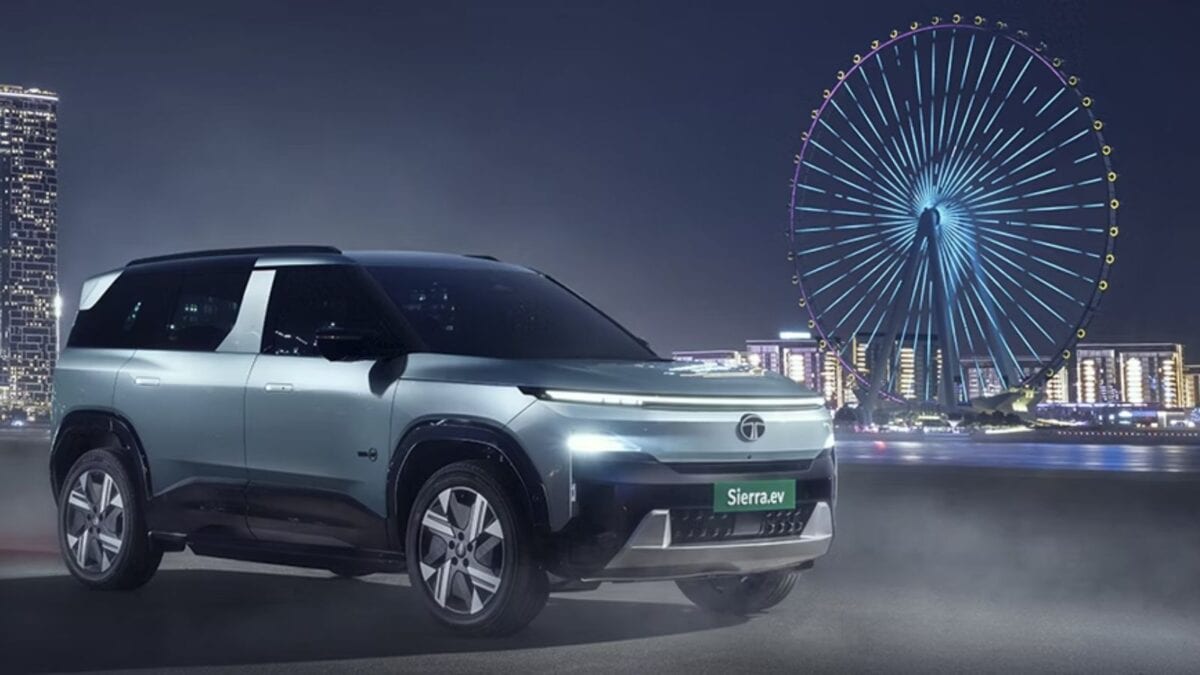
Tata has also recently launched the Sierra EV, which can be purchased at a starting ex-showroom price of ₹ 18.79 lakh. It has 63 kWh and 75 kWh battery packs. RWD models have rear motor (up to 238 hp) and AWD have dual motor (504 Nm). Claimed range is up to 566-665 KM (MIDC), real-world range can be assumed to be 450+ km. It supports 120 kW DC fast charging.

Source link

A discount of ₹ 3.35 lakh is available on this electric SUV; Best for family

A discount of ₹ 3.35 lakh is available on this electric SUV; Best for family

Tata Motors has started offering huge discounts on its electric vehicle range in June 2026, making this a great opportunity for EV buyers. Especially the highest discount is available on Tata Curve EV. This compact electric SUV coupe design is known for its stylish looks, strong performance and long range.

In view of the increasing EV demand in the Indian market, Tata has offered a discount of up to ₹ 3.35 lakh on Curvv EV. This includes green bonus, cash discount, exchange, scrappage and loyalty benefits. This offer is ideal for those customers who want an eco-friendly and sporty SUV. Curvv EV is not only equipped with modern design and premium features, but is also becoming popular due to its battery technology and safety standards. Let's take a look at its discount details.

discount details

The maximum benefit of up to ₹ 3.35 lakh is available on all variants of Tata Curvv EV (except X), which includes a flat green bonus (cash discount) of ₹ 3 lakh. The discount on Creative grade is slightly reduced to ₹ 2.85 lakh. At the same time, there is no cash discount on the Curvv EV These offers may vary depending on the dealership and stock.

Design and interior

Tata Curve EV is India's first electric SUV coupe. It has a bold front grille, slim LED headlights, sloping roofline, piano black body cladding and connected LED taillights. Its sporty and aerodynamic look gives it a distinct identity on the road.

Its cabin is premium. Features like 12.3-inch touchscreen infotainment system, digital instrument cluster, leatherette seats, ventilated front seats and 360-degree camera are available. The spacious cabin is comfortable for 5 passengers.

Features and safety

This SUV gets level-2 ADAS (adaptive cruise control, lane keep assist, blind spot detection), wireless charging, ventilated seats, sunroof, premium sound system and over-the-air updates.

It has got 5-star rating for safety. It has 6 airbags, 360° camera, ISOFIX child seat anchors and strong structure. ADAS features make driving more safe.

Battery, Motor and Range

It has been offered in two battery pack options – 45 kWh (150 PS, 215 Nm, 430-502 km range) and 55 kWh (167 PS, 215 Nm, 502-585 km ARAI claimed range). Both have permanent magnet synchronous motors. 70 kW DC fast charger allows 10-80% charging in just 40 minutes. The liquid-cooled battery is IP67 rated.

Source link

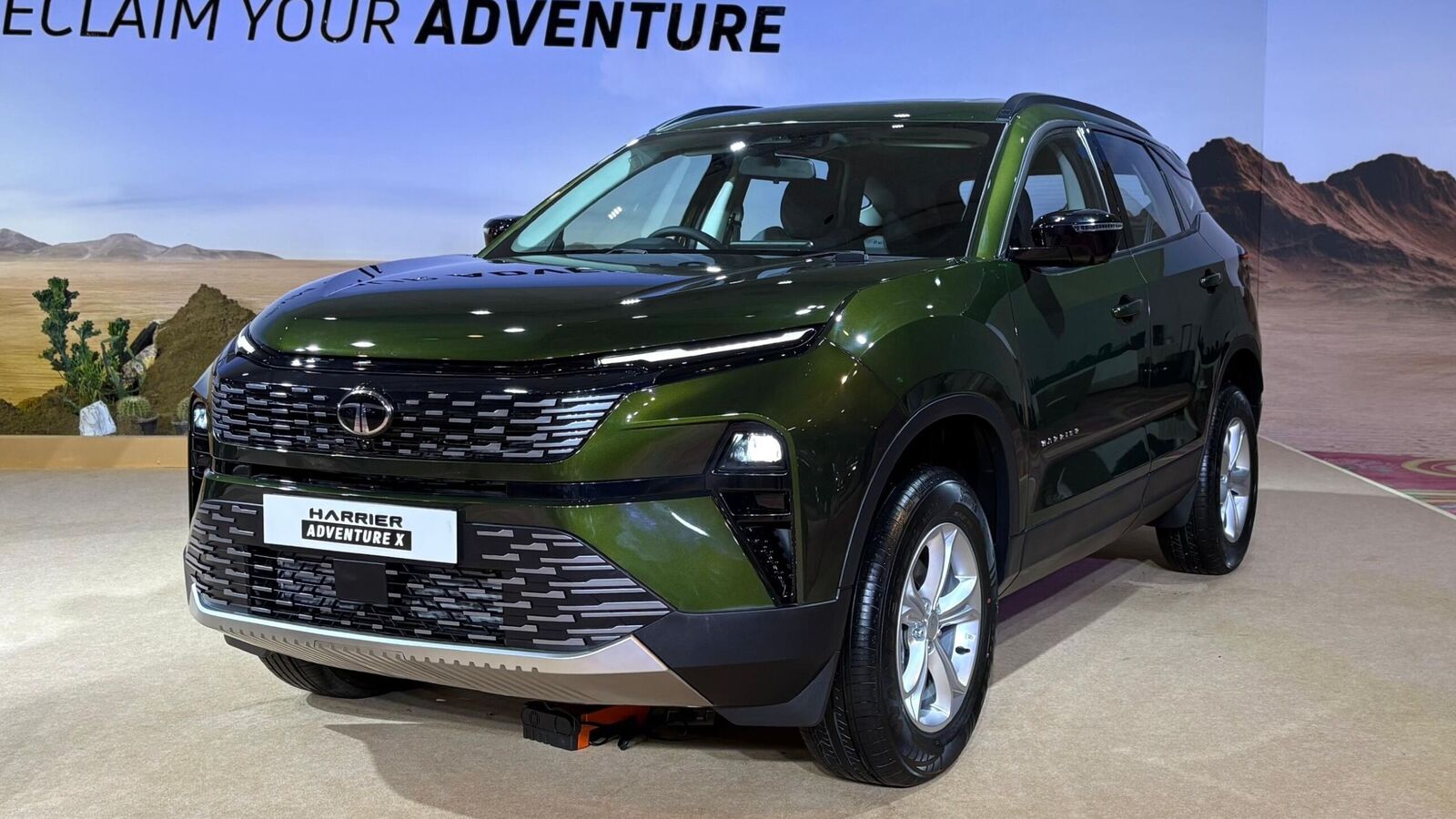
Stealth edition of Tata Harrier and Safari launched in Indian market, know the price

Stealth edition of Tata Harrier and Safari launched in Indian market, know the price

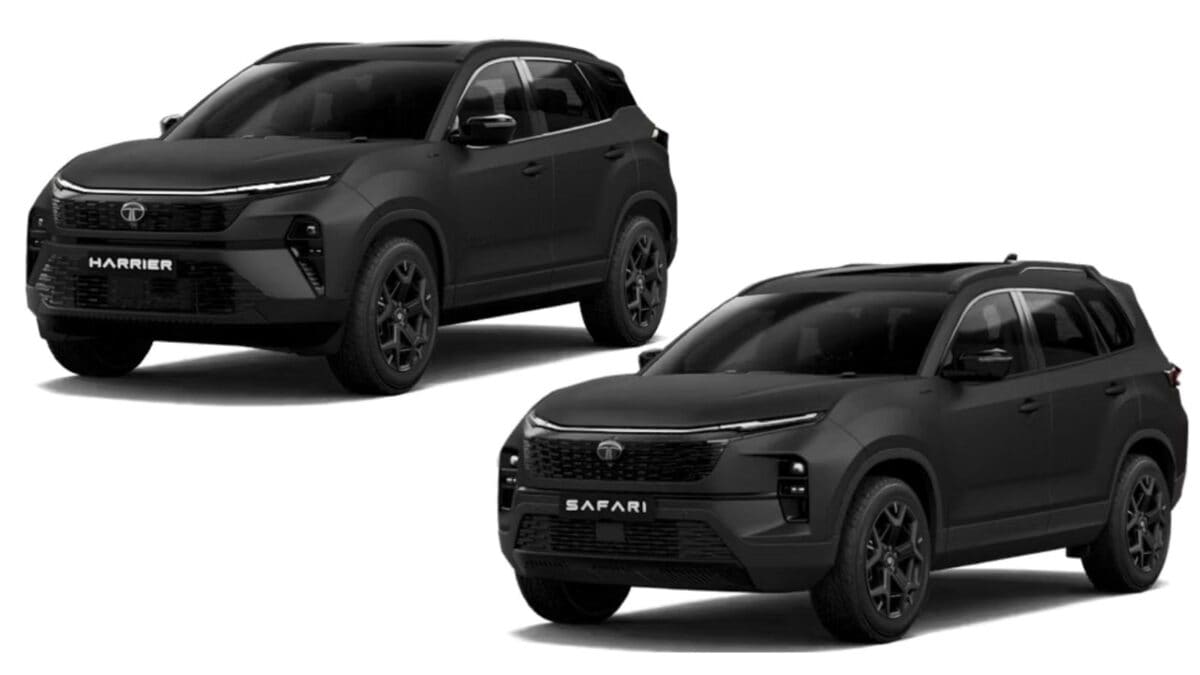
Tata Motors has launched special Stealth Editions of its two most popular SUVs Harrier and Safari. These limited edition models were showcased for the first time at the Bharat Mobility Global Expo 2025. Stealth Edition has been introduced on the occasion of completion of 27 years of Tata Safari. It has a special combination of attractive matte black finish, blacked-out elements and premium features.

These editions are limited to a total of 2,700 units, making them exclusive. The Harrier Stealth Edition is based on the Fearless+ variant, while the Safari is based on the Accomplished+ trim. Prices start at ₹25.09 lakh for the Harrier Stealth and ₹25.74 lakh for the Safari Stealth, ex-showroom Delhi. Both models are available in 6-speed manual and automatic transmission. Let us take a look at the details from their design to engine performance.

Design and interior

The biggest highlight of the Stealth Edition is the matte stealth black color, which gives a bold and aggressive look. 19-inch black alloy wheels, dark themed grille, blacked-out badging and stealth badge add a premium touch to the exterior. The stance of both the SUVs looks more commanding than before.

Its cabin has Carbon Noir all-black theme. Leatherette seats, stealth badge, updated dashboard finish and ambient lighting add to the luxury feel. Space and comfort in both Harrier and Safari are top-class.

Features and safety

Being top-spec variants, both come with features like 12.3-inch Harman touchscreen infotainment system, 10.25-inch digital instrument cluster, panoramic sunroof, ventilated front seats, 10-speaker JBL audio, wireless charging, Alexa Home-to-Car/Car-to-Home connectivity, Arcade apps, MapMyIndia navigation and dual-zone climate control.

Safety includes 7 airbags, Level 2+ ADAS (21 functions) which includes Intelligent Speed ​​Assist, Adaptive Cruise Control, Lane Departure Warning and Automatic Emergency Braking. Features like ESP with 17 safety functions, 360 degree camera and tire pressure monitoring make them one of the safest SUVs in the segment.

Engine and Performance

Both have a 2.0-litre Kryotec turbo diesel engine, which produces around 168-170 bhp power and 350 Nm torque. Good drivability and highway performance is available with 6-speed manual or torque converter automatic gearbox. Overall, the Stealth Edition is ideal for customers who want the exclusivity of a limited edition along with stylish looks, premium feel and strong performance.

Source link

Investment of Rs 40,000 crore, target of doubling sales, this company will become a money printing machine!

Investment of Rs 40,000 crore, target of doubling sales, this company will become a money printing machine!

Last Updated:

Tata Motors has presented a big roadmap for the next five years for its passenger vehicle business. The company will invest Rs 40,000 crore and wants to achieve the target of annual sales of more than 12 lakh vehicles by financial year 2031. Along with this, a target has also been set to have 20 percent share in the domestic passenger vehicle market, revenue of Rs 1.4 lakh crore and increase the share of electric vehicles to more than 30 percent.

news quickly

Zoom

The company will launch 6 brand new vehicles in the next few years.

New Delhi. Competition is continuously increasing in the Indian automobile market. Companies are increasingly betting on SUVs, electric vehicles and new technologies. Meanwhile, Tata Motors has also revealed the strategy for the next five years for its passenger vehicle business. The company's aim is not just to launch new cars but also to take a big leap in sales, market share and profits, said company chairman N. Chandrasekaran (N. Chandrasekaran) told in the 81st Annual General Meeting (AGM) that Tata Motors wants to take passenger vehicle sales above 12 lakh units by financial year 2030. At present the market share of the company is 14.2 percent, the target has been set to increase it to 20 percent.

To achieve these goals, Tata Motors will invest about Rs 40,000 crore in the next few years. This amount will be spent on developing new products, increasing manufacturing capacity and new technologies. The company says that through this investment it wants to take its passenger vehicle business to the next level. Besides, a target has also been set to achieve free cash flow of about Rs 10,000 crore.

6 new cars will come, more than 20 models will be updated

Tata Motors will also expand its portfolio. The company will launch 6 new nameplates (6 all-new cars) in the next few years, while more than 20 existing models will be updated. At the standalone level, the company is working on a plan to increase its portfolio to 15 nameplates. Besides, there are preparations to enter those segments also, where it does not have presence yet.

Special focus will be on EV

The company has made it clear that electric vehicles will be an important part of its strategy in the coming years. By the end of financial year 2030, the company wants the share of electric vehicles in its total passenger vehicle sales to be more than 30 percent. The EV market in India is growing rapidly and Tata Motors is already one of the leading companies in this segment. In such a situation, the company will increase investment in new electric models and technology to maintain its lead.

Earning and profit also a big target

Tata Passenger Mobility Managing Director and Chief Executive Officer Shailesh Chandra said that the company wants to achieve a revenue of Rs 1.4 lakh crore by financial year 2031. Along with this, targets of double digit EBITDA margin, more than 5 percent EBIT margin and more than five times the profit before tax (PBT) as compared to the current level have also been set. At the group level, Tata Motors has set a long-term target of revenue of $60 billion, EBIT margin of 10 percent and PBT of $5 billion.

There was an impact on performance last year

The company said that due to the cyber attack on Jaguar Land Rover in the financial year 2026, production was affected for about two months. This also affected the overall business of the company. Tata Motors' consolidated revenue declined by 8 percent to Rs 3.35 lakh crore in FY 2026, while total sales also declined by 1 percent to 9.49 lakh units. Now the company is preparing to achieve rapid growth in the next five years on the basis of new investments, new models and expansion of electric vehicles.

About the Author

authoring

Jai ThakurSenior-Sub Editor

I am Jai Thakur, serving as Senior Sub-Editor at News18 Hindi. My main job is to convey complex business news to people in simple language. Be it the movement of the stock market, the impact of the country's economy…read more

Source link

Tata Sierra EV's smaller battery pack has more power and the bigger one has less, why so?

Tata Sierra EV's smaller battery pack has more power and the bigger one has less, why so?

Tata Motors has launched Sierra EV in the Indian market after a long wait. Available at a starting price of just ₹ 18.79 lakh (ex-showroom), this SUV comes with 63 kWh and 75 kWh battery options. One thing was most discussed at the time of launch – why is the power output of the 75 kWh RWD variant less than the 63 kWh RWD?

The 63 kWh model produces 238 PS (175 kW), while the 75 kWh RWD produces only 209 PS (154 kW). This is a difference of 29 PS (about 12%), while the 75 kWh variant is also costlier and has a longer range. Tata has now given an official statement regarding this.

Why is power reduced in bigger packs?

According to Tata Motors, this is not a mistake but an intentional engineering decision. Both batteries are packed in the same volume. The 75 kWh battery uses high-capacity cells and Cell-to-Pack (C2P) architecture, achieving excellent packaging efficiency of 141 Wh/kg and 8.9 km/kWh energy efficiency.

This brings the ARAI range to 665 km (99 km more than 63 kWh). However, this resulted in a slight reduction in operating voltage, resulting in reduced peak power. The company says that the peak torque of 315 Nm is the same in both the RWD variants, so there will be no significant difference in daily driving and city-highway performance. 75 kWh is range-focused, while 63 kWh is performance-oriented.

Design and interior

Sierra EV comes with an attractive design like the ICE model. Its highlights are closed-off grille, end-to-end LED DRL, LED taillights, flush door handles, 19-inch alloy wheels with aero inserts and a large panoramic sunroof (1525mm x 925mm). The 2730 mm wheelbase and 622 liters of boot space add to the practicality.

The cabin has a triple screen setup (two 12.3-inch + 10.25-inch). Light colours, spacious feel, ventilated and memory seats, extendable under-thigh support, rear blinds and leatherette upholstery provide a premium experience.

Features and safety

12-speaker JBL sound system (Dolby Atmos), wireless Android Auto/Apple CarPlay, EV Route Planner, DrivePay (UPI), AirConsole Gaming, iRA.ev connectivity, 540° camera and gesture-controlled powered tailgate are the big features.

For safety, it has features like L2+ ADAS, 6 airbags, strong structure and V2L/V2V. 6 terrain modes and crawl control are also provided for off-road.

Battery, Motor and Range

The 63 kWh battery gives 565 km ARAI range, while the 75 kWh will give 665 km range. Both RWD have 315 Nm torque. AWD option is also available in 75 kWh. Fast charging can add 263 km range in 15 minutes. The speed of 0-100 km/h is completed in 5.8 seconds. Built on the Acti.ev platform, this SUV offers a great combination of performance and range.

Source link

Big upheaval in EV market! Tata number-1, Mahindra overtook MG

Big upheaval in EV market! Tata number-1, Mahindra overtook MG

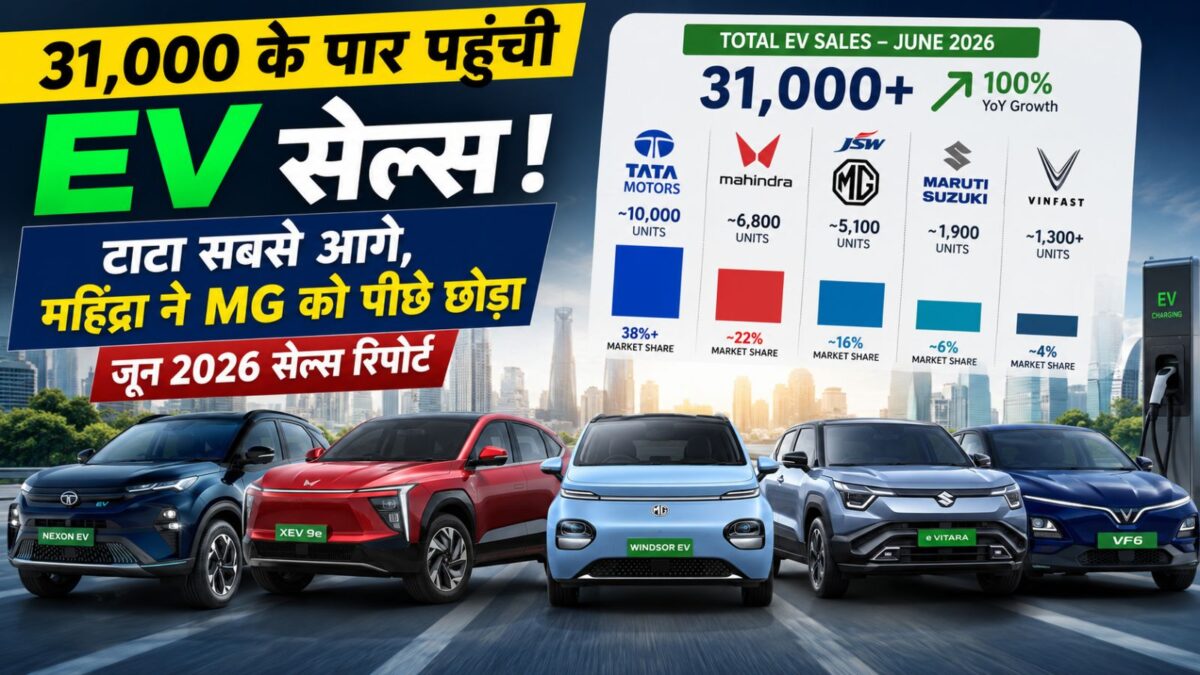
Last month was much better for the Electric Car Market. A total of more than 31,000 passenger EVs were registered for sale in June 2026, which represents a huge increase of 100 percent compared to last year. Tata Motors continues to rule the market, while Mahindra and MG Motors are giving strong challenges. New players like Maruti Suzuki and Vinfast are also growing rapidly.

This increase is the result of government EV policy, reduction in battery prices, expansion of charging infrastructure and increasing environmental awareness of customers. The EV penetration rate has also reached a new high in June. Tata.ev, Mahindra, MG, Maruti and Vinfast are included in the top-5, which together gained a major share of the market. Let us take a look at the company-wise sales report.

Tata Motors

Tata Motors is the uncrowned king of the EV segment in June 2026. The company has sold around 10,000 units and achieved more than 38% market share. Its strong portfolio like Nexom EV, Puch EV, Tiago EV and Curvv EV kept it in control of the market. Tata's reliability, good range, service network and attractive pricing have made it a favorite of common customers. The company is continuously strengthening its position by bringing new technology and updates.

Mahindra

Mahindra gave its best performance in June and secured second position. The company was successful in leaving MG behind with sales of around 6,800 units. This was boosted by strong demand for models like BE 6, XEV 9e and XUV400. Mahindra's SUV styling, powerful performance and growing dealer network have made it popular among premium EV buyers. The company is rapidly upgrading its production and battery technology.

JSW MG Motor

JSW MG Motor stood at the third position and sold around 5,100 units. Models like Windosr EV and ZS EV performed well. The company's attractive design, features and value for money made it strong in the mid-segment. MG is rapidly increasing its market share and is preparing to launch new models.

Maruti Suzuki

Maruti Suzuki secured fourth position. With e Vitara the company sold around 1,900 units. Despite late entry into the EV market, Maruti's large dealer network, service support and affordable pricing helped it grow rapidly. It is making a strong hold in EV as a traditional ICE vehicle manufacturer.

vinfast

Vinfast stood fifth and sold 1,300-1,400 units. The Vietnamese company has made an impressive entry in the Indian market. The modern design and good specifications of models like VF6 and VF7 got it noticed. Vinfast is expanding rapidly and is expected to perform even stronger in the future.

Apart from the top-5 companies of the segment mentioned above, last month 868 units of BYD, 449 units of Kia, 348 units of Hyundai, 32 units of Toyota and only 24 units of Citroën were sold.

Source link

Maruti's charm! Tata and Mahindra become number 1 again, huge sales

Maruti's charm! Tata and Mahindra become number 1 again, huge sales

June 2026 was a much better month for the Indian car market. Talking about the top 10 car companies of the country, together they have registered an overall growth of 23.06% on an annual basis last month. The top 6 OEMs sold a total of 3,62,284 units, whereas in June 2025 this figure was 2,94,397 units.

Maruti Suzuki's dominance continued, while Tata Motors has registered the highest annual growth of 67.40%. Mahindra and Kia also performed well. However, on a monthly basis the market has declined by 12.37%, which came down from 4,13,445 units in May 2026 to 3,62,284 units in June. Let's take a look at the company-wise sales report.

Maruti Suzuki

Maruti Suzuki achieved 40.63% market share by selling 1,47,187 units in June 2026. Its sales increased by 23.78% on an annual basis, while a decline of 22.67% was recorded on a monthly basis as compared to May 2026. The company still remains the biggest player in the Indian market. Maruti is maintaining its hold through new models and expansion plans, although monthly fluctuations continue.

Tata Motors

The performance of Tata Motors was most impressive. It sold 62,076 units in June 2026, which is a huge growth of 67.40% year-on-year. There was also an increase of 5.05% on monthly basis. Strong presence in the EV segment and popular SUV models brought the company the second position. Tata is growing rapidly with 17.13% market share and is expected to perform even stronger in future.

Mahindra

Mahindra has sold 60,393 units in June 2026, registering a growth of 27.66% year-on-year. There has also been an increase of 4.09% on monthly basis. The company achieved 16.67% market share. Especially the popularity of Thar and XUV series has kept Mahindra in a strong position. The SUV focused strategy was successful in keeping the company in the top 3.

Hyundai Motor India

Hyundai stood fourth by selling 39,635 units in June 2026, but registered a decline of 9.97% year-on-year. Monthly sales also decreased by 17.15%. The company is facing challenges with 10.94% market share. Hyundai is trying to improve its position by working on new models and pricing strategy.

Toyota Motor

Toyota sold 28,441 units in June 2026, which is 7.52% higher year-on-year. There was a decline of 6.98% on annual basis. The company achieved 7.85% market share. Toyota is showing stable growth with a strong hold in the hybrid and premium segments.

Kia India

Kia sold 24,552 units in June 2026, an increase of 19.04% year-on-year. There has been a decline of 11% on monthly basis. With 6.78% market share, Kia is performing well in the SUV segment. Models like Seltos and Sonet remain the strength of the company.

Source link

Tata Sierra EV vs Harrier EV: Which electric SUV has more power? Know

Tata Sierra EV vs Harrier EV: Which electric SUV has more power? Know

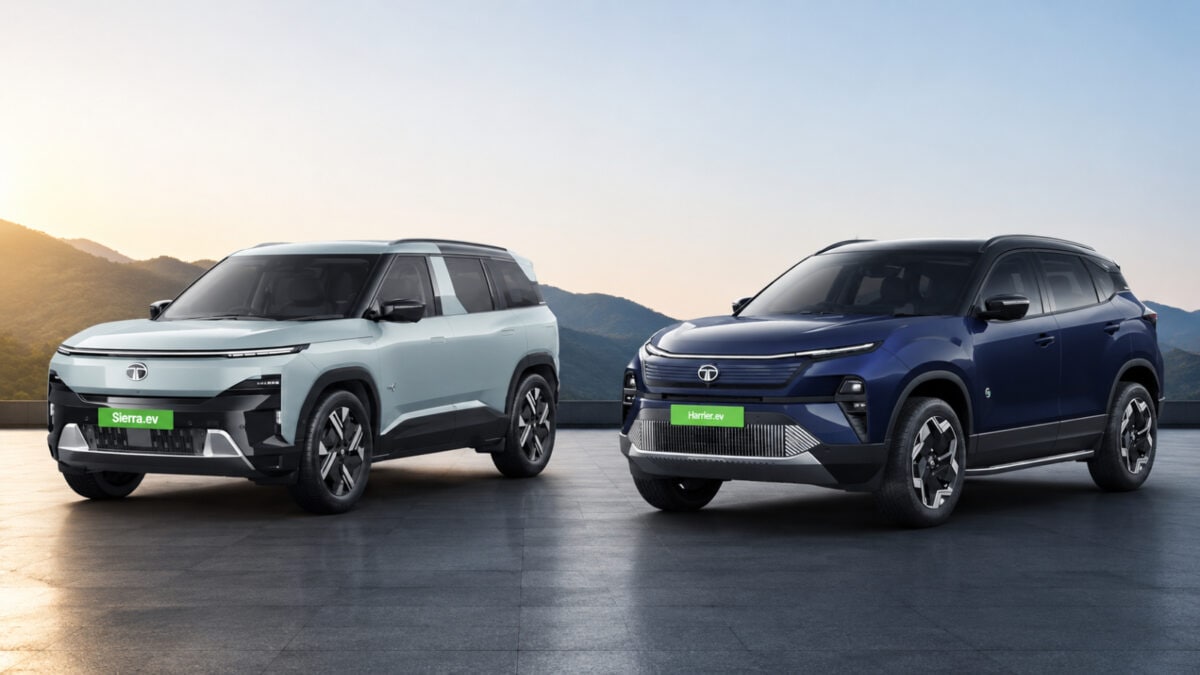
Tata Motors recently strengthened its EV line-up with the launch of Tata Sierra EV, which brings the iconic Sierra design in an electric avatar. It is a more affordable and slightly compact alternative to the Harrier EV. Both are based on the Acti.EV+ platform, but the positioning is different. The Sierra EV is family-oriented and value-for-money, while the Harrier EV is a premium, larger SUV with more features.

Ex-showroom price of Sierra EV starts at ₹18.79 lakh (Pure 63 kWh), the top variant can go up to ₹25-26 lakh. While Harrier EV starts at ₹21.49 lakh (Adventure 65 kWh), the top QWD variant goes for around ₹30 lakh. Both are attractive options for EV buyers, coming with long range, fast charging and strong safety from Tata. Let us know who is better in terms of design and battery-motor?

Design and interior

Tata Sierra EV has a boxy, upright and classic look. It has been introduced with split LED headlamps, blank grille, flush handles and two-tone roof like the ICE version. It looks more practical and family-friendly. The Harrier EV is more dynamic, coupe-styled and muscular, with larger dimensions (4607 mm length) and gives premium road presence. Sierra EV is a bit smaller (about 4400 mm), but feels spacious.

Both the electric SUVs have a premium feel. The Sierra EV gets a triple-screen setup (10.25-inch cluster, 12.3-inch touchscreen + passenger display), panoramic sunroof and ventilated seats. The Harrier EV features a large 14.5-inch touchscreen, JBL Dolby Atmos sound and luxury materials. The cabin of the Sierra EV offers slightly more practical boot space (622 litres+).

Features and safety

Talking about the features, both have features like Level-2 ADAS, 540 degree camera (Transparent Mode), V2L, Auto Park, Summon Mode and Panoramic Sunroof. The Harrier EV gets more premium touches like a larger screen and advanced infotainment, while the Sierra EV is the value pack. Tata is known for its strong 5-star rating. Both have 6-7 airbags, ESP, TPMS, ADAS and disc brakes as standard. Both Harrier EV and Sierra EV get 7 airbags and advanced ESP.

Battery, Motor and Range

Tata Sierra EV can be purchased with 63 kWh (RWD, 535-565 km) or 75 kWh (RWD/AWD, 665 km MIDC) battery options. Harrier EV has 65 kWh (538 km) and 75 kWh (622-627 km) battery options. Both have fast charging (20-80% in just 25 minutes) support.

The top QWD variant of the Harrier EV gets a dual-motor setup, which produces a combined motor power of 158 PS (front) + 238 PS (rear) and 504 Nm torque. At the same time, Sierra EV has been offered with both RWD and QWD drivetrain options. The real-world range of both electric SUVs is approximately between 480 to 530 kilometers.

Source link

The journey started with a 'Khatara' truck, reached the 10 lakhth commercial vehicle!

The journey started with a 'Khatara' truck, reached the 10 lakhth commercial vehicle!

Last Updated:

The journey of Tata Motors, which started with one truck, has today reached 10 lakh commercial vehicles. From the first truck in 1954 to today's modern CV portfolio, the company has given a new direction to the Indian transport sector. After all, how Tata Motors achieved this position in decades and what is its complete story, read this special report to know.

news quickly

Zoom

Tata Motors has rolled out its 10 lakhth commercial vehicle.

The journey of Tata Motors is no less than an inspiration. This company, which started as Tata Engineering and Locomotive Company in 1945, along with Daimler-Benz in 1954, laid a strong foundation for the commercial vehicle industry in the country. This journey, which started with the first indigenous heavy-duty truck, has today reached a historic milestone.

Moving forward on the path of innovation and expansion with time, the company has now rolled out its 10 lakhth commercial vehicle. This is an achievement which tells the story of its decades-long development and progress of India. Let us take a quick look at the story of Tata Motors' commercial vehicle business from its beginning till now.

Started in 1954

Tata Motors' commercial vehicle (CV) journey has been full of ups and downs. Established in 1945 as Tata Engineering and Locomotive Company (TELCO), the company initially focused on locomotives and engineering products. About 9 years after its establishment, in 1954, technical collaboration with Germany's Daimler-Benz changed its fortunes.

On October 15 of the same year, the first Tata Mercedes-Benz truck (TMB 312 model) was rolled out from the Jamshedpur plant. It was a 90-100 HP goods carrier chassis with 3-5 ton capacity, which became the epitome of heavy duty trucks on Indian roads. This was the first heavy-duty truck manufactured in India, which gave a new direction to the country's transport and logistics.

Became self-dependent in 1970!

The partnership with Daimler-Benz continued until 1969, after which vehicles were produced entirely under the Tata brand. The company gradually increased its capacity. Pune plant was established in the 1970s, where production of medium and heavy commercial vehicles started. The Tata 407 Light Commercial Vehicle (LCV), launched in 1986, revolutionized the market. This multipurpose, economical and reliable truck proved to be a game-changer for small traders and transporters. Tata 407 took on Indo-Japanese competitors and gave the company a strong foothold in the LCV segment.

Tata Ace becomes a game changer

Tata Motors expanded in the 2000s. Tata Ace was launched in 2005, which was India's first mini truck. It proved to be perfect for small towns and last mile delivery and empowered small entrepreneurs. The company entered the international market. Acquired South Korea's Daewoo Commercial Vehicles in 2004. Also increased focus on green vehicles like electric and CNG. Today Tata Motors has a wide range of light, intermediate, medium and heavy trucks, buses, tippers and electric vehicles.

crossed a big milestone

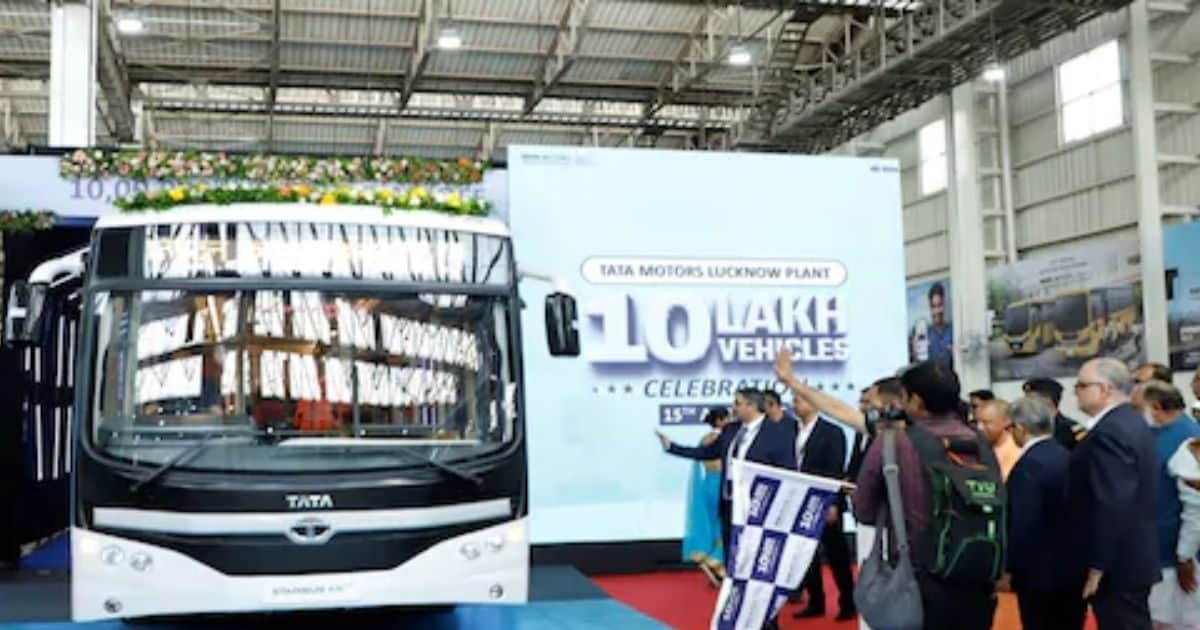
The company wrote a new chapter in its long journey on 15 April 2026, when Uttar Pradesh Chief Minister Yogi Adityanath rolled out the 10 lakhth commercial vehicle of Tata Motors from the Lucknow plant. Established in 1992, this 600-acre plant is a center for cargo, passenger, electric buses and green mobility solutions. This milestone reflects the company's 70+ years of hard work, innovation and contribution to India's economic progress.

About the Author

authoring

Ram Mohan MishraSenior Sub Editor

Ram Mohan Mishra, working as Senior Sub-Editor at News18 Hindi, is active in digital media since 2021 and is currently handling the Auto Desk. They provide car and bike related information in an easy, clear and reliable manner.read more


Source link

Tata Sierra EV will take the market by storm! Know launch details

Tata Sierra EV will take the market by storm! Know launch details

Tata Motors is going to give new excitement to the Indian market by bringing its iconic Sierra nameplate in electric avatar. The original Sierra was launched in 1991, which was India's first domestic SUV. Now its fully electric version is going to come in 2026, which will be positioned between Nexon EV and Curve EV and will be below Harrier EV.

The expected launch date of Tata Sierra EV is in the second quarter of 2026 i.e. between April to June 2026. Unofficial bookings have started at ₹11,000 token. The estimated price is ₹20 to ₹25 lakh ex-showroom, which will make it competitive in the mid-size electric SUV segment. Let us know how special is it going to be?

design details

Talking about design, Sierra EV Neo is made in retro style, which combines the boxy look of the old Sierra with a modern touch. Features like upright stance, flat bonnet, closed-off grille (EV specific), split LED headlamps, full-width LED light bar, flush door handles, muscular bumpers, squared wheel arches and dual-tone roof make it adventure ready.

The rear has wraparound windows and connected LED tail lamps. The panoramic glass roof (alpine style but safety compliant) makes it special. This is a five-door compact SUV, which is different from the three-door model. The design looks more premium and boxy than the Nexon and Curve, which gives an off-road feel.

Cabin and Comfort

The interior is very premium and spacious. Features include floating center console with triple-screen dashboard (12.3-inch digital cluster, central infotainment and passenger display), four-spoke steering wheel (illuminated Tata logo), dual-tone materials, ambient lighting and panoramic sunroof.

Front seats are powered and ventilated, second row ventilation, dual-zone climate control, wireless charger, premium audio system (with JBL or Dolby) and connected car tech (iRA app). The cabin is airy and minimalistic, with soft touch materials and wide glass panels creating a light and spacious feel.

Features and safety

The list of features is long. Level-2 Advanced Driver Assistance Systems (ADAS) include adaptive cruise control, lane departure warning, autonomous emergency braking, 360-degree camera, vehicle-to-load (V2L) and vehicle-to-vehicle (V2V) charging, over-the-air (OTA) updates, wireless Android Auto/Apple CarPlay, and multiple drive modes. Power tailgate, ambient lighting and connected tech make it as premium as the Harrier EV.

Tata never compromises on safety. Sierra EV will have 6-7 airbags as standard, ABS with EBD, ESC, hill hold assist, TPMS, electronic parking brake and strong structural integrity. There is a 360 camera and other assist features with Level-2 ADAS. A 5-star rating is expected in Bharat NCAP, which will give high safety scores like Tata's EV lineup.

Battery, Motor and Range

It is built on Acti.EV+ platform, which provides multi-layer skateboard design, fast charging and ADAS support. Battery options can be 55 kWh, 65 kWh or 75 kWh. Single motor RWD (about 167 hp) and dual motor AWD (up to 238 hp) configurations will be available. ARAI claimed range is 450-550 km (500+ km real world in some reports), which will be tested on MIDC cycle. Top speed will be up to 170 kmph and DC fast charging support (10-80% fast charge). LFP battery technology will provide long life and safety.

Source link

This indigenous car company is taking direct competition with Maruti! Mahindra beats Hyundai

This indigenous car company is taking direct competition with Maruti! Mahindra beats Hyundai

The demand for vehicles is increasing with time in the Indian car market. Same thing was seen last month also. On one hand, Maruti Suzuki has retained the number-1 crown as always. At the same time, Tata Motors has secured the second position, leading Mahindra and Hyundai.

Last month, a total of 4,20,523 new vehicles were sold in the market. This figure shows an impressive increase of 10.46 percent on an annual basis as compared to the total 3,80,689 units sold in February 2025. Let us take a look at the company-wise sales report.

Maruti Suzuki

Maruti is at number one in the list. A total of 1,61,000 units were sold last month. This figure represents a 'nil' increase of 0.13 per cent by only 209 units on an annual basis as against the total 1,60,791 units sold by Maruti in February 2025.

Tata Motors

Tata Motors is at second place in terms of sales. Last month they sold a total of 62,239 units. This figure shows an annual increase of 34 percent compared to the total 46,435 units sold in February 2025.

Mahindra

Mahindra is at number three in the list. It got a total of 60,018 new customers last month. This figure shows an impressive increase of 19 percent on an annual basis as compared to the total 50,420 units sold in February 2025.

Hyundai

Hyundai has reached fourth place in the list. A total of 52,407 units have been sold in February 2026. This figure represents an impressive increase of 9.81 percent year-on-year compared to the total 47,727 units of Hyundai sold in February 2025.

Toyota

On the basis of increase in sales, Toyota registered its name in the list of top-5 companies. A total of 30,737 units were sold last month. This figure shows an impressive increase of 16.37 percent on an annual basis compared to the total 26,414 units sold in February 2025.

Apart from the top-5 cars of February 2025 mentioned above, last month 27,610 units of Kia India, 6361 units of Skoda, 5629 units of Honda, 4857 units of MG, 3495 units of Renault, 2639 units of VW, 2230 units of Nissan, 950 units of Citroen and only 251 units of Jeep were sold.

Source link

People with how much salary should buy Tata Nexon, understand the calculation of down payment and EMI in minutes

People with how much salary should buy Tata Nexon, understand the calculation of down payment and EMI in minutes

Tata Motors is known for its economical, durable and safe cars in the Indian market. Tata Nexon comes at the top in this list. This 5-star safety rated SUV can be purchased at a starting ex-showroom price of only ₹ 7,31,890, which is equipped with all the essential features including 6 airbags.

If you are planning to buy a new Nexon recently, then this article is useful for you. Let us know how much on road price you will have to pay in Delhi if you buy Tata Nexon in the beginning of February 2026. Along with this we will also know about Down Payment and EMI.

Tata Nexon On Road Price and EMI

As told to you, the on road price of Tata Nexon is ₹ 7,31,890. If you buy it in Delhi, then you will have to pay RTO tax of about Rs 58,603 thousand and insurance amount of up to Rs 34,248. In this way the on-road price of the vehicle will become Rs 8,24,741.

If you give a down payment of Rs 1 lakh for this on-road price, then you will have to take a car loan for the remaining Rs 7,24,741. Let us assume that you get this loan for 5 years at an interest rate of 10 percent. In this way, you will be able to repay this loan in 60 months with an EMI of Rs 15,399.

How much interest will be charged?

After paying EMI of 5 years and down payment of Rs 1 lakh, you will pay a total interest of Rs 1,99,175 in 60 installments. In this way, after interest, the total price of your car will be Rs 10,23,916, which also includes the down payment of Rs 1 lakh.

Design and interior

Tata Nexon is known for its premium interior and excellent safety. Its exterior is modern and bold. At the front, sleek headlamps with LED DRLs, connected LED taillights, flared wheel arches, 16-inch alloy wheels and dual-tone color options are available. The rear looks wide and dynamic, which gives it a premium feel.

The interior is quite spacious and luxurious. The dashboard has features like 10.25-inch Harman touchscreen infotainment system, 10.25-inch digital instrument cluster, wireless Android Auto/Apple CarPlay, JBL 9-speaker sound system (in the top variant), ventilated front seats, panoramic sunroof, touch-based HVAC controls, leatherette upholstery and air purifier.

Features and safety

The company offers features like 360° camera, wireless charger, cruise control, keyless entry, push-button start, auto headlamps, rain-sensing wipers and ADAS (Advanced Driver Assistance System) along with 6 airbags as standard in all variants, ABS with EBD, ESP, TPMS, ISOFIX child seat mounts, 360° camera and blind spot monitor.

Engine and Mileage

Tata Nexon can be purchased in 1.2L turbo petrol (118-120 PS power, 170 Nm torque), 1.5L turbo diesel (113-115 PS power, 260 Nm torque) and CNG options. Transmission options include 5/6-speed MT, 6-speed AMT and 7-speed DCT. Its maximum claimed mileage is 24.08 KMPL for diesel.

Important information: The On Road Price and EMI details mentioned above are as per Delhi. The price figure may increase or decrease due to change of city, dealership, RTO and insurance company. Apart from this, getting a car loan at a good interest rate depends on your monthly income and credit score.

If you earn 50-60 thousand rupees per month and are not repaying any loan at present, then you can easily buy it on EMI. To get a good deal, take quotations from different banks and also test drive the car thoroughly before buying it.

Source link

627 KM range, 540° camera and 7 airbags! This family EV is getting a discount of Rs 1.5 lakh

627 KM range, 540° camera and 7 airbags! This family EV is getting a discount of Rs 1.5 lakh

Tata Harrier EV has been launched recently. It comes in the list of popular electric SUVs of the country. If you are planning to buy this electric car in the coming days, then now is the best opportunity. Actually, Tata Motors is offering huge discounts on this premium offering.

The company has said that those buying Tata Harrier EV in February 2026 will get a total discount of up to Rs 1,50,000. This discount is available on both MY2025 and MY2026 models of Harrier EV. Let us tell you that its starting ex-showroom price is ₹ 21.49 lakh, which goes up to ₹ 30.24 lakh for the top variant. Let's take a look at its design, interior, features, battery, motor and range details.

interior detail

Its interior is quite luxurious and modern. The cabin has leatherette seats with dual-tone gray and white color scheme, which gives a comfortable and premium feel. The front seats are ventilated, the driver's seat is 6-way power adjustable with memory function. Features like Boss Mode, Panoramic Sunroof, Multi-Color Ambient Lighting, Touch-Based Climate Control and Wireless Phone Charger make it more attractive. For infotainment, there is a 14.5-inch (or 14.53-inch) Samsung Neo QLED touchscreen, which is a segment-first.

It has wireless Android Auto and Apple CarPlay, in-built navigation, OTA updates and Tata's iRA connected car services. Also, the 10-speaker JBL audio system with Dolby Atmos gives theater-like sound. 10.25-inch digital instrument cluster and HD rear view mirror are also provided. Space is quite good, being a 5 seater, rear passengers get ample leg room and head room. Boot space is 502 litres, which increases to 999 liters when folded.

Features and safety

Harrier EV is full of features. It has advanced features like 540-degree surround camera (with transparent mode), summon mode, e-valet, automated parking, vehicle-to-load (V2L) and vehicle-to-vehicle (V2V) charging, 65W fast charger port, digital key and ultra glide suspension. The floating touchscreen in the interior and the 4-spoke steering wheel with illuminated logo is also the center of attraction.

Tata's focus on safety is strongest. It comes with BNCAP 5-star rating ready body structure. Standard features include 6 or 7 airbags (depending on variant), ABS with EBD, ESP with i-VBAC, electronic parking brake, hill hold and hill descent control. There are Level 2 ADAS features like adaptive cruise control, lane keep assist, automatic emergency braking etc. A 360-degree camera, tire pressure monitoring and a built-in dashcam also add to the safety.

Battery, Motor and Range

Harrier EV has two battery options – 65 kWh and 75 kWh LFP (Lithium Iron Phosphate) battery pack. The ARAI certified range with the 75 kWh battery is 622-627 km, while the 65 kWh battery has a range of around 538 km. In real world it can easily travel up to 400-500 km. The motor setup consists of a permanent magnet synchronous motor at the rear in RWD (rear-wheel drive) producing 238 PS (175 kW) of power and 315 Nm of torque.

QWD (all-wheel drive) gets 158 PS induction motor at the front and 238 PS at the rear, totaling 390 bhp (about 396 PS) power and 504 Nm torque. 0-100 kmph can be achieved in just 6.3 seconds and the top speed is 180 kmph. Fast charging takes 250 km range in 15 minutes on a 120 kW DC charger or 25 minutes for 20-80%. AC charging at 7.2 kW takes 10.7 hours from 10-100%. The company is also giving lifetime battery warranty on it.

Source link

Nexon and Punch made Tata Motors have fun! Beat Mahindra on the basis of strong sales

Nexon and Punch made Tata Motors have fun! Beat Mahindra on the basis of strong sales

Tata Motors is continuously strengthening its position within the Indian auto market. The company has released the sales report for the first month of the year 2026. Tata has recorded total sales of 71,066 units in the domestic and international markets, which represents an impressive growth of 47.1% as compared to 48,316 units in January 2025.

Sales in the domestic passenger vehicle (PV) segment stood at 70,222 units, which also includes electric vehicles (EV). This figure is 46.1 percent more than the 48,076 units sold in the same month last year. PV sales in international trade (IB) reached 844 units, representing an increase of 251.7% from 240 units. Overall, the EV segment (domestic + iB) sold 9,052 units, up 72.7% from 5,240 units in January 2025.

Nexon and Punch shine!

This success of Tata Motors is based on the strong demand for SUV and EV models. Tata Nexon retained the title of the company's Best Selling Car with sales of 23,000 units. Whereas, 19,000 units of Tata Punch have been sold. Punch has crossed the 7 lakh units mark in just 4 years and 3 months, while Tiago has also joined the club of 7 lakh total sales. The company has also recently increased the production of Sierra model.

Tata Motors sold 1.71 lakh units in the third quarter of FY26, which is a growth of 22.3%. In this way, Tata Motors has become the second largest passenger vehicle manufacturer in the country, leaving behind Hyundai and Mahindra. The company continues to shine in the EV segment. They have electric cars ranging from Tiago EV to Tata Curvv EV.

What did the company say?
Tata Motors MD and CEO Shailesh Chandra said that double-digit growth is expected in 2026, this figure can be achieved mainly by focusing on SUVs and EVs. Tata Motors, part of the $180 billion Tata Group, is a leader in design, safety and performance. The company is leading India in the EV revolution with an emphasis on zero emissions and connected mobility.

Source link

Tata Motors PV sales up 22% to 1.71 lakh units in Q3FY26

Tata Motors PV sales up 22% to 1.71 lakh units in Q3FY26

  • Tata Motors Passenger Vehicles reported 22.3 per cent year-on-year growth in sales in Q3FY26, driven by strong SUV demand and nearly 50 per cent growth in EV volumes.

Tata Motors Passenger Vehicles registered 22.3 per cent year-on-year growth in Q3FY26.

View personalized offers

check offer icon check offers

Tata Motors Passenger Vehicles Ltd reported 22.3 per cent year-on-year growth in passenger vehicle sales in Q3FY26, supported by strong demand for SUVs and electric vehicles. Total domestic and international PV sales during the quarter stood at 171,013 units, compared to 139,829 units in Q3FY25.

Domestic and export performance

Domestic passenger vehicle sales grew 20.9 per cent year-on-year to 168,616 units in Q3FY26. The company's international business, though small in volume, grew sharply to 2,397 units from 405 units in the year-ago quarter.

Also read: New ultra variants of Tata Safari and Harrier Petrol explained

Increase in sales of electric vehicles

Electric vehicle sales, including domestic and overseas markets, grew 49.5 per cent year-on-year to 24,103 units during the quarter. EV volume in December 2025 grew by 24.2 percent to 6,906 units.

Record quarter and model-wise highlights

Managing Director and CEO Shailesh Chandra said, “CY25 saw steady progress in the PV industry led by a growing preference for SUVs and accelerated adoption of clean, emission-friendly powertrains. For Tata Motors, it was the fifth consecutive year of record-breaking annual sales, with 587,218 units sold, including the highest-ever EV volume of 81,125 units in a calendar year.”

“For Tata Motors Passenger Vehicles, the momentum brought about by the implementation of GST 2.0 at the end of Q2FY26 picked up further momentum in Q3, resulting in several new records. We achieved our highest ever quarterly wholesales of 171,103 units, while retail sales/registrations crossed the coveted 200,000 units milestone for the first time. Nexon became India's best-selling car in October and November. led as car/SUV and is on track to maintain this leadership for Q3 FY26, with sales at ~64,000 units, and Tago “Delivered strong growth, cementing its preference among hatchback favourites,” he said.

December's pace and inventory position

December 2025 was another strong month for Tata Motors, with sales growing 22 percent year-on-year. Retail sales exceeded wholesale sales, reducing dealer inventory levels to about 18 days.

Also Read: Tata Punch EV facelift to launch in 2026; what do we expect

Powertrain strategy and approach

Tata Motors said its multi-powertrain strategy delivered strong results, with CNG volumes crossing 47,000 units and SUV volumes growing 18 per cent year-on-year. EV growth was supported by longer range, lifetime battery warranty and price parity with ICE models.

The company said deliveries of recently introduced products will begin in Q4FY26, with more launches planned to maintain the growth momentum.

Get information about upcoming cars in India, electric vehicles, upcoming bikes in India and cutting-edge technology that is changing the automotive landscape.

First publication date: 01 January 2026, 16:27 PM IST

Source link

Tata, Hyundai-Mahindra riding on the 'Vijayarath' of Sierra and Nexon, dust off the dust!

Tata, Hyundai-Mahindra riding on the 'Vijayarath' of Sierra and Nexon, dust off the dust!

Last Updated:

Tata Motors Becomes Second Largest Carmaker In Q3: Tata Motors has overtaken Hyundai and Mahindra to become the second largest passenger vehicle company in October-December 2025 due to strong sales of Nexon and Sierra. However, in terms of overall sales, Mahindra remained number 2 in 2025 and Tata and Hyundai remained behind it.

New Delhi. Tata Motors Passenger Vehicles Limited has become the country's second largest passenger vehicle manufacturer, leaving behind Hyundai Motor India and Mahindra & Mahindra in the October-December quarter. This achievement has been achieved due to the strong demand for the Nexon compact SUV and the initial sales of the recently launched Sierra. This information has come out from the vehicle registration data of the government.

vehicle portal statistics
According to data from the vehicle portal of the Ministry of Road Transport and Highways, Tata Motors registered 1.89 lakh passenger vehicles in the third quarter of FY 2026. In the same period, Mahindra registered 1.80 lakh units and Hyundai 1.70 lakh units. Tata Motors remained at second position in December 2025 also, due to which the company's growth continued in the second half of the year.

India's third largest passenger vehicle company
Tata Motors remained India's third largest passenger vehicle manufacturer throughout the calendar year 2025. During this period, Maruti Suzuki and Mahindra stood first and second respectively. Tata registered 5.92 lakh units in the year, while Mahindra registered 6.07 lakh units and Maruti maintained its leadership.

Great performance by Tata
Tata's performance was much better in the second half of 2025, with the Nexon securing the title of India's best-selling passenger vehicle in October and November. Continuous demand for Nexon in petrol, diesel and electric variants increased the company's overall sales. Apart from this, the company also benefited from the early sales of the Sierra SUV, which is slated to be re-launched in the market in late 2025.

Strong sale in December
According to vehicle portal data, Tata Motors sold 51,963 units in December 2025, while Hyundai recorded 48,312 and Mahindra 47,493 units. Tata's better supplies, large portfolio of SUVs and stable performance of electric vehicles strengthened the company's growth in the quarter. The company is planning to further increase its reach among consumers by launching new models in 2026. This will include refreshed versions of existing models as well as new names like Avinya. Many electric powertrain options will also be offered.

homeauto

Tata, Hyundai-Mahindra riding on the 'Vijayarath' of Sierra and Nexon, dust off the dust!

Source link

Tata kept its promise! Tata Sierra SUV gifted to the world-winning women's cricket team

Tata kept its promise! Tata Sierra SUV gifted to the world-winning women's cricket team

New Delhi. Tata Motors Passenger Vehicles has gifted the first units of the new Tata Sierra SUV to the Indian women's cricket team. As per the earlier announcement, the company has gifted this SUV as a tribute to the team that wins the 2025 World Cup. This felicitation ceremony was held in Mumbai, where every team member was given a new Sierra. Through this initiative, Tata Motors celebrated the achievements of the players at the global level.

Price starts from Rs 11.49 lakh
While the Sierra SUV has been gifted to the Indian women's cricket team, general customers and enthusiasts can buy this model at a starting ex-showroom price of Rs 11.49 lakh.

strong features
If we talk about features, Tata Sierra comes with its signature boxy design, which is inspired by the old model but has been given modern styling. The SUV has an upright stance, with gloss-black detailing that connects the LED headlights and daytime running lights to the Tata logo and “Sierra” badges. Its bold front profile also includes a skid plate neatly fitted inside the bumper and dual fog lamps, giving the Sierra a perfect blend of classic and modern design.

luxurious interior
Talking about the interior, the cabin of Tata Sierra has been designed with premium and modern technology and comfort. There are three displays on the dashboard—one for the driver and two for infotainment—which makes content sharing easy. It has a four-spoke steering wheel taken from the Tata Curve, which has illuminated Tata logo and touch-sensitive controls. The interiors get a 12-speaker JBL audio system, the segment's first SonicShaft soundbar, dual-zone climate control, India's largest panoramic sunroof, wireless charging dock, rear sunshades and ventilated, powered front seats. Soft-touch materials and floating armrests add to the luxurious and modern look of the Sierra.

Multiple powertrain options
Tata Sierra will be offered in multiple powertrain options to suit different preferences. The petrol variant will get a new 1.5-litre, 4-cylinder direct-injection turbocharged engine, which generates 160 hp and 255 Nm torque, and is paired with a 6-speed automatic transmission (AISIN). A naturally aspirated variant is also available, which produces 106 hp and 145 Nm of torque, and runs on the Atkinson cycle for better efficiency. It can be bought with 6-speed manual or 7-speed dual-clutch automatic. The diesel variant will get Tata's well-known 1.5-litre engine, which produces 118 HP power, and will have the option of 6-speed manual (260 Nm) or 6-speed automatic (280 Nm) transmission.

Source link

Tata Sierra Vs Maruti Victoris: Whose anti-pinch feature is better, answer given by 'banana' test

Tata Sierra Vs Maruti Victoris: Whose anti-pinch feature is better, answer given by 'banana' test

Last Updated:

Tata Sierra Vs Maruti Suzuki Victoris: Tata Motors launched Sierra SUV in India for Rs 11.49 lakh, which has advanced features and safety systems. In India, its direct competition is with Maruti Suzuki. Meanwhile, the anti-pinch function of Maruti Victoris was compared with the anti-pinch function of Sierra and the video is going viral on social media.

New Delhi. Tata Motors has recently launched Sierra SUV in India, the starting price of which has been kept at Rs 11.49 lakh (ex-showroom). The legendary nameplate has been reintroduced in this new Sierra along with modern features. It has been provided with advanced technology and features, which have been designed keeping in mind today's buyers. Special attention has been paid to safety and many protective systems have been installed in the SUV. During the launch, Tata also showcased vehicle-to-vehicle crash tests, showcasing the Sierra's strong safety and positioning it as a future-ready, family-friendly SUV.

'Banana' test of electric tailgate
Many features have been provided in Tata Sierra SUV, which includes electric tailgate, which also has anti-pinch function. This system has been designed to increase convenience and safety, but incidents of its malfunction have also come to light in some online videos. Recently, a Maruti Arena dealer shared a fun reel in which the anti-pinch setup of the Sierra was compared to that of the Victoris, which sparked a light-hearted discussion about the reliability and performance of this feature.

View this post on Instagram


Source link