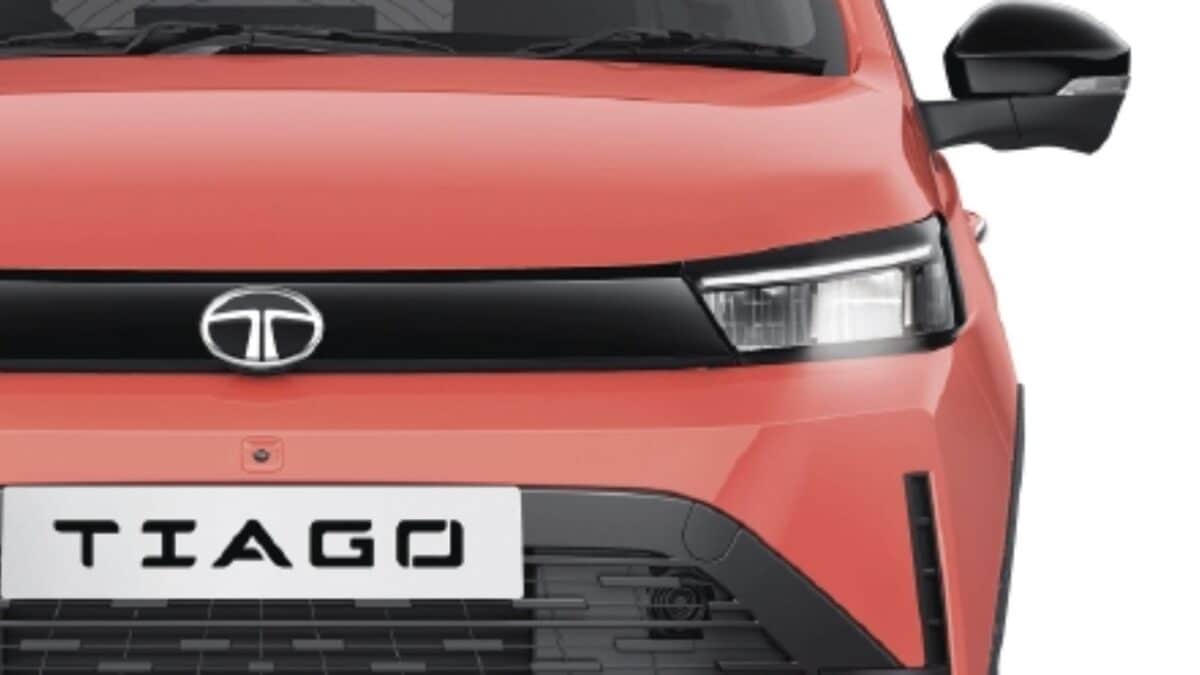
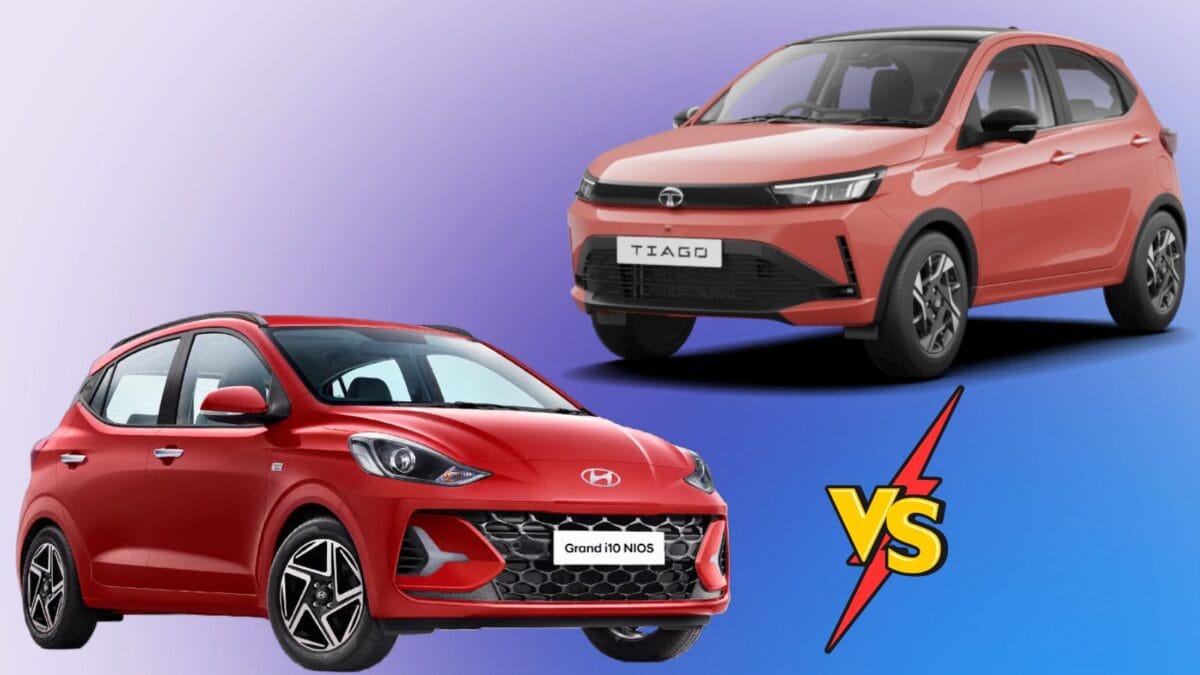
Grand i10 Nios pales in comparison to the new Tiago! Which is best in ₹6 lakh budget? Know

Grand i10 Nios pales in comparison to the new Tiago! Which is best in ₹6 lakh budget? Know

2026 Tata Tiago vs Hyundai Grand i10 Nios: Recently Tata Motors has updated its popular hatchback Tiago. It will give tough competition to Hyundai Grand i10 Nios in the budget hatchback segment. The starting ex-showroom price of Tiago is ₹4.70 lakh, while the price of Grand i10 Nios starts at ₹5.60 lakh.

Both the top variants go for around ₹8 lakh. The Tiago offers more value-for-money, while the Grand i10 Nios offers a premium feel and refined drive. Keeping in mind city driving, family use and fuel efficiency, both of these are good options. The new updates in safety and features of Tiago make it attractive. Let's take a look at the design, engine and mileage details of both.

Design and interior

The 2026 Tata Tiago has a new front-rear design, LED lights and a modern look. It looks strong and stylish. The Hyundai Grand i10 Nios sports a premium and young appeal with a bold stance, projector headlamps, LED DRLs and diamond-cut alloys. Nios looks a little more fashionable.

The cabin of Tiago is updated. It has been made practical and modern with 10.25 inch floating touchscreen, digital cluster, better materials, armrest and dual-tone theme. Nios comes with spacious feel, good fit-finish, honeycomb pattern dashboard and comfortable seats. Both have good space, but Nios has a slightly longer wheelbase.

Features and safety

Tiago gets 360° camera, wireless charging, large touchscreen, connected tech and AMT option. The Nios has a 20.25 cm touchscreen, smartphone connectivity, good infotainment and premium add-ons in some variants. Tiago has the edge in features.

Safety Tiago is strong. It gets 6 airbags as standard, 4-star Global NCAP (based on previous models), ABS, ESP, 360° camera etc. Nios also gets 6 airbags, ABS+EBD, ESC, TPMS. But it had a 2-star rating in the old Global NCAP test.

Engine and Mileage

Both hatchbacks have a 1.2 liter engine. Tiago's Revotron petrol engine produces 85 bhp power, which is capable of giving a mileage of 19-28 kmpl (ARAI) with CNG option. At the same time, Kappa engine of Nios is capable of giving mileage of up to 18-21 kmpl in petrol with 82 bhp power. Even better fuel efficiency is available in CNG.

Whom it makes sense to buy: Tiago seems to win with better value, safety and features. Whereas, Gran i10 Nios is good for those who like premium feel. Overall the new Tiago seems a more attractive choice. Before choosing either one, visit the dealership and take a test drive.
Source link

Tiago in safety, Celerio in mileage! Which car to choose in ₹5 lakh budget?

Tiago in safety, Celerio in mileage! Which car to choose in ₹5 lakh budget?

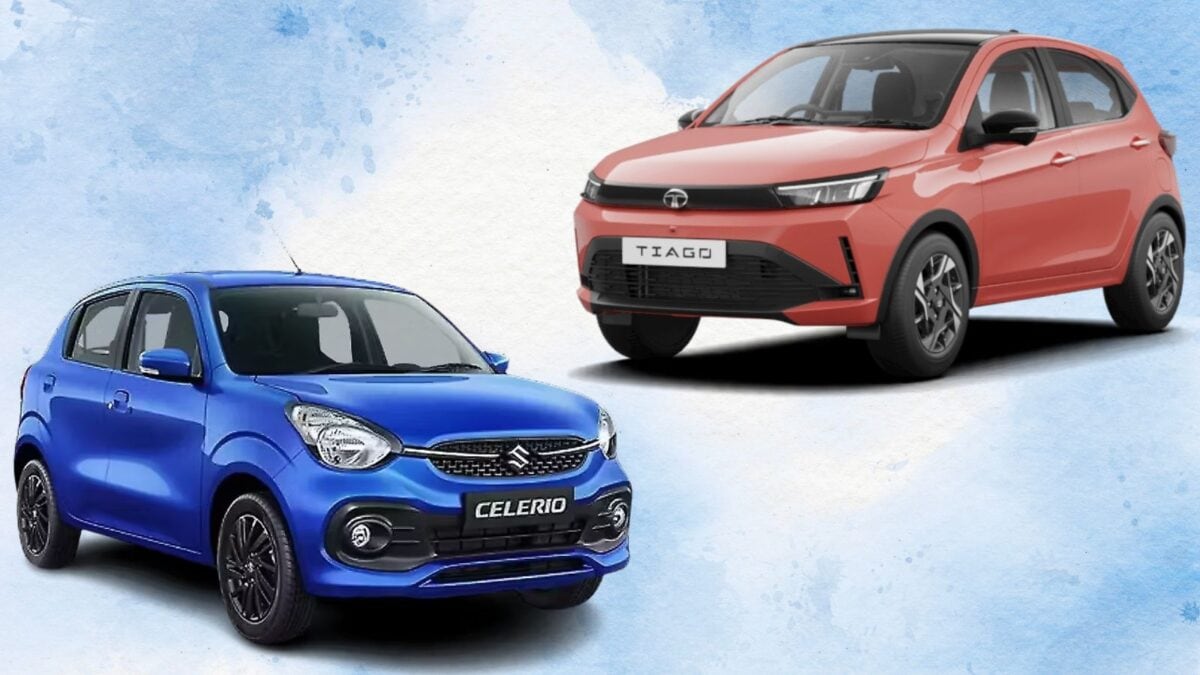
2026 Tata Tiago vs Maruti Celerio: Within the Indian car market, both Tata Tiago and Maruti Celerio give tough competition in the entry-level hatchback segment. Ex-showroom prices for the Tiago start at ₹4.69 lakh (going up to ₹8.55 lakh for the top variant), while the Celerio also starts at ₹4.70 lakh and goes up to ₹6.73 lakh.

Both are suitable for daily city commuting and short family trips, but Tiago emphasizes on premium feel and safety, while Celerio is stronger on mileage and low-maintenance. Recently Tiago has been upgraded. Let us know which one is better among these two hatchbacks?

Design and interior

The 2026 facelift of Tiago is more modern and bold. The new front-rear design, sharp LED lights and premium styling give it an upmarket look. The design of Celerio is simple, functional and city-friendly. The Tiago looks spacious, while the Celerio is compact and easy to park.

Talking about the interior, the cabin of Tiago feels more premium with better materials, good fit-finish and space. Infotainment, steering and seats have been improved in the 2026 update. The interior of the Celerio is simple and practical, but the plastics feel of budget quality. Both have 5-seater space, but Tiago seems more comfortable.

Features and safety

Tiago is ahead in this matter. It gets features like 7-inch touchscreen, Harman audio, reverse camera, auto AC, projector headlamps and connected car tech. The Celerio has basic features like a touchscreen, Android Auto/Apple CarPlay, power windows and steering-mounted controls, but no premium touches like the Tiago. Tiago seems to be more value for money.

Tiago's biggest strength lies here. It has a 4-star rating in Global NCAP, 6 airbags (even in the base), ABS, EBD and strong body structure. Celerio has standard 6 airbags and basic safety features. Tiago is a safe choice for the family.

Engine and Mileage

Tata Tiago has a 1.2L Revotron petrol engine (85 bhp), which is powerful and responsive. CNG option is also available. The Celerio's 1.0L K10C engine (66-67 bhp) is light and smooth. Celerio is ahead in mileage. 25-26 kmpl (ARAI) in petrol, 34+ km/kg in CNG. Whereas, Tiago gives a mileage of around 19-23 kmpl in petrol. Celerio is more economical in the city, while Tiago is better in highway and performance.

Our advice: If you want safety, premium feel and features then choose Tata Tiago. Maruti Celerio is better for pure mileage and low expenses. Both are reliable, but the 2026 Tata Tiago offers more value.

Source link

Tata Tiago or Maruti Swift? Which is the most profitable deal for ₹6 lakh?

Tata Tiago or Maruti Swift? Which is the most profitable deal for ₹6 lakh?

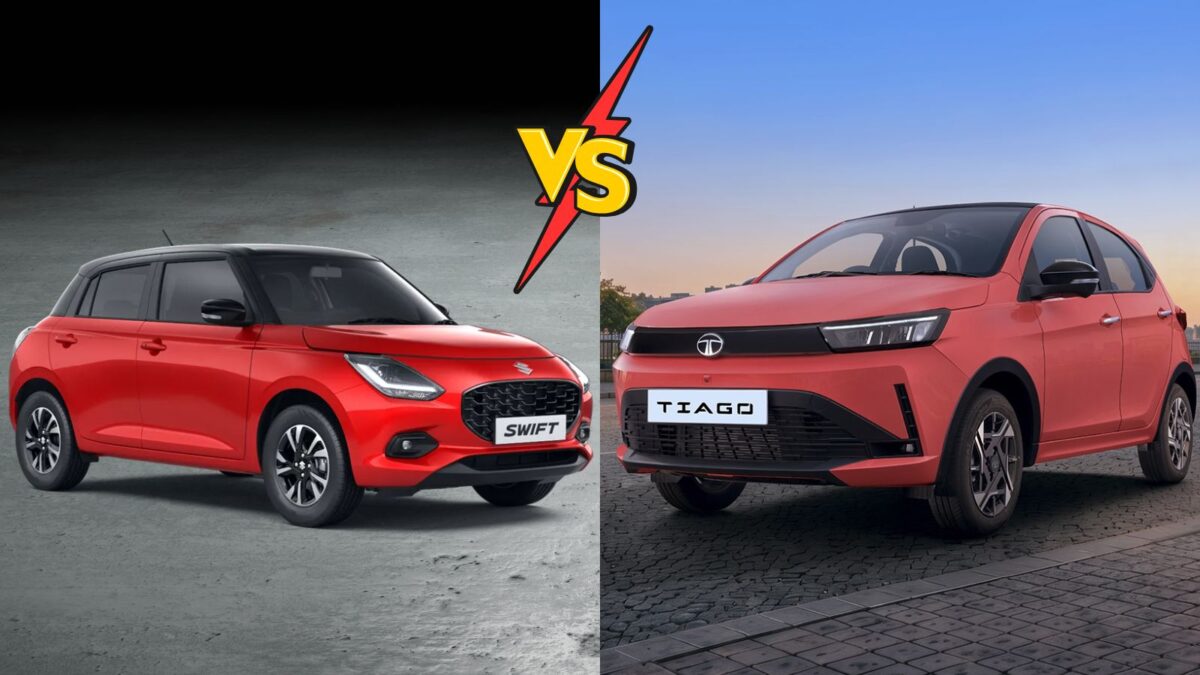
2026 Tata Tiago vs Maruti Swift: Currently, Tata Tiago and Maruti Swift remain the most popular entry-level hatchbacks in the Indian car market. Tiago recently got major updates with the facelift, while Swift is known for its reliability and mileage. The starting ex-showroom price of Tiago starts at ₹ 4.70 lakh, while the Swift can be purchased at a starting ex-showroom price of ₹ 5.79 lakh.

In the top variants, the price of Tiago goes up to ₹ 8.55 lakh and that of Swift goes up to ₹ 8.80 lakh. This comparison is for those buyers who want a safe, feature-packed and efficient car in a budget of ₹ 5-9 lakh. While Tiago emphasizes on value for money and safety, Swift offers better service network, resale value and running costs. Petrol and CNG options are available in both, which are ideal for city traffic. Let us know which of the two would be better to buy?

Design and interior

The 2026 facelift of Tiago is more modern and bold with a new front-rear design, LED lights and a stronger stance. It gives a premium and tough look. The Swift is sportier and youthful with sharp lines, a bold grille and a dynamic profile. The Swift looks slightly longer and wider, which adds to its road presence. The design of Tiago is more timeless and family-oriented.

Talking about the interior, the cabin of Tiago is upgraded. It has features like 10.25-inch touchscreen, digital cluster, better materials, space, 360° camera, wireless charging and rear AC vents. The Swift's interior is also refined with a good build and comfortable seats. But it may seem a bit simple in comparison to Tiago. Both are 5-seater, the Swift has slightly better boot space (265L) than the Tiago (242L).

Features and safety

Tata Tiago is ahead in this matter. It gets 6 airbags, standard 360° camera, wireless charging, connected tech and big infotainment. Swift also has good features like touchscreen, Android Auto/Apple CarPlay, but Tiago offers more premium tech in the top variants.

Tiago's strength is safety. 4-star Global NCAP rating, 6 airbags as standard, ESP, traction control and strong body. Swift also offers ABS, 6 airbags etc., but the safety credentials of Tiago are considered better. Tiago is a safe option for family use.

Engine and Mileage

Both have 1.2L petrol engines. Tiago's engine seems a bit powerful with 85 bhp and 113 Nm, whereas Swift's powertrain comes with 80 bhp and better refinement. The petrol mileage of Tiago goes up to 19-20 kmpl and that of Swift goes up to 24.8-25.75 kmpl. In CNG the mileage of Swift is 32.85 km/kg and the mileage of Tiago is 26.49 km/kg. The Swift is efficient both in the city and on the highway, while the Tiago feels powerful.

Source link

Spend less, save more! Which car to choose between Tiago iCNG and EV? know this

Spend less, save more! Which car to choose between Tiago iCNG and EV? know this

Last Updated:

Planning to buy Tata Tiago, but confused between iCNG, EV BaaS and EV Outright? We have made a complete calculation of all three options on the basis of price, running cost, long journeys, charging and savings. Know which Tiago will prove to be the most profitable deal as per your driving needs and budget.

news quickly

Zoom

Which is better between Tiago iCNG and Tiago.ev? Know

In the Indian automotive market, Tata Tiago has become the hatchback that offers the maximum fuel options to the customers. If you are looking for an eco-friendly and low running cost alternative to petrol, then you have two of the strongest contenders for the Tiago: Tiago iCNG and Tiago.ev (Electric).

After the recent 2026 facelift update, many major changes have been seen in both these vehicles, due to which choosing the right option has become even more interesting. Which Tiago will be best for you depends entirely on your daily driving, budget and the infrastructure (charging and CNG stations) in your area. Let's make it simple based on price and utility.

Price and Variants (Ex-Showroom)

Tata has kept the prices of Tiago range very competitive. Especially in the EV model, the option of BaaS has also been added, which has reduced its initial price considerably. See-

Model / Variant Starting Price (Ex-S) Note/Additional Expenses
Tiago iCNG Starting from ₹5.79 lakh Top variant ₹8.55 lakh
Tiago.ev (with BaaS) Starting from ₹4.69 lakh ₹2.6/KM Battery Rent
Tiago.ev (outright with battery) Starting from ₹6.99 lakh Top variant ₹9.99 lakh

Who is Tiago iCNG best for?

Tiago CNG may be better for those who have a lot of running and want to cover long distances without stopping. These factors make Tiago CNG special-

  • Long distance trips: If you frequently go out of town on weekends or plan long highway trips, CNG is most practical for you. You do not have to worry about stopping for charging (Range Anxiety).
  • Twin-cylinder technology and boot space: Tata's patented twin-cylinder technology allows the CNG cylinders to be fitted low, giving you a generous boot space for a hatchback.
  • Option of Automatic: In Tiago CNG you get the option of manual as well as AMT (automatic), which makes driving in heavy traffic very easy.
  • Infrastructure: If there are no long lines of CNG stations in your city or route, then it directly reduces your pocket money to half compared to petrol.

Who is Tiago.ev (with BaaS) best for?

Tiago EV is for those who want to enjoy an electric car in a low budget and whose daily running is limited (20-40 km). These factors make Tiago EV (BaaS) special-

  • Low starting budget: If your budget is around ₹5-6 lakh and you want to enjoy the silent and premium drive of an EV at the same price as a petrol car, then BaaS is the best. This has directly reduced the starting price of the vehicle by ₹2.30 lakh.
  • Limited Monthly Running: This model is perfect for those who run only 800 to 1000 kilometers in a month. Due to low running, the subscription charge of ₹ 2.6 per kilometer is not heavy on your pocket.
  • Easy Finance and Resale: Low initial cost reduces the loan amount, thereby reducing your monthly car EMI.

Who is Tiago.ev (outright with battery) best for?

This is suitable for those whose daily running is fixed and high (like 80-100 km daily) and who want to avoid repeated subscriptions. These factors make Tiago EV special-

  • Heavy urban commute (Daily High Mileage): If you live in big cities like Delhi-NCR, Mumbai or Bengaluru and the distance from home to office is very long, then an EV without subscription is better for you.
  • Highest savings in the long run: Even if you are paying ₹6.99 lakh or more initially, if your vehicle is going to drive more than 80,000 kms in 5-6 years, the outright model makes the most economic sense. After this you do not have to pay any additional fee per kilometer.
  • Charging facility at home: If you have your own personal parking space and charging point at home or office, you will not have to depend on any commercial charger outside and the running cost will be only ₹1 to ₹1.5 per kilometer.
  • Excellent performance and warranty: The 2026 updated model comes with a larger 24 kWh battery along with lifetime unlimited kilometer battery warranty, which leaves you completely worry-free.

About the Author

authoring

Ram Mohan MishraSenior Sub Editor

Ram Mohan Mishra, working as Senior Sub-Editor at News18 Hindi, is active in digital media since 2021 and is currently handling the Auto Desk. They provide car and bike related information in an easy, clear and reliable manner.read more


Source link