Hyundai Venue Executive Turbo launched at ₹9.99 lakh. Check what’s different

Hyundai Venue Executive Turbo launched at ₹9.99 lakh. Check what’s different

Hyundai Venue Executive Turbo launched at ₹9.99 lakh

The Executive Turbo trim comes with 16-inch dual-tone stylized wheels, dark chrome on the grille, roof rails, shark fin antenna and an ‘Executive’ emblem on the tailgate. The interior gets a front centre armrest with storage, 2-step rear reclining seats, 60:40 split seats and adjustable headrests for all passengers.

There is an 8-inch touchscreen infotainment system, which comes with wireless Android Auto and Apple CarPlay and voice recognition. There is also a digital cluster with a TFT MID for the driver.

For safety, there are 6 airbags, 3 point seatbelts with seat belt reminders, Electronic Stability Control, Vehicle Stability Management, Hill Assist Control, automatic headlamps, tyre pressure monitoring system etc.

Powering the new variant is the same 1.0-litre three-cylinder turbocharged petrol engine. It puts out 118 bhp of max power at 6,000 rpm and a peak torque output of 172 Nm at 1,500 to 4,000 rpm. The Executive Turbo is only available with a 6-speed manual transmission. The engine also comes with an Idle Start/Stop system to enhance fuel efficiency.

Also Read : Hyundai Ioniq 5 facelift EV debuts with new N Line variant: See what has changed

Hyundai has also updated the Venue S (O) Turbo variant with an electric sunroof and map lamps for the passenger and the driver. This variant is available with a 6-speed manual gearbox and a 7-speed dual-clutch automatic transmission.

The new variant and feature additions should help in attracting more customers. Commenting on the announcement, Mr. Tarun Garg, COO,Hyundai Motor India

Ltd. said, “Hyundai has always made India ‘Live the SUV Life’. As we move forward on a path towards democratizing SUVs, we are excited to announce the Executive Turbo variant of the Hyundai Venue. This variant is poised to offer an optimum combination of thrilling performance & enhanced convenience features for the value-conscious new-age buyer. We are confident that the addition of the Executive variant of Hyundai Venue will further fuel India’s love for SUVs.”

First Published Date: 05 Mar 2024, 14:36 PM IST

New Car Updates


Source link

BYD Seal Ground Clearance, Boot Space & Dimensions

BYD Seal Ground Clearance, Boot Space & Dimensions


This article will give you details about the dimensions, or length, width, height and wheelbase of the BYD Seal. We’ll also look at the ground clearance, boot space, fuel tank capacity and tyre size of the BYD Seal.

The BYD Seal is 4800mm long, 1875mm wide and 1460mm tall. Bigger exterior dimensions give a car a stronger road presence. The Seal has a 2920mm long wheelbase. A longer wheelbase makes the car more stable at high speeds and gives better legroom in the back seat, while a shorter wheelbase makes the car more agile.

BYD SEAL DIMENSIONS

Length

4800mm

Width

1875mm

Height

1460mm

Wheelbase

2920mm

Ground Clearance

145mm

Boot Space

450L

Wheel Size (Base)

225/55 R18

Wheel Size (Top)

235/45 R19

The BYD Seal has a fuel tank capacity of  litres and a boot space measuring 450 litres. The Seal has a ground clearance of 145mm. The tyre size of the BYD Seal base model is 225/55 R18 and the top model rides on 235/45 R19 tyres. Cars running on bigger wheels provide better handling and styling. However, these advantages come at the cost of efficiency. Having bigger wheels means more metal and more rotating mass. Therefore, it adversely impacts your drivability, performance and mileage.

What Are The Dimensions Of BYD Seal?

The BYD Seal is 4800mm long, 1875mm wide and 1460mm tall.

What Is The Length Of BYD Seal?

The BYD Seal is 4800mm long. Here’s the length of Seal in other units like centimetres, metres, feet and inches:

BYD Seal Length

Millimetres

4800mm

Centimetres

480cm

Metres

4.8m

Inches

188.98in

Feet

15.75ft

What IsThe Width Of BYD Seal?

The BYD Seal is 1875mm wide. Here’s the width of Seal in other units like centimetres, metres, feet and inches:

BYD Seal Width

Millimetres

1875mm

Centimetres

187.5cm

Metres

1.875m

Inches

73.82in

Feet

6.15ft

What Is The Height Of BYD Seal?

The BYD Seal is 1460mm tall. Here’s the height of Seal in other units like centimetres, metres, feet and inches:

BYD Seal Height

Millimetres

1460mm

Centimetres

146cm

Metres

1.46m

Inches

57.48in

Feet

4.79ft

What Is The Fuel Tank Capacity Of BYD Seal?

The BYD Seal is an electric vehicle which does not come with a traditional fuel tank.

What Is The Wheelbase Of BYD Seal?

The BYD Seal has a wheelbase measuring 2920mm. Here’s the wheelbase of Seal in other units like centimetres, metres, feet and inches:

BYD Seal Wheelbase

Millimetres

2920mm

Centimetres

292cm

Metres

2.92m

Inches

114.96in

Feet

9.58ft

What Is The Boot Space Of BYD Seal?

The BYD Seal has a boot space measuring 450 litres. Here’s the boot space information of Seal in other units like cubic centimetres, cubic metres, cubic inches and cubic feet:

BYD Seal Boot Space

Litres

450L

Cubic Centimetres

450000cm3

Cubic Metres

0.45m3

Cubic Inches

27460.8in3

Cubic Feet

15.89ft3

What Is The Ground Clearance Of BYD Seal?

The BYD Seal has a ground clearance of 145mm. Here’s the ground clearance of Seal in other units like centimetres, metres, feet and inches:

BYD Seal Ground Clearance

Millimetres

145mm

Centimetres

14.5cm

Metres

0.145m

Inches

5.71in

Feet

0.48ft

Also read: BYD Seal Launched – Prices Start At Rs. 41.0 Lakh (Ex-showroom) | V3Cars


Source link

BYD Seal EV to launch In India today: Check range, features price and specs

BYD Seal EV to launch In India today: Check range, features price and specs


  • BYD, the Chinese EV giant, is set to launch the Seal in India on March 5, marking its third electric car introduction in the country.
BYD is set to launch the Seal EV on March 5. The company commenced the bookings for the EV earlier in February. (REUTERS)

Chinese new energy vehicle manufacturer BYD is gearing up to launch its third offering for the Indian market today (March 5th) – the Seal EV. The company commenced the bookings for the electric vehicle (EV) earlier in February.

Expected to be priced between 55 lakh and 60 lakh, the Seal EV will serve as BYD’s new flagship electric vehicle in India, joining the e6 MPV and the Atto3 crossover SUV, which are currently priced at 29.15 lakh and 33.99 lakh respectively. Both the prices are ex-showroom.

The BYD Seal EV is expected to come in a single variant, featuring an 82.5kWh battery pack that delivers a claimed range of 570km (WLTP Cycle) on a single charge. The sedan will be equipped with a rear axle-mounted motor that generates 230bhp and 360Nm of peak torque, accelerating from zero to 100kmph in under six seconds.

BYD Seal: Visual and technical details

In terms of dimensions, the Seal EV measures 4,800 mm in length, 1,875 mm in width, and 1,460 mm in height. Inspired by the Ocean X concept showcased in 2021, the Seal boasts an aerodynamic body with a drag coefficient of just 0.21 cd. Its exterior features crystal LED headlamps with boomerang-shaped LED DRLs and full-width LED taillights.

Also Read : BYD Seal U revealed with 500 km of range, is brand’s first plug-in hybrid SUV

Inside, the Seal offers a premium look with soft-touch materials. The dashboard is highlighted by a 15.6-inch rotating touchscreen infotainment system, similar to the one found in the Atto 3. The digital driver display is 10.25 inches. Additional features include a head-up display and two wireless charging pads.

BYD Seal: Safety

Safety is a key focus for the Seal, which has received a 5-star safety rating in Euro NCAP crash tests. The vehicle scored 89 per cent for adult occupants, 87 per cent for child occupants, 82 per cent for Vulnerable Road Users, and 76 per cent in Safety Assist.

Safety features include dual front airbags, belt pre-tensioners, belt load limiters, side airbags, a centre airbag, ISOFIX child seat mounts, airbag cut-off switch, seatbelt reminders, Autonomous Emergency Braking, Lane Assist System, and Fatigue/Distraction Detection.

First Published Date: 04 Mar 2024, 10:13 AM IST


Source link

MG Hector gets new variants Shine Pro and Select Pro. Here’s what’s new

MG Hector gets new variants Shine Pro and Select Pro. Here’s what’s new


  • MG Motor India introduced new variants Shine Pro and Select Pro to Hector SUV.
MG Motor India introduced new variants Shine Pro and Select Pro to Hector SUV.

MG Motor India on Monday announced the launch of new variants for its Hector SUV. Christened Shine Pro and Select Pro, the new variants come with enhancing options for the Hector buyers. The MG Hector remains the brand’s most popular SUV so far since its arrival in India as the brand’s introductory model in June 2019. The newly launched Shine Pro variant is priced at 15,99,800 (ex-showroom) and the Select Pro is priced at 17,29,800 (ex-showroom).

The SAIC-owned British car marque has stated that the new variants of the car come with India’s largest portrait-oriented HD touchscreen infotainment system, measuring 14 inches. The Select Pro variant gets a dual-pane panoramic sunroof and the Shine Pro comes with a single-pane electric sunroof. Both variants come with a new dashboard design and a host of features including wireless Android Auto and Apple CarPlay connectivity. Other features include a wireless charger, and a fully digital instrument cluster with a 17.78 cm embedded LCD display, a push start/stop button, floating light turn indicators, LED headlamps, and LED-connected taillights among others.

Watch: MG Hector 2023: First Drive Review | HT Auto

Speaking on the launch of the new variants of the MG Hector SUV, Gaurav Gupta, Deputy Managing Director, MG Motor India, said the Hector has made a bold statement with its commanding presence and has redefined the SUV landscape with a multitude of tech features and superior driving comfort with ADAS Level 2 and Connected features. “Each subsequent variant has set new benchmarks in the segment by offering a harmonious blend of comfort, advanced technology, and ergonomic design. Using insights from our market research, industry analysis, and customer feedback, we have introduced these two latest variants, underscoring our commitment to providing an elevated driving experience, characterized by performance and power, catering to the discerning preferences of SUV enthusiasts,” he added.

Mg Hector is available in both petrol and diesel engine options. The engine choices for the SUV include a 1.5-litre turbocharged petrol motor available with both manual and CVT gearbox options and a 2.0-litre turbocharged diesel unit available with a manual gearbox.

First Published Date: 04 Mar 2024, 15:38 PM IST


Source link

Automotive Design School India, automobile design India, postgraduate, masters course

Automotive Design School India, automobile design India, postgraduate, masters course

Automotive Design School India, Automobile Design India


Will offer courses such as a Master’s in Automobile Design & Management, and refresher courses and inductions for CXOs.

India is set to get its first dedicated automobile design institute, the Indian School for Design of Automobiles (INDEA). Set to begin by late 2025, Xavier School of Management (XLRI) will set up the institute in collaboration with automotive expert Avik Chattopadhyay. It will be located at the XLRI Delhi-NCR campus.

About the Indian School for Design of Automobiles

The main highlight of the institute is the one-year Master’s degree in Automobile Design & Management. According to the institue’s management, the course will have a class size of 20-25 students from all graduate schools, who will be selected after a screening process. Apart from going into the nitty-gritty details of automotive design, students will also be trained in managing design teams. It is worth noting that the specifics of the curriculum are being finalised. 

Apart from the master’s degree, there will also be refresher courses for automotive designers who want to fine-tune their skills, and inductions for chief experience officers (CXOs). The management is also considering offering a course on automotive restoration.


About the management 

XLRI is one of the oldest business schools in the country, and together with their former student, Chattopadhyay, has decided ‘to bridge the gap for skilled designers who also understand the nuances of management and customer preferences, creating well-rounded professionals for the Indian automotive industry.

While Indian universities such as the National Institute of Design, the Indian Institute of Technology and the Indian Institute of Management offer some automotive-related programmes, there is no dedicated institute for automobile design in the country. 

When asked about the recruitment problems faced in the Indian automotive design industry, Avik Chattopadhyay said, “The gap lies in the fact that schools are not specialised. Automotive designing ends up being one of the 17 or 21 courses that they offer. So, the industry ends up spending a lot of time making them unlearn and learn once again.”

Chattopadhyay went on to state that students will want to join INDEA because they will be able to get hands-on experience and it’ll also be a gateway into the industry. 

Dr Fr K S Casimir, director of the XLRI Delhi-NCR campus, threw light on the importance of creativity not just in education, but also in the betterment of the country. He said, “Creativity, innovation and originality will ensure that a country leapfrogs to that superpower status. We want to imbue the entire management education with a kind of spirit where we are able to even blunder into creativity.”

Also see: 

Pratap Bose on careers in auto design, Indian design schools and more


Source link

Automakers hope to end FY24 on a positive note, shorter waiting periods ahead

Automakers hope to end FY24 on a positive note, shorter waiting periods ahead


  • Sales of passenger vehicles and two-wheelers posted a strong growth in February 2024.
Sales of passenger vehicles and two-wheelers posted a strong growth in February 2024.

The inordinately long waiting periods for passenger vehicles may be ending as the carmakers continued to produce a record number of vehicles in February 2024, building up stock in their respective dealerships, claimed a report by LiveMint. The increasing retail demand has been playing a crucial role for the automakers to push for higher vehicle production.

The report further stated that the carmakers in India are keeping a close watch on market demand, as inventories, which have already reached 26 days, are likely to pile up in the dealerships with the OEMs having been able to cater to the pending orders and incremental sales depending solely on the pace of fresh demand.

Passenger vehicles to see lower waiting period

The report quoted India’s largest carmaker Maruti Suzuki’s Senior Executive Director Shashank Srivastava revealing that the Indian passenger vehicle industry expects to finish the current financial year with an 8.1 per cent growth rate at 42 lakh units.

In February 2024, the passenger vehicle segment in India recorded wholesales of 373,177 units as opposed to 335,324 units registered in February 2023, marking an 11.3 per cent year-on-year growth, Srivastava said. However, the retail numbers are lower than the wholesale figure, estimated to be around 335,900 units registered last month as compared to 301,900 units recorded in February 2023, which also registered an 11.3 per cent growth. However, the difference between wholesale and retail numbers was about 40,000 units, which have been added to the stock, revealed the Maruti Suzuki top official.

He also said that the stock level is now at 300,000 units, which is around 25-26 days of stock in the industry. “So far since July of last year, we have seen pending bookings significantly come down and stock in the channel had come down. But not only is it pretty high again, the luxury for OEMs to push wholesale against retail is not there anymore,” Srivastava reportedly said, further adding, “We saw that rural growth cumulatively was at 11.7 per cent between April and February, higher than growth in urban sales at eight per cent.”

SUVs driving growth in PV segment

SUVs have been driving demand and sales in the Indian passenger vehicle market, just like the rest of the global market. In February 2024 as well, SUVs accounted for more than 50 per cent of all passenger vehicle sales in India. Industry experts reportedly expect the SUV segment to contribute more than half of total passenger vehicle sales in the current financial year.

The launch of a host of new models in the last few months, and improved availability on the back of the eased supply chain have helped the automakers to post a strong growth in this segment.

Two-wheelers clock strong double-digit growth

Major two-wheeler manufacturers such as Hero MotoCorp, TVS Motor Company and Bajaj Auto have clocked a strong double-digit growth in February 2024, compared to the same month a year ago. However, registrations of two-wheelers grew at a much slower pace in February this year, at 13.2 per cent, claimed the report. This resulted in inventory addition at showrooms. The report also claimed that in the premium segment, higher demand helped Royal Enfield post a wholesale growth of a mere five per cent, whereas retail registrations shrank 1.3 per cent last month, compared to February 2023.

In the electric two-wheeler segment, sales remained flat in February 2024, reflecting a stagnation in demand. The report claimed that registrations of high-speed electric two-wheelers were up by 24 per cent on a year-on-year basis in February 2024. This was due to the extra day in February because 2024 is a leap year. However, the registrations in this category were flat last month compared to January at 81,963 units.

First Published Date: 03 Mar 2024, 16:31 PM IST


Source link

Car interiors evolving into living rooms on wheels. Here’s how

Car interiors evolving into living rooms on wheels. Here’s how

Car interiors evolving into living rooms

Modern car interiors are increasingly becoming more digitalised and smart, connected and feature-packed, essentially becoming an extension of the cons

Modern car interiors are increasingly becoming more digitalised and smart, connected feature-packed, essentially becoming an extension of the consumers’ living room.

A decade ago, visitors to an auto show would have seen cars with dashboards loaded with dials, knobs and mechanical buttons. Interactive engagement between the occupants and the car’s onboard system was still a futuristic idea. However, a decade later, the situation has gone through a massive evolution. Human-machine interfaces (HMI) are now taking over the car interiors with the auto OEMs implementing smart digital interfaces built on advanced technology platforms. This gradual and drastic transformation from mechanical to electronic HMI controls promises to revolutionize the driving experience of drivers and vehicle users.

The mechanical interfaces in passenger vehicles are increasingly being replaced by voice controls, touch-sensitive panels, digital surfaces, wireless communications etc. With the advent of advanced technology-aided features that are focused on the convenience and comfort of the driver as well as driving safety, technologies such as windshields being used as heads-up displays, showing traffic updates, weather reports and other information may become a reality shortly. Overall, the HMI capabilities in modern cars are growing increasingly sophisticated, propelling massive growth in the segment of the in-car electronics market.

Also Read : Subscription vs ownership: Which model can boost India’s electric mobility dream?

what’s more interesting is that, with the rise of advanced technology-aided features ensuring better creature comforts, car interiors are increasingly becoming living rooms on wheels.


Car Updates

A living room on wheels

Modern consumers are engrossed with the convenience of smart devices and the internet of things, which have become ubiquitous. While the consumers enjoy the convenience and advantage of such devices, they expect the same experience in their cars. OEMs too are increasingly focusing on providing the same to their car buyers. This is a key reason behind the rapid growth of connected cars and so many in-car features.

In an attempt to meet the market and consumer expectations as well as to remain competitive, car manufacturers have started connecting cars to the internet and providing smart user interfaces in these vehicles like those available on consumers’ smart devices, in their homes and at work. This strategy ensures seamless connectivity across the consumers’ devices irrespective of the place. In a nutshell, a car interior is increasingly becoming an extension of a vehicle owner’s living room or office.

The rapid growth of capacitive user interfaces including touchscreen that can be customised for various functions like infotainment, navigation and comfort settings, instead of the traditional mechanical knobs and buttons simply testify to this shift of consumer focus.

Flexibility of design

The growth of use in capacitive user interfaces has brought a revolution in car interior design as well, ensuring maximum physical comfort through ergonomic layout. This strategy is resulting in the contemporary cars’ interiors becoming sleek with cutting-edge aesthetics, even in the lower price categories.

The use of digitalized and sleeker HMI is maximising not only physical comfort for the vehicle occupants but offering greater design flexibility to the manufacturers as well. Modern cars are increasingly focusing on spacious interiors to ensure better creature comfort, while at the same time offering enriched experiences with features such as wireless communication, superior lighting and sound systems, internet or cloud connectivity etc.

First Published Date: 03 Mar 2024, 13:18 PM IST


Source link

2024 F1 Bahrain GP results: Verstappen wins ahead of Perez, Sainz

2024 F1 Bahrain GP results: Verstappen wins ahead of Perez, Sainz

Sainz pulled off some spirited overtakes to finish third for Ferrari.

The 2024 F1 season opener in Bahrain proved one thing – that reigning world champion Max Verstappen still remains the driver to beat. The Red Bull driver cruised to victory, 22 seconds clear of teammate Sergio Perez. Carlos Sainz defeated his Ferrari teammate Charles Leclerc to secure the final spot on the podium.

  1. Verstappen wins, 22.457 secs ahead of Perez
  2. Sainz P3, Leclerc P4 for Ferrari

Verstappen takes dominant Bahrain GP

Starting from pole position, Verstappen held the lead into Turn 1 and there was no looking back throughout the 57-lap race. It was complete domination out at front – he pitted both times with sufficient gaps, crossed the chequered flag over 22 seconds clear of Perez and even secured a bonus point for setting the fastest lap.

“I think today went even better than expected. I think the car was really nice to drive, on every [tyre] compound I think we had a lot of pace. It was just super enjoyable to drive today, we really stayed out of trouble and it’s a great start to the year – it couldn’t have been better,” said Verstappen.

Sainz beats Leclerc to P3

Sainz may be out of a drive for next year, with Lewis Hamilton moving to Ferrari in 2025. The news may just a fueled a fire, with the Spaniard pulling off feisty overtakes on teammate Leclerc to grab third place.

Leclerc struggled with tyre degradation and locked up on several occasions, complaining about a brake issue. However, he did pick off George Russell in the closing stages to finish fourth.

Over at Mercedes, both Russell and Hamilton encountered battery issues. Hamilton at one point even reported a broken seat.  As a result, Russell had to settle for fifth place, while Hamilton finished seventh.

Both McLaren drivers finished in the points, with Lando Norris separating the two Mercedes drivers in P6 and Oscar Piastri in P8. The last two points-scoring spots were taken by Aston Martin’s Fernando Alonso and Lance Stroll. The latter had to climb his way up the field after being spun around by Nico Hulkenberg on the opening lap.

F1 now heads to Jeddah for the Saudi Arabian GP on March 7-9. Just like Bahrain, the Saudi Arabia race will also be held on a Saturday.

2024 Bahrain GP results

2024 Bahrain GP results
Pos Driver Team
1 Max Verstappen Red Bull Racing
2 Sergio Perez Red Bull Racing
3 Carlos Sainz Ferrari
4 Charles Leclerc Ferrari
5 George Russell Mercedes
6 Lando Norris McLaren
7 Lewis Hamilton Mercedes
8 Oscar Piastri McLaren
9 Fernando Alonso Aston Martin
10 Lance Stroll Aston Martin
11 Zhou Guanyu Stake Sauber
12 Kevin Magnussen Haas
13 Daniel Ricciardo RB
14 Yuki Tsunoda RB
15 Alex Albon Williams
16 Nico Hulkenberg Haas
17 Esteban Ocon Alpine
18 Pierre Gasly Alpine
19 Valtteri Bottas Stake Sauber
20 Logan Sargeant Williams

Also see:

FanCode to stream F1 in India; packages start at Rs 49


Source link

How to book Hyundai Creta N Line? A step-by-step guide

How to book Hyundai Creta N Line? A step-by-step guide

How to book Hyundai Creta N Line-

By: HT Auto Desk
| Updated on: 02 Mar 2024, 18:08 PM

  • Upon launch on March 11, Creta will become the third model from Hyundai in India to also have an N Line version, after i20 and Venue.
Hyundai Creta N Line is based on the latest Creta that was launched early 2024 in the Indian car market.

Hyundai Creta N Line is all set for its official India launch on March 11. The Creta N Line from Hyundai will be the company’s third N Line model, after i20 and Venue. The N Line, essentially, refers to models that are sportier versions of the original model with several visual enhancements on the inside as well as outer body while having minor technical updates as well.

HT Auto has learnt that Hyundai Creta N Line will be offered in two trims – N8 and N10, and with only the 1.5-litre turbo petrol engine that was introduced in the 2024 Creta. This engine is paired with both a manual gearbox as well as a DCT unit. The Creta N Line colour options include three monotone shades – White, Black and Grey Matte, as well as three dual-tone hues – Blue with Black roof, Grey with Black roof and White with Black roof.

How to book a Hyundai Creta N Line?

Hyundai opened bookings for Creta N Line from Thursday onwards and there are two ways to reserve a unit. The first is by simply walking into any company-authorised dealership in the country and paying a reservation amount of 25,000 which is refundable if the booking is cancelled.


The other option is to make a booking online. An interested customer can follow the steps below:

  1. Log on to Hyundai Motor India’s Click2Buy online platform.
  2. Choose the model. In this particular case, it would be the Creta N Line. Next select the fuel type which in this case, would be petrol only.
  3. Next, select one from the eight available variants of Hyundai Creta N Line. Follow up by opting for the body colour option.
  4. Now comes the most important part about selecting the preferred dealership. For this, select your state, city and the dealer name. The dealer name, on obvious lines, usually is the one closest to your location.
  5. Click on ‘Proceed’ and complete the transaction for the ₹25,000 that is charged as the token booking amount.

Do note that there is a likely waiting period of six to eight weeks that is expected on delivery of Hyundai Creta N Line from the date of launch and then from the date of bookings.

First Published Date: 02 Mar 2024, 18:08 PM IST


Source link

TVS Motor Company’s sales grow by 33% in February 2024

TVS Motor Company’s sales grow by 33% in February 2024

TVS Motor Company’s sales grow by 33% in February 2024

By: HT Auto Desk
| Updated on: 02 Mar 2024, 18:08 PM

  • TVS sold 3,57,810 units of two-wherein February 2024
Image of TVS Raider used for representational purposes only.

TVS Motor Company has announced that they recorded monthly sales of 3,68,424 units in February 2024 with a growth of 33 per cent as against 2,76,150 units they sold in February 2023. The electric vehicle sales grew by 16 per cent as the sales units increased from 15,522 units in February 2023 to 17,959 units in February 2024.

The two-wheelers registered a growth of 34 per cent with sales increasing from 2,67,026 units in February 2023 to 3,57,810 units in February 2024. Domestic two-wheeler registered growth of 21 per cent with sales increasing from 2,21,402 units in February 2023 to 2,67,502 units in February 2024.

Motorcycles registered a growth of 46 per cent with sales increasing from 1,26,243 units in February 2023 to 1,84,023 units in February 2024. Scooter registered a growth of 26 per cent with sales increasing from 1,04,825 units in February 2023 to 1,32,152 units in February 2024.

The Company’s total exports grew by 85 percent, increasing from 53,405 units registered in February 2023 to 98,856 units in February 2024. Two-wheeler exports registered a growth of 98 percent with sales increasing from 45,624 units registered in February 2023 to 90,308 units in February 2024. Three-wheelers registered a growth of 16 percent, with sales increasing from 9,124 units in February 2023 to 10,614 units in February 2024.

TVS Motor Company is committed to investing ₹5,000 for the design, development and deployment of future technologies across products. The homegrown automaker is present in both the two and three-wheeler segments and the investment will be made in both these categories.

Also Read: TVS to invest ₹5,000 crore towards new technologies, focus on clean mobility

Speaking about the vehicle manufacturer’s commitment to invest ₹5,000 crore towards designing, developing, and deploying future technologies across products, TVS Motor Company’s Managing Director Sudarshan Venu said in a statement that the company’s core is engineering and research and development. “Our core is engineering and R&D, and this is driven by over 2,000 engineers backed by solid design and development capability. Our vision is to transform the quality of life of our customers, and redefine the future of mobility with technology, connectivity, and cutting-edge design,” he reportedly said.

First Published Date: 02 Mar 2024, 18:08 PM IST


Source link

Opinion: Maruti's upcoming hybrid tech is a masterstroke

Opinion: Maruti's upcoming hybrid tech is a masterstroke

Maruti’s upcoming hybrid tech is a masterstroke

A few days ago we broke the news of Maruti’s plans to introduce its series hybrid technology in India in more affordable offerings like the Fronx, next-gen Baleno and next-gen Swift, among others. And here’s why I think this technology is going to be a game changer in the truest sense. 

Series hybrid vehicles, also referred to as range-extenders or self-charging electric vehicles, work in a manner that’s similar to an electric vehicle (EV). The battery-powered electric motor directly drives the wheels, with the only difference being that the battery doesn’t need to be plugged in; instead the models are fitted with on-board generators to recharge the battery. This generator is run by a petrol engine. A point to note is that its petrol engine never drives the wheels directly.

Where things get really interesting is that according to the Department of Revenue, an EV “that runs solely on electrical energy derived from an external source or from electrical batteries” qualifies under the 5 percent GST bracket. 

Further, even the Central Motor Vehicles Rules (CMVR), 1989 (amended in 2002) defines an EV “as a vehicle intended for road use, powered exclusively by an electric motor whose traction energy is supplied exclusively by a traction battery installed in the vehicle”.

There’s no mention of tailpipe emissions having been referenced or considered as a factor to define an EV. Which could technically define Maruti’s upcoming range-extenders as EVs, thus qualifying them for the lower GST slab.

This could give these upcoming Marutis a significant price advantage over other ICE cars in the market, including strong hybrids. Not only are these likely to be incredibly efficient, but their on-board generators will eliminate range anxiety associated with EVs, which could make this tech ideal for our market, where charging infrastructure remains at a nascent stage. The question is, will Maruti Suzuki be able to reap the benefits of this grey area in the rulebook and convince authorities to levy a lower GST rate? We’ll know very soon.

Also see: 

Opinion: Buying a new car as an investment

Opinion: Is ADAS suitable for India?

Opinion: Why the Citroen C3 Aircross should be priced aggressively
Source link

WagonR, Baleno and Swift continue to power Maruti Suzuki through February

WagonR, Baleno and Swift continue to power Maruti Suzuki through February

Baleno and Swift continue to power Maruti Suzuki through February

  • Maruti Suzuki is currently preparing to launch the new-gen Swift in the Indian market.
Image used for representational purposes only. (Image courtesy: X/@HQ_DG_NCC)

India’s largest four-wheeler manufacturer, Maruti Suzuki India Limited, has announced sales figures for February. Maruti Suzuki sold a total of 1,97,471 units, which consists of domestic sales of 163,397 units, sales to other OEMs of 5,147 units and exports of 28,927 units.

The compact segment was the most popular as the brand sold 71,627 units in February 2024. It consists of vehicles like Baleno, Celerio, Dzire, Ignis, Swift, Tour S and WagonR. Then there were the utility vehicles, which consisted of Brezza, Ertiga, Fronx, Grand Vitara, Invicto, Jimny, S-Cross and XL6. The sales figures stood at 61,234 units. Ciaz and Eeco sold 481 and 12,147 units, respectively.

Affordable compact vehicles such as Alto and S-Presso are still very popular as the brand sold a combined 14,782 units of those. The rest of the sales numbers come from Super Carry, which is a light commercial vehicle and sales to other OEMs.

From April to February, the most popular models for Maruti Suzuki were WagonR, Baleno and Swift. SUVs accounted for 51.5 per cent of overall sales for Maruti Suzuki.

Also Read : Brezza, Grand Vitara, Fronx star in Maruti’s SUV rush in FY 2023-24

The brand is currently preparing to launch a new generation of Swift in the Indian market. The hatchback has already been revealed in Japan and will soon be making its way to Indian shores. The hatchback will not only get some major cosmetic upgrades but it would also get an all-new engine.

The new engine is a three-cylinder unit as compared to the four-cylinder unit that we currently get in the Indian market. Suzuki says that this change has been done in favour of more low-end torque and more fuel efficiency. In the global market, the new engine comes mated to a CVT automatic transmission. It is expected that the Indian market will still get a 5-speed manual gearbox and an AMT transmission.

First Published Date: 01 Mar 2024, 16:47 PM IST

Source link

Maruti Cars

Brezza, Grand Vitara, Fronx star in Maruti’s SUV rush in FY 2023-24

Brezza, Grand Vitara, Fronx star in Maruti’s SUV rush in FY 2023-24

Fronx star in Maruti’s SUV

  • Maruti Suzuki ended February as India’s second largest SUV manufacturer behind segment leader Mahindra and Mahindra.
Maruti Suzuki’s dominance in the SUV market has been buoyed by vehicles such as Fronx, Grand Vitara, Brezza and Jimny. The carmaker is currently close second to Mahindra in the SUV segment in terms of sales.

Maruti Suzuki continues to benefit from its sport utility vehicles (SUVs) as it remains one of the largest manufacturers in the segment for the Financial Year 2023-24. From April last year to February 2024, Maruti has sold more than four lakh SUVs, which include the likes of Brezza, Grand Vitara, Fronx, Jimny and S-Cross. Though the carmaker had briefly become India’s largest SUV manufacturer last year, the crown has been retaken by Mahindra and Mahindra, the maker of Scorpio-N, Thar and XUV700 among others. However, Maruti Suzuki plans to continue with its SUV offensive and aims to increase its sales in the coming days.

36 KM Mileage Car

From small and compact cars to small and compact SUVs – Maruti Suzuki’s shift towards the more popular body-type in passenger vehicle segment has been rapid. In the last two years, the carmaker has driven in as many as four models, including the Grand Vitara, Fronx and Jimny. Maruti Suzuki said that it has sold 4,04,114 units of sport utility vehicles in the ongoing financial year. However, it admitted that it is likely to fail in meeting estimates of selling around 4.50 lakh SUVs within the same fiscal.

In February, Maruti Suzuki delivered 41,256 units of SUVs. Brezza, Fronx and Grand Vitara contributed the bulk of the sales in the segment. Currently, Maruti Suzuki has a little more than 20 per cent market share. The Jimny, one of the most anticipated launches that took place last year, has not been as successful as some of its siblings. However, it managed to increase its sales to 514 last month from the low of 163 units in January this year.

Compared to its rival Mahindra and Mahindra, Maruti Suzuki ended February just short by nearly 1,200 SUVs. Mahindra sold 42,401 units last month, mostly through its popular Scorpio brand which is available in Scorpio-N and Scorpio Classic versions. Jimny’s sales performance could be one of the factors why Maruti Suzuki may not hit the 4.50-lakh unit sales in the segment by March-end. Its performance could also be the reason why Maruti is currently lagging behind Mahindra in terms of market share in the SUV segment.

First Published Date: 01 Mar 2024, 16:36 PM IST


Source link

Red Bull Soapbox race Hyderabad 2024, timing, schedule and team details

Red Bull Soapbox race Hyderabad 2024, timing, schedule and team details

Red Bull Soapbox race Hyderabad 2024


Third edition of the Red Bull Soapbox race to take place on March 3 in Hyderabad.

The Red Bull Soapbox race returns to India this Sunday after an eight year gap. The third edition of the event will be at Hyderabad on March 3, 2024, with the race starting at 5pm. Team registrations for the race had opened last year and ended on November 15, 2023.

  1. 12 teams will participate in this year’s event
  2. Judges include Harith Noah and few others

Red Bull Soapbox Race: What exactly is it?

As reported by us earlier, Red Bull describes its soapbox race as the “pinnacle of non-motor-racing”, in typical tongue-in-cheek manner. These races are global events held on mainly city courses with the same concept. 

Participants are local amateur entrants that need to build vehicles powered by gravity and leg muscles. The brakes and steering, however, need to be fully functional. The teams will have to build their racer, go to the top of a slope, and let gravity do its thing.

The event will be hosted by some of the popular comedians like Jordanian, Sahiba Bali, Rohan Joshi and Aaditya Kulshreshth among others.

Twelve teams are participating in this year’s event that will see six judges in total. These include Harith Noah, Tara Sachdev, Ankit Panth, Manpreet Singh, Lalremsiami and Ocean Sharma.

Also see:

Kush Maini stripped of Bahrain F2 pole

FanCode to stream F1 in India; packages start at Rs 49


Source link

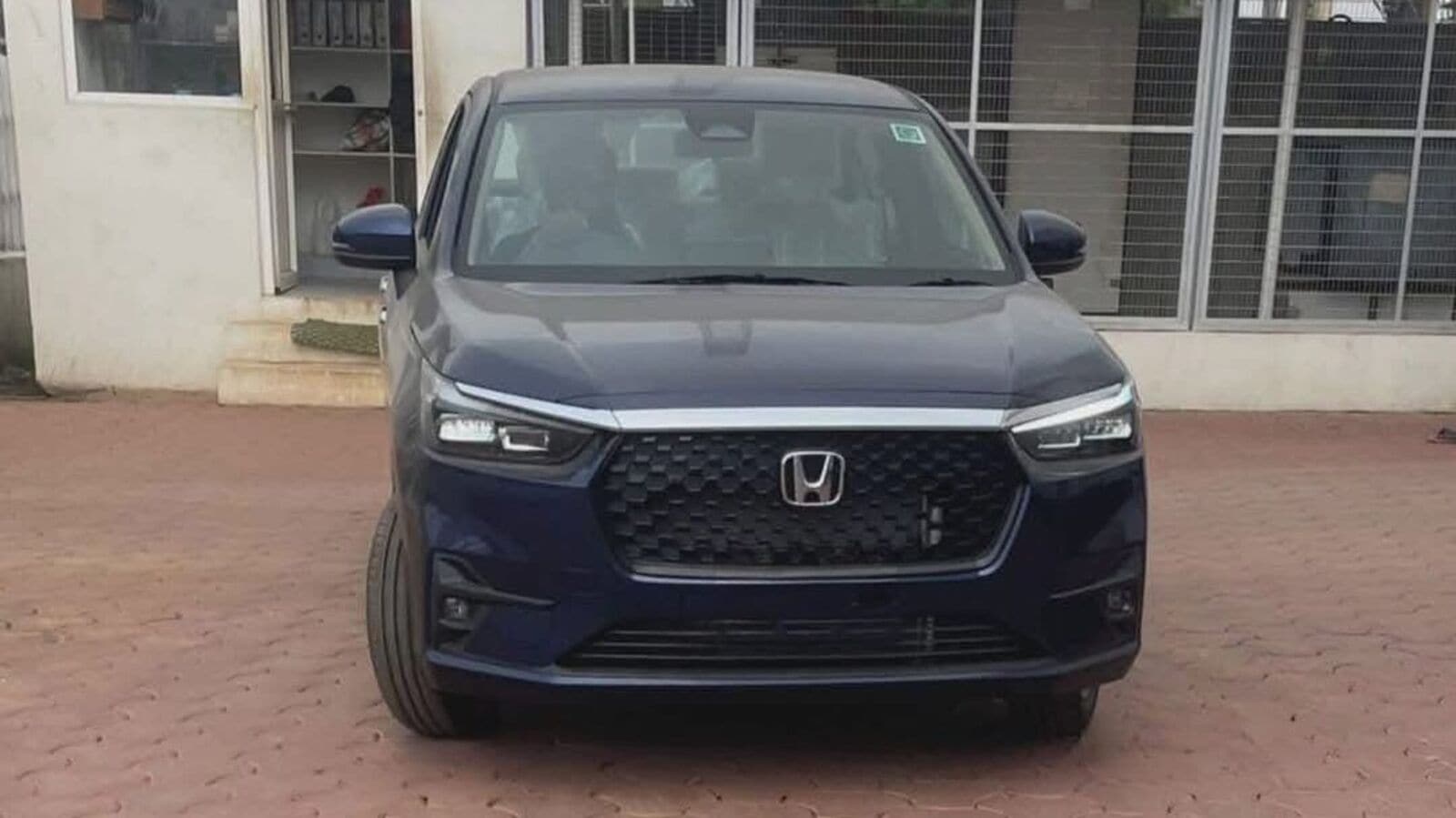
Honda Elevate now available through CSD stores. Check details

Honda Elevate now available through CSD stores. Check details

Honda Elevate now available through CSD stores

  • Honda Elevate is offered only with a petrol engine. It comes mated to a manual gearbox or an automatic transmission.

The Honda Elevate is offered in a single-engine option but with two transmission choices.

Honda has announced that they will be selling their Elevate SUV through Canteen Stores Department (CSD) across the country for the Indian Armed Forces. The Elevate is the third model from Honda to be sold through Canteen Stores Department as Honda is already selling the City and the Amaze.

Honda Elevate shares its underpinnings with the 5th Gen City. So, it is powered by a 1.5-litre, naturally aspirated petrol engine that produces 119 bhp of max power at 6,600 rpm and a peak torque output of 145 Nm at 4,300 rpm. It comes mated to a 6-speed manual gearbox or a CVT automatic transmission with 7-steps.

The fuel efficiency figure for the manual gearbox is 15.31 kmpl whereas the automatic transmission delivers 16.92 kmpl of fuel efficiency. The manufacturer will not sell the Elevate with a diesel engine. Instead, they will launch an all-electric version of the Elevate within the next two years.

The Elevate is currently one of the most affordable mid-size SUVs in the Indian market. It is priced between 11.58 lakh and 16.20 lakh. Both prices are ex-showroom. There are four variants on offer – SV, V, VX, and ZX. Apart from the SV variant, the automatic transmission is available in all variants.


Honda Elevate competes against the Hyundai Creta, Kia Seltos, Maruti Suzuki Grand Vitara, Toyota Urban Cruiser Hyryder, Citroen C3 Aircross, MG Astor, Skoda Kushaq and Volkswagen Taigun.

The Elevate comes standard with features such as LED projector headlamps with Daytime Running Lamps, multi-function steering wheel, push button to start/stop engine, power adjustable ORVMs, automatic climate control, rear AC vents, PM2.5 air filter and front armrest.

Also Read : Honda Drive to Discover: Elevating spirits in Sikkim and north West Bengal

The top-end variant is also equipped with Honda Sensing Technology which is essentially a suite of ADAS features. Honda offers Collision Mitigation Braking System, Adaptive Cruise Control, Lane Keeping Assist, Lead Car Departure System, Road Departure Mitigation and auto-dimming IRVM.

First Published Date: 29 Feb 2024, 16:59 PM IST


Source link

Tech giants and their automobile dream: Status report

Tech giants and their automobile dream: Status report

Tech giants and their automobile dream

In the last few years, from Sony to Huawei, Apple to Xiaomi; traditional technology giants have been making major headlines with their automotive vent

In the last few years, from Sony to Huawei, Apple to Xiaomi; traditional technology giants have been making major headlines with their automotive ventures throwing challenges to conventional auto OEMs.

The automobile industry around the world is going through a rapid and multi-dimensional transformation over the last few years. With the advent of new technologies including connectivity, electric propulsion technology, autonomous driving etc, the industry is witnessing a lot of changes. One such change is the emergence of conventional technology companies as automakers.

In the industry’s massive shift to electric vehicles, legacy automakers and mobility startups are not the only ones trying their luck with vehicles powered by electric propulsion systems. Several global technology companies have been bringing their respective electric vehicles. In the last few years, from Sony to Huawei, Apple to Xiaomi – traditional technology giants have made major headlines with their automotive ventures.

The technology giants’ association with the mobility industry is nothing new. However, to date, the technology companies used to be suppliers for auto manufacturers. But, in the last couple of years, they have evolved drastically and to become new-age mobility companies as well as automobile manufacturers.

However, things have not been a cakewalk for these tech giants in their desired path in the automotive world. Here is the status report about the present scenario of these technology companies’ automotive projects.

Apple

Despite promising a lot through its Project Titan, Apple met little success and the project finally reached a make-or-break point recently due to rising costs and delays. This finally compelled the company to call off its fully autonomous electric car project after a decade since it started sometime in 2014, which was dubbed as one of the most ambitious projects in the history of the tech giant known for its products like iPhone, iPad and Macbook.

Xiaomi

While a tech company on the east side of the Pacific Ocean failed to materialise its dream of making an autonomous electric car, on the west side of the ocean, Chinese tech giant Xiaomi stunned the world with its first EV SU7. A suave all-electric sedan, the Xiaomi SU7 was showcased in the flesh at the Mobile World Congress 2024 in Barcelona. Xiaomi announced the development of the SU7 in 2023. It gets power from a 101 kWh battery pack capable of providing more than 800 kilometres of range on a single charge, significantly higher than the majority of EVs currently on sale.

Sony

Sony joined hands with Honda to make its dream of building an electric car true. Christened Afeela, the tech brand has already showcased a real prototype at the CES 2023. which will spawn the production model in 2026. Before being renamed Afeela, the electric sedan was previously christened Vision S. Sony has claimed that this upcoming EV will not only be a car but will act as a testbed for a wide range of futuristic advanced technologies including autonomous driving and other digital systems.

Huawei

Another Chinese tech giant Huawei too has shown its seriousness about smart electric cars. The company had set up an EV brand called Aito in 2021 in association with Seres Group. Under the Aito brand, already three electric cars have been launched: M5, M7 and M9; while a fourth model M8 is under development. Besides that, Huawei also rolled out two new vehicles in China, including its first electric sedan, the Luxeed S7, which is designed to take on Tesla models. Just a few weeks ago, Huawei set up a separate smart car unit, in another stride forward in the Chinese tech giant’s automotive ambitions.

First Published Date: 29 Feb 2024, 15:07 PM IST


Source link

Tech giants and their automobile dream

FanCode F1 streaming in India, price, subscription plans

FanCode F1 streaming in India, price, subscription plans

FanCode F1 streaming in India

F1 fans in India now have a more affordable alternative to F1TV Pro.

Indian sports streaming platform FanCode has acquired the rights to stream F1 in India. This is part of a two-year deal that will cover the 2024 and 2025 seasons.

F1’s broadcasting agreement with Sport Sports, which also included streaming on Hotstar, expired at the end of the 2022 season, leaving the sport without any TV broadcast in India. Instead, F1TV was made available for a hefty annual fee of Rs 2,999. The new deal with FanCode now gives Indian fans a far more affordable alternative.

FanCode to stream F1, F2 and F3

FanCode will stream all F1 practice, qualifying and sprint events, along with the main Grands Prix. Along with this, the platform will also stream F2 and F3 here.

“I am delighted to announce that fans in India will be able to watch F1 on FanCode for the next two seasons. We have found a strong broadcast partner in them with expert knowledge on how we can best serve our 60 million existing fans and reach new audiences in India. Together, we will take our combined expertise to produce premium content that showcases the sporting spectacle that is F1.,” said Ian Holmes, director of media rights and content creation at Formula 1.

FanCode F1 price, subscription plans

FanCode offers multiple packages for those interested. There first of these is a race weekend pass, covering all the sessions for one round, for a price of Rs 49. The subscription for one full season costs Rs 599.

There’s also an unlimited live stream pass (covering other sports like cricket, football and more) for Rs 999 annually and Rs 199 monthly.

All the races will be streamed with Sky Sports F1 commentary.

Where can you watch FanCode?

Subscribers can watch the races live on FanCode’s website, as well their Android and iOS apps. For TV streaming, apps are available for Android TV, JioTV and Amazon Fire TV.

Streaming is allowed on four devices simultaneously per account.

Is F1TV still available in India?

F1TV is still available in India for the time being, but subscription prices for that are a lot more costly at USD 29.99 (about Rs 2,480) for a year or $3.99 (approximately Rs 330) for a month.

But that subscription does come with the added benefit of live timing data, watching F1’s pre- and post-race analysis, all driver onboard cameras and even archival content.

Also see:

Where to watch 2024 MotoGP in India

Source link

Hyundai India aims 100% renewable energy usage by 2025 to reach RE100 benchmark

Hyundai India aims 100% renewable energy usage by 2025 to reach RE100 benchmark

Hyundai India aims 100% renewable energy

Hyundai plans to invest ₹32,000 crore for expansion of car and SUV platforms including electric vehicle range and charging infrastructure development

Hyundai plans to invest ₹32,000 crore for expansion of car and SUV platforms including electric vehicle range and charging infrastructure development.

Hyundai Motor India aims to reach the RE100 benchmark by 2025. To achieve this target, the South Korean auto giant aims to use 100 per cent renewable energy for its operations in India. The carmaker has announced in an official release that it has been strategically purchasing green electricity from the Indian Energy Exchange to increase its RE portfolio of 64 per cent. The OEM also claimed that it has conserved energy equivalent to about 19,200 tonnes of oil through key energy management projects till now in India.

Hyundai also claimed that it has achieved 80 per cent water neutrality by utilising recycled RO water and rainwater from harvesting ponds with a capacity of 350,000 tonnes. Besides that, the auto OEM claimed to have reduced hazardous waste by 19.4 per cent and non-hazardous waste by 14.3 per cent over the last five years.

Also Read : Hyundai set to bid farewell to petrol-powered N models. Check details

The development and launch of electric vehicles and the setting up of EV charging infrastructure are also a key part of the brand’s strategy to reach carbon neutrality. For this, the OEM has announced to invest more than 32,000 crores in the next 10 years. This investment will be made for the expansion of car and SUV platforms including electric vehicle range and charging infrastructure development.

Speaking on Hyundai’s aim to reach the RE100 benchmark, Gopala Krishnan CS, Chief Manufacturing Officer at HMIL said that the automaker’s operations are driven by a strong sense of responsibility towards the environment and communities. “Our operations are driven by a strong sense of responsibility towards the environment and our communities. We view this proactive role as an opportunity to contribute to long-term sustainable development goals. Our sustainability initiatives are focused towards carbon neutrality and energy transition, circularity, clean tech products and services, operational eco-efficiency, and natural capital conservation. Our ‘Integrated Solutions to Climate Change’ initiative aims for carbon neutrality by 2045, with a sustainable operating system for future generations,” he added.

First Published Date: 28 Feb 2024, 16:49 PM IST


Source link

Carbima.in

BYD Seal EV bookings open, will launch on 5th March

BYD Seal EV bookings open, will launch on 5th March

BYD Seal EV bookings open

Table of Contents

  • BYD Seal has a claimed range of up to 570 km on a single charge.
BYD Seal EV was also showcased at Auto Expo 2023.

BYD India has announced that they have started accepting bookings for their upcoming electric vehicle, Seal. The electric sedan will be unveiled officially to the Indian market on March 5th. Customers who book the BYD Seal by April 30, 2024, stand a chance of receiving a complimentary UEFA match ticket and round-trip flight ticket from India to the match city.

It is expected that the Seal will be the new flagship electric vehicle for BYD. As of now, the brand only sells the e6 MPV and the Atto3 crossover SUV. They are priced at 29.15 lakh and 33.99 lakh respectively. Both prices are ex-showroom.

BYD Seal: Range, battery and performance

BYD Seal is offered with single and dual-motor options. Depending on the version that the customer opts for, the electric sedan will be able to produce 308 bhp and 360 Nm or 522 bhp and 670 Nm. The rear-wheel drive powertrain has a WLTP-claimed range of 570 km whereas the dual-motor setup has a WLTP-claimed range of 520 km. These specs are for the larger 82.5 kWh battery pack.

There will also be a smaller 61.4 kWh battery pack that has a WLTP-claimed range of 460 km. The electric motor puts out 201 bhp of max power and a peak torque output of 310 Nm. The smaller battery pack can be DC fast-charged up to speeds of 110 kW whereas the larger battery pack supports 150 kW.

Also Read : BYD Seal EV details revealed ahead of launch: Check range, features and specs

BYD Seal: Safety rating

The Seal is one of the safest electric vehicles that a customer can buy in the Indian market. It passed the Euro NCAP crash test with 5-star safety rating last year. The Seal EV scored 89 per cent for adult occupants, 87 per cent for child occupants, 82 per cent for Vulnerable Road Users and 76 per cent in Safety Assist. The Seal EV that was tested was equipped with dual front airbags, belt pre-tensioners, belt load limiters, side airbags and a centre airbag. There were also ISOFIX child seat mounts, airbag cut-off switch and seatbelt reminders. Other features on offer are Autonomous Emergency Braking, Lane Assist System and Fatigue / Distraction Detection.

First Published Date: 28 Feb 2024, 15:57 PM IST


Source link

McLaren Artura price in India, Artura Spider, petrol-hybrid supercar

McLaren Artura price in India, Artura Spider, petrol-hybrid supercar

McLaren Artura price in India


McLaren’s first PHEV drop-top gets upgrades that are destined for coupé; weighs just 1,457kg.

McLaren has revealed the Artura Spider as its first drop-top hybrid, ushering in more power and a raft of chassis and aerodynamic upgrades that will also be used on an updated version of the coupé.

  1. Artura Spider claimed to be the lightest convertible supercar in its class
  2. 3.0-litre V6 engine makes 19hp more
  3. o-100kph time matches the coupe’s 3.0 seconds

McLaren Artura Spider weighs only 1,457kg

The Artura Spider is claimed to be the lightest convertible supercar in its class “by as much as 83kg”, with its 1457kg kerb weight giving it the edge over the Maserati MC20 Cielo and Ferrari 296 GTS.

Extensive use of lightweight materials – such as carbonfibre for the folding hard-top – means it is just 62kg heavier than the current coupé version. The Ricardo-developed 120-degree 3.0-litre V6 petrol engine has been carried over but an ECU remap – which can be performed on the existing McLaren Artura – has given it a 19hp boost to 604hp.

Together with the 94hp axial flux motor in the gearbox, the total system output is now 699hp. That gives a power-to-weight ratio of 480hp per tonne and a 0-100kph time that matches the existing coupé’s, at 3.0sec. McLaren Artura Spider top speed is 330kph but McLaren chief engineer Andy Beale said the firm is “keen to do a chunk more than that”. The engine drives through an enhanced version of the eight-speed dual-clutch automatic gearbox, which now shifts 25 percent faster. It is also equipped with a new function that allows the driver to spin the rear tyres up when planting the throttle from a standstill.

The Artura’s ‘emotional’ credentials are enhanced here by the addition of an electrically folding hard-top – framed in carbonfibre or with an electrochromic glass panel.

The roof can be operated at vehicle speeds of up to 50kph and deploys in as little as eight seconds, making it one of the fastest-folding of any convertible on sale. Because the roof mechanism sits where the engine cooling vent is on the coupé, air is extracted via new ducts. Particular attention has been paid to aerodynamics, with an 8mm foil on the windscreen smoothing airflow over the cabin. International deliveries of the Artura Spider and updated coupé will begin in the middle of this year, hot on the heels of the lightly refreshed GT and new 750S, which replaces the 720S.

McLaren India line-up

In our country, the Woking-based supercar maker retails the GT, the Artura and 750S. The Artura Spider is also expected to arrive in India, though it’s launch timeline is yet unknown.

Also see:


Source link