Tata Punch EV Electric Battery-Motor Specs, Driving Range

Tata Punch EV Electric Battery-Motor Specs, Driving Range

This article will provide you with the information about the battery-motor specs like power, torque, battery capacity, driving range and mileage details of the Tata Punch EV electric.

Considering the body style, size and price range of the Tata Punch EV, it competes with the following cars:

  • Tata Tiago EV
  • Citroen eC3
  • MG Comet EV

What Are The Battery-Motor Specs Of Tata Punch EV?

The battery and motor specifications of the Tata Punch EV are as follows:

TATA PUNCH EV

BATTERY-MOTOR SPECIFICATIONS

Battery Capacity

25.0kWh

Power

82PS

Torque

114Nm

Transmission

Automatic

Range (Claimed)

315km

Charging Time (w/ 7.4kW AC)

7.5 hours

Charging Time (w/ 50kW DC)

59min

Mileage

12.60kmpu

What Is The Mileage Or Fuel Efficiency Of Tata Punch EV?

The Tata Punch EV has a mileage of 12.60kmpu. This means that Tata Punch EV will cover 12.6km for each unit or kWh of electricity.

Read more about how you can get the best mileage or fuel efficiency from your car: 10 Tips To Get The Best Mileage From Your Petrol, Diesel Or CNG Car


Source link

Kia Sonet Ground Clearance, Boot Space & Dimensions

Kia Sonet Ground Clearance, Boot Space & Dimensions

This article will give you details about the dimensions, or length, width, height and wheelbase of the Kia Sonet. We’ll also look at the ground clearance, boot space, fuel tank capacity and tyre size of the Kia Sonet.

The Kia Sonet is 3995mm long, 1790mm wide and 1642mm tall. Bigger exterior dimensions give a car a stronger road presence. The Sonet has a 2500mm long wheelbase. A longer wheelbase makes the car more stable at high speeds and gives better legroom in the back seat, while a shorter wheelbase makes the car more agile.

KIA SONET DIMENSIONS

Length

3995mm

Width

1790mm

Height

1642mm

Wheelbase

2500mm

Ground Clearance

205mm

Boot Space

392L

Fuel Tank Capacity

45L

Wheel Size (Base)

195/65 R15

Wheel Size (Top)

215/60 R16

The Kia Sonet has a fuel tank capacity of 45 litres and a boot space measuring 392 litres. The Sonet has a ground clearance of 205mm. The tyre size of the Kia Sonet base model is 195/65 R15 and the top model rides on 215/60 R16 tyres. Cars running on bigger wheels provide better handling and styling. However, these advantages come at the cost of efficiency. Having bigger wheels means more metal and more rotating mass. Therefore, it adversely impacts your drivability, performance and mileage.

What Are The Dimensions Of Kia Sonet?

The Kia Sonet is 3995mm long, 1790mm wide and 1642mm tall.

What Is The Length Of Kia Sonet?

The Kia Sonet is 3995mm long. Here’s the length of Sonet in other units like centimetres, metres, feet and inches:

Kia Sonet Length

Millimetres

3995mm

Centimetres

399.5cm

Metres

3.995m

Inches

157.28in

Feet

13.11ft

What Is The Width Of Kia Sonet?

The Kia Sonet is 1790mm wide. Here’s the width of Sonet in other units like centimetres, metres, feet and inches:

Kia Sonet Width

Millimetres

1790mm

Centimetres

179cm

Metres

1.79m

Inches

70.47in

Feet

5.87ft

What Is The Height Of Kia Sonet?

The Kia Sonet is 1642mm tall. Here’s the height of Sonet in other units like centimetres, metres, feet and inches:

Kia Sonet Height

Millimetres

1642mm

Centimetres

164.2cm

Metres

1.642m

Inches

64.65in

Feet

5.39ft

What Is The Fuel Tank Capacity Of Kia Sonet?

The Kia Sonet has a fuel tank capacity of 45 litres.

What Is The Wheelbase Of Kia Sonet?

The Kia Sonet has a wheelbase measuring 2500mm. Here’s the wheelbase of Sonet in other units like centimetres, metres, feet and inches:

Kia Sonet Wheelbase

Millimetres

2500mm

Centimetres

250cm

Metres

2.5m

Inches

98.43in

Feet

8.2ft

What Is The Boot Space Of Kia Sonet?

The Kia Sonet has a boot space measuring 392 litres. Here’s the boot space information of Sonet in other units like cubic centimetres, cubic metres, cubic inches and cubic feet:

Kia Sonet Boot Space

Litres

392L

Cubic Centimetres

392000cm3

Cubic Metres

0.392m3

Cubic Inches

23921.41in3

Cubic Feet

13.84ft3

What Is The Ground Clearance Of Kia Sonet?

The Kia Sonet has a ground clearance of 205mm. Here’s the ground clearance of Sonet in other units like centimetres, metres, feet and inches:

Kia Sonet Ground Clearance

Millimetres

205mm

Centimetres

20.5cm

Metres

0.205m

Inches

8.07in

Feet

0.67ft


Source link

Hyundai Creta Petrol, Diesel Engine Specs, Mileage, Power, Torque

Hyundai Creta Petrol, Diesel Engine Specs, Mileage, Power, Torque

This article will give you a perspective of the engine specs like, displacement, power, torque, mileage and transmission details of the Hyundai Creta petrol and diesel engines.

Considering the body style, size and price range of the Hyundai Creta, it competes with the following cars:

  • Toyota Urban Cruiser Hyryder

What Are The Engine Specs Of Hyundai Creta?

HYUNDAI CRETA | ENGINE SPECS

Engine

1.5L Normal Petrol

1.5L Turbo Petrol

1.5L Turbo Diesel

Displacement

1497cc

1482cc

1493cc

Cylinder

4

4

4

Power

115PS @ 6300rpm

160PS @ 5500rpm

116PS @ 4000rpm

Torque

144Nm @ 4500rpm

253Nm @ 1500 – 3500rpm

250Nm @ 1500 – 2750rpm

Manual

6-speed manual

NA

6-speed manual

Automatic

CVT

7-speed DCT

6-speed TC

The Hyundai Creta only gets a 1.5L normal petrol engine, which is available with a 6-speed manual and CVT transmission. The Creta’s normal petrol engine makes 115PS of power at 6300rpm and 144Nm of torque at 4500rpm.

What Is The Mileage Or Fuel Efficiency Of Hyundai Creta?

HYUNDAI CRETA | MILEAGE OR FUEL EFFICIENCY

Engine

1.5L Normal Petrol

1.5L Turbo Petrol

1.5L Turbo Diesel

Manual FE

17.40kmpl

NA

21.80kmpl

Automatic FE

17.70kmpl

18.40kmpl

19.10kmpl

The Hyundai Creta 1.5L normal petrol engine has a mileage of 17.40kmpl with the 6-speed manual and 17.70kmpl with the CVT transmission. 

The 1.5L turbo petrol engine has a mileage of 18.40kmpl with the 7-speed DCT transmission.

The 1.5L turbo diesel engine has a mileage of 21.80kmpl with the 6-speed manual and 19.10kmpl with the 6-speed TC transmission.

Read more about how you can get the best mileage or fuel efficiency from your car:

10 Tips To Get The Best Mileage From Your Petrol, Diesel Or CNG Car


Source link

Kia Sonet Diesel, Petrol Engine Specs, Mileage, Power, Torque

Kia Sonet Diesel, Petrol Engine Specs, Mileage, Power, Torque

This article will give you a perspective of the engine specs like, displacement, power, torque, mileage and transmission details of the Kia Sonet diesel and petrol engines.

Considering the body style, size and price range of the Kia Sonet, it competes with the following cars:

What Are The Engine Specs Of Kia Sonet?

KIA SONET | ENGINE SPECS

Engine

1.0L Turbo Petrol

1.2L Normal Petrol

1.5L Turbo Diesel

Displacement

998cc

1197cc

1493cc

Cylinder

3

4

4

Power

120PS @ 6000rpm

83PS @ 6000rpm

116PS @ 4000rpm

Power:Weight

103.99PS/t

76.78PS/t

94.08PS/t

Torque

172Nm @ 1500 – 4000rpm

115Nm @ 4200rpm

250Nm @ 1500 – 2750rpm

Torque:Weight

149.05Nm/t

106.38Nm/t

202.76Nm/t

Manual

6-speed manual

5-speed manual

6-speed manual

Automatic

7-speed DCT

NA

6-speed TC

The Kia Sonet is available with 3 engine options: 1.0L turbo petrol,1.2L normal petrol and 1.5L turbo diesel.

The 1.0L turbo petrol engine makes 120 of power at 6000rpm and 172Nm of torque between 1500 and 4000rpm. This engine is available with a 6-speed manual and a 7-speed DCT transmission.

The 1.2L normal petrol engine churns out 83PS of power at 6000rpm and 115Nm of torque at 4200rpm. The 1.2L normal petrol engine gets a 5-speed manual transmission.

The 1.5L turbo diesel engine is rated to deliver 116PS of power at 4000rpm and 250Nm of torque between 1500 and 2750rpm. You can get the 1.5L turbo diesel engine of the Sonet with a 6-speed manual or a 6-speed TC transmission.

What Is The Mileage Or Fuel Efficiency Of Kia Sonet?

KIA SONET | MILEAGE OR FUEL EFFICIENCY

Engine

1.0L Turbo Petrol

1.2L Normal Petrol

1.5L Turbo Diesel

Manual FE

18.70kmpl

18.83kmpl

22.30kmpl

Automatic FE

19.20kmpl

NA

18.60kmpl

The Kia Sonet 1.0L turbo petrol engine has a mileage of 18.70kmpl with the 6-speed manual and 19.20kmpl with the 7-speed DCT transmission.

The 1.2L normal petrol engine has a mileage of 18.83kmpl with the 5-speed manual transmission.

The 1.5L turbo diesel engine has a mileage of 22.30kmpl with the 6-speed manual and 18.60kmpl with the 6-speed TC transmission.

Read more about how you can get the best mileage or fuel efficiency from your car:

10 Tips To Get The Best Mileage From Your Petrol, Diesel Or CNG Car


Source link

Actor Emraan Hashmi adds the Rolls-Royce Ghost Black Badge to his garage

Actor Emraan Hashmi adds the Rolls-Royce Ghost Black Badge to his garage

  • The images show the Rolls-Royce Ghost Black Badge in all its glory while Emraan Hashmi was spotted taking a ride in his newest prized possession.
Actor Emraan Hashmi was seen in his new Rolls-Royce Ghost Black Badge at his residence recently (HT Auto)

Emraan Hashmi is celebrating his last movie release, Tiger 3, which has been a hit at the box office, and the actor certainly knows how to do it style. The actor was recently seen taking delivery of his new Rolls-Royce Ghost Black Badge adding the opulent luxury saloon to his garage. The Rolls-Royce Ghost Black Badge is as exclusive as they come in the exotic world with on-road prices stretching well over 12 crore.

The images show an all-black Rolls-Royce Ghost rolling into Hashmi’s residence while the actor was spotted taking a ride in his newest prized possession. Not many would know but Emraan has an affinity towards cars and has had the Lamborghini Huracan, Range Rover, Mercedes-Maybach S560 and more.

Also Read : Shah Rukh Khan splurges on Rolls-Royce Cullinan Black Badge worth crores

Emraan Hash, mi Rolls-Royce Ghost Black Badge
The Rolls Royce Ghost Black Badge shares its underpinnings with the new-gen Phantom VIII, while power comes from the 6.75-litre twin-turbo V12 engine (HT Auto)

The Rolls-Royce Ghost Black Badge though sits on top of the automotive pyramid. The Black Badge version adds a special paint option to the car, giving it a pristine look. Under the paintwork is a lightweight aluminium spaceframe architecture shared with the new-generation Phantom VIII. The styling remains instantly recognisable but the new-gen Ghost now gets sleeker headlamps with laser-light technology and C-shaped LED DRLs. The profile retains the sloping roofline while the rear sports a new bumper and LED taillights. The Black Badge adds carbon alloy composite wheels.

The cabin is equally opulent on the Ghost Black Badge with the special model adding Turchese Leather and Technical Carbon veneer. You continue to get the star headliner and the best of craftsmanship inside the car. Rolls-Royce uses about 100 kg of soundproofing material inside the Ghost, while a soft background noise was added to mitigate the complete silence.

Emraan Hashmi Rolls-Royce Ghost Black Badge
The new Rolls-Royce Ghost BB joins Hashmi’s garage that has had a number of exotics including the Lamborghini Huracan, Range Rover, Mercedes-Maybach and more (HT Auto)

Power on the Rolls-Royce Ghost Black Badge comes from the 6.75-litre, twin-turbocharged V12 engine tuned for 592 bhp and 900 Nm of peak torque. The Black Badge makes slightly more power and torque over the standard version with the torque kicking in from just 1,600 rpm onwards. This allows the Ghost BB to be quick despite its weight of around 2.5 tonnes. 0-100 kmph comes up in 4.8 seconds while the top speed is electronically limited to 205 kmph. The Ghost gets an automatic transmission with power going to all four wheels for better traction.

Interestingly, Emraan Hashmi is the second actor from the Yashraj Films Spy Universe to get his hands on a Rolls-Royce Black Badge. Previously, actor Shah Rukh Khan added the Rolls-Royce Cullinan Black Badge to his garage last year following the success of Pathaan.

First Published Date: 13 Jan 2024, 17:56 PM IST


Source link

Ford EcoSport 1.0-litre EcoBoost variants recalled in the US

Ford EcoSport 1.0-litre EcoBoost variants recalled in the US

  • The recall affects 137,790 units of the 2018-2022 Ford EcoSport and 2016-2018 Focus models with the 1.0-litre EcoBoost turbo petrol engine.
The recall affects the 2018-2022 Ford EcoSport and 2016-2018 Focus models powered by the 1.0-litre EcoBoost turbo petrol engine

Ford has issued a voluntary recall for the EcoSport subcompact SUV in the US, as per the documents filed by the National Highway Traffic Safety Administration (NHTSA). The recall affects 137,790 units of the 2018-2022 Ford EcoSport and 2016-2018 Focus models with the 1.0-litre EcoBoost turbo petrol engine. The NHTSA stated that the affected vehicles suffered from oil pressure issues due to a defective oil pump drive belt tensioner arm.

The issue is specific to the 1.0-litre EcoBoost variants of the Ford EcoSport and Focus models where the engine was paired with the 6F15 automatic transmission. The documents state that the belt tensioner arm may fracture because the retention caulk joint wasn’t robust enough to stand engine vibrations. This could end up with the tensioner separating from the backing plate and lead to the belt being degraded by loose teeth.

Also Read : Ford India rolls out last car from Chennai plant, a while EcoSport

The loose belt would then cause the loss of oil pressure, potentially causing damage and seizing the engine. The issue could lead to a loss in engine and braking power, and Ford said that it was aware of a crash due to this issue, which ended up injuring two people. Nevertheless, no fatalities were reported.

2018 Ford EcoSport Interior
The Ford EcoSport was discontinued in India and the US by mid-2022, soon after the automaker’s announced plans to end manufacturing in India

The recall is a part of the investigation by the NHTSA on about 250,000 EcoSports after reports of engine failure emerged in the 2018-2021 models. The EcoBoost engines were under the NHTSA’s scrutiny after 2022 when the US agency began investigations related to the Bronco in the US. About 700,000 Ford and Lincoln models were affected by the investigation powered by the 2.7-litre and 3.0-litre EcoBoost engines.

Also Read : Ford Endeavour design patented in India. Is it coming back?

At the moment, it’s unclear whether the issue is specific to the US-spec EcoSport or if it includes the India-spec models as well. We have reached out to Ford India seeking a statement and will update this piece as and when the company responds.

The Ford EcoSport was discontinued in India and the US by mid-2022 after the automaker decided to cease manufacturing in India. In related news, Ford has been contemplating its return to the country, which is said to be one of the reasons why the Tamil Nadu plant has not been sold yet. Ford’s Sanand facility was sold to Tata Motors last year. The company recently trademarked the new-generation Endeavour in India hinting at the SUV’s return, which could be a second inning for the American automaker.

First Published Date: 13 Jan 2024, 14:42 PM IST


Source link

Dakar 2023 Stage 6 results: Harith Noah in top 15; Hero 2nd overall

Dakar 2023 Stage 6 results: Harith Noah in top 15; Hero 2nd overall


Hero MotoSports’ Ross Branch is now second overall; Joan Barreda Bort out due to mechanical issues.

The 2024 Dakar Rally has reached the halfway mark after the end of the gruelling 48 Hour Chrono stage. Indian rider Harith Noah made some big gains in this stage and has broken into the top 15 for the first time.

Unfortunately, the stage also marked the end of Hero MotoSports rider Joan Barreda Bort’s Dakar 2024 campaign, with the Spanish rider out due to mechanical issues. The Indian squad now only has one rider in the running – Ross Branch, who is currently second overall.

  1. Branch just 51 secs behind leader Brabec
  2. Noah P13 overall
  3. Loeb wins Stage 6, while Al-Attiyah drops down order

Harith Noah breaks into Dakar top 15

Stage 6 marked the debut of the new 48H chrono stage, which required competitors to cover over 600km across two days. They had until 4pm on the first day to cover as much ground as possible before stopping at the closest break zone. Competitors then set off at 7am next day to complete the rest of the stage.

It’s been a challenging first half of the Dakar Rally for Harith Noah, but he’s on course to record his best-ever Dakar finish. He set the 12th best time in Stage 6 to leapfrog to 13th place in the overall ranking.

Noah’s 20th place result in 2021 was the best-ever ranking achieved by an Indian at Dakar. Despite spending most of last year recovering from two major injuries, Noah recently told Autocar India that he was aiming for a top 15 finish this time around.

Branch, Hero MotoSports P2 overall

It was a stage of mixed fortunes for the two Hero MotoSports riders. Joan Barreda Bort encountered mechanical issues with his bike, 529km into the stage, and was unable to reach the finish line. This spells the end of his Dakar 2024 run since Rally GP competitors are not allowed to continue the rally if they don’t finish a stage.

But the Hero camp still has reasons to celebrate. Ross Branch successfully completed the stage in fifth place. Although he’s lost the overall lead to Honda’s Ricky Brabec, he’s only 51secs adrift in second place.

Sainz takes Dakar 2024 cars lead

Reigning Dakar champion Nasser Al-Attiyah tumbled down the order after his Prodrive Hunter racer came to a halt due to a broken steering arm. He had to wait for his team’s assistance truck to arrive in order to repair the damage. While he did eventually finish the stage, he’s dropped to 17th place overall.

Audi now hold the top two spots, with Carlos Sainz in the lead, around 20 mins ahead of his teammate Mattias Ekstrom. Nine-time World Rally Champion Sebastien Loeb set the fastest time in Stage 6, to move up to third place overall.

Also see:

Dakar 2024: Hero’s Ross Branch reclaims lead after Stage 5

‘15 is a nice number’: Harith Noah’s Dakar 2024 goals


Source link

Tata Punch EV to be launched on January 17

Tata Punch EV to be launched on January 17

The new Tata Punch EV takes things up a notch from its petrol-powered sibling and is based on the second-generation ActivEV platform promising about 3

The Tata Punch EV will go on sale on January 17 and prices are expected to be between ₹11-14 lakh (ex-showroom)

Tata Motors has confirmed the Punch EV is all set to go on sale on January 17, 2024. The Tata Punch EV was unveiled earlier this month and the model will be the brand’s most affordable electric SUV. The new Tata Punch EV takes things up a notch from its petrol-powered sibling and is based on the second-generation Pure EV platform called ActivEV. Pre-bookings for the new Punch EV are already open for a token of 21,000.

Tata Punch EV: Styling

The Tata Punch EV looks different from its petrol counterpart getting styling updates as seen on the Nexon EV facelift as well as the Curvv concept. The connected LED DRLs at the front, closed-off grille, slim LED headlamps, all are intended to bring the model in line with Tata’s electric SUV family. The design theme will also be prevalent on the upcoming Harrier EV slated for launch later this year. Other notable changes include new aero alloy wheels, while the rear remains identical with the addition of the new dual-tone bumper.

Also Read : Tata begins production at new Sanand plant acquired from Ford

Tata Punch EV
The Tata Punch EV is expected to get several segment-first features including upgrades over the petrol-powered Punch

Tata Punch EV: Features

The cabin remains under wraps for now but the Punch EV is expected to get the 10.25-inch touchscreen infotainment system from the Nexon EV facelift. It will also get the new UI, the two-spoke steering wheel with the illuminated Tata logo, a rotary drive selector and more. Expect the model to come with a new control panel for the HVAC unit.

On the feature front, the Punch EV is likely to get a 360-degree camera, leatherette seats with ventilation, electronic parking brake with auto hold, wireless charging, connected car tech, cruise control, a sunroof and more. Tata is also likely to bring the Arcade.ev app to the infotainment system allowing users to download interactive applications.

Tata Punch EV: Range

Built on the second-gen platform, the new Tata Punch EV will be available in standard and long-range versions. Specifications are yet to be revealed but expect to see 25 kWh and 35 kWh battery packs. Charging options will include a 3.3 kW on the standard and a 7.2 kW AC charger on the long-range model. Expect the long-range version to offer a range of about 300 km on a single charge. Tata says the new battery packs will be wider and will come with higher-density cells promising to improve efficiency by 10 per cent.

Also Watch: 2023 Tata Nexon EV facelift first drive review: Best-seller gets even better?

More details on the Tata Punch EV will be available on January 17. Deliveries should begin soon after the launch. The electric SUV will be sold via Tata’s new EV-only dealerships. Expect prices to be in the vicinity of 11-14 lakh (ex-showroom) and the Punch EV will primarily take on the Citroen E-C3 in the segment.

First Published Date: 12 Jan 2024, 20:01 PM IST


Source link

McLaren 750S with 740 bhp launched at ₹5.91 crore

McLaren 750S with 740 bhp launched at ₹5.91 crore

Mclaren 750S: Specs and acceleration

Powering the McLaren 750S is a 4.0-litre twin-turbocharged V8 that puts out 740 bhp and 800 Nm of peak torque. The power is sent to the rear wheels using a 7-speed gearbox. It is capable of achieving 0-100km/h in 2.8 seconds and 0-200km/h in 7.2 seconds whereas the Spider version takes 7.3 seconds.

Mclaren 750S: Weight savings

McLaren has focused on reducing the weight of the 750S as much as possible. They use a carbon fibre monocoque, active rear wing, carbon fibre-shelled racing seats and the lightest wheels ever fitted as standard. 750S is lighter than 720S by 30 kg as it has a dry weight of just 1,277 kg.

Mclaren 750S: Rivals

The supercar will lock horns against the Ferrari 296 GTB plug-in Hybrid, as well as the Lamborghini Huracan.

Also Read : McLaren GTS is a practical supercar, tops out at 326 kmph with 617 bhp )

“For 60 years, our past has fuelled our future. At McLaren Racing, every second can make a meaningful difference on the track for our F1 drivers. At McLaren Automotive, this same DNA drives us, every small change yields significant results. It is this ethos from which the 750S was created, carrying this DNA into a new era. It improves everything that matters to a driver and raises the supercar benchmark that we previously set so high with the 720S.” Paul Harris, Managing Director – APAC and China, McLaren Automotive

First Published Date: 12 Jan 2024, 17:18 PM IST


Source link

MTHL open, Mumbai Trans Harbour Link route, toll, speed limit, bridge details

MTHL open, Mumbai Trans Harbour Link route, toll, speed limit, bridge details


About 16.5km of the 21.8km-long bridge is over the sea; toll set at Rs 250 for a one-way trip.

The Mumbai Trans Harbour Link, a new life-line connecting India’s financial capital to the mainland, has been opened for public use today. The 21.8-km long bridge connects Sewri, which is near the South of Mumbai, and various parts of what is being dubbed “Third Mumbai” – essentially parts of Navi Mumbai that border the upcoming international airport.

  1. MTHL toll costs Rs 250, return journey priced at Rs 375
  2. Daily pass costs Rs 625, monthly pass priced at Rs 12,500
  3. Expected to cut travel time for Mumbaites headed to Pune, Mahabaleshwar, Goa

Also called the Atal Bihari Vajpayee Smruti Sewri-Nhava Sheva Atal Setu, the MTHL has has 6 lanes (3+3 lanes) plus one emergency lane on both sides, and spans 21.8km; about 16.50km is over the sea and 5.5km is over land. With a speed limit of 100kph, the bridge is expected to be handy for outstation travellers to and from South Mumbai. There are interchanges at Sewri, Shivaji Nagar, SH-54 in Jasai and at Chirle on NH-348.

Also See: Driving on Mumbai Trans Harbour Link video

MMRDA and the government have set the toll price at Rs 250 for a one-way journey, while a return pass will cost Rs 375. The price of a daily pass is set at Rs 625, while a monthly pass costs Rs 12,500. While most of the tolling will be automatic (open tolling) so the flow of traffic will not be affected, there will also be a traditional cash lane for those who want to pay cash.

Here’s more details on the feat of engineering that the MTHL is, how eco-friendly and safe it is and what it’s like to drive on India’s longest sea bridge.

Also see:

Mumbai Coastal Road drive in a Tata Nexon EV

Bandra-Worli Sea Link test


Source link

Kia Sonet facelift to launch tomorrow in India

Kia Sonet facelift to launch tomorrow in India

  • Kia will offer the Sonet with three engine options – a naturally aspirated petrol, a diesel engine and a turbo-charged petrol engine.
Kia Sonet continues to come in three broad trims and is offered in as many as seven variants. There are a plethora of exterior and upholstery colour options as well. (HT Auto/Kunal Vianayak Thale)

After unveiling the Sonet last month, Kia has revealed that they will be launching the compact SUV tomorrow in the Indian market. Kia is already accepting bookings for the 2024 Sonet for a token amount of 25,000. For 2024, the Sonet gets a sharper-looking exterior and a revised interior with an updated feature list.

2024 Kia Sonet facelift: Variants and Trims

Sonet will be offered in three trims – Tech Line, GT Line and X-Line. There will be seven variants on offer.

2024 Kia Sonet facelift: Colours

Kia will sell the 2024 Sonet facelift in eight monotone, two dual-tone and one matte finish paint shades. The brand has introduced a new Pewter Olive colour that is already found on the Seltos.

Watch: Kia Sonet 2024 facelift SUV: Armed with ADAS, ready for rivals

2024 Kia Sonet facelift: Engine and transmission

Just like earlier, the Sonet facelift will be available in three engine options. There will be a naturally aspirated petrol engine, a diesel engine and a turbo-petrol engine on offer.

The naturally aspirated petrol engine will get a 5-speed manual gearbox. Kia is claiming a fuel efficiency figure of 18.83 kmpl. The turbo-petrol engine which will be offered with a 6-speed intelligent manual gearbox and a 7-speed dual-clutch automatic transmission. The fuel efficiency figures are rated at 18.7 kmpl and 19.2 kmpl respectively.

The diesel engine gets a 6-speed intelligent manual gearbox with a fuel efficiency figure of 22.3 kmpl, there will also be a 6-speed torque converter automatic transmission rated for a fuel efficiency figure of 18.6 kmpl. Finally, there will be a 6-speed manual gearbox whose fuel efficiency figures have not been unveiled because it is still under certification.

Also Read : 2024 Hyundai Creta vs Kia Seltos: Which South Korean SUV should you choose

2024 Kia Sonet facelift: Rivals

Once launched, the Sonet will be competing against the Maruti Suzuki Brezza, Hyundai Venue, Nissan Magnite, Renault Kiger, Tata Nexon and Mahindra XUV300.

First Published Date: 11 Jan 2024, 17:29 PM IST


Source link

Raptee Energy’s new electric motorcycle breaks cover, promises 150 km range

Raptee Energy’s new electric motorcycle breaks cover, promises 150 km range

  • Raptee Energy’s upcoming electric motorcycle promises up to 150-kilometre range on a single charge.
Raptee Energy’s upcoming electric motorcycle promises up to 150-kilometre range on a single charge.

Raptee Energy unveiled its upcoming electric motorcycle on Thursday, previewing the upcoming EV. The electric motorcycle is slated to launch in April this year and it claims to be built on a high-voltage drivetrain. The EV manufacturer also claims that the upcoming electric motorcycle will come with a host of features and technology promising a thrilling ride experience. However, the EV maker has not revealed the name of the motorcycle or any details about its pricing.

The prototype showcased by Raptee Energy previews the design of the upcoming electric motorcycle, which carries a naked roadster styling. Expect it to feature an all-LED lighting setup as well as a fully digital instrument cluster. Also, the electric motorcycle will be running sporty alloy wheels wrapped with meaty rubbers. The prototype also hints the motorcycle will come featuring disc brakes on both front and rear wheels, while suspension duty will be done by telescopic front forks.

Also Read : Ola announces benefits worth 15000, discount on S1 X+ to continue

Speaking about the powertrain, Raptee Energy has stated that the upcoming electric motorcycle will boast a powerful drivetrain. It claims to be capable of running at a top speed of 135 kmph. The EV maker also claimed that the motorcycle will offer a real-world range of up to 150 kilometres on a single charge.

The battery pack onboard the electric motorcycle claims to be capable of being charged up to 80 per cent in 45 minutes, while it will provide up to a 40-kilometre range on 15-minute charging. The motorcycle also claims to come with an acceleration capability of 0-60 kmph in 3.5 seconds. Raptee claims the motorcycle will challenge internal combustion engine-powered models as well.

First Published Date: 11 Jan 2024, 16:58 PM IST


Source link

BMW X1 price; BMW, Mini sales in 2023, BMW EV sales

BMW X1 price; BMW, Mini sales in 2023, BMW EV sales


BMW and Mini’s combined sales stood at 14,172 units, while BMW Motorrad retailed 8,768 two-wheelers during the last year.

BMW Group India clocked sales of 14,172 units in 2023, registering a strong 18 percent year-on-year (YoY) growth. The company says 2023 was a trailblazing year for all its three brands – BMW, Mini and BMW Motorrad – each recording their highest-ever sales in the Group’s history in the country.

  1. BMW sold 13,303 units; Mini retailed 869 units
  2. BMW Motorrad sales grew 20 percent
  3. BMW sold 1,474 EVs; 325 percent YoY growth

BMW Group India sales in 2023

While car sales under the BMW Group in 2023 were pegged at 13,303 units with an 18 percent YoY growth, Mini models went home to 869 buyers, registering a 20 percent growth. BMW Motorrad registered 8,768 units and a 20 percent YoY growth rate.

The company said that Q4 CY23 (October-December 2023) was the best-ever quarter for all three brands, with BMW particularly clocking sales of 4,306 units (up 41 percent), Mini clocking 287 cars (a 54 percent growth), and BMW Motorrad selling 1,990 units (a 3 percent increase), respectively. December 2023 was also the best-ever sales month for BMW and Mini.

While SUVs dominated BMW’s 2023 sales with a 54 percent contribution to overall volumes, sedans were not far behind at 46 percent. The BMW 3 Series emerged as the highest-selling model, contributing 20 percent to the company’s overall sales and going home to 2,702 buyers. At No. 2, the X1 crossover clocked 2,633 units, and also contributed 20 percent to the company’s total 2023 volumes. The flagship X7 SUV registered 1,513 units to become the third highest-selling model for the company, with an 11 percent sales contribution in the year.

BMW India EV sales in 2023

With a five-model EV portfolio, the company sold 1,474 EVs, registering a substantial YoY growth of 325 percent. “We have been No. 1 in the EV segment for the second consecutive year in a row with over 50 percent market share in the luxury segment as per the Vahan data,” Vikram Pawah, president of BMW Group India, told journalists in New Delhi.

While BMW Group India’s EV sales stand at 10 percent of the total by the end of 2023, the company is aiming for 25 percent by 2025. “We plan to introduce two more EVs in 2024,” Pawah highlighted.

Its EV portfolio includes the 3-door Mini hatchback, BMW iX1, i4, iX, and i7, with the iX being the top-selling luxury EV in India with sales of 639 units in 2023. The all-electric Mini 3-door Cooper SE hatchback went home to 239 buyers last year.

The Group had around 1,500 pending orders at end-2023 for BMW and Mini models; the BMW Motorrad order bank stands at a similar number. The company sees a two-three month waiting period for the all-electric i7 sedan, and has confirmed the iX has sold out. It says it aims to fulfill all committed deliveries of the i4 by March 2024.

Also see:

BMW, Mini line up 4 new India launches for 2024

Mercedes EQE SUV vs Audi Q8 e tron vs BMW iX vs Jaguar I Pace comparison video


Source link

Rolls-Royce delivers record number of cars in 2023

Rolls-Royce delivers record number of cars in 2023

  • Rolls delivered 6,032 cars around the world — the largest amount in its 119-year history.
The United States was the Rolls-Royce’s biggest market in 2023, followed by China

Rolls-Royce Motor Cars delivered a record number of luxury vehicles last year when clients also began taking possession of its first all-electric Spectre model, the German-owned brand said Monday. Rolls delivered 6,032 cars around the world, the largest amount in its 119-year history “despite continuing economic uncertainties and market volatility”, the company said in a statement.

Deliveries, also described as sales by the group, were largely flat over the year, with 11 more vehicles handed over to clients compared with 2022, it added. The United States was the group’s biggest market in 2023, followed by China.

Last year “was another extraordinary year for Rolls-Royce, with strong sales performances in all regions and across the full product portfolio”, said new chief executive Chris Brownridge.

“I’m in the extremely fortunate position of taking over responsibility for a business in robust good health, with strong foundations and a clear strategy for growth and development, formidable technical capabilities and a focused, dedicated team,” he added in the statement.

Predecessor Torsten Muller-Otvos departed the group in November, having led the group since 2010 and overseen record-breaking performances.

Founded at the beginning of the 20th century, the emblematic British car brand became part of German auto giant BMW in 1998. Rolls-Royce cars are produced in Goodwood, southern England.

First Published Date: 10 Jan 2024, 21:10 PM IST


Source link

2024 Renault Kwid vs Maruti Suzuki Alto K10: Price and specification comparison

2024 Renault Kwid vs Maruti Suzuki Alto K10: Price and specification comparison

Renault India has launched the updated Kwid hatchback in the country with a revised list of features, enhancing its appeal further and raising its com

Renault India has launched the updated Kwid hatchback in the country with a revised list of features, enhancing its appeal further and raising its competitiveness against the Maruti Suzuki Alto K10.

Renault India has launched the 2024 iteration of the Kwid hatchback in the country at a starting price of 4.69 lakh (ex-showroom) alongside its other siblings like Kiger and Triber. While the pricing of the updated Renault Kwid hatchback remains unchanged, the French auto giant has revised the feature list and introduced three new dual-tone exterior shades.

With the launch of the updated Kwid, the RXL(O) variant of the car now comes with an eight-inch touchscreen infotainment system making it the most affordable hatchback in India with this feature. Also, this variant of the Kwid now comes with an AMT gearbox, making it the most affordable automatic car in India. Renault has also made 14 safety features as standard for the Kwid hatchback.

Renault Kwid competes with rivals like the Maruti Suzuki Alto K10, which has been one of the bestselling small hatchbacks in India for a long time. Here is a price and specification comparison between the new Kwid and Maruti Suzuki Alto K10.

2024 Renault Kwid vs Maruti Suzuki Alto K10: Price

The 2024 Renault Kwid is priced between 4.69 lakh and 6.12 lakh (ex-showroom, Delhi), while the Maruti Suzuki Alto K10 hatchback is available between 3.99 lakh and 5.96 (ex-showroom, Delhi).

The RXL(O) AMT variant of the Renault Kwid is priced at 5.44 lakh (ex-showroom), which makes it the most affordable automatic car in India, while the closest competitor against it is the Maruti Suzuki Alto K120 VXI AGS, which is priced at 5.61 lakh (ex-showroom).

2024 Renault Kwid vs Maruti Suzuki Alto K10: Specification

The updated Renault Kwid remains the same as the previous model on the powertrain front. Under the hood, the 2024 Renault Kwid continues to draw power from a 1.0-litre, three-cylinder, petrol engine that is capable of churning out 67 bhp peak power and 91 Nm of maximum torque. This engine is available with transmission choices of a five-speed manual and an AMT unit.

On the other hand, powering the Maruti Suzuki Alto K10 is a 1.0-litre K10C petrol engine. This engine is available with transmission options of a five-speed manual unit and an AMT, which the automaker calls Auto Gear Shift or AGS. The Alto K10 hatchback churns out 65 bhp peak power and 89 Nm of maximum torque.

The Alto K10 is available in both petrol-only and petrol-CNG fuel options, while the Renault Kwid has no CNG option. When it comes to power and torque output, the Kwid generates slightly more power and torque than the Alto K10.

First Published Date: 10 Jan 2024, 15:57 PM IST


Source link

Mumbai Trans Harbour Link, MTHL drive, Atal Setu, Mumbai, Ulwe, Navi Mumbai

Mumbai Trans Harbour Link, MTHL drive, Atal Setu, Mumbai, Ulwe, Navi Mumbai

We drive on the 21.8km-long Atal Setu that connects Sewri with the mainland, in an Audi RS e-tron GT.

Published On Jan 10, 2024 06:26:00 PM

Mumbai, the financial capital of India, sits on the west coast of India. Only it doesn’t. Originally a group of seven islands merged over the years into one single entity, it is situated approximately 10km off the western seaboard of India.

This is why connectivity with the mainland of India has always been something of a long trudge. To go north is easy, the mainland isn’t far. But to go east or south, you first had to travel 40km north to Thane, take a U-turn, then backtrack another 20km before starting your journey, and this took hours. Then in 1973, the authorities in Mumbai built a bridge across the Vashi creek, making the drive around considerably shorter. You still needed to backtrack 20 odd kilometres, but it did save a big chunk of time.

Mumbai Trans Harbour Link: saving time

This then, fifty years on, is the next step; a bridge that connects the heart of Mumbai to the west coast of India. No need to drive 20km, take a U-turn, backtrack. With the Mumbai Trans Harbour Link (MTHL) or Atal Bihari Vajpayee Smruti Sewri-Nhava Sheva Atal Setu, you can cross directly onto the mainland.

Audi RS e-tron GT on MTHL


To drive onto the MMRDA-built Atal Setu, all you have to do is hook right on Mumbai’s Eastern Freeway and drive straight on. We first pass through a spaghetti bowl of eight on and off ramps that look straight out of a sci-fi movie. As the bridge stretches out ahead, I’m happy I have something fast, fun and appropriately forward-looking today; Audi’s RS e-tron GT. This electric supercar puts down 646hp on the road and does 0-100kph in just 3.3 seconds. And as I zoom onto the bridge – the RS pushing me back in the seat – I can’t help but marvel at the scale and size of it.

The roads are perfectly lined up ahead, there are three lanes (plus one emergency lane), the heavy duty guard rail and retaining wall can contain a fully loaded trailer, and the gantries above even have speed guns and cameras already mounted. Why couldn’t we have made a similar bridge earlier? 

Fact is, a similar bridge was thought about and discussed. The bridge back in the ‘80s would have cost around Rs 2,000 crore. Today, that figure is close to Rs 18,000 crore and the Mumbai Metropolitan Region Development Authority (MMRDA) along with finance and technical collaborations from Japan started construction in 2017. More on this later.

Mumbai Trans Harbour Link: the drive

The road up ahead is totally empty and I can’t resist a long, hard pull. As I mash the accelerator down, the Audi bolts forward, and what makes things even more exciting is that the bridge now curves right. The shortest and quickest way of course would have been to go straight, but the Atal Setu has to meander its way around a myriad of hurdles. 

Audi RS e-tron GT on the MTHL Shapur driving


So why does it twist and turn and rise and dip? The initial turn right is done to stay clear of the refineries on our left; there are a couple of them. Then there are a couple of power stations, after which the bridge needs to daintily step over gas and oil pipelines that drift and move with the tide. The first step up to a higher level is to allow easy passage to creek dredgers, ships that constantly de-silt the channel. And further up, the bridge rises again to its maximum height of 32 metres (according to the display on the Audi) to allow for larger ships to pass below. 

As we continue on our drive, we pass a group of workers erecting barriers. There are a couple of types used on the bridge; transparent ones keep the sound in but allow you to see out, and towards the refinery and other sensitive installations, there are slatted baffles that block your view.

Mumbai Trans Harbour Link: environment-friendly

This bridge has also been designed keeping the environment in mind; specifically the intertidal mudflats. Ecologically sensitive, these mudflats support a lot of biodiversity such as flamingos and other water birds, so plans for a sea link-like cable-stay bridge were scrapped — the fanning cables would have interfered with the flight path of the flamingos. In addition, to protect the biodiversity that lives on the mudflats, no permanent embankments were allowed to be built, and this made erecting the massive pillars and spans of the bridge extremely expensive and difficult, forcing them to do it from temporary bridges and floating barges.

Audi RS e-tron GT on MTHL


The Ministry of Environment and Forest also directed the project leaders to set aside around 2 percent of the cost of the project, around Rs 330 crore, for the replantation of mangroves, air and water pollution monitoring and flamingo monitoring. A sum of around Rs 30 crore was paid to the Bombay Natural History Society to monitor the latter for 10 years. Concerning the efforts to be eco-friendly Sanjay Mukherjee, Metropolitan Commissioner, MMRDA, said, “Considering the environmental impact and the minimum disturbance to the flora and fauna, we have used reverse circulation drills when we have drilled in and that has caused minimum vibration and minimum disturbance to the marine life and aquatic life and other life around this area.” 

Back on the ‘gas’ in the Audi and I’m revelling in how planted it feels. The low-slung battery, the sporty and sophisticated suspension, and the stiffness of the chassis make the car feel super comfortable at high speeds. Up ahead there’s another steep rise with the road disappearing over the crest. As we get into a corner towards the top we notice that the side of the bridge is painted a shade of pink. Done to indicate the largest and highest span to ships passing under, the colours are also chosen keeping the flamingos in mind.

As the road dips down again and we effortlessly gain speed, I spot the mainland of India. But can this be right? We’ve only been driving for what feels like 15 or 20 minutes. Then I look down at the speedo; better slow down. And that’s the other thing about this bridge, the tarmac is just brilliant. Smooth, silent, well marked with wide lanes and near seamless transitions between the segments, this will be Mumbai’s best surfaced road.

As we pass Elephanta island on the right, and another drop, we now clearly see the mainland of India. The connecting roads up ahead aren’t finished, so we drive up to a ramp that ends abruptly. 

MTHL route map


Wow what a ride! And a healthy 100kph speed limit. Also, once all the connectors and roads are finally built, most journeys out of Mumbai will be considerably shorter. It will open up a whole new region of Mumbai for faster development; faster connectivity will mean the economy of Greater Mumbai and India will be boosted; and once the new airport opens up, it will only be a quick drive away. As Mukherjee says, “The connectivity of the MTHL to Marine Drive is also a very crucial thing. So we are constructing a tunnel and we shall be starting that work soon. That will be from Orange Gate on the Eastern Freeway down to Marine Drive.” There’s little doubt that the MTHL is going to change Mumbai forever. Like the name too; it was PM Vajpayee after all who dragged India into the modern era when it came to roads, and built the Golden Quadrilateral and many others, a fair number of them under budget.

Also see:

Mumbai Coastal Road drive in a Tata Nexon EV – video

Copyright (c) Autocar India. All rights reserved.


Source link

India-bound Triumph Daytona 660 unveiled globally. Check details

India-bound Triumph Daytona 660 unveiled globally. Check details

  • Triumph has unveiled the Daytona 660 in the global market. It is expected that it will make its way to the Indian market before the year ends.
Triumph Daytona 660 uses the same engine as the Trident 660 but it is more powerful.

Triumph has brought back the Daytona nameplate with the new Daytona 660. The new motorcycle has been introduced in the global market and is expected to launch in India as well. However, as of now, a launch timeline is not known. Yes, the Triumph Daytona 660 does share its underpinnings with the Trident 660 but there are few changes.

Triumph Daytona 660: Engine

Triumph Daytona 660 uses the same in-line three-cylinder, liquid-cooled engine that uses a 240-degree firing order. It puts out 93.70 bhp of max power at 11,250 rpm and a peak torque output of 69 Nm at 8,250 rpm. When compared, the Trident 660 produces 80 bhp at 10,250 rpm and 64 Nm at 6,250 rpm. Both motorcycles use a 6-speed gearbox. The service interval of the motorcycle is 16,000 km or 12 months, whichever comes first. Apart from the Road and Rain riding modes, the brand has added a new Sport riding mode.

Triumph Daytona 660: Underpinnings

The tubular steel perimeter frame is suspended by 41 mm up-side down separate function Big Piston forks with 110 mm of travel in the front and a Showa monoshock at the rear with pre-load adjustment and 130 mm of travel. Braking duties are being performed by twin 310 mm discs in the front with 4-piston calipers and a 220 mm disc at the rear with a single-piston caliper. There is dual-channel ABS on offer. The seat height of a motorcycle measures 810 mm so it is not very tall and most people should be able to handle it pretty well.

Also Read : Triumph Scrambler 400 X first ride review: Another hit for Triumph?.)

Triumph Daytona 660: Design

The Daytona 660 does look quite sporty as it comes with a full fairing. There is a split LED headlamp setup in the front with clip-on handlebars so the riding posture will be slightly more aggressive than the Trident 660. However, it will not be very committed.

First Published Date: 09 Jan 2024, 18:03 PM IST


Source link

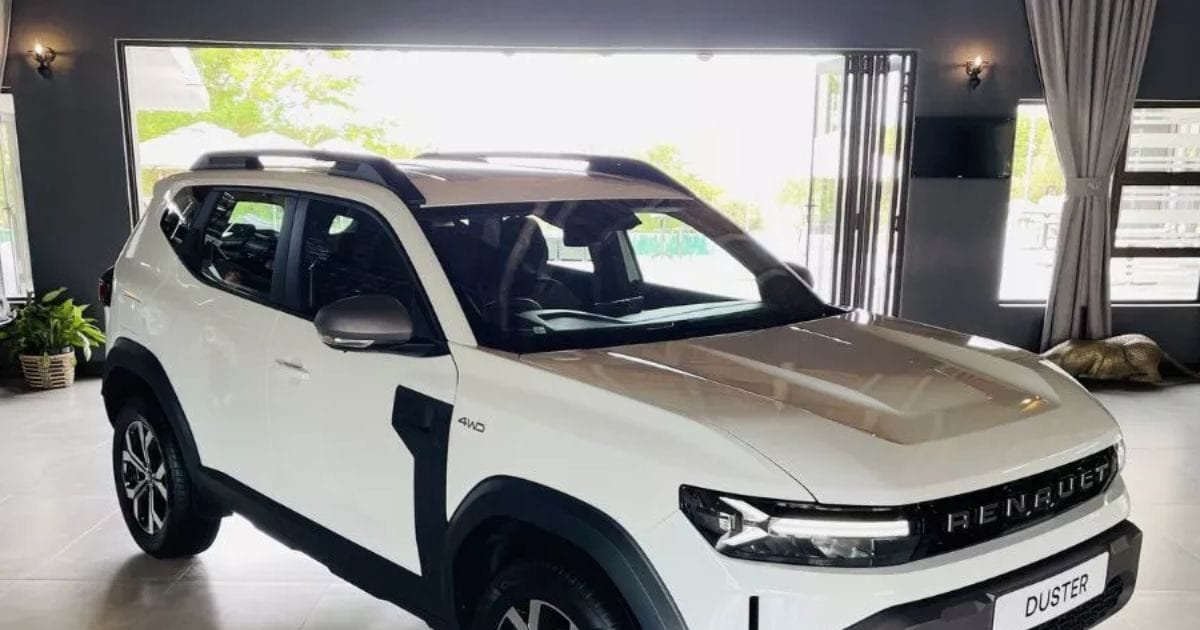
Renault India to drive out 5 models in next 3 years, focus likely on new Duster

Renault India to drive out 5 models in next 3 years, focus likely on new Duster

  • Renault promises to play the SUV game in India much stronger than it has so far while also confirming an EV for the market over the next three years.
Renault India will drive out the next-generation Triber and Kiger models, an EV and two SUVs in the country in the next three years.

Renault India may have found the going tough over the past few years in the market here because of just three models in the portfolio and all of these three are ageing too. But the French automaker is now promising to fight back and is all set to enter the SUV space as well as electric segment. Renault officials on Tuesday confirmed as many as five launches over the next three years.

Renault, bolstered previously by the enormous success of the Duster only for the model to fade out, is now promising to enter the SUV game with renewed vigour. As such, two new SUVs are being promised for India – a B+ SUV and a C SUV. Although the company stopped short of openly naming Duster, it is more likely that the latest version of the model launched under the Dacia brand in Europe is the one that will also make its way into India. “We are saying that we will bring in a C SUV in the next three years. But I am not saying it will definitely be the Duster,” said Venkatram Mamillapalle, Renault India MD, when asked about the specifics. As for the B+ SUV segment, it refers to the more premium end of the sub-compact SUV space.

At present, Renault offers Kiger in the Indian market and the model competes in the entry-level SUV space, priced between 6.50 lakh and 11.20 lakh (ex-showroom). But while targeting a young set of buyers, the model hasn’t exactly been a rousing success just yet. The company on Tuesday also launched an updated version of the Kiger, complete with more features. The next-generation Kiger will also be introduced over the course of the next three years while the next-generation Triber, the company’s three-row MPV in the sub- 10 lakh bracket will also be brought in.

Also interesting is that Renault has confirmed entering the EV space in India over the next three years but once again, stopped short of elaborating which model or which price bracket this option would eventually be driven out in.

First Published Date: 09 Jan 2024, 12:04 PM IST


Source link

Triumph Daytona price, Daytona 660 power, design, India launch

Triumph Daytona price, Daytona 660 power, design, India launch

Makes 14hp, 4Nm more than Trident 660; has higher-spec brakes, fully-faired design.

Triumph has finally taken the covers off the Daytona 660 and in this bike, the 660cc triple is in its most powerful state yet making 95hp at 11,250rpm and 69Nm at 8,250rpm. 

  1. Gets radial calipers and IMU
  2. First fully-faired Triumph after original Daytona 675

While the Daytona 660 is a fully-faired machine, its rider triangle is much more relaxed than the original and quite unforgiving 675. Owing to the fact that the clip-on handlebars are placed above the fork tops and the footpegs not being set very high up, the riding position is sporty yet comfortable. 

Clip-ons are above the fork tops, same instrumentation as the Tiger Sport 660, Street Triple R.

The split seats are also larger than a traditional supersport, like say a Kawasaki ZX-6R, and should be more comfortable for both rider and pillion. 

While the main frame, wheels and most of the cycle parts are carried over, there are a few key changes. The Daytona 660 weighs 201kg (12kg more than the Trident), has Triumph-branded radially mounted calipers and gets a Sport riding mode over just the Road and Rain modes on the other two Triumph 660s. 

Only the Triumph 660 model to get radial calipers.

Seat height too has gone up by 5mm over the Trident, to 810mm on the Daytona. And unlike the sport-touring Michelin Road 5 rubber on the Trident 660 and Tiger Sport 660, the Daytona 660 runs on sportier Michelin Power 6 rubber. 

As with all Triumph models, an extensive catalogue of accessories is on offer, including luggage, protection, a Bluetooth module for the dash and a bidirectional quickshifter. 

In the UK, the Daytona 660 costs 8,595 pounds (approx Rs 9.09 lakh) – priced above the Trident 660, which costs 7,895 pounds (approx Rs 8.35 lakh). Considering that Triumph retails nearly its entire international lineup here, we can expect the Daytona 660 to be launched in India in 2024. The closest rival to the new Daytona would be the Honda CBR650R, which is currently not on sale in India but we do expect it to return in due course. 


Source link

In pics: Mercedes-Benz GLS facelift kickstarts India journey with fresh styling

In pics: Mercedes-Benz GLS facelift kickstarts India journey with fresh styling

1/7

The 2024 Mercedes-Benz facelift has finally made its India debut on 8th January after making its global debut previously in early 2023. The flagship Mercedes-Benz luxury SUV comes with a host of updates on design and feature front, while the powertrain too received a touch of electrification.

2024 Mercedes-Benz GLS facelift
2/7

The front profile of the 2024 Mercedes-Benz GLS facelift has been updated significantly with redesigned LED headlamps, which flank the large and bold-looking front grille that sports four thick horizontal slats. The front bumper too has been revamped significantly with chrome trim surrounding the lower air intake and large black air dams at both ends.

Mercedes-Benz GLS
3/7

The new Mercedes-Benz GLS is available in both petrol and diesel engine options, namely GLS 450 and GLS 450d, which come priced at 1.32 crore and 1.37 crore (ex-showroom). The luxury SUV looks similar to the outgoing model as the side and rear profile of the new GLS remain almost unchanged.

Mercedes-Benz GLS
4/7

The 2024 Mercedes-Benz GLS comes with a host of updates inside its plush cabin as well. The first most notable one among them is the upgraded MBUX touchscreen infotainment system, which combines the large touchscreen infotainment system and the instrument cluster. The upholstery has been updated as well.

Mercedes-Benz GLS
5/7

Besides these changes, the car gets wireless smartphone charger at the front and back as well. Apart from these, the Mercedes-Benz GLS facelift is majorly unchanged inside its cabin. However, the updated upholstery takes the premiumness of the cabin a few notches up.

Mercedes-Benz GLS
6/7

The rear occupants too get dedicated tablets for rear seat entertainment connected to the MBUX system of the car. The MBUX of the GLS gets wireless Android Auto and Apple CarPlay connectivity. The rear seat occupants get a touch panel for controlling a wide variety of functions and features.

Mercedes-Benz GLS
7/7

Powertrain options for the new GLS include a petrol engine and a diesel motor as well, which come combined with a 48V mild-hybrid technology that can churn out 20 bhp power and 200 Nm torque alone. Transmision duty for the SUV is performed by a nine-speed automatic gearbox.

First Published Date: 08 Jan 2024, 17:06 PM IST


Source link