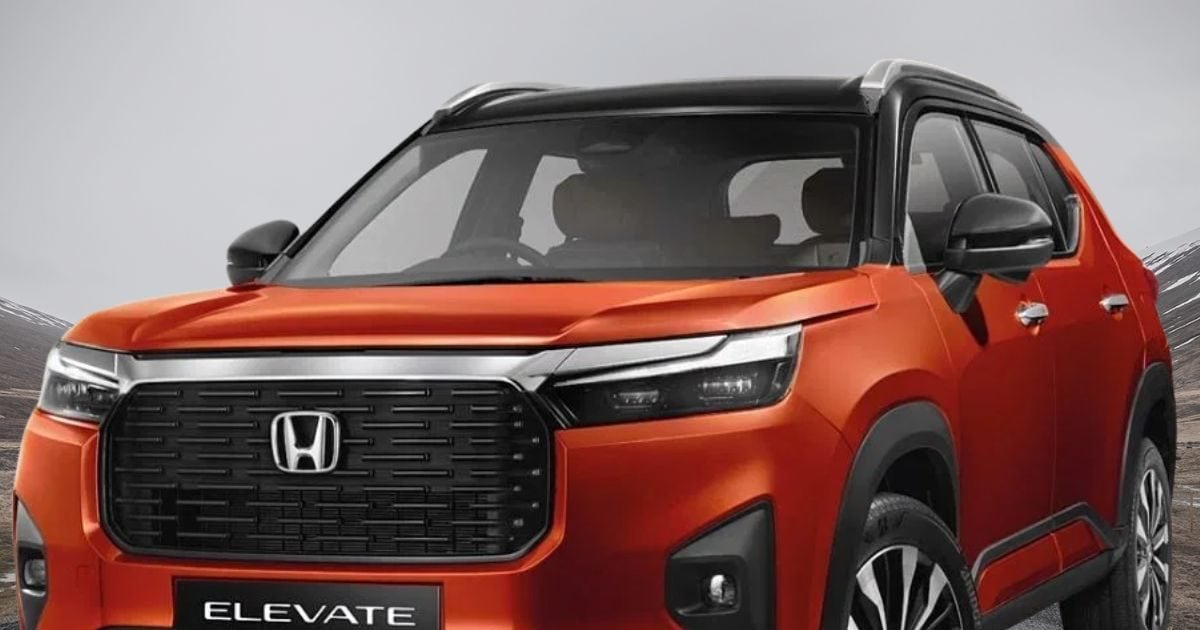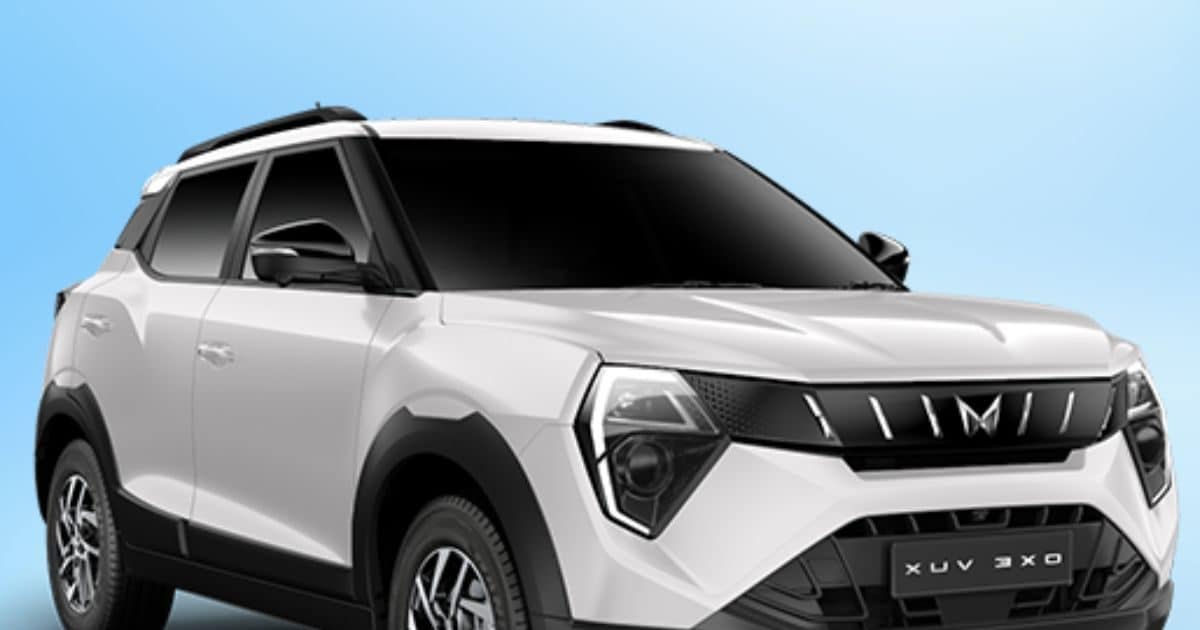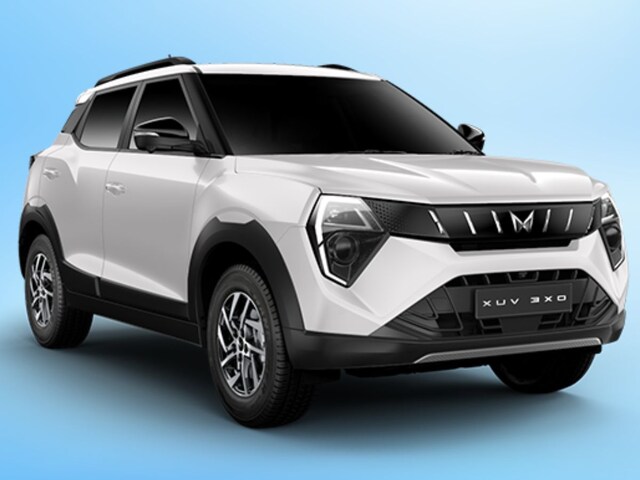
This electric SUV with 456 KM range is getting a discount of ₹ 4 lakh

This electric SUV with 456 KM range is getting a discount of ₹ 4 lakh

Mahindra is known for its SUVs in the Indian car market. The company is strengthening its EV portfolio with time and is trying to take the vehicles to more and more customers. To make a good start to the financial year 2026-27, the company has decided to sell one of its electric cars at a great discount.

Actually we are talking about Mahindra XUV 400. Mahindra is giving a huge discount of up to Rs 4 lakh on the purchase of this entry level electric car in April 2026. Let us tell you that due to FY and inventory clearance, this offer is available for a limited time. If you plan to buy, get information from the nearest dealership. Let's take a look at its design, battery and range details.

Design and dimensions

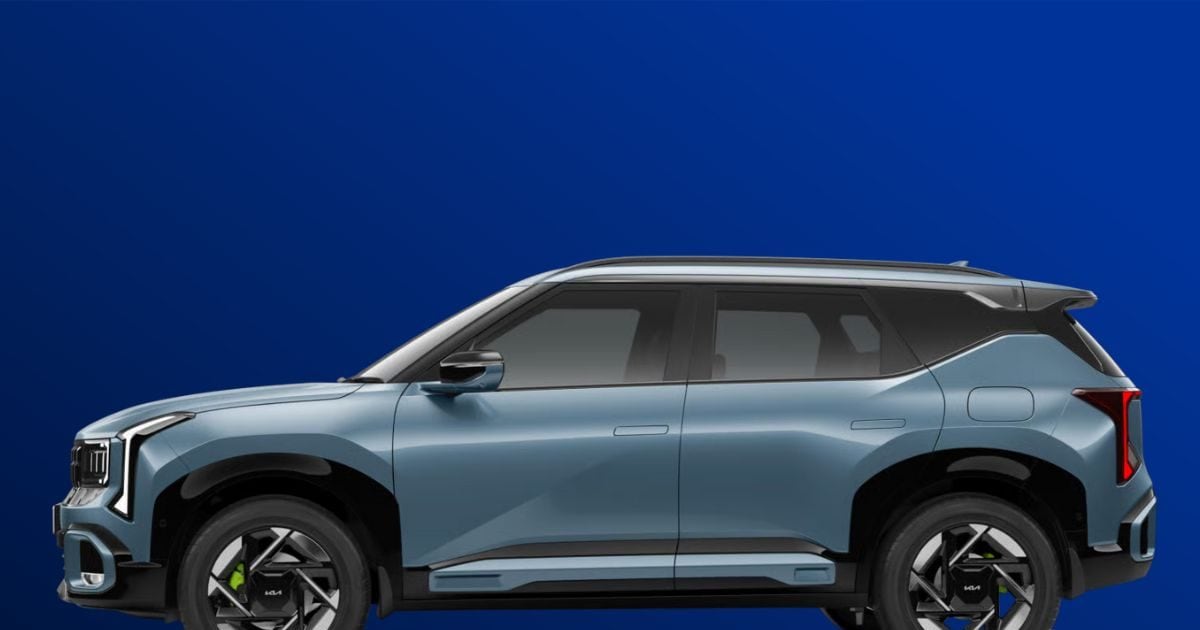
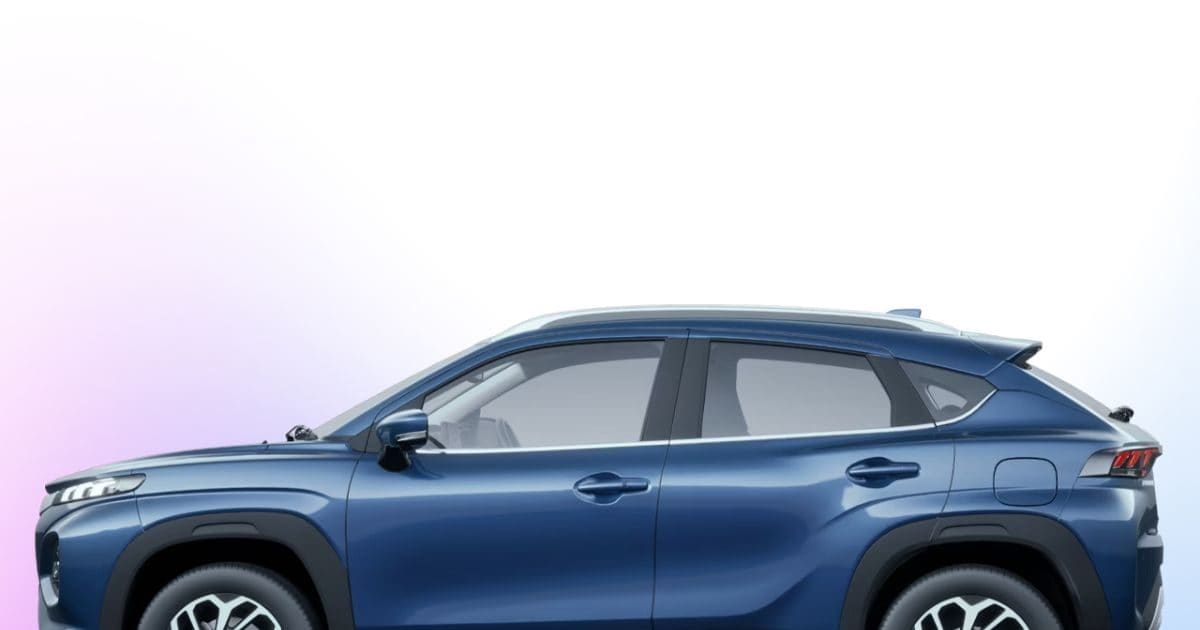
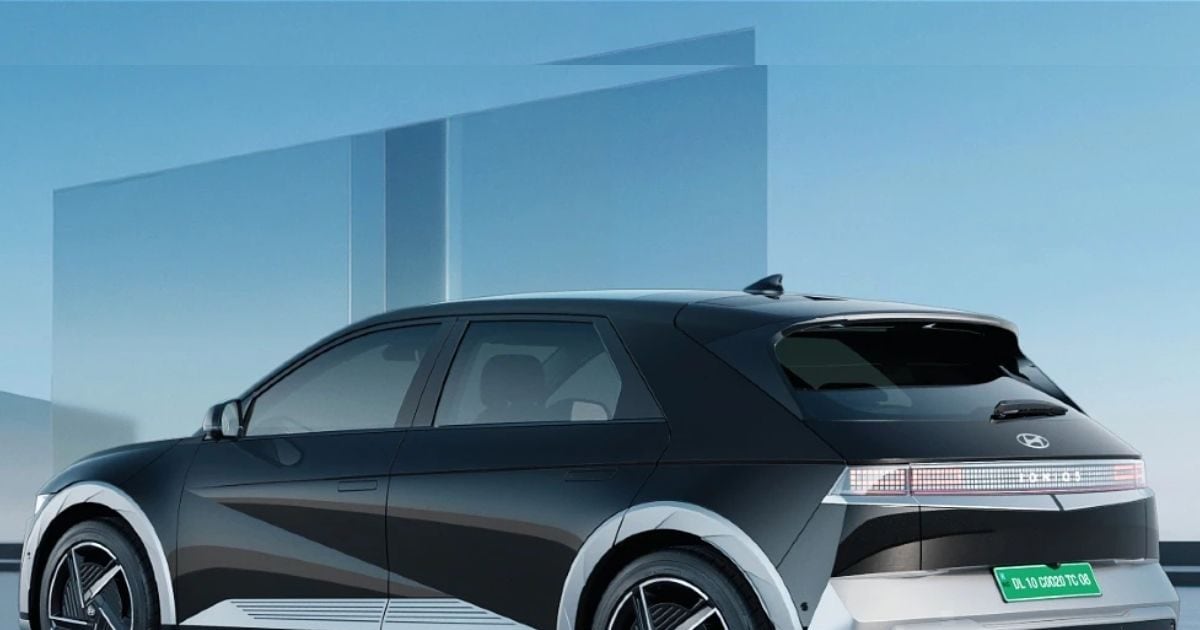
The XUV 400 EL Pro has a bold and modern design, which is the bigger electric incarnation of the XUV300. With a length of 4200 mm and width of 1821 mm, it makes a strong presence in the compact SUV segment. The front looks attractive with projector headlamps with LED DRLs, front fog lamps and a grille with chrome/satin inserts. In the side profile, R16 diamond cut alloy wheels, roof rails and shark fin antenna give a sporty look. LED taillamps and spoiler at the rear make it dynamic. Due to the availability of dual tone colors, it gives a premium feel. The overall design is of aggressive SUV style, which suits both city and highway.

Cabin and Comfort

The interior is quite updated and premium. The cabin is spacious, the 5-seater with 60:40 split rear seats ensures a comfortable journey. Leather seats, leather steering wheel and copper stitching add a luxury touch. The 10.25 inch touchscreen infotainment system and 10.25 inch digital cluster give a modern look. Features like dual zone climate control, rear AC vents, wireless charger, cruise control and height adjustable driver seat increase comfort. Sunroof (electric with anti-pinch), auto dimming IRVM, rain sensing wipers and illuminated sunvisor give a premium feel. The boot space is 368 litres, which is enough for family use. Overall the interior has now come closer to competitors like Tata Nexon EV.

Features and safety

XUV 400 EL Pro is full of features. The 10.25-inch CDC touchscreen comes with Alexa support, wireless Apple CarPlay/Android Auto. The sound system with 4 speakers + 2 tweeters gives good audio. Steering mounted controls, keyless entry, push button start, reverse camera with guidelines and smartwatch connectivity make daily use easy. Drive modes (Fun, Fast, Fearless) allow customization of performance.

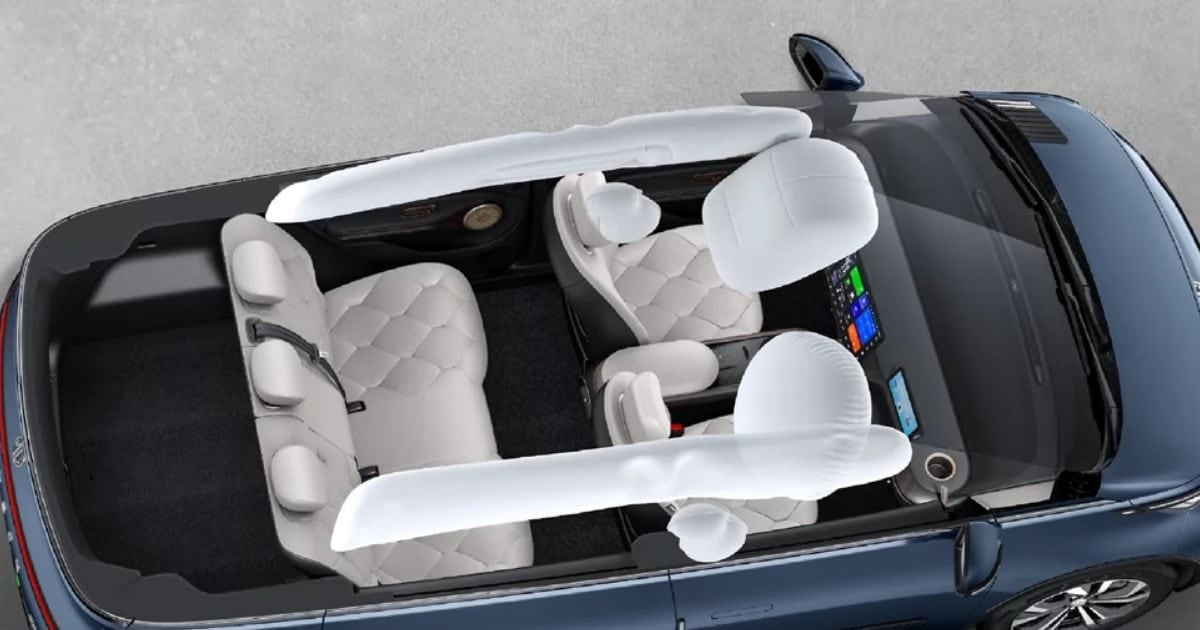
Safety features include 6 airbags (driver, passenger, side and curtain), ESP (Electronic Stability Program), TPMS (Tire Pressure Monitoring), all disc brakes and ISOFIX child anchors. Features like EBD, hill hold, traction control along with ABS ensure stability. Rear defogger, wash and wipe, auto headlamps and follow-me-home headlamps make night driving safe.

Battery, Motor and Range

XUV 400 EL Pro comes with two battery options – 34.5 kWh and 39.4 kWh. Both have a single permanent magnet synchronous motor, which generates 147.5 bhp power and 310 Nm torque. 0-100 kmph acceleration happens in around 8.3 to 9 seconds, top speed is around 150 kmph.

The variant with 34.5 kWh battery offers an ARAI range of up to 375 km, while the 39.4 kWh battery offers a range of 456 km. In real world, 250-350 KM is easily available in city and highway mix. A full charge from the 7.2 kW AC charger takes 6-7 hours, while the DC fast charging support provides fast top-up. The motor is smooth and responsive, which adds to the fun of driving an EV. L mode and region braking extend battery life.

Source link

What is the difference between NA and turbo engine? Who will give more mileage, know what is right for you

What is the difference between NA and turbo engine? Who will give more mileage, know what is right for you

Last Updated:

Choosing between NA and turbo engine is the most difficult decision when buying a car. Should you go for the smooth and frugal NA engine or the powerful and fun turbo? City traffic, highway driving, mileage and maintenance. Keeping every aspect in mind, know here which engine is perfect for your needs.

news quickly

Zoom

What is the difference between NA and turbo engine? Know

The biggest question while buying a car is whether to buy a naturally aspirated (NA) engine or turbocharged? This decision is not easy amidst the rising petrol and diesel prices in India, city traffic and long driving on the highway. The NA engine is considered a simple and reliable option of the old times, while the turbo engine attracts performance lovers by extracting more power than even a small engine.

Both have their advantages and disadvantages. If you travel 20-30 kilometers daily in the city or like to drive fast on the highway, then it is important to understand which engine will suit your needs. In this article, we will explain the technical differences, advantages and disadvantages of both the engines and the right purchasing decision.

NA engine

In NA i.e. Naturally Aspirated engine, air comes in naturally through the intake manifold. When the piston goes down, a vacuum is created in the cylinder and the atmospheric air automatically goes out. There is no additional pump or turbine in it. Due to this, the response is immediate, the car starts easily in any weather, be it hot or cold, morning or evening. Torque and power depend on the size of the engine. For example, the 1.2 liter NA petrol engines of Maruti Swift or Hyundai Grand i10 run very smoothly at city speeds.

turbocharged engine

A turbocharged engine uses a turbine driven by exhaust gases. This turbine rotates the compressor, which presses and burns more air and fuel in the engine. Even a smaller 1.0 or 1.2 liter engine gives 100-120 bhp power and ample torque. The turbo engines of Tata Nexon, Kia Sonet or Mahindra XUV300 are fun to overtake and load on the highway. But there is a problem of 'turbo lag'. The power comes on suddenly at low RPM, which makes it feel a bit awkward in city stop-go traffic.

Maintenance and cost

Talking about maintenance and cost, NA engine is cheap and simple. Servicing is easy, parts are cheap and the risk of breakage is low. Servicing becomes expensive due to turbocharger, intercooler and more sensors in turbo. If your annual driving is less than 10-12 thousand kilometers and mostly in the city, then NA engine will be better in terms of fuel economy and low cost.

If you travel at a speed of 120-140 km/h on the highway, take a long trip with the family or have luggage loaded in the car, then the turbo engine will give more fun and power. Small engines with turbo often give better mileage than big engines with NA.

The right choice as per your need-

  • City, Low Budget, Low Maintenance- NA Engine (Swift, Baleno, i10)
  • Performance, Highway, Overtaking- Turbo Engine (Nexon, Sonet, Venue)
  • Mileage and Balance – 1.0 liter turbo petrol the smartest choice

About the Author

authoring

Ram Mohan MishraSenior Sub Editor

Ram Mohan Mishra, working as Senior Sub-Editor at News18 Hindi, is active in digital media since 2021 and is currently handling the Auto Desk. They provide car and bike related information in an easy, clear and reliable manner.read more


Source link

People are eagerly buying this sedan, price starts from ₹ 6.26 lakh.

People are eagerly buying this sedan, price starts from ₹ 6.26 lakh.

Sedans are the best option for those who want a car with better comfort and lower ground clearance than an SUV. Their demand is decreasing with time, but there are still many customers in the market who are looking for such vehicles. The same was seen in the sale of the last financial year also. Maruti Dzire was the best selling sedan in the segment in FY26.

Apart from this, sales of Hyundai Aura and Honda Amaze have also increased. At the same time, the demand for vehicles like Skoda Slavia, Tata Tigor and Hyundai Verna has decreased. The country's top sedan has sold a total of 3,99,003 units in the last financial year. This figure shows an annual increase of 19.3%. Let us take a look at the model wise sales report.

Maruti Dzire

Maruti Dezire is at number one in terms of sales. A total of 2,29,130 ​​units were sold in the last financial year. This figure shows an annual increase of 38.8 percent. Ex-showroom price of Maruti Dezire starts from ₹6.26 lakh and goes up to ₹9.31 lakh. The new modern look, sharp headlamps, sleek profile and premium styling have strong road presence.

The interior has a dual-tone cabin, 9-inch touchscreen, wireless Android Auto/Apple CarPlay, sunroof, auto AC and comfortable seats. Features include 360° camera, wireless charging, cruise control, 6 speaker sound system and connected tech.

Safety has Global NCAP 5-star rating, 6 airbags, ABS and strong body. It can be purchased with 1.2 liter 3-cylinder Z-series petrol (80 bhp, 111 Nm) or CNG option. This engine is available with 5-speed MT/AMT gearbox. Mileage is 24.79 KMPL in petrol and 33.73 km/kg in CNG.

Hyundai Aura

Hyundai Aura is at second place in the list. This sedan has got a total of 68,066 new customers in FY 2025-26. This figure shows an annual increase of 23.9 percent.

Honda Amaze

Honda Amaze is at third place in terms of sales. This affordable sedan has got 32,906 new customers in the last financial year. This figure shows a slight increase of 0.6 at the annual level.

vw virtus

Volkswagen Virtus is at number four in the list. In the financial year 2025-26, this sedan has got a total of 22,959 new customers. This figure shows a slight increase of 7.1 percent on an annual basis.

SKODA Slavia

Despite decline in sales, Slavia has registered its name in the list of top-5 sedans. It got a total of 14,382 new customers in FY26. This figure shows an annual decline of 7.7 percent.

Apart from the top-5 sedans of the segment mentioned above, 12,147 units of Tigor, 9,925 units of Verna, 7,142 units of City and only 2,346 units of Camry were sold last month.

Source link

26.11 KM Mileage, 6 Airbags… Price ₹ 8.80 Lakh! This is the country's best selling 7-seater car

26.11 KM Mileage, 6 Airbags… Price ₹ 8.80 Lakh! This is the country's best selling 7-seater car

The demand for 7-seater cars is increasing in the Indian auto market. Big families like the cars of this segment very much. The same was seen in the last financial year also. Talking about the sales in FY 2025-26, Maruti Ertiga is at number one in terms of sales.

Apart from this, sales of Mahindra Scorpio and Toyota Innova have increased. At the same time, the demand for XUV 7XO and Safari has decreased. Talking about the top-20 models, they have sold a total of 9,34,365 units. This figure shows an annual increase of 7.4 percent. Let us know about the best selling 7-seater cars of FY26.

Maruti Ertiga

Maruti Ertiga is at number one in terms of sales. In the last financial year, this 7-seater car got a total of 1,98,876 new customers. This figure shows an annual increase of 4.1 percent.

Its ex-showroom price starts from ₹ 8.80 lakh and goes up to ₹ 12.94 lakh. It is perfect for family use with its attractive and modern look, bold grille, LED taillamps and stylish profile. The spacious cabin, comfortable seats, 209 liters of boot space, premium fabric and good fit-finish make it special.

Features include 7-inch touchscreen, SmartPlay Pro, cruise control, auto AC, rear AC vents, keyless entry and power windows. Safety includes 6 airbags, ABS with EBD, ESP, hill assist, ISOFIX and rear parking sensors. Its 1.5 liter K15C smart hybrid petrol engine (102 PS) is also available in CNG option and is capable of giving a mileage of up to 26.11 km/kg in CNG along with 20.5 kmpl.

Mahindra Scorpio

Mahindra Scorpio is at second place in terms of sales. This 7-seater car has got a total of 1,78,800 new customers in FY 2025-26. This figure shows an annual increase of 8.5 percent.

Toyota Innova

Innova is at number three in the list. A total of 1,12,188 people bought this 7-seater MPV in the last financial year. This figure shows an annual increase of 4.6 percent.

Mahindra Bolero

Bolero is at number four in terms of sales. 1,10,136 people bought it last financial year. This figure shows an annual increase of 16.2 percent.

Mahindra XUV 700

Despite declining sales, XUV 700 has registered its name in the list of top 5 seven-seaters. It got 87,412 new customers last month. This figure shows an annual decline of 6.1 percent.

Apart from the top-5 cars of the segment mentioned above, last financial year there were 76,837 units of Carens + Clavis, 37,159 units of XL6, 35,216 units of Fortuner, 25,174 units of Triber, 24,425 units of Rumion, 19,508 units of Safari, 12,393 units of Alcazar, 7,896 units of XEV 9S, 2,375 units of Gravite, 1,793 units of Kodiaq, 1,483 units of Vellfire, 1,201 units of Meridian, 874 units of Carnival, 381 units of Marazzo and only 238 units of Tayron have been sold.

Source link

This SUV will make a big entry in the market, starting price will be less than ₹ 10 lakh

This SUV will make a big entry in the market, starting price will be less than ₹ 10 lakh

Upcoming SUV in India: The mid-size segment has always been hot-selling in the SUV market. Where customers look for style, performance, features and value for money. Three big names are ready to make this segment more exciting in 2026. Mahindra Scorpio N facelift, Skoda Kylak Sportline and Nissan Tecton will be launched in the coming days. These upcoming models are going to bring new heights in design, technology and driving experience.

Mahindra Scorpio N is already popular for its speed, off-road capability and bold looks. Will bring more refinement to the facelift version. Skoda Kylak is already performing well in the compact SUV segment, now the Sportline variant will give it a more youthful and sporty appeal. Nissan Tecton will be a new mid-size SUV based on Renault Duster platform, which is going to create a stir in the market with its affordable price and modern features. Let us know about these three.

Mahindra Scorpio N facelift

The launch of Scorpio N facelift is expected to happen around August 2026. It can get mild exterior updates like new grill, headlights and alloy wheels. The interior is likely to include features like a large 10.25-inch infotainment screen, ventilated seats, panoramic sunroof and level-2 ADAS.

The engines will remain the same – 2.0-litre turbo petrol and 2.2-litre diesel, which can be purchased with manual and automatic gearboxes. 4×4 option will be available in diesel. There may be a slight increase in the price, expected to be around ₹ 24 lakh (ex-showroom) from the current ₹ 13.5 lakh. This model will be perfect for both family use and adventure.

Skdoa Kylaq Sportline

Kylak Sportline may be launched by September this year. This will be a sportier variant of the existing Kylak, which will get exteriors like black elements, special alloy wheels and red highlights. Red accents will be provided with all-black theme in the cabin. The engine will be 1.0-litre TSI turbo petrol, which will be available in both manual and automatic options.

Mileage is expected to be good. While the Kyalaq already starts at ₹7.59 lakh and goes up to ₹12.99 lakh, the Sportline will be slightly more expensive but more stylish. It will attract young buyers who want a sporty SUV for both daily commute and weekend trips.

Nissan Tekton

Nissan Techton is scheduled to be launched in mid-2026, preferably around June. This new generation will be based on Renault Duster and will be built on the RGMP platform. There is also a possibility of hybrid option with turbo petrol engine. The design will be bold. Commanding stance, striking rear lightbar and modern look are going to make it special.

Among the features, large touchscreen, connected technology and good safety are expected. The estimated price can start from ₹10-11 lakh and go up to ₹18 lakh. As an affordable mid-size SUV, it will compete with models like Creta, Seltos and Kushaq. Nissan is planning to make it in India and also export it.

Source link

hatchback or SUV? Which car is best according to your needs?

hatchback or SUV? Which car is best according to your needs?

hatchback and SUV are the two most popular segments in the Indian market. The hatchback is small, economical and perfect for the city, while the SUV is considered tall, spacious and an all-road vehicle. It is not easy to choose between the two, because each has its own merits and demerits.

The hatchback offers low budget, better mileage and easy handling. The SUV provides family comfort, high ground clearance and road presence. Considering India's rough roads, city traffic and growing family needs, this decision depends on your lifestyle, budget and daily driving. Let us understand which of the two is best to buy?

Who should buy hatchback?

Hatchback cars are usually compact in size. Their length is usually less than 4 meters. These have a horizontally opening hatch door at the rear, which makes the boot space easily accessible. hatchbacks like Maruti Swift, Hyundai i20, Tata Altroz ​​are best for parking and maneuvering on congested city roads.

Due to their low weight, handling is sporty and responsive. Fuel efficiency is also excellent. You can easily get mileage of 20-25 kmpl in petrol. Due to low purchase cost (up to Rs 6-12 lakh) and low maintenance cost, these are the first choice for budget-conscious buyers. This is perfect for a small family or a single user.

How different is the SUV?

On the other hand, SUVs (Sport Utility Vehicles) are larger and taller cars. Their ground clearance is high (180-200 mm or above), which gives a big advantage on bad roads, speed breakers and bad village roads of India. The cabin is spacious in compact SUVs or large SUVs like Creta, Nexon, Brezza.

More leg room, head room and boot space is available. SUVs are better for family road trips or carrying a lot of luggage. The high seating position provides good road visibility to the driver and increases driving confidence. Modern SUVs also have more advanced safety features, powerful engines and premium feel. The difference between the two can be made like this-

  • Size and Space: hatchback small and compact, SUV big and roomy.
  • Ground clearance: Less in hatchback (150-170 mm), more in SUV.
  • Mileage: The hatchback wins, the SUV may lose 4-8 kmpl.
  • Price: hatchback is cheap, SUV is expensive.
  • Maintenance: The cost of hatchback is less, service and fuel of SUV is expensive.
  • Driving: hatchback easy in the city, SUV comfortable on highways and bad roads.

What is right for you depends on your needs. If you commute daily in the city, have a limited budget, mileage is a priority and have a small family then choose a hatchback. Parking is easy, driving will be fun and running costs will be low. But if the family is big, often has to go to the highway or village, there are bad roads and you need comfort and space, then SUV is a better option. Many people are now choosing compact SUVs because they offer the benefits of both and also come at an affordable price.

Source link

Why did Tesla fail in India? Even 10% target of sale could not be achieved

Why did Tesla fail in India? Even 10% target of sale could not be achieved

HomePhotoAutoCar

Why did Tesla fail in India? Even 10% target of sale could not be achieved

Last Updated:

Why Tesla Failed In India: Why Tesla has failed to make its mark in India? Why Elon Musk's cars are struggling on Indian roads and how indigenous brands like Tata-Mahindra have made the path difficult for Tesla. Newly launched 6 seater Model YL worth Rs 62 lakh, will the damage done in the last one year be controlled?

The world's largest electric car company came to India, tried to make a splash, but it gets a big shock on the ground of reality. Yes, we are talking about Elon Musk's company Tesla. Today, on April 22, 2026, Tesla has launched its new Model YL (6-seater, long wheelbase) in the Indian market, the price of which has been fixed at Rs 62 lakh. This is not just a new launch, but a kind of 'damage control', because Tesla's journey in India so far has been full of struggle and has been much worse than expected.

Generated image

The biggest reason for Tesla's struggle in India has been its skyrocketing prices. The government imposes huge import tariffs ranging from 70% to 110% on vehicles coming from outside India. The result was that the price of Model Y reached between Rs 60 lakh to Rs 68 lakh. Due to being so expensive, it became out of the reach of the common man and stood in the category of luxury vehicles like Mercedes EQB, BMW iX1 and Volvo EC40. In a country like India, where people pay most attention to the price and value of a car before buying it, Tesla has never been able to attract the 'mass market'.

Generated image

Talking about figures, Tesla's performance has been quite bad. In the year 2025, the company sold only 227 vehicles during the entire year, whereas their target was at least 2,500 units. The situation became so bad that the company had to give a discount of up to Rs 2 lakh to clear its stock. This shows that it is not so easy to win the Indian market on the basis of brand name alone, especially when the customer has to get value for money at every step.

Add News18 as
Preferred Source on Google

Generated image

Apart from the price, the problem of charging has also made the path of Tesla difficult. There are currently only 25,000 charging stations in India, which is far less than the requirement. Many times it happens that the stations which appear on the map are actually found to be bad. Tesla's biggest strength is considered to be its 'Supercharger Network', which has created a stir in America and Europe, but in India this network is still nominal. Without a strong charging infrastructure, any EV user hesitates to go on long distance journeys.

Generated image

The dominance of domestic companies like Tata Motors in the Indian market also remains a big challenge for Tesla. Tata has about 60% share in the electric vehicle market, followed by Mahindra and JSW MG Motors. These companies understand the pulse of Indian customers. Tata Nexon EV and Mahindra's new vehicles are much cheaper than Tesla and are designed keeping in mind the needs of Indian families. In such a situation, it has been like chewing iron grams for Tesla to make its place among these giants.

Generated image

Another bitter truth is that the market for luxury electric vehicles in India is very small. The share of vehicles above Rs 16.5 lakh i.e. about $20,000 in total sales is only 6.6%. Even in this small segment, old and established players like Mercedes, BMW, Kia and Audi are already present. Tesla not only has to fight with these brands but also has to face the challenges of Indian roads. The ground clearance of Tesla vehicles is low, which is not suitable for the big speed breakers and potholes of India. To fix this, major changes are required in the design of the vehicle, which costs a lot.

Generated image

Tesla has also been left far behind in terms of service network. Tesla showrooms and service centers are limited only to big cities, whereas Tata and Mahindra's network extends to villages and towns. If a customer from a small town faces any problem with his car, he has no easy way out. Apart from this, Elon Musk's own global image and his political activities have also had an impact on the company's sales, which has been felt all over the world.

Generated image

Now the question is what will happen next? Through the new 6-seater Model YL, Tesla wants to woo the premium segment of India which likes large and comfortable SUVs. This is a good effort, but experts believe that until Tesla sets up its factory in India and starts manufacturing vehicles here, this trend of high prices will not stop. Local manufacturing is the only way through which Tesla can become a long-haul horse in the Indian market.

Click here to add News18 Hindi as your favorite news source on Google.

Source link

These 5 SUVs are best for commuting to office! Price starts from only ₹ 5.62 lakh

These 5 SUVs are best for commuting to office! Price starts from only ₹ 5.62 lakh

Best Affordable SUV For Office Commute: Choosing a good car for daily office commute is a big challenge. Keeping in mind all these factors like traffic, parking problems, fuel economy and comfortable driving, the sub-compact SUV segment proves to be a great option. These vehicles are of compact size, which can be easily driven on the crowded roads of the city. Due to high ground clearance, there is no problem even on bad roads or speed breakers.

Also, they are reliable in terms of mileage, features and safety. If you commute 30-50 km daily in a city like Delhi-NCR, then this article of ours is useful for you. In this article, we have brought for you a list of 5 cheapest and best SUVs present in the market. These can be selected on the basis of budget, style, mileage and safety. The list includes names from Magnite to Sonet.

Nissan Magnet

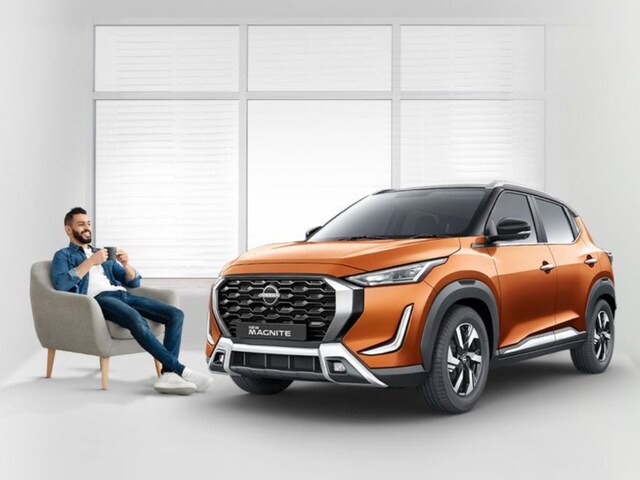
Nissan Magnite is an economical and practical option for daily commuting. Its starting price starts from around Rs 5.62 lakh (ex-showroom), making it budget-friendly. The 999 cc engine produces 71-99 bhp power, while ARAI mileage is around 19-20 kmpl. With CNG option also available, fuel consumption is further reduced.

High ground clearance of 205 mm gives confidence on bad city roads. Features like 6 airbags, 9-inch touchscreen, wireless Android Auto-Apple CarPlay make the commute comfortable. Due to compact dimensions, there is ease in parking and traffic. If you want value for money and low maintenance, then Magnite is a great choice for daily office commuting.

Tata Punch

Tata Punch is very popular among daily commuters. It is especially better because of the 5-star global NCAP safety rating. Its price starts from only Rs 5.65 lakh. Its 1.2 liter engine gives 87 bhp power and the mileage is around 18-20 kmpl. CNG variant is also available.

High ground clearance and strong build quality provide confidence in bad weather or uneven roads. Simple yet functional interiors, good seating position and short turning radius make driving in the city rush easy. If safety and durability are of utmost importance during an office commute, the Tata Punch will not disappoint.

Maruti Suzuki Fronx

Maruti Frontex is unbeatable in terms of mileage and service network for commute. Its price starts from Rs 6.85 lakh. The 1.2 liter engine with 89 bhp power gives an excellent mileage of 21-22 kmpl, which saves money on long daily commutes. Crossover styling, sleek design and light weight help to navigate in the city.

Features like 9-inch touchscreen, cruise control and good AC performance make the commute pleasant even in summers. Maruti's wide service network and low maintenance costs make it perfect for long-term users. If fuel economy is your priority, then the front would be best.

Skoda Kylaq

It is known for its premium feel and driving dynamics. The price of Kylac starts from Rs 7.59 lakh. Its 1.0 liter TSI turbo petrol engine gives 114 bhp power and 178Nm torque, which makes overtaking on the highway easy. Mileage is around 19 kmpl.

Features like spacious cabin, 10-inch touchscreen, ventilated seats and sunroof provide a premium experience while going to office. The sturdy build and good handling add confidence on city roads. If you want a combination of quality, comfort and performance, the Kylac will make the daily commute enjoyable.

Kia Sonet

With style, features and premium appeal, it gives a luxury touch to the commute. Its price starts from Rs 7.30 lakh. Apart from 1.2 liter petrol engine, there are also turbo and diesel options, mileage is around 18-20 kmpl.

Latest features like ventilated seats, 360-degree camera, wireless charging and large touchscreen make it tech-savvy. Good cabin space, refined engine and stylish looks attract attention even in office parking. Although a bit expensive, the feature loaded interiors and brand value make it attractive as a premium commuter.

Our advice: The choice among these five SUVs depends on your preferences. Choose Magnite or Punch for budget and value, Fronx for mileage, Kylaq or Sonet for premium drive. Take a test drive and decide keeping in mind your daily route. Budget is also going to play a big role while buying, so keep that in mind also.

Source link

EV vs Hybrid Car: Which one is more profitable to buy? Understand with 5 year calculation

EV vs Hybrid Car: Which one is more profitable to buy? Understand with 5 year calculation

EV vs Hybrid Car: Amidst the ever increasing pollution and skyrocketing prices of petrol and diesel, people have now started turning towards EV and hybrid cars. In such a situation, which one should be chosen between electric vehicles (EV) and hybrid cars? There is a lot of debate regarding this. The cost of running an EV is low, but charging infrastructure is still limited. Whereas, hybrid cars offer a combination of petrol-electric. There is no range anxiety and long drives are easy.

If you are also confused between EV and hybrid cars, then this article of ours is useful for you. Taking Maruti Suzuki's Grand Vitara Strong Hybrid as an example, we will do detailed calculation of 5 years ownership cost. Data is based on latest data (CarWale, CarDekho, ARAI) for April 2026. We will calculate ₹95/litre petrol and domestic electricity at ₹6/unit for normal usage and annual driving of 15,000 km.

hybrid car

The ex-showroom price of Maruti Suzuki Grand Vitara Strong Hybrid ranges from ₹16.63 lakh to ₹19.72 lakh for the Zeta+/Alpha+ variants. On-road prices (including RTO + insurance) in UP go up to around ₹20-22 lakh. Its ARAI claimed mileage is 27.97 kmpl. Real world mileage can be expected to be 23-25 ​​kmpl in the city and 20-22 kmpl on the highway, which is close to an average of 22 kmpl. According to this fuel economy, its 45 liter tank gives 1,000+ km range. Due to Maruti's service network with 8 years of battery warranty, its maintenance cost is on average low.

electric car

The ex-showroom price of Maruti's first electric car E Vitara (Zeta/Alpha 61 kWh) ranges from ₹ 17.49 lakh to ₹ 19.79 lakh. Its on-road price in UP ranges from around ₹19.5 to ₹22 lakh. It can be purchased at almost the same or slightly lower price than the Grand Vitara Hybrid. The ARAI claimed range of the e-Vitara is 543 km and battery consumption in real world efficiency can be expected to be 6-7 km/kWh. Its running cost with domestic charging comes to around ₹ 1.12/km.

5 Year Calculation (75,000 km total)

Let us assume that the estimated on-road price of both the cars is ₹21 lakh (mid variant). Other expenses (insurance, tyres, service) remain almost the same, but there is a big difference in running costs. Let us understand this from a table-

parameters Grand Vitara Maruti e-Vitara Savings in EV
on road price ₹21 lakh ₹21 lakh Equal
Running Cost/KM ₹4.32 (₹95 petrol/22 kmpl) ₹1.12 (depending on electricity rate) ₹3.20 lakh
5 year expenses (75,000 km) ₹3.24 lakh ₹84 thousand ₹2.40 lakh
Maintenance (5 years) ₹25,000 – 30,000 ₹15,000 – 20,000 ₹10 thousand
Total expenses for 5 years ₹3.55 lakh ₹1.00 lakh ₹2.55 lakh
Average cost per KM ₹4.73 ₹1.33 quite cheap

Where will EV win?

The running cost of an electric car (e-Vitara) is cheaper by ₹ 2.4-2.5 lakh in 5 years. Silent drive, quick torque, zero tailpipe emissions. Solar charging at home can be done more cheaply, but finding a charging station on a long highway drive is a bit of a challenge. The charging network is continuously increasing with time, but it still remains a challenge in rural areas.

Power of Hybrid (Grand Vitara)

There is no range anxiety regarding this. Petrol pump is found every 200-300 km. Good in both city and highway. Due to the small battery, performance does not drop in cold weather or long drives. Maruti's service network is strong across the country and the resale value will also be good after 5 years.

Our advice: If 70% of your driving is in the city, charging is available at home and you drive 15,000+ km annually, then an EV is going to be a better option. If you have a lot of highway trips, don't have to worry about charging and live in a small town/village, then Grand Vitara Strong Hybrid is a better option. The 5-year math leans towards EV, but as per practicality, hybrid is a better option.

Source link

This is the country's cheapest diesel engine SUV, price starts from only ₹ 7.99 lakh

This is the country's cheapest diesel engine SUV, price starts from only ₹ 7.99 lakh

Mahindra Bolero is considered to be a popular and durable SUV of the country. This vehicle is perfect for rural areas, cities and off-road driving. Bolero's robust body, reliable engine and practical design make it a favorite among family, commercial use and adventure lovers. The company sells it as the cheapest diesel SUV in the country.

Ex-showroom prices of the Bolero start from around Rs 7.99 lakh and go up to Rs 9.69 lakh for the top variant B8. There is price difference according to the features in different variants like B4, B6, B6(O) and B8. This vehicle is available only in diesel without petrol or CNG option. If you are planning to buy the country's cheapest diesel SUV, then know the details from its design to mileage.

design details

The design of Bolero is very rugged and classic. With length 3995 mm, width 1745 mm and height 1880 mm, it fits within 4 meters, which also provides tax benefits. The boxy shape, high ground clearance (about 180 mm) and strong metal bumpers make it stable on bad roads.

The front grille is attractive with chrome accents, while the side cladding and wheel caps give it a stylish look. Static bending feature in headlamps is available in higher variants. Overall the design is utilitarian, which focuses more on performance than looks.

Cabin and Comfort

The interior is spacious and practical. The 7-seater configuration provides ample space in the second row and third row. Fabric or vinyl upholstery, power steering and adjustable headrests add comfort. High variants have features like 17.8 cm touchscreen infotainment system, steering mounted controls, USB charging and digital cluster. AC, heater and rear parking sensors provide convenience in the cabin. Boot space is approximately 384 litres.

Features and safety

Necessary features have been provided in Bolero. The base gets power steering, ABS with ABD and dual airbags. The upper variants include touchscreen, Bluetooth, power windows, central locking, fog lamps and rear washer-wiper. Micro hybrid technology (engine start-stop) improves mileage. Other features include speed alert, seat belt reminder and engine immobilizer.

Engine and Mileage

Bolero has a 1.5 liter mHawk75 turbo diesel engine, which generates 75 bhp power and 210 Nm torque. It is rear wheel drive (RWD) with a 5-speed manual gearbox. The engine performs well even in loaded condition due to its low-end torque. ARAI claimed mileage is approximately 16.7 kmpl. The engine is BS6 compliant and its maintenance cost is also very low.

Source link

Duster makes a hero-like entry! India returned with a steely body, challenging Sierra and Creta

Duster makes a hero-like entry! India returned with a steely body, challenging Sierra and Creta

HomeLatest NewsAutoCar

Duster returned with steely body in crash test, challenging Sierra and Creta

Last Updated:

Duster Safety Rating: Renault India's mid-size SUV Duster has made a comeback in the Indian market after 4 years. This car has got 5 star rating in crash test. It is going to compete with cars like Creta, Sierra.

news quickly

Zoom

Renault Duster has received 5 star rating in crash test.

New Delhi. Renault India's car Duster, which has returned to the Indian market after a break of 4 years, has made a strong claim in its segment. This mid-size SUV of Renault has got 5 star rating in crash test. Due to the steel body of the car, it can give tough competition to even the strong cars of Tata and Mahindra. Renault India on Monday said that its new Duster SUV has received a 5-star safety rating under the Bharat New Car Assessment Program (BNCAP).

The company said that the new Duster has performed brilliantly in both adult and child safety categories. It got 30.49 out of 32 for adult safety and 45 out of 49 for child safety. V. Vikraman, Head of Renault Engineering India, said that this result is the result of excellent implementation of engineering at the ground level. A number of simulations, physical crash tests and system-level validations were conducted on the Duster, with special attention given to real-life Indian road conditions.

What were the results of the test?

Vikraman said that every aspect of the Duster, from the strength of the body structure to the restraint calibration and electronic safety system, has been combined, tested and perfected. The 5-star BNCAP rating reflects the rigor of this entire engineering and validation process. This is the reason why this car, which has returned to India after 4 years, can give strong competition to the cars of its segment. Earlier, Duster used to get tremendous response in the Indian market and its sales were also higher than other cars of the company.

Which cars will face competition?

Renault's Duster is a mid SUV range car, which comes in the range of Rs 10 to 19 lakh. This car is going to compete with Hyundai's Creta and Kia's Seltos, Maruti's Grand Vitara, Tata's Sierra, Toyota's Urban Cruiser, Honda's Elevate and Skoda's Kushaq and Taigun. At present the car has been launched and customers were waiting for the results of its crash test. Now that it has got a 5 star rating, the impact of this result will definitely be visible on its market and demand.

About the Author

authoring

Pramod Kumar Tiwari

Pramod Kumar Tiwari likes to cover stock market, investment tips, tax and personal finance. Explains complex topics very easily. He has also written dozens of columns on personal finance in newspapers. Journalism…read more

Source link

These are the 10 safest SUVs in the country! Got full 5 stars in crash test

These are the 10 safest SUVs in the country! Got full 5 stars in crash test

HomePhotoAutoCar

These are the 10 safest SUVs in the country! Got full 5 stars in crash test

Last Updated:

Safety has now become the biggest factor while buying a car in India and the new report of Bharat NCAP has revealed many shocking names. From Hyundai Venue to Tata Harrier EV and Mahindra BE 6, many popular vehicles have achieved 5-star rating. If you are thinking of buying a new car, then this list is very important for you, because here are only those vehicles which are best in safety.

Bharat NCAP is a government program launched to promote vehicle safety in the country. It crash tests the vehicles on frontal offset, side impact, child protection and many other parameters, on the basis of which 1 to 5 star rating is given.

Tata Sierra Crash Test

Many popular cars and SUVs have been tested in BNCAP till April 2026, most of which have received 5-stars. This is rapidly improving the safety standards on Indian roads and helping buyers make safe choices. Let's take a look at the top-10 cars tested so far.

Hyundai Venue Price Hike

Hyundai Venue: It received a 5-star rating in Bharat NCAP in March 2026. In this, adult protection was 31.15/32 and child protection was 44.46/49 points. With standard safety features like 6 airbags, TPMS, ISOFIX and ESC, this sub-compact SUV proved to be a strong safety option in the Indian market.

Add News18 as
Preferred Source on Google

Hyundai Venue and Kia Seltos get 5 star safety rating in BNCAP

Kia Seltos: It got 5-stars in March 2026, 31.70/32 (very good score) in Adult and 45/49 points in Child. Diesel variants were tested but this rating is applicable to the entire lineup. The mid-size SUV with 6 airbags, hill descent control and TPMS has become the benchmark among ICE cars in the segment.

Sierra Crash Result

Tata Sierra: Sierra achieved 5-star rating in March 2026. Got 31.14/32 points in adult protection and 44.73/49 points in child protection. 6 airbags, ESC, traction control and disc brakes are standard. This mid-size SUV takes forward Tata's safety legacy.

Vinfast VF 6

VinFast VF7: VinFast VF7 has received 5-stars in January 2026. 28.54/32 points were given in adult and 45.25/49 points were given in child. With features like 7 airbags and ESC, this electric SUV showed good performance, although the adult score was slightly low.

Mahindra EV Sales Report

Mahindra BE 6: Mahindra BE 6 has received a 5-star rating. It was given a score of 31.97/32 (almost perfect) in Adult and 45/49 in Child. This car built on EV platform proved to be a top performer with strong structure and advanced safety features.

Mahindra XEV 9e

Mahindra XEV 9e: Mahindra XEV 9e achieved 5-stars with a perfect 32/32 adult and 45/49 child scores. It is one of the safest cars in the EV segment, offering a strong body and excellent crash protection.

Tata Harrier EV: Tata Harrier EV has also got 5-star with perfect 32/32 adult and 45/49 child. With excellent performance in EV variant, it has become a benchmark in the mid-size SUV segment.

Maruti Suzuki e Vitara: Maruti e Vitara has got 5-star rating. It has got 31.49/32 marks for adult protection and 43/49 marks for child protection. It scores well as an electric SUV and is offered with standard safety features.

Maruti Suzuki Victoris: Maruti Victoris got 5-stars (Adult 31.66/32, Child 43/49). This shows improvement in safety of Maruti while showing good performance.

Toyota Innova Hycross

Toyota Innova Hycross: Innova Hycross has received a 5-star rating. It has got 30.47/32 marks for adult safety and 45/49 marks for child protection. The MPV is a safe choice for the family in the segment with a strong body and 6 airbags.

Click here to add News18 Hindi as your favorite news source on Google.

Source link

People with how much salary should buy Maruti Dzire, know

People with how much salary should buy Maruti Dzire, know

Maruti Suzuki Dzire is the company's first 5-star safety rated car. It gets many advanced features including sunroof and 6 airbags. If you are planning to buy a new Dezire in the coming days, then this article of ours is useful for you. In this article, we have brought the details of Maruti Dzire's on-road price and complete finance plan along with EMI.

In the country's capital Delhi, you can buy this popular compact sedan at a starting ex-showroom price of only Rs 6,25,600. It competes with cars like Honda Amaze and Hyundai Aura in its segment. If you want to buy it on installment by giving a down payment of Rs 1 lakh, then the calculation can be something like this. Let's take a look at the complete breakdown.

Maruti Dzire On Road Price

As told to you, the ex-showroom price of Dezire starts from Rs 6,25,600. If you want to buy it in the capital Delhi, then you will have to pay RTO charges of Rs 45,592 on the base variant of Dezire. Apart from this, you may have to pay insurance amount of Rs 38,608 and other charges of Rs 38,608. In this way the on road price of Dezire becomes Rs 7,16,785.

Maruti Dzire Down Payment & EMI Details

If you give a down payment of Rs 1 lakh while buying a brand new Dezire, then you will have to apply for a car loan on the remaining Rs 6,16,785. If your monthly income is good and your credit score is in good condition, then you will easily get this loan at an interest rate of 10 percent.

Let us assume that you will get this car loan for 5 years. In this way, at 10 percent interest rate, you can repay your car loan by paying a total of 60 EMIs of Rs 13,105. In this way you will pay a total of Rs 7,86,292 in installments. If Rs 1 lakh down payment is added, the total amount will be Rs 8,86,292 (after interest and EMI).

Design and interior

Maruti Suzuki Dezire is a great compact sedan. Its new design gives a modern and sporty look with sharp LED projector headlights, blacked-out grille, large Suzuki logo and 3D LED taillights. The body proportions are balanced, 15 inch diamond cut alloy wheels give a premium feel.

The interior is spacious and modern. Features like 9-inch floating touchscreen infotainment system, wireless Apple CarPlay-Android Auto, semi-digital instrument cluster, automatic climate control, 360° camera and sunroof (in the top variant). The cabin has good build quality and comfortable seating.

Features and safety

Features include cruise control, wireless charging, 6-speaker sound system, connected car tech and push button start. For safety, it gets features like 6 airbags in all variants, ABS with EBD, ESP, hill hold, ISOFIX, rear parking sensors and TPMS with 5-star GNCAP rating.

Engine and Mileage

It can be purchased with a sole 1.2 liter 3-cylinder Z-series petrol (80 bhp, 112 Nm) engine, which is also available in CNG option. Transmission options available are 5-speed manual or AMT gearbox. Its mileage is up to 25.71 kmpl in petrol and 33.73 km/kg in CNG.

Our advice: If you want to buy a new Dezire by taking a loan, then first analyze your financial condition. To get loan approval at a good interest rate, your monthly income and credit score should be good.

If you earn Rs 40-50 thousand per month and are not paying any big installment now, then it can be easily purchased with a car loan. The calculation given above is just an example. This amount may be more or less depending on the dealership, RTO, loan provider and insurance company.

Source link

This is the most luxurious SUV of the country, the price of one car is enough to buy 100 Cretas!

This is the most luxurious SUV of the country, the price of one car is enough to buy 100 Cretas!

5 Most Luxurious SUVs in India: At one time luxury cars meant only sedans or sports cars, but now the whole picture has changed. Nowadays, high-net-worth individuals (HNIs) and business tycoons are preferring ultra-luxury SUVs. These vehicles not only provide excellent performance and comfort, but have also become status symbols.

The luxury car market in India is growing rapidly, in which the share of SUVs is more than 50%. Better infrastructure and premiumization trend have boosted the demand for these expensive SUVs. If you also want to know about the 5 most premium and luxury SUVs of the country, then you have reached the right address. This list includes Rolls-Royce Cullinan, Bentley Bentayga, Ferrari Purosangue, Lamborghini Urus SE and Mercedes-Maybach GLS. Come, let us know about them.

Rolls-Royce Cullinan

It is often called the world's most luxurious SUV. Its ex-showroom price in India starts from ₹ 10.50 crore and goes up to ₹ 12.25 crore. The 6.75-litre twin-turbo V12 engine produces 563-600 bhp power and 850-900 Nm torque, completing 0-100 km/h in just 5.2 seconds. The biggest feature of Cullinan is its magic carpet ride.

It has air suspension and silent cabin, which makes the vehicle like a moving palace on every road. The interior features bespoke leather, wood, crystal and a starlight headliner. Unique features like theatre-style viewing and picnic tables in the rear seats make it ideal for a luxury feel. It is the top choice in India for road presence and exclusivity.

Bentley Bentayga

This is a great balance of luxury and performance. Its price in India is around ₹ 5.48 crore to ₹ 5.60 crore (EWB variant). The 4.0-litre V8 engine produces 542 bhp and 770 Nm torque, while the extended wheelbase (EWB) variant offers extra space for rear passengers.

The Bentayga's interior is filled with luxury like handcrafted leather, diamond-quilted seats and an optional Breitling Tourbillon clock. It is adept in both high-speed cruising and off-road capability. Rich buyers in India use it in both chauffeur-driven or self-driven modes.

Ferrari Purosangue

This is Ferrari's first SUV, which gives the experience of a sports car. Its price in India is around ₹ 9.93 crore to ₹ 10.5 crore. The 6.5-litre naturally aspirated V12 engine generates 715 bhp power and 716 Nm torque.

It accelerates from 0-100 km/h in just 3.3 seconds and the top speed is 310 km/h. The specialty of Ferrari is its handling and engine sound, which gives the driver a race track feel. It is perfect for young entrepreneurs who want adrenaline along with luxury.

Lamborghini Urus SE

It now comes in Plug-in Hybrid (PHEV) version, which sets a new level of power and efficiency. The price in India goes from ₹4.47 crore to ₹4.57 crore. The electric motor combined with the 4.0-litre twin-turbo V8 produces 789-800 bhp and 950 Nm torque. 0-100 km/h takes just 3.4 seconds and top speed is 312 km/h.

The 25.9 kWh battery gives a pure EV range of up to 60 km. The design of Urus SE is aggressive. Sharp lines, Y-shaped headlights and sporty stance make it special. The interior has a touchscreen, advanced connectivity and luxury materials. It is a favorite of performance lovers in India, especially it is liked for both city traffic and highways.

Mercedes-Maybach GLS

This is the most accessible ultra-luxury option. Prices in India after local manufacturing start from ₹2.75 crore for the Celebration Edition to ₹4.10 crore. The 4.0-litre V8 engine produces 557 bhp and 730 Nm torque. It is a perfect mix of comfort and technology.

The specialty of Maybach GLS is the luxury of the rear seat. Executive seats, footrest, refrigerator, Burmester sound system and MBUX infotainment make it special. Four-zone climate control, massage function and panoramic sunroof make it the favorite car of celebrities.

Source link

VW Taigun vs Maruti Victoris: Which family SUV has more power? Know before you buy

VW Taigun vs Maruti Victoris: Which family SUV has more power? Know before you buy

2026 Volkswagen Taigun Facelift vs Maruti Suzuki Victoris: Both of them compete with each other in the compact SUV segment. Taigun focuses on premium driving dynamics, turbo engine and European feel, while Victoris is Maruti's new flagship SUV with fuel efficiency, features and value for money.

Talking about the price, 2026 Volkswagen Taigun Facelift can be purchased by paying a price ranging from ₹ 11 lakh to ₹ 19.3 lakh for the top variant. Whereas, Maruti Suzuki Victoris starts from ₹ 10.5 lakh and the top variant goes up to ₹ 19.99 lakh. Come, let us know about the price and features of these two.

design details

The Taigun Facelift gets a refreshed front grille, connected LED DRLs, illuminated VW logo and a connected LED light bar at the rear. Blacked-out alloy wheels and Taigun-style updates give it a more premium and sporty look. It is 4221 mm long, 1760 mm wide and has 2651 mm wheelbase.

Victoris is bolder and SUV-like. With sharp LED headlamps, modern front and a length of 4360 mm, it gives a great SUV feel. Its width is 1795 mm and height is 1655 mm, but the wheelbase (2600 mm) is slightly less. The Taigun has a European sleek design, while the Victoris is targeted at the Indian family and is more muscular and attractive.

difference in interior

The cabin of Taigun Facelift is refined. It has dual-tone premium upholstery, leatherette seats, contrast stitching, GT embroidery and laser red ambient lighting. Features like 10.25-inch digital cluster, large touchscreen, panoramic sunroof, ventilated front seats and rear seat massage function make it special.

Victoris also has a premium feel. It can be bought with 10.25-inch digital display, 10.1-inch touchscreen, panoramic sunroof, color ambient lighting and good space. The cabin of the Victoris is family-friendly, while the Taigun seems to be more driver-oriented and with quality materials. Both have good boot space, but the Victoris looks a little more practical.

Who is ahead in features?

The Taigun Facelift gets wireless Android Auto/Apple CarPlay, Google voice commands, panoramic sunroof, ventilated seats, rear parking sensors and connected car tech. Victoris is overloaded. It can be purchased with Level 2 ADAS, Infinity Harman sound system, 360° camera, cruise control and sunroof. The Victoris has better smart tech with hybrid and CNG options, while the Taigun focuses on premium connectivity and comfort.

safety detail

Both have 5-star safety rating. Taigun has achieved 5 stars in Global NCAP. It can be bought with standard 6 airbags, ABS with EBD, ESC, hill start assist and multi-collision braking system. Victoris also comes with 5 stars in Bharat NCAP and Global NCAP along with advanced safety like 6 airbags, ESC and ADAS (Level 2). Victoris has the ADAS advantage, while Taigun is stronger in build quality and handling safety.

Engine and Mileage

The Taigun Facelift gets two turbo petrol options – 1.0 liter TSI (115 PS, 178 Nm) with 6-speed MT or the new 8-speed torque converter AT and 1.5 liter TSI (150 PS, 250 Nm) with 7-speed DSG. Mileage as per ARAI is around 16-20 kmpl (1.0L MT is better). It gives sporty driving and refined performance.

Victoris has 1.5 liter petrol (103-114 bhp), strong hybrid (up to 141 bhp) and S-CNG options. Mileage ranges from 19 to 28.65 kmpl. The Victoris is strong on efficiency and low running costs, while the Taigun is powerful and fun-to-drive. AWD option is also available in Victoris.

Source link

Kia's mega planning! Big family SUV will soon come in the market, equipped with hybrid engine

Kia's mega planning! Big family SUV will soon come in the market, equipped with hybrid engine

Testing of Kia Sorento Hybrid has started on Indian roads. Its launch is likely to happen at the end of 2026. Recently, a highly camouflaged test mule was spotted near Delhi, which hints at the preparation of a three-row premium SUV. This will be KIA's first hybrid car in India, which will be positioned above the Seltos. The estimated price can be kept around ₹ 30-35 lakh (ex-showroom).

This model will be built on the K1 platform and can be available at a competitive price with local assembly. With hybrid powertrain, it will offer a combination of space, comfort and better mileage for the family. Kia plans to launch several electrified vehicles by 2030, including the Sorento Hybrid and the Carnival Hybrid. Let us know with which features and specialties it can be offered.

Design and interior

The design of Kia Sorento Hybrid is modern and bold. It has upright stance, large alloy wheels (up to 19 inches) and attractive LED headlights-taillights. Like the global model, the Indian version will also have muscular body lines, chrome accents and a premium crossover look. This SUV, approximately 4.8 meters long, will show dominance on the road. Despite the camouflage, it is clear from the test mule that it will be based on the upcoming facelifted version.

The interior is premium and spacious. Panoramic cockpit will be available with dual 12.3-inch display (instrument cluster and infotainment). The rotary gear selector indicates hybridity. Three-row seating (6 or 7 seater) will be available, with second row captain seats and third row with enough space for adults. Features like premium materials, leather upholstery, heated-ventilated front seats, panoramic sunroof and ambient lighting will increase comfort. The boot space can be quite large with folding seats.

Features and safety

The latest features will be loaded in Sorento Hybrid. Wireless Apple CarPlay and Android Auto, 360-degree camera, head-up display, Bose premium audio, wireless charger and dual-zone climate control will be included. Level-2 ADAS safety features like automatic emergency braking, lane keep assist and adaptive cruise control are expected to be available. This family SUV will be ideal for long drives.

There will also be a special focus on safety. Apart from standard airbags, ABS, EBD, ESC, multiple ADAS features will be provided. The global model has more than 20 driver assistance features, which are also expected in the Indian version. Safety will also be ensured with the strong body structure and battery of the hybrid system.

Engine and Mileage

The powertrain will be a 1.6-litre turbo petrol hybrid engine, which will give a combined output of 178 bhp (petrol) + 65 bhp (electric motor). Total system output will be 227-238 hp along with adequate torque (265 Nm + 250 Nm). FWD or AWD option will be available with 6-speed automatic transmission. Due to the hybrid engine, its claimed mileage can be around 15-18 KMPL.

Source link

9,99,999 KM…and then everything is zero! This car made a unique record

9,99,999 KM…and then everything is zero! This car made a unique record

Last Updated:

This story of a French driver who completed 9,99,999 km by driving the same car for 15 years has gone viral on the internet. As soon as the odometer reached 10 lakh, it suddenly reset to zero and the car started looking 'like new'. This is not just an incident, but a great example of car durability and proper maintenance. After all, how was this record made? Read the full news.

news quickly

Zoom

This car covered more than 9,99,999 KM.

An ordinary driver in the city of Lyon, France has set a unique example in automobile history. By driving the same compact car continuously for 15 years, he took the odometer of his car to 999,999 kilometers. When the odometer was about to cross the 1,000,000 mark, the car's display suddenly reset to zero. This incident went viral on social media and remains a topic of discussion among auto lovers.

This French driver used this car in everyday life. Office, market, family trips – this person has made this record by consuming thousands of liters of fuel every day and with regular oil changes. Most modern cars start breaking down around 3 lakh kilometers due to planned obsolescence, but this car showed the power of old school engineering. This has been possible due to the hard work of the owner and maintaining the car well.

New car gift!

After the incident, the brand's engineers contacted the owner and offered a new car to keep in his museum. This is not just a story of an odometer reset, but of the triumph of mechanical reliability over digital limits. When the odometer reached 999,999, the car's electronic system could not handle the seventh digit and reset. This made the car appear 'brand new' electronically, whereas in reality it was 15 years old.

Lessons for millions of car owners

Nowadays, there is a trend in the auto industry to buy a new car every 4-5 years. Companies quickly discontinue old cars in the name of new features, strict emission norms and electronic complexity. But this French story is a reminder that with proper maintenance, regular servicing and good lubricants, a car can last for decades. Such cases are rare, but such reliability has been seen in older models of Toyota, Honda or some European brands.

This incident is an inspiration for those car owners who want to drive their vehicle for a long time. Small things like regular oil change, tire rotation, brake check and engine tuning play a big role. In today's era, where electric vehicles and hybrid technology are coming, there is a need to pay similar attention to the longevity of the battery and motor.

About the Author

authoring

Ram Mohan MishraSenior Sub Editor

Ram Mohan Mishra, working as Senior Sub-Editor at News18 Hindi, is active in digital media since 2021 and is currently handling the Auto Desk. They provide car and bike related information in an easy, clear and reliable manner.read more


Source link

From VW Taigun Facelift launch to Kia's mega planning! These are the 5 big news of this week

From VW Taigun Facelift launch to Kia's mega planning! These are the 5 big news of this week

Many big events took place in the Indian automobile sector in the last one week. Volkswagen launched the facelift of its popular Taigun SUV, while VinFast entered the electric MPV segment. Renault started the delivery of the new Duster and also announced big plans for the future.

Apart from this, Kia India has confirmed new EVs and hybrid models. All these updates reflect the Indian customers' move towards better options, advanced features and electrification. It is clear from these news of this week that companies are focusing on design, technology and sustainability. Let's take a look at the big news of the entire week.

Launch of Volkswagen Taigun Facelift

Volkswagen India launched the 2026 Taigun Facelift on 9 April 2026. Its starting price is ₹ 10.99 lakh (ex-showroom). The facelift model gets minor changes on the exterior, like new LED headlamps, reworked bumpers and illuminated VW logo. Ventilated front seats, panoramic sunroof and updated features have been added to the interior.

The special thing is that with the 1.0-litre TSI petrol engine, the option of 8-speed automatic gearbox is now available, which will give better efficiency and driving experience. This update will strengthen Taigun in the competitive mid-size SUV segment, where it will compete with Renault Duster and other models. The company is hoping to achieve 20-25% more volume.

VinFast VF MPV 7 launched

Vietnamese EV maker VinFast has launched its third model VF MPV 7 in India on 15 April 2026. This spacious electric 7-seater MPV is available at a price of ₹24.49 lakh (ex-showroom). It has a 60.13 kWh battery pack, which gives 201 bhp power and 280 Nm torque. ARAI-claimed range is up to 517 km.

The model has comfort features like theatre-style seating, AC vents in all three rows and leatherette upholstery. VinFast's focus is on Indian family and fleet users. It will compete with vehicles like BYD eMax 7 and Kia Carens Clavis EV. The company is going to start delivery soon

Renault Duster delivery begins

Renault India has started customer deliveries of the new Duster to be launched in March 2026. The first delivery took place in Chennai in the presence of the company's CEO François Provost. Currently, only turbo-petrol variants are being delivered, while deliveries of the hybrid version are expected to begin by Diwali 2026.

It is built on the new CMF-B platform and has modern features, better safety and adventure capability. Price starts from ₹10.49 lakh. Along with delivery, the company is also strengthening its retail network, which includes new 'R' stores. The hybrid variants have already been sold out through bookings.

Kia India's mega planning

Kia India has announced its ambitious plans for India at the 2026 CEO Investor Day. The company will expand its portfolio in India to 10 models by 2030, out of which 8 will be electrified (EVs and hybrids). Especially Syros EV, Sorento Hybrid and Carnival Hybrid have been confirmed to be brought to India.

Syros EV may be launched in 2026, while hybrid models will arrive by 2030. Kia's focus is on the budget EV segment and hybrid technology, so that hybrid option can be available in popular vehicles like Seltos also. There is also a plan to increase the dealer network to 800 locations. This step has been taken keeping in mind the fast development of the Indian EV market.

Renault's future plan

Renault India announced to bring 7 new vehicles in India by 2030 under the FutureReady India plan. The company aims to achieve 5% market share. The focus will be on two new platforms – RGEP (Renault Group Entry Platform) and RGMP.

RGEP is meant for entry-level and affordable cars, which will support the successors of models like Kiger and Triber. This platform will come with petrol, CNG, AMT and CVT options. Renault is also planning to make the Chennai plant a global export hub, with an annual export target of ₹2 billion. The new models will also include strong hybrid and full electric powertrains.

Source link

6 Airbags and 332KM Range! MG launches EV for taxi drivers, will earn big money

6 Airbags and 332KM Range! MG launches EV for taxi drivers, will earn big money

JSW MG Motor India has recently launched a new version of its popular electric car MG Windsor, which has been specially designed for taxi and fleet operators. This variant has been named MG Commute and its ex-showroom price has been kept at only Rs 13.49 lakh. This is about Rs 60,800 cheaper than the base variant Excite of the standard Windsor EV, which has become Rs 14.10 lakh after the recent price hike.

Commute aims to provide affordable operating costs and better performance keeping in mind commercial use. This model can prove to be an attractive option for taxi services, cab operators and fleet companies. It has retained Windsor's strong battery technology and space, but has reduced the price by removing some non-essential features. Let's take a look at the design, battery, motor and range details.

Design and dimensions

The design of the MG Commute is very similar to the original Windsor EV, offering a modern CUV (Compact Utility Vehicle) look. It has a long wheelbase of 2700mm with 4295mm length, 1850mm width and 1677mm height, which ensures ample space in the cabin. The exterior features LED projector headlamps, dual-function lighting and solid build quality.

However, some cosmetic changes like black steel wheels with wheel covers and connected rear LED light bar have been removed in the taxi version, which makes maintenance easier and costs lower. It is a durable and practical design for fleet use, which performs well on city roads. A premium black option is also available, which makes the taxi look a little more professional.

Cabin and Comfort

The Commute's interior is as spacious and passenger-friendly as the Windsor EV, especially for rear seat passengers. It has Aero-Lounge rear seats that recline up to 135 degrees, providing comfort on long taxi journeys. There is ample leg room and head room in the cabin, even 6 feet tall passengers can sit comfortably.

The dual-tone interior theme, good build quality and rear AC vents are suitable for commercial use. Although some base features like a larger touchscreen or speakers may be reduced, basic comforts like adjustable headrests and 3-point seat belts are available for all passengers. This practical interior will prove to be long lasting for taxi operators.

Features and safety

Since the MG Commute is fleet-oriented, some premium features have been removed. This includes a connected light bar, steering-mounted controls or advanced infotainment. But it meets the basic requirements, including rear AC vents, LED lighting and drive modes. This model mainly focuses on low running costs, so OTA updates and connected technologies have been limited. It is simple and reliable for fleet management, where there is less need for more gadgets.

No compromise has been made in safety. Essential features like 6 airbags (dual front, side and curtain), all disc brakes, electronic stability control (ESC), hill start assist, electronic parking brake and TPMS are standard in Commute. ISOFIX child seat anchorages and 3-point seat belts are available on all seats. This safety package is much better than the taxi service.

Battery, Motor and Range

The Commute uses the same 37.9 kWh (approx. 38 kWh) LFP battery pack as the standard Windsor Excite, mated to a front-wheel drive single electric motor. This motor generates 136 PS power and 200 Nm torque. Its ARAI claimed range is 332 km, while in real-world conditions (with AC, passengers) 200-250 km can easily be achieved. For charging, there is 3.2 kW AC charger and 45 kW DC fast charging support.

Source link

Want to bring home a new car this Akshaya Tritiya? Check bank offers

Want to bring home a new car this Akshaya Tritiya? Check bank offers

Akshaya Tritiya is considered a very auspicious day, which this time is falling on 19 April 2026 i.e. Sunday. Buying gold, property or any new thing on this day brings eternal prosperity. Many people also plan to buy a new car on this occasion because it symbolizes a new beginning.

Along with special discounts, exchange offers and free accessories at car dealerships, banks have also launched attractive festival offers. Facilities like zero processing fees, low interest rates, cashback and fast approval are making car loans even more attractive this time. Let us know which bank is offering the best car loan.

Interest rate calculation

Major banks in India are running special schemes on car loans this Akshaya Tritiya. Public sector banks like State Bank of India (SBI), Union Bank of India and Canara Bank are offering loans at very competitive rates. The interest rate on new car loan in SBI starts from 8.70%, while in some schemes it can go up to 8.65%, especially lower for electric vehicles (EV). Union Bank of India is also giving loan at the rate of 8.70%.

Private banks are also not behind. HDFC Bank rates start from 8.15%, ICICI Bank starts from 8.50% and Axis Bank starts from 8.75%. Assured cashback up to ₹ 25,000 is also available in some offers. Minimal documentation, fast approval (in a few hours) and flexible EMI (up to 7 years) make these offers special. There is a possibility of additional discounts and lower interest rates on electric cars, because the government is also promoting green mobility. For example, rates in SBI's Green Car Loan Scheme can start from 8.65%.

Keep these things in mind

It is important to keep some things in mind while taking a car loan. First of all check your CIBIL score. If you have a good score (750+), you will get the lowest interest rate. The loan amount can usually range from 80-100% of the on-road price. The higher the down payment, the lower will be the EMI. Get complete information about processing fees, insurance and other charges. Festival offers are time-limited, so contact the bank's website or nearest branch immediately.

better chance

Bringing a new car on Akshaya Tritiya is not only considered auspicious, but can also prove to be financially beneficial. Due to low interest rates and zero processing fees, the burden of monthly EMI is less, which does not affect the budget. Car dealerships are also offering gifts like extra discounts, free insurance or gold coins on this occasion.

Choose a bank as per your need, budget and credit profile. Plan using the online EMI calculator. If you have a good salary or stable income, the loan will be approved easily. This Akshaya Tritiya, you can take good advantage of discounts to buy your new car.

urgent matter: Interest rates and offers may change with time. For latest information, contact the concerned bank or check their official website. Take loan as per your budget, credit score and repayment capacity.

Source link