Lexus NX 350h price, Overtrail edition, features, design, exterior, comfort, hybrid, performance

Lexus NX 350h price, Overtrail edition, features, design, exterior, comfort, hybrid, performance

NX 350h Overtrail edition gets chunkier tyres and an exclusive paint scheme.

Lexus India has launched the NX 350h Overtrail edition at Rs 71.17 lakh (ex-showroom, India), which is outdoors-inspired and gets minor updates reflect that.

Lexus NX 350h Overtrail exterior

The Lexus 350h Overtrail edition is available in a single, exclusive paint shade called ‘Moon Desert’, which is similar to the paint scheme seen on the Thar Earth Edition. The Lexus Overtrail also gets specific blacked-out exterior elements such as the grille, wing mirrors, door handles and roof rails. Since the SUV is more focused on the outdoors, the company has given it a new set of alloys and tyres. While the NX 350h F-Sport, Exquisite and Luxury ride on 235/50 tyres and 20-inch alloys, the Overtrail gets 18-inch matte black alloys shod with 235/60-section tyres, which the brand claims will improve driving on broken roads.

Lexus NX350h Overtrail interior

On the inside, the NX 350h gets a synthetic black leather interior with earthy-coloured highlights on trim pieces such as the front armrest, seat edges and door panel. Equipment-wise, the NX 350h gets a leather-wrapped steering wheel with a heating function, electrically adjustable seats, ventilated front seats, a powered tailgate, Mark Levinson 17-speaker audio system, an ADAS suite and more.

Lexus NX 350h Overtrail powertrain and suspension

Like the Lexus NX 350h F-Sport, the Overtrail edition also gets the brand’s variable dampers system, however, other things remain the same. The SUV is powered by a 2.5-litre petrol engine that’s mated to two electric motors, one in the front and one in the rear, with a total system output of 243hp. Power is transferred to all wheels via a 6-step e-CVT gearbox.

Lexus NX 350h Overtrail rivals

The NX 350h rivals other luxury SUVs like the Audi Q5 (Rs 65.18 lakh), BMW X3 (Rs 68.5 lakh), Mercedes-Benz GLC (Rs 74.45 lakh) and Volvo XC60 (Rs 68.9 lakh).

Also see: 

2022 Lexus NX review: The only Strong Hybrid in its class

Lexus RX 350h review: New age luxury


Source link

2024 Porsche Taycan facelift review, features, performance, battery, range, charging and comfort – Introduction

2024 Porsche Taycan facelift review, features, performance, battery, range, charging and comfort – Introduction

Upgraded Porsche electric sedan boasts even more power and sees a substantial jump in range.

The Porsche Taycan is a car we know really well. We’ve dragged it, we’ve set lap records in it  and we even drove one from Kashmir to Kanyakumari. The takeaway was always the same. The Taycan is the enthusiast’s electric car. Today, I’m in Sevilla, Spain to see how the story has moved forward. Say hello to the updated Porsche Taycan. 

2024 Porsche Taycan: What’s new

In a nutshell, Taycans across the board are faster courtesy power upgrades and there’s a significant increase in range too made possible by a new battery chemistry, larger battery pack (up to 105kWh), enhanced aero, more efficient regen braking and tweaked electronics. Of the three Taycan versions bound for India, the standard Taycan sees power upped to 435hp (from 408hp), 0-100kph is down 6 tenths of a second to 4.8 seconds and range with the optional 105kWh Performance Battery rises 35 percent to 678km (WLTP)!

The Taycan 4S goes up to 598hp and slashes the 0-100kph dash time to 3.7 seconds while the 884hp Turbo brings that time down to 2.7 seconds. Markets abroad will also get the 952hp Turbo S, and the wild 1100hp Turbo GT (0-100kph in 2.2 seconds)! 

2024 Porsche Taycan performance 

It’s the 4S that’s my ride for the day. And the very first point of note? Performance. Responses are instant and the build of speed is ferocious. So much so that you’ll rarely get an opportunity to go full throttle. Given the space you can also use the Formula E-derived push to pass function. Pressing a button on the steering mode selector has the motors give their all for 10 seconds at a time.That’s an added 90hp over the standard 500hp and it’s brilliant fun to use. It’s just crazy the insane power electric motors have unlocked. Mind you, this Taycan 4S is second from the bottom in terms of power. Faster Taycans will require you to recalibrate your sense of speed. 

2024 Porsche Taycan ride, handling and features

More powerful motors aside, the Taycan also gets a redone suspension. Air suspension is standard and an optional Active Ride function works behind the scenes to keep the ride flat. It’ll even have the car lean into corners like a motorcycle to maximize grip and the suspension trickery works eerily well.

The Taycan corners flat no matter what speed you’re doing and belies its 2.2 tonne mass. It’s crisp at the steering too, and grips the road as if its life depended on it.  In fact, you almost feel like you’re always driving slower than the cornering speeds the Taycan is capable of. It really is the handling that separates the Taycan from other high performance EVs. But, and this is a complaint with all EVs, despite all the power, all the handling prowess and even this artificial noise, the driving experience isn’t as emotive as you’d expect in a Porsche. it feels a bit distant and you don’t want your Porsche to feel that way. 

The other cool bit? That Active Ride suspension has an added function of raising the car when the door is unlocked easing the process of getting in and out. Inside, the Taycan looks familiar with its three screen layout but the interface has been upgraded. The optional passenger display (the fourth screen) gets added functions and what’s nice is that a special coating means the contents of this screen aren’t visible to the driver. 

The rear seat is comfy with ample room. Just don’t expect to sprawl out here.  As ever, you can also spec your Taycan to your liking for a big price, though.

2024 Porsche Taycan battery and charging

Those buying the Taycan for its virtues as an EV will have much to like. Ride comfort is good, the cabin is quiet and the new range figures should do away with range anxiety. The new battery chemistry has also unlocked a higher charge speed up to 320Kw, and allows the Taycan to charge at a faster rate for a longer period of time too. 

Also helping the Taycan go the distance are aero tweaks at the bumpers, though the biggest giveaways to this being the latest version of the electric car are its subtly redone headlights now with standard fit Matrix LED tech. Taycan enthusiasts will notice subtle tweaks to the tail lamp internals while the glowing Porsche lettering is a cool detail.

2024 Porsche Taycan price and verdict

The updated Taycan goes on sale in India shortly and we expect prices to start at Rs 1.6 crore (estimated ex-showroom) with the Turbo S likely around 2.8 crore.   The neck snapping acceleration might not be enough to make converts of ardent petrolheads but for well heeled buyers open to going electric, the Taycan is arguably the most exciting choice around. It’s fast, handles like a Porsche should and even feels India-friendly in its ability to tackle bad roads. The latest iterations’ enhanced range and added performance make the package feel even more complete.

To sum it up then, the Taycan remains electric and electrifying. 

Also see: 

2024 Porsche Taycan video review


Source link

Maruti Grand Vitara, Fronx, Taisor, Ertiga, Invicto discounts in April 2024

Maruti Grand Vitara, Fronx, Taisor, Ertiga, Invicto discounts in April 2024


Unsold stocks of 2023 Jimny still get Rs 1.50 lakh discount; no discounts on Invicto this month.

Maruti Suzuki is offering attractive benefits on almost the entire Nexa line-up this month, including on popular models like the Grand Vitara, Baleno and Fronx. These can be availed in the form of cash discounts, exchange offers as well as corporate benefits. The only model not listed with any benefit this month is the Invicto MPV.

Disclaimer: Discounts vary from city to city and are subject to the availability of stock. Please check with your local dealer for exact discount figures.

Maruti Suzuki Fronx

Save up to Rs 68,000

Maruti Suzuki is offering benefits of up to Rs 68,000 on the turbo-petrol variants of the Fronx. This includes a cash discount of Rs 15,000, a Velocity Edition accessory kit worth Rs 30,000, an exchange bonus of Rs 10,000 and Rs 13,000 as corporate benefits. The regular petrol and CNG variants have much lower overall benefits of Rs 20,000 and Rs 10,000, respectively. The Fronx is stylish, spacious and comfortable, but the turbo-petrol variants lack the punch you’d expect.

Maruti Suzuki Grand Vitara 

Save up to Rs 79,000

The Grand Vitara hybrid can be had with benefits of up to Rs 79,000 which includes Rs 25,000 cash discount, Rs 50,000 exchange bonus and corporate offers of up to Rs 4,000. Regular petrol variants of the Grand Vitara, meanwhile, can be had with benefits of up to Rs 59,000 on account of slightly lower exchange benefit of Rs 30,000. The Grand Vitara is a well packaged SUV that impresses with fantastic fuel economy, although the regular petrol variants leave you wanting for performance.

Maruti Suzuki Jimny 

Save up to Rs 1.50 lakh

The highest benefit from the Nexa lineup this April is on the Jimny. It continues to be offered with Rs 1.50 lakh cash discount on the top-spec Alpha trim for MY2023 units, while the newer MY2024 models get Rs 50,000 cash discount on the entry-level Zeta trim. While the SUV is capable off-road, the high sticker price has resulted in sluggish sales. The SUV has since received multiple discounts, including a Rs 2.3 lakh discount in December.

Maruti Suzuki Ignis 

Save up to Rs 58,000

Both manual and automatic variants of the Ignis are available with benefits of up to Rs 58,000. This includes a Rs 40,000 cash discount, a Rs 15,000 exchange benefit and a corporate bonus of Rs 3,000. The Ignis is powered by a 1.2-litre petrol engine that puts out 83hp and 113Nm. It’s available with the choice of a 5-speed manual gearbox or a 5-speed AMT. The Ignis is a frugal yet sporty hatchback, but top-end variants are pricey.

Maruti Suzuki Baleno 

Save up to Rs 53,000

The Baleno has consistently been a strong performer for the Nexa brand and is available with both petrol and CNG powertrains. The petrol variants are available with benefits of up to Rs 53,000 that’s inclusive of cash discount of up to Rs 35,000, an exchange bonus of Rs 15,000 and corporate benefits of Rs 3,000. The CNG variants, meanwhile, have a lower cash discount of Rs 15,000. Offered with a 1.2-litre engine that produces 90hp with petrol and 78hp with CNG, the Baleno is a spacious, well-equipped hatchback that scores high on comfort.

Maruti Suzuki Ciaz

Save up to Rs 53,000

All variants of the Ciaz are listed with benefits of up to Rs 53,000 that includes cash discount and exchange bonus of Rs 25,000 each, and an exchange bonus of Rs 3,000. The Ciaz is powered by a 105hp, 1.5-litre petrol engine and is available with either a five-speed manual or a four-speed torque converter automatic gearbox. Its interiors are dated and the petrol engine is unexciting, but its spacious cabin and smart pricing make it a level-headed buy. 

Maruti Suzuki XL6

Save up to Rs 20,000

The Maruti XL6 is only listed with an exchange bonus of Rs 20,000 this month. It’s powered by a 103hp, 1.5-litre petrol engine that’s mated to either a 5-speed manual or a 6-speed AT gearbox. The XL6 also gets CNG variants, but they are not listed with any benefits this month. The XL6 is a spacious and practical MPV that’s good value for what it offers.

Image Source

Also See:

Toyota Urban Cruiser Taisor previewed ahead of launch


Source link

New MotoGP owners, Liberty Media Dorna takeover

New MotoGP owners, Liberty Media Dorna takeover


Dorna to retain management team led by Carmelo Ezpeleta; deal valued at €4.2 billion.

Formula 1 owner Liberty Media has announced an agreement to acquire MotoGP, through a takeover of current rights holder Dorna.

The official announcement confirms that the current Dorna management structure, led by CEO Carmelo Ezpeleta will continue. Liberty Media will acquire 86 percent of Dorna, in a deal with an enterprise value of €4.2 billion (over Rs 37,000 crore) and an equity value of €3.5 billion (over Rs 31,000 crore).

  1. Liberty Media to acquire 86 percent of Dorna
  2. Carmelo Ezpeleta will remain CEO

American mass media company Liberty has owned the rights to Formula 1 since 2016. The championship has since witnessed a spike in popularity, especially in America, partly due to the success of the Drive to Survive Netflix series.

The company is now set to acquire approximately 86 percent of Dorna, which has held the commercial and TV rights to MotoGP since 1992. Dorna also holds exclusive rights to Moto2, Moto3, MotoE, and the Superbike World Championships, among others.  The acquisition is expected to be completed by end-2024 and is subject to clearances and approvals by competition and foreign investment law authorities.

The official announcement stresses that Dorna will “remain an independently run company” and business will remain based in Madrid. Carmelo Ezpeleta will continue in his role as CEO and MotoGP will retain its current management team.

“We are thrilled to expand our portfolio of leading live sports and entertainment assets with the acquisition of MotoGP,” said Greg Maffei, Liberty Media President and CEO.  “MotoGP is a global league with a loyal, enthusiastic fan base, captivating racing and a highly cash flow generative financial profile. Carmelo and his management team have built a great sporting spectacle that we can expand to a wider global audience. The business has significant upside, and we intend to grow the sport for MotoGP fans, teams, commercial partners and our shareholders.”

Before the Liberty takeover, British private investment company Bridgepoint Group owned 39 percent of Dorna, while the Canadian public pension fund CPPIB owned 31 percent. Under the current deal, Dorna management will retain approximately 14 percent of their equity business.

“This is the perfect next step in the evolution of MotoGP, and we are excited for what this milestone brings to Dorna, the MotoGP paddock and racing fans,” said Ezpeleta.

“We are proud of the global sport we’ve grown, and this transaction is a testament to the value of the sport today and its growth potential. Liberty has an incredible track record in developing sports assets and we could not wish for a better partner to expand MotoGP’s fanbase around the world.”

Also see:

Portuguese GP: Jorge Martin wins to lead MotoGP world championship


Source link

Bentley car price; Bentley EV, hybrid, PHEV, range, performance, PPE

Bentley car price; Bentley EV, hybrid, PHEV, range, performance, PPE


Bentley’s PHEVs to stay on sale in international markets even after the introduction of its first EV.

According to Bentley’s Beyond100 plan, the carmaker was to introduce five new electric models by 2030 following the launch of its first EV in 2025. However, the company has now opted to push the launch of its first electric model to 2026, and deliveries will commence later that year. The brand will use this delay to develop the V8 plug-in hybrid system for its future hybrid vehicle range. 

  1. First Bentley EV international deliveries to begin in 2026
  2. Continental GT, GTC, Flying Spur will be heavily updated 
  3. Bentayga will be the only model to have an ICE option until 2026

Bentley EV to be based on VW’s PPE architecture

While Bentley has confirmed that the upcoming EV will be a completely new model, CEO Adrian Hallmark admitted that a direct replacement for the Bentayga SUV would be a ‘gamble’ for a debut EV. The upcoming Bentley EV will be based on Volkswagen Group’s PPE architecture. It is also confirmed that the first EV will be built at Bentley’s Crewe plant, as it commits a GBP 2.5 billion (about Rs 22,560 crore) investment to the site, along with a research and development strategy scaled over the next decade with a focus on sustainability.

Bentley PHEV plans 

Bentley claims that a delay in the PPE programme led to the brand postponing its EV. This delayed launch, however, will be utilised in development of autonomous technologies including an updated low-speed driving assistant and a wheel-curb avoidance system. Additionally the launch of new high-performance PHEV utilising a V8 engine is imminent, which will replace the now-discontinued W12.

Bentley has also confirmed that the Continental GT, GTC and Flying Spur will be updated later this year; the V8 and W12 engines with be replaced by new hybrid units in the future. The Bentley Bentayga will continue to have a 550hp, 4.0-litre V8 engine option until 2026, and the V6 PHEV range will be retained as well. 

Also see:

Bentley Bentayga EWB review: Modern British royalty

Bentley Flying Spur Hybrid launched at Rs 5.25 crore


Source link

Spinny used car buying trends, women buying used cars, popular used car choices

Spinny used car buying trends, women buying used cars, popular used car choices


This month alone, 46 percent used car buyers were women, up from 35 percent in entire Q3 FY2024.

As per a recent data report by Spinny, the used car buying and selling platform has witnessed a marked growth in the percentage of women buyers of used cars. The report states that 46 percent of used car buyers in the country this month were women, up from 35 percent in the entire Q3 of FY2024. The company also recorded a healthy 31 percent growth in Q4 FY2024 on the back of this surge in women buyers.

  1. Highest increase in women buyers came from Delhi-NCR, Mumbai
  2. Maruti Baleno, Hyundai Grand i10 and Renault Kwid among popular choices

As per the data shared, Spinny witnessed Delhi-NCR experiencing the highest increase in women buyers at 48 percent, followed closely by Mumbai at 46 percent, Bengaluru at 41 percent and Pune at 39 percent. Non-metro cities like Lucknow and Jaipur witnessed 20 percent growth in women buyers for the month of March.

The report noted some key factors that was driving this surge in women buyers ranging from financial prudence to environmental consciousness and a desire for greater autonomy. Some of the cars that were most popular among the buyers include the Renault Kwid, the Hyundai Grand i10 and the Maruti Suzuki Baleno, especially among women aged between 30 to 40 years.

Mr. Niraj Singh, CEO and Founder of Spinny, said, “At Spinny, we believe it’s a woman’s world. That’s why our ‘Lady Luck’ promotion, offered during the month of March, featured exclusive discounts of up to Rs. 25,000 on car purchases. By recognising and encouraging women as car owners, we’re not just celebrating, but empowering them to go far.

Also See:

Spinny CEO Niraj Singh on the used car market in India

Buying a used car: what to look out for?


Source link

Suzuki V-Strom, V-Strom 800DE India launch, bookings

Suzuki V-Strom, V-Strom 800DE India launch, bookings


V-Strom 800DE will be available in three colours, costs less than Honda Transalp 750 and Triumph Tiger Sport 850.

After a very long wait, Suzuki has finally launched the V-Strom 800DE at an introductory price of Rs 10.30 lakh (ex-showroom, Delhi).

  1. 776cc parallel-twin engine makes 84.3hp, 78Nm
  2. Rides on 21/17-inch wire-spoke rims but uses tubed tyres
  3. Gets a TFT dash, full set of electronic rider aids

Suzuki V-Strom 800DE engine, features, delivery details

The V-Strom 800DE is powered by Suzuki’s new liquid-cooled, 776cc, 270-crank parallel-twin engine, which is rated for 84.3hp and 78Nm. A 6-speed gearbox is mated to this new mill and the bidirectional quickshifter is standard.

The V-Strom 800 DE features the same steel frame as its newly unveiled naked sibling but its subframe has been lengthened and made tougher for coping with the extra load of a pillion as well as luggage. With its 20-litre fuel tank brimmed, the V-Strom 800DE weighs 230kg, while seat height is a relatively tall 855mm.

One disappointment here is that unlike the erstwhile V-Strom 650XT, and like its closest Japanese rival the Honda Transalp 750, the spoked wheels on the 800DE come shod with tubed Dunlop Mixtour rubber.

A comprehensive number of electronic aids are standard: a bi-directional quickshifter, four riding modes (including a Gravel mode), three traction control settings and dual-channel ABS. 

At its introductory price of Rs 10.30 lakh, the Suzuki V-Strom 800DE is priced below its chief rival – the Honda Transalp 750 (Rs 11 lakh). Bookings are open at all Suzuki big-bike dealerships and it is available in three colours – Champion Yellow No. 2, Glass Matte Mechanical Gray and Glass Sparkle Black.


Source link

Renault Duster, Renault Duster launch date, Nissan SUV for India details

Renault Duster, Renault Duster launch date, Nissan SUV for India details


Heavily localised CMF-B platform will be used for these two SUVs and their seven-seater derivatives.

At a joint press briefing, Nissan and Renault have announced the development of four new products; two five-seater SUVs, one from each brand, and their respective seven-seater derivatives.

  1. Renault Duster, Nissan SUV to be based on localised CMF-B platform
  2. Both midsize SUVs to spawn respective seven-seater iterations
  3. Two other products also in pipeline

Renault Duster, Nissan SUV: platform, design

A teaser of the two upcoming midsize SUVs was released in concept form. The SUVs will be based on the Renault-Nissan Alliance’s modular, heavily localised CMF-B platform that underpins a number of global models for both the manufacturers, along with Renault’s sister brand Dacia.

While Renault hasn’t confirmed, we believe its CMF-B-based five-seater SUV could revive the ‘Duster’ nameplate. The new-gen Renault Duster made its global debut in February this year.

However, the newly teased CMF-B SUV features some styling changes over the global-spec Duster, including redesigned headlamps as well as a restyled front bumper. The Nissan SUV boasts L-shaped LED DRLs that are connected together with a light bar running across the nose.

Renault Duster, Nissan SUV: seven-seater versions

Both SUVs will also have their respective seven-seater iterations, considering the growing segment of three-row midsize SUVs that now include the Hyundai Alcazar, MG Hector Plus, Tata Safari and Mahindra XUV700. The three-row versions of the two SUVs will likely have some distinctive styling elements and a longer wheelbase, but might carry over the same powertrain(s).

Renault Duster, Nissan SUV: launch timeline, rivals

The new Renault Duster is expected to make its India entry only by late 2025. While there is no official launch timeline for either of the four SUVs, the Renault Duster and Nissan’s five-seater SUV will likely be launched first, followed by their seven-seater iterations. The manufacturers confirmed that the products from the two brands will be introduced parallelly. Additionally, there are plans to introduce two more products, although there’s no confirmation as to what they could be.

Upon arrival, the SUVs will fend off competition from SUVs like the Hyundai Creta, Kia Seltos, Skoda Kushaq, Volkswagen Taigun, Maruti Suzuki Grand Vitara, Toyota Hyryder, Honda Elevate, Citroen C3 Aircross and the MG Astor.

Also see:

Citroen Basalt SUV-coupe breaks cover

Force Gurkha 5-door teased ahead of mid-2024 launch


Source link

Mercedes G-Class, Mercedes G Wagon facelift, Mercedes-AMG G63 facelift revealed

Mercedes G-Class, Mercedes G Wagon facelift, Mercedes-AMG G63 facelift revealed

New G-Class SUV gets minor styling tweaks, a new suspension setup and more.

The Mercedes G-Class line-up has received a mid-life update, the second for this generation of the SUV. The refreshed G-Class now gets mild hybrid engine options across the line-up along with other minor changes. 

  1. Standard G-Class facelift gets minor power bump for all engines
  2. AMG G63 gets same power but new suspension setup
  3. EQG EV SUV coming later this year 

Mercedes G-Class facelift: powertrain highlights

The G-Class in its current gen was unveiled back in 2018 and has now received tweaks to its entire line-up. The G-Class EV, likely to be called the EQG upon debut, is also expected to see light of day later this year. 

The entry-level model will continue to use a 3.0-litre straight-six diesel, although it is now mated to a 48V mild hybrid integrated starter generator (ISG). That lifts power 357hp, while substantially boosting torque to 750Nm – which is why it has been rebadged from G400d to G450d. The G500 will continue to be offered in some markets, with its 3.0-litre six-cylinder in-line petrol unit now lifted to 436hp. 

Mercedes G-Class facelift: exterior highlights

There are subtle design changes to the G-Class. There is a new front bumper and radiator grille, while the A-pillars have been subtly rounded off and a new lip added to the leading edge of the windscreen. The latter two changes are designed to improve aerodynamic efficiency and reduce interior noise, and were inspired by developments for the electric version. Through those and other minor developments, Mäntele claims the drag coefficient of the G-Class has been reduced from 0.53 to 0.48.

The front-facing camera has now been mounted lower in the front bumper so that it offers better visibility of obstacles using a new ‘transparent bonnet’ view – a switch that required Mercedes to fit a small auto-deploying washer jet to ensure the camera stayed clean.

Mercedes G-Class facelift: interior highlights

Inside, the G-Class gains the same version of the MBUX infotainment system that sees duty on the GLS facelift – which means it gets a touchscreen for the first time – along with temperature-controlled cup holders and a wireless mobile charger. In another nod to practicality, the G-Class now features keyless entry for the first time; while a seemingly minor tweak, it required substantial work to install without redesigning the door handle itself.

The off-road ‘control centre’ in the middle of the dashboard has also been revamped to give easier access to key functions. 

Mercedes G-Class facelift: off-road tech

What hasn’t changed is the off-road capability of the model: it has ground clearance of 229mm, a fording depth of 70cm, a 31 degree angle of approach and the ability to remain stable on inclines of up to 35 degrees.

Mercedes-AMG G63 facelift gets updates too

The hot Mercedes-AMG G63 has been revamped with extra power and an advanced new active suspension system that is designed to improve both its on- and off-road performance. Just like the standard G-Class, the facelift also adds 48-volt mild-hybrid tech the AMG G63’s hand-built 4.0-liter V8, but it produces 585hp which is same as before.  Also the AMG G 63 now gets optional AMG Active Ride Control, Mercedes’ hydraulic, anti-rollbar-free suspension tech, that made its debut on the AMG SL 63.

Also see: 


Source link

Citroen C3 Aircross, Citroen Basalt, Citroen C3X global debut on March 27, 2024

Citroen C3 Aircross, Citroen Basalt, Citroen C3X global debut on March 27, 2024


Citroen C3X SUV Coupe has been christened Basalt, will rival the Tata Curvv and other mid-size SUVs in India.

Citroen’s upcoming SUV coupe which was so far known as the C3X, has been christened Basalt.  The Basalt’s SUV coupe’s exterior design will be revealed on March 27, 2024; the French brand has confirmed.  The Citroen Basalt’s interior will be revealed at a later date.

  • Citroen Basalt will be based on the CMP platform
  • Will have more features than Citroen C3 Aircross
  • Expected to go on sale in the coming months

Citroen Basalt:  second C-Segment offering from the brand

Citroen’s Basalt SUV coupe will be positioned slightly above than the brand’s C3 Aircross SUV which is essentially a more practical and conventional looking alternative to the Basalt.  While both Citroen SUVs will have a lot in common, the Basalt SUV coupe will offer a four-door coupe-like design coupled with a high riding stance and will be aimed squarely at the upcoming Tata Curvv SUV coupe.

The teaser released by Citroen shows stylish slant-back profile highlighting its coupe-like roofline that neatly merges with a short boot-lid.  The Citroen Basalt however, will come with a lift-back type tailgate similar to what we see on the Skoda Superb.  The teaser also shows its stylish taillamp design which looks similar to the more premium Euro-spec C3 hatchback.

As reported earlier, the Basalt will have quite a few bits shared with the C3 Aircross. These will include the CMP modular platform,  a few body panels and powertrain.  As far as styling goes, the Basalt will have a similar nose but will have some premium touches like additional chrome bits to differentiate it from the C3 Aircross.  The Basalt will have similar ground clearance to the C3 Aircross, large alloy wheels and rugged-looking plastic cladding all around among other bits.

Citroen Basalt to have more features than C3 Aircross

The C3 hatchback and the C3 Aircross haven’t seen desirable sales numbers due to the blatant cost-cutting and feature omissions. Dealers at the moment are still having a good chunk of unsold MY2023 stocks that are being disposed off at mouthwatering discounts.

As reported by us recently, learning from the C3 and C3 Aircross, Citroen went back to the drawing and will equip the Basalt with more features right from its market launch.

There are talks of features like electric folding wing mirrors, automatic climate control, cruise control, wireless charging, LED headlamps, push-button start and keyless entry could be part of the feature list for on the Basalt SUV coupe.

Citroen Basalt powertrain highlights

In India, the upcoming Citroen Basalt X will be powered by the same 110hp, 1.2-litre turbo-petrol that powers the C3 Aircross and the C3 hatchback. This engine will be mated to either a manual or torque converter automatic transmission.  Citroen will bring an EV based on the Basalt but that is still some time away.

Citroen C3X India launch details

Citroen Basalt’s exterior design will be revealed in full on March 27,2024. The brand will reveal the Basalt’s interior and features at a later date and a market launch will take place in the coming months.


Source link

2024 F1 Australian GP results: Carlos Sainz leads Ferrari 1-2

2024 F1 Australian GP results: Carlos Sainz leads Ferrari 1-2


Ferrari secures its first 1-2 finish since 2022; Norris completes the podium.

Carlos Sainz led a Ferrari 1-2 finish at the Australian GP, as brake issues forced Max Verstappen to retire early on. Sainz secured his third F1 win just two weeks after undergoing surgery for appendicitis, which caused him to miss the Saudi Arabian GP.

McLaren’s Lando Norris completed the podium in third place, ahead of his teammate Oscar Piastri.

  1. Sainz wins, 2.366 secs ahead of Leclerc
  2. Norris on podium
  3. Verstappen suffers first DNF in two years

Verstappen retires from Australian GP

Verstappen made a smooth getaway from pole position, but complained that he’d “lost the car” on the second lap, giving Sainz the perfect chance to pass him on the run between Turns 9 and 10.

Just moments later, the right-rear brake of his RB20 caught on fire, forcing Verstappen to crawl into the pitlane. This is his first retirement in two years; the last one was during the 2022 Australian GP.

Sainz takes victory ahead of Leclerc

After moving into the lead on Lap 2, Sainz started pulling away from Norris, Leclerc and Piastri behind him. Leclerc pulled off the undercut to take second place and a Virtual Safety Car, triggered after Lewis Hamilton stopped due to an engine problem, brought him closer to Sainz.

But Sainz held on to the lead and once again started building an advantage. “It was a really good race; I felt really good out there,” said Sainz, who still doesn’t have a seat for 2025, following Hamilton’s shock move to Ferrari next year.

“Of course, [I’m] a bit stiff, especially physically, it wasn’t the easiest, but I was lucky that I was more or less on my own and I could manage my pace, manage the tyres, manage everything. I’m happy to be in a one-two with Charles here. It shows that hard work pays off. Life sometimes is crazy, what happened at beginning of year, then the podium in Bahrain, then the appendix, the comeback, the win… it’s a rollercoaster but I loved it and I’m extremely happy.”

With Leclerc finishing second, Ferrari secured its first 1-2 finish since the 2022 Bahrain GP.

No points for Mercedes

Piastri got the jump on Norris during the first round of pit stops, but was later asked to move aside for his teammate. He ended up finishing his home race in fourth place, ahead of Red Bull’s Sergio Perez and Aston Martin’s Fernando Alonso.

Mercedes, meanwhile, walk away from Melbourne with no points. Hamilton had retired early on due to an engine issue, and George Russell crashed out on the penultimate lap while trying to pass Alonso. This promoted Lance Stroll to seventh place.

Yuki Tsunoda handed RB their first points this season, after finishing eighth. The Haas duo of Nico Hulkenberg and Kevin Magnussen rounded out the top 10.

2024 F1 championship standings

Verstappen still holds on to the championship lead, four points ahead of Leclerc. Perez is just one point behind Perez in third place, with Sainz a further six points adrift.

F1 will now head to the Suzuki circuit for the Japanese GP on April 5-7.

2024 Australian GP results

2024 Australian GP results
Pos Driver Team
1 Carlos Sainz Ferrari
2 Charles Leclerc Ferrari
3 Lando Norris McLaren
4 Oscar Piastri McLaren
5 Sergio Perez Red Bull Racing
6 Fernando Alonso Aston Martin
7 Lance Stroll Aston Martin
8 Yuki Tsunoda RB
9 Nico Hulkenberg Haas
10 Kevin Magnussen Haas
11 Alex Albon Williams
12 Daniel Ricciardo RB
13 Pierre Gasly Alpine
14 Valtteri Bottas Kick Sauber
15 Zhou Guanyu Kick Sauber
16 Esteban Ocon Alpine
17 George Russell Mercedes
NC Lewis Hamilton Mercedes
NC Max Verstappen Red Bull

Also see:

Verstappen wins Saudi Arabian GP; Bearman scores points on F1 debut

FanCode to stream F1 in India; packages start at Rs 49


Source link

KTM 250 Duke price in India, Atlantic Blue colour

KTM 250 Duke price in India, Atlantic Blue colour


The blue-orange scheme on the 250 Duke is very similar to the one seen on the Gen 3 KTM 390 Duke.

Our sources in KTM have revealed that the 250 Duke is set to receive a new colour scheme in the coming weeks.

  1. Atlantic Blue colour will be offered on 250 Duke now too
  2. Bike will remain mechanically identical to the current model

KTM 250 Duke Atlantic Blue launch details

Up until 2020, any colour other than white, black, grey or ofcourse the signature orange shade wasn’t seen on any KTM model sold anywhere. With the advent of the Gen 3 KTM Super Duke R, the Austrian marque started adding a dash of blue to its bikes and that has trickled down to models like the 890 Duke R and the 2024 390 Duke. Even the 200 and 125 Duke models get a little helping of blue in certain colourways. 

Now it seems as though even the KTM 250 Duke will receive the Atlantic Blue colour and it looks largely similar to the livery we’ve seen on the 390 Duke. The only difference on the 250 Duke is that the ‘Duke’ badging on the tank extensions is written in white (not orange as on the 390). 

Currently, the KTM 250 Duke is priced at Rs 2.39 lakh (ex-showroom, Delhi) and we expect the Atlantic Blue to cost the same amount as KTM usually doesn’t upcharge for different colours on the same model. The existing Ceramic White and Electronic Orange colours will continue, which means the 250 Duke will now be offered in three colours upon the Atlantic Blue hue’s launch. 

Also See:

2024 KTM 250 Duke review: 31hp never felt this good

KTM 250 Duke real world fuel economy tested, explained


Source link

Nissan Kicks, Nissan Magnite, Nissan SUV, India launch details

Nissan Kicks, Nissan Magnite, Nissan SUV, India launch details


New Nissan Kicks SUV gets fresh looks inside out, based on Mitsubishi XForce SUV sold in Indonesia

The new Nissan Kicks has been revealed ahead of its official New York Motor Show 2024 debut.  The new Kicks is slightly bigger in all dimensions and has a lot in common with the Mitsubishi X-Force SUV which is sold in markets like Indonesia and a few others.

  • New Kicks SUV gets fresh styling inside out
  • Gets new powertrain and off-road gear
  • Also gets more features and tech on some variants

New Nissan Kicks will be a global SUV

The outgoing Kicks SUV had two different versions depending n market.  While both versions had quite similar exterior design,  India got the one that sat on the B0 platform shared with other Renault and Nissan SUVs like the Duster and the Captur. The second version of the Kicks was based on the V platform that was sold in markets like North America,  ASEAN region and a few other countries. This version shared its platform with the Nissan Micra and the Sunny sedan.

The second gen Kicks now sits on a single platform for all markets.  The SUV is now based on the ASEAN market XForce SUV from Mitsubishi and shares its platform, body panels (with some design tweaks), interior bits and a few other mechanical components.  While Nissan is tight lipped about the platform that underpins the Kicks , the XForce SUV sits on a derivative of the Mitsubishi GS Platform that has been around since a long time with updates.   Apart from the new Kicks SUV and the XForce, it also underpins the Xpander and the Nissan Livinia MPVs in Indonesia.

The Kicks will be sold in left and right hand drive markets across the globe serving as Nissan’s entry level SUV in North America and a few other markets. 

New Nissan Kicks styling and features

Some of the body panels of the stylish new Nissan Kicks including the doors, roof and a few other things are common with the XForce SUV. It also gets similar glasshouse with a smart coupe-like tapering roofline.  It gets chunky looking wheel arches with matte black body cladding all around with top variants getting huge 19-inch alloy wheels that look straight out of a concept car. As far as styling goes, upfront the new Kick gets horizontal LEDs seamlessly integrated within a large black-finished area surrounding the grille. At the rear, uniquely shaped LED taillamps blend with a black trim that runs across the width of the tailgate.

On the inside, Nissan says the new Kicks gets more premium materials than before.  The center of attraction is the large 12.3 inch infotainment screen among other features. The dashboard has a double layered look like the Xforce but the quality of materials on the new Kicks like the AC vents and even the screen looks better than the Mitsubishi counterpart. It gets touch-sensitive controls for the HVAC and climate control, four USB-C ports and a wireless charging pad, along with wireless Apple CarPlay and Android Auto connectivity.The new Kicks also gets a panoramic sunroof which is not offered on the Mitsubishi XForce.  Some variants also gets headrest mounted BOSE speakers.

New Nissan Kicks safety and tech

Nissan Safety Shield 360 ADAS Suite, which includes Intelligent Cruise Control is standard on the new Kicks. Top variant gets Nissan ProPILOT Assist system as an upgrade which includes steering assistance to help keep the driver centered in their lane.

New Nissan Kicks: will it come to India?

While the outgoing Kicks was sold in India for a few years, it was a sales disaster for Nissan in India. The brand since then has been surviving on a single model portfolio that includes the budget oriented Magnite compact SUV in our market.  Nissan will bring in an MPV based on the Renault Triber and there will be a Nissan-badged SUV based on the new Renault Duster too, however that launch is still some time away.  We don’t expect the new Nissan Kicks to come to India anytime soon.


Source link

Volkswagen Virtus, Virtus price, new GT Plus Sport variant, all-black Virtus, revised lineup

Volkswagen Virtus, Virtus price, new GT Plus Sport variant, all-black Virtus, revised lineup


New Virtus with blacked-out cosmetic upgrades will go into production in second half of 2024.

Volkswagen has showcased the new Virtus GT Plus Sport concept alongside the new Taigun GT Plus Sport. Like the Taigun, the new Virtus also gets a blacked-out treatment with red highlights, however, the company is calling this a concept at the moment, which will go into production later this year.

  1. Virtus gets new GT Plus Sport variant
  2. Likely to also have a revised trim line-up
  3. Will go on sale later this year

Virtus GT Plus Sport: what’s new

Visually, there isn’t much that sets the new Virtus apart. The existing GT Line variants already come with a blacked-out treatment for the alloy wheels, roof, wing mirrors and bumpers. What’s new is that the chrome lining on the front and rear bumpers and the grille have also been blacked-out; the door handles have a new dark chrome finish; the GT badges on the grille and fenders are now finished in red; and so are the brake calipers.

On the inside, similar to the new Taigun, the Virtus GT Plus Sport gets an all-black interior (the regular model gets dual-tone black and beige interior) with red highlights and red ambient lighting. There are no additions to the equipment list.

Virtus GT Plus Sport: variant and powertrain line-up

Although it hasn’t been officially announced yet, it is likely that the Virtus’ trim line-up will also be revised like the Taigun. The trims will likely be differentiated based on their looks and not powertrain options, which means the line-up could be revised to Chrome, Sport and GT Edge trims. This would essentially mean that the 1.0-litre TSI engine will also be available with the GT Line treatment.

The 150hp, 250Nm, 1.5-litre, four-cylinder turbo-petrol engine continues as is, as does the 115hp, 178Nm, 1.0-litre, three-cylinder turbo-petrol engine. Transmission options include a 6-speed manual, a 6-speed AT and a 7-speed DCT, depending on the engine.

Volkswagen also showcased the much-awaited all-electric ID.4 SUV alongside the new Virtus and Taigun, and it’s finally expected to launch later this year.

Also See:

Skoda Superb to return by mid-2024; Octavia to follow

Volkswagen ID 3 GTX performance hatch revealed with 326hp


Source link

Audi A4, Q6 e-tron, Q3, Q7 sales in India, luxury car sales India

Audi A4, Q6 e-tron, Q3, Q7 sales in India, luxury car sales India


Audi AG’s VP of sales overseas also said the Indian luxury car market is set to cross the 1 lakh sales mark by 2030.

The global sales head of Audi AG, Andre Konsbruck, believes the Indian luxury car market will triple in the next 10 years and is set to cross the 1 lakh unit sales mark by 2030. Speaking to Autocar post the 2023 annual earnings conference, Konsbruck said that the economic indicators of India are picking up rapidly and the industry is growing very fast.

“India has moved up to third place in the global sales and that is why India has full attention from Audi. The growth potential is finally getting materialised. Unlike the past, when the market promised a lot but did not deliver, at present, the market is ticking all (the right) boxes,” explained Konsbruck.   

  1. Luxury car sales in India estimated to be 45,000 to 47,000 units in 2023
  2. 20 new Audi models on the docket for an India launch
  3. Audi expects 50 percent of luxury cars sales to come from EVs by 2028

In the calendar year 2023, the Indian luxury car market is estimated to have sold over 45,000 to 47,000 units, registering a strong double-digit growth. Audi India grew by 89 percent in 2023 registering a sale of 7,931 units. The tripling of volumes by 2033 would mean the market size may cross 1.25 lakh units per annum in 10 years. 

Lauding the Government of India’s latest electric vehicle policy, Konsbruck says that the Indian government is committed to electrification and local manufacturing. “It is a first market which has seen a specific intervention from the government towards the premium cars and that will help in accelerating the localisation of premium cars which will automatically drive demand. All these kinds of policies along with GST benefit – all small steps add up and will help in driving demand.”

Audi has globally announced the launch of 20 new models in the coming years and the head of sales said he is keen on bringing every single car to India principally. “We are open and happy to homologate every possible car. In principle, the entire portfolio is available to India, but we decide on the market launch with Balbir (Audi India head). The big advantage that Audi has is that we are renewing our portfolio in the next two years. We will have a completely new ICE portfolio and we will have a new widened range of EVs,” said Konsbruck.

The revamped portfolio will help Audi adjust globally as well as in India, if the market transition towards EVs were to face headwinds. Globally, Audi has committed to move to 100 percent electric by 2033, though in India, it expects the share of EVs to be 50 percent by 2030. 

Also see:

New Audi RS5 Avant to debut in 2025

Audi India forecasts 35-40 percent growth for used car brand in FY2024


Source link

Audi electrification plans for India, future EVs, localisation plans, challenges for EVs

Audi electrification plans for India, future EVs, localisation plans, challenges for EVs


Wider EV product portfolio at more accessible price points will be key for such an ambitious target.

Andre Konsbruck, vice president of overseas sales at Audi AG believes that more than 50 percent of luxury cars sold in India by 2028 will be electric vehicles and hence the German carmaker is very actively looking at localising electric vehicles in the country.

Speaking on the sidelines of the 2023 annual conference in Ingolstadt on Tuesday, Konsbruck told Autocar India that he knows that the Government of India wants to achieve 30 percent electric vehicle penetration for cars by 2030, but he believes that in the luxury segment, EV penetration will be much higher at 50 percent by 2028.

EV penetration in luxury segments

“In the premium market, the penetration for EVs will be faster. We believe that the tipping point will come around 2028, when the market crosses 50 percent EV share. I believe in the D segment and in the top end of luxury cars, it may be even earlier. That is our planning premise,” said Konsbruck.

He elaborated that given the high import duty structure in India of around 15-35 percent (for locally assembled vehicles) versus 70-110 percent (for imported models)- with that big gap, “you are only competitive if you locally produce,” he added. “We are currently evaluating different scenarios (for assembling EVs in India), I hope that we will be able to make a decision soon,” asserted Konsbruck.

Autocar India learns that Audi is currently studying both the possibilities of either utilizing the VW Group’s MEB platform for smaller compact EVs and also its own premium modular EV architecture PPE, which it shares with sports car brand Porsche.

Audi India entered the luxury EV space with e-tron SUVs in 2021, but has remained a sub-optimal player due to completely built imports. Its portfolio only comprises models costing well above Rs 1 crore (ex-showroom), which is why its German rivals – Mercedes-Benz and BMW – and Volvo sell much higher volumes of EVs, some of which are much more competitive due to local assembly.

How Audi aims to achieve 50 percent EV sales

The first step will be the introduction of more products. The company just globally unveiled the new Q6 e-tron based on the all-new PPE architecture that’s supposed to mark Audi’s next phase of electrification. As we have reported to you already, the Q6 e-tron is India-bound by late-2024 or early-2025. It is, in fact, one of 20 new models – ICE and EV combined – that Audi plans to introduce globally in the next one year, and “some of these models will also be headed to India,” said Balbir Singh Dhillon, head of Audi India. “With availability of more products, the EV penetration will go up.”

Apart from localization initiatives, Audi also needs more EVs across a wider price band, especially in India. The company has stated that there will be a new entry-level electric SUV positioned below the Q4 e-tron which is currently the entry point to Audi’s EVs, and this could very well be on cards for India as well.

“We need to have a basket of cars available globally to choose from. The availability of products is widening, and we have to combine demands of customers in India and what we have globally and choose some of these models to be brought to India,” said Dhillon.

Challenges in EV adoption

Currently, infrastructure is still the biggest hurdle for wider adoption of EVs. In fact, very few customers actually rely on public charging infrastructure. As Dhillon accepted, “We began with installing charging facilities at all our dealerships, but we now see very few customers actually use it. Most charging happens at home.” And herein lies a big challenge as there have even been cases of customers facing challenges in the installation of home chargers in high-rise societies.

Audi, however, is committed to electrification – the company has already outlined plans to be an all-electric brand globally in the next ten years, and while India catches up on EV adoption over the next few years, the company will maintain a balance of both ICE and EVs in India. “We will be flexible towards ICE and BEVs in India,” said Dhillon.  

Also See:

Volvo XC40 Recharge single motor bookings open

MG readying new global midsize platform; will come to India


Source link

Audi Q6 e-tron India launch details, first look, drive impresssions, design, features, specs

Audi Q6 e-tron India launch details, first look, drive impresssions, design, features, specs

Table of Contents

Q6 e-tron is the first Audi built on the Group’s PPE platform that’s set to underpin future models; India-bound in the next 10-12 months.

Published On Mar 18, 2024 11:30:00 PM

Audi says the Q6 e-tron isn’t just another new car, but the next step in the brand’s transformation into a premium electric mobility company. Indeed, the Q6 e-tron is the very first model to be built on the group’s new platform; the premium platform electric (PPE), which also underpins the Porsche Macan electric. The Q6 e-tron also comes with a new e&e architecture that gets an all-new electronic hardware and software, which is set to filter into the rest of the Audi range, including the internal combustion engine (ICE) models. So yes, the Q6 e-tron is a very important car to examine inside out.

Q6 e-tron is the first Audi on the VW Group’s PPE platform.

The VW group currently has four electric platforms: the MLB EVO platform that underpins the Q8 e-tron; the J1 Performance platform over which the e-tron GT and the Porsche Taycan are built; the MEB platform which the Q4 e-tron and the VW ID family use; and this, the new PPE that’s been designed to underpin EVs right from the midsize to the premium end. So models like this Q6 to sedans like the A6 will be built on it. The platform is also likely to expand and include electric versions of the A8 and the next generation Q8 too. A point to note, the Q6 e-tron is not related to the ICE Q6 on sale in China; that’s an entirely different model built on the MQB EVO platform and sits outside of the typical Audi hierarchy. In fact, Audi says the Q6 e-tron is a sister model to the Q5.

As for the new E3 1.2 e&e architecture, Audi says it has decoupled the hardware and software interdependence, so it should help the company adapt to fast evolving technology. Of course, it brings with it new hardware and software, including some AI tech.

Audi Q6 e-tron exterior style and design

At first look it’s very understated, much like all Audis, but a moment later you’ll soon see some rather striking design elements, and to my eyes it’s a very attractive balance. The grille is the Audi trapezoidal unit but it’s protruding a bit more and is largely sealed off; air flow being managed from the lower bumper area, which has a lot of angular and sharp edges. These elements will differ depending on the trim level.

The LED DRLs can have as many as eight different light signatures. 

Unlike the Q4 and Q8 e-trons, the headlights and DRLs are now separate units, which show just how important DRLs have become. They occupy a larger area than the headlights, they sit on top and look really cool with eight different signatures that owners can select; the headlights are the familiar LED Matrix beams.

The profile is typical ICE-like with a long bonnet, and the cabin area stretches back neatly. It has a swept-back look, but even then, it’s very understated. You do see some really flashy elements like a front fender crease line and an extremely prominent, almost horizontal panel over the rear wheels, which Audi calls the Quattro blister. The doors have a contrast cladding below, with smooth but deep curves giving it a nice sensuous flair.

The character line over the rear wheel arch is what Audi calls the Quattro blister.

At the rear, there’s the now-familiar continuous light bar, but the highlight is the new second generation OLED lights, which have six OLED panels and a total of 360 segments. In what Audi says is possibly a world first, the tail-lights have a continuously animated pattern; think twinkling Diwali lights. There’s no real benefit though and if you don’t like them – I don’t – you can opt for different light signatures, some of which have a neat 3D effect.

OLED tail-lights can create warning triangles to alert cars behind of hazards ahead.

Thanks to the new E3 1.2 architecture, these lights can also actively communicate with the outside. So for instance if the Q6 detects some road work signs ahead, it will indicate this to the cars following it by showing small warning triangles in the tail-lights, this also happens when you switch on the hazard lights. Down below there’s a functioning diffuser that helps the Q6 achieve a 0.28 coefficient of drag.

Audi Q6 e-tron interiors, space and comfort

If the outsides are Audi-esque the interiors are pretty much all new. There’s now a single curved pane housing a 11.9-inch IP screen and a 14.5-inch central touchscreen. In an Audi first, it also has a passenger touchscreen. The 10.9-inch screen can also play videos which are obstructed from the driver’s view, the sound though will play over the car’s speakers. There’s an HUD with AR displays and the Audi assistant has a few more clever voice commands like asking it to lower a window half way down.

The curved infotainment and instrument cluster are an Audi first, so is the passenger touchscreen. 

The new E3 1.2 architecture is based on the Android operating system, so Android Auto is included. Apple Carplay is also deeply integrated, and the system also brings in some AI bits, which Audi says will keep evolving. So for instance, if the car realises you are struggling with setting the right temperature, it would suggest things like using the cooled seats.

The steering wheel is all new and gone are the buttons, and in its place are touch surfaces. This is the same with the mirror controls; there are indents to guide your fingers around but buttons would have just been better. Also missing is the neat palm rest-integrated drive selector from the Q8 e-tron, and in its place is a simple toggle switch. HVAC controls are also sadly embedded into the touchscreen, but thankfully the familiar Audi media control dial hasn’t been deleted.

Rear seat space is pretty impressive, but some may find the backrest recline slightly upright.

Space inside is pretty impressive, boot space stands at 526 litres and there’s a 64-litre frunk too. For my 5 foot 8 inch frame, front and rear legroom is more than adequate, and headroom is very good too, with about 5 inches to spare. We’ll know more about seat comfort when we spend substantially more time with the car, but first impressions are good. However, some will find the rear backrest recline slightly upright. In terms of features, it’s got all you’d expect like a premium 20-speaker Bang & Olufsen sound system, full ADAS suite, powered tailgate and 360-deg camera.

Boot has a generous 526 litres of space.

Audi Q6 e-tron performance and drive impressions

At launch, the Q6 e-tron will be offered in two AWD (Quattro) versions; Q6 and a sportier SQ6, with a rear-wheel drive model set to follow. The SQ6 puts out 517hp, does the 0-100kph dash in 4.3 seconds and tops out at 230kph, while the Q6 has 387hp, takes 5.9 seconds to 100kph and has a top speed of 210kph. We did drive both, but very briefly and only within the Audi training centre parking lot, so I can’t tell you much, except that acceleration is quick and steady, in typical EV fashion. Through rapid lane changes you can feel some weight, but it’s stable; again, having a low centre of gravity helps. Suspension duties are carried out by the optional adaptive air suspension system. We’ll have a proper drive review by the middle of this year so stay tuned for that.

Acceleration is brisk in typical EV fashion. 

One bit that did stand out was the brakes – the blending of the recuperation from the motors and the friction brakes is very good, and pedal feel is uniform and positive. Audi says they have a complex brake blending program that, for the first time, can manage axle-specific blending too. It does work, braking is well controlled and you can’t tell when the friction brakes kick in. The company also says that about 90 percent of everyday braking would be handled by regenerative braking alone.

Audi Q6 battery, charging and range  

Both the Q6 and SQ6 get the same 100kWh battery, so range is the only differentiating factor. The Q6 has a claimed WLTP range of 625km, while the SQ6 has a claimed range of 598km. There’s also a smaller 83kWh battery in the pipeline, which is basically the same lithium-ion prismatic unit but with two fewer (10) modules, and it’s this version that’s likely to be brought to India. With up to 270kW at 800 volts, the 100kWh battery can go from 10 to 80 percent in 21 minutes. On board AC charging speed is only 11kW, but an option of 22kW will be offered at a later stage.

Audi Q6 India launch and price

The Q6 e-tron launch is scheduled to take place by the middle of this year in Europe, followed by China. India launch is likely to take place by the end of the year or early next year, and it’s likely to be the two-wheel drive 83kWh battery, which would be priced around the Rs 70 lakh-80 lakh mark. With direct rivals like the iX3 and the Mercedes EQC, both not available in India, the Audi Q6 e-tron would sit between smaller electric SUVs like the Volvo XC40 and the BMW iX1, and larger SUVs like its sibling, the Q8 e-tron, the Mercedes EQE SUV and the BMW iX.

When it arrives in India, it will pretty much sit in a space of its own.

Copyright (c) Autocar India. All rights reserved.


Source link

Latest Car Updates

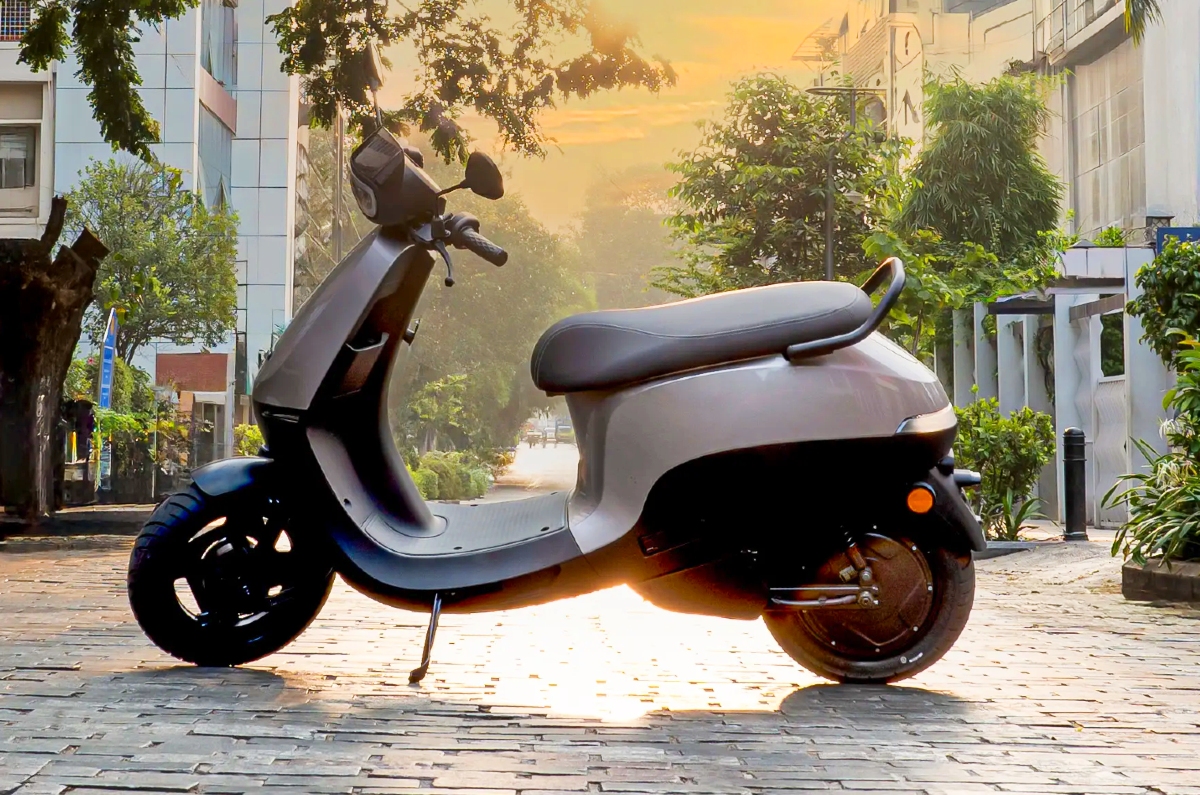
This is probably best time to buy an electric scooter. Here’s why

This is probably best time to buy an electric scooter. Here’s why


Various factors like the gradual improvement of EV charging infrastructure across India, the rising number of electric two-wheelers, and a narrowing p

Various factors like the gradual improvement of EV charging infrastructure across India, the rising number of electric two-wheelers, and a narrowing price gap between the ICE and electric two-wheelers are fuelling the favourable situation for electric scooters and motorcycles.

Electric vehicles are finding an increasing level of footprint in India over the last few years. In the last few years, electric two-wheelers have taken the baton of spearheading the EV adoption pace in the country from electric three-wheelers. Also, this shift has democratised the adoption of electric vehicle ownership in the country.

An estimate shows that an electric scooter can offer the rider a saving of about 16,200 every year compared to an equivalent internal combustion engine (ICE) powered scooter if the daily commuting distance is 30 kilometres, per unit electricity charge is 10 and a litre of petrol costs 100. With the FAME 2 subsidy benefits are about to conclude at the end of this month, the newly launched Electric Mobility Promotion Scheme (EMPS) 2024 brings another opportunity for two-wheeler buyers to avail the benefit of purchasing an electric scooter or electric motorcycle with lowered acquisition cost.

The Ministry of Heavy Industries has launched the EMPS 2024, which allocates a total amount of 333.39 crore for electric two-wheelers. The scheme also states that a total of 333,387 electric scooters will receive the benefit of 10,000 each. Under the EMPS 2024, the buyers of electric two-wheelers will receive this benefit for four months, spanning between April 1 and July 31 this year.

Watch: Ather 450S review: Worthy of its price tag?

Adding further advantage points for the consumers are factors like the rapidly improving electric vehicle charging infrastructure across India, the rising number of products, and the narrowing price gap between the ICE and electric scooters.

EV charging infrastructure

While electric cars require large charging space and bigger infrastructure, electric two-wheelers can use smaller space. This has propelled the EV charging infra developers to set up charging points at various spaces across the country. The EV manufacturers too are coming up at a large number with their relevant solutions. Besides this, electric two-wheelers can be easily charged using home charging solutions. Apart from that, the ease of taking out the battery from the vehicle and charging it somewhere is available with electric two-wheelers. In the last few years, EV charging infrastructure across India has improved significantly, which is one reason to make it an appropriate time for buying an electric scooter or motorcycle, as range anxiety is addressed at large.

Watch: Ola S1 Pro electric scooter: First impressions

Rising number of products

In the last few years, the number of electric vehicle launches, especially in the two-wheeler segment has increased drastically. While the EV startups have been leading the pack, the legacy two-wheeler manufacturers too have shifted their attention to this space. This is why, besides the EV startups like Ather Energy and Ola Electric, Hero MotoCorp, TVS Motor Company, and Bajaj Auto have brought their respective offerings into the space.

Narrowing price gap between ICE and electric two-wheelers

The price gap between conventional petrol engine-powered and electric two-wheelers is narrowing gradually. The EV startups have been offering discounts on their products, while schemes such as FAME and EMPS too are reducing the acquisition costs for the buyers. Additionally, the sky-high cost of petrol and rising maintenance costs along with the rising cost of acquisition for the ICE two-wheelers are making the situation favourable for electric two-wheelers.

First Published Date: 18 Mar 2024, 16:41 PM IST


Source link

Hyundai Creta EV spotted in wild, likely to get 360-degree camera and ADAS

Hyundai Creta EV spotted in wild, likely to get 360-degree camera and ADAS


  • Hyundai Creta EV is expected to share a host of design elements with the ICE variant of the midsize SUV.
Hyundai Creta EV is expected to share a host of design elements with the ICE variant of the midsize SUV. (Image: Autospy)

Hyundai Creta EV has been in discussions among Indian electric vehicle enthusiasts even before the updated version of the mid-size SUV entered the market in January this year. Now, the Creta EV has been spotted in the wild in South Korea in a fresh spy shot image. A fully camouflaged test mule of the Hyundai Creta EV has been spied, giving us a clue about the possible design elements of the electric SUV.

The latest spy shot of the upcoming Hyundai Creta EV shows the SUV gets an identical LED daytime running light (DRL) spanning the entire width of the front profile. Also, it looks like the car will have similar styling elements including LED projector headlamps as the ICE variant of the Creta, which is currently on sale in India. However, being an electric car, it would feature a closed panel instead of a conventional radiator grille visible in the newly launched Creta facelift. The spyshot also reveals the electric Creta gets 17-inch aero-designed alloy wheels, which is specifically meant for the EV and comes as the most distinctive change compared to the ICE variant.

Watch: Hyundai Creta facelift review: Major step-up for the SUV king

The Hyundai Creta EV is expected to come with repositioned brand log, front-fender mounted charging port. Also, there will be a smoothened bumper with tweaked radiator grille. Expect the electric SUV to feature design tweaks at side and rear profile as well.

Speaking about features, the Hyundai Creta EV is expected to come equipped with a large touchscreen infotainment system with EV-based user interface, an all-digital instrument cluster with new graphics, revamped centre console. Also, there would be a 360 degree surround camera and Level 2 ADAS suite. The front camera is visible at the centre of the nose section at front profile.

The South Korean automaker is tightlipped about the specifications of the upcoming electric car. However, expect it to come offering about 450 kilometre range on a single charge thanks to 55-60 kWh battery pack.

First Published Date: 17 Mar 2024, 14:20 PM IST


Source link