By: HT Auto Desk | Updated on: 06 Jan 2024, 17:30 PM
Yamaha has announced special offers in the state of Tamil Nadu to celebrate the Pongal festival. These offers will be applicable till 31st January 202
…
Yamaha has announced special offers in the state of Tamil Nadu to celebrate the Pongal festival. These offers will be applicable till 31st January 2024 only.
Image of Yamaha Fascino 125 FI Hybrid used for representation purposes only.
Yamaha Motor India has announced special offers in Tamil Nadu to celebrate the Pongal festival. These offers will be applicable till 31st January 2024 only. The exclusive offers are currently applicable on Yamaha’s 150 cc FZ model range, FZ16 and 125 cc Fi Hybrid scooters.
Yamaha is offering benefits of up to ₹6,000 or ₹1,999 down payment on 150 cc 150 cc FZ-S Fi V4, FZ-S Fi V3 and FZ Fi. The FZ-X gets zero down payment or benefits up to ₹7,000. Apart from this, there are benefits of up to ₹4,000 or zero down payment on 125 Fi Hybrid Scooters – RayZR and Fascino. There are no offers on the recently launched YZF-R3, MT-03, MT-15, R15 and Aerox 155.
In the Indian market, the most recent launch from Yamaha was the YZF-R3 and MT-03. Everyone has been waiting for these motorcycles for a very long time. While the R3 returned to the Indian market after some time, this was the first time that the brand launched the MT-03 in India.
However, there was a bit of an issue when Yamaha announced the prices of the R3 and MT-03. They are priced at ₹4.65 lakh and ₹4.60 lakh. Both prices are ex-showroom. The price is on the higher side because the motorcycles come to India through the CBU route. Yes, Yamaha did say that they will eventually bring the motorcycles through CKD if they see enough units being sold. However, at this price, this is a difficult proposition considering that the Aprilia RS457 costs ₹4.1 lakh ex-showroom.
Having said that, the R3 and the MT-03 will be preferred by a few people who are die-hard fans of the basic motorcycle. Both motorcycles are pretty simple and do not offer any electronics. The only thing on offer is a digital instrument cluster and dual-channel ABS. There is not even a slipper clutch on offer.
Vietnamese EV maker to invest $500 million into setting up a 1.5 lakh unit capacity plant in the first phase of five years.
VinFast, Vietnam’s leading electric vehicle (EV) manufacturer, and the Tamil Nadu State Government on Saturday announced a Memorandum of Understanding (MoU) to invest USD 2 billion (around Rs 16,600 crore) to manufacture and export vehicles from India.
VinFast and the state government will work towards a total investment of up to USD 2 billion, with an intended commitment of USD 500 million (around Rs 425 crore) for the first phase of the project spanning five years from the commencement date, said VinFast’s statement.
New plant construction expected to begin this year itself
Will generate 3,000-3,500 new job opportunities
VinFast’s investment is the largest in Tamil Nadu’s history
This move is a significant step in VinFast’s global expansion, which offers the brand a foot into the world’s third-largest car market. “The plan to expand into India aims to seize growth opportunities in the world’s most populous nation and rapidly expanding EV market,” added the statement.
The establishment of VinFast’s integrated electric vehicle facility in Tamil Nadu is anticipated to generate employment to approximately 3,000-3,500 people locally. Situated in Thoothukudi, the VinFast Tamil Nadu project aims to evolve into a electric vehicle production hub in the region, with an annual capacity of up to 150,000 units.
The construction of the plant is anticipated to begin in 2024, and is set forth to lay a strong foundation for economic growth in Tamil Nadu and India as a whole, claims the company. The company will also be setting up a nationwide dealership network to establish a strong brand presence and swiftly connect with customers across the country.
Besides the economic benefits, the project will also pave the way for green transportation development, targeting 30 percent of newly registered private cars to be electric. This aligns with the state government’s initiatives to minimise carbon emissions in the transportation sector.
Dr TRB Rajaa, minister of Industries Investment Promotions and Commerce of the Government of Tamil Nadu, with VinFast’s top management.
Ms Tran Mai Hoa, deputy CEO of Sales and Marketing, VinFast Global shared, “The MoU demonstrates VinFast’s strong commitment to the sustainable development and vision of a zero-emissions transportation future. We believe that investing in Tamil Nadu will not only bring considerable economic benefits to both parties, but will also help accelerate the green energy transition in India and the region.”
TRB Rajaa, minister of Industries of the Government of Tamil Nadu, said: “EV manufacturing companies are not only important economic drivers but also powerful accelerators to the state’s green vision. We are delighted that VinFast has chosen to invest in Tamil Nadu to establish its integrated EV facility. Possessing robust capabilities and unwavering commitment to a sustainable future, I believe that VinFast will emerge as a reliable economic partner and substantial contributor to Tamil Nadu’s long-term development.”
VinFast’s green transportation development project is its third manufacturing project and the largest investment in Tamil Nadu’s history, the press statement noted. The Government of Tamil Nadu has committed to providing cleared land for the manufacturing facilities, uninterrupted power supply and other infrastructure support on a best-effort basis.
Additionally, both parties will continue to collaborate and discuss opportunities for charging stations to steer towards a clean mobility future. VinFast – a member of Vingroup – envisions driving the advancement of the global smart electric vehicle revolution.
By: Paarth Khatri | Updated on: 05 Jan 2024, 18:07 PM
Apart from reporting 89 per cent sales growth, Audi also launched three new cars and three new special editions in India.
File photo of Audi Q8 e-tron and Audi Q8 Sportback e-tron models.
Audi India has announced 89 per cent growth in 2023 as they sold 7,931 units in India. This is the highest sales figure since 2015. Moreover, in Quarter 4, the brand sold 2,401 units and reported 94 per cent growth. Audi Approved which sells pre-owned cars grew by 62 per cent in 2023. In 2023, the manufacturer launched three new cars – the Q3 Sportback, the Q8 e-tron and the Q8 Sportback e-tron. Apart from this, three limited edition versions of Q8, Q5 and S5 were also introduced.
The SUV range that consists of Q8, Q8 e-tron, Q8 Sportback e-tron, Q3 Sportback, Q5 and Q7 registered 174 per cent growth. According to Audi, one in every four customers is a repeat Audi customer. Apart from this, performance and lifestyle cars including the e-tron range grew by 40 per cent.
Audi India recently opened India’s first ultra-fast charging station in Bandra Kurla Complex (BKC), Mumbai. It is developed in collaboration with ChargeZone and it boasts an impressive, total capacity of 450kW, to deliver 360 kW of power to an electric vehicle and is enabled by a 500 amps liquid-cooled gun to ensure high performance and efficiency. The charging station also has a solar roof which further supports the other electrical requirements like lighting. The Audi Q8 55 e-tron with a 114 kWh battery (the largest battery on a passenger vehicle in India) can charge from 20% to 80% in just 26 minutes using this ultra-fast charger.
Mr. Balbir Singh Dhillon, Head of Audi India said, “2023 marks another successful year for us and our diverse and desirable product portfolio continues to garner robust demand. We remain steadfast to an upward trajectory, instituting industry-first initiatives, and delivering unparalleled luxury experiences. Our retail footprint is expanding, culminating in the year-end with a total of 64 touch points (includes showrooms and workshops) and 25 Audi Approved: plus showrooms nationwide. We are confident that this momentum will carry into 2024. One in every four customers is a repeat Audi buyer and this tells us that we are on the right path. We will continue to focus on industry-best offerings for our customers and of course, bringing the very best products to India.”
Audi India has announced growth of 89 percent, retailing 7,931 units, in the January to December 2023 period. Positive growth followed on the back of three new product launches – the Audi Q3 Sportback, Q8 e-tron and Q8 e-tron Sportback – along with continued demand for the A4, A6 and Q5. This marked the highest sales since 2015, the press release noted.
The Q7, Q8, A8 L, S5 Sportback, RS5 Sportback, RS Q8, e-tron GT and the RS e-tron GT continued to witness strong demand. Balbir Singh Dhillon, Head of Audi India said, “2023 marks another successful year for us and our diverse and desirable product portfolio continues to garner robust demand. Our retail footprint is expanding, culminating in the year-end with a total of 64 touch points (including showrooms and workshops) and 25 Audi Approved: plus showrooms nationwide. We are confident that this momentum will carry into 2024.”
Audi India continued its strong performance on the back of new product launches, a strong product portfolio of seventeen cars and industry-best customer offerings. Dhillon further added, “One in every four customers is a repeat Audi buyer and this tells us that we are on the right path. We will continue to focus on industry-best offerings for our customers and of course, bringing the very best products to India.”
Audi Approved: plus the pre-owned car business witnessed a growth of 62 percent in 2023. Currently operating with 25 Audi Approved: plus, facilities across all major hubs in the country, the brand will continue to expand and add more pre-owned car facilities this year.
On a fine October morning in Delhi recently, I got to spend an entire day with the Tata Punch to figure out all the answers and assess what this new sub-compact SUV has on offer. A punchy name, after all, is just a name and the real proof of its capabilities lies out in the open world.
Read on for the extensive first-drive review of Tata Punch.
Tata Punch: Exterior
Tata Punch is being offered in four variants, or personas as Tata Motors likes to call these. Much of the details highlighted here would depend on which variant or persona one opts for. There is the base which is called Pure, followed by Adventure, Accomplished and the top-end Creative. It is a clever marketing strategy because even if you opt for the base model, all you have to say is “I bought the Punch in Pure persona”. Fancy!
Punch has a very prominent face which underlines its SUV credentials.
There are multiple colour options on offer but not all variants get all colour choices.
Tata Punch colour options
Pure
Adventure
Accomplished
Creative (Dual-tone roof)
Orcus White
Yes
Yes
Yes
Yes (Black roof)
Daytona Grey
Yes
Yes
Yes
Yes (Black roof)
Tropical Mist
Yes
Yes
Yes (Black roof)
Atomic Orange
Yes
Yes
Yes (Black roof)
Meteor Bronze
Yes
Yes (Black roof)
Tornado Blue
Yes (White roof)
Calypso Red
Yes (White roof)
The Punch I received as part of the media test drives was in Tornado Blue shade with white roof and the top-end Creative variant. In terms of dimensions, obvious at that, the all variants are same and the Punch has compact numbers while still looking showing off an SUV-ish profile. The prominent front face with a familiar ‘Humanity Line’ on the grille, the LED DRLs and head light units that seem to have been taken straight from the Harrier and the fog light units on the front fender give it a muscular appeal.
A look at he front and side profile of Tata Punch.
On the side, the large arches over the 15- or 16-inch wheels – depending on the variant, striking alloy design, generous cladding on the doors and roof rails highlight the profile. The fact that this car also has doors which open at a 90-degree angle – mimicking a butterfly, visually speaking, means that getting in and out is quite easy, space permitting of course.
All four doors on the Punch open at a 90-degree angle. Just be sure not to hit anyone or anything else!
Tata Punch dimensions
Length (mm)
3827
Width (mm)
1945
Height (mm)
1615
Wheelbase (mm)
2445
And the rear has a sleek demeanour courtesy arrow-shaped LED tail lights, double character lines on the trunk door and ‘Punch’ lettering here.
Open the trunk and there’s around 360 litres of boot space available even if the load angle is a little high and could make lifting heavy suitcases a bother. While the addition of a tyre puncture repair kit, tucked neatly on one corner, is great, the exposed wiring on the inside trunk section is shoddy. The support hinge for the parcel tray in my review unit came off at the slightest bit of tug. Word of advise – don’t put anything remotely heavy on the tray.
Minor quality-related issues like this hook for the parcel tray coming off its casing may be a concern for a few on the Punch.
Tata Punch first drive review 2024
Tata Punch: Interior
Punch has a rather compact cabin because of its rather compact dimensions. If you step in with expectations kept sky high, it is likely that the fall back to the ground will hurt. There’s no sunroof, no air purification system, no wireless phone charging option and no ambient lighting. What one can get, depending on the variant of course, are functional features for everyday use such as a cooled glovebox, infotainment screen, climate control, auto-folding ORVMs, rain-sensing wipers, automatic headlights, four speakers with two tweeters, among other additions.
Tata Punch variant-wise features
Pure
Adventure
Accomplished
Creative
All features of Pure and…
All features of Adventure and….
All features of Accomplished and…
Central locking with key
Floating 3.5 inch infotainment
Floating 7 inch touch screen infotainment by Harman with Android Auto and Apple Car Play
Projector HLs
Dual airbags
Four speakers
Four speakers, two tweeters
LED DRLs
ABS with EBD
Steering mounted control
Rear view camera
R16 Diamond cut alloys
IAC+ESS Technology
USB charging port
LED tail lamps
Roof rails
Brake Sway Control
ORVM with electrical adjustment
Front fog lamps
7 inch TFT instrument cluster
Front power windows
All power windows
R15 hyper style wheels
Auto headlamps
90-degree door
Follow me home HLs
Push button start stop
Rain sensing wipers
Flat rear floor
Anti glare IRVM
One touch down Dr window
Auto folding ORVMs
LED indicators
Central Remote Locking with Flip Key
Cruise control
Fully automatic temperature control
Black ODH
Full wheel covers
Driver seat height adjustment
Cooled glove box
Painted bumpers
Body coloured ORVM, ODH
Traction Pro (AMT only)
Rear wiper + wash
Door, wheel arch and sill cladding
Rear defogger
Puddle lamps
Rear seat arm rest
Leather steering & Gear knob
One can also choose from a host of customization options when buying the Punch, a sign that Tata Motors does not want you to be limited in your desire for more features just because you chose a lower variant.
Pure
Adventure
Accomplished
Creative
Rhythm Pack
Rhythm Pack
Dazzle Pack
IRA Pack
3.5-inch infotainment screen
7-inch touchscreen
16-inch diamond cut alloys
IRA Connected Car technology
4 speakers
2 tweeters
LED DRLs
Steering-mounted audio control
Android Auto/Apple CarPlay
Projector head lights
Rear camera
A Pillar black tape
The seven-inch infotainment screen inside my Persona was par for the course courtesy minimal reflections and good response to touch inputs. Apart from the usual audio, video and navigation details, it also puts out a driver scorecard which assesses how well (or not) you have been behind the wheel. The semi-digital driver display too was on expected lines and is positioned well behind the three-spoke, flat-bottomed steering with mounted controls. The steering, however, can only be adjusted for rake and not for reach.
A look at the cabin layout of Tata Punch.
Tata Punch first drive review The New Tata Punch
Now there is a lot of hard plastics used all around the cabin of the Punch but frankly, I was expecting this. Because Tata is likely to price Punch aggressively, this is something that can be overlooked. What is impressive though is the sporty dashboard design and layout which seek to camouflage the plastic quality, especially the white patterned addition on the lower end of the dash -where the AC vents are at. Speaking of AC vents, these get an outline border in the same hue as the exterior body colour of the vehicle.
The entire dashboard layout of Punch has a youthful appeal.
The cooled glovebox is a great addition and has plenty of space for storing either documents or bottles. Or both. A sectional divide here seeks to ensure that things don’t get jumbled.
Coming to the important bit about seat upholstery and spacing, Tata Punch tends to deliver on most counts. The seats are well cushioned and the quality of stitching appeared to be satisfactory. The driver seat can be adjusted for height which means even someone who may not exactly be considered tall will have a commanding view of the road ahead. I would have expected an arm rest, at least with the AMT I was driving, but there was none to be found.
The passengers on the back seat, well, have a bit of a hit and miss experience. The flat floor ensures that there is space for feet for the middle passenger but those on either side have limited space for their respective feet due to the rails on which the front seats sit. Leg room is rather limited and knee and head room is just about satisfactory. Three passengers sitting side-by-side on long journeys may be a bit of a cramped affair, also because there is no rear AC vent. Another miss is the lack of charging points for rear-seat passengers.
Space is a bit constrained on the back seats but Punch benefits from a high-seating position.
That said, it isn’t as if the rear section of the Punch is a deal-breaker for the family person. An armrest in the middle of the rear seats, high-seat position and good punchy speakers may still make this car a good proposition for small families.
Tata Punch: Safety
Tata Motors has been consistently producing some of the safest passenger vehicles in India. Over the last few years, the homegrown carmaker has shown the world that made-in-India cars can achieve a Global NCAP five-star safety rating and one among them is the Tata Punch. This boxy SUV-ish car has received a five-star for adult occupant protection, while for child occupant protection, it has received a four-star rating.
A major factor behind this safety rating is the build quality, as the automaker claims. Besides that, on the safety feature front, the Punch gets dual front airbags, ABS with EBD, automatic headlamps, reverse parking sensors, ISOFIX anchors, autonomous emergency braking lane departure warning, electronic stability control, blind-spot detection etc.
Tata Punch: Performance
Punch is made available only with a 1.2-litre Revotron petrol engine. In case you want a diesel option, I advise checking out other Tata Motor options or picking one from the rival camp. But if the petrol engine is fine, there’s much to look forward to right here.
Tata Punch technical specs
Max Power
86 Ps
Max Torque
113 Nm
Engine
1.2 Revotron petrol
Capacity, Cylinders
11999 cc, 3 cylinders
Fuel tank capacity
37 litres
The majority of my time with the Punch was with the AMT and that worked well because majority of my time was also spent within city limits – Delhi to Gurugram to Delhi. In all, I drove this variant (oops, persona) for around 100 kilometres on mostly well-laid city roads with the occasional broken patches.
Tata Punch first drive review
Punch is relatively stable at high speeds and maintains straight lines with poise.
The key takeaway from the drive that I had was that the AMT, on expected lines, is a bit slow to take off. It has a familiar reluctance till around the 1,500 RPM mark and there the so-called rubber-band effect is very, very omnipresent. Any sudden plans for overtaking ought not to be sudden and will have to be well thought out before being executed. But once speed does build up and around the 1800 RPM mark, the Punch does justice to its name.
If you are primarily driving within city limits, the Punch with AMT ought to be a good choice as long as you aren’t an authentic driving enthusiast. If you are, try the Punch with a manual gearbox.
Cruising past around 60 KMPH and the Punch comes into its element. Its compact dimensions meant that weaving in and out of the extremely congested Delhi-Gurugram Expressway was an absolute delight. And because the steering set up is done right, it offers a good balance between heft and flexibility – a good combination to have for a car that may be doing duty in all kinds of traffic situations. There is also a traction-control mode on offer on the AMT which promises to get you out of slippery situations.
NVH levels are satisfactory although the groan of the engine does seep into the cabin when being excessively pushed. Keep it steady and the Punch manages to hint at a certain level of refinement that recent Tata cars have started putting in respective resumes off late.
But one thing Punch ought not to put on its resume is the control over body roll. Again, this is only when the vehicle is being pushed to perform but sharp turns at relatively high speeds means the driver and especially passengers at the rear will have to get a grip, literally speaking.
It was soon time for me to make the switch to the Punch with manual transmission and take my word for it – if you like the basic nuances of driving, you will love this car.
The Punch with MT is not just capable on regular roads but is quite capable on paths less taken and traveled.
Now I am not sure if it is because I spent most of my time with the AMT or if the manual transmission is really that good but having a control over Punch’s punch made me wish that I had had more than just 20 minutes with this particular option. The gear shifts are short, crisp and nearly precise. And remember the bit about planning over-taking moves? No need! Downshift, press the pedal and the Punch will execute commands nearly instantly.
The manual gearbox is also what is likely to excel on roads less than perfect. I got a chance to test its ‘off-road’ capabilities and while it was in a controlled test track, I was mighty impressed. Sure, Punch is no 4X4 but its high-seating position does help in giving a clear view of the surroundings – crucial in tricky terrain that one may encounter. With a 20.3 approach angle, 37.6 departure angle and 22.2 ramp-over angle, Punch was nifty throughout the obstacle course. And because it has a claimed water-wading capability of 370mm, this car may also be capable of navigating through submerged roads of Indian cities during monsoon. My advice though? Don’t try it unless you absolutely must have to.
Overall, it is great that Tata Motors has offered AMT on the Punch and it does have some serious SUV traits. But it is the manual transmission that would be my preferred choice and the fact that the vehicle can ably manage challenging terrain – to its best ability – is a big, big plus over rivals.
Tata Punch: Verdict
Tata Punch looks more like an SUV than many of the sub-compact SUVs out in the market. This alone could bring many to Tata showrooms to check out the vehicle. But beyond the superficiality of looks, it has a long list of core strengths that could work in its favour.
A high ground clearance and seating position means Punch is perhaps the most SUV-ish among all sub-compact SUVs on offer.
Punch may not have an absolutely exhaustive feature list or the most comfortable drive and ride experience in the segment it wants to compete in. And yet, it packs in the features that an owner is most likely to make use of – including iRA connected app support -and is an eager machine on the move. The ability on less than perfect roads don’t come as a cherry on the cake but is a large and delicious part of the cake itself.
I expect Tata Motors to price the Punch very, very aggressively and assuming this happens, the SUV will surely be a very, very compelling option for buyers inclined towards this body type without having to break bank.
It will come with two battery pack options; likely to be called MR and LR.
Having wrapped up 2023 on the back of strong EV sales, it’s no surprise Tata’s first new model for 2024 is also going to be an EV. After numerous spy shots and much anticipation, Tata Motors is likely to officially debut the Punch EV in India this week, and we have some fresh details on its battery pack and equipment list.
Punch EV to get two battery pack options: 25kW and 35kW
Will come with ventilated seats, 10.25-inch screens
Bookings expected to commence next week
Tata Punch EV battery, equipment details
Our sources tell us that like the the Nexon EV and Tiago EV,the Punch EV will be available with two battery pack options – 25kWh and 35kWh. The two variants could, therefore, also be called Medium Range (MR) and Long Range (LR), as per Tata’s EV nomenclature. The small EV SUV will be based on the ALFA platform with Tata’s Gen 2 EV architecture, which essentially is an ICE to EV conversion with major modifications, and come with a liquid-cooled battery and a permanent magnet synchronous motor powering the front wheels.
Our sources also say the Punch EV will get ventilated front seats, which will make it the most affordable car in the country to get this feature. Higher variants will get a new 10.25-inch touchscreen from the Nexon EV, while lower variants will have a smaller 7.0-inch screen. The jewelled drive selector from the Nexon EV will also be carried over.
Previous spy shots have also hinted at four-wheel disc brakes, the two-spoke steering wheel seen on larger Tata SUVs, a digital instrument cluster and an electronic parking brake. It will also be marked out visually from its ICE counterpart with new styling elements, such as full-width LED light bars, a blanked-out grille and new alloy wheels, largely drawing inspiration from the Nexon EV.
Tata Punch EV positioning and rivals
The Punch EV will be squarely aimed at the Citroen eC3 in our market. It will be positioned below the Nexon EV MR and above the Tiago EV MR, which means prices could range between Rs 10 lakh-13 lakh, ex-showroom. Bookings are expected to commence soon and details on range, power figures and features are expected upon its official debut.
By: HT Auto Desk | Updated on: 03 Jan 2024, 20:28 PM
Honda Motorcycle and Scooter India closed the 2023 calendar on a positive note with over 3.17 lakh units sold in December 2023, a growth of 27 per cen
…
Honda Motorcycle and Scooter India closed the 2023 calendar on a positive note with over 3.17 lakh units sold in December 2023, a growth of 27 per cent.
Honda 2Wheelers India’s exports shined in December 2023 with 31,022 units shipped overseas, registering an 82% growth year-on-year
Honda Motorcycle and Scooter India (HMSI) reported its sales for December 2023 and the company sold a cumulative (domestic + exports) of 317,123 units, growing by 27 per cent, as compared to 250,171 units sold in December 2022. The two-wheeler maker closed the calendar on a positive note even as the two-wheeler market showed slow sales momentum.
Honda’s domestic sales stood at 286,101 units, witnessing a hike of 22.71 per cent year-on-year, as against 233,151 units sold in December 2022. Exports, on the other hand, stood at 31,022 units, registering a massive growth of 82.27 per cent over 17,020 units shipped overseas during the same month a year before.
The Honda Shine 100 was launched in 2023 in the entry-level 100 cc segment as the brand’s most affordable motorcycle (HT Auto/Kunal Thale)
Honda Two-Wheelers India sold 43,84,559 units during the 2023 calendar year. In comparison, its biggest rival and market leader Hero MotoCorp sold 54.99 lakh units during the same period. The Japanese manufacturer continues to hold the second spot as far as two-wheeler sales are concerned in India.
Honda had an eventful 2023 with multiple new and updated launches. The company introduced the Honda Activa H-Smart variant, as well as the Shine 100, its most affordable motorcycle yet. The new Honda SP160 and Dio 125 also hit the market in 2023. In the premium segment, the company went on to launch the new classic CB350, the updated Gold Wing Tour and the XL750 Transalp adventure tourer. Furthermore, HMSI announced the appointment of Tsutsumu Otani as the new President, CEO & Managing Director of the company.
The 2024 calendar year is more crucial for Honda Two-Wheelers India with the company all set to enter the electric mobility space. The company has already announced its plans to foray into the space and will bring an electric scooter and motorcycle later this year. The made-in-India models will make it to other markets as well with India serving as the production hub.
New Creta will get a total of five powertrain options and 19 variants to choose from.
Hyundai commenced bookings for the Creta facelift on Tuesday and also revealed the powertrain options that will be available on the SUV. As before, the 115hp, 1.5-litre petrol and diesel engines will continue with their respective gearboxes, but what’s new is the 160hp, 1.5-litre turbo-petrol engine. Now we have a complete breakdown of which powertrain will be available on which trim.
Creta turbo-petrol to come in a single fully-loaded trim
Will only be offered with the 7-speed DCT gearbox
Bookings ongoing for Rs 25,000
Hyundai Creta facelift trims and variants
The new Creta will be available in seven trim levels – E, EX, S, S(O), SX, SX Tech and SX(O) – of which the latter two will also get a dual-tone colour option. Of the five powertrain options, it’s only the 1.5 petrol-MT that will be available across the board, but crucially, the 1.5 turbo-petrol will only be offered with 7-speed DCT gearbox and in just one fully-loaded trim. Here’s a table summarising the variant line-up of the new Creta.
Hyundai Creta variant lineup
E
EX
S
S(O)
SX
SX Tech
SX(O)
1.5 petrol MT
Yes
Yes
Yes
Yes
Yes
Yes
Yes
1.5 petrol CVT
–
–
–
Yes
–
Yes
Yes
1.5 turbo-petrol DCT
–
–
–
–
–
–
Yes
1.5 diesel MT
Yes
Yes
Yes
Yes
–
Yes
Yes
1.5 diesel AT
–
–
–
Yes
–
–
Yes
This, however, seems to be a missed opportunity for Hyundai. A sole gearbox option in a fully-loaded trim will limit the appeal and accessibility of the turbo-petrol engine, especially since the Kia Seltos additionally gets the option of an iMT gearbox with the same engine and from much lower in the variant lineup. Hyundai and Kia have predefined their gearbox strategy with the 1.5 turbo-petrol of manual and iMT, respectively, so a manual should have been offered with the Creta as well.
In fact, every other model in the Hyundai-Kia group that uses this engine gets the option of a second gearbox apart from the 7-speed DCT, and across multiple trims – the Carens gets an iMT while both the Alcazar and Verna get proper manual gearboxes. Even among Hyundai’s rivals, the Skoda Kushaq and Volkswagen Taigun get manual as well as DCT gearboxes with their respective 1.5-litre turbo-petrol engines.
Hyundai Creta facelift exterior, interior updates
As for the updates that come with the mid-lifecycle facelift, the Creta gets a comprehensive exterior makeover that brings with it new full-width LED daytime running lamps, new headlamps and grille and all-new front and rear bumpers. It looks a lot more upright and squared-out than the outgoing model, and perhaps will divide less opinion about its styling.
On the inside, the dashboard has been completely redone with new twin connected screens and a redesigned centre console with a touch panel for HVAC controls. On the features front, the addition of ADAS, dual-zone climate control and 360-degree camera will be key additions, among others.
Bookings for the Creta facelift are ongoing for a token amount of Rs 25,000, and those who have booked the outgoing model will have the option of changing their bookings to the facelifted model. The launch is expected later this month.
By: HT Auto Desk | Updated on: 02 Jan 2024, 21:42 PM
Hero MotoCorp closed the 2023 calendar year with over 54.99 lakh units sold, a growth of 5 per cent over 52.47 lakh units sold in CY2022.
Hero MotoCorp dispatched 393,952 units in December 2023 with volumes dropping marginally year-on-year
Hero MotoCorp reported its sales for 2023 and the company closed the calendar year with over 54.99 lakh units between January and December. The manufacturer registered a five per cent growth in volumes when compared to 52.47 lakh units sold during the same period in 2022. While sales ended in the green for the year, Hero witnessed a marginal drop in volumes with 393,952 units sold in December 2023, as against 394,179 units sold in December 2022.
Hero MotoCorp said that it expects the positive momentum to grow further from the fourth quarter of FY2024 with increased government spending and improved liquidity, encouraging farm activity and the upcoming marriage season.
Motorcycle sales in December remained flat with 354,658 units sold, when compared to 356,749 units sold during the same month a year ago. Scooter sales were down by five per cent with 39,294 units sold last month, over 37,430 units sold in December 2022.
Hero MotoCorp introduced its premium two-wheeler strategy in 2024 across segments and also went on to launch the Premia dealerships
Domestic sales remained flat at 377,842 units, as against 381,365 units a year before. Exports, on the other hand, registered a 25 per cent hike last month with 16,110 units shipped overseas, compared to 12,814 in December 2022.
The previous year also saw Hero make some significant announcements including the launch of the Xoom 110, Xtreme 160R 4V, Karizma XMR 210 and the return of the Passion Plus. The company also launched its maiden offering in partnership with Harley-Davidson in the form of the H-D X440. Hero also strengthened its EV arm, Vida, with network expansion and collaboration, announcing its partnership with Ather Energy for interoperable fast-charging stations across the country.
Furthermore, Hero announced Vida’s entry into the European market at EICMA 2023 while showcasing future models like the Xoom 125R, Xoom 160, and the 2.5R Xtunt Concept. The two-wheeler giant is all set to kick off 2024 with its motorsports program and will be competing in the upcoming Dakar Rally. The brand also has its new flagship product in the works which will be introduced on January 22, 2024.
The current Chetak with the LCD display will likely remain on sale as the Chetak Urbane, while the new Premium version will get features like a TFT display.
Bajaj will launch an updated Chetak Premium on January 5th, and the improved e-scooter will get fancier features, including a new TFT display.
The current Chetak lineup already includes an Urbane and a Premium variant, but the two scooters are extremely similar. With the updated Chetak Premium, Bajaj is likely to broaden the gap between the two variants. The Chetak Urbane will carry on as the more affordable and more basic version, while the updated Chetak Premium will present the more expensive and more feature-rich option.
Teaser image showing the new TFT screen coming to the updated Chetak Premium.
The company has taken to social media to announce the launch of the updated Chetak Premium, which will take place at 1pm on Jan 5. Additionally, it has also put up teaser images showing parts of the scooter, including a clear look at the new TFT screen. From the display readout, we can tell that the updated scooter will get Bluetooth connectivity and turn-by-turn navigation. It will also almost certainly continue to feature riding modes.
The images also show the rest of the scooter, which looks fairly identical to the current Chetak Premium. It will continue to sport the neat single-sided front suspension, the smart alloy wheels and the slick, rounded design. The seat, lights, floorboard and apron storage space also remain unchanged.
What’s not yet known is whether the powertrain and battery pack will receive any revisions. At present, the Chetak Premium gets a 2.9kWh battery pack good for a claimed range of 108km – at the very least, this is likely to increase to 113km as a result of software upgrades, as we saw with the recently launched Chetak Urbane.
By: HT Auto Desk | Updated on: 01 Jan 2024, 16:57 PM
Ola Electric sells S1 Pro, S1 Air and S1X Plus electric scooters in India.
Ola Electric on Monday announced that it sold 30,219 electric scooters across India in December 2023. The ride-hailing platform turned into an EV manufacturer also claimed that it captured 40 per cent market share in the Indian electric two-wheeler segment. Ola Electric further claimed that December 2023 witnessed its highest-ever monthly registrations.
The electric two-wheeler manufacturer has claimed in an official release that it registered a whopping 74 per cent sales growth in December 2023, as compared to the same month a year ago. Also, the company claims to have recorded 68 per cent growth in the last quarter ending in December 2023 with 83,963 units, compared to the October-December quarter of 2022. Also, the EV manufacturer claims to have sold a total of 2.65 lakh units of electric scooters in 2023.
Ola Electric further claimed that it crossed another milestone of becoming the first company in the industry to produce 400,000 electric scooters in just two years. Speaking about the sales performance, Anshul Khandelwal, Chief Marketing Officer of Ola Electric, said that its ‘December to Remember’ campaign was a massive success bringing thousands of customers under the EV fold. “We believe that we have continued our market leadership for yet another quarter on the back of our strong product lineup comprising the S1 Pro, S1 Air, and the S1 X+. Our ‘December to Remember’ campaign has been a massive success, bringing thousands more under the EV fold,” he added.
Ola Electric currently has five different electric scooters on offer across variants and different battery options. It sells models like S1 Pro, S1 Air and S1X Plus. Priced at ₹147,499 (ex-showroom), S1 Pro is the company’s flagship premium EV scooter while S1 Air is available at ₹119,999 (ex-showroom), and it is the band’s most affordable EV.
First report: The compact EV has entered our fleet and has been making light work of jam-packed commutes.
Say hello to the Autocar long-term fleet’s latest and smallest car, the MG Comet EV. Soon after, I whisked away the keys for some seat time with a car that has intrigued me for a while. After a short stint, here’s what it’s like to live with.
I have the privilege of taking home various test and long-term cars and bikes, and none of them have caught the fancy of my family like the Comet. I took it home over the Diwali weekend and everyone, including my extended family, was keen on checking out this cute little car. What immediately wowed them, apart from the unconventional looks, was the interior design and quality. With light colours and a clean, minimalist look, the MG Comet’s cabin is a nice, airy place to be. And while space at the back is actually ample for adults, getting in and out of the rear seat is a task, especially for older or healthier people.
The Comet EV manages to fit in comically small parking spaces.
The Comet has also been making my commute to work a breeze. Don’t get me wrong, it’s still jam-packed but much more manageable now. The Comet’s tiny footprint allows me to squeeze in and out of gaps, which I would only have been able to do on a two-wheeler. It also makes parking a stress-free process, with its large glass area giving you a great 360-degree view. It fits in parking slots where you just wouldn’t expect a car to. Another thing I appreciate about the MG is its steering. Not only does the wheel feel high quality and good to hold but it’s also effortless to operate, which again, is a boon in the city.
However, I really wish MG had given it a better audio system as the current one just isn’t good enough. It’s loud, but the clarity and bass leave a lot more to be desired. And a good music system is something that I really want in my car, which is something I’m sure the younger, hipster crowd that MG is targetting want. Furthermore, the touchscreen has also glitched on occasion so an infotainment upgrade is a much-needed one.
Audio system is very poor and leaves more to be desired.
I have been in very few vehicles that garner as much attention as the Comet. From young to old, everyone wants to know more about it. Part of the attention you get is because of its dimensions and the other part is thanks to this bright neon green paint. Personally, I don’t like this colour, but that’s a subjective matter.
While I haven’t run it long enough, I did run it from 100 to 30 percent, during which it covered 121km (see table below); more than acceptable for a city EV. And mind you, the AC was on the entire time.
MG Comet EV range
Charge
Distance
100%
0km
90%
16km
80%
32km
70%
52km
60%
65km
50%
82km
40%
101km
30%
121km
There’s also a few curious things I’ve noticed in my short stint with the Comet. First, the buttons to switch tracks etc. on the right hand side of the steering work on and off, especially when you’re using Android Auto. Second, it won’t charge using our office’s wall-mounted charger anymore. It did initially, but now the plug won’t lock into place, so I’ve had to resort to the slow AC charger that comes with the car. Lastly, and most surprisingly, the Comet managed to roll back its odometer on its own. And it’s not like it’s an analogue unit where it could be a mechanical malfunction; this is a full-digital unit. This is something I’ve never experienced with a car or bike in the five years I’ve been testing them. We will get these matters inspected and report back in the next long-term review.
By: HT Auto Desk | Updated on: 31 Dec 2023, 19:42 PM
First launch of the year, the Kawasaki Ninja ZX-6R has received a host of upgrades since the last time this model was on sale in India.
The 2024 Kawasaki Ninja ZX-6R makes a comeback to the Indian market with new styling and the same exciting 636 motor
India Kawasaki Motor is all set to introduce the Ninja ZX-6R full-faired motorcycle in the country tomorrow, January 1, 2024. The first launch of the year, the Kawasaki Ninja ZX-6R was showcased at India Bike Week 2023 earlier this month and has received a host of upgrades since the last time this model was on sale in India.
The Kawasaki Ninja ZX-6R has seen plenty of upgrades internationally over the years. The MY2024 version will arrive in India with a revised bodywork that’s identical to the one found in the recently launched Ninja ZX-4R. The split LED headlamps are sharper and the bike comes with clip-on handlebars for a more dedicated riding posture. The bike has also been updated with a TFT screen that now gets Bluetooth connectivity.
Kawasaki ZX-6R uses a 636 cc, liquid-cooled, in-line four-cylinder engine tuned for 128 bhp and 69 Nm of peak torque
Power continues to come from the 636 cc inline-four engine engine that is now Euro5 compliant. The motor has been tuned to produce 128 bhp and 69 Nm of peak torque and is paired with a 6-speed gearbox with a quickshifter. Other mechanicals have been carried over including the Showa USD front forks and a monoshock at the rear. Braking performance comes from dual 310 mm discs at the front and a single 220 mm disc at the rear. The bike will come shod with 17-inch alloy wheels with Pirelli Diablo Rosso 4 tyres.
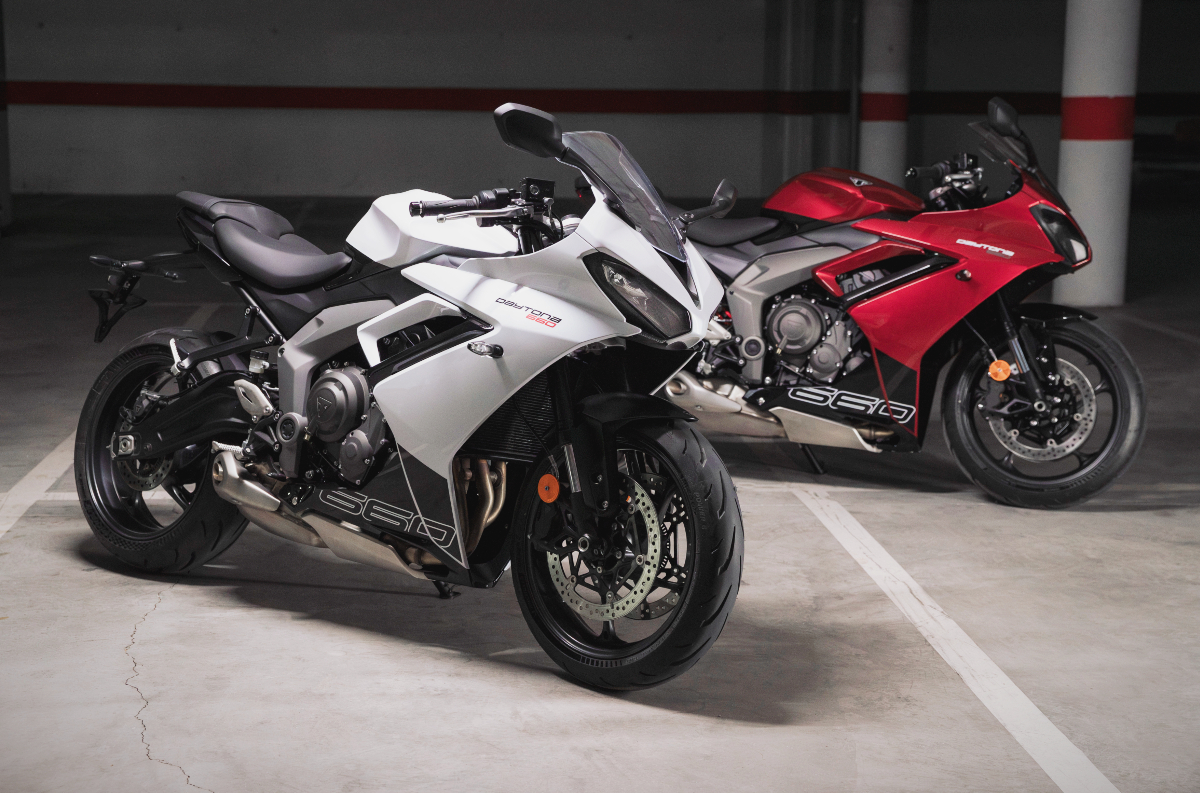
The Kawasaki Ninja ZX-6R will take on the Aprilia RS 660 upon arrival and prices should be around ₹12 lakh (ex-showroom). The motorcycle makes for a fantastic bridge between the Ninja 400 and the top-spec Ninja ZX-10RR, keeping the track enthusiasts entertained. The bike is expected to soon face the heat from the Yamaha R7, also slated for arrival in 2024 in India.
We’ve been driving the Maruti Suzuki Jimny in the city, on the highway and even over some off-road sections. Here’s our list of good bits and bad bits.
By: HT Auto Desk | Updated on: 30 Dec 2023, 19:04 PM
From Ather to Ola and everything in between, there is something from every major EV player coming up in 2024.
From Ather bringing its family e-scooter to Honda introducing its maiden electric scooter, both new and traditional OEMs will have something to offer in 2024
2023 was a particularly challenging year for the electric two-wheeler segment. While demand soared on one end, manufacturers also faced challenges with the revision of the FAME II subsidy hiking prices across the EV space. Nevertheless, the demand continues to be on the rise for electric two-wheelers and manufacturers – new and traditional alike – are gearing up to introduce many new models in the coming year.
With electric two-wheeler sales exceeding the 8.3 lakh mark in 2023, the number is only expected to increase further in 2024. So if you are looking to bring a new electric scooter or motorcycle home next year, this should be the list to watch out for. From Ather to Ola and everything in between, there is something for everyone in this space. Here are the top 10 electric two-wheeler launches lined up in 2024.
The Ather 450X Apex will be a limited-run model with cosmetic and performance upgrades. It will arrive on January 6, 2023
1. Ather 450 Apex
Kicking off the new year will be the Ather 450 Apex. The new electric scooter arrives on January 6 and will be a new limited-run model line based on the 450X. The teaser images promise the transparent side panels from the 450X Series 1 limited edition, as well as a boost in performance. Expect to see visual upgrades as well when the 450 Apex arrives next month, albeit in limited numbers.
The Ampere NXG is expected to resemble the concept closely and will be the brand’s new flagship e-scooter
2. Ampere NXG
Ampere Electric Mobility, the EV arm of Greaves Cotton, previewed the NXG electric scooter at the 2023 Auto Expo and the model is slated to arrive in 2024. Showcased as a concept, the Ampere NXG is expected to stick close to the concept in shape and form while packing a 7-inch TFT screen, PMS mid-drive electric motor and a host of other features. The Ampere NXG will be the new flagship offering from the company and will take on the Ather 450X, Ola S1 Pro and Simple One presently on sale.
The TVS iQube ST will pack a bigger battery pack and a higher top speed over the iQube S
3. TVS iQube ST
While the TVS iQube is one of the best-selling electric scooters on sale, the much-awaited iQube ST continues to elude the market. The model was even showcased at the 2023 Auto Expo. The TVS iQube ST will be the top-spec variant of the electric scooter and packs a larger 4.56 kWh battery pack with a longer range of 145 km in Eco mode and 110 km in Power mode. The iQube ST also gets a higher top speed of 82 kmph as against 78 kmph on the iQube S. The e-scooter will come with a 950W charger powering the battery from 0-80 per cent in 4 hours and 6 minutes, while the company will also offer a 1,500W charger that’ll shorten the charging time to 2 hours and 30 minutes. The ST variant will be 3 kg heavier and will also get a price bump upon arrival.
The 2024 Bajaj Chetak Premium will come with a bigger battery pack and a new 7-inch touchscreen unit with more connectivity options
4. 2024 Bajaj Chetak Premium
The 2024 Chetak Urbane was launched recently with a subtle refresh and you can expect the more premium Chetak Premium variant to arrive over the next few weeks. According to leaked documents, the 2024 Chetak Premium will carry a larger 3.2 kWh fixed battery promising a longer range of 126 km on a single charge. The electric scooter will also get a new 7-inch touchscreen console that will bring features like turn-by-turn navigation and notification alerts. The top speed will also increase to 73 kmph on the top variant. The 2024 Bajaj Chetak Premium should be more competitively equipped to take on the Ather 450S, Ola S1 Air, Simple Dot One and the like in the segment.
The Ather family electric scooter will be comfier and should be more accessible as well
5. Ather Family Scooter
Also coming from the house of Ather Energy next year will be the family electric scooter. Ather Energy has been testing its new offering and the e-scooter is expected to grace showrooms in 2024. Details are scarce about the new family electric scooter but the model is expected to be more rounded and appealing to a wider audience and will give Ather a stronger product to level up its volume game. The new family e-scooter is also likely to be more affordable than the 450X.
The Honda SC e: concept looks like a 125 cc equivalent electric scooter that could influence the future e-scooters from the manufacturer
6. Honda Electric Scooter & Motorcycle
Making its debut in the electric mobility segment will be Honda Two-Wheelers India with its maiden electric offering. The company has already announced its plans to bring two electric scooters with fixed and swappable batteries respectively. Honda Global also announced recently that an electric motorcycle will be made in India and is slated to arrive in 2024. India will play a major role in Honda’s electric mobility plans going forward, especially in producing mass-market EVs. Honda’s maiden electric scooter should arrive by March 2024.
The production-spec Tork Kratos X will be different from the one revealed at the 2023 Auto Expo and will arrive by mid-2024
7. Tork Kratos X
The Tork Kratos X was first unveiled at the 2023 Auto Expo and was slated to arrive in June 2023. However, the FAME II subsidy revisions threw a spanner in the works of the Pune-based start-up. Tork Motors now plans to bring the Kratos X by mid-2024 and the electric motorcycle will see key changes over the one showcased at the expo. The X will be the flagship offering but will also come with an upgraded motor for better power and torque output. It needs to be seen if the aluminium swingarm, 7-inch TFT screen and winglets will be carried over on the updated version.
Ola Electric is likely to reveal the production-spec e-motorcycles next year that promise segment-leading power and range outputs
8. Ola M1 Electric Motorcycle
Ola Electric announced a foray into the electric motorcycle segment in August this year and we expect to see the first offering from the company arrive towards the end of 2024. Dubbed the M1 electric motorcycle range, the company showcased four concepts – roadster, cruiser, adventure and supersport – and we could see the final production versions arrive next year. Ola did not share any technical details on the upcoming e-motorcycles but promised that the bikes will see the biggest battery pack and motor on any Indian electric two-wheeler. At present, the UltravioletteF77 has the biggest battery pack at 10.5 kWh.
The Matter Aera will finally hit the streets in the first quarter of 2024 and will be the first electric motorcycle in India to get a liquid-cooled motor and battery, and a 4-speed gearbox
9. Matter Aera
Having launched its maiden e-bike earlier this year, Ahmedabad-based Matter will finally begin deliveries of the Aera electric motorcycle next year. The Matter Aera is priced from ₹1.73 lakh to ₹1.83 lakh (ex-showroom) and the reservation window is currently open. The Matter Aera is powered by a 10.5 kW (14 bhp) mid-mounted motor with 520 Nm of torque at the wheel. The e-motorcycle packs a 5 kWh battery pack promising a range of 150 km on a single charge. The Aera will be the first electric motorcycle to get a liquid-cooled motor and battery, and a functional 4-speed gearbox. Deliveries should begin from March 2024 onwards.
The Kinetic Luna will make a comeback in an all-electric avatar with Kinetic Green launching the e-moped sometime next year (In pic: Arun Firodia of the Kinetic Group with the Luna moped)
10. Kinetic Green e-Luna
Making a comeback in an all-electric avatar, Kinetic Green will revive the Luna name for its upcoming electric two-wheeler called the ‘e-Luna.’ The electric moped promises to be as functional as its yester-year ICE version and will pack a host of features as well. The company has not revealed more details about the e-Luna but the model is expected to arrive in the first half of 2024.
The Renault Duster will make its India comeback with the third-generation model in 2025.
The all-new Duster has been revealed internationally by the Dacia brand, sporting a new platform, fresh design and multiple powertrain options. The big news is that Renault will bring it to India in 2025. So, without further ado, here are the most important things to know about the new Renault Duster for India.
1. Renault Duster platform
The new Duster is built on the Renault-Nissan Alliance’s modular CMF-B platform that, globally, also underpins a number of models for both the carmakers, as well as Renault’s sister brand Dacia. This platform is more advanced than the M0 architecture that underpinned the original Duster and it will be localised for production in India. Earlier this year, the Renault-Nissan alliance had announced a fresh investment of Rs 5,300 crore in the Indian market, primarily to launch six new locally produced models between the two brands. These would be based on the CMF-B platform and also on the electrified version of the CMF-A platform.
2. Renault Duster exterior
On the outside, the new Duster looks more squared off, and its muscular flanks and shapely bonnet give it a butch look. The large 18-inch wheels add to its appearance as do the large dose of plastic cladding all around, including on the angular wheel arch design. The headlights with their Y-shaped DRLs merge neatly with the grille for the Dacia version. Expect some differences in the front-end styling of the India-bound Duster that will be sold as a Renault to begin with. A Nissan version will follow later.
Along the sides, there’s a unique contrast panel behind the front wheel arches, while the rear door handles are integrated into the C pillar. At the back, you see attractive Y-shaped full LED tail-lights, cuts and creases on the tailgate, and a sporty roof spoiler.
The new model measures 4.34 metres long, which is about as long as the original Duster. Interestingly, a three-row, seven-seat version of the SUV is also in the works that will debut a little later.
3. Renault Duster interior
On the inside, the rugged theme continues on the Duster’s dashboard, which gets a prominent centre console that is angled towards the driver. The AC vents get the Y-themed styling and there are physical buttons for the climate control.
There’s a lot of new tech now: a 10.1-inch touchscreen takes centre stage, a 7-inch digital instrument panel, a six-speaker audio system with Arkamys 3D sound, a wireless phone charger, cruise control and an electric parking brake. The model that’s been shown abroad doesn’t sport a sunroof though. Charging options include two USB-C ports and a 12V outlet for both the front and rear passengers, and it also gets ADAS features such as auto emergency braking and lane keep assist. We expect Renault to bring the ADAS bundle on the India-bound Duster as well.
4. Renault Duster powertrains
Announced so far are three petrol engine options, two of which are electrified. There’s a strong hybrid – called the Hybrid 140 – that pairs a 94hp, 1.6-litre petrol with a 49hp electric motor and a high-voltage starter generator, and this is likely to be a front runner for India. This engine comes with an automatic gearbox and features regenerative braking and a 1.2kWh battery, enabling purely electric driving for up to 80 percent of the time in the city.
There’s also a new TCe 130 engine, which combines a three-cylinder, 1.2-litre turbo-petrol and a 48V mild-hybrid system that generates a combined 130hp. It comes with a 6-speed manual gearbox and front-wheel drive as standard; all-wheel drive is optional. There is no diesel version announced but some markets will get a petrol-LPG option.
The Duster AWD gets a terrain mode selector that, in auto mode, switches power between the front and rear axles as needed. It gets Snow, Mud/Sand, Off-Road and Eco modes too. Also standard on the AWD is hill-descent control, and off-road screens showing tilt angle, pitch and torque distribution between the axles. Duster AWD gets 217mm of ground clearance with 31-degree approach, 36-degree departure and 24-degree ramp breakover angles.
5. Renault Duster India launch
The Renault Duster will make its India entry only by late 2025. It will go up against a competent field of midsized SUVs, including the Hyundai Creta, Kia Seltos, Volkswagen Taigun, Skoda Kushaq, Maruti Grand Vitara, Toyota Urban Cruiser Hyryder and MG Astor. Expect it to be priced at around the Rs 20 lakh mark, which will put it right in the mix of things. As before, however, the rugged appeal and its brand equity, which is still quite high, could help the Duster make a space for itself in the crowd.
By: Sameer Fayaz Contractor | Updated on: 29 Dec 2023, 17:11 PM
Deliveries of the Odysse Vader began earlier this month after the company received iCAT certification passing all tests.
Nemin Vora – CEO – Odysse EV, revealed that the Vader electric motorcycle deliveries have commenced with over 5,000 bookings already in place
Mumbai-based electric two-wheeler start-up, Odysse EV recently began deliveries of the new Vader electric motorcycle in India and it plans to deliver the existing bookings of 5,000 units over the next six months. Deliveries of the Odysse Vader began earlier this month after the company received iCAT certification passing all tests. The motorcycle was launched in March this year at a price tag of ₹1.30 lakh (ex-showroom, pre-FAME subsidy revision).
The Odysse Vader electric motorcycle deliveries were originally announced to commence in August this year but were pushed by a quarter in a bid to accommodate the FAME subsidy revision in the final price, apart from the iCAT certification. This is the company’s first offering to meet the FAME II requirements and comes with built-in Google Maps. Prices have now been revised to ₹1.62 lakh (ex-showroom), which pits the model against the Hop Oxo, Revolt RV400, Oben Rorr and the upcoming Matter Aera.
The Odysse Vader is the first electric motorcycle to get built-in Google Maps and is presently priced at ₹1.62 lakh (ex-showroom, after revised FAME II subsidy)
Nemin Vora, CEO – Odysse EV said, “In terms of our other products, the production is going on but for the Vader, we plan to to roll out 300-400 units every month for the initial two months and then scale it up once things are more streamlined for us. Roughly we have about 5,000 bookings and we plan to complete that in about six months.”
“Since we’ve started delivery, we are experiencing good demand mainly from South India from markets like Kerala, Karnataka and Tamil Nadu right now. Those three are our top three markets for the Vader,” Vora added.
Odysse EV has about 68 dealerships right now spread across Maharashtra, Gujarat, Rajasthan, Madhya Pradesh, Kerala, Tamil Nadu, and Karnataka. Vora revealed that South, West and Central India is where the brand has a better presence. The company recently expanded to the North East and East India with dealerships in West Bengal, Odisha, and now Assam. Odysse plans to expand its network to 90 dealerships by the end of the current financial year (FY2024) and further increase to over 150 outlets by the end of FY2025.
“When we launched, the FAME subsidy was on the higher side than what it is today. That’s definitely impacted our projections about what we had about the Vader because the subsidies have been revised. But we are still experiencing a good amount of demand for the Vader since the delivery has started,” Vora revealed further.
Odysse EV is now working on a new high-speed electric scooter slated to arrive next year. While the company has not shared more details on the new offering, we are told the upcoming e-scooter will be a 125 cc equivalent. The manufacturer is also looking to ramp up production with a new manufacturing facility in the works. Odysse presently has two plants located in Mumbai and Ahmedabad respectively and will consolidate its overall manufacturing to a single new plant. The new facility is coming up near Ahmedabad and will commence operations next year with an initial capacity of 10,000 units a month.
Citroen will add more features to the C3X to meet customer demand.
Citroen could delay the launch of the C3X, which is a sedan with a twist. Earlier scheduled to debut in mid-2024, we’ve learnt that after receiving feedback from stakeholders, Citroen has gone back to the drawing board to equip this car more generously, which could delay its launch.
C3X launch could be delayed by a few months
Feedback from stakeholders being considered
Citroen will add more features to the C3X sedan
The upcoming C3X is a fresh take on the sedan body style, with a coupe-like roofline, a notchback (like the Skoda Superb), and a crossover-like treatment that includes a raised ride height, tough body cladding, etc. The company is going to call it an ‘SUV-coupe’ to give it a unique position in its segment.
The Citroen C3X will be based on the C-Cubed platform, which underpins the C3, eC3 and C3 Aircross, and will also share several components, powertrains and equipment, among other things, to keep a check on costs. Due to the blatant cost-cutting and feature omissions on the recently launched C3 Aircross, sales of the SUV didn’t take off despite aggressive pricing, and within a month of its debut, the company was offering huge discounts to push sales.
Its poor start as well as feedback from customers, media and other stakeholders has certainly made the company’s top officials sit up and take notice. To meet the ever-growing demands of customers, we’re told that the C3X will get more equipment than the company had originally planned to correct some of the shortcomings of the C3 Aircross, which could delay the C3X from hitting showrooms.
Even though we aren’t certain what the C3X’s ‘updated’ equipment includes, we hope it packs in all or most of the C3 Aircross’ missing features like electric folding mirrors, automatic climate control, cruise control, wireless charging, LED headlamps, push-button start, keyless entry, ventilated front seats and a sunroof; these are available on competitor offerings.
The C3X will be powered by Citroen’s familiar 110hp, 1.2-litre three-cylinder turbo-petrol engine with a 6-speed manual transmission that does duty on the C3 and C3 Aircross. Citroen could also offer the 6-speed automatic transmission option right from launch; the torque convertor unit will make its debut in the C3 and C3 Aircross in the first quarter of 2024. An electric iteration of the C3X could hit the market in 2025.
Citroen C3X rivals
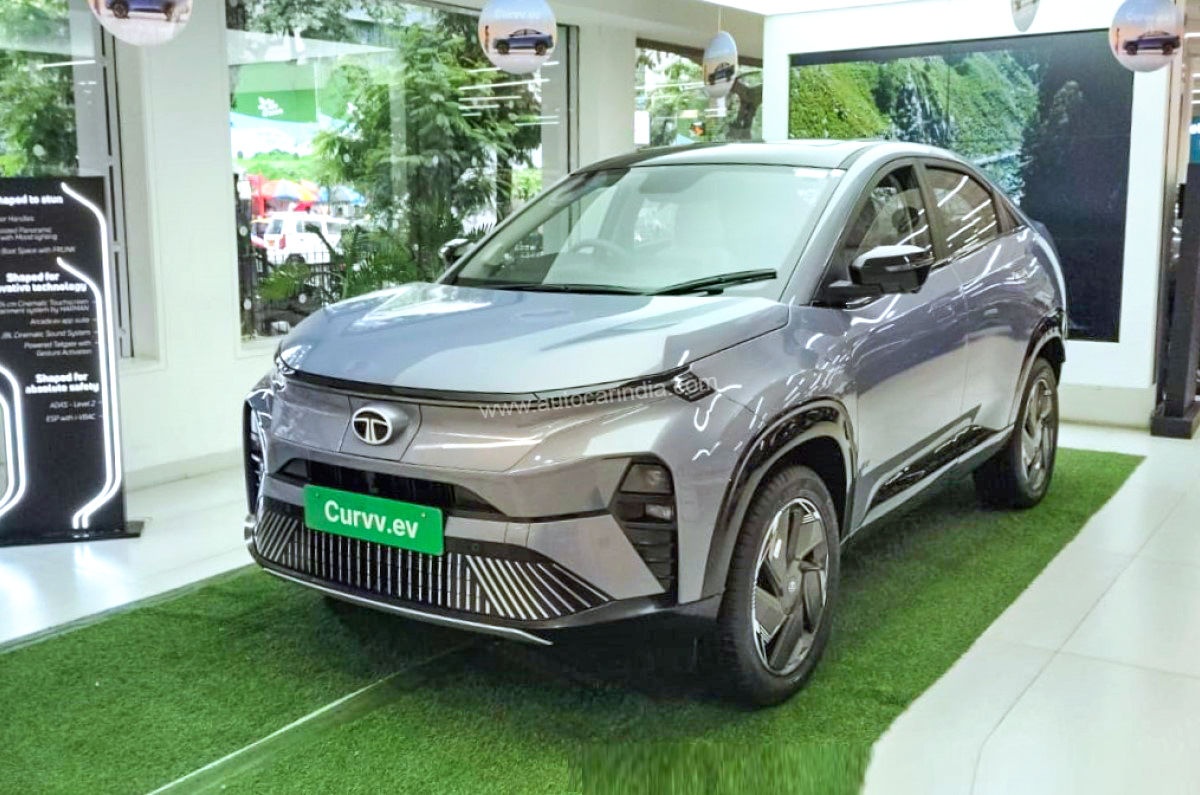
The Citroen C3X will rival midsize sedans like the Hyundai Verna, Volkswagen Virtus, Skoda Slavia and Honda City. However, on account of its coupe-like design and high-riding character, it could carve out its own niche. Interestingly, Tata will also launch the Curvv crossover with coupe-like styling by mid 2024, which will be a direct rival to the C3X. Going by Tata’s current portfolio, expect the Curvv to be generously equipped too. Will Citroen infuse the C3X with a healthy dose of premium features to match the Tata? We’ll find out soon.
By: Sameer Fayaz Contractor | Updated on: 28 Dec 2023, 21:58 PM
Indians travelled a whopping 6.8 billion kilometres in Uber cabs during the year, enough to cover the complete 6.37-million km road network in the cou
…
Indians travelled a whopping 6.8 billion kilometres in Uber cabs during the year, enough to cover the complete 6.37-million km road network in the country more than a thousand times over.
While Indians travelled 6.8 billion km using Uber cabs in 2023, about 64 million km were covered using EVs
Uber India shared its annual data report revealing several key details about the year. The app-based cab aggregator revealed that Indians travelled a whopping 6.8 billion kilometres in Uber cabs during the year, enough to cover the complete 6.37-million km road network in the country more than a thousand times over. While Delhi-NCR saw the highest Uber trips in 2023, Bengaluru stood in second place with the second-most number of trips.
Sharing rider trends, Uber revealed that Uber Auto and Uber Go were its most popular products in 2023, particularly the former, which has largely been a street-hailed service. Apart from Delhi-NCR and Bengaluru, the cities with the highest number of trips include Hyderabad, Mumbai, Pune, and Kolkata. That said, Mumbai had the most light-night trips booked through the year, while users in Kolkata booked weekend travel the most.
Residents in Delhi-NCR mostly booked through the Uber app for commutes and had the highest number of office-hour trips. The company also revealed that most Uber trips were booked between 6 pm and 7 pm, while the most popular day for booking availing the service was Saturday.
Uber saw its highest monthly bookings in December while the Durga Puja and Christmas weekends were the most popular days for the company. The firm also recorded the highest number of Uber Reserve trips to airports between 4 pm and 5 pm. Concerning Uber Rentals, most users opted for the 2-hour, 20-km package. About 74,000 first-time users booked a seat through the app via Uber Bus. Lonavala was the most frequented tourist destination for users in Mumbai.
2023 also saw Uber introduce its flagship ‘Uber Green’ service bringing the option to book EVs via the app. The company said Indians travelled 64 million km using EVs this year spending a total of 3.9 million hours.
Dashboard will get a new dual-tone finish and larger touchscreen, among other updates.
We have already reported to you that the Mahindra XUV400 EV is due for an equipment upgrade that’ll be introduced sometime in early 2024. Now, a leaked internal document has revealed all the new features that the XUV400 will receive, chief among which will be dual 10.25-inch screens for the infotainment system and instrument cluster.
XUV400 EV to get dual 10.25-inch screens with Adrenox software
Dashboard to get new dual-tone finish, rear AC vents
Launch expected in early 2024
Mahindra XUV400 EV new features revealed
The leaked document reveals the XUV400 EV will get two new trims – EC Pro and EL Pro. It remains to be seen if these new trims will be introduced alongside the existing EC and EL trims, or it replaces them altogether.
The higher-spec EL Pro trim will get the new 10.25-inch screen running Mahindra’s Adrenox software. It will also receive a new 10.25-inch fully digital instrument cluster – the current model uses two analogue dials with a small digital MID in between. And while this will necessitate a major redesign of the dashboard, spy shots suggest that it will not be the twin connected screens as we see on the XUV700.
Other feature additions will include dual-zone climate control with a memory function, wireless phone charger, wireless Apple CarPlay and Android Auto, Alexa connectivity, rear USB ports as well as rear AC vents which had been sorely missing from the XUV400 so far. The all-black dashboard in the current model will make way for a new dual-tone finish, and there will be a new flat-bottomed steering wheel as well.
We, however, do not expect major cosmetic updates to the extent of the XUV300 facelift that’s also due sometime in early 2024. There could be minor updates here and there, but the overall design will likely remain unchanged.
Mahindra XUV400 EV: no mechanical updates
There will also be no updates on the mechanical front. The leaked document reveals the EC Pro will get the 34.5kWh battery while the EL Pro will get the larger 39.4kWh battery. The former has a claimed range of 375km while the latter has a claimed range of 456km, both on the MIDC cycle. Mahindra could, however, consolidate the lineup by offering the faster 7.2kW AC charger as standard on both variants.
Both variants are powered by a front axle-mounted electric motor that produces 150hp and 310Nm of torque. It also will also continue with disc brakes for all four wheels, regenerative braking and three drive modes.
These updates should help the XUV400 close the gap to the Tata Nexon EV, which recently took a huge leap with a mid-lifecycle facelift. Expect a notable step up in prices as well.
×
Member Login
Personal Details
OR
No comments yet. Be the first to comment.