Electric two-wheeler manufacturer Xero EV has joined with battery-swapping technology provider VoltUp for last-mile delivery solutions. The EV maker announced on Wednesday that it aims to get 15,000 electric two-wheelers on the road within the next two years, which will be used in the last-mile delivery segment.
By: HT Auto Desk | Updated on: 27 Dec 2023, 18:18 PM
Xero EV aims to produce 15,000 electric two-wheelers with swappable batteries by 2025.
Under the strategic partnership between Xero EV and VoltUp, the electric two-wheeler manufacturer’s pure electric scooters will leverage the latter’s battery-swapping facility across 12 cities in the country. The EV maker claims the partnership will revolutionise last-mile delivery solutions across these cities. While the company claimed that this partnership will initially benefit the Mink electric scooter, it will also benefit other Xero electric two-wheelers. Xero EV has further claimed that under this partnership, users of its electric two-wheelers will be able to swap their battery packs within a minute.
Speaking about this collaboration, Bharat Pritmani, co-founder of Xero EV has said that the two companies are creating a solution that not only meets but exceeds the demands of last-mile delivery partners. “This collaboration marks a turning point in the electric vehicle industry. By integrating Xero’s energy-efficient products with VoltUp’s swappable battery network, we are creating a solution that not only meets but exceeds the demands of last-mile delivery partners,” Pritmani added.
Ritesh Singh, Head of Business & Strategy at VoltUp said that this partnership between the two companies will play a pivotal role in minimizing costs for riders, unlocking new possibilities for the electric vehicle landscape. “The partnership between VoltUp and Xero EV not only underscores our dedication to offering cutting-edge solutions but also emphasises our commitment to creating a sustainable future for all. As we embark on this journey together, we are confident that this partnership will play a pivotal role in minimizing costs for riders, unlocking new possibilities for the electric vehicle landscape. The integration of VoltUp’s platform into Xero EVs Mink model will significantly reduce charging times, enabling riders to optimize their time on the road and eliminate the waiting game associated with traditional charging or fast charging stations,” he added.
Facelifts for a sedan and an SUV, and the launch of a new EV are expected from Audi in the next year.
Audi India seems to have had a successful 2023, registering a growth of 88 percent in the first nine months of this year, posting sales of over 5,500 units. The German luxury brand filled out both ends of its portfolio during the year, bringing the Q3 Sportback, the Q8 e-tron, and the Q8 e-tron Sportback to the market. For 2024, Audi will bring at least two facelifts and an all-new EV to the country. Here’s what’s coming and when.
Disclaimer: All launch timelines and ex-showroom prices are estimates.
Updates for the Audi Q8 are largely cosmetic in nature – both inside and out – and will include the addition of HD Matrix LED headlights. The same 340hp, 3.0-litre V6 turbo-petrol engine, 8-speed automatic and Quattro AWD system from the pre-facelift model will continue. Having driven the Q8 facelift, we can confirm that the update is a rather mild one. However, that should also help keep prices similar to the outgoing model’s Rs 1.07 crore-1.43 crore.
It’ll be about a year after the Audi A6 facelift was revealed for international markets that it’ll come to India. The model unveiled in May 2023 had subtle exterior tweaks, relatively minor interior changes, and a few new features. The refreshed A6’s exterior will get revised matrix LED headlights with a cleaner look for the DRLs, along with a more prominent single-frame grille, and nips and tucks for the front and rear bumpers. There’ll also be a new set of alloy wheels on offer. The current model’s 245hp, 2.0-litre mild-hybrid turbo-petrol engine and 7-speed dual-clutch automatic are expected to continue unchanged.
Audi Q6 e-tron
Price: Rs 1 crore Launch: Late 2024 Battery: TBA
The Q6 e-tron is an all-new electric SUV based on Audi’s newly developed Premium Platform Electric (PPE), which features the latest battery and charging technology as well as the brand’s new ‘E3’ electronics architecture. Full powertrain details are yet to be revealed, but it will use an 800V architecture with a range of around 600km. Its interior will include Audi’s new infotainment tech with twin screens in a curved layout – an 11.9-inch digital instrument cluster and a 14.5-inch infotainment touchscreen – and an additional 10.9-inch screen for the front passenger. Another talking point will be the Q6 e-tron’s advanced digital matrix LED headlights with a multi-pixel LED array, and its second-generation digital OLED technology. As its name suggests, the Q6 e-tron is likely to be a smaller, more affordable Audi electric SUV positioned below the Q8 e-tron.
This is Hyundai’s second donation to the state government after the previous contribution of ₹3 crore made in the immediate aftermath of the cyclone. The company says it is already working with the government authorities to distribute essential relief kits comprising dry rations, tarpaulin, bedsheets and mats in districts such as Chennai, Kancheepuram, Tiruvallur and Chengalpattu.
Commenting on the additional contribution, Un Soo Kim, MD & CEO – Hyundai Motor India, said, “Tamil Nadu, our home state, has faced the brunt of Cyclone Michaung, and the aftermath has left many in distress. The resilience and unity displayed by the people of Tamil Nadu in the face of adversity are truly inspiring. To contribute tangibly to the recovery efforts, Hyundai Motor India Foundation has extended an additional fund of INR 2 crore to Tamil Nadu State Disaster Management Authority, which will be utilized to provide necessary flood relief and support for the affected communities.”
Tamil Nadu has been home to Hyundai Motor India since the South Korean brand arrived in India in 1998. The company operates three plants located in Sriperumbudur that produce cars for domestic and export markets.
The automaker also revealed a dedicated medical camp will be established to address the immediate medical needs. Hyundai also plans to offer special counselling sessions to the affected people, while undertaking village cleaning initiatives to address the post-cyclone sanitation challenges.
This was achieved in 94 months since the original Vitara Brezza’s launch in March 2016.
Eight months after it recorded cumulative sales of 9 lakh units, the Maruti Brezza has breezed past the 10 lakh or a million-unit sales milestone in India. To drive past this record figure, it took the Brezza – originally the Vitara Brezza – 94 months or 7 years and eight months, from launch on March 2016 through to early December 2023.
Overtakes Tata Nexon as best-selling SUV in FY2024
Addition of CNG variant this year boosted sales
Maruti Brezza hits 1 million sales milestone
From launch in March 2016 to end-November 2023, the Brezza is estimated to have sold 996,608 units, just 3,392 units shy of the million mark, which it would have surpassed in the first week of December 2023. This year itself, in the period between April to November, the Brezza is estimated to have sold 1,11,371 units, averaging monthly sales of 13,921 units or 3,480 a week or 497 units every day.
If the compact SUV maintains the same sales momentum in the remaining four months of FY2024, the Brezza could go on to clock an estimated 1,67,055 units – its highest for this model in a fiscal year after the 1,57,880 units in FY2019.
Interestingly, the Brezza’s sales in the first 8 months of FY2024 make it the best-selling SUV in India at present, 593 units ahead of the Tata Nexon that has sold an estimated 1,10,778 units in the same period. Only two other SUVs have sold in excess of 1,00,000 units in the April-November 2023 period – the Hyundai Creta (1,08,584 units) and the Tata Punch (1,02,326 units).
Mercedes-Benz has stated that it will reveal a number of digital innovations at the CES 2024 in Las Vegas next month. Slated to take place between 9th and 13th January 2024. The German luxury car manufacturer has revealed that it will showcase a camouflaged prototype of the pure electric G-Class and its new Artificial Intelligence (AI) powered iteration of MBUX virtual assistant.
By: HT Auto Desk | Updated on: 25 Dec 2023, 16:48 PM
Mercedes-Benz is gearing up to show a camouflaged prototype of the pure electric G-Class and AI-powered assistant, while the Concept CLA will make its North American debut.
Consumer Electronics Show or CES has been witnessing an increasing penetration of automotive technologies with a rising number of automobile manufacturers every year and the 2024 edition of the annual event is not going to be any different. Honda has already teased an electric vehicle that will break cover at the CES 2024. Mercedes-Benz has also said that it will showcase its updated AI-powered MBUX virtual assistant that will offer a more human-like interaction opportunity with the car.
Mercedes-Benz has said the new MBUX virtual assistant takes the ‘Hey Mercedes’ voice assistant into a whole new visual dimension using high-resolution game-engine graphics developed by Unity Technologies. This updated MBUX system will debut in Mercedes-Benz cars in 2024.
While the AI-fuelled updated version of MBUX will be a key attraction from Mercedes-Benz at CES 2024, the carmaker will also showcase a camouflaged prototype of the pure electric G-Class that is among the much-awaited Mercedes-Benz electric vehicles. Also, the automaker will showcase the Concept CLA electric sedan with a coupe design promising more than 750-kilometre range. With an appearance at this event, the Mercedes-Benz Concept CLA will make its North American debut.
The Concept CLA four-door sedan previews the new entry-level vehicles from the luxury car marquee, which will comprise both internal combustion engine (ICE) propelled models as well as electric vehicles. Meanwhile, Mercedes-Benz India is gearing up to launch its GLS facelift in the country on 8th January 2024, which made its global debut earlier this year.
Solid State batteries are the future, and here’s why the tech has the potential to be a game changer.
Published On Dec 25, 2023 09:00:00 AM
Toyota FT-Se Concept used for representation only.
Compact solid state batteries will allow for smaller and more compact super EVs.
If electric cars have to deliver the future we all expect them to, there will need to be several advances made in the coming years. The first, of course, involves the greening of battery components; specifically the mining and production of Lithium, which releases around half a dozen tonnes of CO2. Up next is safety – thermal runaway – that’s still a huge problem in hot countries like ours. And finally there’s performance, packaging and cost, advances we all expect electric cars to make in the coming years.
EVs with Solid state batteries could have up to 1,400km range
Lexus FT-Se could come with an SSB when launched
Toyota holds maximum SSB patents
What’s fascinating is that all three issues can potentially be resolved, partially at least, if solid state battery (SSB) technology rolls over the horizon in the coming years. Expected to be mass manufactured and adopted somewhere between 2027 and the end of the decade, SSBs are both currently leaden with potential, and at the same time fraught with technological hurdles.
Toyota engineers say solid state batteries will go from 150mm for normal Lithium ion battries to around 100mm for solid state units, at least initially.
Solid state batteries: what’s different?
But what exactly is an SSB? It’s actually quite simple. Lithium-ion batteries we use in cars use a liquid electrolyte to help transfer electrons from one side of the battery to the other. Remember electrolysis? Yeah, something like that. And since the electrolyte is in liquid form, this makes the battery large, heavy and sensitive to thermal runaway. This is why, in comparison to a conventional lithium-ion battery, SSB technology has the potential to increase energy density, reduce charge time and make it more stable when it comes to thermal runaway.
Solid state batteries, however, are expensive, and currently cost up to three times more pound for pound. But, they make up for it as they’re capable of holding three times the charge and delivering thrice the range. How far will EVs with solid state batteries be able to go? Toyota says that by 2027, its EVs will be able to travel around 1,400km on a single charge. And unlike today – because of better thermal management – solid state batteries won’t have to stick to the 80 percent limit when it comes to DC fast charging.
Solid state batteries are currently suffering from the problem of micro cracks, and these are proving to be difficult to overcome in the short term.
Solid state batteries: hurdles and feasibility
So much for the potential. However, myriad hurdles exist. For one, several battery makers around the world are struggling to overcome the problems of cracks forming in the solid separator. Some battery makers are suffering lower than expected energy densities (measured in Wh/Kg), and then to make these new batteries viable, costs need to be reduced significantly. Also part of the equation are ever-improving conventional Lithium-ion batteries.
Still, progress has been made – if slowly – especially in Japan, Korea and China where multiple companies are currently moving into the production feasibility phase. Also on the cards, and often touted as a solution, are sodium-ion batteries. This type could remove the difficult to mine Lithium from the equation, however, they don’t currently have the density required to be used in cars, and are only thought to be suitable for use in static applications where weight and size aren’t issues.
Another way we could see faster adoption of solid state tech is if companies like Toyota introduce them in hybrids first. This would potentially resolve some of the problems, and once the technology is more widespread, would serve only to accelerate the production and use of large capacity units.
Lithium will continue to be a much sought after resource. Other types of battries will come eventually, but they are a long way off, especially for cars.
Solid state batteries: advantages
Apart from its fundamental strengths, solid state batteries will also offer advances in other areas, many not conventionally associated with the battery. The most important one would probably be that SSBs are much flatter in general, which means they will be great for packaging. How much of a reduction in size are we talking about? Toyota says the size will go down from roughly 150mm today to approximately 100mm eventually, and that’s huge in packaging terms. So SSBs will allow engineers to build lower slung, more aerodynamically efficient cars and with their lighter weight, it would also make the design of two-door sportscars more feasible.
Most sporting EVs today have four doors for a reason, and that reason, of course, is the size of the battery and its weight. You can bet your last Yen that Lexus’ sporty FT-Se, shown at the Tokyo Salon earlier this year, will use an SSB. How else can it achieve that roofline?
Solid state batteries: which companies?
So who’s ahead in the race to bring solid state batteries to the market? Surprisingly, it’s Toyota, as it holds the most patents on the tech. What’s just as important is that Toyota has recently even tied up with Idemitsu for the manufacture of SSBs. So is Toyota’s solid state battery all but ready? Panasonic, Samsung and LG, the other big Japanese and Korean battery makers are also close on its heels, with some holding onto advantages in specific areas.
Also equally important are Chinese battery giants CATL and BYD , who have been ‘showing’ plenty of progress in recent years, especially in their projections. Don’t write off these state sponsored world leaders in battery production, remember that they can work their way around most patents anyway.
Solid state batteries will be game changers when they arrive. Their compact proportions, high performance and ability to blend into any design will fundamentally change how we engineer and manufacture cars. Imagine, when they arrive on the scene en masse, born EV platforms will have to evolve or be rendered outdated. Keep your eye on this potentially disruptive emerging technology, it has the potential to fundamentally change the game.
Electric two-wheeler maker e-Sprinto has clocked the sale of over 8,000 electric scooters since the company commenced operations. The manufacturer managed the milestone in 21 months, having begun sales in March 2022. With a few more days to end the calendar year, the company aims to close 2023 with sales crossing the 10,000 mark.
By: HT Auto Desk | Updated on: 24 Dec 2023, 21:33 PM
e-Sprinto sold over 5,500 electric scooters between April and June this year, and has made it to 8,000 units with a few days left in 2023
e-Sprinto was aggressive with its launches and network expansion only this year, which gave the manufacturer a significant push in volumes. The manufacturer says it has achieved a major presence in Tier I cities like Kolkata, Bengaluru, Chennai and Delhi-NCR.
“We are thrilled to reach the milestone of 8000 e-Sprinto electric scooters sold, a testament to our commitment to innovation and customer satisfaction. With our eyes set on the future, we aim to achieve the ambitious target of 10,000 units sold by 2024,” said Atul Gupta, Co-Founder & Director – e-Sprinto.
e-Sprinto further revealed that it has achieved a 50 per cent increase in revenue year-on-year, while the company is also experiencing a 50 per cent month-on-month growth in revenue. The manufacturer sells the e-Sprinto LS, Rapo and Roamy in the low-speed and e-Sprinto HS in the high-speed category. The company launched the Amery e-scooter earlier this year.
Alternatively, you can look at X3 M40i, which gets the same motor as M340i, but has the added practicality of an SUV.
Published On Dec 24, 2023 09:00:00 AM
I have a Honda Amaze right now and I’m in the market for a new car. My top contenders are BMW 330Li, M340i, Mercedes GLA 35 AMG and Mercedes GLC 300. Recently, I drove an M340i and it was fun. I quite liked the GLA 35 too but it wasn’t as engaging as the BMW. I am yet to test drive the other two. My confusion is, whether the M340i is a compromise in terms of practicality in India, as I do like to go on long road trips. Can you really make out the difference between 330Li and M340i in the real world?
Rajat Kumar Gupta, via email
Autocar India says: The BMW 330Li is far more comfort-oriented with a softer suspension setup, which makes it far more suited to our road conditions than an M340i. It is engaging to drive too and should satiate your performance needs, however, there’s no doubt that the M340i’s performance feels explosive in comparison. If you really want something that is out-and-out sporty, and don’t mind sacrificing ride comfort, go for the X3 M40i which shares its powertrain with the M340i, and at the same time, being an SUV, it will be more practical for our roads, particularly on your long road trips.
India is one of the fastest-growing electric vehicle markets in the world. Over the last few years, both legacy players and EV startups have been drastically transforming the landscape of the Indian EV industry. Electric two-wheelers dominate the Indian EV market, but car manufacturers too are introducing interesting products. While homegrown car manufacturers have been launching new electric cars in the country, foreign brands are also bringing their respective products into the segment.
By: HT Auto Desk | Updated on: 23 Dec 2023, 20:42 PM
From mass-market to luxury, the year 2023 witnessed launch of several electric cars across price-segments, with SUVs dominating the chart.
In 2023, several carmakers, in both mass-market and luxury segments have launched some spectacular electric cars across different pricing slabs. Interestingly, like the fossil-fuel-propelled passenger vehicle market, the Indian electric car market is witnessing the rise of SUVs. In 2023, the majority of the electric cars launched in the country were SUVs.
Here is a comprehensive list of the electric cars that were launched in India in 2023.
MG Comet EV
MG Comet EV is the most affordable electric car in India. This small boxy hatchback looks tiny compared to other models in the fray, but a perfect machine for in and around-city commuting. MG Comet EV was launched in 2023 at an introductory starting price of ₹7.98 lakh (ex-showroom). The electric hatchback threw a tough challenge to the Tata Tiago EV, the erstwhile most affordable electric car in India with its pricing. Design-wise, the EV is eye-catching on the exterior, while inside the cabin it looks simple yet very much urban at the same time. The Comet EV promises a 230 km range on a single charge.
Tata Nexon EV facelift
One of the most noteworthy car launches in India in 2023 was the arrival of the Nexon EV facelift. Tata Nexon EV is the country’s bestselling electric car and the homegrown automaker simply ramped up the appeal of the electric compact SUV with the launch of the Nexon facelift, which incorporates a wide range of design and feature updates. The Nexon EV facelift comes available at a starting price of ₹14.74 lakh (ex-showroom), and it promises a 465-kilometre range on a single charge, while it can accelerate to 0-100 kmph in 8.9 seconds. It comes with V2V and V2L technologies.
Powering the electric SUV is a 66.4 kWh battery pack paired with dual electric motors.
BMW iX1
BMW launched the electric avatar of the X1 SUV, christened as iX1 in India in 2023. The luxury EV was launched in the country at a price tag of ₹66.90 lakh (ex-showroom). BMW iX1 is the German brand’s fourth fully electric vehicle and is sold in India via the CBU route. Powering the electric SUV is a 66.4 kWh battery pack paired with dual electric motors. The electric propulsion system churns out 309 bhp peak power and 494 Nm of maximum torque. The EV promises up to 440-kilometre range on a single charge. It can reach 0-100 kmph in 5.6 seconds and can achieve a top speed of 180 kmph.
BMW i7
BMW i7 is an all-electric sedan that was launched in India in 2023 at a price tag of ₹2.50 crore (ex-showroom). The BMW i7 M70 xDrive is the brand’s first M-division electric car that was launched in India in 2023. Powering this luxury electric sedan is a 101.7 kWh battery pack that is paired with dual electric motors and generates up to a 560-kilometre range on a single charge. The electric propulsion system churns out 657 bhp peak power and 1,100 Nm maximum torque. This electric sedan can sprint to 100 kmph from a standstill position in just 3.7 seconds at a top speed of 250 kmph.
Mahindra XUV400
Mahindra XUV400 is the homegrown automaker’s first-ever electric SUV launched in India in 2023. The Mahindra XUV400 comes positioned in compact SUV segment and it competes with rivals like the Tata Nexon EV. Launched at ₹15.99 lakh (ex-showroom), the Mahindra XUV400 is available in two different battery options and promises up to 456-kilometre range on a single charge. Available in EC and EL, the Mahindra electric SUV’s price goes up to ₹18.99 lakh (ex-showroom).
Citroen eC3
Despite being a new entrant in the Indian passenger vehicle market, French auto giant Citroen was quick to launch an electric car in the form of eC3. The electric SUV comes priced from ₹11.50 lakh (ex-showroom) and it promises a range of 320 kilometres on a single charge, which is also the highest in its segment. Available in four different variants, the Citroen eC3 EV is powered by a 29.2 kWh battery pack that promises 320 kilometres range on a single charge. The electric SUV promises a top speed of 107 kmph.
Volvo C40 Recharge
Volvo C40 Recharge is the second electric car in India from the Swedish luxury car manufacturer after the XC40 Recharge. The electric car was launched at ₹61.25 lakh (ex-showroom). The EV competes with rivals such as Kia EV6 and Hyundai Ioniq 5. The EV gets power from a 78 kWh battery pack paired with dual electric motors. The EV churns out 402 bhp peak power and 660 Nm of maximum torque. The EV is capable of running at a top speed of 180 kmph and can sprint to 100 kmph from a standstill position in 4.7 seconds.
Hyundai Ioniq 5
Hyundai Ioniq 5 is the second electric car from the South Korean auto giant in the Indian market. The Hyundai Ioniq 5 EV has been launched in the country at ₹44.95 lakh (ex-showroom). The EV comes competing against the Kia EV6 but is more affordable than the rebadged sibling. Powering the Hyundai Ioniq 5 is a 72.6 kWh battery pack, that promises a 631 kilometre range on a single charge. It gets a rear-wheel drivetrain churning out 214 bhp peak power and 350 Nm of maximum torque. The EV claims come with a fast charging technology that charges the battery from 10 to 80 per cent in just 18 minutes.
Audi Q8 e-tron and Sportback e-tron
Audi launched the Q8 e-tron and Sportback e-tron in India in middle of 2023. The SUV and the Sportback were launched together, priced at ₹1.14 crore and ₹1.18 core (ex-showroom). The Q8 e-tron essentially came as a facelifted iteration of the erstwhile e-tron. Both the SUV and the Sportback were launched in two trims – 50 and 55, with range of up to 600 kilometres on a single charge. Powering the 50 variant is a 71 kWh battery pack, while the 55 onbe gets a larger 114 kWh battery pack. The SUV has a maximum claimed range of 491 kilometres and 582 kilometres for the 50 and 55 variants, respectively, while the Sportback has a maximum range of 505 kilometres and 600 kilometres for the 50 and 55 variants, respectively.
Mercedes-Benz EQB
Mercedes-Benz India launched the EQB 350 4Matic electric SUV in India in 2023, at a starting price of ₹77.50 lakh (ex-showroom). The luxury electric SUV was launched in the country replacing the previous EQB 300 4Matic that was launched in December 2022. The EQB is powered by a 66.5 kWh battery pack. The electric propulsion system onboard the SUV promises 288 bhp peak power and 520 Nm of maximum torque. These specifications are significant enhancements from the EQB 300 4Matic.
Mercedes-Benz EQE
Mercedes-Benz EQE electric SUV was launched in India in 2023 after the EQS and EQB, joining the lineup as the brand’s third EV in the country. The Mercedes-Benz EQE electric SUV was launched here at ₹1.39 crore (ex-showroom). It competes with rivals like Audi Q8 e-tron and BMW iX1 electric SUVs. Mercedes-Benz EQE 500 4Matic SUV comes promising 550 kilometres range on a single charge. The SUV gets power from a 90.56 kWh battery pack that is paired with dual motors. The SUV can accelerate from 0-100 kmph in 4.9 seconds at a top speed of 210 kmph.
By: HT Auto Desk | Updated on: 22 Dec 2023, 19:22 PM
Pollution in Delhi NCR is increasing once again because of this the Graded Response Action Plan (GRAP) has rolled out a new order that bans vehicles up to BS-3 petrol and BS-4 diesel four-wheelers. The air quality of Delhi NCR falls under the ‘Severe’ category which essentially means an AQI ranging between 4O1-45O. As of now, there is no timeline stated for the ban to be lifted.
Ban on BS3 petrol and BS4 diesel cars has been implemented once again because of increasing AQI. (Photo by Sanchit Khanna/ Hindustan Times) (Hindustan Times)
The Sub-Committee observed that the AQI of Delhi on 22nd December witnessed a sharp increase. It stood at 4O9 and the committee says that it is only expected to increase a further 8 owing to the highly unfavourable meteorological and climatic conditions reported/ predicted by IMD/ IITM.
The AQI categorises scores from zero to 500, with values between zero and 50 considered “good,” 51 to 100 labelled as “satisfactory”, 101 to 200 as “moderate”, 201 to 300 as “poor”, 301 to 400 as “very poor” and 401 to 500 as “severe”.
Apart from banning cars, GRAP has ordered a strict ban on construction and demolition activities in the entire NCR region. However, few activities are expected such as projects for railway services, airports, inter-state bus terminals, hospital/health care and metros. Projects and activities related to national security, public projects such as sanitation, highways, roads, flyovers etc. are also exempted.
Earlier, the Delhi government had planned to introduce the Odd-Even rule after Diwali when pollution spiked in the city. However, it postponed the plans after the Supreme Court termed the move as mere optics without much effect on pollution levels.
All four models will be brought in as niche imports or as CKDs.
The duo of Volkswagen and Skoda have had a packed couple of years with its India 2.0 launches, but what’s next for 2024? Well, both brands will be relying on a bunch of niche imports to further populate their respective portfolios over the next 12 months. Additionally, there could be mid-lifecycle updates and more special editions on models like the Kushaq, Slavia, Taigun and Virtus. Let’s take a closer look at the upcoming launches from Skoda and Volkswagen in 2024.
Skoda Superb
Expected price: Rs 50 lakh Launch: Early 2024
Skoda will reintroduce the previous-gen Superb sedan in our market in limited numbers, after it was discontinued due to the BS6.2 implementation. The company will introduce it with an updated 190hp, 2.0-litre TSI turbo-petrol engine, mated to a sole 7-speed DSG gearbox. However, the Superb will not be locally assembled in India anymore, but will be imported as a CBU (completely built-up unit). The Czech brand will reintroduce it only in top-spec L&K trim with new features like ADAS that include lane-keeping assist and adaptive cruise control, a 360-degree camera, a new infotainment system, adaptive chassis control tech, an active tyre pressure monitoring system and nine airbags.
However, this will only be a stop-gap measure, as last month, Skoda globally unveiled the fourth-gen Superb with evolutionary styling, an all-new interior and an updated powertrain line-up, which even includes a plug-in hybrid. Although there’s no official word on it, we expect the new-gen Superb to also make it to India at some point in the future.
Skoda Enyaq iV
Expected price: Rs 55 lakh Launch: Mid-2024
The Enyaq iV will be Skoda’s first all-electric offering in India and it’ll be brought in as a full import. This five-seater crossover is only slightly smaller than Skoda’s flagship three-row Kodiaq SUV. Skoda has been testing the top-spec ‘80x’ version in India, which gets a 77kWh battery powering two electric motors – one on each axle giving it all-wheel-drive capability – producing a total of 265hp. Also, the Enyaq iV has a healthy claimed range of over 500km and an equally impressive 0-100kph acceleration time of 6.9 seconds. It remains to be seen whether Skoda offers lower-spec, two-wheel-drive variants of the Enyaq iV for a lower starting price point.
New Skoda Kodiaq
Expected price: Rs 50 lakh Launch: Late 2024
The second-gen Kodiaq is the brand’s first production car to be styled with elements from the ‘Modern Solid’ philosophy previewed by last year’s Vision 7S concept, which gives it a more overtly rugged and utilitarian look than its predecessor. It’s also slightly longer than its predecessor, which means there’s more space in the third row and boot. The interior, meanwhile, is shared with the latest-gen Superb, and as such looks premium and well-equipped with a fine mix of physical and touch controls.
Under the hood, the new Kodiaq is powered by 2.0-litre petrol and diesel engines as well as a plug-in hybrid and mild-hybrid 1.5-litre petrol engines; the diesel-automatic solely gets the option of a 4×4 system. Skoda will get the new Kodiaq to India towards the end of 2024, although there’s no confirmation on what powertrain configuration it will get, or if it will be a CKD (completely knocked-down) unit as the existing Kodiaq or an import. The Kodiaq currently continues to be on sale in India in its first-generation guise with a petrol engine.
Volkswagen ID.4
Expected Price: Rs 55 lakh Launch: Mid-2024
A sister model to the Skoda Enyaq iV, Volkswagen’s first all-electric model for India will also be a niche import. The ID.4 is based on VW’s MEB electric platform. India will likely get the high-performance ID.4 GTX model that uses one electric motor at the front axle and one at the rear. Combined, it produces 299hp and 460Nm of torque. The ID 4 GTX houses a 77kWh battery that has a claimed range of up to 480km on a single charge. This high-performance model uses one electric motor at the front axle and one at the rear. Combined, it produces 299hp and 460Nm of torque. Volkswagen has been testing the ID 4 in India for nearly two years now. However, its launch is yet to be greenlit by Volkswagen’s global headquarters. It will be brought in with Volkswagen’s India 3.0 plan, which is all about electric mobility and will cover both completely built units (CBUs) as well as locally built EVs.
Tata Motors has inaugurated its first EV-only dealership in Gurugram. The dealership will open for the general public on 7th January and it is located on Sohna Road. The manufacturer says that they will expand the network to 2-3 more cities where they sell the most number of electric vehicles.
By: Paarth Khatri | Updated on: 21 Dec 2023, 16:19 PM
The new EV-only dealership is located on Sohna Road, Gurugram and will be operational from 7th January.
Customers would be able to use fast chargers that will be available at these new dealerships. Tata has also announced that once the EV dealerships are up and running, they will stop selling electric vehicles from regular showrooms. Apart from this, all Tata EV showrooms will have workshops that will be exclusive to Tata electric vehicles, this information was already confirmed to us back in October last year when the manufacturer launched the Tiago EV.
Tata Motors currently sells the Nexon. ev, Tiago.ev and Tigor. ev in the Indian market. Nexon.ev and Tiago.ev contribute around 75 per cent of sales among all Tata electric vehicle sales. Speaking of Tiago.ev, 25 per cent of buyers of the electric hatchback are women. Tata aims to complete 2023 with about 70,000 EV sales.
Commenting at the inauguration of the new showrooms, Shailesh Chandra, MD, Tata Motors Passenger Vehicles Ltd., and Tata Passenger Electric Mobility, said, “With insights gathered from over 1 Lakh Tata EV customers, we understand that the EV consumers seek a different kind of customer experience. They are sensitive to how the planet is evolving, very conscious about the cost of driving, and desire cutting-edge technology. This is in line with the new brand identity’s core values – sustainability, community, and technology. The new flagship showrooms are the first physical manifestations of this brand philosophy and we have mapped the customer journey accordingly. We want to empower our customers so our plans include the creation of a harmonious community space to facilitate customer gatherings/services, sustainability-focused workshops, and events for customers. These showrooms are not just about retailing EVs but they become TATA.ev community centres in Gurugram.
A dashcam, rear AC vents and larger touchscreen will be among some new features over regular Thar.
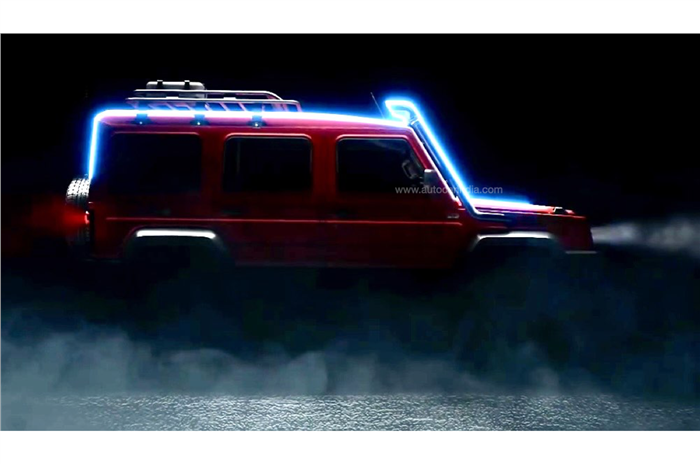
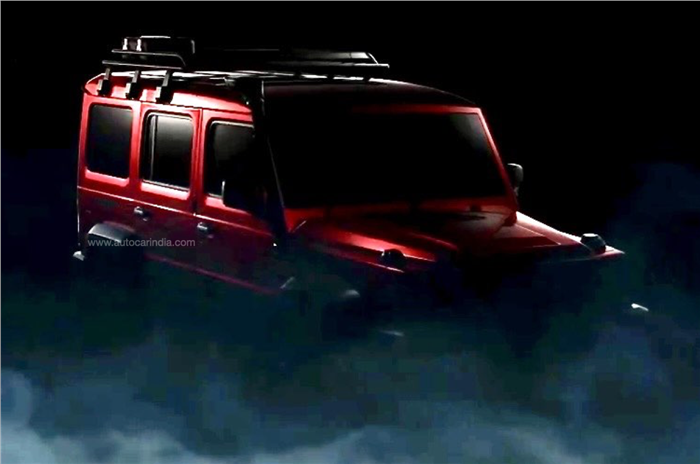
Mahindra has been testing the upcoming 5-door Thar for nearly a year and a half now, and while we have already reported to you with several spy images, a new sighting of the interior shows some additional features that the 5-door SUV will get over its 3-door sibling. The 5-door is expected to go on sale by the middle of next year.
5-door Thar to get larger touchscreen, sunroof
Will also get front seat armrest and rear AC vents
Likely to carry forward petrol and diesel engines from 3-door Thar
Mahindra Thar 5-door interior spied
As we have already reported, the biggest update to the 5-door Thar’s interior will be a larger touchscreen in a new housing, possibly a 10-inch unit with improved interface and graphics. This will necessitate a slight redesigned of the dashboard, but the AC vents, HVAC controls and band of toggle switches at the bottom, as seen in these images, will be carried forward unchanged. The band of physical buttons and a rotary dial below the screen have also been retained from the regular Thar.
The newer revelation is that there will be individual armrests for the front seats as well second-row AC vents, both of which are missing from the 3-door Thar. And while this test mule comes fitted with dummy seats at the rear, it remains to be seen if Mahindra offers a regular bench seat or two individual seats as in the regular Thar.
Other additions of note over the regular Thar could be an improved instrument cluster with a larger MID (possibly from the Scorpio N), a dashboard camera as well as a single-pane sunroof that’s clearly visible in these images. The 5-door Thar will only be offered in a hardtop guise with a fixed roof.
The 7-inch screen on the Thar 3-door has been criticised for its mediocre interface and display, and also for its relatively smaller size – 8-inch units are pretty much the norm on almost every other mainstream car or SUV. We expect the larger touchsreen infotainment to be added to the Thar 3-door as well at some point in the future.
With the Thar 5-door, Mahindra will be targetting SUV buyers who want a practical vehicle that can be used for daily commutes as well as for off-road use. Therefore, a longer features list and more creature comforts will be crucial to set it sufficiently apart from its 3-door sibling that’s a focused off-roader. Camouflaged test mules have also hinted at a slightly altered design to set it apart from its 3-door sibling.
Mahindra Thar 5-door powertrain options
Under the hood, the 5-door Thar is likely to retain the current 2.2-litre diesel and 2.0-litre petrol engines, mated to the same 6-speed manual and auto gearboxes. The off-road hardware will also be carried forward, but owning to the longer wheelbase and additional weight, there will be changes to the suspension setup.
The 5-door Thar is expected to debut sometime around mid-2024, and is expected to be priced considerably higher than the regular Thar, likely in the Rs 16 lakh-20 lakh (ex-showroom) range.
Yamaha Motor India was once known for being a brand that wanted to sell motorcycles that enthusiasts would want. The manufacturer used to sell the YZF-R3 but it was then discontinued when the BS6 emission norms came into effect. Since then things have been slow and cold. However, earlier this year, Yamaha announced that they would be launching the YZF-R3 and MT-03 in the Indian market. This sparked a lot of hype around the brand once again. So, when Yamaha invited us for a few laps of both motorcycles on the Buddh International Circuit (BIC), we could not say no.
By: Paarth Khatri | Updated on: 20 Dec 2023, 17:57 PM
The MT-03 and R3 use the same underpinnings.
It is important to note that we only rode both motorcycles for just 15 minutes which is 4 laps of the race track. So, these are only our initial impressions and not a full review.
Yamaha R3 and MT-03: Looks and ergonomics
Both motorcycles look quite impressive and high quality.
In terms of looks not much has changed since the last time, the R3 was on sale in the Indian market. It now comes with all LED lighting, a fairing and a design that is inspired by its elder siblings. The golden forks do add a bit of character and premiumness to the looks of the motorcycle. Being a sportbike, the R3 comes with slightly rear-set footpegs and clip-on handlebars. Having said that, the ergonomics are not as committed as one would imagine. In fact, they are more accommodating than the R-15 which was quite surprising for me.
Then there is the MT-03 which has a transformer-like front-face and looks like a larger version of the MT-15. The motorcycle just gets twin slim LED Daytime Running Lamps and a projector headlamp. The one thing that is a bit of an eyesore is the fact that the horn is placed right below the headlamp. Being a naked streetfighter, the riding triangle on the MT-03 is more upright and comfortable than the R3. However, because there is no fairing, the wind blast on the MT is a lot more than the R3.
Yamaha R3 and MT-03: Smooth engine
The ergonomics of the R3 are more accommodating than the R15.
Both motorcycles are powered by a 321 cc, parallel-twin engine that is very smooth and delivers power in a very linear fashion. The engine dishes out 41 bhp at 10,750 rpm and a peak torque of 29.5 Nm at 9,000 rpm. The engine comes mated to a 6-speed gearbox which unfortunately does not get a slip-and-assist clutch. Because of this, under aggressive downshifting, the rear would start to hop. Moreover, the gearbox would get stuck while shifting from 4th to 5th and then from 5th to 6th. The engine can pull cleanly even at higher gears and slow speeds and speaking of speeds, it can stay all day long at 100 kmph doing 6,000 rpm. We were able to clock a top speed of around 172 kmph on the R3 whereas the MT-03 did 169 kmph.
Yamaha R3 and MT-03: Features
The MT-03 looks striking. The only eye sore is the placement of the horn which is directly below the projector headlamp.
There are no fancy features on the R3 and MT-03. It just comes with a digital instrument cluster that shows various information including a temperature gauge and a gear position indicator. There is no Bluetooth connectivity or USB port to charge mobile devices. Fortunately, the motorcycles do come with all LED lighting and dual-channel ABS.
Yamaha R3 and MT-03: Who should get one?
Well, this is where things get a bit interesting. Yes, people have been waiting for these motorcycles for a long time now but Yamaha is bringing them to India through the CBU route. What this means is that they are priced high. The MT-03 costs ₹4.60 lakh whereas the R3 is priced at ₹4.65 lakh. Both prices are ex-showroom. The recently launched Aprilia RS 457 is priced at ₹4.1 lakh ex-showroom and it does look more exotic, offers more features and is more powerful as well. But, if you are a purist, someone who just wants a pure basic motorcycle without any of the fancy features then your heart will deviate towards Yamaha’s motorcycles.
Tata’s range-topping SUVs are the first models to receive a rating under the Bharat New Car Assessment Programme.
The very first crash test results from the Indian government’s Bharat New Car Assessment Programme (BNCAP) have been announced, with both Tata Harrier and Safari securing a 5-star rating. The organisation has been conducting tests since December 15 and has just revealed the first batch of results.
Harrier, Safari score high on adult and child protection
Score and rating similar to the one received from Global NCAP
Bharat NCAP and Global NCAP norms overlap for the most part
Tata Harrier, Safari crash test results
The Harrier and Safari both secured 30.08/32 points for adult occupant protection (AOP) and 44.54 out of a maximum of 49 for child occupant protection (COP), which have helped get that 5-star rating. While the SUVs scored perfectly in the side movable deformable barrier test, the protection for the chest region in the frontal offset deformable barrier test proved to be less than ideal.
Interestingly, these two SUVs had also been awarded a 5-star rating in Global NCAP’s crash tests, and had been given very similar scores for AOP and COP. There’s more on that here.
Difference between Global NCAP and Bharat NCAP
For all intents and purposes, there’s very little that separates the two ratings and the processes implemented by each organisation. One of the major differences, though, is that under Global NCAP, the maximum score that can be attained for AOP is 34 points, while under Bharat NCAP, it is 32 points. Other than this, the crash test protocols and assignment of ratings seem to be quite similar.
Tesla has long held a place of prominence in the world of electric vehicles (EVs), enjoying a significant lead over all its rivals across the world. But the pedestal on which the US-based manufacturer has long been perched upon is under direct threat from China’s BYD which has now equalled Tesla’s 17 per cent market share in the world of battery electric vehicles or BEVs, as per Counterpoint Research.
By: HT Auto Desk | Updated on: 19 Dec 2023, 20:02 PM
BYD is on the hunt and it smells Tesla. Cars like BYD Song (in pic) are helping the Chinese company notch up sales numbers fast.
BYD is a significant player in China’s EV scene and has recently expanded to several overseas markets as well, including India. And unlike Tesla, the company also offers hybrids and plug-in hybrids (PHEVs), apart from its lineup of BEVs. Tesla, however, only offers BEVs and even here, its global market share is now under serious threat.
What is remarkable is that BYD had a 13 per cent market share in the previous Q3 (for BEVs alone) and was behind the curve to Tesla’s 17 per cent even then. But it has taken some massive strides to catch up and is now poised to shift to top gear and overtake. A key driving factor here may be BYD’s March of 2022 decision to stop production of vehicles that are powered by engines, and focus entirely on BEVs, hybrids and PHEVs. While China remains its biggest market, overseas expansion may also be helping with the additional boost.
Tesla vs BYD: David vs Goliath?
File photo of Tesla Model 3 vehicles rolling out of the company plant in Shanghai. (REUTERS)
Tesla’s rise has been meteoric. It has left established champions of the automotive world, the likes of Toyota, Volkswagen and even the German luxury brands far behind. The Elon Musk-led company has often been compared to David from the Book of Samuel. But BYD may be the new David in town.
Established in 1995 as a company focused on rechargeable nickel–cadmium batteries, BYD eventually established two main subsidiaries – BYD Auto and BYD Electronics. BYD Auto was founded in 2003, the same year as Tesla. The Chinese company entered into production of forklifts, buses, trucks and electric bicycles – not necessarily in that order, before seeing potential in battery-powered four-wheeled vehicles. The potential was also because China was emerging as a big player in the EV category. Today, the country leads the world.
Tesla only entered into the Chinese market in 2017. The Shanghai facility was its first outside of the US and currently supplies the local market as well as select European countries. But while the company remains an enormously popular manufacturer here, BYD has been consistently growing big in its home base while pressing on the expansionist mode as well.
If Tesla has Model 3, its most affordable EV, BYD has Seal. If Tesla has Model Y SUV, BYD has Song EV. Model for model, the competition is hotting up. Tesla is catering to the global audience. BYD is still a largely Chinese market-dependent company. But it is using its local popularity to add winds to its proverbial sails. Will Tesla weather the incoming storm?
Webster becomes the first ever F4 India champion, securing the title by 62.5 points over Rishon Rajeev.
Cooper Webster has won the first ever Formula 4 (F4) Indian Championship after securing a total of eight race wins, nine podiums and 244.5 points. This is the 20-year-old Australian’s first race car championship victory; he started off his motorsport career as a sim racer before switching to real-life racing last year.
Webster wins total of eight races
Rajeev finishes second overall
The F4 Indian Championship made its debut this year, featuring the FIA-homologated Gen 2 Mygale F4 car (also used in the French F4 championship) run by MP Motorsport. Along with a bunch of up-and-coming national talent, the championship also attracted a number of international racers it offered Super Licence points, which are necessary to qualify to race in F1.
Quite a few tweaks were made to the calendar since the Hyderabad and Chennai street races were cancelled. This left the inaugural season with a total of four rounds, all of which were held at the Madras International Circuit.
Cooper started the season on a strong note, but encountered a few hiccups, mainly due to tyre issues. Nevertheless, he headed into the finale with a lead of 44.5 points over Akshay Bohra. He put himself in prime position to win the title after securing pole position in both qualifying sessions. Qualifying 1 set the grid for Race 1, while Qualifying 2 set the grid for Race 3. The results of the two races then set the grids for Races 2 and 4, with the top six positions reversed.
He converted both pole positions into race wins (Races 1 and 3), securing enough points to win the championship with a lead of 62.5 points over Rishon Rajeev.
Rajeev won Race 2, ahead of Alex Sawer and Webster after Rishab Jain was handed a 30 secs post-race penalty for overtaking under yellow flags. The final race of the season was won by Shahan Ali Mohsin, ahead of Sawer and Rajeev.
“We had trouble at the beginning with the first couple of rounds with tyre issues and what not. But I put my head down and worked hard, and found some really good pace at the end of the season. So yeah, I’m really stoked about getting my first championship in race cars and also working with MP [Motorsport]; what an amazing squad they are,” said Cooper. “I’ve enjoyed my time here in India and I’m looking forward to next year where I’m going into Euro Cup 3.”
Sport also gets a new PHEV variant priced at Rs 2.11 crore; is the only plug-in hybrid SUV in its class.
The Range Rover Sport has been on sale in India for about one and half years now, but so far it was only available with 3.0-litre six-cylinder petrol and diesel mild-hybrid engine options. Now, Land Rover has officially listed prices of the flagship Range Rover Sport SV variant, as well as the 3.0-litre plug-in hybrid petrol on its India website. Dealers say once booked, it will take 6-8 months for either of these variants to be delivered.
Flagship Range Rover Sport gets 635hp, 4.4-litre V8 engine
Plug-in hybrid gets a claimed EV-only range of 123km
Deliveries to take 6-8 months post booking
Here’s a look at the detailed price of the new V8 and PHEV variants of Range Rover Sport:
Range Rover Sport prices (ex-showroom)
Variant
Price
Range Rover Sport SV
Rs 2.80 crore
Range Rover Sport PHEV Autobiography
Rs 2.11 crore
Range Rover Sport SV
Pushing out 635hp and 800Nm from a 4.4-litre, twin-turbocharged BMW-sourced V8 engine, this is the most powerful Range Rover yet. It does the 0-100kph sprint in 3.8 seconds, and can go on to a top-speed of 290kph. It drives all four wheels via an 8-speed automatic gearbox.
There are subtle design changes over the regular Sport model, which includes wider front and rear tracks, increased camber, a new front bumper and grille treatment, side skirts and a rear bumper with dual twin exhausts. The new front treatment is partly necessitated by the increased cooling requirements of the V8 engine and the brakes.
Range Rover Sport SV interior
Inside, the SV has new seats with integrated head restraints, and a new design for the steering wheel – smaller, thicker rim with clearly moulded hand positions. It also incorporates an SV button to activate the personalised drive mode. The integrated head restraints make it onto the two rear chairs too, but otherwise, the interior architecture largely continues unchanged.
Range Rover Sport PHEV
The other addition is the plug-in hybrid variant that’s powered by a 3.0-litre, 6-cylinder engine that’s coupled with a 38.2kWh battery pack. Total system output stands at 460hp and 660Nm of torque, has a top-speed of 225kph, and can sprint from 0-100kph in 5.5 seconds. The battery pack takes five hours to fully charge using a 7kW AC charger, and it returns an electric-only range of 123km (WLTP cycle). This powertrain also comes mated to an 8-speed automatic gearbox, sending power to all four wheels.
The plug-in hybrid powertrain is only available in top-spec Autobiography trim, but while it doesn’t get any exterior or interior cosmetic updates, it comes fully loaded with all the bells and whistles. These include digital LED headlights, panoramic sunroof, 22-inch alloy wheels, ambient lighting, four-zone climate control, illuminated scuff plates, 22-way powered front seats with ventilation and message, head-up display, 360-degree camera and much more.
The Range Rover Sport SV joins the likes of other super SUVs in the country such as the Lamborghini Urus, Audi RS Q8 and Aston Martin DBX. The PHEV, meanwhile, does not have any direct rival in India.
India will get a number of new electric cars in the next 12 months as the EV segment continues to grow at a rapid rate. Several carmakers have already confirmed launch of their new electric vehicles in 2024. Some of these models will help top carmakers enter the EV fray in the country which currently has less than seven per cent contribution to overall vehicle sales in India. Key names among the expected electric cars to hit Indian shores include the likes of Maruti Suzuki’s first EV – the eVX, Tata Harrier EV among others. Here is a quick look at list of brand new electric cars to launch in India next year.
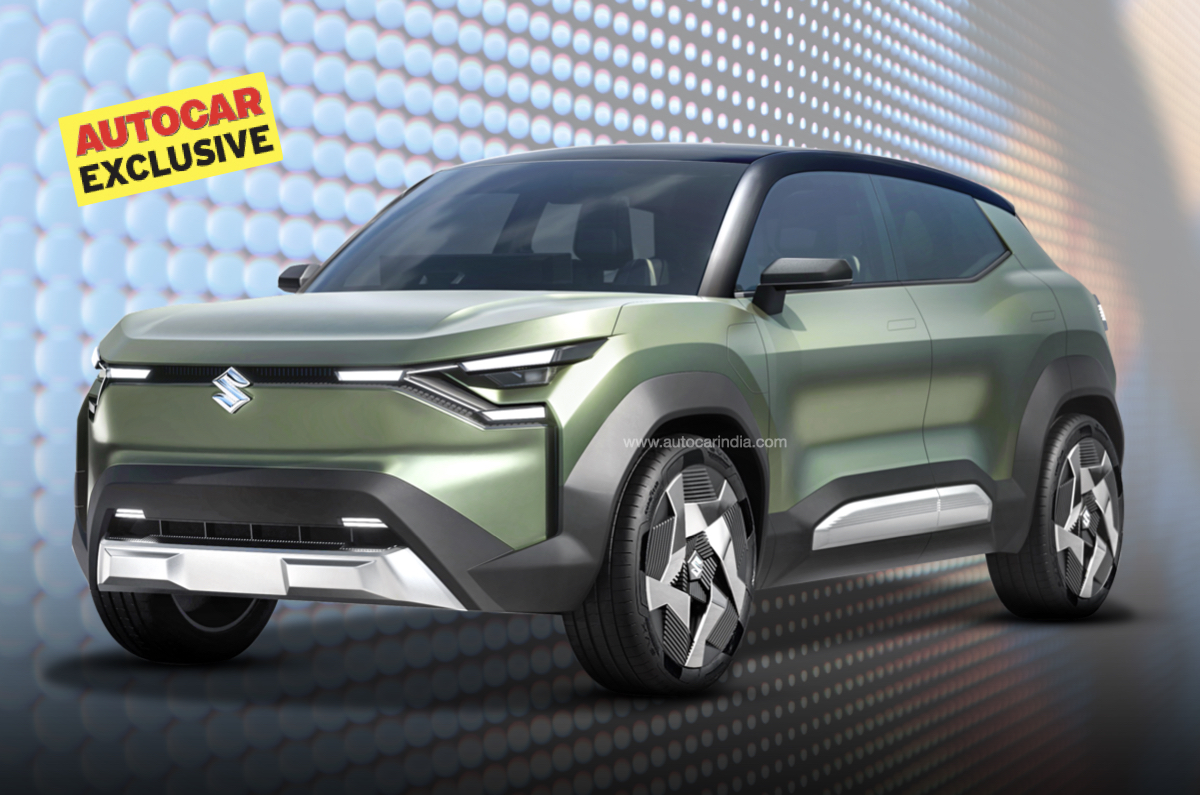
Maruti Suzuki is expected to launch its first electric vehicle in India with the introduction of the eVX in 2024. Tata Motors is also expected to launch at least three new EVs, including the electric avatar of its flagship Harrier SUV next year.
2024 will be a landmark year for Maruti Suzuki, the largest carmaker in India, as it plans to put its first ever electric car eVX to production. The carmaker has confirmed that the eVX electric SUV, first showcased at the Auto Expo held in January this year, will be manufactured from Suzuki Motor’s Gujarat facility at Hansalpur starting next year. It is expected to be launched some time in 2024. The eVX electric SUV will come with a range of around 550 kms in a single charge. It will be equipped with a 60 kWh lithium-ion battery pack. When launched, it will take on the likes of MG ZS EV and Hyundai Kona among others.
Tata Harrier EV
Tata Motors has confirmed that its flagship Harrier SUV, which recently received a major facelift, will get its electric version next year. The Harrier EV made its debut at the Auto Expo earlier this year. Built on the Gen 2 EV architecture, the Harrier EV will come with V2L and V2V charging facilities. The Harrier EV has been spotted testing on roads ahead of its launch within the next few months. However, very little is known about what this electric SUV will offer in terms of range, performance and features.
Tata Punch EV
The second electric vehicle from Tata stable expected to make India debut next year is the Punch. The smallest SUV from the carmaker already has the ICE and CNG version on sale. When launched, it will become the fourth car in Tata’s lineup to offer ICE, CNG and EV version of the same model. The Punch EV is expected to come with the same Ziptron technology that is doing duty in other Tata EVs like Nexon. The size of the battery could be the ones used for Tigor EV or the Nexon EV. Tata Punch EV could offer range of more than 300 kms in a single charge in the long-range version.
Tata Curvv EV
The third electric car from Tata Motors expected to be launched in 2024 is the Curvv EV. Tata is likely to launch the EV version of the SUV after its ICE version makes its debut. The Curvv EV will be based on Tata Motor’s X1 platform which will be heavily reworked to become EV ready. According to reports, the expected range of the Curvv electric SUV will be between 400 kms and 500 kms in a single charge. It is not clear if Tata Motors will use the same battery the Nexon EV facelift uses.
Kia EV9
The Korean auto giant is expected to expand its EV lineup in India with the introduction of its three-row electric SUV EV9. Based on the Electric Global Modular Platform (E-GMP), the EV9 stands more than five metres in length. It promises to offer range of up to 541 kms in a single charge. It is expected to be offered in two variants. Globally, the EV9 is powered by a 150 kW electric motor that can help it sprint 0-100 kmph in 9.4 seconds. The RWD version of the EV will come with a more powerful 160 kW electric motor. The EV has an 800-volt electrical architecture that enables the EV to charge at ultra-fast speed. Kia claims the EV9 can run 239 kms with just 15 minutes of charging.
Mahindra XUV.e8
Mahindra and Mahindra will also expand its EV lineup for India with the launch of an electric SUV based on the XUV700. This will be Mahindra’s second electric offering after the XUV400. Mahindra had showcased five upcoming electric SUVs during an event held in United Kingdom in August last year. To be launched under the Born Electric brand, the XUV.e8 is expected to come with dual electric motor as well as all-wheel drive technology. Mahindra is likely to offer at least 60 kWh battery pack with the XUV.e8 EV besides adding features like level 2 ADAS, 5G connectivity among others.
Comments
×
Member Login
Personal Details
OR
No comments yet. Be the first to comment.