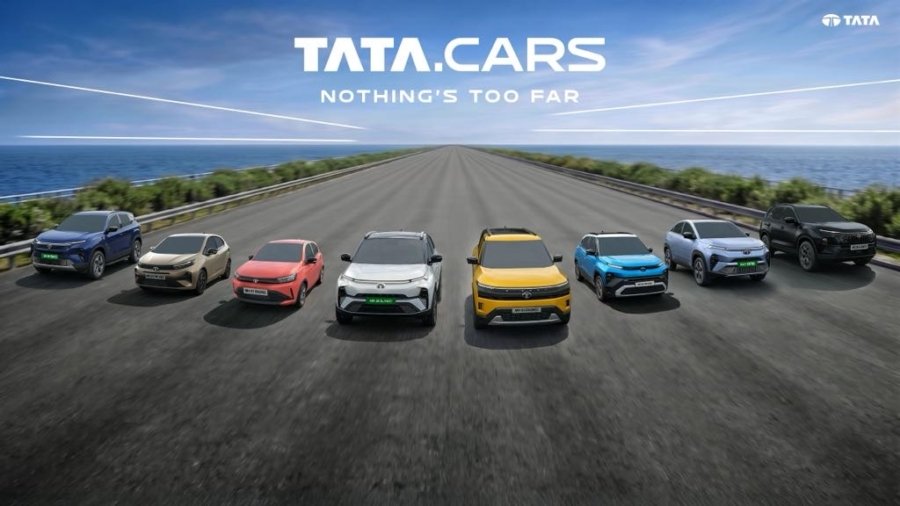
Tata Motors has introduced Tata.Cars as the new customer-facing identity for its passenger vehicle business in India. The new umbrella brand will cover the company’s petrol, diesel and electric passenger vehicles, while Tata.ev will continue to operate as the dedicated electric vehicle sub-brand. The change…
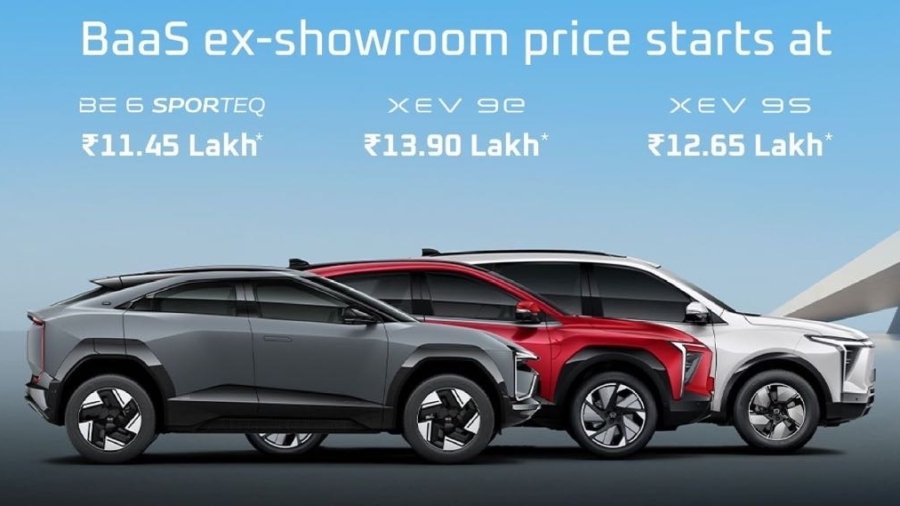
Mahindra has extended its Battery-as-a-Service (BaaS) purchase option to every variant of its Electric Origin SUV portfolio, giving buyers of the BE 6 Sporteq, XEV 9S and XEV 9e the option of paying separately for the battery through a usage-linked EMI. Under the expanded programme,…
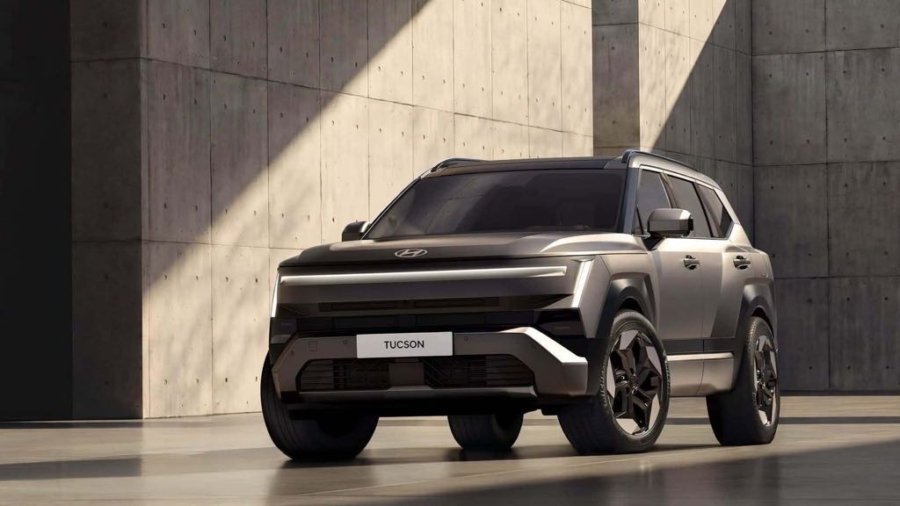
Hyundai Motor is planning a significant expansion of its presence in India, with 26 new or updated products earmarked for the market through 2030. The move forms part of a broader global strategy under which the automaker plans more than 100 launches and major product…
Mahindra is preparing an update for the three-door Thar, with two test mules of the facelifted SUV recently spotted testing together. The latest sighting suggests that development of the updated model is nearing completion, with the facelift expected to bring several styling revisions while retaining…
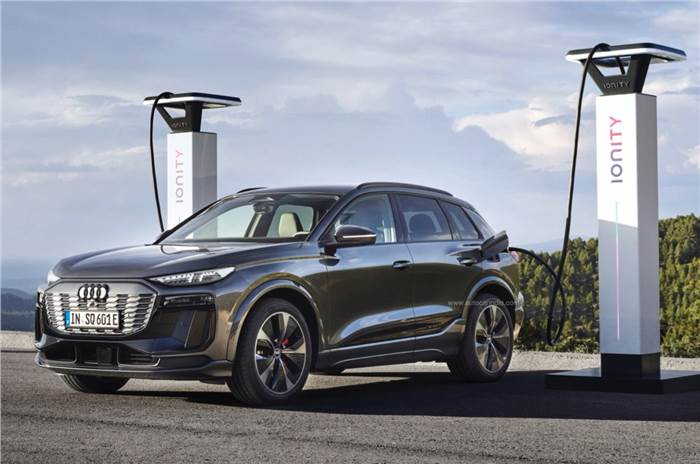
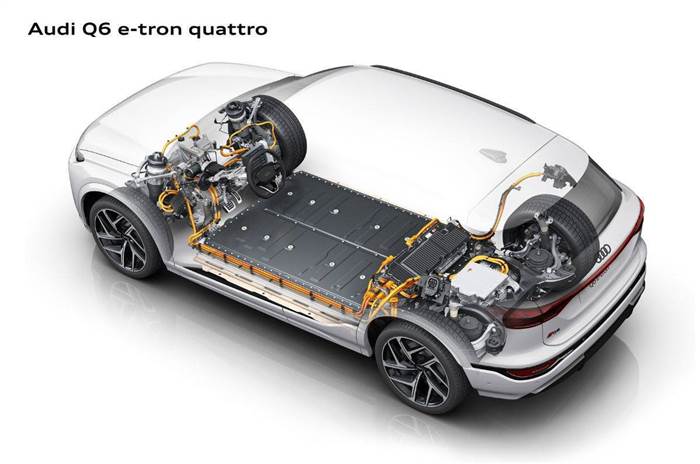
Q6 e-tron is the first Audi built on the Group’s PPE platform that’s set to underpin future models; India-bound in the next 10-12 months.
Published On Mar 18, 2024 11:30:00 PM
Audi says the Q6 e-tron isn’t just another new car, but the next step in the brand’s transformation into a premium electric mobility company. Indeed, the Q6 e-tron is the very first model to be built on the group’s new platform; the premium platform electric (PPE), which also underpins the Porsche Macan electric. The Q6 e-tron also comes with a new e&e architecture that gets an all-new electronic hardware and software, which is set to filter into the rest of the Audi range, including the internal combustion engine (ICE) models. So yes, the Q6 e-tron is a very important car to examine inside out.
Q6 e-tron is the first Audi on the VW Group’s PPE platform.
The VW group currently has four electric platforms: the MLB EVO platform that underpins the Q8 e-tron; the J1 Performance platform over which the e-tron GT and the Porsche Taycan are built; the MEB platform which the Q4 e-tron and the VW ID family use; and this, the new PPE that’s been designed to underpin EVs right from the midsize to the premium end. So models like this Q6 to sedans like the A6 will be built on it. The platform is also likely to expand and include electric versions of the A8 and the next generation Q8 too. A point to note, the Q6 e-tron is not related to the ICE Q6 on sale in China; that’s an entirely different model built on the MQB EVO platform and sits outside of the typical Audi hierarchy. In fact, Audi says the Q6 e-tron is a sister model to the Q5.
As for the new E3 1.2 e&e architecture, Audi says it has decoupled the hardware and software interdependence, so it should help the company adapt to fast evolving technology. Of course, it brings with it new hardware and software, including some AI tech.
Audi Q6 e-tron exterior style and design
At first look it’s very understated, much like all Audis, but a moment later you’ll soon see some rather striking design elements, and to my eyes it’s a very attractive balance. The grille is the Audi trapezoidal unit but it’s protruding a bit more and is largely sealed off; air flow being managed from the lower bumper area, which has a lot of angular and sharp edges. These elements will differ depending on the trim level.
The LED DRLs can have as many as eight different light signatures.
Unlike the Q4 and Q8 e-trons, the headlights and DRLs are now separate units, which show just how important DRLs have become. They occupy a larger area than the headlights, they sit on top and look really cool with eight different signatures that owners can select; the headlights are the familiar LED Matrix beams.
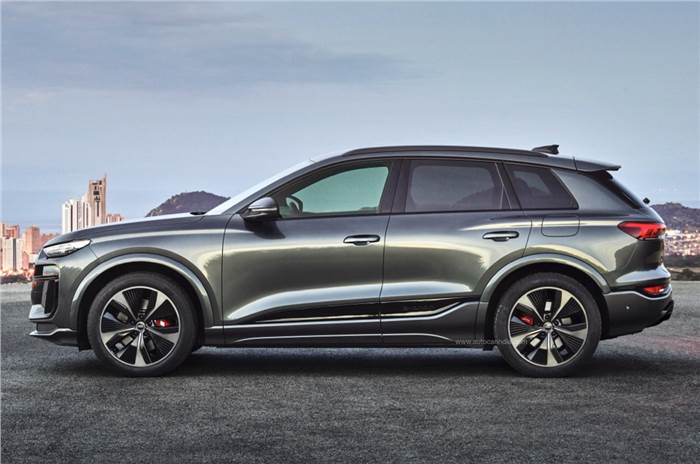
The profile is typical ICE-like with a long bonnet, and the cabin area stretches back neatly. It has a swept-back look, but even then, it’s very understated. You do see some really flashy elements like a front fender crease line and an extremely prominent, almost horizontal panel over the rear wheels, which Audi calls the Quattro blister. The doors have a contrast cladding below, with smooth but deep curves giving it a nice sensuous flair.
The character line over the rear wheel arch is what Audi calls the Quattro blister.
At the rear, there’s the now-familiar continuous light bar, but the highlight is the new second generation OLED lights, which have six OLED panels and a total of 360 segments. In what Audi says is possibly a world first, the tail-lights have a continuously animated pattern; think twinkling Diwali lights. There’s no real benefit though and if you don’t like them – I don’t – you can opt for different light signatures, some of which have a neat 3D effect.
OLED tail-lights can create warning triangles to alert cars behind of hazards ahead.
Thanks to the new E3 1.2 architecture, these lights can also actively communicate with the outside. So for instance if the Q6 detects some road work signs ahead, it will indicate this to the cars following it by showing small warning triangles in the tail-lights, this also happens when you switch on the hazard lights. Down below there’s a functioning diffuser that helps the Q6 achieve a 0.28 coefficient of drag.
Audi Q6 e-tron interiors, space and comfort
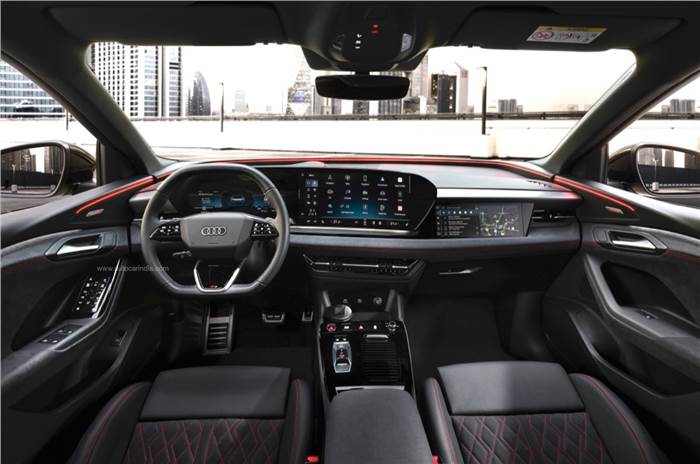
If the outsides are Audi-esque the interiors are pretty much all new. There’s now a single curved pane housing a 11.9-inch IP screen and a 14.5-inch central touchscreen. In an Audi first, it also has a passenger touchscreen. The 10.9-inch screen can also play videos which are obstructed from the driver’s view, the sound though will play over the car’s speakers. There’s an HUD with AR displays and the Audi assistant has a few more clever voice commands like asking it to lower a window half way down.
The curved infotainment and instrument cluster are an Audi first, so is the passenger touchscreen.
The new E3 1.2 architecture is based on the Android operating system, so Android Auto is included. Apple Carplay is also deeply integrated, and the system also brings in some AI bits, which Audi says will keep evolving. So for instance, if the car realises you are struggling with setting the right temperature, it would suggest things like using the cooled seats.
The steering wheel is all new and gone are the buttons, and in its place are touch surfaces. This is the same with the mirror controls; there are indents to guide your fingers around but buttons would have just been better. Also missing is the neat palm rest-integrated drive selector from the Q8 e-tron, and in its place is a simple toggle switch. HVAC controls are also sadly embedded into the touchscreen, but thankfully the familiar Audi media control dial hasn’t been deleted.
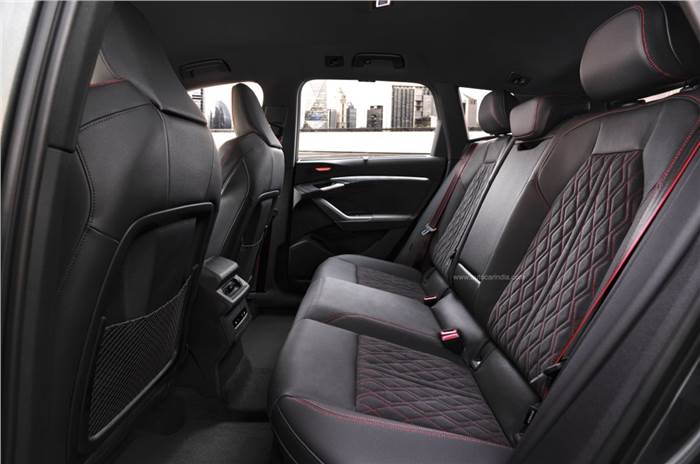
Rear seat space is pretty impressive, but some may find the backrest recline slightly upright.
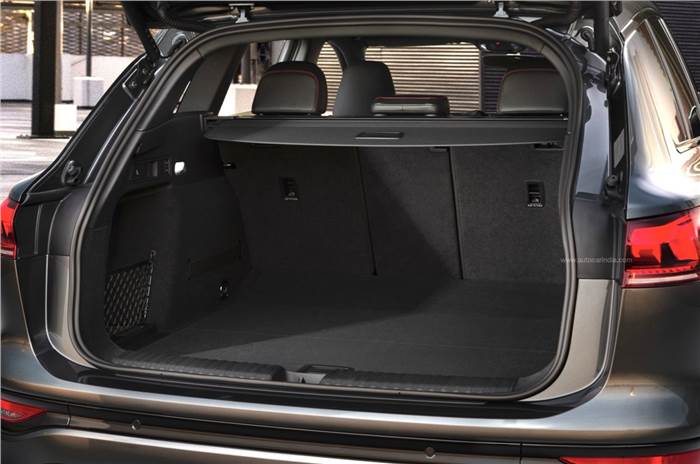
Space inside is pretty impressive, boot space stands at 526 litres and there’s a 64-litre frunk too. For my 5 foot 8 inch frame, front and rear legroom is more than adequate, and headroom is very good too, with about 5 inches to spare. We’ll know more about seat comfort when we spend substantially more time with the car, but first impressions are good. However, some will find the rear backrest recline slightly upright. In terms of features, it’s got all you’d expect like a premium 20-speaker Bang & Olufsen sound system, full ADAS suite, powered tailgate and 360-deg camera.
Boot has a generous 526 litres of space.
Audi Q6 e-tron performance and drive impressions
At launch, the Q6 e-tron will be offered in two AWD (Quattro) versions; Q6 and a sportier SQ6, with a rear-wheel drive model set to follow. The SQ6 puts out 517hp, does the 0-100kph dash in 4.3 seconds and tops out at 230kph, while the Q6 has 387hp, takes 5.9 seconds to 100kph and has a top speed of 210kph. We did drive both, but very briefly and only within the Audi training centre parking lot, so I can’t tell you much, except that acceleration is quick and steady, in typical EV fashion. Through rapid lane changes you can feel some weight, but it’s stable; again, having a low centre of gravity helps. Suspension duties are carried out by the optional adaptive air suspension system. We’ll have a proper drive review by the middle of this year so stay tuned for that.
Acceleration is brisk in typical EV fashion.
One bit that did stand out was the brakes – the blending of the recuperation from the motors and the friction brakes is very good, and pedal feel is uniform and positive. Audi says they have a complex brake blending program that, for the first time, can manage axle-specific blending too. It does work, braking is well controlled and you can’t tell when the friction brakes kick in. The company also says that about 90 percent of everyday braking would be handled by regenerative braking alone.
Audi Q6 battery, charging and range
Both the Q6 and SQ6 get the same 100kWh battery, so range is the only differentiating factor. The Q6 has a claimed WLTP range of 625km, while the SQ6 has a claimed range of 598km. There’s also a smaller 83kWh battery in the pipeline, which is basically the same lithium-ion prismatic unit but with two fewer (10) modules, and it’s this version that’s likely to be brought to India. With up to 270kW at 800 volts, the 100kWh battery can go from 10 to 80 percent in 21 minutes. On board AC charging speed is only 11kW, but an option of 22kW will be offered at a later stage.
Audi Q6 India launch and price
The Q6 e-tron launch is scheduled to take place by the middle of this year in Europe, followed by China. India launch is likely to take place by the end of the year or early next year, and it’s likely to be the two-wheel drive 83kWh battery, which would be priced around the Rs 70 lakh-80 lakh mark. With direct rivals like the iX3 and the Mercedes EQC, both not available in India, the Audi Q6 e-tron would sit between smaller electric SUVs like the Volvo XC40 and the BMW iX1, and larger SUVs like its sibling, the Q8 e-tron, the Mercedes EQE SUV and the BMW iX.
When it arrives in India, it will pretty much sit in a space of its own.
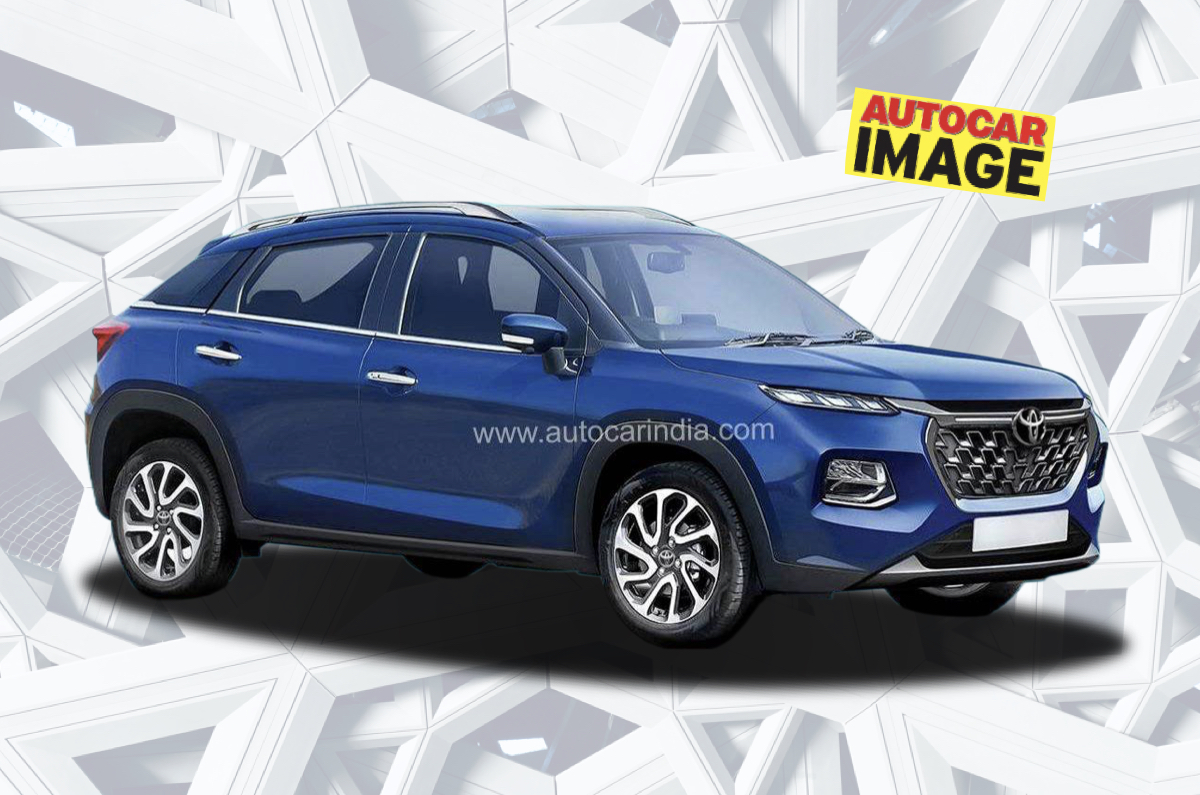
Urban Cruiser Taisor will be the smallest SUV in Toyota’s India line-up.
Toyota’s rebadged version of the Maruti Suzuki Fronx has been anticipated for long, and the company has now officially confirmed its debut on April 3. In August 2023, Toyota trademarked the “Urban Cruiser Taisor’ nameplate in India, which is what we expect the rebadged Fronx will be called. As is the case with the existing shared models between both brands, we expect some cosmetic differences inside out, although it will remain identical under the skin.
New compact car is expected to be named Urban Cruiser Taisor
Will be based on the Maruti Suzuki Fronx
Updates will only be cosmetic in nature
Toyota Urban Cruiser Taisor: new exterior and interior
The updates on the rebadged Fronx can be expected to be on lines of the Baleno–Glanza as the Fronx itself is based on the Baleno. One can expect an all-new bumper with revised headlamp clusters, new LED daytime running lamp signatures, new alloys wheels, new tail-lamps along with a revised rear bumper. There will be no sheet metal changes – the differences are only going to be on the soft plastic parts.
On the inside, the dashboard will be identical to the Fronx, but it’s expected to come finished in new colours and trim materials. The seats are also expected to get new upholstery. And while the equipment list on top-spec models will be identical, from the pattern seen on existing shared models, Toyota is likely to offer the rebadged Fronx in fewer trims. Toyota will also offer better standard warranty to bring about some more differentiation.
Toyota Urban Cruiser Taisor: powertrain options
The Fronx has two engines on offer – a 1.0-litre BoosterJet unit that makes 100hp and 147Nm, and a 90hp, 113Nm naturally aspirated 1.2-litre petrol engine, with a 5-speed manual as standard. As for automatics, the turbo-petrol gets a 6-speed torque converter automatic while the petrol gets a 5-speed AMT.
It’s certain that the 1.2-litre petrol engine will be carried over to the Taisor – over 80 percent of Fronx buyers opt for this engine – but it remains to be seen if the Boosterjet is carried over as well (for instance, the Invicto doesn’t carry over the regular petrol engine from the Hycross).
If it does, then it will be the first turbo-petrol motor in Toyota’s line-up that’s primarily dominated by hybrids and diesels. The Fronx is also available with a CNG powertrain option and this should carry over to the Toyota derivative as well.
Toyota Urban Cruiser Taisor: rivals and launch
The Urban Cruiser Taisor will mark Toyota’s return to the sub-4m SUV space after the Brezza-based Urban Cruiser was discontinued in late-2022, albeit in a new coupe-SUV guise. Apart from the Fronx, it will rival other compact SUV such as the Tata Nexon, Hyundai Venue, Mahindra XUV300, Maruti Suzuki Brezza and more. In terms of price, expect a marginal premium over a corresponding Fronx.
By: HT Auto Desk | Updated on: 14 Mar 2024, 17:53 PM
Over 50 per cent or about 5,000 of Maruti Suzuki Subscribe customers were added in the current financial year.
The Maruti Suzuki Subscribe program witnessed a 44 per cent hike in subscriptions this fiscal garnering over 5,000 customers
Maruti Suzuki’s car leasing program, Subscribe, has achieved a new milestone as it hit 10,000 new car subscription sales. The automaker introduced the Maruti Suzuki Subscribe program in July 2020, bringing a more accessible way to lease cars at attractive monthly payments. The subscription program is in addition to the traditional retail sales channels offered by the automaker.
Maruti Suzuki revealed that a significant chunk of Subscribe customers are based out of major metros with its presence in over 25 cities. Moreover, over 50 per cent or about 5,000 customers were added in the current financial year itself. The carmaker also revealed that its premium cars including the Brezza, Baleno, Grand Vitara and Ertiga are among the most popular models accounting for over 53 per cent of the total subscriptions.
The Maruti Suzuki Baleno, Brezza, Grand Vitara, and Ertiga are the most popular subscription options
The Maruti Suzuki Subscribe program allows customers to select the ownership period based on their requirements. This could vary from a minimum of 12 months to four years. The company offers rental prices according to the tenure. The monthly payments include the car’s cost, insurance, maintenance and more, thereby ensuring a seamless ownership experience.
Commenting on the milestone, Shashank Srivastava, Senior Executive Officer, Marketing and Sales – Maruti Suzuki India Limited, said, “Since its introduction, the Maruti Suzuki Subscribe program has steadily been gaining acceptance among Indian buyers who prefer flexible buying and ownership experience. The vehicle subscription model is gradually gaining momentum in the country, and most of our customers are based out of Delhi-NCR, Mumbai, Hyderabad, Chennai, and Bangalore. Interestingly, over 50 per cent of the total Maruti Suzuki Subscribe customers have been added in the current financial year.”
Maruti Suzuki Subscribe is offered through five partners in the country and registered a 44 per cent growth in FY2023-24 year-to-date (YTD) over FY2023 YTD. The automaker also revealed that 65 per cent of the subscriptions were for 3-4 years, as customers are looking for more flexible vehicle ownership options.
Kia Clavis SUV to be positioned between Sonet and Seltos
To be a lifestyle offering, albeit without an AWD option
Clavis petrol to debut by the end of this year, launch early 2025
Kia Clavis design highlights
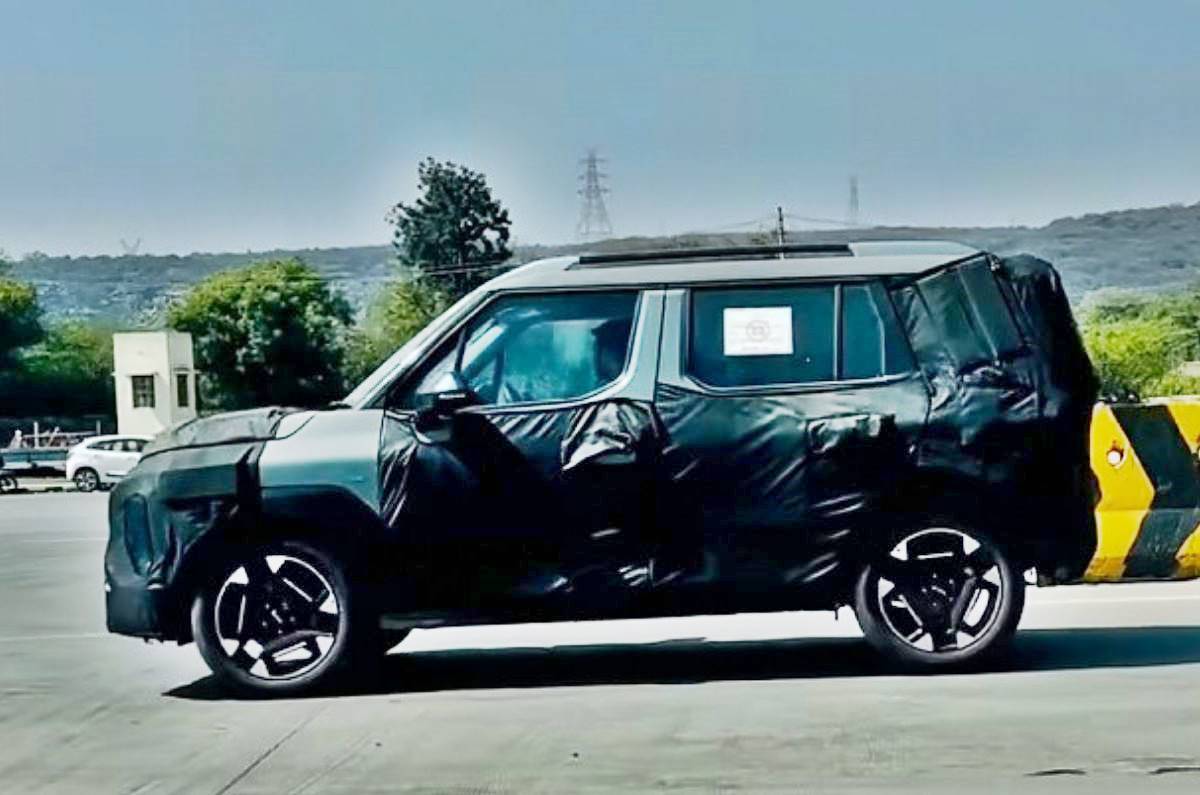
While the test mule is fully camouflaged, the boxy shape of the SUV is evident. The SUV boasts of a flat roofline with functional roof rails, while the bonnet, nose and the rear-end are also upright and flattish. The diamond-cut alloy wheels seem to have taken inspiration from the facelifted fourth-gen Kia Carnival MPV. The Clavis will be a sub-4-metre SUV, but its upright styling would result in better headroom compared to the Sonet. Bigger windows would also contribute to the cabin feeling airier. Essentially, it will be more lifestyle-oriented that the Sonet which is quite urban.
Kia Clavis powertrain options
As we’ve reported earlier, the Clavis will be offered with both petrol and electric powertrains. Both versions will be based on the same platform and a hybrid powertrain could also be introduced at a later stage. However, all versions will feature a front-wheel drive configuration as standard, with specific details about the powertrains available closer to its debut.
Kia Clavis launch timeline
The petrol-powered Kia Clavis SUV is expected to be unveiled in India by the end of this year, followed by a launch in early 2025. The battery-powered version of the Clavis is expected to arrive about six months later. Considering its market positioning, the Kia Clavis will be slightly pricier than the Sonet, which is currently priced at Rs 7.99 lakh.
Maruti Suzuki Arena sold over 9 lakh cars to women
[ad_1]
By: HT Auto Desk | Updated on: 08 Mar 2024, 18:58 PM
Maruti’s new initiative is aimed at celebrating the growing number of women drivers and influencers in vehicle decisions across the country.
Maruti Suzuki Arena sells majority of manufacturer’s vehicles.
On account of Women’s Day, Maruti Suzuki has announced that they have sold more than 9 lakh cars through their Maruti Suzuki Arena dealerships. In FY23-24, 28 per cent chose Maruti Suzuki’s cars which is up from 18 per cent in FY17-18. The brand will be launching a new campaign called ‘Arena Journeys’ under the Maruti Suzuki Arena. This initiative is aimed at celebrating the growing number of women drivers and influencers in vehicle decisions across the country.
The campaign will include short stories from four well-known women directors such as Tanuja Chandra, Alankrita Shrivastava, Sonam Nair, and Tahira Kashyap Khurrana. The directors will be narrating interesting stories of women.
The first short story will debut on 8th March. Commenting on the launch of the ‘Arena Journeys’, Mr. Shashank Srivastava, Senior Executive Officer, Marketing and Sales, said, “As industry leaders, Maruti Suzuki India Limited is proud to shine a spotlight on the rising number of women taking charge of the roads. We are proud of the fact that over 9 lakh women buyers have found their right match with Maruti Suzuki Arena. More than 28% of women in FY23-24 chose the brand value of Maruti Suzuki as a reason to purchase. Arena Journeys is more than just a campaign; it’s a testament to the brand’s dedication to inclusivity, empowerment, and customer-centricity.”
Currently, the brand is working on the launch of Swift which is expected to make its debut in the coming months. The hatchback will get some major revisions to the exterior and the interior will have some hints of the Baleno. The biggest change will be the new engine. It will be a new three-cylinder unit that will replace the current four-cylinder unit. Suzuki says that they did this in favour of better fuel efficiency and the engine is supposed to deliver better low-end torque.
US–based auto giant Ford Motor is expected to return to India soon with models like new Endeavour SUV and Mustang Mach-E.
Ford Everest, earlier sold as Endeavour SUV, is one of the most awaited cars from the US-based auto giants expected for a comeback in new avatar soon.
Ford Motor could soon to return to India as the US-based carmaker recently filed a few design patents for the domestic market and two of its global models spotted on Indian roads recently. Ford Motor has not officially made any statement on the future of Ford India yet. However, the carmaker is expected to make a comeback after two years after stopping production in 2022. From Figo to Ecosport, Ford has offered several popular models in India before it left the market. While these models may not return to India, here is a look at five global cars which one would like to see on Indian roads when Ford returns.
The Endeavour SUV, rival to Toyota Fortuner, is one of the most awaited models in India. The rival to Toyota Fortuner, Endeavour has been one of the best-selling models in the large SUV space before Ford stopped making cars in India. Recently, Ford Everest was seen on Indian roads, triggering speculation of the SUV’s return. Everest is basically the new generation avatar of the Endeavour SUV sold globally.
The Everest SUV spotted in India comes powered by a 2.0-litre turbo diesel or a 2.0-litre bi-turbo diesel engine. The turbo engine can churn out 168 bhp of power while the bi-turbo can generate 208 bhp of power. The torque output peaks at 405 Nm and 500 Nm. The turbo diesel engine uses a 6-speed automatic transmission whereas the Bi-turbo gets a 10-speed automatic transmission. Both gearboxes get SelectShift and Ford offers 4×2 as well as 4×4 drivetrains.
Ford Ranger
The Ranger pickup truck is another model that was spotted on Indian roads along with the Everest SUV. The Ranger, which could rival the likes of Toyota Hilux and Isuzu D-Max sold in India, is one of the smallest pickup trucks Ford offers in global markets.
Ford offers the Ranger pickup globally with three engine options. There is a 2.3-litre EcoBoost, 2.7-litre EcoBoost and a 3.0-litre EcoBoost. The 2.3-litre unit puts out 266 bhp of max power and 420 Nm of peak torque. Then there is the 3.0-litre unit that is rated for 399 bhp and 583 Nm. As of now, the 2.7-litre engine has not gone on sale. Ford says that they are targeting power and torque figures of 310 bhp and 542 Nm.
Ford Bronco
IF Ford was to have an SUV that can rival the likes of Mahindra Thar or Maruti Suzuki Jimny, it would probably be the Bronco. Ford launched the Bronco SUV in 2021 with both two-door and four-door 4X4 versions for the first time. Ford Bronco SUVs are offered in two powertrain options. There is a 2.7-litre EcoBoost V6 petrol engine which can produce 310 horsepower and 542 Nm of torque. It also comes equipped with a 2.3-litre EcoBoost four-cylinder engine which can churn out 270 hp of power and peak torque of 420 Nm.
Ford Mustang Mach-E
Ford used to sell the Mustang sports car in India before it wrapped up business three years ago. However, the Mustang can return to India in its new electric avatar when Ford makes a comeback. Ford Mustang Mach-E, which was recently trademarked in India, comes with up to 502 km of driving range. Ford offers the EV equipped with two battery choices – a 72 kWh unit and a 91 kWh unit.
Ford F-150 Lightning
As EV adoption in India grows and customers look forward to newer models, Ford may find an opportunity in the electric pickup segment with the F-150 Lightning. Launched for the first time in 2022, the F-150 Lightning is one of the most popular electric pickup trucks in the US.
The Ford F-150 Lightning pickup truck comes with a range of 482 km on a single charge. Equipped with dual electric motors, one on each axle, the electric pickup can achieve 563 horsepower and a staggering 1,050 Nm of peak torque. F-150 Lightning can go from 0 to 100 kilometres per hour in just four seconds. Ford claims that with a super fast DC charger, the F-150 Lightning can replenish around 87 kms of charge in just 10 minutes, charging the battery from 15 to 80% in just 41 minutes. The towing capacity of the F-150 Lightning, an important characteristic in pickup trucks, is 4.53 tonnes.
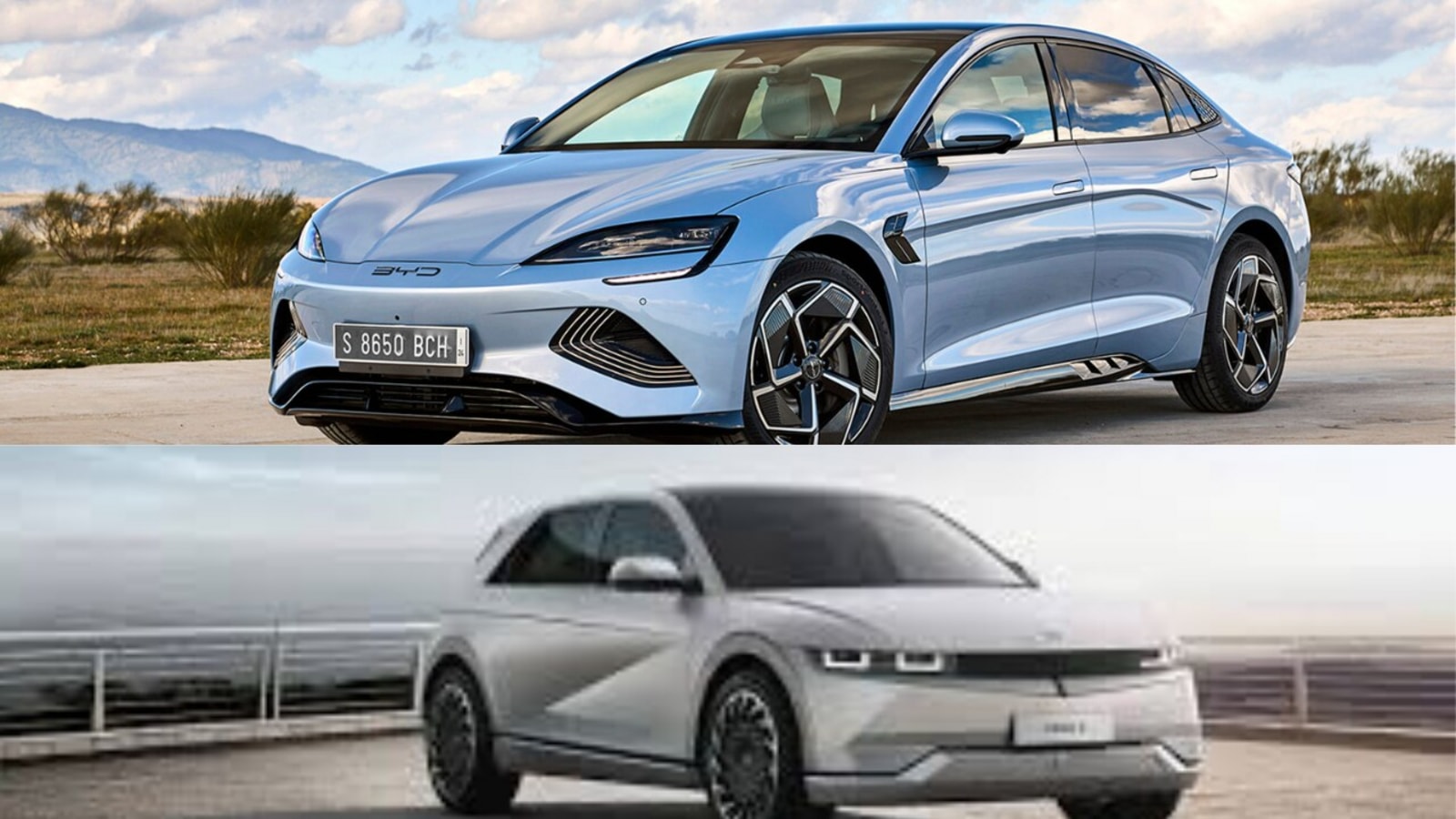
BYD Seal vs Hyundai Ioniq 5: Which premium EV to go for
2023 hyundai ioniq 5 se standard range
[ad_1]
By: HT Auto Desk | Updated on: 07 Mar 2024, 18:57 PM
BYD Seal is the newest electric car in the Indian market and at its price points, will rival Hyundai Ioniq 5. The Seal EV will be offered with two pow
…
BYD Seal is the newest electric car in the Indian market and at its price points, will rival Hyundai Ioniq 5. The Seal EV will be offered with two powertrains and three variant options.
BYD Seal is the newest electric car in the Indian market and at its price points, will rival Hyundai Ioniq 5. The Seal EV will be offered with two powertrains and three variant options.
BYD, the Chinese EV giant, has made waves in the global market by surpassing Tesla as the largest EV maker worldwide. This remarkable achievement is credited to the cutting-edge technology found in BYD vehicles, particularly the revolutionary ‘blade battery’ tech, coupled with their competitive pricing. Recently, BYD took the Indian market by storm with the launch of its Seal, touted as a performance EV, at an unexpectedly competitive price point. Priced at ₹41 lakh ex-showroom, the Seal garnered immense interest, with over 200 bookings within just two days of its launch.
While the BYD Seal offers an enticing value proposition, brand recognition plays a crucial role in the Indian market. This is where the Hyundai Ioniq 5 comes into play. Priced similarly to the Seal, the Ioniq 5 benefits from the strong brand awareness of Hyundai and its extensive sales network, giving it an edge in the market.
To provide a comprehensive comparison between the BYD Seal and the Hyundai Ioniq 5, let’s delve into their pricing, specifications, range, and features.
2023 hyundai ioniq 5 se standard range
BYD Seal vs Hyundai Ioniq 5: Specifications
BYD Seal has been launched in India in three variants. First up is the base Dynamic variant, boasting a 61.44 kWh battery pack and a rear-wheel drive setup. With 201 bhp and 310 Nm of torque under the hood, this variant promises an impressive range of 510 kilometres on a single charge.
Moving up the ladder, the BYD Seal Premium comes equipped with an 82.56 kWh battery and retains the rear-wheel drive configuration. Packing a punch with 308 bhp and 360 Nm of torque, this variant offers the longest range of the trio, reaching up to 650 kilometres.
For those craving even more power, the top-of-the-line BYD Seal Performance variant delivers with its 82.56 kWh battery and all-wheel drive system. Generating a whopping 523 bhp and 670 Nm of torque with a slightly reduced claimed range of 580 kilometres.
The Dynamic variant capable of reaching 85 per cent charge in 37 minutes when plugged into a 110 kW charger. The Premium and Performance variants, on the other hand, can handle even faster 150 kW chargers.
On the other end of the spectrum, the Hyundai Ioniq 5 from Korea boasts a 72.6 kWh battery pack and an axle-mounted single electric motor producing 214 bhp and 350 Nm of torque. Hyundai claims an impressive charging time from 10-80 per cent in just 18 minutes using a 350 kW DC charger.
BYD Seal vs Hyundai Ioniq 5: Range
The larger battery size of the Seal has proven to benifial, offering impressive advantages across its range. The Dynamic variant boasts a claimed range of 510 km and can accelerate from 0-100 kmph in just 7.5 seconds. Stepping up to the Premium Range, drivers can expect even more exhilarating performance, with a 0-100 kmph acceleration time of 5.9 seconds and a claimed range of 650 km.
For those seeking the ultimate in performance, the Seal Performance variant delivers with a claimed range of 580 km and quick acceleration from 0-100 kmph in just 3.8 seconds.
Watch: Hyundai Ioniq 5 Review: First Drive Impressions
On the other hand, the Hyundai Ioniq 5 offers a competitive range of up to 630 kilometres, making it pretty comparable to the Seal’s Premium Range.
BYD Seal vs Hyundai Ioniq 5: Features
Step inside the BYD Seal, and you’ll be greeted by a three-spoke multi-function steering wheel, a digital driver’s display, and a touchscreen infotainment system that can rotate to suit your viewing angle. The EV also boasts a panoramic sunroof, a 360-degree camera, ventilated seats, wireless charging, and Level 2 ADAS features for a truly futuristic driving experience.
On the other hand, Hyundai’s electric crossover is no slouch in the features department either. Featuring a spacious interior with a 12.3-inch digital console and touchscreen infotainment system with wireless Apple CarPlay and Android Auto along with over 60 features of connected car technology and Bose sound system. It also gets dual-zone climate control, leather upholstery, ventilated seats with memory function, and more.
BYD Seal vs Hyundai Ioniq 5: Price
The BYD Seal pricing ranges between ₹41 lakh and ₹53 lakh (ex-showroom). The Dynamic and Premium variants of BYD Seal make it the most affordable option among the two EVs in this comparison. The sole variant of Hyundai Ioniq 5 is priced at ₹46 lakh (ex-showroom).
Single motor variant of the XC40 Recharge has a power output of 238hp, WLTP range of 475km.
Volvo has launched a new variant of the XC40 Recharge with a single motor mounted to the rear axle. Officially called the E60, the variant is dubbed the ‘Plus’ on the Volvo India website and is priced at Rs 54.95 lakh, ex-showroom, India. It is positioned below the dual-motor, AWD XC40 Recharge E80 (Ultimate) that’s priced at Rs 57.9 lakh, ex-showroom, India.
Equipped with a 69kWh lithium-ion battery
0-100kph in 7.5 seconds
Misses out on Harman Kardon system and 360-deg camera
Volvo XC40 Recharge E60 single motor features
The E60 single-motor variant loses out on some features compared to the dual-motor model such as Pixel LED headlamps, fog lamps, 360-deg camera and a Harman Kardon sound system. That being said, the E60 variant gets features such as an 8-speaker sound system, two-zone climate control, a 12-inch digital driver’s display, a 9-inch infotainment unit, TPMS, park assist, 19-inch alloy wheels, panoramic sunroof, powered front seats and wireless phone charging to name a few.
However, being a Volvo, it continues to get a raft of safety features like 7 airbags and an ADAS suite that includes lane keep assist, adaptive cruise control, cross-traffic alerts and rear collision warning.
Volvo XC40 Recharge E60 single motor powertrain, battery and range
The Volvo XC40 Recharge E60’s power output stands at 238hp and 420Nm, which allows the SUV to complete the 0-100kph sprint in 7.3 seconds and reach a limited top speed of 180kph. The single motor variant gets a 69kWh Lithium-ion battery pack that has a WLTP range of 475km.
Volvo XC40 Recharge E60 single motor rivals
The Volvo XC40 Recharge E60 single motor rivals other RWD EVs such as the recently launched BYD Seal Dynamic (Rs 41 lakh) and Premium (Rs 45.55 lakh), Hyundai Ioniq 5 (Rs 45.95 lakh) and the Kia EV6 GT Line (Rs 60.95 lakh).
By: Mainak Das | Updated on: 06 Mar 2024, 15:13 PM
Hybrid cars have been increasingly becoming popular across India, bridging the gap between electric cars and ICE models.
Hybrid cars have been increasingly becoming popular across India, bridging the gap between electric cars and ICE models.
Hybrid cars are gradually gaining higher traction in the Indian passenger vehicle market. Over the last few years, several automakers present in the Indian market have been shifting their focus on bringing in new cleaner and greener powertrain technologies. While the ultimate goal remains steady on battery electric vehicles, hybrid cars are bridging the gap between pure EVs and fossil fuel-propelled models that run on petrol or diesel.
Market data reveals that between September and November 2023, sales of hybrid cars surged significantly surpassing the electric car retail numbers. While electric car sales have been witnessing a marginal slowdown, in sync with the worldwide trend, hybrid cars are recording a ramp-up in growth. As the numbers testify, a total of 24,062 units of hybrid cars were sold between September and November last year, as against 21,455 units of battery electric cars.
The question is why Indians are in love with hybrid cars instead of pure electric vehicles.
Advantages of hybrid technology over pure ICE or EV
It is well known that hybrid cars offer the benefit of both worlds, internal combustion engines (ICE) and electric vehicles (EV), by combining a fossil fuel engine with an electric motor and a battery pack. By blending the best of both worlds, the hybrid powertrain technology not only ensures lower tailpipe emission compared to pure petrol or pure diesel models but also offers lower fuel consumption and longer driving range, eventually resulting in financial savings for the vehicle owners.
At the same time, hybrid powertrain technology comes at a cheaper cost compared to pure electric vehicles. Besides that, using a hybrid car boosts the consumers’ confidence in electrified propulsion technology. There are different types of hybrid powertrain technology available in the market, which include micro hybrid, mild hybrid, full hybrid and plug-in hybrid. In the first two variants, the electric motor acts as an assisting component for the internal combustion engine, which generates the actual propulsion power, while in the latter two variants, the electric motor itself can generate propulsion power for the vehicle with assistance from a battery pack. Many full hybrid or plug-in hybrid cars can run about 50-kilometre distance on electric power alone.
Watch: Do Hybrid Cars Make More Sense Than EVs In India? | All Things EV | HT Auto
Hybrid cars offer a cost-effective solution against pure ICE, EV and CNG models
In the last few years, several automakers in the Indian passenger vehicle market have launched their respective hybrid cars. Maruti SuzukiGrand Vitara, Toyota Urban Cruiser Hyryder, HondaCity and Toyota Innova Hycross are some of the key passenger vehicles in the country, which currently are sold as hybrid models. Interestingly, the hybrid powertrain technology has penetrated not only the mass-market segment but the luxury segment as well. The reason behind this is the rising consumer demand for this tech.
Multiple factors have played their bit in this growth story of hybrid cars. Since the Covid-19 pandemic, demands for personal mobility have surged drastically. At the same time, sky-high petrol and diesel prices and the significantly high cost of acquisition for electric cars have paved the way for hybrid cars in India, which satiate the requirement for lower tailpipe emission in the face of tightening emission norms and growing concern for environmental pollution. Besides that, the promise of a longer driving range and lower fuel consumption too helped the growth of hybrid cars.
Petrol and diesel prices in India have shot up by around 41 per cent since 2019. In such a situation increased availability of CNG kits in the aftermarket and OEMs introducing petrol-CNG cars have offered the consumers a viable solution, but with that, the vehicle owners have to compromise on boot storage. Electric vehicles too have come up dramatically in the last few years, but even now, an electric car costs significantly more than its ICE counterpart. Besides that, other factors like confusion about the lifecycle of EVs, lack of charging infrastructure, and range anxiety have been hindering the desired growth of electric cars.
On the other hand, hybrid technology offers a key viable solution, where consumers don’t have to worry about range anxiety or compromise on the boot space of their vehicles while getting the benefit of both ICE and EVs. The consumers have understood this and shifting their focus accordingly. Buoyed by that, carmakers in India are increasingly focusing on bringing hybrid cars into the market, fuelling the cyclic growth in the segment.
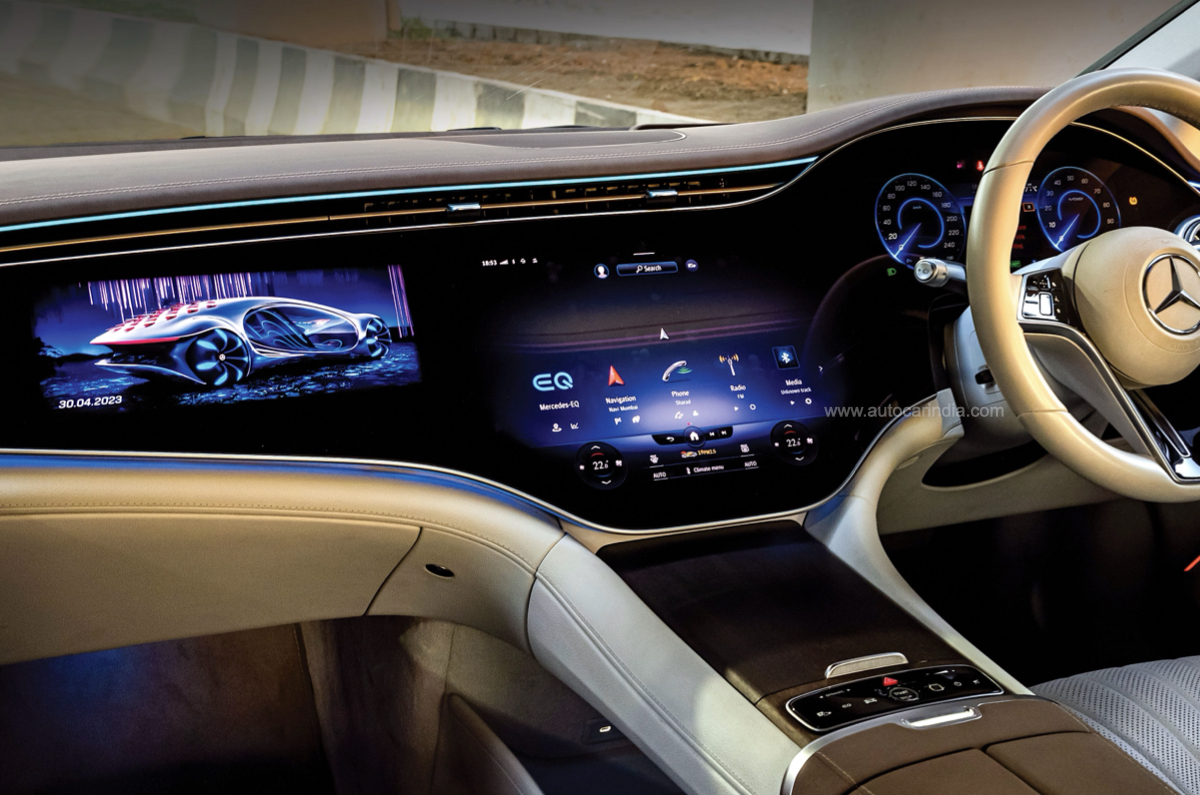
Touch-based car controls are inherently dangerous; more physical touchpoints could improve safety.
Touchscreens in cars were quite a novelty when they were first introduced, but in just a few years, they have completely taken over car interiors. In recent years, carmakers have been cramming even the most basic operations into touch panels, and more often than not, the usability and functionality has gone south.
Lately, some carmakers have started moving back to physical controls, in limited ways. In fact, carmakers in Europe are actually being encouraged to stop using touchscreens for basic functions in order to enhance road safety. As per a report by The Times, Euro NCAP is set to introduce a new set of rules for crash testing in January 2026 that will require vehicles to have physical controls for basic functions in order to score a full 5-star safety rating.
Euro NCAP set to introduce new rules in January 2026
Point to be awarded for having physical controls
The proposition is still a work-in-progress
“The overuse of touchscreens is an industry-wide problem, with almost every vehicle maker moving key controls onto central touchscreens, obliging drivers to take their eyes off the road and raising the risk of distraction crashes,” said Matthew Avery, director of strategic development at Euro NCAP, to The Times.
Under the new set of rules that could come into effect in 2026, vehicles will need to be fitted with physicals buttons, dials or stalks for operations such as turn signals, hazard lights, horn and windscreen wipers to be eligible for the maximum safety rating.
Tesla, for instance, has completely removed stalks for indicators and wipers on the Model S. Meanwhile, a touch panel for the HVAC controls or integrating them into the infotainment system is also pretty common these days; think of the latest Tatas, Volkswagens and Skodas in India which have a touch panel.
These systems, however, are not the most intuitive to use as users have reported. But why are carmakers pushing screens then? The answer is simple – cost. A single touchscreen panel – usually made of plastic – is much more cost effective to produce than an array of buttons and dials.
Do note that Euro NCAP testing is voluntary, and this does not in any way mean carmakers will mandatorily have to fit physical controls in cars. However, Euro NCAP is backed by several EU governments and several carmakers regularly use these crash test results in their marketing campaigns in order to attract more buyers, so it could have a wider implication. Any risk of points being deducted during such assessments is likely to be taken into consideration.
This, however, is still understood to be work-in-progress, and the exact evaluation procedures haven’t been finalised yet. Reportedly, carmakers have also been made aware of this proposition and they support it.
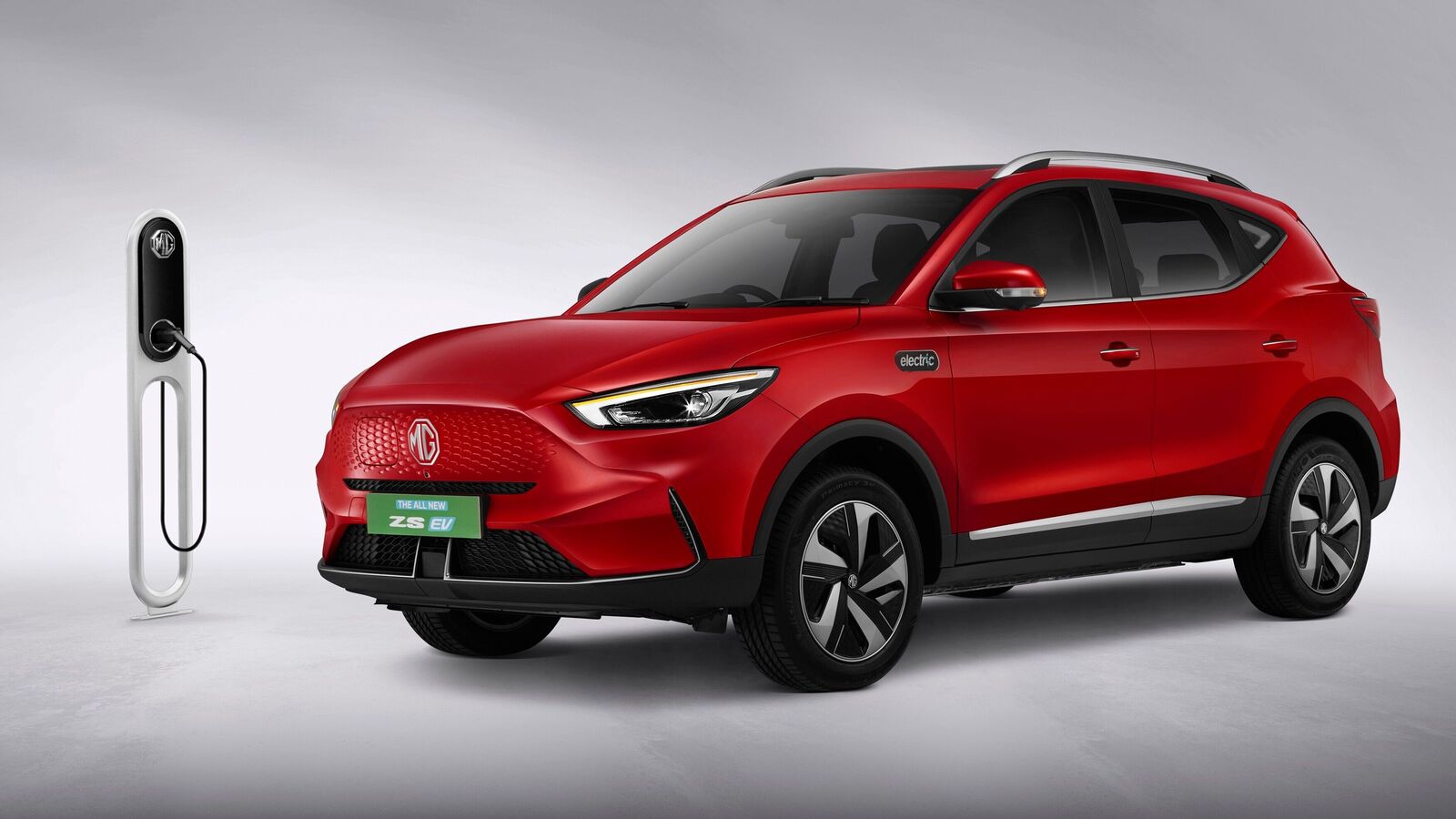
MG ZS EV launched in new mid-spec Excite Pro variant
Table of Contents
[ad_1]
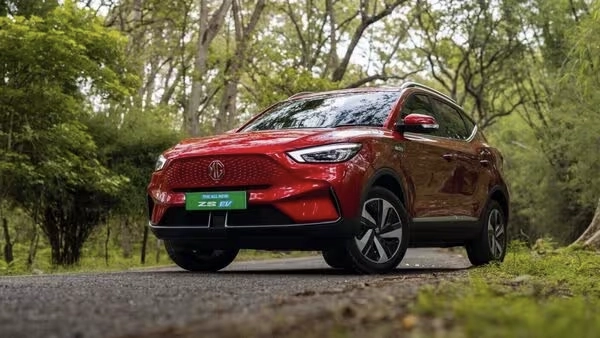
The new MG ZS EV Excite Pro brings the dual-pane panoramic sunroof to the electric SUV becoming the only sub ₹20 lakh EV to offer the feature. The model continues to come with other tech including over 75 connected features as well as Level 2 ADAS for additional safety. The model also packs a segment-first digital key, which allows the owner to start the car without using the physical key.
The top variants remain unchanged on the MG ZS EV which continues to get 17 Level 2 ADAS features and more
The hardware has been carried over on the new ZS EV Excite Pro with power coming from the 50.3 kWh battery pack. The automaker claims a range of 461 km (certified) on a single charge, while the electric motor develops 174 bhp sending at the front axle. The feature list on the top variants comprises a 360-degree camera, a 10.1-inch touchscreen, wireless charging, a 7-inch digital console, and more. The model also comes with six airbags, ABS with EBD, ESC, Hill Descent Control, and more.
The MG ZS EV takes on the Tata Nexon EV and Mahindra XUV400 in the segment with both electric SUVs getting significant updates in recent times. The latest update should keep the ZS EV in check with the competition, offering better value to customers.
Mercedes EQE SUV, EQB SUV, EQS sedan, Mercedes India sales
[ad_1]
Even as Mercedes dials back its electrification plans globally, its Region Overseas head believes India should stay on the EV track.
Mercedes-Benz announced last month that it would continue to sell combustion-engined cars – even in some developed markets – well into the 2030’s, contrary to its plan of transitioning into an all-electric brand by 2030 ‘wherever market conditions allow’.
However, while the company may be dialling back its EV plans elsewhere, it believes that electrification should stay on the fast track in India. Sagree Sardien, head of Region Overseas, Mercedes-Benz Cars, says, “For the Indian market, I think the better strategy would be to go electric as opposed to go to plug-in hybrids.”
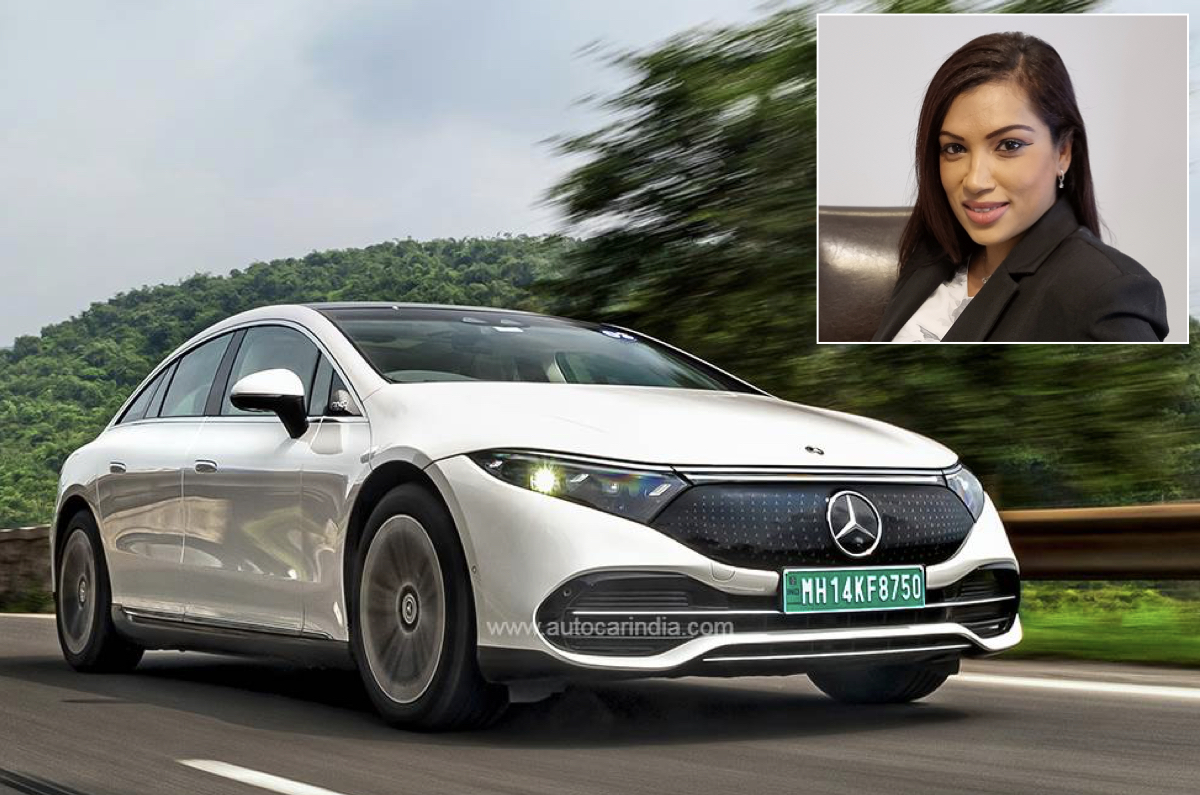
Mercedes-Benz sells just one plug-in hybrid model in India, the AMG GT 4-door coupe. But it has three electric models – the EQS, the EQB, and the EQE SUVs – with plans to introduce three more this year.
‘Indian market committed to EVs’
Sardien explained that she sees India as a market committed to EVs and thus advises that the country “takes the journey faster to battery electric vehicles”. Sardien is also confident that the EV market will continue to grow for the brand. “Whilst we are at 4 percent EV penetration in India, we anticipate double-digit penetration going forward,” Sardien said. For reference, globally, Mercedes EVs account for 19 percent of its total sales.
Mercedes India had record sales in 2023 selling 17,408 units, which is close to its current 20,000 production capacity limit. However, Sardien says the company is ready to cater to any changes in demand patterns and volume. “The plant in Pune has adequate capacity to be able to handle 20,000. If the market demand changes, of course, we have the flexibility, scalability and speed to adapt. So, if for some reason the Indian market accelerates faster than anticipated, we can scale up equally.” Currently, the EQB and EQE SUVs are both brought in as CBUs, whereas the EQS is assembled locally.
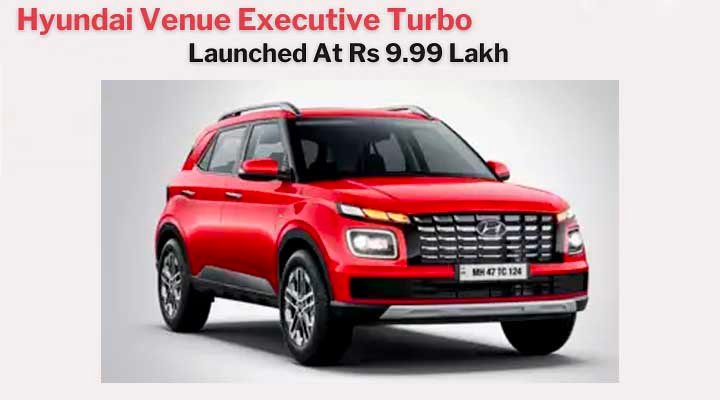
Hyundai Venue Executive Turbo launched at ₹9.99 lakh
The Executive Turbo trim comes with 16-inch dual-tone stylized wheels, dark chrome on the grille, roof rails, shark fin antenna and an ‘Executive’ emblem on the tailgate. The interior gets a front centre armrest with storage, 2-step rear reclining seats, 60:40 split seats and adjustable headrests for all passengers.
There is an 8-inch touchscreen infotainment system, which comes with wireless Android Auto and Apple CarPlay and voice recognition. There is also a digital cluster with a TFT MID for the driver.
For safety, there are 6 airbags, 3 point seatbelts with seat belt reminders, Electronic Stability Control, Vehicle Stability Management, Hill Assist Control, automatic headlamps, tyre pressure monitoring system etc.
Powering the new variant is the same 1.0-litre three-cylinder turbocharged petrol engine. It puts out 118 bhp of max power at 6,000 rpm and a peak torque output of 172 Nm at 1,500 to 4,000 rpm. The Executive Turbo is only available with a 6-speed manual transmission. The engine also comes with an Idle Start/Stop system to enhance fuel efficiency.
Hyundai has also updated the Venue S (O) Turbo variant with an electric sunroof and map lamps for the passenger and the driver. This variant is available with a 6-speed manual gearbox and a 7-speed dual-clutch automatic transmission.
The new variant and feature additions should help in attracting more customers. Commenting on the announcement, Mr. Tarun Garg, COO,Hyundai Motor India
Ltd. said, “Hyundai has always made India ‘Live the SUV Life’. As we move forward on a path towards democratizing SUVs, we are excited to announce the Executive Turbo variant of the Hyundai Venue. This variant is poised to offer an optimum combination of thrilling performance & enhanced convenience features for the value-conscious new-age buyer. We are confident that the addition of the Executive variant of Hyundai Venue will further fuel India’s love for SUVs.”
By: HT Auto Desk | Updated on: 02 Mar 2024, 18:08 PM
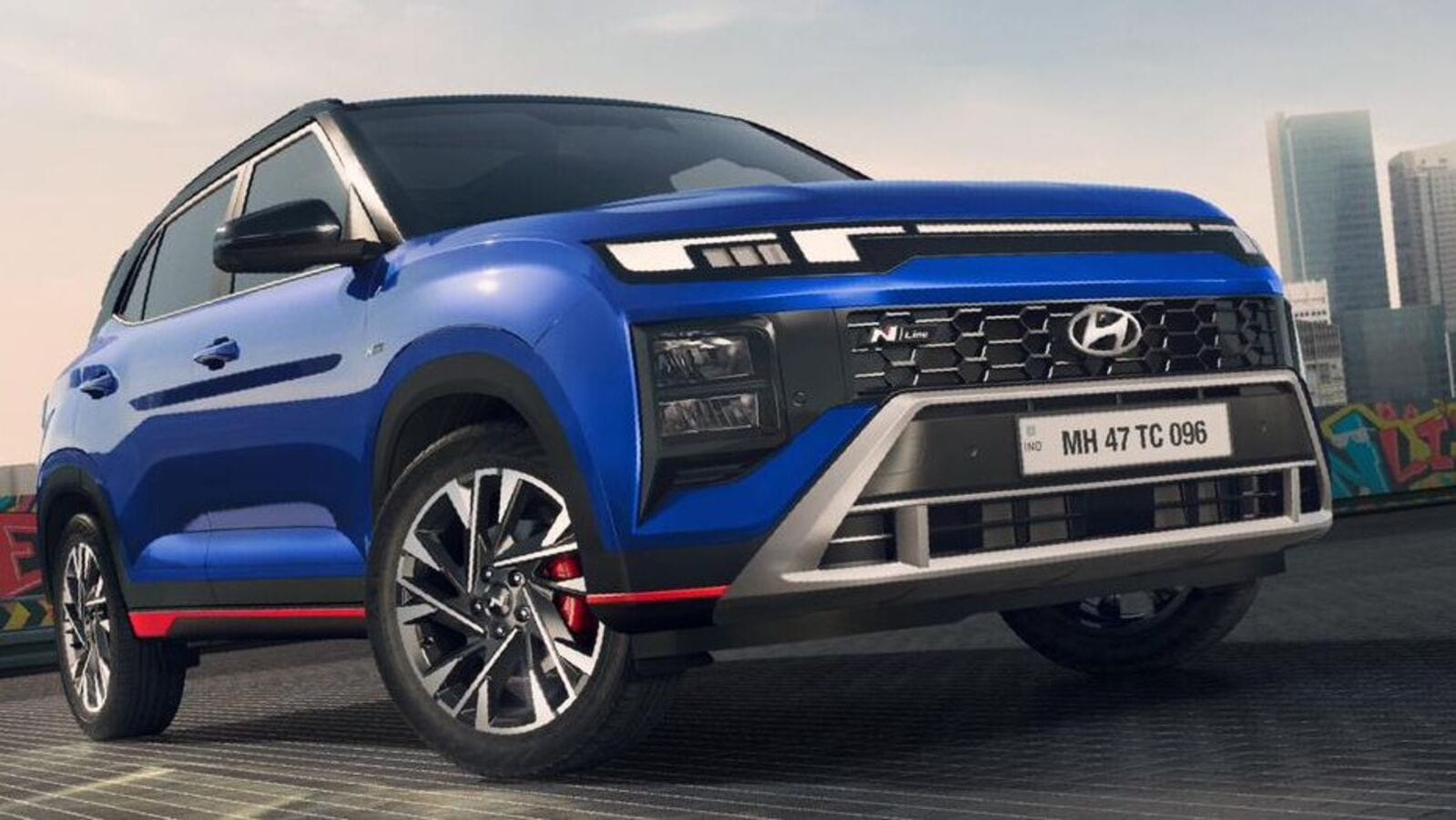
Upon launch on March 11, Creta will become the third model from Hyundai in India to also have an N Line version, after i20 and Venue.
Hyundai Creta N Line is based on the latest Creta that was launched early 2024 in the Indian car market.
Hyundai Creta N Line is all set for its official India launch on March 11. The Creta N Line from Hyundai will be the company’s third N Line model, after i20 and Venue. The N Line, essentially, refers to models that are sportier versions of the original model with several visual enhancements on the inside as well as outer body while having minor technical updates as well.
HT Auto has learnt that HyundaiCreta N Line will be offered in two trims – N8 and N10, and with only the 1.5-litre turbo petrol engine that was introduced in the 2024 Creta. This engine is paired with both a manual gearbox as well as a DCT unit. The Creta N Line colour options include three monotone shades – White, Black and Grey Matte, as well as three dual-tone hues – Blue with Black roof, Grey with Black roof and White with Black roof.
How to book a Hyundai Creta N Line?
Hyundai opened bookings for Creta N Line from Thursday onwards and there are two ways to reserve a unit. The first is by simply walking into any company-authorised dealership in the country and paying a reservation amount of ₹25,000 which is refundable if the booking is cancelled.
The other option is to make a booking online. An interested customer can follow the steps below:
Log on to Hyundai Motor India’s Click2Buy online platform.
Choose the model. In this particular case, it would be the Creta N Line. Next select the fuel type which in this case, would be petrol only.
Next, select one from the eight available variants of Hyundai Creta N Line. Follow up by opting for the body colour option.
Now comes the most important part about selecting the preferred dealership. For this, select your state, city and the dealer name. The dealer name, on obvious lines, usually is the one closest to your location.
Click on ‘Proceed’ and complete the transaction for the ₹25,000 that is charged as the token booking amount.
Do note that there is a likely waiting period of six to eight weeks that is expected on delivery of Hyundai Creta N Line from the date of launch and then from the date of bookings.
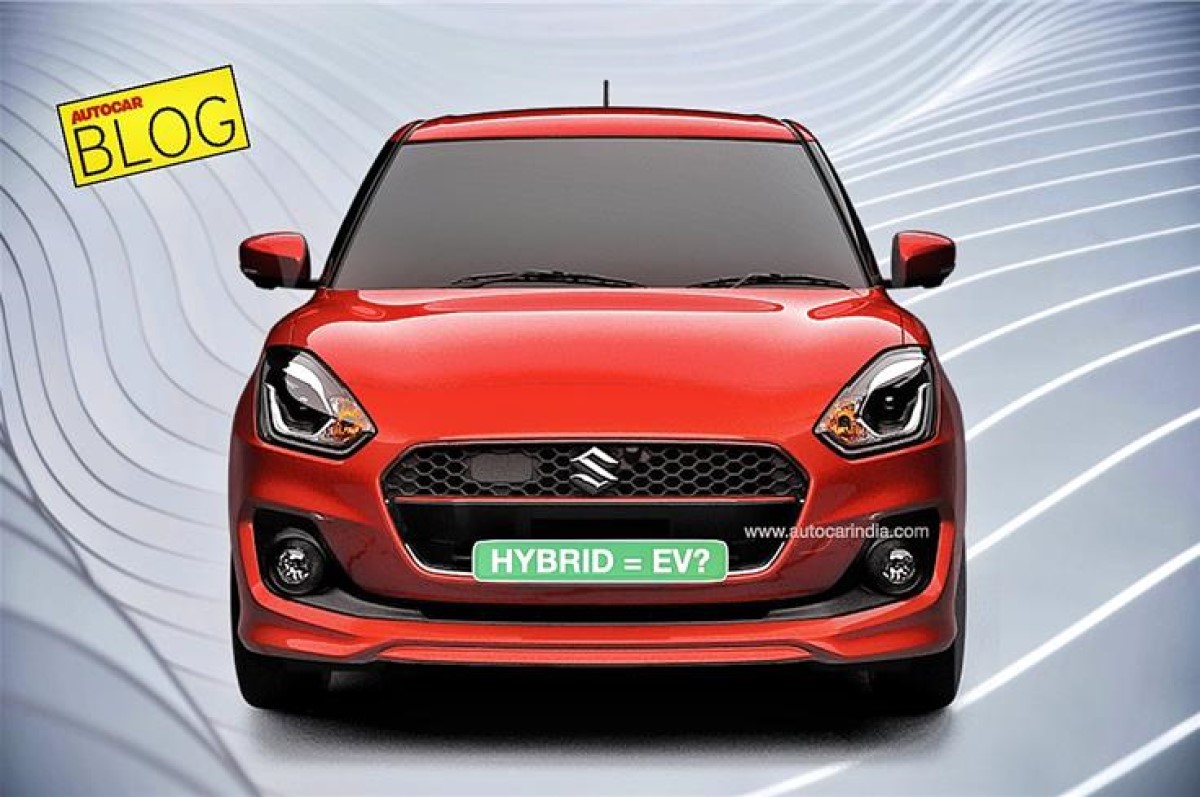
A few days ago we broke the news of Maruti’s plans to introduce its series hybrid technology in India in more affordable offerings like the Fronx, next-gen Baleno and next-gen Swift, among others. And here’s why I think this technology is going to be a game changer in the truest sense.
Series hybrid vehicles, also referred to as range-extenders or self-charging electric vehicles, work in a manner that’s similar to an electric vehicle (EV). The battery-powered electric motor directly drives the wheels, with the only difference being that the battery doesn’t need to be plugged in; instead the models are fitted with on-board generators to recharge the battery. This generator is run by a petrol engine. A point to note is that its petrol engine never drives the wheels directly.
Where things get really interesting is that according to the Department of Revenue, an EV “that runs solely on electrical energy derived from an external source or from electrical batteries” qualifies under the 5 percent GST bracket.
Further, even the Central Motor Vehicles Rules (CMVR), 1989 (amended in 2002) defines an EV “as a vehicle intended for road use, powered exclusively by an electric motor whose traction energy is supplied exclusively by a traction battery installed in the vehicle”.
There’s no mention of tailpipe emissions having been referenced or considered as a factor to define an EV. Which could technically define Maruti’s upcoming range-extenders as EVs, thus qualifying them for the lower GST slab.
This could give these upcoming Marutis a significant price advantage over other ICE cars in the market, including strong hybrids. Not only are these likely to be incredibly efficient, but their on-board generators will eliminate range anxiety associated with EVs, which could make this tech ideal for our market, where charging infrastructure remains at a nascent stage. The question is, will Maruti Suzuki be able to reap the benefits of this grey area in the rulebook and convince authorities to levy a lower GST rate? We’ll know very soon.





.jpg&c=0&w=700)