
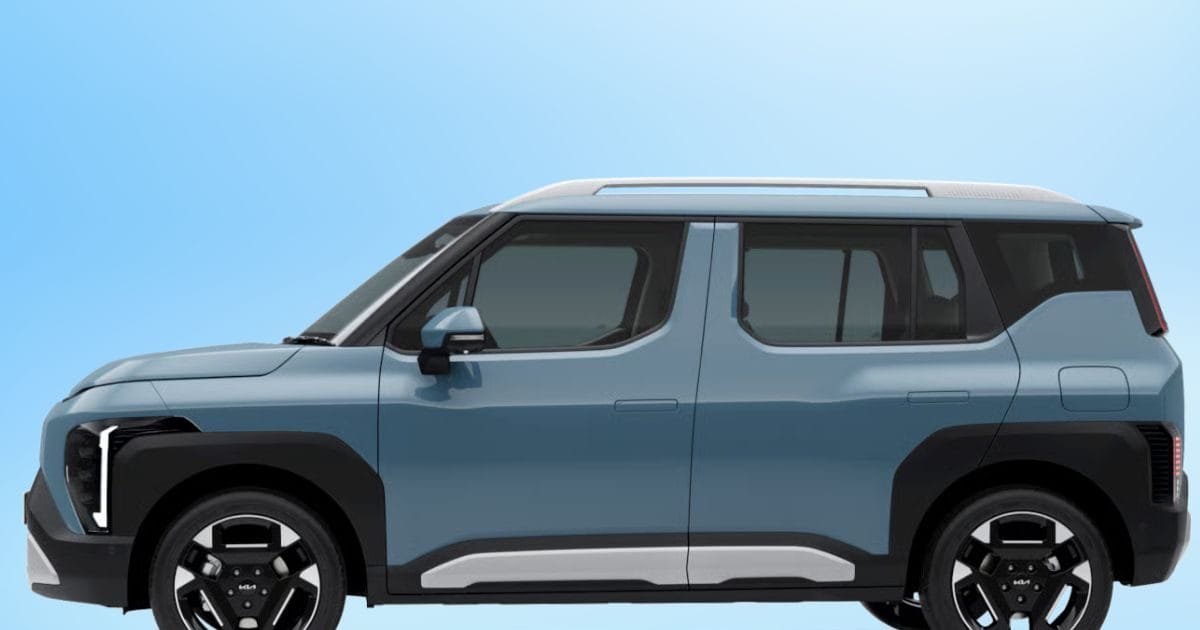
The 2026 Kia Syros EV has been spotted testing completely in camo. This is an important model to strengthen Kia's range of electric vehicles in India. This sub-4 meter electric SUV is based on its ICC version Cyros, but will come with EV-specific changes. In the market it will compete with cars like Tata Nexon EV and Mahindra XU 3XO EV.
It is expected to be launched in the second quarter of 2026. The estimated price could be between ₹14-20 lakh. It will be built on the K1 platform (shared with Hyundai Inster EV) and will come with front-wheel drive. The spy shots show the charging port, aero wheels and other details being tested in full camouflage. Let us take a look at the possible design, interior, features and safety along with battery, motor and range details.
Design and interior
The design of Cyros EV is very similar to the ICE model. It has a boxy silhouette, vertical LED headlights and L-shaped DRLs. Despite being spied in full camo, the front features a charging flap on the left fender, closed-off grille, active air vents (for battery cooling), revised rear bumper (body-coloured and black panels), aerodynamic changes to the roof rails and aero-optimized alloy wheels. Green brake callipers (like Seltos GT) and EV badging will also be available. The overall look will be modern and practical, perfect for the sub-compact SUV segment.
Its cabin is expected to remain the same as the ICE model, which includes dual 12.3-inch screens (Trinity display), touch-based AC controls, panoramic sunroof, wireless phone charger and ventilated front-rear seats. V2L (Vehicle to Load) and V2V (Vehicle to Vehicle) features, region modes and EV-specific information displays may be added to the EV version. The cabin will be spacious, with premium materials and plenty of storage.
Features and safety
Syros EV will be feature-rich, which will include 360° camera, ADAS level 2, wireless Android Auto/Apple CarPlay, dashcam, high-safety package and powerful infotainment system. EV specific features like regenerative braking, drive modes and fast charging indicators will also be available. Like the ICE model, it is also expected to have a 5-star BNCAP rating, with 6 airbags as standard, ADAS (16 autonomous features), ABS, EBD, ESC and other safety aids.
Battery, Motor and Range
It will be built on K1 platform and will come with FWD setup. Battery options could be 42kWh and 49kWh, with a claimed range of 300-390km (MIDC/WLTP). Some reports mention up to 51.4kWh, which can give 400-450km range. Motor power will be around 110-145 PS and torque 220-250 Nm. Fast charging from 10-80% is possible in just 58 minutes. It will become a strong contender in the affordable EV segment.