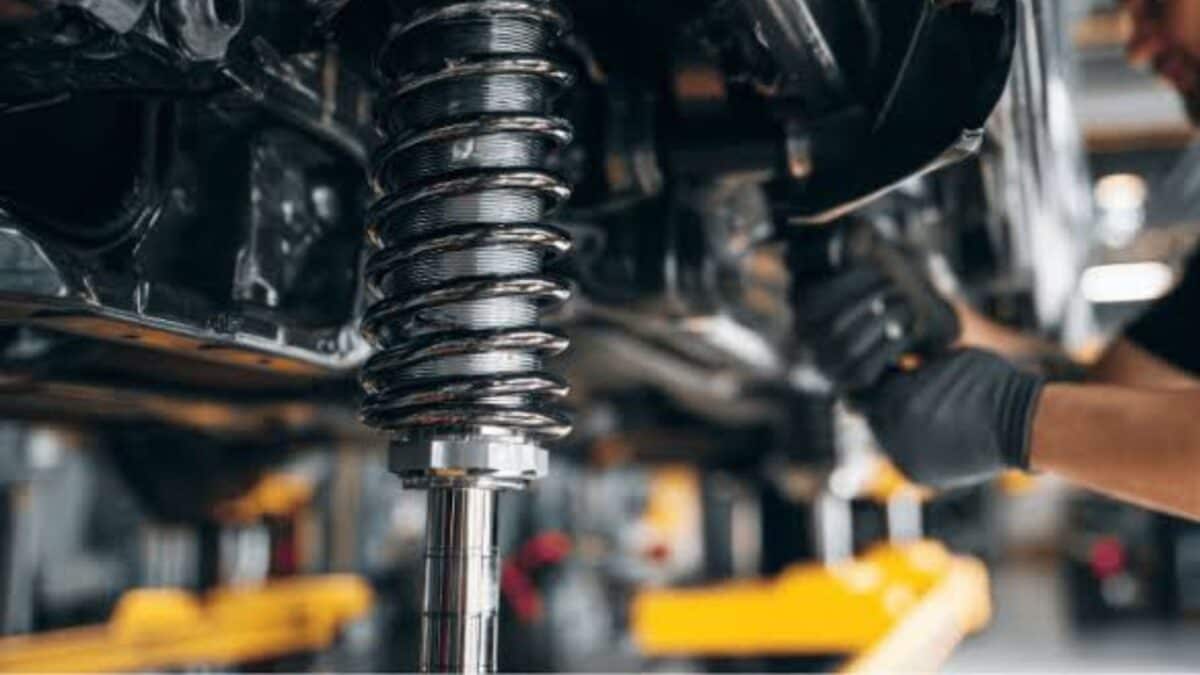
Car Suspension Care: The suspension system of a car is the basis of safety, comfort and control of the vehicle. It controls the vehicle on rough roads, keeps the tires connected to the road and provides stability during turns. With time its shock absorbers, struts, springs and other parts become weak. If the suspension is not repaired on time, it not only makes driving uncomfortable but also has a negative impact on braking, handling and tire life.
This increases the risk of accident. Many drivers ignore small problems, which lead to costly repairs. In this article, we will discuss those 5 important signs, seeing which you can easily understand whether the suspension system of your car will need repair or not? By regular checkups and paying attention to time, you can make your car safe and keep it in good condition for a long time. Come, let us know about these five gestures.
1. high bounce
If your car bounces excessively or experiences jerks on potholes or small uneven roads, it is a sign of damaged shock absorbers or struts. Good suspension handles the ups and downs on the road easily. If the ride is no longer as smooth as before, get it checked by a mechanic immediately.
2. Uneven tire wear
Another important sign is uneven tire wear. When the suspension is bad, the weight of the car falls more on one side, due to which the edges of the tires wear out quickly. Keep checking tires regularly. If a tire is experiencing excessive center wear or uneven wear, it may be the result of suspension misalignment or worn bushings.
3. Unusual sounds
Third, strange noises while driving the car. If you hear clunk, clatter or squeak especially on potholes or speed breakers, the suspension parts may be loose or broken. These sounds increase when there is a problem with the ball joints, control arms or sway bar links. Ignoring it can cause complete failure of parts.
4. Car pulling to one side
The fourth sign is the car pulling to one side. If the car lurches left or right when braking or driving straight, the suspension is unbalanced. This happens due to weakness of strut or spring. This affects handling and poses a danger while changing lanes.
5. Leakage or visual damage
Leakage or visual damage comes at number five. Oil leaking from the shock absorber or accumulation of grease under the suspension is a clear sign of damage. Lift the car up and check it from below. If any part is cracked, rusted or bent, get it replaced immediately.
By recognizing these signs in time, you can avoid major accidents and costly expenses. It is very important to get the suspension professionally checked every 10,000-15,000 kilometers.
Read these 5 important tips before going out with your car in the rain, you will be saved from damage.
Last Updated:
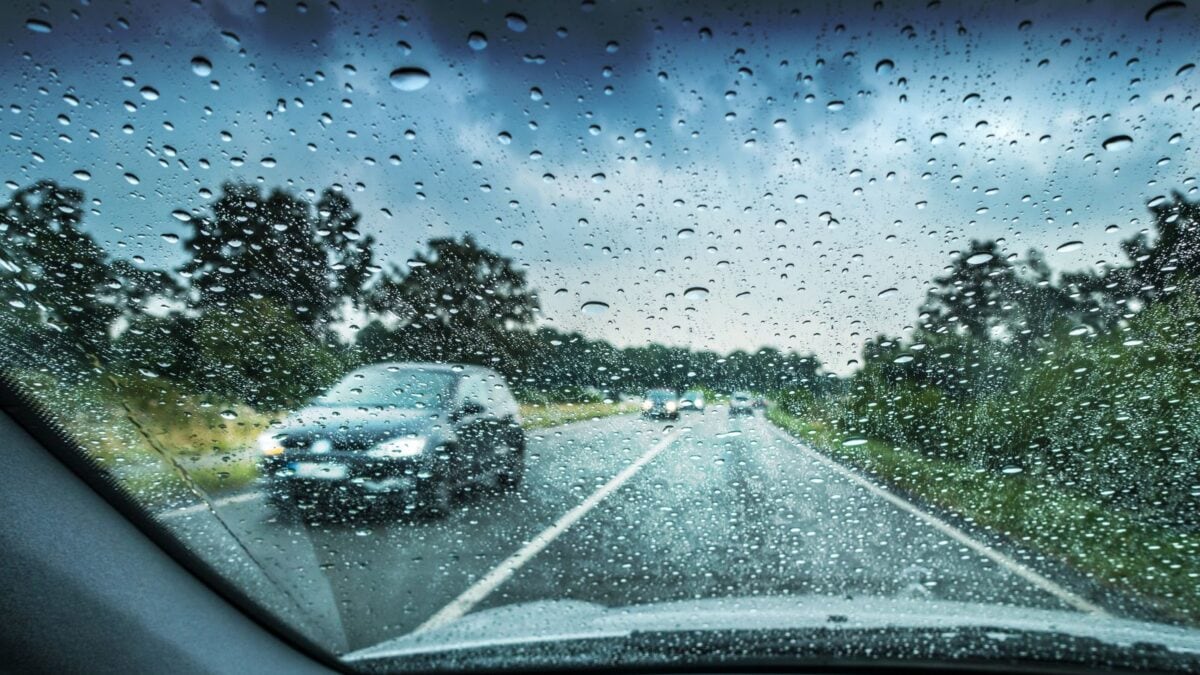
As comfortable as driving in monsoon may seem, it can also be equally risky. Wet roads, low visibility and waterlogging can turn a small mistake into a major accident. If you want to keep your car and family safe in the rain, then definitely know these 5 easy but very important driving tips. This advice can prove useful for every driver.
news quickly
Follow these 5 tips while driving a car in monsoon.
Monsoon season brings both relief and challenges to India. Heavy rain, waterlogging, slippery roads and low visibility make driving risky. Road accidents increase every year as wet roads increase braking distance, create the risk of hydroplaning and affect visibility. It is important to be careful in this season, because small carelessness can cause a big accident.
By good preparation of the vehicle, slow speed and vigilance, you can keep yourself and others safe. According to experts, the vehicle should be checked regularly before driving in monsoon. Avoid sudden braking, taking sharp turns or going to flooded areas during rains. Stay focused on the road, do not use mobile and check the weather forecast. In this article, we have brought top 5 tips, which will keep your car safe in the rain.
1. Check the vehicle beforehand
Before the onset of monsoon, get the grip of tyres, brake pads, wiper blades and all lights checked. Worn tires are a major reason for loss of control on wet roads. If the wipers are not working properly then nothing can be seen ahead in the rain. Also keep extra emergency kit like flashlight, first aid box and tools in the car. Regular servicing increases the reliability of the car.
2. Keep speed control
In heavy rain, always drive at half the normal speed. Braking distance doubles on wet roads and the risk of hydroplaning increases. Avoid fast speed, especially on turns and bridges. Slow driving results in better control of the vehicle and reduces the chances of an accident.
3. Maintain a safe distance
Keep a distance of at least 4-6 seconds from the vehicle moving ahead. Due to low visibility in rain and slippery road, extra space is necessary to avoid collision in case of sudden braking. Be more cautious especially while walking behind a truck or bus.
4. Use headlights and wipers correctly
Always keep low beam headlights on in the rain, so that you can easily see other vehicles. Do not use high beam because due to this the light does not fall completely on the water drops. Run wipers and defoggers regularly to keep the windshield clean and visibility maintained.
5. Avoid flooded areas completely
If you see water on the road, do not try to cross it, especially if the water reaches the floorboard of the vehicle. Avoid sudden turns, overtaking or non-essential trips. Check weather updates and do not leave the house if not necessary. If the vehicle gets stuck, do not panic, call help. By adopting these tips you can ensure safe driving in monsoon.
About the Author
Ram Mohan MishraSenior Sub Editor
Ram Mohan Mishra, working as Senior Sub-Editor at News18 Hindi, is active in digital media since 2021 and is currently handling the Auto Desk. They provide car and bike related information in an easy, clear and reliable manner.read more
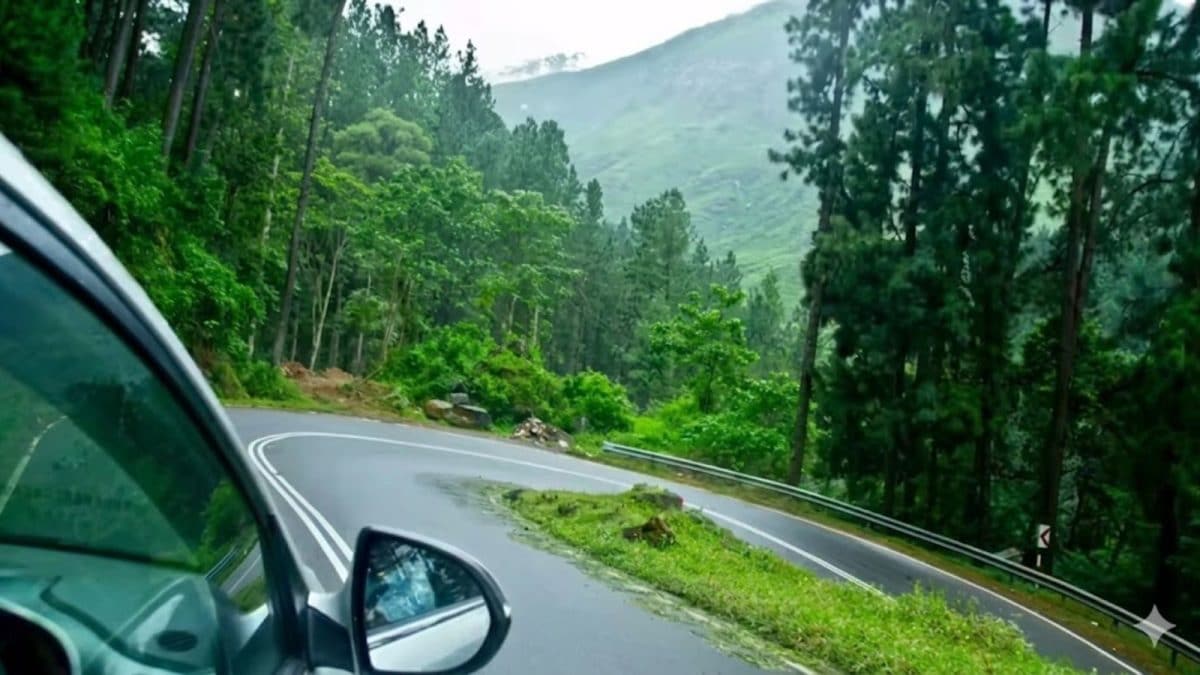
Just packing your bag before leaving Delhi-NCR for the mountains is not enough. Winding roads, steep slopes and changing weather can turn even a small mistake into a major accident. If you want your hill station trip to be safe and memorable, then definitely know these 5 important tips related to driving. One of these mistakes can cost you heavily on your entire journey.
news quickly
Be sure to follow these 5 tips while driving on hills.
If you want to visit the mountains to escape the heat from urban areas like Delhi-NCR, then it is natural to turn to the Himalayan paths in search of picturesque views, cool breeze and peace. But this beautiful journey can also be challenging. Driving amidst high peaks, winding roads, steep slopes and unpredictable weather is completely different from normal city driving.
Even experienced drivers can become victims of accidents due to small mistakes. Therefore, it is important to follow the rules of safe driving, so that your trip becomes memorable and you return home safely. With proper preparation, caution and discipline, you can enjoy the beauty of the mountains to the fullest. Let us take a look at 5 important tips in such a situation.
make full preparations
Before going on a hilly journey, definitely get your car checked at the service center. Check the condition of brakes, clutch, engine cooling system, tire pressure and spare tyre. The engine gets hotter in the mountains, so keep the coolant and engine oil levels correct. 4WD or tires with good grip are better. Carry extra water, torch, tool kit, first aid kit and extra fuel. Check weather report and road conditions before leaving Delhi. Do not overload the vehicle. These small preparations can save you from big trouble.
Drive slowly and at a controlled speed
Do not maintain speed more than 40-50 km/hr on hilly roads. There is always a risk of accidents and falling stones due to vehicles coming at sharp turns. Always stay in gear and reduce brake use. Use engine braking when going downhill. Use the horn consistently, especially on blind curves. Avoid overtaking other vehicles and give way to them. Avoid driving at night as fog and low visibility are dangerous.
Keep an eye on weather and road conditions
The weather in the mountains changes in a moment. Check news of rain, snowfall or landslide in advance. Press the brakes gently on slippery roads. If there is fog, turn on hazard lights and drive slowly. The car's engine works harder on steep climbs, so stop occasionally and let the engine cool down. Get route information from local people or traffic police. Always use an updated map or GPS app.
Avoid fatigue and take breaks
In long drives, take a break of 10-15 minutes every 2-2.5 hours. Due to constant twists and turns on hilly roads and altitude, fatigue sets in quickly. Have coffee or light breakfast, but do not take alcohol or sleep inducing medicines. Keep changing drivers if possible. Keep the windows open so that fresh air comes. Driving while tired is the biggest danger.
be prepared for emergencies
If the car breaks down, park it on the side of the road and turn on the hazard lights. Carry rope, chain and reflectors. Save important numbers (toll free helpline, local police) in your mobile. Insist on children and elderly people to wear seat belts. It is better to wait after sunset or in bad weather than to take risks. If you remain alert, every trip will be safe and enjoyable.
About the Author
Ram Mohan MishraSenior Sub Editor
Ram Mohan Mishra, working as Senior Sub-Editor at News18 Hindi, is active in digital media since 2021 and is currently handling the Auto Desk. They provide car and bike related information in an easy, clear and reliable manner.read more
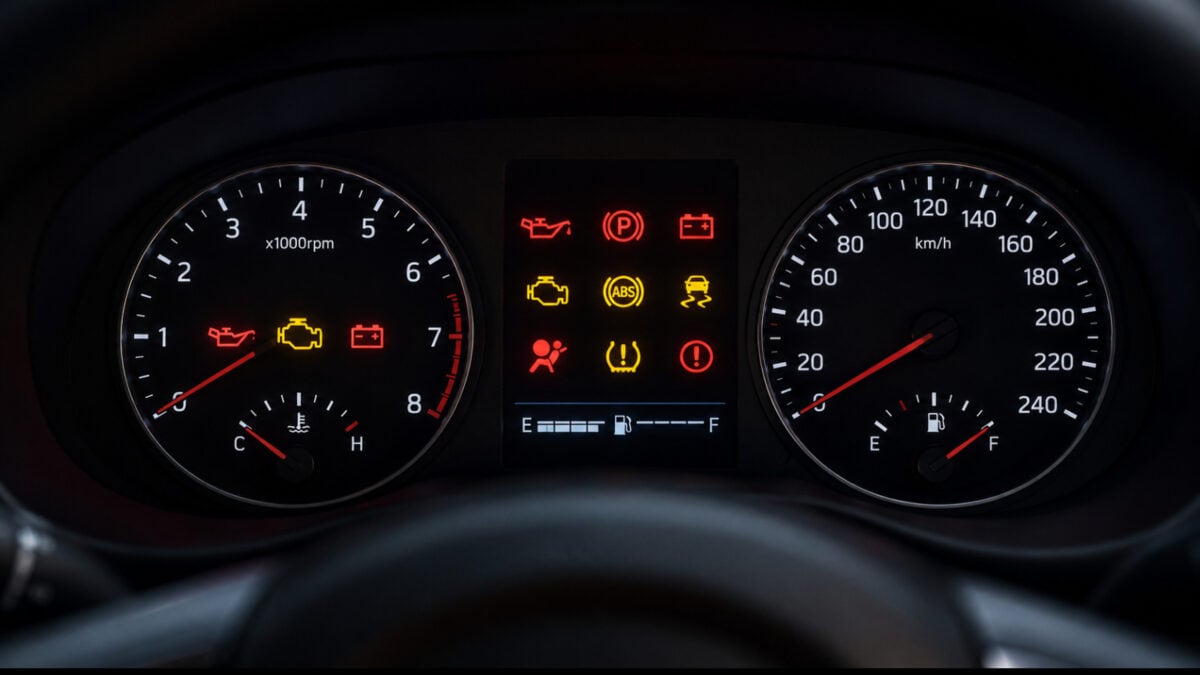
In modern cars, different warning lights installed on the dashboard are a mirror of the health condition of the vehicle. These lights provide instant notification of problems with the engine, brakes, battery, tires and other critical systems. Red lights are worth immediate attention, while yellow/orange lights indicate caution. Due to increase in temperature in summer, there is extra pressure on the engine, cooling system, battery and tires, due to which these lights can come on more often.
Many drivers ignore these, but this can lead to major problems like engine damage, brake failure or sudden breakdown. In summer, it is common for coolant to burn quickly, battery fluid to dry up and tire pressure to increase. Therefore, it is important to understand these lights and take timely action. Let us know what kind of lights come on on the dashboard and what do they mean?
Dashboard lights and what they mean
There are many standard lights on the dashboard of the car. The check engine light (engine outline) indicates a problem with the engine or emissions system. It can be yellow or red in colour. Engine temperature warning (thermometer icon) indicates engine overheating. The battery light (battery symbol) indicates a malfunction of the charging system.
The oil pressure light (oil can) indicates low pressure or lack of engine oil. Tire Pressure Monitoring System (TPMS) lights up when there is too much or less air in a tyre. The ABS light indicates a problem with the anti-lock braking system, while the brake warning indicates a low handbrake or brake fluid. Other lights include low fuel, airbag, traction control etc. Decide priority based on their color. Don't ignore red light.
icon
name of light
meaning/sign
🌡️
engine temperature warning
This is a sign of engine overheating.
🛢️
oil pressure light
Engine oil pressure is low or there is lack of oil.
🔋
battery light
There is a fault in the charging system or alternator.
🛑 / ⚠️
brake warning
Handbrake engaged or brake fluid low.
👤 / 🪂
airbag light
There is a malfunction in the airbag system.
⚙️ / ⚠️
check engine light
There is a problem with the engine or emissions system.
(ABS)
abs light
There is a malfunction in the anti-lock braking system.
⚠️ / 🛞
TPMS
The air pressure in a tire is too low or high.
🚗💨
traction control
Tire grip is decreasing or there is a malfunction in the system.
⛽
low fuel
There is very little fuel (petrol/diesel) left in the tank.
Why be more careful about these lights in summer?
Summer season is challenging for the car. When the outside temperature goes above 40 degrees, the engine temperature increases rapidly, which puts a burden on the cooling system. The temperature light may come on when the coolant level is low or there is a problem with the radiator, ignoring which may cause the head gasket to blow.
Heat has the worst effect on the battery. The fluid evaporates, the chemical reaction accelerates and the life of the battery gets reduced. The possibility of battery failure doubles in summer. The air in the tires gets heated and expands, due to which the pressure increases and there is a risk of blowout. The TPMS light often comes on for this reason. Additionally, heat can affect wiring and sensors, leading to false warnings.
What to do when the light goes out
Take immediate action: When a red light (like temperature or oil) comes on, stop the vehicle at a safe place, turn off the engine and let it cool.
Yellow Light: Go to the nearest service centre. Get the check engine light diagnosed with an OBD scanner.
Preventive Maintenance in Summer: Check coolant, brake fluid, oil regularly. Check tire pressure in the cold morning. Keep battery terminals clean. Use sunshade in parking. Get serviced before a long drive.
Summary: Ignoring dashboard lights can prove costly. Being careful in summer not only increases the lifespan of the vehicle, but accidents can also be avoided. Every driver should read the manual and have basic knowledge. Safe driving can be ensured with timely maintenance.
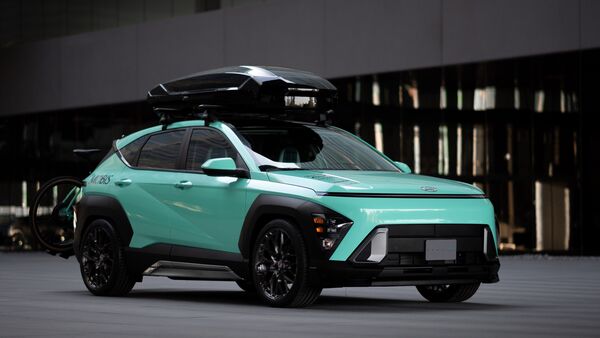
However, not all car modifications are permitted by the law of the land. In fact, performing some weird modifications to your car may lead you to legal trouble. Hence, if you are planning to modify your car, make sure not to do anything that may compromise the safety of everyone in and around the vehicle. Don’t do anything that weakens the strength of the car’s chassis. Also, don’t do anything that may impact the environment adversely.
If you are planning to modify your car, here is a comprehensive guide with a list of legal and illegal modifications in India.
Types of modifications
Usually, car modifications can be segmented into three categories: aesthetic, functional and performance.
Aesthetic modifications: The most common car modifications around us are aesthetic modifications. Generally, such modifications make the car visually distinctive but don’t add anything to the performance or utility. While some of these modifications are not allowed by the Motor Vehicle Act, some can be played with. Such customisation can be performed at the exterior and inside the cabin of the car.
Functional modifications: These modifications are usually done to make the use of vehicles more convenient for the driver and passengers. Usually, such modifications are aimed at providing better comfort and convenience to the occupants. These are generally based on accessories and not mechanical. Such customisation can be performed at the exterior and inside the cabin of the car.
Performance modifications: Performance modifications are meant to increase the performance of a car. An average car coming out of the OEM’s plant is tuned to find a perfect balance between performance and fuel efficiency. People who seek extra from their vehicle, often customise the vehicle’s powertrain.
Legal car modifications in India
Body kit installation: Body kit installation on a car is legal as long as it is fitted as a bolt-on and doesn’t interfere with the structure of the vehicle. Usually, these kits like body cladding, side panels, front splitter etc are often fitted to cars to enhance the looks of the vehicles. Many automakers too offer some body kits as factory fitment or dealer-level fitment, which come with the benefit of no impact on warranty.
Colour change: Changing a car’s colour is completely legal in India, but is subject to RTO’s approval. However, some colours like Army Green are only reserved for military vehicles and not available for civilian vehicles. If you are planning to change the colour of your car, make sure to get approval from the RTO first and also update the registration certificate specifying the paint as accurately as possible.
Body wrapping: Similar to colour change, body wrap for a car is legal in India. It is generally a vinyl wrap applied directly on the vehicle’s surface to protect the car’s original paint from damage from natural elements or minor impacts like scratches or scars. Besides this, it also enhances the glossy look of the car. The owner doesn’t require RTO approval for body wrapping if the wrap is of the same colour as the car. However, if the wrap is of a different colour than the exterior paint of the car, the RTO needs to be informed and the RC should be updated accordingly.
Aftermarket CNG kit installation: Installing an aftermarket CNG kit on a car is legal in India. However, ensure the vehicular documents are updated with the local RTO accordingly and the CNG kit fitment is mentioned in the registration certificate.
Suspension change: Change of suspension is legal as long as the upgrade does not increase or decrease the vehicle’s ground clearance significantly. Upgrading a suspension without hurting the ground clearance majorly can ensure the vehicle offers a more comfortable ride quality, especially considering the condition of the Indian roads.
Arrangement for differently abled: It is legal to make some changes to a car to suit the requirements of a differently-abled person. According to the amended Motor Vehicles Act, an orthopedically disabled person with a 40 per cent permanent disability or above can drive a car with a length less than or equal to four metres. He or she can drive a car with an engine capacity of 1,200 cc for petrol models and 1,500 cc for diesel vehicles. However, such cars should be registered as ‘Adapted Vehicles’ with the local RTO.
Modifications that impact the car’s structural integrity adversely, are prohibited by law.
Illegal car modifications in India
Additional lights: This is another category, which also often sees rule violations. According to the MV Act, any light placed over 1.5 metres from the ground is illegal. This means the cars with lights mounted to the rooftop are violating the rule. Also, all vehicles are legally prohibited to have more than four headlights. Besides that, any lights that blind a person at a distance of eight metres or less are illegal. The cars are legally restricted to come with any additional light positioned in the front and above the height of stock headlamps. Also, such additional lights are supposed to be covered when driving around the city.
Aftermarket exhausts: One of the most common modifications done by car owners in India is the fitment of aftermarket exhausts. This modification is done on both cars and motorcycles. While many such exhausts don’t make much difference to power output, some expensive ones do. However, the problem is that all these aftermarket exhausts come with painfully loud sounds. The amended MV Act mandates that any exhaust that is louder than 80 decibels is illegal. It is recommended to not fit such an exhaust unless it is approved by the RTO. While many motorists brazenly break this rule, doing so is illegal anyway.
Tinted screens: According to law, the screens at the front and the rear of any car must have at least 70 per cent visible light transmission. The sides of the car can be slightly darker and must have 50 per cent sunlight penetration capacity through them to the cabin of the car. While many cars often use very dark-tinted glasses, those are illegal as they not only hamper the vision of the driver but also prevent a clear view inside the car.
Bull bars: A common misconception is that bull bars enhance the safety of a vehicle. In reality, in case of a crash, the bull bar can critically damage the structure of the car and even impact the engine as well. Also, they pose a severe safety threat to pedestrians. While in India, many cars especially SUVs use aftermarket bull bars, they are illegal as they come bolted on the chassis and reduce the car’s structural integrity. It also impacts the airbags’ functionality adversely in case of a crash, posing a threat to the occupants inside the vehicle’s cabin.
Fancy number plates: Again, a widely practised illegal modification is using fancy number plates. As per Indian law, all cars must have a high-security number plate with 3D hallmarked IND lettering embossed on them.
Changing body type: If you are thinking of turning your sedan into a limousine by stretching it as long as possible, or turning it into a convertible by chopping off the roof, refrain from doing so. Making any kind of structural change to any car in India is strictly illegal. Doing so can make the chassis weak and pose a threat to the safety of people.
Engine swapping: No matter how tempted you feel to try a V8 motor on your SUV by spending lakhs of money, be assured that it is illegal. The registration certificate of the car mentions the chassis and engine number of the vehicle, and they must remain the same throughout the life of the vehicle. If you ever consider swapping your car’s engine, approach the local RTO first.
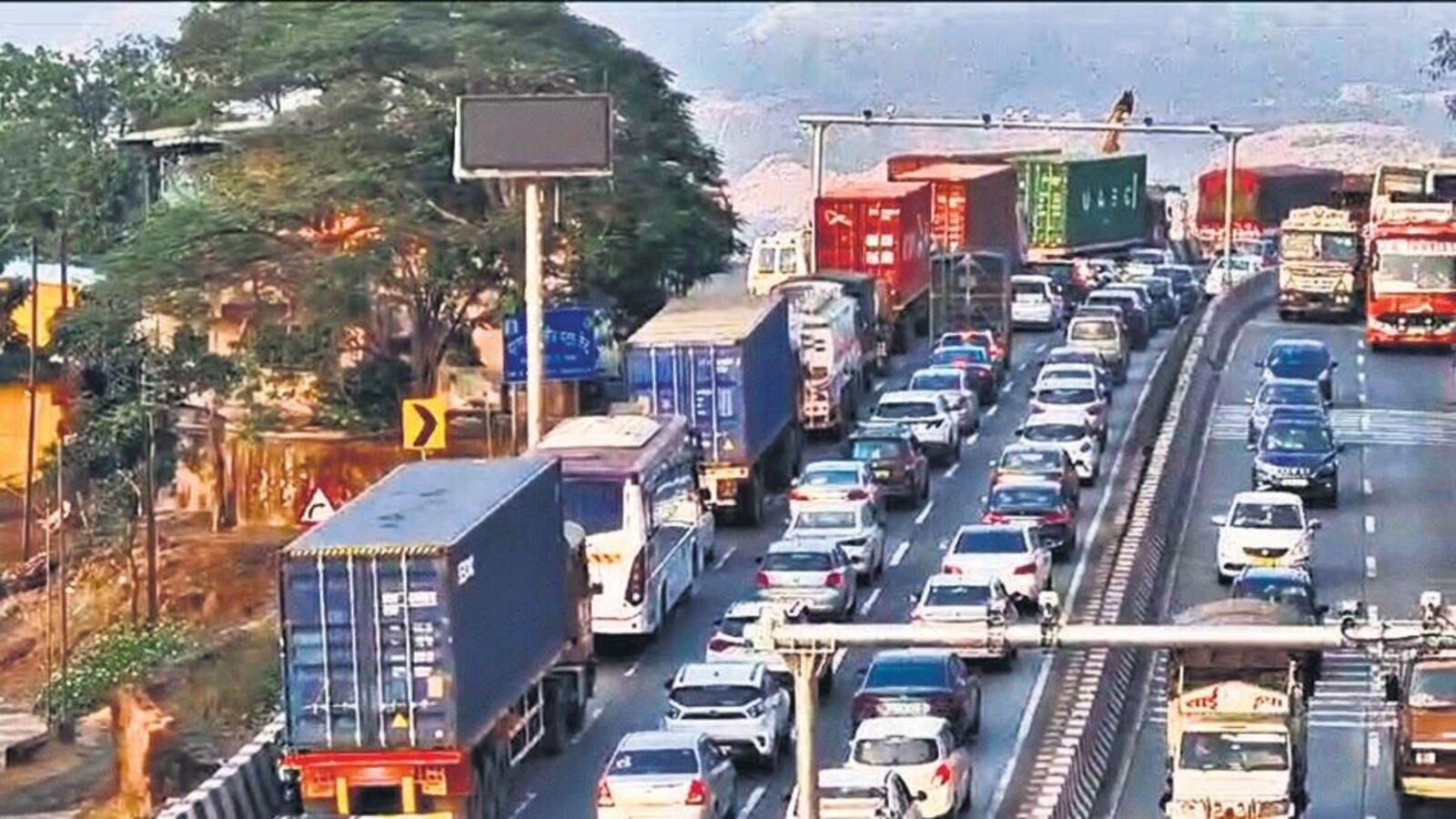
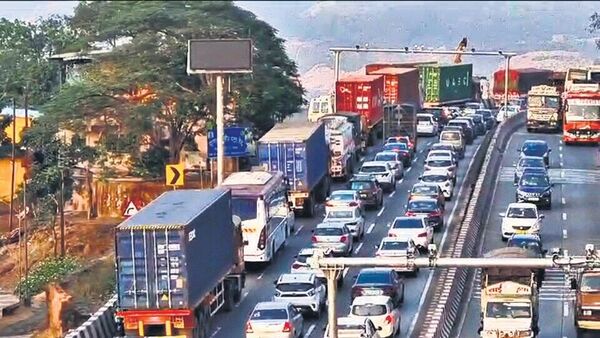
The long weekend around Christmas has thrown traffic out of control in many parts of India, especially for those heading to hill stations in Himachal Pradesh or Maharashtra. Motorists and holidayers who took the Mumbai-Pune Expressway over the weekend faced long traffic jams. The massive traffic jam on the Mumbai Pune Expressway took 36 hours to be cleared, leaving thousands of vehicles stuck on the highway near Lonavala and Khandala.
By: HT Auto Desk | Updated on: 25 Dec 2023, 18:14 PM
Due to the weekend and Christmas holidays, there was a huge traffic jam on the Mumbai-Pune Expressway at Khandala Ghat, while broken-down vehicles made the situation worse. (HT_PRINT)
For many people who took the Mumbai-Pune Expressway to reach their destinations during the weekend around Christmas, it became a nightmare. Many people had to wait more than three hours to get out of the jam after being stuck in traffic congestion. At some stretches, the traffic jam extended up to 10 kilometres. Several cars broke down on the Mumbai-Pune Expressway, worsening the traffic situation there. Videos of cars standing at the roadside on the Mumbai Pune Expressway with their bonnets open have gone viral on social media platforms.
Breakdowns on the road can be extremely stressful for vehicle owners. Here are some common reasons that play key roles behind a car breaking down and tips on how to avoid such a condition.
Dead or faulty battery
One of the most common causes of vehicle breakdown is a dead or faulty battery, which makes it difficult for a driver to start a car’s engine, eventually leaving him or her stuck. It is recommended to get the battery checked by a technician every three years and replace it if required. A few warning signs of a faulty car battery are dim lights and slow-functioning power windows.
Faulty alternator
An alternator is highly important as it recharges a car’s battery using engine power. Additionally, the alternator also provides power to the car’s electrical components. A faulty alternator means the battery will not be charged properly and there will be stress on other electrical components as well. Hence, get the alternator checked periodically by a technician and fix if there are any issues. Keep an eye out for the car’s ignition warning light and high engine temperature alert. These are signs when the belt that drives the alternator is broken.
Malfunctioning engine
An engine can be dubbed as the heart of a car. The engine works in unison with many critical components and faults in any of them can result in a breakdown. Some common issues related to a car engine failure include a failing oil pump, aged spark plugs, debris and oil deposits, poor lubrication, inadequate fuel and air compression, blocked engine radiators, leaking engine coolant, damaged oxygen sensors prolonged engine detonation etc. It is imperative to get the engine checked by a trained technician frequently and fix any issue if detected. Also, make sure to change engine oil and engine coolant periodically as required and prescribed by the OEM.
Damaged clutch wire
Manual cars rely on a clutch for running and shifting gears. In case of damage to the clutch, the vehicle’s overall performance is impacted negatively. If the clutch plate is burnt or the clutch wire is broken, the car stops moving. If you see, hear or feel signs like a grinding sound while changing gears, the clutch pedal comes at a higher position than its usual resting position, unusual feeling while the clutch pedal is pressed, there is a potential issue with the clutch and it needs to be fixed immediately.
Electrical issues
Modern cars come loaded with a wide range of advanced features, which make it hard to detect electrical problems. It is difficult to fix such an issue in the middle of the rod. But, an electrical short circuit can drain the car’s battery and leave the vehicle stranded. Hence, if you feel any issues with any of the car’s electrical systems like dimming lights or issues with power windows or other components, get the car checked by a technician. Installation of aftermarket electrical components such as additional lights or other devices can also put stress on the entire electrical system and eventually on the battery as well. Also, avoid installing unnecessary lights or fancy gadgets as that puts pressure on the battery draining its charge.

.jpg?impolicy=website&width=52&height=52 "authoring")